India’s furniture market crossed USD 25.38 billion in 2025 and is projected to reach USD 44.30 billion by 2034. Wood accounts for nearly 57–60% of this market by material share. The global wood products market was valued at $690.04 billion in 2022, and India is positioned to capture a meaningful slice through manufacturing, exports, and value addition. If you are exploring wood business ideas for 2026, this is the right time-urbanization is accelerating, modular furniture demand is surging, eco-friendly products are gaining traction, and government MSME schemes are more accessible than ever. In this guide, I have compiled 35+ profitable wood business ideas based on two decades of preparing project reports and bank loan documentation for wood manufacturing entrepreneurs across India.
What is Wood Business and Why It’s Booming in India
A wood business covers any venture that involves manufacturing, processing, finishing, or trading products made from solid wood, engineered wood (plywood, MDF, particle board), veneers, or wood-based composites. Woodworking can range from small home workshops to large-scale manufacturing units producing thousands of units monthly.
The wood processing industry in India is driven by several forces:
- Real estate and construction: Millions of new housing units under PMAY and private builders create recurring demand for doors, windows, flooring, and fitted furniture.
- Modular and fitted interiors: Urban apartments increasingly demand modular furniture, kitchen cabinets, and storage solutions.
- Hospitality and commercial spaces: Hotels, restaurants, and offices constantly refresh their interiors.
- Export markets: India exported furniture worth approximately ₹6,000 crore in 2023, with Middle East, Europe, and Asian markets driving orders.
- Sustainability shift: The demand for high-quality, sustainable wooden items is rising. The woodworking industry is shifting away from mass-produced furniture toward personalized pieces, and consumers are willing to pay premium prices for wooden products with a story.
The furniture industry is no longer just about local carpenters. It is a structured manufacturing business with clear pathways for bank finance, export incentives, and technology adoption.
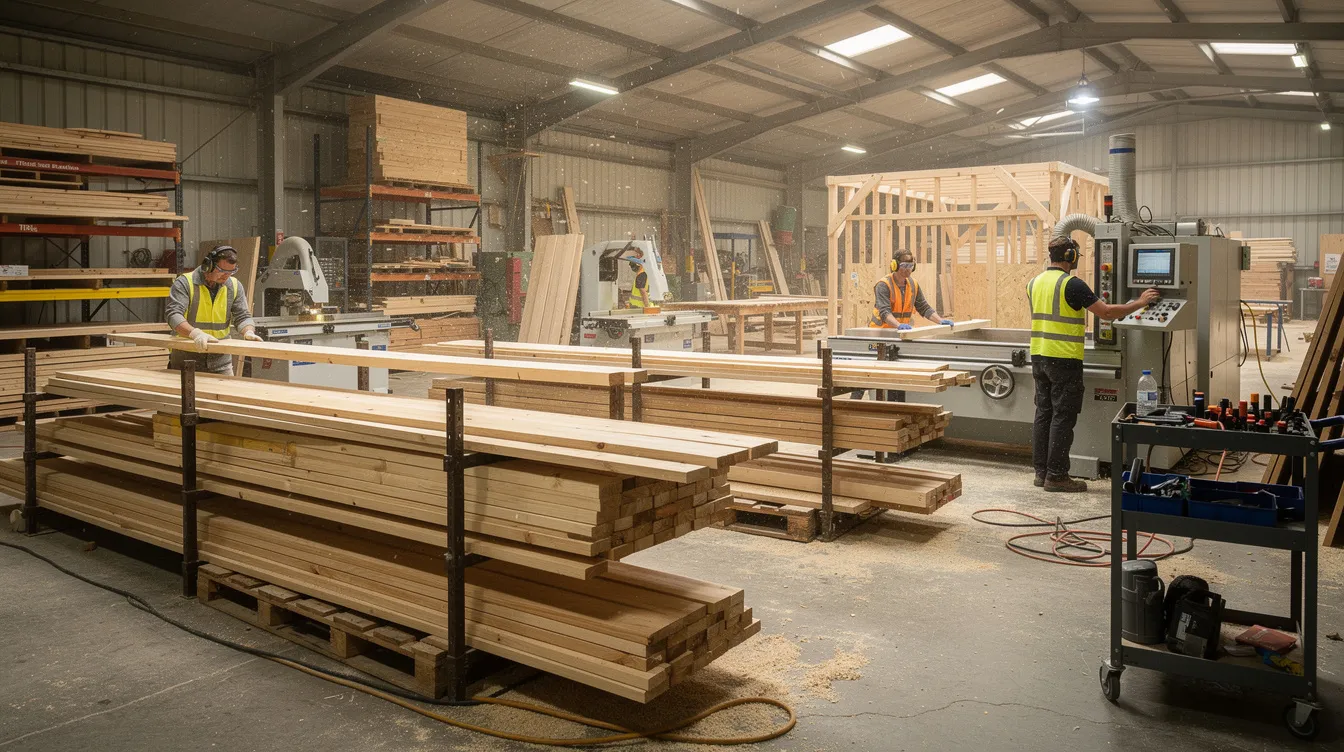
Table of Contents
How We Selected the Most Profitable Wood Business Ideas
As a Chartered Accountant who has prepared hundreds of DPRs for wood-based businesses, I evaluated each idea against these parameters:
- Investment range: ₹5 lakh for small artisan setups to ₹2 crore+ for engineered wood manufacturing
- Market demand: Current and projected demand from domestic and global market data
- Profit margin: Gross margins of 25–40% for standard manufacturing; net margins of 12–20% for medium units at 65–70% capacity utilization; custom furniture and premium designs often deliver 30–60% margins
- Bank loan and scheme eligibility: Mudra Loan, PMEGP, CGTMSE, and SFURTI cluster grants
- Scalability and export potential: Ability to standardize, certify (FSC, BIS), and access overseas buyers
- Raw material availability and complexity: Proximity to timber sources, engineered wood suppliers, and hardware markets
The most profitable woodworking businesses focus on customization and repeatable products. Artisanal woodworking products often command higher profit margins than mass-produced items, and customization allows woodworkers to charge higher prices without drastically increasing production time.
Top 35+ Profitable Wood Business Ideas for Indian Entrepreneurs
Below are the top 10 ideas covered in depth. The remaining 25+ (including wooden shelves, floating shelves, wooden garden furniture, planter boxes, wall panels, wooden coasters, key holders, jewelry boxes, wooden candle holder items, coffee tables, storage crates, wall art, wall décor, wooden picture frames, wooden serving trays, wooden signs, charcuterie boards, wooden kitchenware, outdoor furniture, school furniture, hotel furniture, CNC furniture, veneer manufacturing, wood pellets, and wood recycling) follow similar evaluation logic and are summarized in the comparison table.
1. Wooden Furniture Manufacturing
Bedroom sets, living room pieces, office desks, and dining tables form the core of the wooden furniture segment. Wooden furniture claims nearly 40% of the US furniture market alone-indicating strong export potential alongside massive domestic demand.
- Why It Stands Out: Consistent demand driven by housing, renovation, and replacement cycles (every 8–10 years).
- Best For: Entrepreneurs with ₹15–50 lakh investment capacity and access to skilled carpenters.
- Key Strengths: High profit margins (25–45%), export potential, ability to serve both mass and premium segments. You can explore a detailed wooden furniture project report for bank loan preparation.
- Possible Limitations: Skilled labor requirement, design trend changes, raw wood price volatility.
2. Modular Furniture Manufacturing
Kitchen cabinets, wardrobes, TV units, and ready-to-assemble furniture represent the fastest-growing sub-segment. Modular furniture solves space issues for urban dwellings-a critical selling point in Tier-1 and Tier-2 cities.
- Why It Stands Out: Standardized production using engineered wood products reduces waste and improves consistency.
- Best For: Tech-savvy entrepreneurs targeting urban markets.
- Key Strengths: Higher margins through efficient production methods, repeat customers from interior designers and builders. See the modular furniture manufacturing guide for detailed financials.
- Possible Limitations: Initial CNC machinery investment (₹15–30 lakh), competition from established furniture brands.
3. Wooden Toys Manufacturing
The wooden toys market is expected to reach $43.29 billion by 2034 globally. Eco-friendly children’s toys are increasingly sought after by parents concerned about plastic safety.
- Why It Stands Out: Low investment (₹5–15 lakh), high margins, and strong export potential to Europe and North America.
- Best For: Small-scale entrepreneurs with creative skills. A wooden toys project report helps structure your bank application.
- Key Strengths: Safety certification (EN 71, ASTM) opens international doors. Personalized wooden gifts are part of a $509 billion global market.
- Possible Limitations: Certification costs, seasonal demand spikes.
4. Plywood Manufacturing
Commercial and decorative plywood feeds India’s construction projects and interior design sector. The Furniture Quality Control Order (February 2026) now mandates BIS certification for several furniture categories-giving certified manufacturers an edge.
- Why It Stands Out: Bulk orders from builders and government projects ensure stable demand.
- Best For: Entrepreneurs with ₹50 lakh to ₹2 crore investment. A comprehensive plywood project report is essential for loan approval.
- Key Strengths: Recurring B2B orders, particle board and medium density fiberboard variants diversify revenue.
- Possible Limitations: Environmental clearances, quality control requirements, raw material costs.
5. Wooden Packaging Boxes and Pallets
Wooden packaging such as crates and pallets caters to industrial clients. Wooden packaging products are increasingly popular due to plastic alternatives being restricted in several export markets.
- Why It Stands Out: E-commerce growth and export industry needs create recurring orders.
- Best For: Entrepreneurs near industrial hubs or ports.
- Key Strengths: Low skill requirements, bulk sales, storage solutions for logistics companies.
- Possible Limitations: Price competition from unorganized players, logistics challenges with bulky products.
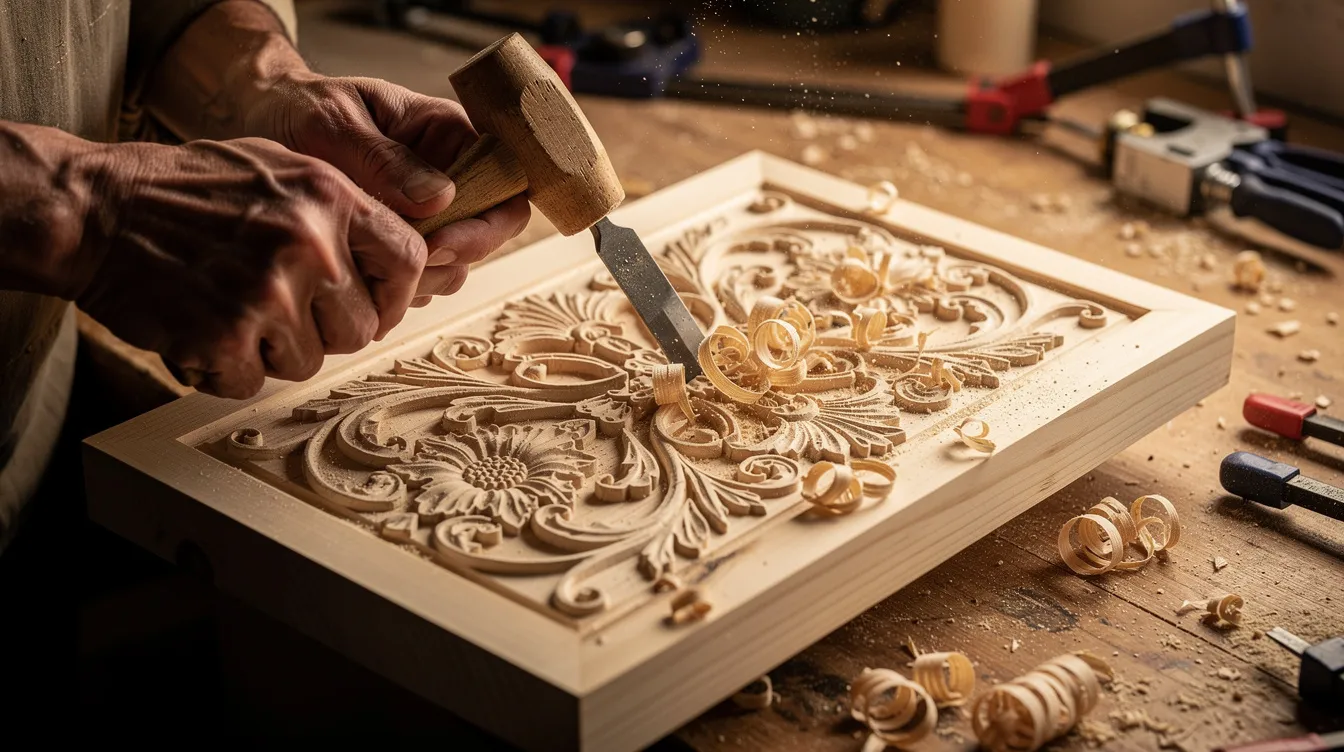
6. Wood Carving and Handicrafts
Decorative items, religious artifacts, and artistic products with intricate carvings command premium prices in domestic and export markets. Crafting wooden wall signs can yield high demand and customization options. Wooden signs can be customized with quotes or names, and can even be made with low-cost materials like scrap wood.
- Why It Stands Out: Cultural heritage and tourism market appeal. The market for personalized gifts is growing within the woodworking industry, and corporate gifting involves regular purchase of customized wooden products by businesses.
- Best For: Artisans and craft-skilled entrepreneurs. Refer to the wood carving project report for financial planning.
- Key Strengths: High value addition, intricate designs command 40–60% margins, export potential to US and Europe.
- Possible Limitations: Skilled artisan dependency, market seasonality.
7. Wooden Doors and Windows
Real estate growth directly drives demand for custom doors and architectural wooden elements. The demand for specialty wood types increases the profitability of bespoke furniture and door manufacturing.
- Why It Stands Out: Premium housing and commercial spaces require aesthetic appeal in wooden doors with modern aesthetics.
- Best For: Entrepreneurs with carpentry background and ₹20–50 lakh investment.
- Key Strengths: High margins on custom orders, strong local market presence.
- Possible Limitations: Design expertise required, installation services add complexity.
8. MDF and Particle Board Manufacturing
Engineered wood products like MDF and particle board offer cost-effective alternatives to solid wood for furniture manufacturers across India.
- Why It Stands Out: Consistent quality, easier machining, lower raw material costs compared to solid timber.
- Best For: Large-scale manufacturers with technical expertise and ₹1–2 crore investment.
- Key Strengths: High volume sales to furniture manufacturers, decorative laminated sheets and wood plastic composite products expand revenue streams.
- Possible Limitations: Heavy machinery investment, environmental regulations, advanced machinery maintenance.
9. Wooden Kitchen Utensils
Spoons, cutting boards, serving trays, and eco-friendly kitchenware are booming. The wooden kitchen products market is projected to exceed $19 billion by 2033. Personalized cutting boards can sell for $35–85 with low material costs. High-demand woodworking opportunities include charcuterie boards and cutting boards. Charcuterie boards can be sold at premium prices with personalization through laser engraving.
- Why It Stands Out: Health-conscious and eco-friendly cooking trends drive rising demand. Customized wooden picture frames and wooden serving trays add complementary revenue.
- Best For: Small-scale entrepreneurs and women entrepreneurs with access to an online store.
- Key Strengths: Low investment (₹3–10 lakh), strong online sales potential, basic tools suffice to start.
- Possible Limitations: Food safety regulations, quality consistency across batches.
10. Timber Trading Business
Wholesale timber supply to furniture manufacturers and builders remains an essential supply chain role.
- Why It Stands Out: No manufacturing setup required-focus on sourcing, grading, and distribution of raw wood and treated wood.
- Best For: Entrepreneurs with logistics knowledge and market connections.
- Key Strengths: Established demand from construction projects and furniture makers, margins of 15–25%.
- Possible Limitations: Working capital intensive, price volatility in timber markets, material costs fluctuation.
Additional profitable woodworking business ideas (covered in the comparison table): picture frames, candle holders, wooden utensils, laminated veneer lumber products, sell wood projects via online platforms, wood projects sell well at craft fairs, birdhouses (catering to a growing market of recreational birders in the US), outdoor spaces furniture, rustic charm décor, and incorporate carvings into gift items.
Investment and Profitability Comparison Table
| Business | Investment (₹) | Key Machinery | Profit Margin | Bank Loan | Difficulty |
|---|---|---|---|---|---|
| Wooden Furniture | 15–50 lakh | Saws, planers, spray booth | 25–45% | High | Medium |
| Modular Furniture | 25–75 lakh | CNC router, edge bander | 30–50% | High | Medium-High |
| Wooden Toys | 5–15 lakh | Lathe, sander, drill press | 35–60% | Medium | Low |
| Plywood Manufacturing | 50 lakh–2 crore | Peeling, pressing, drying | 20–30% | High | High |
| Packaging/Pallets | 10–30 lakh | Circular saw, nailer | 15–25% | Medium | Low |
| Wood Carving | 5–20 lakh | Carving tools, CNC optional | 40–60% | Medium | Medium |
| Doors & Windows | 20–50 lakh | Panel saw, router, planer | 25–40% | High | Medium |
| MDF/Particle Board | 1–2 crore+ | Hot press, chippers | 18–28% | High | High |
| Kitchen Utensils | 3–10 lakh | Lathe, sander, basic tools | 40–65% | Medium | Low |
| Timber Trading | 20–75 lakh (WC) | Nil (storage + transport) | 15–25% | Medium | Low |
Break-even for medium-scale units typically arrives in Year 2–3 at 60–70% capacity utilization, with ROI of 18–25% by Year 5.
Best States and Locations for Wood Business
- Uttar Pradesh: Saharanpur is India’s largest furniture and carving cluster with established supply chains and skilled artisans.
- Haryana: Yamunanagar serves as a major timber processing and plywood manufacturing hub.
- Rajasthan: Jodhpur is renowned for handicrafts, premium furniture, and export-oriented wooden products.
- Gujarat: Strong export infrastructure and port proximity benefit packaging and furniture exporters.
- Maharashtra: Large consumer market with high interior design spending.
- Other states: Karnataka, Tamil Nadu, and Kerala combine artisan traditions with modern manufacturing infrastructure.
Essential Machinery and Equipment Required
Basic woodworking tools include saws, drills, and sanders. Power drills start at $20 for basic models, making entry accessible. Wood planers help create smooth finishes on wood surfaces. Here is a practical machinery checklist:
- Basic: Circular saw, table saw, thickness planer, sanding machine, drill press
- Intermediate: Panel saw, spray booth, dust collection system, jointer
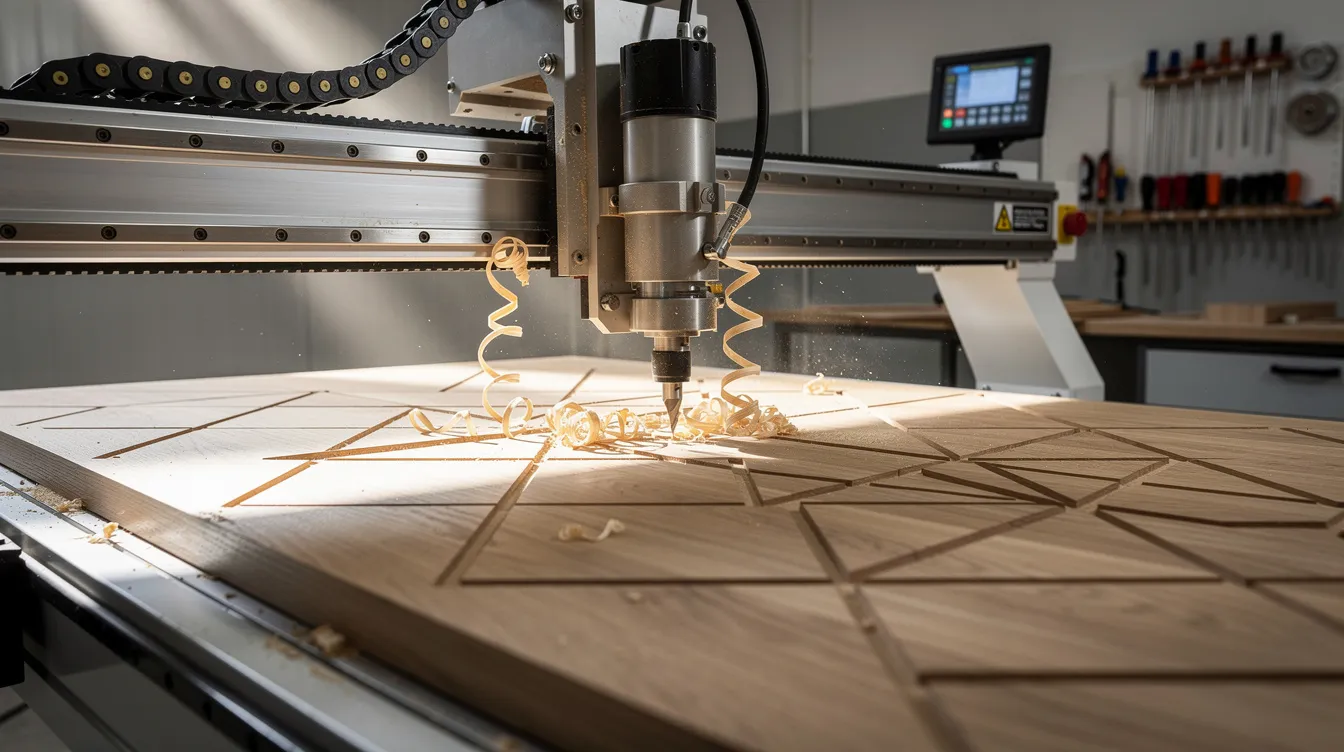
- Advanced: CNC routers allow precision in woodworking production. CNC machines enable efficient production of customized wooden products. Edge banding machines automate laminate application.
- Safety: Fire extinguishers, dust extraction, PPE for workers
Machinery financing is available through term loans; ensure your DPR includes detailed machinery costing with supplier quotations.
Raw Materials and Supply Chain Management
- Timber: Teak, sheesham, mango wood-price volatile due to forest regulations. Sustainable wood sourcing with FSC certification improves credibility for export markets.
- Engineered wood: MDF, plywood, particle board-consistent quality, regulated under BIS standards.
- Reclaimed wood is an eco-friendly material option gaining popularity for rustic charm furniture and wall décor products.
- Hardware: Hinges, handles, slides, adhesives-local availability improving but import dependence remains for premium fittings.
- Finishes: Low-VOC paints, stains, polishes-essential for meeting export and domestic quality standards. Renewable materials and eco-friendly adhesives are becoming industry standard.
Licenses and Legal Requirements
| License/Registration | Purpose | Mandatory? |
|---|---|---|
| Udyam Registration | MSME benefits, subsidies | Yes |
| GST Registration | Tax compliance | Yes (above threshold) |
| Factory License | Manufacturing above threshold | Yes |
| Pollution Consent (PCB) | Environmental clearance | For processing units |
| EPF & ESI | Employee benefits | Above 10/20 employees |
| Trade License | Municipal permission | Yes |
| BIS/ISI Certification | Quality control compliance | For specified products |
| IEC Code | Export business | For exporters |
| Fire Safety Certificate | Safety compliance | Yes |
The Furniture Quality Control Order effective February 2026 mandates ISI/BIS certification for work chairs, tables, beds, and general-purpose chairs-compliance is now essential for government supply orders.
Government Schemes and Financial Support
- Mudra Loan: Collateral-free loans up to ₹10 lakh under Kishore/Tarun categories for small woodworking business setups
- PMEGP: Supports manufacturing units in rural and semi-urban areas with loan plus subsidy components
- SFURTI: Grants up to ₹2.5 crore per cluster (₹5 crore for heritage clusters) for machinery, training, and market linkages in traditional industries including wood crafts
- CGTMSE: Collateral-free credit guarantee for loans up to ₹2 crore
- State industrial subsidies: Capital investment subsidies, stamp duty exemptions, and power tariff concessions vary by state
Bank Loan Process and Documentation
Banks evaluate wood business loan applications based on a professionally prepared Detailed Project Report (DPR). Here is what lenders expect:
- DPR with financial projections for 3–5 years including revenue, costs, depreciation, and tax
- CMA data (Credit Monitoring Arrangement) with projected balance sheet and P&L
- DSCR analysis: Debt Service Coverage Ratio above 1.5x is typically required
- Break-even analysis: Demonstrating break-even within Year 2–3 strengthens your case
- Collateral: Mudra loans are often collateral-free; larger term loans need property or machinery security
- Working capital assessment: Based on operating cycle-raw material holding, WIP, finished goods, and receivables
A professionally prepared project report is the single most important document for loan approval. Banks reject applications that lack financial depth, not business potential.
Risk Analysis and Mitigation Strategies
- Raw material price volatility: Maintain 2–3 supplier relationships; consider long-term purchase contracts
- Skilled labor shortage: Invest in training programs; adopt CNC technology to reduce manual dependency
- Competition from unorganized sector: Differentiate through BIS certification, branding, and quality control
- Design obsolescence: Track interior design trends; offer custom furniture options
- Environmental compliance: Budget for pollution control equipment and clearances from the start
- Working capital stress: Maintain 60–90 days working capital buffer; negotiate favorable credit terms with suppliers
Future Opportunities and Market Trends
- Exports: FSC-certified and CE-compliant products access premium international buyers. Birdhouses cater to a growing market of recreational birders in the US-a niche but profitable venture.
- E-commerce and D2C: Furniture brands increasingly sell through online platforms. An online store reduces showroom costs and expands your target audience to Tier-2/3 cities.
- Smart and modular: IoT-integrated furniture and flat-pack designs are the next frontier.
- Sustainability: The woodworking market is increasingly focused on eco-friendly materials and practices. Certified sustainable wood commands 15–25% premium.
Quick Comparison: Which Wood Business is Best for You
- Choose Wooden Furniture Manufacturing if you have ₹15–50 lakh and woodworking skills
- Choose Wooden Toys if you want low investment (₹5–15 lakh) with creative potential and high demand projects
- Choose Plywood Manufacturing if you have ₹50 lakh+ and want bulk business with stable demand
- Choose Handicrafts if you have artisan skills and want export opportunities with most profitable woodworking projects
- Choose Timber Trading if you prefer no manufacturing and have market connections
How to Choose the Right Wood Business for Your Situation
Choose Based on Investment Capacity
- Low (₹5–20 lakh): Wooden toys, handicrafts, kitchen utensils, wooden coasters, key holders, jewelry boxes
- Medium (₹20–75 lakh): Custom furniture, doors/windows, packaging, wooden garden furniture
- High (₹75 lakh+): Plywood, MDF, large furniture manufacturing, laminated veneer lumber products
Choose Based on Skills and Background
- Technical/engineering: Machinery-intensive businesses like MDF, plywood, CNC furniture
- Artistic/creative: Handicrafts, custom furniture, wooden toys-these are profitable woodworking projects that reward woodworking projects mastery
- Business/trading: Timber trading, wholesale operations, wood products distribution
Choose Based on Market Access
- Local market: Furniture, doors/windows, kitchen utensils-target market within 50–100 km radius
- Export orientation: Handicrafts, toys, premium furniture-tap into global market demand
- B2B focus: Plywood, packaging, timber trading-serve furniture manufacturers and builders
Which Wood Business Option is Best for You
- Choose Furniture Manufacturing if you want balanced risk-reward with strong local market demand
- Choose Export-oriented Handicrafts if you have artistic skills and want global reach through profitable woodworking
- Choose Engineered Wood if you have high investment capacity and technical expertise for a suitable project
- Start with Wooden Toys or Utensils if you are testing the market with low risk-these are among the most profitable wood projects for beginners
Need a Professional Project Report for Your Wood Business?
As a Chartered Accountant with 20+ years in MSME project consultancy, I prepare bankable project reports that banks actually approve. My team provides:
- Detailed Project Reports (DPR) with industry-specific assumptions
- CMA data, projected Balance Sheet, P&L, and Cash Flow statements
- DSCR and ratio analysis calibrated to bank requirements
- Mudra Loan and CGTMSE documentation
- Working capital assessment and term loan proposals
- Reports tailored for specific wood business types-from wooden toys to plywood manufacturing
These reports are accepted by nationalized banks, private banks, NBFCs, and government scheme authorities.
Business Consultancy Services by CA Manish Gugliya
Beyond project reports, I offer:
- Manufacturing business setup consultation with machinery costing and layout planning
- Financial modeling and business valuation for investor presentations
- Pitch deck preparation for startup funding
- Bank loan proposal documentation and presentation coaching
- Expansion project planning and financial feasibility studies
- Working capital planning and material costs optimization
Final Thoughts
The wood industry in India offers a remarkable range of profitable business ideas-from a ₹5 lakh kitchen utensils workshop to a ₹2 crore plywood factory. Customization increases the perceived value of wood products without drastically increasing production time, and that principle applies across every niche in this industry.
Success in any woodworking business depends on three things: choosing the right niche based on your investment capacity and skills, preparing a solid business plan backed by realistic financial projections, and maintaining quality control from day one.
Sustainability and export orientation offer long-term competitive advantages that most unorganized players cannot match. Start with thorough market research, get your project report professionally prepared, and gradually scale based on performance.
The entrepreneurs who succeed in wood manufacturing are not necessarily the ones with the largest capital-they are the ones with the best planning.
About the Author – CA Manish Gugliya, FCA
CA Manish Gugliya is an experienced Chartered Accountant with more than 20 years of experience in project finance, MSME consultancy, manufacturing business planning, startup advisory, business valuation, bank loan documentation, and financial modelling. He specializes in preparing bankable DPRs, CMA data, investor pitch support, and business feasibility studies for manufacturing entrepreneurs across India.
Frequently Asked Questions (FAQs)
What is the minimum investment to start a wood business in India?
The investment depends on the type and scale of the business. Small woodworking ventures such as wooden toys, handicrafts, or kitchenware can often be started with ₹3–5 lakh, while furniture manufacturing, plywood production, or modular furniture businesses may require ₹15 lakh or more. A professionally prepared project report helps estimate the actual investment based on your business model.
Which wood business is the most profitable in India?
Some of the most profitable wood business ideas include modular furniture manufacturing, custom furniture, plywood manufacturing, wood carving, wooden toys, wooden pallets, and premium home décor products. Businesses that offer customized or value-added products generally achieve better profitability than those selling standard products.
Is the wood business profitable in India?
Yes. The wood industry in India has strong growth potential due to increasing demand from the construction, real estate, interior design, hospitality, and e-commerce sectors. Profitability depends on efficient production, product quality, branding, pricing strategy, and effective marketing.
Can I get a Mudra Loan or bank loan for a wood business?
Yes. Eligible entrepreneurs can apply for Mudra Loans, MSME loans, or other business loans through banks and financial institutions. Approval depends on the project’s feasibility, repayment capacity, and proper documentation. A professionally prepared Detailed Project Report (DPR) and CMA Data can significantly strengthen your loan application.
What licenses are required to start a wood manufacturing business?
The required registrations may include Udyam Registration, GST Registration, Trade License, Factory License (where applicable), Shops & Establishment Registration, and Pollution Control approvals for specific manufacturing activities. Depending on the product, additional quality or industry-specific compliance requirements may also apply.
Which states are best for starting a wood business in India?
States such as Uttar Pradesh, Haryana, Rajasthan, Gujarat, Maharashtra, Karnataka, Kerala, Tamil Nadu, and Madhya Pradesh have well-established furniture manufacturing, timber processing, plywood, and handicraft industries. Choosing a location with good raw material availability and market access can improve business profitability.
What machinery is required for a woodworking or furniture manufacturing business?
The machinery required depends on the products you manufacture. Common equipment includes panel saws, circular saws, thickness planers, CNC routers, edge banding machines, drilling machines, sanding machines, polishing equipment, and dust collection systems. The selection should match your production capacity and business objectives.
What raw materials are commonly used in a wood manufacturing business?
Most wood manufacturing businesses use timber, plywood, MDF boards, particle boards, veneers, laminates, adhesives, hardware fittings, paints, varnishes, and polishing materials. Selecting quality raw materials is essential for producing durable products and building customer trust.
Is plywood or wooden furniture manufacturing a good business opportunity?
Yes. Both plywood manufacturing and wooden furniture manufacturing continue to benefit from growing demand in residential, commercial, institutional, and infrastructure projects. Success depends on product quality, efficient operations, competitive pricing, and effective marketing.
Can I export wooden products from India?
Yes. Indian wooden furniture, handicrafts, decorative products, and engineered wood products have good export potential. Businesses must obtain an Import Export Code (IEC) and comply with the quality, packaging, and regulatory requirements of their target export markets.
What should a project report for a wood business include?
A bankable project report should include the business overview, market analysis, manufacturing process, machinery details, raw material requirements, project cost, means of finance, financial projections, profitability analysis, projected balance sheet, projected profit and loss account, cash flow statement, break-even analysis, and DSCR. A comprehensive project report improves business planning and enhances loan approval prospects.
Why is CMA Data important for obtaining a bank loan?
CMA (Credit Monitoring Arrangement) Data presents projected financial information in a structured format used by banks to evaluate working capital requirements, repayment capacity, liquidity, and overall financial viability. Accurate CMA Data strengthens the credibility of your loan proposal.
How can I increase the profitability of my wood business?
You can improve profitability by reducing material wastage, investing in modern machinery, manufacturing value-added products, maintaining consistent quality, developing a strong brand, expanding online sales channels, and implementing efficient inventory and cost management practices.
What are the biggest challenges in the wood manufacturing business?
Common challenges include fluctuations in timber prices, rising production costs, labour shortages, changing customer preferences, competition, inventory management, and maintaining consistent product quality. Proper financial planning and efficient operations help mitigate these risks.
How can CA Manish Gugliya help entrepreneurs start or expand a wood business?
CA Manish Gugliya, with over 20 years of professional experience, provides comprehensive consultancy services for entrepreneurs, including bankable Project Reports (DPRs), CMA Data, Financial Projections, Business Valuation Reports, Investor Pitch Decks, Startup Financial Modelling, Loan Proposal Preparation, and Manufacturing Business Consultancy. These services are designed to help businesses secure bank finance, attract investors, evaluate expansion opportunities, and build a financially sustainable enterprise.
- Pulse Cleaning Plant Feasibility Study: ROI, IRR, DSCR and Bank Finance


- Pulse Cleaning & Grading Plant Working Capital & Cash Credit Requirements in India

- Pulse Cleaning & Packing Plant Financial Projections, CMA Data & DSCR

- Pulse Cleaning & Grading Processing Cost, Recovery, Wastage & Profitability in India

- Pulse Cleaning, Grading & Packing Plant Setup Cost & Investment in India

- Pulse Cleaning & Packing Plant Capacity, Land, Building & Layout Requirements

- Pulse Cleaning, Grading, Sorting & Packing Process Flow Explained

- Optical Colour Sorter for Pulses: Technology, Capacity, Price & Selection

- Pulse Cleaning, Grading & Sorting Machinery: Equipment List, Specifications & Cost

- Pulse Cleaning, Grading & Packing Job-Work Business Model & Project Report in India

- Export-Grade Pulse Cleaning, Colour Sorting & Packing Plant Project Report & DPR in India

- Integrated Multi-Pulse Cleaning, Grading & Packing Plant Project Report & DPR in India

- Pulse Protein, Starch & Advanced Ingredients Manufacturing Project Report & DPR

- Pulse Protein Manufacturing Feasibility, ROI & Bank Finance

- Pulse Protein Plant Financial Projections, CMA Data & DSCR