
Many entrepreneurs believe that once a loan is marked as “Settled” in their credit report, getting another Mudra loan becomes impossible. Fortunately, that is not always true. A settled account does create real obstacles, but with the right approach, a fresh Mudra loan approval is still within reach. In this article, I will explain exactly why banks reject Mudra loans due to settled accounts, what the difference between “settled” and “closed” really means, and what practical steps you can take to improve your chances before reapplying.
Key Takeaways
Between 2024 and 2026, a significant number of Mudra loan applications are being rejected because of a “settled” or “written-off” loan visible in the applicant’s credit report. However, this does not automatically mean a permanent ban on future Mudra loans.
- A “settled” status is fundamentally different from a “closed” loan. Settlement means you paid less than the full amount owed, which typically lowers your CIBIL score by roughly 75–100 points and significantly reduces lender trust for new loans.
- Mudra loans are categorized into Shishu (up to ₹50,000), Kishor (₹50,001 to ₹5 lakh), Tarun (₹5 lakh to ₹10 lakh), and Tarun Plus (₹10 lakh to ₹20 lakh for expanded businesses). Despite a past settlement, approval is still possible if your current credit score, income, banking behaviour, and project report are strong.
- Shishu loans are more lenient regarding credit history assessment compared to higher-value categories.
- To improve your chances: work on improving your CIBIL score, clear all current overdues, prepare a realistic project report with CMA data, and provide an honest written clarification explaining why the settlement happened.
Table of Contents
Understanding “Settled Loan” and Its Impact on Mudra Loan
A loan settlement occurs when a borrower cannot pay the full outstanding amount, and the bank agrees to accept a reduced lump sum as final payment to close the account. Once this happens, the lender reports the account as “Settled” rather than “Closed” to credit bureaus like CIBIL, Experian, or CRIF. A settled status indicates less than full payment on a loan, and this distinction matters enormously for future borrowing.
This is different from full loan closure, where every rupee of principal and interest has been repaid as per the original contract. Here is how three common outcomes differ:
- Paid in full / Closed: Borrower repaid entire outstanding. Report shows “Closed” with no overdue. Positive signal.
- Partially settled / Settled: Lender accepted less than total dues. Report shows “Settled” with DPD history. Negative signal.
- Written-off (not settled): Lender declared the amount unrecoverable after prolonged non-payment (typically 180+ days). Report shows “Written-off.” Very negative signal.
For many borrowers, loan settlement happens after 6–12 months of continuous default caused by job loss, illness, business loss, or COVID-19 period financial distress. Banks mark the account accordingly, and this mark stays.

For Mudra loan eligibility, banks treat a “settled” status as evidence of past difficulty in repayment. The new Mudra loan application is automatically classified as higher risk, especially for ticket sizes above ₹2–3 lakh. Settling a loan makes future borrowing more difficult. A settled credit card, personal loan, gold loan, or even a previous business loan can all impact a fresh Mudra loan application because all accounts are visible in a single consolidated credit report.
Closed vs Settled vs Written-off vs Default – Clear Difference for Mudra Applicants
Most Mudra loan rejections due to “settled loan” actually stem from confusion between four different account statuses. Understanding these clearly can help you decide the right course of action before reapplying.
| Status | What It Means | How It Appears in Credit Report | Impact on Mudra Loan Eligibility |
|---|---|---|---|
| Closed / Paid | Full amount repaid as per contract | “Closed – No overdue” | Generally supports approval |
| Settled | Bank accepted reduced payment | “Settled” with DPD history | Negative; increases risk perception |
| Written-off | Bank declared amount unrecoverable | “Written-off (WO)” | Very negative; worst from risk perspective |
| Default / Overdue | Active missed EMIs, recent non-payment | “Overdue” with 90+ DPD | Can completely block Mudra loan |
A “Closed” status generally supports Mudra loan eligibility if the rest of your credit profile is clean. “Settled” is negative but still better than an open, unpaid default. “Written-off” without any payment is considered worst by lenders. Recent “Default/Overdue” for more than 90 days can completely block your Mudra loan, even without formal settlement.
A settled loan remains on your credit report for seven years from the date of first delinquency. This means mistakes from 2019–2020 may still be visible in 2025–2026. Full loan closure with payment of complete dues, updated as “Closed” with a NOC from the bank, is always better than negotiating small settlement savings that permanently damage the credit report.
Why Was Your Mudra Loan Rejected Due to a Settled Loan?
Imagine you applied for a ₹4 lakh Kishore Mudra loan in 2025, and the bank rejected it because of a 2019 personal loan marked “settled” in your credit report. This is a common scenario, and understanding the bank’s reasoning is the first step toward fixing it.
Here are the specific risk reasons banks see when they assess a settled or written-off account:
- History of financial stress or cash flow mismatch that led to default before settlement
- Possibility that the borrower may repeat past behaviour with the new Mudra loan
- Pressure from the Reserve Bank and internal audit teams to control NPAs under the Mudra scheme
- Lower internal risk rating automatically assigned to applicants with settlement history
- Settling a loan can even make you ineligible for certain future government schemes
Lenders require applicants to have a satisfactory credit track record. Banks generally require no past defaults to qualify for a Mudra loan. Payment history accounts for approximately 35% of your CIBIL score calculation, making it the single most important factor. A CIBIL score below 650 increases Mudra loan rejection chances significantly. Mudra loans are collateral free loans – unsecured business loans – so banks rely heavily on repayment history. A settled account immediately creates doubt about discipline, irrespective of current income.
If your application was rejected, politely request written or email confirmation of the actual reasons. The rejection letter often mentions “settled/written-off account observed in bureau report.”
Can You Still Get a Mudra Loan After a Settled Account?
A settled loan does not create a legal lifetime ban on Mudra loans. Approval is still possible but becomes more selective and case-specific. Let me explain what can work in your favour.
Key factors that can compensate for a past settlement:
- Current CIBIL score: A recovered score above 675–700 shows improvement since the settlement period
- Time gap since settlement: Older than 3–4 years is viewed more leniently than a last-year settlement
- Stable income and profit: Demonstrated through bank statements and ITR for the last 12–24 months
- Loan category and amount: Shishu loans offer up to ₹50,000 for startups and vendors and may be easier to get approved than Tarun loans providing ₹5 lakh to ₹10 lakh for established businesses. Tarun Plus loans extend from ₹10 lakh to ₹20 lakh for expanded businesses and carry the highest scrutiny.
Some banks review credit history differently based on internal policies. Public sector banks may still approve small Mudra loans if the settlement was for a closed credit card from years back and current behaviour is clean. Private banks and some non banking financial companies may be stricter.
For repeat Mudra borrowers – for example, upgrading from Shishu to Kishore – banks will check how the earlier Mudra loan performed alongside the old settlement before deciding. No CA, DSA, or consultant can legally guarantee Mudra loan approval after settlement. Each bank follows its own credit policy and RBI guidelines.

How Banks Actually Evaluate Mudra Loan Applicants with Settled Loans
As a practising Chartered Accountant who has reviewed hundreds of Mudra files, I see a fairly standard evaluation process across major banks when they encounter CIBIL settlements.
Step-by-step evaluation flow:
- Bank pulls the credit report from CIBIL, Experian, CRIF, or Equifax and checks all “Settled/Written-off/Overdue” tags
- Underwriter reads DPD (Days Past Due) history for the last 24–36 months
- Number of previous credit enquiries and recent loan applications is reviewed
Cross-checks performed by underwriters:
- Business account bank statement for the last 6–12 months to verify cash flow
- Cash deposit patterns, UPI or card sales, GST returns (if applicable) to confirm business turnover
- Existing EMIs and FOIR (Fixed Obligation to Income Ratio) to ensure the new Mudra EMI is affordable
- Whether the applicant has successfully repaid any recent facility without delays
For Mudra loans above ₹2 lakh, branch managers often conduct field verification: they visit your shop or factory, verify stock, machinery, licences, local competition, and market reputation. This scrutiny increases when there is a past settled loan account visible.
If the settlement amount was large or recent, the file may need higher-level approval at the regional office credit cell. At that stage, the quality of your project report, CMA data, and co-borrower strength become crucial differentiators.
Steps to Improve Your CIBIL and Eligibility After Loan Settlement
Even after a settlement, you can rebuild your credit profile within 18–36 months with planned actions before reapplying for a Mudra loan. Improving your credit profile involves timely payment of debts – there are no shortcuts.
Practical improvement steps:
- Obtain your latest credit report from all credit bureaus. Carefully read all settled accounts, DPD entries, and check for errors.
- Clear any remaining overdues or small outstanding amounts on other loans or credit cards. CIBIL reporting of a settlement occurs within 15 days of payment, so updates happen relatively quickly.
- For partially settled loans, consider negotiating with the bank to pay the remaining waived amount. Request an update from “Settled” to “Closed” along with a NOC and closure letter. Obtain a No Objection Certificate to confirm the loan settlement is complete. Requesting to change a loan status from “settled” to “closed” can be significantly beneficial for your score.
- Maintain perfect repayment on all current EMIs for at least 12 consecutive months. Each on-time payment slowly improves your credit score and offsets the old settlement impact.
- Limit new credit enquiries. Avoid applying for multiple personal loans or credit cards while preparing for a Mudra loan application.
- For self-employed applicants, filing consistent ITRs, maintaining business turnover in a bank account instead of relying only on cash transactions, and keeping GST compliances up-to-date all strengthen the overall profile beyond just the CIBIL score.
Documents and Explanations That Strengthen a Mudra Loan Case After Settlement
When a settled loan appears in your report, strong documentation and transparent explanation can sometimes convince the bank that the problem was temporary and has been resolved. Submitting a formal written appeal alongside these documents can help in loan reconsideration.
You need seven documents to apply for a Mudra loan. Beyond the basics, here is what strengthens a settlement-affected case:
- Latest full credit report (all pages) highlighting that there are no current overdues
- Bank statement for the last six months (mandatory) for all major accounts – current and savings
- Proof of income includes the latest Income Tax Return for the last 2–3 assessment years
- A valid photo identity proof (Aadhaar card, PAN) and address proof as identity proof and other documents
- Business proof: GST registration, Udyam Registration or business registration, trade licence, rent agreement for business premises
- Ownership proof of residence or office is needed for the loan application
Additional documents that make a difference:
- A clear written explanation letter describing why the previous loan was settled (e.g., medical emergency in 2020, COVID lockdown impact, job loss), how the situation has improved, and your commitment to avoid such issues going forward
- A proper project report and CMA data showing realistic sales, margin, expenses, and EMI capacity – a weak or generic project report often leads to rejection on its own
- Quotations for machinery or stock purchase, and proof of own capital invested as margin money
Fill the Mudra loan application form completely and accurately. You can apply online via bank websites or the Jan Samarth portal, and submit all required documents upfront.
Common Mistakes After Settlement That Lead to Mudra Loan Rejection
Many genuine entrepreneurs hurt their own chances by repeating predictable mistakes after a loan settlement and then facing Mudra loan rejection.
- Hiding or denying the settled loan during branch discussion, even though it is clearly visible in the credit report. Banks will verify every detail.
- Applying for a Mudra loan immediately (within 2–3 months) after settlement before CIBIL has improved or financial stability is demonstrated.
- Submitting inconsistent information in the loan application versus ITR or bank statements – for example, inflated turnover, incorrect address, or mismatched income figures.
- Filing applications simultaneously with many banks and non banking financial companies in the same month. This creates multiple enquiries, further lowering your score and signalling desperation to lenders.
- Using unrealistic project reports downloaded from the internet with over-optimistic profit margins. Credit officers become more sceptical in already high-risk settlement cases.
- Mudra loan settlements can lead to a “Willful Defaulter” tag in extreme cases, which creates far worse consequences than just a settled status.
Prepare for the branch interview: explain your business model, competition, and the past settlement confidently and honestly. Vague or contradictory answers during the bank interview are a common reason for final-stage rejection.
Real-Life Style Case Study: From Rejection After Settlement to Mudra Approval
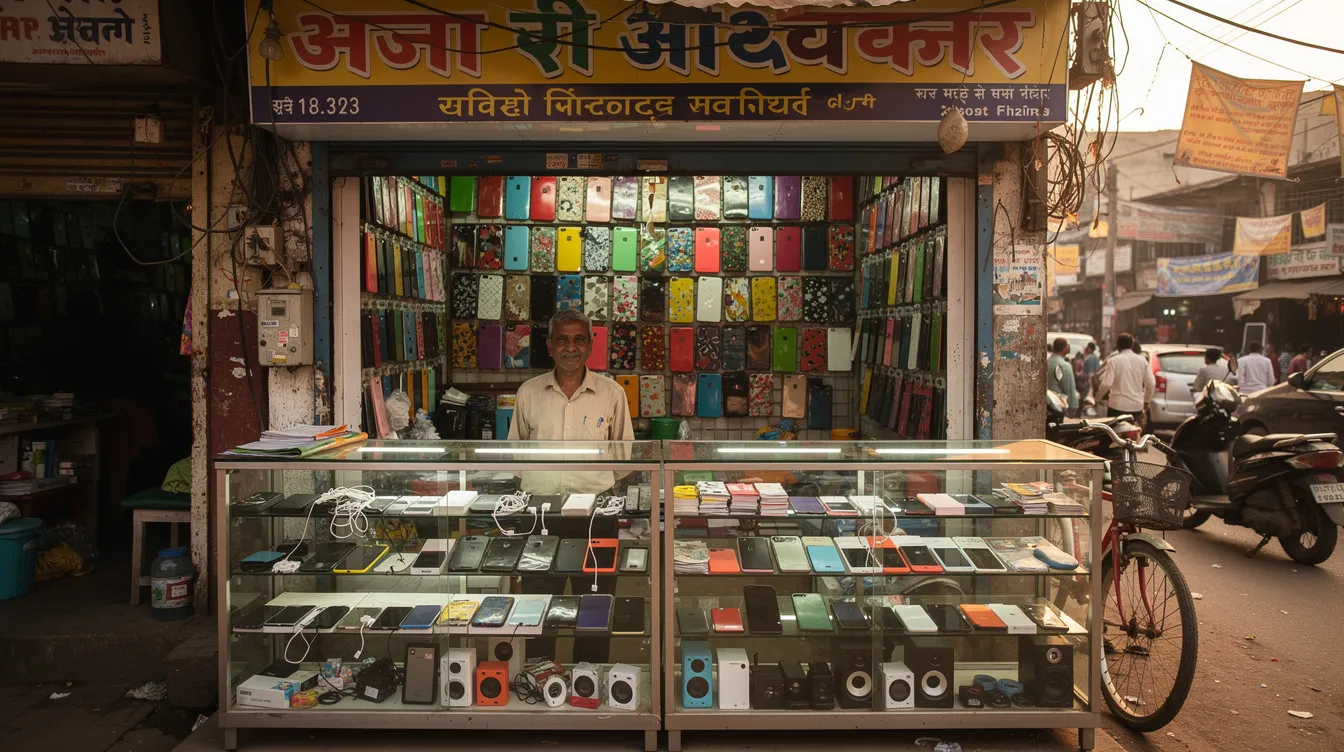
Meet Mr. Rajesh, a 34-year-old mobile shop owner from Indore. The following details are illustrative but based on actual patterns I have seen in practice as a Chartered Accountant.
The Problem: Rajesh had a personal loan of ₹2.5 lakh taken in 2018 that became overdue during the 2020 lockdown. He could not repay due to complete shop closure for months. The bank offered a settlement, and he paid ₹1.6 lakh in mid-2021 to close the account. His credit report now showed “Settled” status.
First Attempt: In early 2022, Rajesh applied for a ₹5 lakh Kishore Mudra loan for shop expansion. Rejected. Reason cited: “settled loan observed in credit report, low CIBIL score of 610.”
Corrective Actions Over 18 Months:
- Paid all current credit card dues on time every month, keeping utilisation under 30%
- Routed most shop sales through bank account and UPI so turnover was clearly visible in statements
- Filed ITR for two consecutive years showing modest but real business income
- Got a proper project report and CMA data prepared showing realistic sales and ability to service EMIs of about ₹11,000 per month
- Wrote a clear explanation letter describing the COVID-related settlement circumstances
Result: In late 2023, Rajesh reapplied with an improved CIBIL score around 700, stronger financials, and full disclosure. The bank sanctioned a ₹3.5 lakh Kishore loan – smaller than the ₹5 lakh requested, but still approved. This is the Pradhan Mantri Mudra Yojana working as intended: providing financial assistance and easy access to collateral free funds for micro units and small business owners who demonstrate genuine repayment capacity.
Expert Advice: How to Plan Your Mudra Loan Strategy After a Settled Account
As a practising Chartered Accountant with over 20 years of experience helping entrepreneurs with Mudra loans and MSME finance through the Micro Units Development and Refinance Agency (MUDRA) flagship scheme, here is my strategic advice.
On timing:
- If settlement is very recent (less than 12 months), focus on stabilising income and CIBIL first. Do not rush. Most borrowers who apply too early face rejection.
- The ideal re-application window is 18–36 months after settlement, with a clean track record during this period.
On choosing the right category and loan amount:
- Start with a realistic, need-based amount – sometimes slightly lower than maximum eligibility – so EMI burden and risk perception stay manageable
- For those with settlement history, Shishu or lower-end Kishore amounts may be more acceptable to banks initially. Kishor loans range from ₹50,001 to ₹5 lakh for growing businesses and offer a reasonable middle ground.
On strengthening your overall profile:
- Maintain minimum average balance and regular transactions in your main bank. A healthy bank statement demonstrates financial discipline.
- Keep business compliance (GST, Udyam, basic accounting) in order so the bank can easily verify your numbers
- The Mudra Yojana and broader Mudra scheme offer lower interest rates compared to informal money sources – position your application to take advantage of this
Do not fall for agents promising “guaranteed Mudra loan after settlement for a high commission.” No one can guarantee approval. Instead, work systematically on your documents, credit behaviour, and honest communication with the bank. The application process requires patience, but it rewards genuine effort.
FAQs – Mudra Loan Rejection Due to Settled Loan
Below are answers to additional focused questions about settled loans and Mudra eligibility that were not fully covered in the sections above.
Does a single settled credit card completely stop me from getting a Mudra loan?
Not necessarily. A single small settled card from several years ago may not completely block Mudra loan approval if your current income is stable, your CIBIL score has improved above 650–700, and there are no other negative accounts in your credit report. However, recent or high-value settlements make approval significantly harder. Some banks review credit history differently based on their own internal policies, so the outcome can vary between financial institutions.
Is it better to wait before applying for Mudra loan after settlement?
Yes. Waiting 18–24 months after settlement while maintaining perfect repayment on all active facilities and improving your bank statements usually gives far better chances than applying immediately. Mudra loans are often rejected due to past loan defaults that are still fresh in the credit history. Use the waiting period to rebuild your score and gather strong documentation.
Will paying the remaining amount after settlement change the status in my credit report?
If the bank agrees to accept the remaining waived amount and issues a revised closure letter, many lenders will update the status from “Settled” to “Closed” with credit bureaus. This change is viewed much more positively for future Mudra and other business loan applications. Always obtain the closure letter and NOC in writing, and follow up to verify the update appears in your credit report.
Can I apply for Mudra loan online if I have a settled loan in my report?
Technically, you can apply online via bank websites or the Jan Samarth portal. However, the system and branch will still pull your credit report and may reject the case due to the settlement. You should first improve your credit profile, prepare all documents, and then apply with full disclosure. Applying online without preparation leads to the same outcome as walking into a branch unprepared.
Will taking a guarantor remove the negative effect of my settled loan?
A strong guarantor or co-applicant can support the case, but it does not erase the settled status from your credit report. Banks still evaluate your own repayment behaviour as the primary borrower. Guarantor strength is considered as additional comfort – not a replacement for your own clean credit history. If other options are limited, a guarantor with a strong credit profile and stable income can sometimes tip the decision in your favour for smaller loan amounts.
- Roller Flour Mill ROI, IRR, Payback & Sensitivity Analysis: A Practical Guide for Investors and Bankers


- Roller Flour Mill Feasibility Study & Project Viability

- Roller Flour Mill Financial Projections & Working Capital

- Roller Flour Mill Project Cost & Means of Finance

- Roller Flour Mill Land, Building & Plant Layout Requirements

- Roller Flour Mill Capacity Planning – TPD & Production Capacity

- Roller Flour Milling Process & Flow Chart: Wheat to Atta, Maida & Suji

- Roller Flour Mill Machinery Cost in India – Practical Capacity-Wise Guide for Promoters

- Roller Flour Mill Setup Cost in India: Professional Investment & Project Cost Guide

- Poha, Puffed Rice & Value-Added Rice Products Project Report & Processing Opportunities

- Integrated Value-Added Rice Products Processing Plant Project Report & DPR

- Integrated Rice Plant Bank Loan, Feasibility, ROI, IRR, Payback & Sensitivity Analysis

- Integrated Rice Processing Plant Financial Projections, Working Capital & DSCR

- Integrated Rice Products Revenue Model, Market Strategy & Profitability

- Integrated Value-Added Rice Plant Project Cost & Means of Finance