Key Takeaways
- “Branch manager recommendation” in a mudra loan is a positive internal note. It means the branch believes your file deserves further processing. It does not signify final sanction or guarantee disbursement.
- A mudra loan can still be rejected even after branch manager recommendation. More checks by higher authorities, credit hubs, or automated systems may still be pending.
- The branch manager’s role at this stage is to verify documents, business viability, repayment capacity, and eligibility criteria, then forward the file with remarks to the sanctioning authority.
- Processing time after recommendation depends on bank workload, loan amount, and internal approval hierarchy. Applicants should cooperate and stay in touch instead of panicking.
- This article is written from the perspective of CA Manish Gugliya (FCA), with 20+ years of MSME and Mudra loan experience. Below, I explain step-by-step what to do after branch manager recommendation in a Mudra loan.
Introduction: Why “Branch Manager Recommendation” Confuses Mudra Loan Applicants
Picture this: a first-time entrepreneur in 2026 applies for a Mudra loan of ₹7 lakh to set up a small trading business. He checks his application status online and reads: “File recommended by Branch Manager.” He immediately calls his supplier and says, “Money will hit my account in 1–2 days.”
That assumption is wrong – and very common.
In most Indian banks, recommendation and approval are two different internal stages of the Mudra loan process, especially for Kishor and Tarun category loans. “Branch manager recommendation mudra loan” is a strong positive signal, but it is not a legal promise that the financial institution must disburse the money.
Here is what you will learn in this article:
- The real meaning of “recommended by branch manager” status
- How recommendation differs from final approval
- Who finally sanctions the Mudra loan and what happens after this stage
- Practical steps every applicant should take right now
I, CA Manish Gugliya (FCA), have handled hundreds of MSME and Mudra loan files since the scheme was launched on April 8, 2015. This article is based on real discussions with branch managers and credit officers across public and private sector banks.
Table of Contents
What Does Branch Manager Recommendation Mean in a Mudra Loan?
“Recommended by Branch Manager” means the branch manager has checked your Mudra loan application, is broadly satisfied, and is internally supporting your case for further processing. It does not mean the loan is finally approved.
Inside the bank’s core banking or Loan Origination System (LOS), this status is an internal note to higher authorities or system approvers. It tells them that, based on current documents and verification, the branch finds the proposal acceptable as per policy.
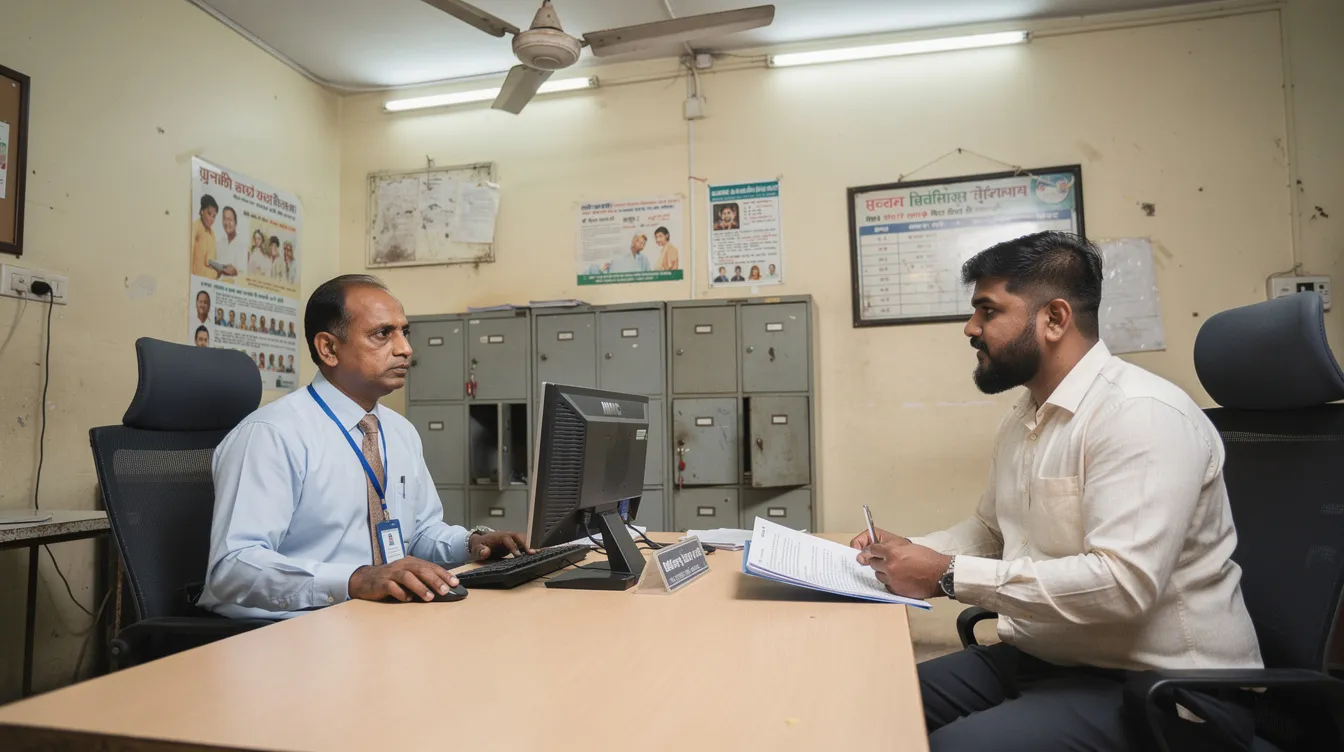
Branch managers oversee all functions of their branch office, from operations to lending. Before recommending a Mudra file, the manager typically completes these checks:
- KYC verification (Aadhaar, PAN, photographs)
- CIBIL report pull and credit history review
- Basic income, turnover, and cash flow assessment
- Business visit or telephonic verification
- Confirmation that your activity falls under permitted Mudra loan sectors
Under PMMY, mudra loans provide up to Rs. 20 lakh for micro enterprises. Loans are classified into Shishu, Kishor, and Tarun categories. No collateral is required for Mudra loans. In Shishu loans (upto rs 50,000) for very small vendors, some public sector banks may allow the branch manager to be both recommending and sanctioning authority. But in many Kishor (₹50,001–₹5 lakh) and Tarun (₹5 lakh–₹10 lakh) cases, the recommendation goes to a higher officer or committee.
When your mudra loan file is recommended by manager, it also indicates your application has crossed the initial screening stage and entered the credit decision zone – only more technical or policy checks remain.
One important piece of advice: do not celebrate by placing big purchase orders or committing to machinery immediately after seeing this status. Any adverse finding in later checks can still change the outcome.
Branch Manager Recommendation vs Final Approval: Key Differences
Many people search “does recommendation mean approval” or “branch manager recommendation vs approval” because the two appear similar. Inside the bank’s system, they are very different.
| Feature | Branch Manager Recommendation | Final Loan Approval / Sanction |
|---|---|---|
| Nature | Internal recommendation note | Legal sanction to disburse funds |
| Can loan be rejected after this? | Yes – at higher levels | Very unlikely unless fraud found |
| Loan account number generated? | Typically not yet | Yes |
| Sanction letter issued? | Not issued | Issued and signed by competent authority |
| Disbursement possible? | Not yet | Yes, once documentation is complete |
| Authority level | Branch level only | Competent sanctioning authority per bank policy |
| Applicant’s journey completed | About 70–80% | 100% of approval process |
Here is an example: in a nationalised bank, for a ₹8 lakh Tarun Mudra loan, the branch manager may recommend but final sanction might rest with the Chief Manager or Regional Office. The branch alone cannot treat it as approved. If you want to understand how branch manager powers work in Mudra loan approval, that is a separate detailed topic.
Summary: whenever you see “branch manager recommended loan,” understand it as roughly 70–80% of the journey is complete. The last internal checks are still pending.
Why and When Does a Branch Manager Recommend a Mudra Loan?
The branch manager is responsible for the quality of the branch’s Mudra loan portfolio. They recommend only those proposals that seem repayable and policy-compliant. Branch managers are responsible for hiring employees and loan approvals at the branch level, so their recommendation carries weight in the system.
A manager recommends when:
- All standard documents are received (KYC, application form, quotations, bank statements)
- Business appears genuine based on field visit
- Projected sales, profit, and repayment from cash flow seem reasonable
- The borrower’s CIBIL score and credit history are acceptable
- The activity fits PMMY norms (manufacturing, trading, services, or other permitted activities)
- The quantum of the loan matches the business need
- Interest rates – which start at 9.05% per annum for Mudra loans – are factored into repayment capacity
Fair assessments by managers are crucial for ensuring unbiased loan evaluations. Knowledge of PMMY guidelines is essential for branch managers to correctly evaluate each beneficiary micro unit. Branch managers typically need at least five to seven years of experience before reaching that position, and globally, the average annual salary for branch managers is around $124,000 – reflecting the seniority and responsibility this role demands. The job outlook for financial managers shows 17% growth by 2033, which means these professionals are increasingly important in banking.
Public sector banks often have dedicated targets for government-backed schemes, which means managers in these banks are actively looking for quality proposals to recommend.
Recommendation usually comes after the branch manager recommendation after verification steps – field visit to shop or workshop, checking existing liabilities, and talking briefly with the applicant about business plan and experience. Local branch proximity facilitates field verification for small loans, so choosing a bank branch near your business location affects the success of MUDRA loan applications.
The recommendation is recorded in the system: the manager logs in, fills credit appraisal notes, selects “Recommend,” and enters remarks like “Proposal recommended for further approval under MUDRA – Kishor, based on satisfactory conduct and viability.”
Sometimes, a manager may recommend the loan with conditions – such as reducing the amount, adding a co-applicant, or routing business turnover through the same bank account. Branch managers should follow compliance and integrity in the loan process, and conditional recommendations are part of that discipline.

What Happens After Branch Manager Recommendation in a Mudra Loan?
Your file moves to the next phase where the sanctioning authority or automated system takes the final decision based on policy and risk checks. Here is the typical flow:
Application & Documents → Primary Scrutiny → Site / Business Verification → Credit Appraisal at Branch → Branch Manager Recommendation → Higher Authority / Credit Hub Review (if required) → Final Sanction or Rejection → Documentation & Agreement Signing → Loan Account Creation → Disbursement to your account or vendor
After recommendation, these steps typically follow:
- Additional credit review for larger Tarun loans, including detailed assessment of the enterprise’s projected income and existing debt
- System-based fraud checks and confirmation against fraud databases
- Delegated powers verification – ensuring the sanctioning officer has the authority to approve the specific loan type and amount
- Regional office review for loans above the branch manager’s sanctioning limit
Your mudra loan branch recommendation status may show in SMS or online tracking while the file is actually sitting in a queue at the regional office or credit processing centre. Digital applications through the UdyamiMitra Portal provide a transparent tracking trail, so if you applied online, you can monitor movement more easily.
Clear communication from branch managers can prevent application delays. Ask the branch: “Who is the next sanctioning authority, and by when do you expect the file to come back?” This one question saves you weeks of waiting and confusion.
Typical (non-committal) timelines: in many small-ticket, low-risk cases, the decision after recommendation may come within 3–10 working days. But holidays, audit season, or heavy workload can easily extend this to several weeks. There is no fixed RBI-mandated number of days, though some court observations suggest banks should communicate sanction or rejection of completed Mudra applications within 14 working days.
Can a Recommended Mudra Loan Still Be Rejected? Reasons, Examples & Final Authority
Yes, a recommended Mudra loan can still be rejected, because recommendation is not final sanction.
Here are practical reasons for rejection after recommendation:
- Higher authority discovers a policy breach (activity not permitted under the scheme)
- A new adverse CIBIL or bureau entry appears between application and sanction
- Mismatch in GST or ITR figures vs the declared turnover in the application
- Negative field report from another branch or verification agency
- Incomplete financials for higher-ticket Tarun loans
- Doubts about end-use of funding or the enterprise’s sustainability
- Existing od or loan exposure already too high for the borrower’s income
- The applicant provides inconsistent details across documents
Depending on the bank, Shishu loans may be fully within the branch manager’s approval authority, while larger Kishor and Tarun loans may need approval from a Chief Manager, AGM, regional office credit cell, or a centralised processing hub.
Common mistake: assuming that because the manager verbally said “ho jayega,” the loan is guaranteed. Never commit to machinery purchases or advance payments before the actual sanction letter and loan agreement are signed.
Real-life example: A small manufacturing unit in Jaipur applied for a ₹9 lakh Tarun loan in 2024. The branch manager recommended the file. However, the regional office reduced the sanctioned amount to ₹6 lakh after analysing low profit margins and high existing EMIs. The borrower had to accept the reduced amount and adjust the business plan accordingly.
Even if a recommended proposal is finally rejected, applicants can improve documentation, clear CIBIL issues, prepare a stronger project report and CMA data, and reapply or approach another financial institution. The social stigma around rejection is unnecessary – banks reject files for policy reasons, not personal ones.
What Should Applicants Do After Branch Manager Recommendation? Practical Checklist & Expert Tips
Do not panic and do not over-celebrate. After recommendation, your role is to cooperate fully and respond quickly to any query so that the file moves smoothly to final sanction.
Here is your practical checklist:
- ✓ Keep all original documents ready for fresh verification – the company or bank may ask again
- ✓ Ensure your mobile number remains switched on at all time; higher authorities or validation teams may call
- ✓ Check SMS and email from the bank regularly
- ✓ Maintain the same information you gave in the application when answering calls – consistency matters
- ✓ A comprehensive documentation file enhances professionalism during the loan application process, so keep everything in one folder
Branch visits: one polite visit per week to check status and ask if any paper or clarification is pending. Avoid multiple daily visits – they irritate staff and do not speed up processing.
Prepare additional supporting documents even if not yet demanded:
- Simple projected income statement for the next 12 months
- Basic business plan in 1–2 pages
- Recent GST returns or sales invoices
Taking professional help from a CA for preparing a clear project report or CMA data can significantly reduce queries, especially for Mudra loans above ₹5 lakh where cash flow justification is important. Existing banking relationships can improve receptiveness from branch managers, so if you already have a savings or current account with the same branch, mention it.
Do not change your mobile number, address, or bank account suddenly during this stage without informing the branch. This may trigger additional re-verification and delay the decision by days or months.
Post-recommendation checklist summary: Stay reachable. Be honest. Respond fast. Keep documents ready. Avoid unnecessary arguments with the branch. If the branch manager gets transferred during this phase, meet the new officer, explain your case, and request early movement.

FAQs: Doubts People Still Have About Branch Manager Recommendation in Mudra Loans
Even after reading everything above, many entrepreneurs in the community still ask recurring questions about status messages, time taken, and the reference point for understanding their application’s progress. Here are answers to the most common ones.
Can I still be denied a Mudra loan even if my file shows “recommended by branch manager”?
Yes. Higher authorities or centralised credit teams can decline or modify a recommended case if they find policy violations, weak repayment capacity, or negative credit information. Only a formal sanction letter – printed, signed, and handed to you – confirms approval. Verbal assurances from any bank employee do not provide legal security for the borrower.
My Mudra loan status is stuck at “branch manager recommendation” for 10–15 days. What should I do?
Politely visit or call the branch. Ask whether the file is pending at the regional office or credit hub. Check if any additional document or clarification is required. Request a rough timeline without arguing or threatening complaints at the first stage. If you applied through the UdyamiMitra Portal, check your dashboard for any updates. Many customers find that a single polite follow-up call resolves weeks of waiting.
Can I change the loan amount or purpose after the branch manager has already recommended my Mudra loan?
Minor changes – like a small reduction in amount or slight modification in the type of use of funds – may be possible before final sanction. However, this usually requires fresh noting or re-processing. Inform the branch in writing and understand that this may reset part of the approval process. For the finance and credit appraisal to remain valid, changes should be minimal.
What happens if the branch manager is transferred while my Mudra file is under recommendation?
In banks, records live in the system, not with individuals. Another officer can take charge of the file. You should meet the new branch manager, briefly explain the case, and request early movement. There is no automatic cancellation of your application only because of a transfer – the micro units and their files remain in the branch’s records.
Can I apply for a Mudra loan in another bank if one recommended file is finally rejected?
Yes. Borrowers can apply at another bank or financial institution with improved documents and better explanations. Be transparent about past rejection. Ensure issues like CIBIL score, income proof, or business viability are properly addressed. Many entrepreneurs in the sector successfully get approved on their second attempt after strengthening their project report and demonstrating a clearer repayment plan from their enterprise’s projected revenue.
- Mudra Loan Branch Manager Issues: Complete Guide to Manager’s Role, Powers & Common Problems


- How Branch Workload Affects Mudra Loan Processing

- Can a Branch Manager Return a Mudra Loan File for Corrections? Complete Practical Guide
- Why Is My Mudra Loan Waiting for the Branch Manager’s Signature?

- Why Does the Branch Manager Ask for Clarification Before Loan Approval?

- Branch Manager Recommendation in Mudra Loan: Full Meaning, Next Steps & Practical Guidance

- Can a Branch Manager Reduce the Requested Mudra Loan Amount?

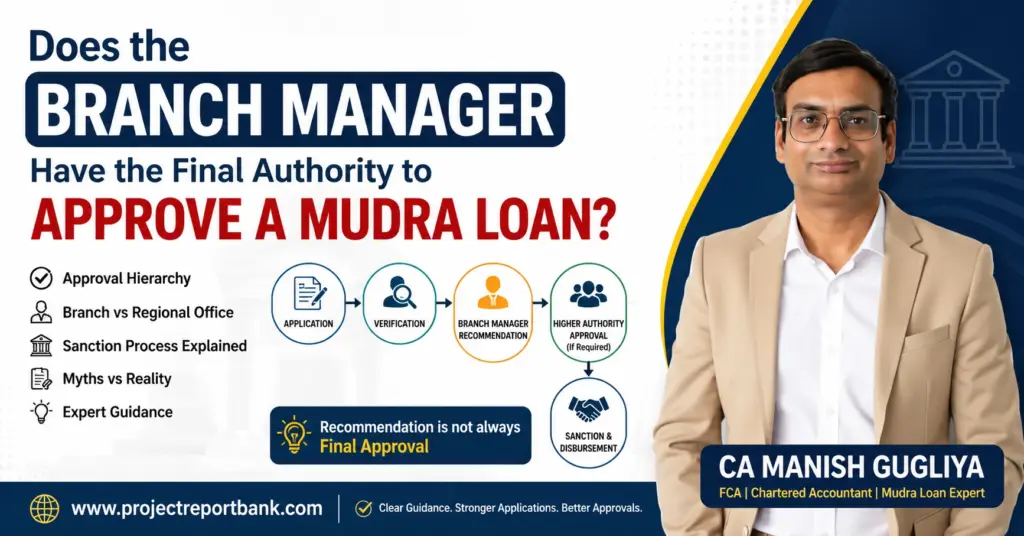
- Does Branch Manager Have Final Authority to Approve Mudra Loan?
- What Happens If the Branch Manager Is Transferred During Mudra Loan Processing?