
Obtaining a bank loan for luxury hotel construction is a complex financial process that demands rigorous planning and stringent underwriting. Unlike standard business loans, hotel project finance in India evaluates long-term cash-generating capacity, projected occupancy, and the promoter’s ability to sustain operations through a multi-year ramp-up. This guide covers what every promoter and investor should know before approaching lenders.
Key Takeaways
- A bank loan for luxury hotel is appraised primarily on project viability, projected cash flows, DSCR and promoter strength – not just collateral or property value.
- Luxury hotel project finance typically combines a term loan for construction and FF&E with working capital limits, structured around a defined debt-equity ratio.
- A well-prepared hotel project report for bank loan (DPR) – covering feasibility, revenue model, financial projections and sensitivity analysis – often separates approvals from repeated rejections.
- Occupancy, ARR/ADR and RevPAR assumptions must be realistic, market-backed and conservative during early years.
- ProjectReportBank.com, led by CA Manish Gugliya, assists promoters with DPRs, CMA data and financial projections for bank loan for 4 star hotel, bank loan for 5 star hotel and other luxury hotel projects across India.
Explore Luxury / 4-Star & 5-Star Hotel Project Report Guides
Explore our complete Luxury, 4-Star and 5-Star Hotel Project Report and DPR guides covering setup cost, equipment, project cost, revenue, financial projections, occupancy, feasibility, project finance and bank loan assessment.
1. Why Bank Loan for a Luxury Hotel Is Different from a Normal Business Loan
In my experience preparing project reports and financial projections for hotel developers, I have seen that hotel financing sits closer to infrastructure-level project finance than to a simple hotel business loan. Luxury hospitality projects involve high capital expenditure and extensive risk, and luxury hotels take longer to stabilize than select-service properties post-opening. CARE Ratings notes that break-even for luxury hotels in India averages around 12 years.
Effective cost planning includes land, civil construction, architecture, and luxury finishes, along with interiors, FF&E, HVAC, electrical systems, fire and safety, elevators, spa, banquet halls, restaurants, IT systems, pre-operative expenses and working capital margin. Lenders sanction these loans on long-term cash-generating capacity – occupancy, ARR/ADR, F&B and banquet income – rather than only on collateral coverage. Banks treat a 4-star or 5-star hotel as a long-gestation project with ramp-up periods of 2–4 years, which directly influences moratorium, repayment tenure and DSCR expectations.
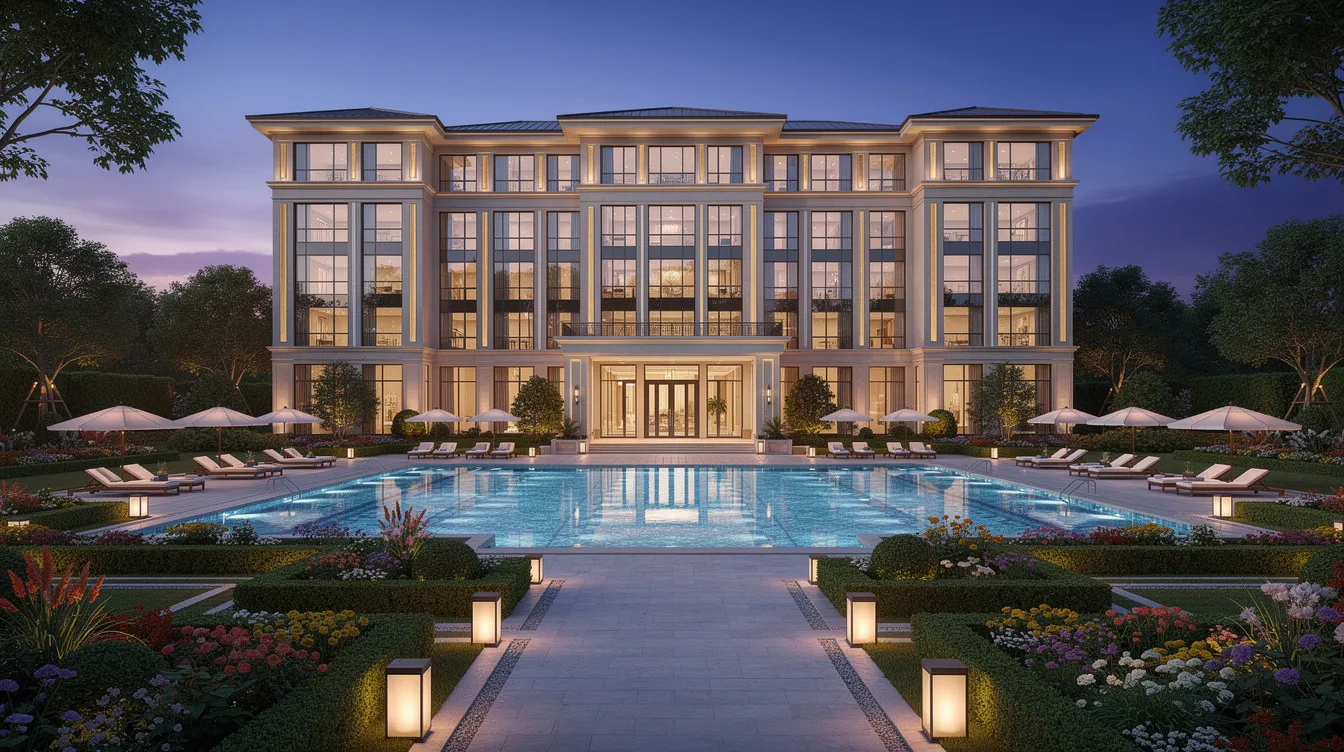
2. Basics of Luxury Hotel Project Finance in India
Project finance for a luxury hotel means funding based on projected project cash flows, with security created over hotel assets. A typical structure includes promoter equity (30–40% of project cost excluding land), a luxury hotel term loan covering the balance, and separate working capital limits. Senior debt is the primary secured loan covering the remaining project balance. Mezzanine financing, which combines elements of debt and equity, is sometimes used by promoters alongside private equity firms or institutional investors to bridge gaps.
Hotel loans can range from ₹10 lakhs to ₹50 crores depending on project scale, with interest rates starting from 1.25% per month for certain lenders. LTV ratios for luxury projects typically range from 50% to 65% of the total project cost. Debt financing allows ownership retention for hotel owners, and interest expenses on debt are often tax-deductible. Green financing now links loan terms to sustainability performance targets, and environmental, social, and governance compliance is increasingly tied to favorable interest rates. Loan options vary – from term loans and credit unions to schemes like CANARA MSME INN offering loans from ₹10 lakhs to ₹25 crores.
3. What Expenses Can Be Covered Under a Luxury Hotel Project Loan?
Exact eligibility varies by lender, but most banks broadly cover these cost heads in a hotel project loan:
- Land and site development (some banks limit or exclude bare land)
- Building and civil works, interior fit-outs
- Furniture, fixtures and equipment (FF&E)
- Kitchen, laundry and housekeeping equipment
- HVAC, electrical installations, fire-fighting systems, elevators
- IT, PMS and security service systems
- Banquet and conference infrastructure, spa and gym
- Pre-operative expenses, contingencies, interest during construction
- Margin for working capital
Luxury hotel financing requires dedicated contingency reserves typically between 10% to 15% of project cost. Collateral-free loans up to ₹2 crore are available through CGTMSE for smaller components. Bank finance for a hotel project can include a separate hotel construction loan tranche and a specific FF&E portion, each with its own disbursement logic aligned with the lender’s credit policy and RBI guidelines.
4. Project Cost and Means of Finance – Structuring the Luxury Hotel Deal
An internally consistent “Project Cost & Means of Finance” statement is the backbone of hotel project finance in India. The project cost column itemises land, construction, interiors, equipment, professional fees, pre-operative expenditure, contingencies and IDC. The means of finance column shows promoter equity, investor equity, term loan, unsecured loans (subject to conditions) and other sources like state tourism incentives.
Lenders require substantial equity contributions for luxury hotel financing. A down payment of at least 10% is often required, and lenders scrutinize the loan-to-cost ratio carefully. Banks test reasonableness by benchmarking cost per key against comparable 4-star and 5-star projects – NOESIS estimates luxury hotel cost at ₹1.6–3.0 crore per key excluding land. Funds for hotel projects are disbursed in stages tied to verified construction milestones.
For a detailed Luxury Hotel Project Cost and Means of Finance analysis, promoters can refer to the separate guide on ProjectReportBank.com.
5. FF&E, Equipment and Fit-Outs – Why They Matter in Luxury Hotel Loans
FF&E forms a disproportionately high share of project cost in a luxury hotel compared to budget properties. Major categories include premium guest-room furniture, bedding and soft furnishings, lobby and restaurant furniture, banquet furniture, commercial kitchen equipment, laundry and housekeeping equipment, spa and gym equipment, IT and security systems, and back-office equipment.
Banks typically treat FF&E within the overall capex, with disbursement against supplier invoices. Under-estimating FF&E creates funding gaps that force promoters into last-minute unsecured borrowing or quality compromises that hurt the hotel’s positioning and ARR. Promoters should review the Luxury Hotel Equipment, Furniture and FF&E List with Cost for a category-wise cost reference.
6. Revenue Model, Occupancy, ARR/ADR and RevPAR – How Banks Judge Earning Capacity
Lenders appraise a bank loan for luxury hotel primarily on projected income streams: rooms, F&B, banquet, weddings, MICE, spa and other services. Luxury positions require confirmation of localized purchasing power to support pricing. Lenders evaluate risk based on tourist demand and expected occupancy rates, and non-room revenue (banquets, events) now contributes significantly to overall viability.
For deeper coverage of each income stream, see the Luxury Hotel Revenue Model covering Rooms, F&B, Banquet and Other Income.
6.1 Occupancy, ARR/ADR, RevPAR and Break-Even
Occupancy rate (sold rooms ÷ available rooms) ramp-up is critical – conservative projections in the first 3–5 years are essential. Stabilised occupancy for luxury hotels in strong markets typically reaches 65–75%. ARR/ADR reflects positioning, location, star category and competitive landscape. RevPAR (occupancy × ARR) is increasingly examined by Indian banks when appraising luxury hotel projects. Break-even occupancy – the point where operating and finance costs are covered – typically lies between 45–60%.
For formulas and worked examples, refer to the Luxury Hotel Occupancy, ARR, RevPAR and Break-Even Analysis.
7. Financial Projections, DSCR and Loan Repayment Capacity
A bankable DPR must include integrated financial projections typically spanning 5 to 10 years from COD: projected P&L, balance sheet, cash flow, revenue build-up, operating cost sheet, interest and depreciation schedule, loan amortisation and DSCR calculation. Room revenue must logically connect: number of rooms × 365 × occupancy × ARR/ADR.
DSCR is a key metric banks analyze for the capacity to service debt during all phases. Lenders analyze projected net operating income relative to debt payments through the DSCR, generally expecting a minimum of 1.25–1.50x under base case. Lenders typically require a minimum debt yield of 10% to 12% for luxury hotel projects. Debt financing requires stable cash flow for repayment – terms include interest rate structure, maturity date, and required reserves in loan agreements.
Repayment terms for hotel loans can extend up to 25 years, though 10–15 years is more common. Moratorium periods of 12–24 months during construction are standard. For detailed projection structures, see the Luxury Hotel Financial Projections for DPR.
8. Feasibility, Location and Hotel Project Finance Eligibility
In my experience as a CA, weak location or unrealistic feasibility is the most common reason bank finance for a hotel project faces difficulty. A feasibility study evaluates local supply and demand for luxury hotels, covering demand drivers (business travel, tourism sector demand, MICE, weddings by tour operators), existing supply, pipeline projects, seasonality and accessibility.
Eligible entities include individuals, companies, and trusts. Eligibility criteria banks evaluate include: promoter background and hospitality industry experience, net worth, credit history (a minimum credit score of 650 is typically required, with some lenders requiring 680), land and title clarity, statutory approvals, proposed debt-equity ratio, and projected DSCR. Borrowers with NPAs are ineligible for hotel loans. Each bank applies its own internal credit policy – no consultant can guarantee sanction based on generic criteria.
For feasibility methodology, refer to the Luxury Hotel Feasibility Study and Project Viability analysis.
9. Documents Required and Role of a Professional DPR
Clear documentation and a well-structured hotel project report for bank loan significantly reduce back-and-forth. Banks generally require a detailed project report including market studies and financial projections. A detailed project report is required for loan applications across virtually all lenders.
Typical documents required:
- KYC documents provided by all partners or directors
- Constitution documents (Partnership Deed, LLP Agreement, MOA/AOA)
- Last 3 years’ audited financials, ITRs, bank statements
- Net-worth statements, existing loan details
- Land/title documents, building plan approvals
- Architect estimates, civil and interior BOQs
- Equipment and FF&E quotations
- DPR with CMA data and financial projections
- Project implementation schedule
A professionally prepared DPR should read as a single coherent story – all numbers must reconcile across project cost, means of finance, revenue build-up and repayment schedule. As CA Manish Gugliya, I assist promoters in preparing DPR for luxury hotel bank loan based on assumptions and market data shared by the client, without certifying future performance.
10. How Banks Appraise Luxury Hotel Loan Proposals in Practice
Banks prioritize projects with experienced promoters and clear legal titles for financing. The appraisal covers:
- Promoter appraisal: Track record, financial strength, credit score, willingness to invest equity
- Technical appraisal: Hotel design, room count, facilities, construction plan, operator or brand
- Market appraisal: Demand-supply, target segments, competition, projected occupancy and ARR
- Financial appraisal: Cost realism, means of finance, DSCR trends, sensitivity analysis
- Security appraisal: Primary security over land and building; collateral may be required, often starting at 10% of the loan value; personal and corporate guarantees
Banks prefer institutional management agreements for luxury hotels to reduce operational risk. Lenders require rigorous planning and stringent underwriting, including third-party reports such as environmental assessments for due diligence. Sanction terms finally depend on institution-specific policies and risk appetite.
11. New Hotel vs Existing Hotel – Differences in Financing Approach
Financing a greenfield luxury hotel carries greater construction and ramp-up risk than expanding an existing property. New projects rely entirely on feasibility studies with no historical data, requiring longer moratorium and close monitoring.
Expansion projects (adding rooms or banquet facilities) allow lenders to rely on existing occupancy, ARR and EBITDA margins. Renovation or repositioning loans are typically smaller and shorter-tenure. For existing hotels, DSCR analysis covers combined debt (existing plus new), not only incremental finance. This difference is crucial for informed decisions when entrepreneurs plan their funding needs and assess financing options.
12. Typical Luxury Hotel Loan Process – Step-by-Step View
The process for securing a hotel project loan typically follows this sequence:
- Concept and hospitality vision finalisation
- Preliminary project cost estimate
- Market and location scan
- Detailed feasibility study
- Project cost and means of finance finalisation
- DPR preparation with financial projections
- Selection of suitable banks
- Submission of loan application with complete documents
- Bank appraisal and site visit
- Valuation and legal due diligence
- Credit sanction with terms
- Documentation and security creation
- Disbursement linked to milestones
- Post-disbursement monitoring
Preparing key components before filing ensures quick processing and avoids delays. Timelines from complete submission to sanction commonly range 60–120 days for large luxury hotel loans.
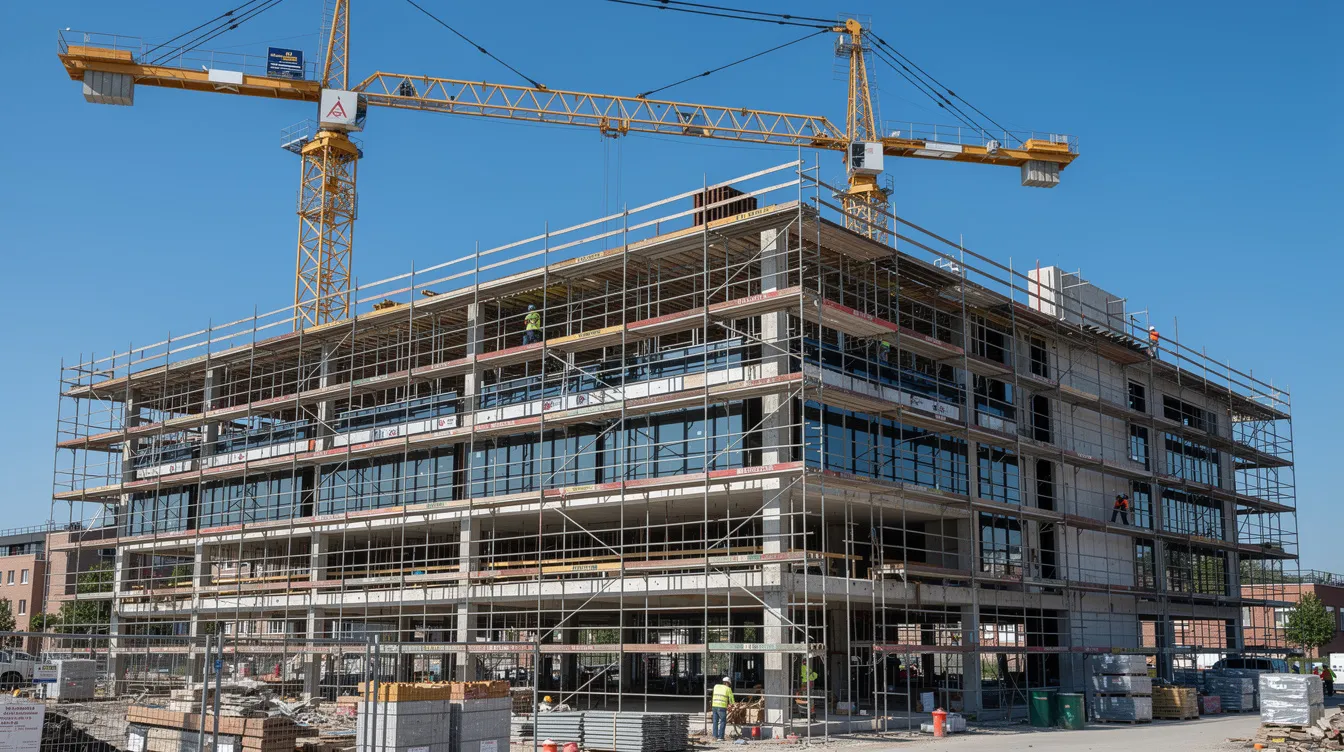
13. Common Reasons Luxury Hotel Loan Proposals Face Difficulties
Drawing on real-life experience reviewing hotel DPRs across India, common issues include: unrealistic occupancy in early years, aggressive ARR compared to the local market, underestimated construction and FF&E cost, inadequate promoter contribution, weak banquet and F&B assumptions, missing working capital provision, low DSCR due to short tenure, incomplete approvals, and inconsistency between narrative and numbers. Defaulting on debt can lead to asset seizure by lenders, making conservative planning essential.
Improving bankability involves revising scope to match the market, bringing in additional equity from investors, partnering with an experienced management company or brand, and strengthening the business plan and documentation. Improving financial logic does not guarantee sanction but materially improves chances of fair appraisal and contributes to long term success.
14. Sensitivity Analysis and Stress-Testing the Hotel Project
Hotel projects must be evaluated under different scenarios – not just a single optimistic case. Typical stress tests include occupancy 5–10 percentage points lower, ARR 5–15% lower, construction cost escalation of 10–15%, COD delay by 6–12 months, higher staff or energy costs, and rising interest rates.
Each scenario affects DSCR and promoter cash requirements. Banks routinely ask for such sensitivity tables before sanctioning a bank loan for luxury hotel. Structured sensitivity analysis is a standard part of any professional DPR and helps both lenders and borrowers secure a realistic understanding of project resilience.
15. Illustrative Example of a Luxury Hotel Project Finance Structure
All figures below are illustrative assumptions only – not benchmarks, quotations or commitments from any bank.
Consider a 120-room 5-star hotel in Jaipur:
| Parameter | Illustrative Value |
|---|---|
| Total project cost (excl. land) | ₹220 crore (~₹1.83 crore/key) |
| Promoter equity (35%) | ₹77 crore |
| Term loan (65%) | ₹143 crore |
| Year-1 occupancy | 45% |
| Stabilised occupancy (Year 3+) | 72% |
| Stabilised ARR | ₹8,500 |
| Revenue split | Rooms 55%, Banquet 18%, F&B 17%, Other 10% |
| Employee cost | ~22% of revenue |
| Repayment tenure | 12 years with 2-year moratorium |
| Base case average DSCR | ~1.45x |
A 10-percentage-point drop in occupancy reduces DSCR to approximately 1.15–1.20x, illustrating why lenders insist on conservative assumptions. Actual bank terms, costs and hotel performance will vary case by case. SBA loans can provide up to $5 million for hotel projects in the US context, but Indian luxury hotels typically access domestic capital through scheduled banks and financial institutions.
16. Conclusion – Aligning Vision, Numbers and Bank Expectations
Successful bank loan for luxury hotel approval depends on a fully aligned chain: project concept → feasibility → project cost → means of finance → occupancy and ARR assumptions → revenue and EBITDA → cash flow → DSCR and repayment capacity. Every link must hold together under scrutiny.
A robust hotel project report for bank loan prepared by experienced professionals ensures these elements are consistent and defensible during bank appraisal. The hospitality sector rewards promoters who invest in planning before they invest in property and capital.
If you need assistance preparing a DPR, CMA data, financial projections or a complete bank-ready proposal for a luxury, 4-star or 5-star hotel project in India, you can reach out to CA Manish Gugliya at ProjectReportBank.com. Professional preparation does not promise loan approval, but it gives your project the best possible foundation for a fair and timely appraisal by any lender in India or the broader economy.

Frequently Asked Questions – Bank Loan for Luxury Hotel
1. Can a first-time hotel developer get a bank loan for a 5-star hotel in India?
Yes – first-time developers can access luxury hotel project finance if they demonstrate strong net worth, bring experienced hotel operators or consultants on board as a partner, present a robust DPR and maintain reasonable debt-equity and DSCR levels. Lack of direct hospitality experience must be compensated by a credible professional team and adequate equity contribution to secure lender confidence.
2. How much of the total project cost will banks typically finance for a luxury hotel?
There is no single universal percentage. Lenders decide the loan amount based on acceptable debt-equity ratio, collateral coverage, projected DSCR and promoter profile. In practice, the debt component for luxury hotels often ranges around 60–65% of project cost excluding land, but this varies by bank, borrower and overall risk profile. Collateral requirements, personal guarantees and the quality of project reports all influence the final sanction.
3. Is it mandatory to have a branded operator to get hotel project finance?
It is not legally mandatory, but many banks view professional management agreements with reputed brands positively because they improve occupancy, ARR and operational consistency. Strong standalone hotels with proven promoters and solid feasibility studies can also access finance, depending on overall risk assessment.
4. Do Indian banks finance FF&E and pre-operative expenses for luxury hotels?
Many banks include major FF&E categories and defined pre-operative expenses as part of overall project cost, subject to credit policy and documentation such as quotations and invoices. The treatment of specific components – interest during construction, brand fees, pre-opening marketing – should be discussed with the prospective lender at the proposal stage. Promoters should purchase and plan equipment procurement carefully to avoid cost overruns.
5. How early should I start preparing the DPR before approaching banks?
Bank Loan for Luxury Hotel – Project Finance Guide (India)
Obtaining a bank loan for luxury hotel construction is a complex financial process that demands rigorous planning and stringent underwriting. Unlike standard business loans, hotel project finance in India evaluates long-term cash-generating capacity, projected occupancy, and the promoter’s ability to sustain operations through a multi-year ramp-up. This guide covers what every promoter and investor should know before approaching lenders.
Key Takeaways
- A bank loan for luxury hotel is appraised primarily on project viability, projected cash flows, DSCR and promoter strength – not just collateral or property value.
- Luxury hotel project finance typically combines a term loan for construction and FF&E with working capital limits, structured around a defined debt-equity ratio.
- A well-prepared hotel project report for bank loan (DPR) – covering feasibility, revenue model, financial projections and sensitivity analysis – often separates approvals from repeated rejections.
- Occupancy, ARR/ADR and RevPAR assumptions must be realistic, market-backed and conservative during early years.
- ProjectReportBank.com, led by CA Manish Gugliya, assists promoters with DPRs, CMA data and financial projections for bank loan for 4 star hotel, bank loan for 5 star hotel and other luxury hotel projects across India.
1. Why Bank Loan for a Luxury Hotel Is Different from a Normal Business Loan
In my experience preparing project reports and financial projections for hotel developers, I have seen that hotel financing sits closer to infrastructure-level project finance than to a simple hotel business loan. Luxury hospitality projects involve high capital expenditure and extensive risk, and luxury hotels take longer to stabilize than select-service properties post-opening. CARE Ratings notes that break-even for luxury hotels in India averages around 12 years.
Effective cost planning includes land, civil construction, architecture, and luxury finishes, along with interiors, FF&E, HVAC, electrical systems, fire and safety, elevators, spa, banquet halls, restaurants, IT systems, pre-operative expenses and working capital margin. Lenders sanction these loans on long-term cash-generating capacity – occupancy, ARR/ADR, F&B and banquet income – rather than only on collateral coverage. Banks treat a 4-star or 5-star hotel as a long-gestation project with ramp-up periods of 2–4 years, which directly influences moratorium, repayment tenure and DSCR expectations.
2. Basics of Luxury Hotel Project Finance in India
Project finance for a luxury hotel means funding based on projected project cash flows, with security created over hotel assets. A typical structure includes promoter equity (30–40% of project cost excluding land), a luxury hotel term loan covering the balance, and separate working capital limits. Senior debt is the primary secured loan covering the remaining project balance. Mezzanine financing, which combines elements of debt and equity, is sometimes used by promoters alongside private equity firms or institutional investors to bridge gaps.
Hotel loans can range from ₹10 lakhs to ₹50 crores depending on project scale, with interest rates starting from 1.25% per month for certain lenders. LTV ratios for luxury projects typically range from 50% to 65% of the total project cost. Debt financing allows ownership retention for hotel owners, and interest expenses on debt are often tax-deductible. Green financing now links loan terms to sustainability performance targets, and environmental, social, and governance compliance is increasingly tied to favorable interest rates. Loan options vary – from term loans and credit unions to schemes like CANARA MSME INN offering loans from ₹10 lakhs to ₹25 crores.
3. What Expenses Can Be Covered Under a Luxury Hotel Project Loan?
Exact eligibility varies by lender, but most banks broadly cover these cost heads in a hotel project loan:
- Land and site development (some banks limit or exclude bare land)
- Building and civil works, interior fit-outs
- Furniture, fixtures and equipment (FF&E)
- Kitchen, laundry and housekeeping equipment
- HVAC, electrical installations, fire-fighting systems, elevators
- IT, PMS and security service systems
- Banquet and conference infrastructure, spa and gym
- Pre-operative expenses, contingencies, interest during construction
- Margin for working capital
Luxury hotel financing requires dedicated contingency reserves typically between 10% to 15% of project cost. Collateral-free loans up to ₹2 crore are available through CGTMSE for smaller components. Bank finance for a hotel project can include a separate hotel construction loan tranche and a specific FF&E portion, each with its own disbursement logic aligned with the lender’s credit policy and RBI guidelines.
4. Project Cost and Means of Finance – Structuring the Luxury Hotel Deal
An internally consistent “Project Cost & Means of Finance” statement is the backbone of hotel project finance in India. The project cost column itemises land, construction, interiors, equipment, professional fees, pre-operative expenditure, contingencies and IDC. The means of finance column shows promoter equity, investor equity, term loan, unsecured loans (subject to conditions) and other sources like state tourism incentives.
Lenders require substantial equity contributions for luxury hotel financing. A down payment of at least 10% is often required, and lenders scrutinize the loan-to-cost ratio carefully. Banks test reasonableness by benchmarking cost per key against comparable 4-star and 5-star projects – NOESIS estimates luxury hotel cost at ₹1.6–3.0 crore per key excluding land. Funds for hotel projects are disbursed in stages tied to verified construction milestones.
For a detailed Luxury Hotel Project Cost and Means of Finance analysis, promoters can refer to the separate guide on ProjectReportBank.com.
5. FF&E, Equipment and Fit-Outs – Why They Matter in Luxury Hotel Loans
FF&E forms a disproportionately high share of project cost in a luxury hotel compared to budget properties. Major categories include premium guest-room furniture, bedding and soft furnishings, lobby and restaurant furniture, banquet furniture, commercial kitchen equipment, laundry and housekeeping equipment, spa and gym equipment, IT and security systems, and back-office equipment.
Banks typically treat FF&E within the overall capex, with disbursement against supplier invoices. Under-estimating FF&E creates funding gaps that force promoters into last-minute unsecured borrowing or quality compromises that hurt the hotel’s positioning and ARR. Promoters should review the Luxury Hotel Equipment, Furniture and FF&E List with Cost for a category-wise cost reference.
6. Revenue Model, Occupancy, ARR/ADR and RevPAR – How Banks Judge Earning Capacity
Lenders appraise a bank loan for luxury hotel primarily on projected income streams: rooms, F&B, banquet, weddings, MICE, spa and other services. Luxury positions require confirmation of localized purchasing power to support pricing. Lenders evaluate risk based on tourist demand and expected occupancy rates, and non-room revenue (banquets, events) now contributes significantly to overall viability.
For deeper coverage of each income stream, see the Luxury Hotel Revenue Model covering Rooms, F&B, Banquet and Other Income.
6.1 Occupancy, ARR/ADR, RevPAR and Break-Even
Occupancy rate (sold rooms ÷ available rooms) ramp-up is critical – conservative projections in the first 3–5 years are essential. Stabilised occupancy for luxury hotels in strong markets typically reaches 65–75%. ARR/ADR reflects positioning, location, star category and competitive landscape. RevPAR (occupancy × ARR) is increasingly examined by Indian banks when appraising luxury hotel projects. Break-even occupancy – the point where operating and finance costs are covered – typically lies between 45–60%.
For formulas and worked examples, refer to the Luxury Hotel Occupancy, ARR, RevPAR and Break-Even Analysis.
7. Financial Projections, DSCR and Loan Repayment Capacity
A bankable DPR must include integrated financial projections typically spanning 5 to 10 years from COD: projected P&L, balance sheet, cash flow, revenue build-up, operating cost sheet, interest and depreciation schedule, loan amortisation and DSCR calculation. Room revenue must logically connect: number of rooms × 365 × occupancy × ARR/ADR.
DSCR is a key metric banks analyze for the capacity to service debt during all phases. Lenders analyze projected net operating income relative to debt payments through the DSCR, generally expecting a minimum of 1.25–1.50x under base case. Lenders typically require a minimum debt yield of 10% to 12% for luxury hotel projects. Debt financing requires stable cash flow for repayment – terms include interest rate structure, maturity date, and required reserves in loan agreements.
Repayment terms for hotel loans can extend up to 25 years, though 10–15 years is more common. Moratorium periods of 12–24 months during construction are standard. For detailed projection structures, see the Luxury Hotel Financial Projections for DPR.
8. Feasibility, Location and Hotel Project Finance Eligibility
In my experience as a CA, weak location or unrealistic feasibility is the most common reason bank finance for a hotel project faces difficulty. A feasibility study evaluates local supply and demand for luxury hotels, covering demand drivers (business travel, tourism sector demand, MICE, weddings by tour operators), existing supply, pipeline projects, seasonality and accessibility.
Eligible entities include individuals, companies, and trusts. Eligibility criteria banks evaluate include: promoter background and hospitality industry experience, net worth, credit history (a minimum credit score of 650 is typically required, with some lenders requiring 680), land and title clarity, statutory approvals, proposed debt-equity ratio, and projected DSCR. Borrowers with NPAs are ineligible for hotel loans. Each bank applies its own internal credit policy – no consultant can guarantee sanction based on generic criteria.
For feasibility methodology, refer to the Luxury Hotel Feasibility Study and Project Viability analysis.
9. Documents Required and Role of a Professional DPR
Clear documentation and a well-structured hotel project report for bank loan significantly reduce back-and-forth. Banks generally require a detailed project report including market studies and financial projections. A detailed project report is required for loan applications across virtually all lenders.
Typical documents required:
- KYC documents provided by all partners or directors
- Constitution documents (Partnership Deed, LLP Agreement, MOA/AOA)
- Last 3 years’ audited financials, ITRs, bank statements
- Net-worth statements, existing loan details
- Land/title documents, building plan approvals
- Architect estimates, civil and interior BOQs
- Equipment and FF&E quotations
- DPR with CMA data and financial projections
- Project implementation schedule
A professionally prepared DPR should read as a single coherent story – all numbers must reconcile across project cost, means of finance, revenue build-up and repayment schedule. As CA Manish Gugliya, I assist promoters in preparing DPR for luxury hotel bank loan based on assumptions and market data shared by the client, without certifying future performance.
10. How Banks Appraise Luxury Hotel Loan Proposals in Practice
Banks prioritize projects with experienced promoters and clear legal titles for financing. The appraisal covers:
- Promoter appraisal: Track record, financial strength, credit score, willingness to invest equity
- Technical appraisal: Hotel design, room count, facilities, construction plan, operator or brand
- Market appraisal: Demand-supply, target segments, competition, projected occupancy and ARR
- Financial appraisal: Cost realism, means of finance, DSCR trends, sensitivity analysis
- Security appraisal: Primary security over land and building; collateral may be required, often starting at 10% of the loan value; personal and corporate guarantees
Banks prefer institutional management agreements for luxury hotels to reduce operational risk. Lenders require rigorous planning and stringent underwriting, including third-party reports such as environmental assessments for due diligence. Sanction terms finally depend on institution-specific policies and risk appetite.
11. New Hotel vs Existing Hotel – Differences in Financing Approach
Financing a greenfield luxury hotel carries greater construction and ramp-up risk than expanding an existing property. New projects rely entirely on feasibility studies with no historical data, requiring longer moratorium and close monitoring.
Expansion projects (adding rooms or banquet facilities) allow lenders to rely on existing occupancy, ARR and EBITDA margins. Renovation or repositioning loans are typically smaller and shorter-tenure. For existing hotels, DSCR analysis covers combined debt (existing plus new), not only incremental finance. This difference is crucial for informed decisions when entrepreneurs plan their funding needs and assess financing options.
12. Typical Luxury Hotel Loan Process – Step-by-Step View
The process for securing a hotel project loan typically follows this sequence:
- Concept and hospitality vision finalisation
- Preliminary project cost estimate
- Market and location scan
- Detailed feasibility study
- Project cost and means of finance finalisation
- DPR preparation with financial projections
- Selection of suitable banks
- Submission of loan application with complete documents
- Bank appraisal and site visit
- Valuation and legal due diligence
- Credit sanction with terms
- Documentation and security creation
- Disbursement linked to milestones
- Post-disbursement monitoring
Preparing key components before filing ensures quick processing and avoids delays. Timelines from complete submission to sanction commonly range 60–120 days for large luxury hotel loans.
13. Common Reasons Luxury Hotel Loan Proposals Face Difficulties
Drawing on real-life experience reviewing hotel DPRs across India, common issues include: unrealistic occupancy in early years, aggressive ARR compared to the local market, underestimated construction and FF&E cost, inadequate promoter contribution, weak banquet and F&B assumptions, missing working capital provision, low DSCR due to short tenure, incomplete approvals, and inconsistency between narrative and numbers. Defaulting on debt can lead to asset seizure by lenders, making conservative planning essential.
Improving bankability involves revising scope to match the market, bringing in additional equity from investors, partnering with an experienced management company or brand, and strengthening the business plan and documentation. Improving financial logic does not guarantee sanction but materially improves chances of fair appraisal and contributes to long term success.
14. Sensitivity Analysis and Stress-Testing the Hotel Project
Hotel projects must be evaluated under different scenarios – not just a single optimistic case. Typical stress tests include occupancy 5–10 percentage points lower, ARR 5–15% lower, construction cost escalation of 10–15%, COD delay by 6–12 months, higher staff or energy costs, and rising interest rates.
Each scenario affects DSCR and promoter cash requirements. Banks routinely ask for such sensitivity tables before sanctioning a bank loan for luxury hotel. Structured sensitivity analysis is a standard part of any professional DPR and helps both lenders and borrowers secure a realistic understanding of project resilience.
15. Illustrative Example of a Luxury Hotel Project Finance Structure
All figures below are illustrative assumptions only – not benchmarks, quotations or commitments from any bank.
Consider a 120-room 5-star hotel in Jaipur:
| Parameter | Illustrative Value |
|---|---|
| Total project cost (excl. land) | ₹220 crore (~₹1.83 crore/key) |
| Promoter equity (35%) | ₹77 crore |
| Term loan (65%) | ₹143 crore |
| Year-1 occupancy | 45% |
| Stabilised occupancy (Year 3+) | 72% |
| Stabilised ARR | ₹8,500 |
| Revenue split | Rooms 55%, Banquet 18%, F&B 17%, Other 10% |
| Employee cost | ~22% of revenue |
| Repayment tenure | 12 years with 2-year moratorium |
| Base case average DSCR | ~1.45x |
A 10-percentage-point drop in occupancy reduces DSCR to approximately 1.15–1.20x, illustrating why lenders insist on conservative assumptions. Actual bank terms, costs and hotel performance will vary case by case. SBA loans can provide up to $5 million for hotel projects in the US context, but Indian luxury hotels typically access domestic capital through scheduled banks and financial institutions.
16. Conclusion – Aligning Vision, Numbers and Bank Expectations
Successful bank loan for luxury hotel approval depends on a fully aligned chain: project concept → feasibility → project cost → means of finance → occupancy and ARR assumptions → revenue and EBITDA → cash flow → DSCR and repayment capacity. Every link must hold together under scrutiny.
A robust hotel project report for bank loan prepared by experienced professionals ensures these elements are consistent and defensible during bank appraisal. The hospitality sector rewards promoters who invest in planning before they invest in property and capital.
If you need assistance preparing a DPR, CMA data, financial projections or a complete bank-ready proposal for a luxury, 4-star or 5-star hotel project in India, you can reach out to CA Manish Gugliya at ProjectReportBank.com. Professional preparation does not promise loan approval, but it gives your project the best possible foundation for a fair and timely appraisal by any lender in India or the broader economy.
Frequently Asked Questions – Bank Loan for Luxury Hotel
1. Can a first-time hotel developer get a bank loan for a 5-star hotel in India?
Yes – first-time developers can access luxury hotel project finance if they demonstrate strong net worth, bring experienced hotel operators or consultants on board as a partner, present a robust DPR and maintain reasonable debt-equity and DSCR levels. Lack of direct hospitality experience must be compensated by a credible professional team and adequate equity contribution to secure lender confidence.
2. How much of the total project cost will banks typically finance for a luxury hotel?
There is no single universal percentage. Lenders decide the loan amount based on acceptable debt-equity ratio, collateral coverage, projected DSCR and promoter profile. In practice, the debt component for luxury hotels often ranges around 60–65% of project cost excluding land, but this varies by bank, borrower and overall risk profile. Collateral requirements, personal guarantees and the quality of project reports all influence the final sanction.
3. Is it mandatory to have a branded operator to get hotel project finance?
It is not legally mandatory, but many banks view professional management agreements with reputed brands positively because they improve occupancy, ARR and operational consistency. Strong standalone hotels with proven promoters and solid feasibility studies can also access finance, depending on overall risk assessment.
4. Do Indian banks finance FF&E and pre-operative expenses for luxury hotels?
Many banks include major FF&E categories and defined pre-operative expenses as part of overall project cost, subject to credit policy and documentation such as quotations and invoices. The treatment of specific components – interest during construction, brand fees, pre-opening marketing – should be discussed with the prospective lender at the proposal stage. Promoters should purchase and plan equipment procurement carefully to avoid cost overruns.
5. How early should I start preparing the DPR before approaching banks?
Start DPR preparation and financial projections soon after finalising land and preliminary concept – typically 6–9 months before targeted financial closure for large luxury hotel projects. Early preparation allows time for feasibility refinement, growth in design clarity, realistic cost estimation and alignment of means of finance before your proposal reaches bank credit committees for appraisal.
Explore More Luxury / 4-Star & 5-Star Hotel Project Report Guides
Continue exploring our Luxury, 4-Star and 5-Star Hotel DPR guides covering setup cost, equipment, project cost, revenue, financial projections, occupancy, feasibility, project finance and bank loan assessment.