Why Clients Trust Our Mudra Loan Project Reports
Expert Guidance from a Chartered Accountant

100% Online and Hassle-Free Process

Trusted by Hundreds Across Kerala
Mudra Loan Kerala – Complete Guide to PM Mudra Loan & Project Report (2026)
Key Takeaways
Here is a fast summary for Kerala entrepreneurs before you dive into the full guide:
PM Mudra Loan (PMMY) in Kerala offers collateral-free loans up to Rs. 10 lakhs for small businesses under Shishu, Kishore and Tarun categories. No collateral security is required for these loans.
Banks in Kerala – including SBI, Canara Bank, Kerala Gramin Bank, Federal Bank, HDFC Bank and others – usually prefer a proper Mudra Loan Project Report, even for relatively small loan amounts.
We provide 100% online Mudra Loan Project Report Kerala services for all districts, including Thiruvananthapuram, Kochi, Kozhikode, Thrissur, Kollam, Kannur and more. We do not have a physical office in Kerala.
This article covers eligibility, documents, interest rates, step-by-step process, common rejection reasons, and how a CA-prepared project report can improve your approval chances.
Women entrepreneurs may access concessional interest rates under the PMMY, and approximately 68% of all Mudra Loan beneficiaries nationwide are women.
Introduction – Mudra Loan Kerala & Why Project Report is Important
A Mudra Loan is a government scheme under the Pradhan Mantri Mudra Yojana that gives collateral-free credit up to Rs. 10 lakhs to micro and small businesses. It is one of the most popular ways for small entrepreneurs across India to get affordable credit for starting or expanding a business.
In Kerala, thousands of people in 2026 are starting small businesses – catering units, tiffin services, online reselling, mobile shops, beauty parlours, driving schools, printing units, homestays and more. Many of them need a small loan to buy equipment, stock or furniture. Mudra Loan is often the best fit for such enterprises.
But here is what many applicants miss: banks in Kerala ask for a Project Report before sanctioning a Mudra Loan. The project report helps the bank check your business idea, repayment capacity, projected profits and cash flow. Without a proper report, your application may get delayed or rejected – even if your business idea is good.
A well-prepared Mudra Loan Project Report Kerala can strongly improve your chances of approval and help you get a better loan amount. This is especially true with commercial banks and private banks like Federal Bank. I am CA Manish Gugliya, and I have more than 20 years of practical experience preparing project reports, CMA reports and financial projections for MSMEs across India, including Kerala, entirely through online mode.
This article is for first-time entrepreneurs, small shop owners, students, housewives and professionals in Kerala who want a simple, step-by-step guide to getting a Mudra Loan with a proper project report.
What is PM Mudra Loan (Pradhan Mantri Mudra Yojana)?
The PM Mudra Loan is a Government of India scheme started in 2015. Its main purpose is extending affordable credit up to Rs. 10 lakhs to micro units and small businesses without requiring collateral.
Here are the key things you should know about the mudra scheme:
PMMY is implemented through banks, NBFCs and microfinance institutions. It is supervised by the Micro Units Development & Refinance Agency (MUDRA) Ltd, which works as a refinance agency under the Ministry of Finance in New Delhi.
The scheme aims to promote self-employment, help small traders and service providers, support small-scale manufacturing units, and reduce dependence on local moneylenders. PMMY loans also promote financial inclusion for micro and small entrepreneurs by bringing them into the formal financial system.
Mudra Loans are strictly for non-farm income generating activities – shops, workshops, vehicles for business use, services, food processing and activities allied to agriculture. They are not for personal consumption, house construction or pure crop cultivation.
There is no central government interest subsidy. Interest rates are decided by individual financial institutions but usually remain competitive for small businesses.
Kerala entrepreneurs can apply for PM Mudra Loan at almost every bank branch – public sector banks, private banks, regional rural banks, small finance banks and cooperative banks that are part of the PMMY lending network.
As of FY2024-25, nearly 52-55 crore loans have been sanctioned nationwide, amounting to over Rs. 33-34 lakh crore under PMMY. These numbers show how widely accepted and accessible this scheme is.

Types of Mudra Loans – Shishu, Kishore and Tarun
Mudra Loans in Kerala include Shishu, Kishore, and Tarun categories, divided based on loan amount and business stage.
Shishu Loan (up to Rs. 50,000)
The Shishu category offers loans up to Rs. 50,000. This is ideal for very small or starting businesses. Think of a street food cart in Thrissur, home tailoring in Kozhikode, fish vending in Kollam or online tuition in Thiruvananthapuram. Processing is usually simple and fast.
Kishore Loan (Rs. 50,001 to Rs. 5 lakhs)
The Kishore category provides loans from Rs. 50,001 to Rs. 5 lakhs. This suits businesses that need moderate funding – a small bakery in Kochi, an auto workshop in Palakkad or a mobile repair shop in Kannur. Banks typically expect a project report for this category.
Tarun Loan (Rs. 5 lakhs to Rs. 10 lakhs)
The Tarun category covers loans from Rs. 5 lakhs to Rs. 10 lakhs. This is for more established or capital-intensive small businesses – a small manufacturing unit in Alappuzha, a packaged food unit in Malappuram or a digital printing press in Kottayam. A detailed bankable project report is almost always required.
Tarun+ Category (Rs. 10 lakhs to Rs. 20 lakhs)
Since Budget 2024-25, the Tarun+ category offers loans from Rs. 10 lakhs to Rs. 20 lakhs for eligible repeat borrowers who have successfully repaid earlier Tarun loans. Not all Kerala banks may have formally listed this yet, but the national scheme allows it.
Loan Category | Loan Amount Range | Best For | Typical Kerala Examples | Collateral | Typical Interest Rate Range |
|---|---|---|---|---|---|
Shishu | Up to ₹50,000 | Very small / new businesses | Food cart, home tuition, fish vending | Not required | ~8.5% – 12% |
Kishore | ₹50,001 – ₹5,00,000 | Growing small businesses | Bakery, auto repair, mobile shop | Not required | ~11% – 15% |
Tarun | ₹5,00,001 – ₹10,00,000 | Established micro enterprises | Manufacturing, printing, food processing | Not required | ~11% – 14% |
Tarun+ | ₹10,00,001 – ₹20,00,000 | Repeat successful borrowers | Expanding units | As per bank | Varies by bank |
Note: Interest rates are indicative only. Confirm with your bank on the date of application.
Benefits of Mudra Loan for Kerala Entrepreneurs
Mudra Loan is very useful for small entrepreneurs in Kerala who often do not own property or have large assets to offer as collateral. Collateral-free loans are a primary feature of the PMMY.
Here are the main benefits:
No collateral required for loans up to Rs. 10 lakhs. This removes the biggest barrier for micro enterprises.
Simple documentation. The application process is designed for easy access to credit with simplified procedures.
Available at local bank branches. You can walk into SBI, Canara Bank, Kerala Gramin Bank, Federal Bank or any authorised lender near your home or business.
No margin money for small Shishu loans in many cases (subject to bank policy). For Kishore and Tarun, some banks like Kerala Gramin Bank require 15% margin.
Interest rates are competitive and affordable. They are typically lower than what informal moneylenders charge, reducing total cost of borrowing for small shop owners and self-employed people.
Loan funds can be used to purchase machinery, tools, stock, furniture, computers, delivery vehicles (like goods auto-rickshaw) – as long as they are for business purposes. The assets created from the loan belong to the beneficiary micro unit.
Special benefit for women entrepreneurs. Women entrepreneurs may access concessional interest rates under the PMMY. Many banks give preference or slight concession for women beneficiaries, housewives and SHG members in Kerala.
Quick example: A woman in Wayanad wants to start a homemade pickles and snacks unit. She applies for a Kishore Mudra Loan of Rs. 2 lakhs. The funds help her buy utensils, grinder, packaging material and start marketing. Kerala State Co-operative Bank even offers a special “Vanitha Mudra Loan” at approximately 9% interest for such enterprises.
Eligibility for Mudra Loan Kerala
Mudra Loan eligibility in Kerala is almost the same as the rest of India, but individual banks may have small internal rules. The application process includes checking eligibility criteria first.
Basic eligibility:
Indian citizen, age typically 18 to 65 years (confirm with your bank).
Must have a non-farm income generating business or a clear business idea in manufacturing, trading or services.
Applicants must demonstrate necessary skills or experience for their proposed business activity.
Eligible entities for PMMY include individuals, proprietary concerns, and partnership firms. Proprietorship and partnership firms can apply for Mudra Loans.
Loan applicants must not have a default history with any financial institution.
Applicants must have a high CIBIL score. Even for small amounts, many banks now check credit history.
Who can apply in Kerala:
Manufacturing units: Small fabrication workshop, agarbatti unit, coconut-based product making, coir product manufacturing, handicrafts unit, rubber product manufacturing.
Service businesses: Beauty parlours, salons, repair workshops, event management, photographers, computer centres, coaching classes, online freelancing with basic equipment.
Retail shops and traders: Grocery shop, stationery shop, mobile shop, textile shop, small supermarkets, medical stores (with proper licenses), hardware shops.
Professionals: Doctors, CAs, architects, engineers – to start or expand clinics, offices or consultancy with small infrastructure loans.
Women entrepreneurs, housewives and students who want to start a small business from home or rented shops. Banks will expect a workable plan and basic capacity to repay.
Startups and first-time entrepreneurs can also apply. If you are exploring this path, our detailed guide on Mudra Loan for Startup covers more.
Banks will also check existing loans, credit card obligations and informal repayment history. People with thin credit history may still get small Shishu loans if other documents are in order.
Documents Required for Mudra Loan in Kerala
Complete documents make Mudra Loan processing faster and reduce chances of delay or rejection. Documents required for PMMY include identity and address proof, business documents, and photographs. Key documents are required for verification during the application.
KYC Documents:
Aadhaar card (compulsory in most banks)
PAN card (compulsory for loans above Rs. 50,000)
Voter ID, driving licence or passport as additional ID proof
Address Proof:
Aadhaar card, utility bill (electricity, water, gas), rental agreement, ration card or bank passbook with address
Business Proof:
Udyam Registration certificate
Shop and Establishment licence
GST registration (if applicable)
Partnership deed (for partnership firms)
Registration for societies or trusts (if applicable)
Financial Documents:
Last 6–12 months bank statement
ITR copies for last 1–3 years (if available)
Balance sheet and profit and loss account for existing businesses
Quotations for machinery, equipment or stock purchase
For New Business:
Mudra Loan Project Report Kerala
Rent agreement for proposed shop or workspace
Basic business plan with cost estimates
Category of Applicant | Key Documents Required |
|---|---|
New Business | Aadhaar, PAN, business plan, project report, quotations, rent agreement, photographs |
Existing Business | Aadhaar, PAN, Udyam registration, GST returns, bank statements, ITRs, balance sheet |
Professional (Doctor, CA etc.) | Aadhaar, PAN, professional registration, clinic/office proof, project report |
Home Business | Aadhaar, PAN, project report, product samples/photos, address proof |
Documents may vary slightly between banks in Kerala. Always confirm with your branch before applying.
What is a Project Report for Mudra Loan?
A Project Report is a written document that explains your business idea, how much money you need, how you will use it, and how you will repay the loan. Think of it as your business story told in numbers and words.
Banks in Kerala ask for a Project Report to understand your business, check profit possibility, see whether cash flow is enough to pay EMI, and keep a record for audit and internal approvals.
Many Mudra Loan applications are rejected only because the project report is weak, copied from the internet, or does not match actual business conditions in Kerala. A professional and customised project report for Mudra Loan Kerala is especially important when the loan amount is above Rs. 2 lakh (Kishore and Tarun category) or when the business is new.
For small Shishu loans, some banks accept a simple one-page plan. But even there, a clear written note helps convince the branch manager.
Online Mudra Loan Project Report Kerala preparation by an experienced CA saves time, avoids mistakes, and presents your business in the language that bankers understand. Our guide on preparing a perfect project report covers the fundamentals in detail.
What Should a Good Mudra Loan Project Report Kerala Include?
A good project report must be realistic, simple and match Kerala market conditions – local demand, cost levels and seasonality. Here are the essential components:
1. Business Profile Promoter details (name, education, experience), business location, nature of activity, and target customers.
2. Business Model Products or services offered, pricing strategy, how you will reach customers, and your competitive advantage in the local Kerala market.
3. Cost of Project Money needed to buy machinery, furniture, computer, vehicle, initial stock, shop deposit, interior work, license fees and small working capital. Spell out every cost clearly.
4. Means of Finance How much own money (margin) the entrepreneur will bring, how much Mudra Loan is requested, and whether any other funding or subsidies are expected. For example, if total cost is Rs. 5 lakhs, own contribution might be Rs. 75,000 and Mudra Loan Rs. 4.25 lakhs.
5. Working Capital Requirement Money needed every month for buying stock, paying rent, salaries, electricity, fuel and other operating expenses until business gets steady. This is a working capital loan component that banks carefully evaluate.
6. Sales Projection For a small tea shop in Kerala, estimate daily customers, average bill, monthly sales, seasonal variation (tourist season, festival season, off-season). Be conservative.
7. Profit Projection A simple table showing expected income and expenses for the first 3–5 years, with net profit each year.
8. Cash Flow Statement Money coming in (sales, other income) and money going out (expenses, EMI, purchases) – month-wise or year-wise – to show your ability to pay EMI.
9. Projected Balance Sheet Assets (machinery, furniture, stock, cash, bank balance) and liabilities (loan, creditors, capital) for at least 3 years.
10. CMA Report A detailed financial statement set used by banks for term loan and working capital assessment. More on this later.
11. DSCR (Debt Service Coverage Ratio) How many times your yearly surplus (profit plus depreciation) can cover your yearly loan instalments and interest. Banks generally prefer DSCR above 1.5.
12. BEP (Break-Even Point) The sales level at which your business neither makes profit nor loss. For example, if a small bakery in Kochi needs Rs. 40,000 monthly to cover all fixed costs, the BEP is the number of sales needed to reach that amount.
Project Report Component | Purpose in Bank Appraisal |
|---|---|
Business Profile | Checks promoter credibility and experience |
Cost of Project | Validates loan amount requested |
Means of Finance | Confirms own contribution and financing mix |
Working Capital | Assesses day-to-day fund needs |
Sales Projection | Tests revenue assumptions |
Profit Projection | Checks viability and profitability |
Cash Flow | Verifies EMI repayment ability |
DSCR | Measures debt repayment safety margin |
BEP | Shows minimum sales needed to survive |
Step-by-Step Mudra Loan Process in Kerala
The process for Mudra Loan Kerala is simple if done in the correct order with proper documents. Applicants can apply for Mudra Loans online or offline. Loan applications can also be submitted at authorized lending institutions.
Step 1 – Business Idea Choose a realistic business based on your skills, local demand and available time. Examples: fish delivery, online store, tuition centre, tailoring, printing, small manufacturing.
Step 2 – Project Report Prepare a proper Mudra Loan Project Report Kerala with help of a CA or consultant. Include financial projections, cost break-up and repayment schedule.
Step 3 – Document Collection Gather KYC, address proof, business documents, quotations, rent agreement, photos and any existing bank statements or ITRs.
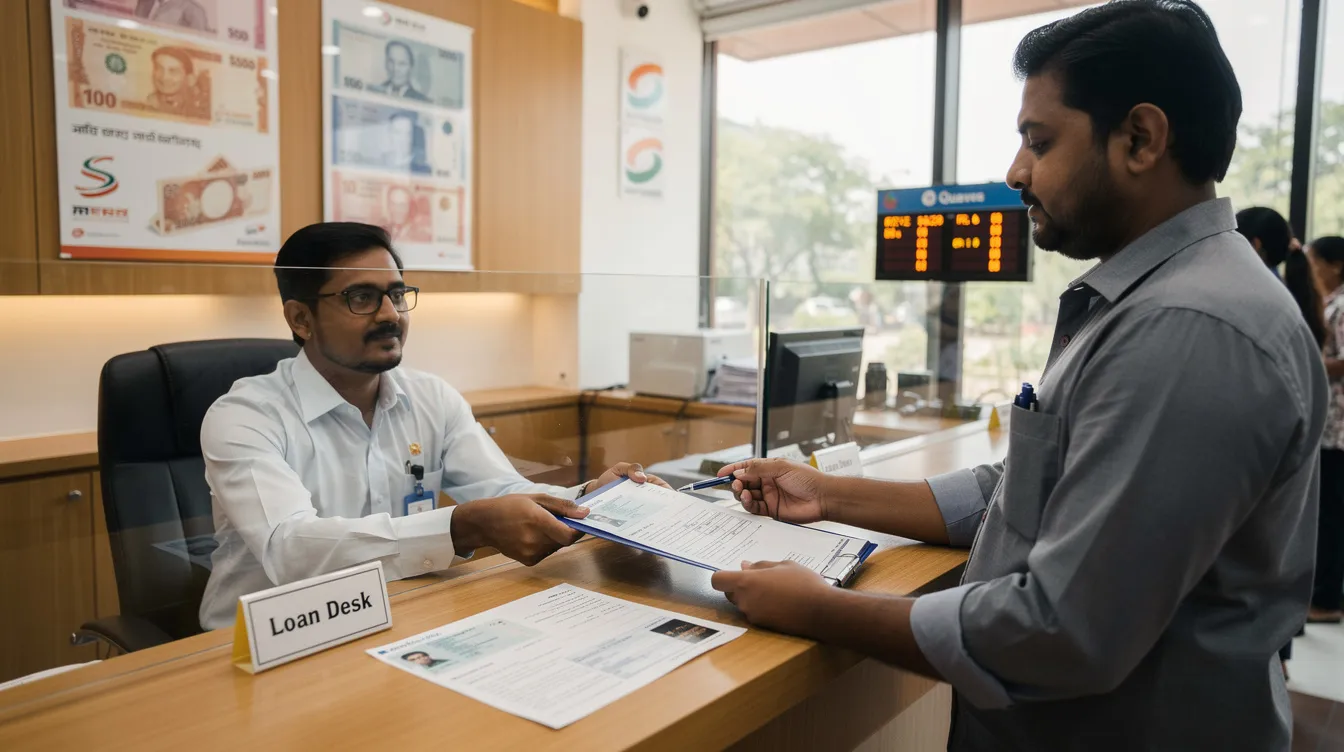
Step 4 – Bank Selection & Application Choose a nearby bank branch where you already have an account if possible. Fill the PMMY/Mudra application form. Submit along with project report and documents.
Step 5 – Bank Verification The bank officer checks documents, visits shop or proposed location (field visit), and may ask questions about your business and projections. This verification step is important for processing.
Step 6 – Loan Approval Internal credit appraisal happens. You receive a sanction letter with approved amount, tenure, interest rate and EMI schedule.
Step 7 – Loan Disbursement Bank releases funds either directly to supplier (for machinery/vehicle) or to your business account. Mudra Loans can be disbursed within 48 hours of approval in some banks, though 7–15 working days is more typical for Kishore and Tarun categories.
Step | Who is Responsible | Approximate Time in Kerala |
|---|---|---|
Business Idea | Entrepreneur | 1–7 days |
Project Report | Entrepreneur + CA/Consultant | 3–7 days |
Document Collection | Entrepreneur | 3–5 days |
Bank Application | Entrepreneur | 1 day |
Bank Verification | Bank Officer | 5–10 days |
Loan Approval | Bank (Internal) | 3–7 days |
Loan Disbursement | Bank | 1–3 days after approval |
Online Mudra Loan applications are accepted by some banks, but for the project report, banks often still need a PDF or printed copy.
Interest Rates and Charges for Mudra Loan in Kerala
Interest rates for Mudra Loans are not fixed by the central government. They are decided by individual banks as per Reserve Bank guidelines and internal policies. Interest rates are deregulated for Mudra Loans in India, and banks are advised to charge reasonable interest rates.
Broad indicative ranges observed in Kerala (2025-2026):
Loan Type | PSB Range | Private Bank Range | NBFC/MFI Range |
|---|---|---|---|
Shishu | ~8.5% – 12% | ~9% – 13% | ~12% – 18% |
Kishore | ~11% – 14% | ~11% – 15% | ~13% – 20% |
Tarun | ~11% – 14% | ~11% – 15% | ~13% – 18% |
Kerala Gramin Bank charges approximately 11.75% for MSME/Mudra loans below Rs. 10 lakhs. Kerala State Co-operative Bank offers special Vanitha Mudra Loan at around 9% for women.
Factors that influence your rate: type of bank (PSB, private, RRB), loan amount, nature of business, credit history, existing relationship with the bank, and whether any additional security is offered for higher ticket sizes.
Other charges to expect: processing fee (often nil or very low for small amounts), documentation charges, insurance premium for asset or credit life cover, and GST on certain charges.
My advice: compare terms from 2–3 nearby banks before making a final decision. But do not delay too much – rate differences are often small for micro loans. Timely repayment and financial discipline matter far more for your long-term credit history.
Common Reasons for Mudra Loan Rejection in Kerala
Many Mudra applications fail not because of scheme limits but due to small, avoidable mistakes. Understanding these helps you prepare better.
Poor or copied project report. Unrealistic sales numbers, very high profit margins, figures not matching Kerala market reality, or using generic internet templates without local data. Banks see through these quickly.
Wrong financial estimates. Underestimating expenses like rent in Kochi city, electricity for machinery, wages, transport costs – and overestimating profit. This creates doubt in the banker’s mind about your knowledge.
Missing or incomplete documents. No PAN, mismatched signatures, unclear address proof, no business registration, incomplete bank statements, or missing quotations for machinery.
Poor credit history. Existing overdue loans, credit card defaults, cheque bounces. Banks worry about past repayment behaviour. Even one small default can cause problems.
Incorrect or inconsistent information. Different business names in forms and documents, mismatch in date of birth, confused loan purpose between application, project report and verbal explanation.
Non-viable business idea. Wanting a Tarun loan without experience or a clear plan, or proposing a business with no local demand in Kerala.
Common Mistake | Impact on Loan | How to Avoid |
|---|---|---|
Copied project report | Rejection or major delay | Get customised report from CA |
Overestimated profits | Bank doubts viability | Use conservative, realistic numbers |
Missing documents | Application returned | Use checklist before submission |
Low CIBIL score | Rejection | Clear dues, wait 3-6 months, reapply |
Inconsistent information | Trust lost with banker | Cross-check all forms and documents |
Unrealistic loan amount | Downsized or rejected | Start with amount you can justify |
For a deeper discussion on why applications fail, read our detailed guide on Reasons for Mudra Loan Rejection.
Tips to Improve Mudra Loan Approval Chances – Practical CA Advice
Based on 20+ years of banking and project report experience, here are practical steps that actually work in Kerala:
Start with a realistic loan amount. Match it to your own contribution and business size. Do not directly apply for Rs. 10 lakhs without need or experience.
Maintain a clean bank statement for 3–6 months before application. Avoid cheque bounces, maintain minimum balance, and show some business transactions if already started.
Get a customised project report. Use actual quotations, realistic estimates, local market knowledge and a clear repayment schedule. A Mudra Loan Consultant or experienced CA can make a significant difference.
Use your existing banking relationship. Apply in the bank where your salary or main business account is already maintained. The lender already knows your transaction pattern.
Keep your CIBIL score healthy. Pay all EMIs and credit card dues on time. Close unnecessary loans. Avoid multiple simultaneous credit applications.
Explain your business clearly to the bank officer. Show understanding of costs, customers and competition in your local Kerala area. Confidence backed by knowledge helps.
For housewives, students and women entrepreneurs: Involving a family member with some financial background during bank meetings can add comfort for the banker.
Industries and Business Ideas Eligible for Mudra Loan in Kerala
The PMMY supports various income-generating activities including manufacturing and services. Almost all non-farm small businesses are eligible. The scheme helps develop such enterprises in every part of India.
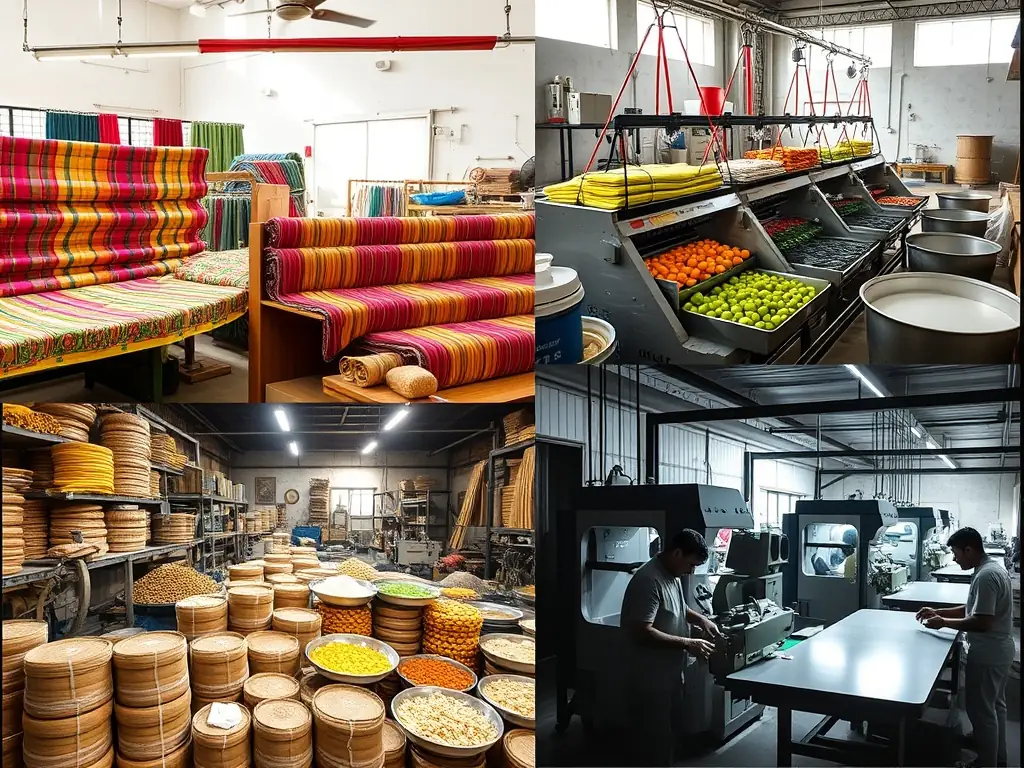
Manufacturing: Coir products, rubber-based products, coconut oil extraction, spices grinding and packing, handicrafts, small garment stitching unit, paper plate making, printing and packaging units, soap and candle making.
Trading and Retail: Grocery stores, fruits and vegetable shops, fish and meat retail, mobile and electronics shops, textile outlets, hardware and plumbing shops, small bookshops, photocopy centres.
Services: Beauty parlours, salons, small hotels and tea shops, fast food centres, travel agencies, courier agencies, mobile repair, computer service centres, housekeeping and cleaning services. Delivery services are also eligible.
Agriculture Allied and Food Processing: Dairy-related small units, poultry, fish processing, pickles and chutney manufacturing, banana chips and traditional Kerala snacks units. Note: pure agriculture crop cultivation is not covered under Mudra.
Digital and Online: Online tutoring, content creation studios, digital marketing services, online stores for handicrafts. If you sell on Amazon or Flipkart, check our guide on Mudra Loan for Amazon Sellers.
Women-Focused and Home-Based: Homemade food tiffin service, tailoring and boutique, homemade sweets and bakery items, arts and crafts. These can often be run from home with minimal investment.
Online Mudra Loan Project Report Kerala – Our CA Services
We are Chartered Accountants specialising in Mudra Loan Project Reports, CMA Reports and MSME Project Reports for clients across India through online mode.
We do not have a physical office in Kerala. However, we provide complete online Mudra Loan Project Report preparation services for all districts in Kerala.
Entrepreneurs from Thiruvananthapuram, Kochi, Kozhikode, Thrissur, Kollam, Kannur, Kottayam, Palakkad, Alappuzha, Malappuram, Kasaragod, Pathanamthitta, Idukki and Wayanad can avail our services. In fact, every town and village in Kerala is covered through WhatsApp, email and phone.
How our online process works:
You share business details and documents via email or WhatsApp.
We discuss requirements over a phone call.
We prepare a customised project report with financial projections.
We make corrections if needed based on your feedback.
We deliver the final PDF that you can print and submit to the bank.
We prepare Mudra Loan Project Reports, CMA Reports Kerala, Financial Projections for up to 5–7 years, and detailed Business Plans depending on loan size and bank requirements.
Advantages of a professional CA-prepared report: correct financial structure, realistic projections, banker-friendly formats, inclusion of DSCR and break-even analysis, and compliance with typical bank appraisal norms.
Comparison With Other State Mudra Loan Project Report Guides
Many principles of Mudra Loan Project Reports are common across India, though cost structures and markets differ by state. A project report for a bakery in Kochi will have different rent and labour costs compared to one in Ahmedabad or Hyderabad.
We have prepared similar detailed guides for other states. If you have business interests outside Kerala, these may be helpful:
Kerala entrepreneurs with business branches in other states can refer to the respective guides for those units while following Kerala-specific advice for local branches.
Simple Example – Mudra Loan Project Report for a Small Kerala Business
Let me walk you through a simple example to make things clear. This is for learning purposes only – your actual report will need more detail.
Business: Small snacks and tea shop in Kochi.
Promoter: Mrs. Lakshmi, 32 years old, 5 years experience working in a restaurant, now wants her own shop.
Cost of Project:
Item | Amount (Rs.) |
|---|---|
Shop rent deposit (6 months) | 60,000 |
Basic interior and furniture | 50,000 |
Kitchen equipment (stove, grinder, utensils) | 40,000 |
Initial raw materials (2 months) | 30,000 |
Working capital (2 months expenses) | 70,000 |
Miscellaneous (licence, signboard etc.) | 10,000 |
Total | 2,60,000 |
Means of Finance:
Source | Amount (Rs.) |
|---|---|
Own contribution (margin) | 60,000 |
Mudra Loan (Kishore) | 2,00,000 |
Total | 2,60,000 |
Simple Yearly Sales Projection:
Year | Monthly Sales (Rs.) | Annual Sales (Rs.) |
|---|---|---|
Year 1 | 80,000 | 9,60,000 |
Year 2 | 1,00,000 | 12,00,000 |
Year 3 | 1,15,000 | 13,80,000 |
Monthly Expenses (Year 1): Rent Rs. 10,000 + Raw materials Rs. 32,000 + Helper salary Rs. 12,000 + Electricity Rs. 3,000 + Others Rs. 3,000 = Rs. 60,000
Monthly Net Cash: Rs. 80,000 – Rs. 60,000 = Rs. 20,000
EMI (approx): For Rs. 2 lakh loan at ~12% for 5 years, EMI is approximately Rs. 4,450.
DSCR: Yearly cash surplus Rs. 2,40,000 ÷ Yearly loan payment Rs. 53,400 = 4.49 (well above the 1.5 minimum banks prefer).
This is a simplified example. The actual report needs more sections, supporting documents and conservative assumptions tailored to real conditions. But it shows the basic logic that bankers look for.


CMA Report Kerala for Larger Mudra and MSME Loans
A CMA (Credit Monitoring Arrangement) Report is a set of detailed financial statements that banks use mainly for working capital assessment and larger MSME loans. Some banks also ask for it with higher-end Tarun Mudra loans.
In simple words, CMA normally includes:
Past financials of 2–3 years (for existing businesses)
Projected financials for next 5–7 years
Working capital assessment
Fund flow statement
Ratio analysis
For small Shishu and many Kishore Mudra loans, banks may not demand full CMA format. But when you are combining a Mudra Loan with a regular MSME term loan and CC (cash credit) limit, CMA becomes important.
Professional preparation of CMA Report Kerala by an experienced CA makes the bank’s appraisal easy and reduces back-and-forth queries. For more details on the broader MSME loan process, our MSME Mudra Loan Guide explains the complete framework.
When CMA is Usually Required | Key Data Needed from Applicant |
|---|---|
Loan above Rs. 5 lakh (Tarun) | Sales history, stock levels |
Combined term loan + CC limit | Debtor/creditor details, bank statements |
Expansion of existing MSME | Past audited financials, GST returns |
Applications through PSBs for larger amounts | Projected turnover and margins |
Mudra Loan for New Business vs Existing Business in Kerala
Banks look at new and existing businesses differently while processing mudra loans.
New Business: Focus is on promoter’s background, skills, experience, business idea quality, project report strength and own contribution. Since no past financial data exists, projections must be strong and realistic. A credit guarantee fund mechanism under the scheme supports such lending, but the borrower still needs to present a convincing case.
Existing Business: Focus is on past turnover, profit, bank statement pattern, GST returns, ITRs and general market standing. The project report should align with historical numbers. Banks feel more comfortable here because they can verify claims.
Factor | New Business Applicant | Existing Business Applicant |
|---|---|---|
Key documents | Project report, quotations, skill proof | ITRs, bank statements, GST returns |
Project report focus | Future projections, market study | Past performance + growth projections |
Bank’s risk view | Higher risk | Lower risk |
Typical Mudra loan size | Usually Shishu or Kishore | Kishore or Tarun |
Kerala example: A fresh graduate in Kannur starting a computer service centre (new business) will need a stronger project report than a hardware shop owner in Thrissur who has been running the shop for 3 years and wants to expand (existing business).
Mudra Loan Kerala – Special Focus on Women, Housewives and Students
A large number of new small businesses in Kerala are now started by women, housewives and students, often from home. The government is actively supporting this trend.
Under PMMY, many banks give preference to applications from women and may offer slightly better terms. Nationally, about 68% of all Mudra Loan beneficiaries are women.
Typical business ideas for women in Kerala: Home catering, bakery, tailoring, beauty parlour at home, online reselling, tuition classes, craft items, homemade pickles and snacks.
For housewives: You can use simple documents – Aadhaar, PAN, spouse’s income proof if required, a rental agreement – and a clear project report to convince the bank. Our guide on Mudra Loan for Housewives has specific advice. You can also explore Mudra Loan for Home Business if you plan to work from home.
For students: If you want to start a part-time coaching centre, mobile repair unit, digital marketing service or small e-commerce business, banks will check your seriousness and family support. A clear project report is essential.
Financial intermediaries in Kerala, including cooperative banks, are actively supporting women-led micro enterprises through special schemes.
Mudra Loan Kerala – With or Without GST Registration
Small businesses below certain turnover limits are not mandatorily required to register under GST. Rules change periodically, so always confirm with a CA or tax advisor.
Mudra Loan can be given both to GST-registered and non-registered small units, subject to bank policy and turnover size. For very small businesses (Shishu category), banks usually do not insist on GST.
If your business is slightly larger, GST registration helps. It creates better financial records, makes you eligible for bigger loans and gives recognition in the industry as a formal entity.
For very small businesses that do not have GST, check our guide on Mudra Loan Without GST Registration to understand your options better.
EMI, Repayment and Financial Discipline for Mudra Loans
Repaying your Mudra Loan EMI on time is critical. It builds your credit history, makes you eligible for future bigger loans (housing, car, business expansion) and keeps you in good standing with the bank.
How EMI works: EMI is calculated based on loan amount, interest rate and tenure. You can use free online EMI calculators or ask your bank officer for the exact figure.
Typical repayment tenures:
Shishu: 12–36 months
Kishore: 36–60 months
Tarun: Up to 84 months (Kerala Gramin Bank allows maximum 84 months for term loans)
Longer tenure reduces monthly EMI but increases total interest paid. Choose a balance that your cash flow can handle comfortably.
Practical tips:
Keep a separate business bank account
Maintain a small emergency reserve (at least 2 months of EMI)
Always keep EMI amount ready before due date
Never use loan amount for personal consumption
Quick example: For a Rs. 3 lakh loan at 12% interest for 5 years, approximate monthly EMI is Rs. 6,675. Over 5 years, you pay about Rs. 1 lakh as total interest. If you can repay in 3 years, EMI goes up to approximately Rs. 9,960 but total interest drops to about Rs. 58,500. Exact EMI depends on your bank’s actual terms.
Frequently Asked Questions – Mudra Loan Kerala
Can I get Mudra Loan in Kerala without collateral?
Yes. No collateral is required for loans up to Rs. 10 lakhs under PMMY. This is one of the biggest advantages of the scheme. However, some banks may ask for margin money (your own contribution) in Kishore and Tarun categories.
What is the maximum Mudra Loan amount I can get in Kerala in 2026?
The standard maximum is Rs. 10 lakhs. If you have successfully repaid a previous Tarun loan, you may be eligible for Tarun+ up to Rs. 20 lakhs, depending on your bank’s policy.
How many days does it usually take to get Mudra Loan sanctioned in Kerala?
Typically 7–15 working days for Kishore and Tarun loans when all documents and project report are complete. Shishu loans through digital channels can sometimes be processed in 1–3 days.
Can an NRI family member support my Mudra Loan application in Kerala?
The Mudra Loan applicant must be an Indian resident. An NRI family member cannot be the primary applicant, but they can provide financial assistance for your own contribution or margin money.
Is Mudra Loan available for homestay or tourism-related units in Kerala?
Yes, if the business is a legitimate service business with proper licenses and registrations. Tourism-related services like small homestays, travel desks, local tour operations and souvenir shops are eligible.
Can I use Mudra Loan to buy used machinery?
Yes, many banks allow purchase of used machines under Mudra, provided the machinery is in working condition and properly valued. Read more in our guide on Mudra Loan for Used Machinery.
Is Mudra Loan available for franchise businesses in Kerala?
Yes. If you want to open a franchise outlet (food chain, courier franchise, education centre etc.), Mudra Loan can fund the setup. Our guide on Mudra Loan for Franchise Business has more details.
Author Profile – CA Manish Gugliya
This article is written from the experience of CA Manish Gugliya, a Chartered Accountant with more than 20 years of practical experience in preparing Project Reports, CMA Reports, Business Plans, Mudra Loan Consultancy, MSME Finance and Startup Finance across India.
He has worked with thousands of micro and small businesses – manufacturers, traders, service providers, home businesses and startups – seeking Mudra and MSME loans from various banks. His team provides online project report and financial projection services to entrepreneurs from all districts of Kerala and many other Indian states.
All guidance in this article is general in nature. Entrepreneurs should discuss specific cases with their bank and professional advisor before taking financial decisions.
Key Features & Industries We Serve Across Kerala
Comprehensive & Compliant Reports
Diverse Industry Experience in Kerala

Trusted by Hundreds of Clients
No, we operate entirely online and serve clients across Kerala without a physical office.
Typically, it takes 2-3 business days, depending on the complexity of your project.
We need basic business details, financial data, and industry information, which we guide you to provide.
Simply contact us through our website, and we will guide you through the easy online process.