Key Takeaways
- This article is a practical guide to planning a multigrain atta manufacturing plant in India, covering the manufacturing process, machinery, raw materials, project cost, profitability, working capital and bank finance requirements.
- A multigrain flour blending and packaging unit (buying ready-made flours) requires significantly lower capital than an integrated flour mill plant that handles grain cleaning, milling, blending and packing in-house. The right model depends on your capital, technical capability and long-term business strategy.
- Typical plant capacities range from 1 TPD to 20 TPD and above. Multigrain atta plant setup cost can range from approximately ₹18–20 lakh for a small unit to well over ₹1 crore for a larger integrated plant, depending on capacity, automation level and location.
- Capacity utilisation directly impacts profit margin, cash flow and DSCR. A plant operating at 50% utilisation will have fundamentally different economics than one running at 80%.
- All financial figures in this article are illustrative only. For an actual multigrain atta manufacturing plant in India, a customised DPR and CMA Data prepared with project-specific assumptions is essential. Project Report Bank, led by CA Manish Gugliya, provides professional DPR preparation, financial projections and bank loan documentation for flour milling and food processing projects.
Introduction to Multigrain Atta Manufacturing Plant in India
A multigrain atta manufacturing plant project report is one of the most frequently requested documents we prepare for entrepreneurs entering the value-added flour segment in India. Multigrain atta – flour made by blending wheat with grains such as ragi, jowar, bajra, oats, barley and maize – has moved from a niche health product to a mainstream grocery item. A multigrain atta manufacturing plant requires a comprehensive project report for feasibility, securing financing, obtaining approvals and guiding the entire setup process.
Multigrain flour offers diverse nutrients from various grains, promotes overall health and well-being, and has a distinctive flavor profile that enhances culinary creations with depth and complexity. Compared to conventional wheat flour, multigrain atta delivers higher dietary fibre, improved amino acid balance and a lower glycemic response, making it suitable for health-conscious households and institutional buyers alike.
Entrepreneurs and existing flour mill operators can approach this business through two distinct models. The first is a multigrain flour blending and packaging unit that purchases pre-milled wheat flour and other grain flours, blends them according to a recipe and packs the finished product. This requires lower fixed investment, simpler processing and less power. The second is an integrated automatic multigrain atta manufacturing plant that performs full grain cleaning, conditioning, flour milling, blending and packaging under one roof. This offers better control over quality and raw material cost but involves substantially higher capital expenditure and more complex machinery.
A professionally prepared multigrain atta manufacturing plant DPR helps in estimating project cost and machinery requirements, planning production capacity and working capital, and preparing a bank loan project report with realistic financial projections. Essential components of such a project report include financial projections and market analysis, technical feasibility assessment, risk evaluation and sensitivity scenarios.
Planning to set up a multigrain atta manufacturing plant? Project Report Bank, led by CA Manish Gugliya (FCA, DISA), prepares customised Detailed Project Reports, CMA Data and financial models for flour milling and multigrain atta projects across India. Visit www.projectreportbank.com to discuss your project.
Market Opportunities for Multigrain Atta Manufacturing in India
The demand for healthier packaged flour products in India has grown steadily. Urbanisation, rising incidence of lifestyle-related health conditions and greater consumer awareness about nutrition have contributed to a shift from plain wheat atta toward multigrain and millet-based flour blends. The Government of India’s push through initiatives like the National Millet Mission has further increased consumer interest in blended flour products.
Key demand segments include retail households purchasing branded multigrain atta in 1 kg, 5 kg and 10 kg packs; institutional buyers such as tiffin services, restaurants, bakeries and quick-service chains incorporating multigrain flour into their menus; and private-label opportunities for supermarkets and online grocery platforms. Market analysis should cover target audience demographics and competitive landscape to position the product effectively.
Sales channels span general trade through kirana stores and distributors, modern trade through supermarkets, e-commerce marketplaces, and B2B bulk supply to institutional users. Existing atta chakki or roller flour mill operators can diversify into multigrain atta using their existing infrastructure by adding blending and packaging lines, while new entrepreneurs can launch region-specific blends using locally available grains.
Competition from national brands, regional players and unbranded local millers is real. New entrants can differentiate through grain formulation, authentic sourcing, consistent flour quality, compliant packaging and competitive pricing.
Raw Materials Required for Multigrain Atta Manufacturing
Raw material sourcing is critical and must consider quality and availability. The selection of grains directly impacts nutrition, taste, flour behaviour in dough, production cost per kg and shelf life.
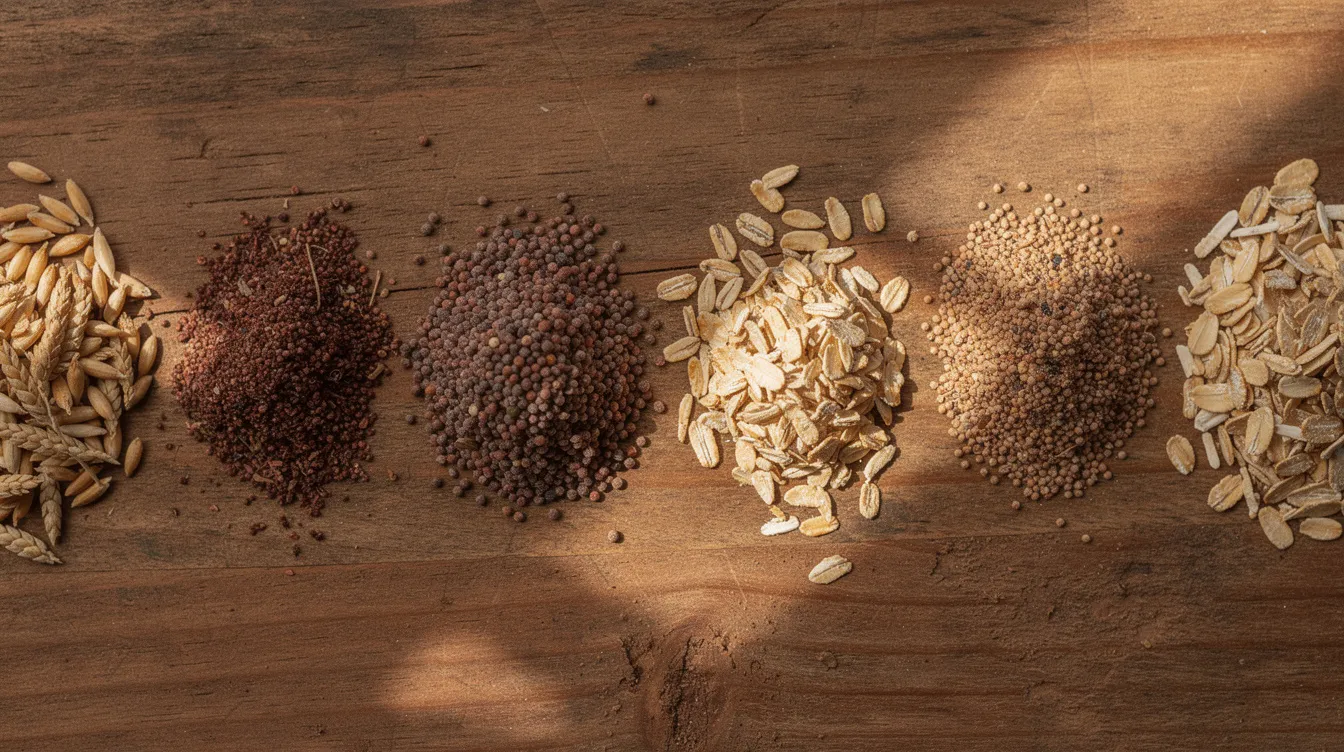
Commonly used grains and pulses include:
- Wheat – the primary base, typically forming 60–80% of the blend
- Ragi (finger millet) – adds calcium and fibre
- Jowar (sorghum) – gluten-free, high in antioxidants
- Bajra (pearl millet) – rich in iron and magnesium
- Maize (corn) – contributes colour and texture variety
- Oats – adds soluble fibre
- Barley – contributes beta-glucan
- Optional additions like defatted soya flour, chickpea flour, flaxseed – with appropriate allergen labelling
Key quality parameters include grain size, cleanliness, absence of mould and insects, moisture content (typically 11–13% for most cereals for safe milling and storage), test weight, foreign matter and aflatoxin levels, particularly for maize and certain millets.
Grains are typically sourced from local APMC mandis, Farmer Producer Organisations (FPOs) or bulk traders. Seasonal price variations make it important to plan buffer procurement during harvest months. Monthly raw material costs for mid-scale units can reach ₹10–50 lakh depending on capacity and blend composition.
Storage requires separate godowns or silos for each grain with pallets, ventilation, FIFO rotation and periodic fumigation. Storage silos are essential for both raw grain and finished flour to maintain product quality.
Illustrative Multigrain Atta Formulation (100 kg Batch)
| Grain / Ingredient | Approximate % | Key Contribution |
|---|---|---|
| Wheat | 70% | Base flour, gluten for dough |
| Ragi | 8% | Calcium, fibre |
| Jowar | 7% | Antioxidants, texture |
| Bajra | 5% | Iron, minerals |
| Oats | 5% | Soluble fibre |
| Barley | 3% | Beta-glucan |
| Defatted Soya Flour | 2% | Protein boost |
This is a sample recipe for understanding cost and process only. Actual formulations vary by brand positioning and must comply with FSSAI guidelines.
Research from CFTRI, Mysore indicates that at a 10% non-wheat grain blend, protein content can rise from approximately 11.4% (pure wheat) to about 14.25%, though higher blends (beyond 15–20%) may affect dough workability, chapati puffing and colour. Shelf life of multigrain atta is approximately 2–3 months under proper packaging and storage conditions, as noted by both CFTRI and the Indian Institute of Millet Research.
Multigrain Atta Manufacturing Process and Flow Chart
The manufacturing process differs significantly depending on whether the plant is a flour blending and packing unit or a fully integrated multigrain flour mill plant.
Integrated Multigrain Atta Manufacturing Plant – Process Steps
- Raw material procurement and unloading – receipt of wheat and other grains at the plant
- Primary inspection and sampling – quality checks for moisture, foreign matter and grain condition
- Cleaning and pre-treatment – pre-cleaners, vibro cleaners, gravity separators and magnetic separators remove dust, stones and metallic contaminants
- Destoning – removal of stones and heavy impurities
- Conditioning/tempering – especially for wheat, to optimise moisture for the milling process
- Individual grain milling – roller mills are commonly used for wheat flour production, while stone mills, hammer mills or pulverisers may be used for different grains depending on desired texture
- Sieving and grading – plansifters grade the finished flour and separate bran; particle size control is important for consistent flour quality and consumer acceptability
- Recipe-based weighing – accurate proportioning of individual flours as per the multigrain formulation
- Blending – uniform mixing in a ribbon blender or paddle mixer
- Quality control and metal detection – moisture testing, granulation checks, sensory evaluation and metal detection before packing
- Packaging – into food-grade laminated pouches or bags using semi-automatic or fully automatic packing machines; automated packing machines ensure hygiene in flour packaging, and packaging must ensure product freshness and comply with food safety standards
- Finished goods storage and dispatch – palletisation, batch coding and shipment
Simplified Process for a Blending-Only Plant
A multigrain flour blending plant that purchases ready-made flours follows a shorter process: receipt and inspection of individual flours, basic sieving, recipe-based weighing and blending, metal detection, packaging and dispatch. This model skips grain cleaning, conditioning and milling entirely.
Important process controls include consistency in weighing and mixing to maintain the same taste and nutrition in every batch, controlling flour temperature during milling to prevent rancidity (particularly relevant when processing high-oil grains), and maintaining housekeeping standards with dust control systems that maintain cleanliness in flour milling operations.
Multigrain Atta Plant Machinery and Equipment Cost
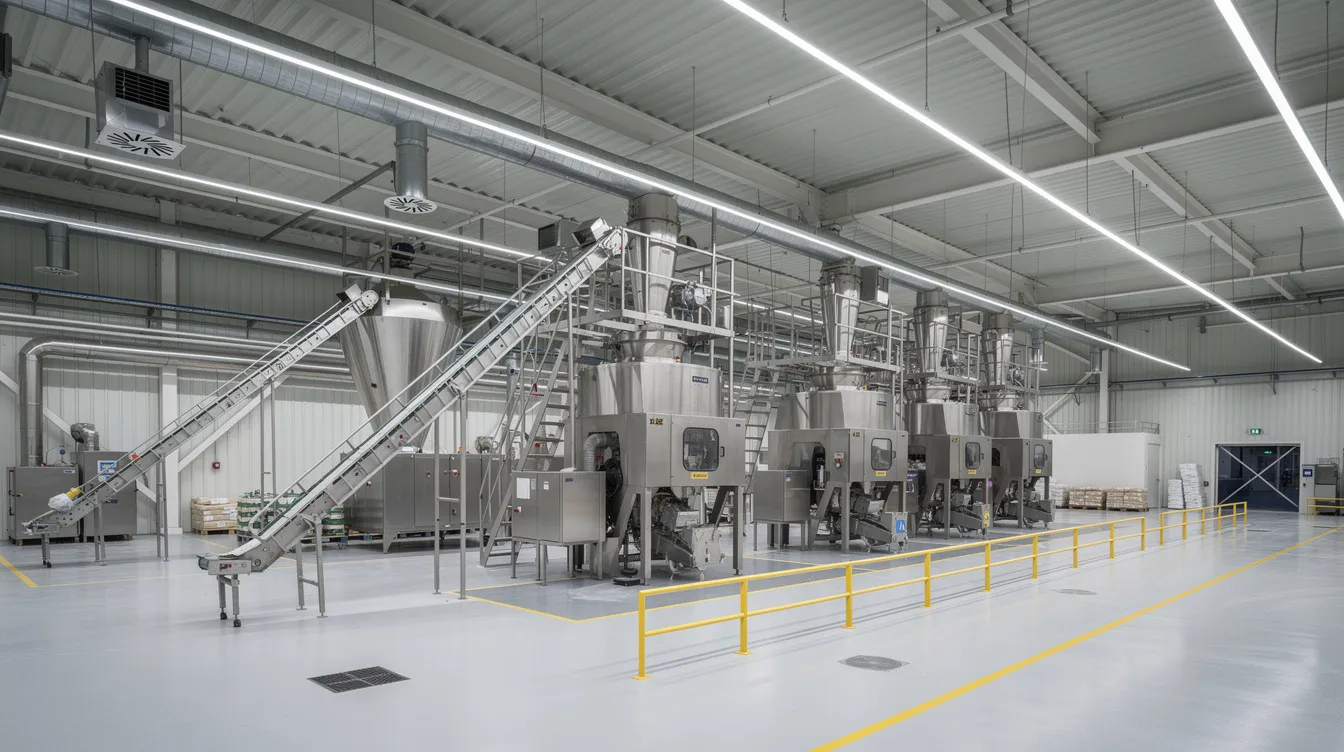
Machinery configuration and multigrain flour mill machinery cost depend on plant capacity, automation level and whether the plant is blending-only or integrated milling plus blending.
Key Machinery for an Integrated Plant
| Machine / Equipment | Purpose | Capacity Considerations | Key Investment Factors |
|---|---|---|---|
| Grain intake, elevators, conveyors | Material handling | Matched to plant TPD | Conveyors add efficiency; bucket elevators for vertical transport |
| Pre-cleaners, vibro separators | Removing dust and light impurities | Continuous flow | Indian vs imported; stainless steel contact parts |
| Destoners, magnetic separators | Stone and metal removal | Matched to grain intake rate | Essential for food safety compliance |
| Flour mill (roller mill / chakki / pulveriser) | Grinding grains into flour | 250 kg/hr to 2 TPH per unit | Roller mills for wheat; traditional mills or hammer mills for millets; energy efficiency matters |
| Plansifter / sieving machine | Flour grading and bran separation | Matched to mill output | Determines particle size and product quality |
| Storage bins / silos | Intermediate flour storage | Based on batch or continuous flow | Prevents cross-contamination between grain types |
| Ribbon blender / paddle mixer | Multigrain flour blending | 200 kg to 2,000 kg per batch | Uniform mixing critical for consistent product |
| Dust collection system | Housekeeping and worker safety | Plant-wide | Regulatory and operational necessity |
| Packing machines | Weighing, filling, sealing | Semi-auto or fully automatic | Machines designed for 1–25 kg packs; automation reduces labour |
| Metal detector, check weigher | Quality assurance | In-line before packing | Non-negotiable for food processing |
| Electrical panels, automation | Process control | PLC-based for larger plants | Higher initial cost but better consistency |
A fully automatic multigrain atta manufacturing plant with PLC-based recipe control, automated grain handling and online weighing will have higher initial investment but potentially lower long-term labour cost. Fully automatic flour mills reduce labor costs significantly compared to semi-automatic setups.
As per MOFPI draft cost norms, machinery for a 1 ton/hr semi-automatic atta milling line is approximately ₹12.50 lakh, while a 2 ton/hr line costs approximately ₹19.80 lakh – covering cleaning, milling, crushing and associated equipment only. A small-scale flour mill may require ₹15–25 lakh for machinery. Total plant cost including civil, electrical and utilities will be substantially higher.
Entrepreneurs should obtain multiple quotations from reputed flour mill machinery manufacturers in India, comparing not just price but also warranty, power consumption, spares availability and expansion options. Project Report Bank does not supply machinery but uses realistic market-based assumptions and client quotations while preparing the multigrain atta manufacturing plant DPR.
Multigrain Atta Manufacturing Plant Capacity Planning
Capacity planning must be aligned with target market size, distribution reach and financial capacity – not just technical ambition. Plant capacity influences equipment needs, layout design and operational costs at every level.
Typical capacity options:
- Micro / small unit: 1–2 TPD, serving local markets, operating 8–10 hours/day
- MSME unit: 5–10 TPD, district or regional presence, typically 16-hour operations
- Larger regional plant: 20 TPD and above, wider state-level distribution, 16–20 hour shifts
Key planning concepts include the distinction between installed capacity and achievable capacity (accounting for realistic stoppages), working days per year (commonly 250–300 days after maintenance and holidays), and capacity utilisation build-up over initial years. Many new plants operate at approximately 50–60% utilisation in Year 1, rising to 70% in Year 2 and 80–90% by Year 3 as brand acceptance and distribution develop.
Milling yield and process losses typically reduce gross grain input to net saleable multigrain atta output by 5–10% or more, depending on grain mix, cleaning stages and quality. Product mix across retail packs (1 kg, 2 kg, 5 kg) and institutional bags (10 kg, 25 kg) affects packing machine throughput and daily tonnage.
Illustrative example: A 10 TPD plant operating 300 days/year at 70% utilisation produces approximately 2,100 tonnes annually. This production volume forms the basis of financial projections, revenue estimates and break-even calculations. Capacity utilisation directly influences profitability, cash flow, loan repayment capacity and DSCR for term loans. For a deeper understanding of how plant ROI and sensitivity change with capacity, structured scenario analysis is essential.
Multigrain Atta Manufacturing Plant Setup Cost in India
Multigrain flour manufacturing plant cost in India depends on plant capacity (TPD), whether it is a blending-only unit or an integrated grain milling plant, automation level, location and building specifications. A multigrain flour mill requires 1,800 to 2,000 square feet of space at minimum for a small unit; larger plants need considerably more.
Major investment heads include:
- Land purchase or lease – land costs for flour mills range from ₹10 lakh to ₹1 crore depending on state and proximity to urban centres
- Site development and boundary wall
- Factory building – production area, raw material godown, finished goods storage, utilities room and office
- Plant and machinery including taxes and transportation
- Electrical installations and cabling
- Material handling equipment
- Laboratory, furniture and office equipment
- Pre-operative expenses (consultancy, interest during construction, initial training)
- Contingencies (5–10% buffer on major capital items)
- Margin for working capital
Illustrative Project Cost – 10 TPD Integrated Multigrain Atta Plant
| Cost Head | Illustrative Amount (₹ Lakh) |
|---|---|
| Land and site development | 15–60 |
| Factory building and civil works | 25–50 |
| Plant and machinery (installed) | 45–80 |
| Electrical installation and utilities | 8–15 |
| Material handling, lab, furniture | 3–6 |
| Pre-operative expenses | 3–5 |
| Contingencies | 5–10 |
| Margin for working capital | 10–20 |
| Estimated Total Project Cost | ₹115–245 Lakh |
These figures are illustrative only, based on generic market understanding. Actual quotations and site conditions will differ significantly.
Investment for a small multigrain flour mill (1–2 TPD) is approximately 18 to 20 lakh rupees for basic machinery and setup, while larger multigrain flour mills may require 35 to 40 lakh rupees or more. For a detailed comparison with atta chakki plant setup costs, the critical variable is whether the plant performs in-house milling or relies on purchased flours.
Multigrain Atta Plant Project Cost and Means of Finance
Total project cost is the sum of fixed capital (land, building, plant and machinery, other fixed assets) plus margin for working capital. Financial projections should estimate both capital and working capital requirements clearly.
Illustrative Means of Finance – 10 TPD Plant (Total Project Cost: ₹1.50 Crore)
| Source | % Share | Amount (₹ Lakh) |
|---|---|---|
| Promoter’s contribution (equity) | 30% | 45.00 |
| Term loan from bank | 55% | 82.50 |
| Working capital limit (CC/OD) | 15% | 22.50 |
| Total | 100% | 150.00 |
Exact debt-equity ratio depends on bank norms and promoter strength.
Typical term loan repayment tenor for machinery is 5–7 years, with a moratorium period during project implementation. Interest rate assumptions should reflect prevailing MSME lending practices. The correct structuring of term loan versus working capital is important for managing cash flow smoothly, ensuring a reasonable DSCR and satisfying bank appraisal norms. For a broader understanding of project cost structuring and means of finance, the principles remain consistent across flour milling projects.
Multigrain Atta Manufacturing Working Capital Requirements
Working capital is the capital locked in day-to-day operations – separate from fixed investment in plant and machinery. Working capital is crucial for maintaining raw material inventory and operational liquidity.
Major working capital components:
- Raw material inventory (wheat, ragi, jowar, bajra, oats and other grains)
- Packaging material inventory (printed pouches, outer cartons, bags, labels)
- Work-in-progress (typically minimal in atta manufacturing)
- Finished goods stock to serve distributors and retail orders
- Trade receivables from distributors, super-stockists and institutional clients
- Less: trade creditors and credit period from suppliers
- Cash and bank balance for wages, power bills, transport and routine expenses
The working capital cycle – the number of days from paying for raw materials to realising money from customers – determines the quantum of funds required. Higher credit to customers and lower credit from suppliers means a larger working capital requirement.
Illustrative Working Capital Assessment (10 TPD Plant at 70% Utilisation)
| Component | Holding Period | Illustrative Amount (₹ Lakh) |
|---|---|---|
| Raw material inventory | 30 days | 8–12 |
| Packaging material | 15 days | 1–2 |
| Finished goods | 10 days | 4–6 |
| Trade receivables | 30 days | 10–15 |
| Less: Trade creditors | 15 days | (4–6) |
| Operating expenses buffer | – | 2–3 |
| Gross working capital | 21–32 |
Part of this is funded by promoter margin money; part is financed by bank cash credit limits. CMA Data for bank loans presents these working capital projections in the format banks require for appraisal.
Multigrain Atta Plant Financial Projections and Profitability
Financial projections for a multigrain atta plant typically cover 5–7 years and are built on key operating assumptions. Financial modeling analyzes profitability through detailed cash flow and profit-loss calculations.
Main elements of projected Profit and Loss:
- Production volume based on capacity and utilisation ramp-up
- Average selling price per kg across pack sizes and channels – multigrain atta usually commands a 10–25% premium over regular wheat atta
- Raw material cost based on formulation and grain prices
- Packaging cost per kg (inner pouches, outer bags)
- Power and fuel – electricity bills for flour mills can range from ₹1–5 lakh monthly depending on plant size and operating hours
- Labour – monthly salaries for staff may range from ₹2 to ₹10 lakh depending on plant scale and automation
- Factory overheads, repairs and maintenance
- Selling and distribution expenses including freight and promotional activities
- Administrative overheads
EBITDA is derived after deducting all operating costs. Then depreciation, interest on term loan and working capital, provision for tax and finally profit after tax and cash accruals (PAT + depreciation) are computed.
Illustrative Financial Summary (10 TPD Plant)
| Particulars | Year 2 (65% CU) | Year 3 (75% CU) |
|---|---|---|
| Production (MT) | 1,950 | 2,250 |
| Net Sales (₹ Lakh) | 682 | 788 |
| Raw Material + Packing | 530 | 610 |
| Gross Profit | 152 | 178 |
| EBITDA | 72 | 92 |
| Interest | 14 | 12 |
| Depreciation | 12 | 12 |
| PBT | 46 | 68 |
| PAT (approx.) | 35 | 51 |
| Cash Accruals | 47 | 63 |
Purely illustrative. Actual results depend on local conditions, management efficiency and market dynamics.
The difference between gross margin, EBITDA margin and net profit margin is significant. Claims that “profit margin is always 15%” are oversimplified and may mislead investors. Gross margins do not automatically represent final net profitability after interest, depreciation and tax.
Multigrain Atta Plant ROI, IRR, DSCR and Break-Even Analysis
These indicators help both promoters and lenders assess multigrain atta plant investment and profitability from different angles.
- Return on Investment (ROI) – average annual profit compared to total project cost
- Project IRR – the discount rate at which NPV of project cash flows becomes zero
- Equity IRR – return to equity investors after debt servicing
- Payback Period – time to recover initial investment from net cash accruals
- DSCR – ratio of cash available for debt servicing to term loan repayment obligations; most lenders expect average DSCR of 1.5x or higher
- Break-Even Point – a break-even analysis is essential for understanding the sales volume needed to cover all fixed and variable costs
These indicators change when selling prices fluctuate, raw material costs rise due to poor harvests, capacity utilisation falls below plan, or interest rates shift. Comprehensive analysis includes sensitivity analysis to assess project robustness under varying scenarios.
There is no fixed “standard” IRR or DSCR applicable to every multigrain atta plant. The numbers emerge from a detailed project-specific financial model.
Multigrain Atta Manufacturing Plant Feasibility Study
A feasibility study is a holistic evaluation of market, technical, financial and managerial factors before committing large capital. Technical feasibility must assess the manufacturing process and required machinery alongside infrastructure suitability.
Market feasibility covers demand in the target geography, competition mapping, price points acceptable to consumers and distribution channel viability.
Technical feasibility evaluates suitability of selected plant capacity and technology, availability of skilled manpower, and reliability of utilities including power, water and road access in the chosen location.
Raw material feasibility assesses proximity to wheat and millet-growing regions, year-round availability of consistent quality grains and storage infrastructure.
Financial feasibility examines likely profitability, IRR, DSCR and cash-flow patterns based on realistic assumptions, and the promoter’s ability to arrange margin money and manage the working capital cycle.
Sensitivity analysis should test scenarios including 5–10% increase in grain procurement prices, 5–10% reduction in selling prices, lower-than-planned capacity utilisation in the first 2–3 years, higher power or labour costs and delayed payments from distributors. A structured feasibility study helps promoters either refine the project or decide not to proceed, avoiding costly mistakes.
Licences and Regulatory Requirements in India
Exact licensing requirements depend on state, capacity and manufacturing process. Licensing costs for flour mills range from ₹50,000 to ₹5 lakh depending on scale and regulatory category. Promoters should verify with local authorities at the time of implementation.
Common registrations include:
- Business registration (proprietorship, partnership, LLP or company) and PAN
- Udyam Registration for MSME benefits
- FSSAI registration or licence (state or central, depending on capacity and turnover)
- GST registration where applicable – licenses needed include GST, FSSAI and UDYAM registration
- Factory licence under the Factories Act
- Pollution control board consent or NOC where applicable – statutory approvals include FSSAI registration and pollution control board consent
- Trade licence and fire safety NOC from local authorities
- Legal Metrology compliance for net quantity declarations, ingredient lists, FSSAI licence number and nutritional information on packaged atta
Maintaining hygiene, pest control and batch-wise traceability records is essential under FSSAI schedules. Entrepreneurs should consult official government websites or professional advisors for updated compliance requirements.
Bank Loan and Finance for Multigrain Atta Manufacturing Plant
Most multigrain atta plants in India are financed through a mix of promoter funds and bank loans. Banks require a detailed, well-structured multigrain atta plant bank loan project report. The project report is needed to secure financing, obtain approvals and guide setup decisions.
Banks evaluate term loan proposals, working capital facilities and sometimes non-fund-based facilities. Typical documentation includes KYC and promoter background, a Detailed Project Report in the format banks require, CMA Data with projected balance sheets and fund flows, machinery quotations, layout plans, sales and profitability projections, DSCR analysis and collateral details.
MSME and government credit schemes such as CGTMSE may support eligible projects, though eligibility and terms change over time and must be verified at application.
Banks focus beyond plant cost – they examine break-even analysis, DSCR, sensitivity to changes in selling price and raw material cost, the promoter’s track record and the reasonableness of working capital assumptions.
Need bank finance advisory for your multigrain atta project? Project Report Bank offers bank finance DPR and loan proposal assistance, CMA Data preparation and financial projections tailored to flour milling and food processing projects.
Risks and Challenges in Multigrain Atta Manufacturing
Multigrain atta can be profitable, but a comprehensive project report must address risk assessment and mitigation strategies. The ideal project report structure highlights technical feasibility, market viability and financial assessments alongside the following risks:
- Raw material price volatility – mitigate through diversified sourcing, buffer stocks during harvest and flexible pricing
- Quality consistency – variation in grain quality affects flour behaviour and product quality; mitigate through strict incoming checks and standard operating procedures
- Shelf life concerns – high-oil grains can cause rancidity; control through proper storage, avoiding excessive milling heat and using barrier packaging
- Inventory management – avoid over-stocking by demand forecasting and smaller batch production
- Competitive pricing – differentiate on formulation, freshness, local branding and consumer education on nutritional benefits
- Distribution challenges – build strong distributor partnerships and focus on profitable geographies
- Credit and collection risk – set credit limits and use digital payment terms
- Operational risk – preventive maintenance schedules and appropriate power backup
- Financial risk – conservative assumptions, periodic review of projections versus actuals
Why a Professional DPR Is Important for Multigrain Atta Manufacturing
Many entrepreneurs start a flour mill based on rough estimates, which often leads to cost overruns and cash-flow stress. A professional Detailed Project Report reduces such surprises. A multigrain flour mill project report from Project Report Bank typically covers:
- Detailed project description (capacity, product range, location, process type)
- Technical details of plant layout, machinery specifications and utilities
- Manufacturing process and quality control framework
- Project cost estimation based on realistic quotations
- Financial projections for 5–7 years including P&L, Balance Sheet, Cash Flow and Funds Flow
- Working capital assessment and CMA Data
- Break-even, ROI, IRR, DSCR and sensitivity scenarios
- Risk analysis, mitigation strategies and implementation schedule
A customised DPR helps promoters understand investment and payback clearly, helps banks evaluate loan proposals with confidence, and enables investors to assess commercial viability. It is not a static document but can be updated as quotations, market conditions and project scope change.
How CA Manish Gugliya Assists Multigrain Atta Manufacturing Entrepreneurs
CA Manish Gugliya is a practising Chartered Accountant with more than 20 years of experience in project finance, DPR preparation, financial modelling and MSME advisory. Through ProjectReportBank.com, professional services for multigrain atta and flour mill projects include customised DPR preparation, project cost and investment planning, CMA Data preparation for bank loans, financial projections and scenario analysis, project feasibility studies, DSCR analysis and loan repayment structuring, bank finance DPR and loan proposal assistance, and investor-ready financial documentation.
These services are advisory in nature and do not guarantee bank sanction or subsidies, but they substantially improve the quality, clarity and defensibility of the entrepreneur’s proposal.
Frequently Asked Questions
What is a realistic starting capacity for a new multigrain atta plant?
Many first-time promoters begin with 1–5 TPD capacity. This keeps the multigrain atta plant setup cost manageable, allows easier funding, limits initial risk and provides room to scale up once brand acceptance and distribution improve. A budget of approximately ₹18–40 lakh for machinery and basic setup is common at this scale, though total project cost including civil works and working capital will be higher.
Can I convert my existing wheat flour mill into a multigrain atta manufacturing unit?
Yes. Practical steps include adding separate cleaning and milling lines for other grains (or sourcing ready-made flours), installing a ribbon blender and packing line, updating your FSSAI licence and labels to reflect the new product range, and recalibrating financial projections to account for value-added products. The additional investment depends on your existing infrastructure and chosen automation level.
How do I decide between a blending-only plant and an integrated milling plant?
A blending-only plant requires lower initial investment and can start operations faster, but depends entirely on purchased flour quality and pricing. An integrated flour mill plant offers better control over raw material cost and product quality but needs more capital, technical expertise and larger premises. The decision depends on available budget, local grain availability, long-term brand strategy and your business needs.
Does multigrain atta require special packaging compared to regular wheat atta?
Yes, to a degree. Because some multigrain blends contain higher fat or fibre components from grains like flaxseed or certain millets, the barrier properties of packaging become more important to avoid rancidity and maintain freshness. Food-grade laminated pouches with proper sealing are recommended. Shelf-life declarations should be based on actual testing – typically 2–3 months under normal conditions.
How long does it take to prepare a professional DPR for a multigrain atta plant?
Typically a few working weeks, depending on how quickly the promoter provides inputs such as target capacity, location details, machinery quotations and financing preferences. Project Report Bank works iteratively, incorporating client feedback and bank-specific requirements to deliver a DPR that is both comprehensive and practically useful.
Conclusion – Planning a Financially Viable Multigrain Atta Manufacturing Plant
Setting up a multigrain atta manufacturing plant in India requires coordinated attention to market demand, plant capacity, raw material strategy, the manufacturing process, project cost, working capital and regulatory compliance. The food processing industry offers genuine opportunities in value-added flour products, but innovation in formulation must be matched by disciplined financial planning.
Entrepreneurs should carefully choose between blending-only and integrated flour mill plant models based on capital and control requirements. They should avoid overestimating demand or underestimating operating costs. Special focus on working capital management, DSCR analysis and practical break-even calculation is essential before finalising term loans.
A professional multigrain atta manufacturing plant project report – with realistic financial projections, ROI and IRR analysis – is a planning and bank-finance tool, not a formality. The numbers should tell a logical business story that promoters can explain to lenders and investors with confidence.
Seriously evaluating a multigrain atta manufacturing plant in India? Connect with CA Manish Gugliya through ProjectReportBank.com for customised DPR preparation, feasibility studies, CMA Data and project finance advisory. Start with a project-specific consultation to build a financially sound foundation for your investment.