Key Takeaways
- Atta chakki plant capacity, measured in TPD (tonnes per day) and kg/hr, is the single most important technical decision in any flour milling project because it directly determines project cost, term-loan requirement, working capital, profitability and debt servicing capability.
- Entrepreneurs should never select plant capacity based solely on machinery supplier brochure figures. Machine rated capacity in kg/hr is typically higher than the actual saleable atta production achievable after accounting for downtime, process losses, cleaning, packaging bottlenecks and realistic capacity utilisation.
- TPD means tonnes per day. A 10 TPD atta chakki plant is designed to process approximately 10,000 kg of wheat in one working day under rated conditions. However, actual output depends on effective operating hours, extraction yield, capacity utilisation and line balancing across cleaning, milling and packaging sections.
- Commercial atta chakki plants are available across a wide range – from 1 TPD micro units for village-level operations to 5 TPD, 10 TPD, 20 TPD, 30 TPD and 50 TPD or larger plants serving district, regional and state-level markets. Each capacity band has different infrastructure, working capital and market requirements.
- Project Report Bank, led by CA Manish Gugliya with more than 20 years of professional experience, helps entrepreneurs select appropriate atta plant capacity through customised DPR preparation, financial projections, CMA Data and feasibility analysis aligned with realistic market demand and bank finance requirements.
Introduction – Why Atta Chakki Plant Capacity Planning Matters
Deciding atta chakki plant capacity is one of the most critical choices in any commercial flour milling project. Whether a promoter is setting up a small atta chakki unit for local distribution or a fully automatic flour mill plant targeting regional markets, the selected TPD capacity shapes every other aspect of the project – from land and building to machinery, power consumption, wheat procurement, packaging, working capital, term-loan amount and eventual profitability.
Incorrect capacity selection creates problems in both directions. An oversized plant leads to idle machinery, higher term-loan burden, excess interest cost, under-utilised production capacity, high fixed cost per kilogram of wheat flour and unnecessarily large working capital tied up in wheat inventory and finished stock. An undersized plant creates equally serious problems – inability to fulfil distributor and institutional orders, lost market share to competitors, weak brand visibility and early reinvestment pressure to add another milling line well before the original investment has been recovered.
This article focuses specifically on atta chakki plant capacity, TPD calculations, hourly output in kg/hr, capacity utilisation and realistic production planning. It is not a general guide to atta manufacturing or a discussion of detailed project cost. For readers evaluating the overall investment side of an atta project, a separate detailed guide on atta chakki plant setup cost in India is available. Flour mill setup costs range from ₹10 lakh to ₹2 crore depending on capacity, automation and infrastructure, so understanding what drives these costs begins with understanding what capacity is actually needed.
What Does TPD Mean in an Atta Chakki Plant?
TPD stands for tonnes per day. It is the most common unit used to describe atta plant capacity – whether the plant is a 1 TPD micro unit, a 5 TPD small commercial plant, a 10 TPD district-level operation, or a 20 TPD, 30 TPD or 50 TPD regional flour mill. Since 1 tonne equals 1,000 kg, a 10 TPD atta plant theoretically handles around 10,000 kg of wheat in one working day under rated conditions.
In atta chakki projects, TPD can be defined in three different ways: based on wheat input per day, based on finished wheat flour output per day, or based on the combined rated throughput of the machinery line. These are not identical figures. If machines are rated at 1,000 kg/hr of wheat processing and the plant operates for 10 effective hours, the nominal capacity is 10,000 kg per day, which is approximately 10 TPD.
From a DPR and project finance perspective, the entrepreneur, consultant and machinery supplier must clearly agree whether the stated TPD figure is input-based or output-based. This distinction matters because wheat input does not fully convert into saleable atta – some portion becomes bran and by-products, and there are process losses. If a DPR assumes 10 TPD of atta output but the machinery is actually rated for 10 TPD of wheat input, revenue projections and wheat requirement calculations will both be incorrect.
Installed Capacity vs Actual Production Capacity in a Flour Mill Plant
The phrase “atta chakki plant capacity” can mean several different things depending on context: machine rated capacity, installed capacity, practical operating capacity, capacity utilisation or saleable production. Each has a specific meaning, and confusing them is one of the most common sources of error in project planning.
Lenders and investors are typically more interested in actual achievable production volume and saleable output than in the brochure capacity mentioned in kg/hr or TPD. In financial projections for a flour mill, installed capacity is just the starting point. Realistic operating conditions must be layered in to arrive at a credible estimate of atta production per day and per year.
Consider a simple illustration. If a 20 TPD atta plant operates at only 70% capacity utilisation over 300 working days, its actual annual wheat processing is not 6,000 tonnes but 4,200 tonnes. Saleable atta production will be somewhat lower still, after accounting for extraction yield and process losses. The sections below break down each capacity concept.
Machine Rated Capacity
Machine rated capacity is the output, usually expressed in kg/hr, claimed by the atta chakki machine or commercial flour mill manufacturer under ideal test conditions. Individual machines such as a chakki grinder, pulveriser or roller stand are each rated at a certain throughput, and these individual ratings are combined to design an overall flour mill plant capacity.
Commercial atta chakki machines operate from 2 HP to 20 HP. A 10 HP atta chakki machine delivers up to 100 kg/hr capacity. For instance, the SSH10D model delivers up to 100 kg/hr, while the MSH7.5D model has a capacity of 75–80 kg/hr. A 15 HP machine can produce up to 150 kg/hr of flour. Motor horsepower directly correlates with the throughput of an atta chakki, and the typical capacity of small-to-medium commercial atta chakki plants falls between 100 kg to 1,000 kg per hour.
Factors that influence atta chakki capacity include motor power, grain quality and automation level. The rated capacity of a plant does not guarantee the actual production every hour due to various factors – different wheat varieties, moisture variation, operator skill, maintenance condition, voltage fluctuation and feeding patterns can all reduce real-life output below rated specifications.
In project planning, promoters should treat rated capacity as the technical upper limit, not as the everyday production volume for financial projections. For readers who want specific machine-wise costing and selection guidance, a separate article on atta chakki machine and automatic atta plant machinery covers this in detail.
Installed Capacity of an Atta Chakki Plant
Installed capacity is the total theoretical production capacity of the complete flour mill plant as installed – covering cleaning, milling, sifting and packing – expressed in TPD or tonnes per annum. It is normally based on the line bottleneck, meaning the slowest major section determines the effective throughput.
If the milling section can grind 1,000 kg/hr but the cleaning line handles only 800 kg/hr, installed capacity should be computed on 800 kg/hr, not 1,000 kg/hr. The machine that grinds wheat at the fastest rate is irrelevant if upstream or downstream equipment cannot keep pace.
In a DPR, annual installed capacity is typically calculated by multiplying daily rated capacity in TPD by planned operating days per year. For example, a 20 TPD plant operating for 300 days has an annual installed capacity of 6,000 tonnes. Banks and financial institutions routinely check whether the stated installed capacity is reasonable for the proposed term-loan and project cost, and whether it matches the machinery list and plant layout.
Practical Operating Capacity of a Commercial Flour Mill
Practical operating capacity is the realistic throughput achievable after adjusting installed capacity for unavoidable downtime, cleaning cycles, changeovers, minor breakdowns and start-up or shut-down losses. Actual output often is lower than rated capacity due to downtime and operational bottlenecks.
Typical causes of capacity loss include machine stoppages for sieve cleaning, bag changes, parameter adjustment when the wheat lot changes, preventive maintenance windows and power cuts. Even with advanced technology and precision engineering, no production line runs at 100% of rated output continuously.
As an illustrative example, a 10 TPD plant rated at 1,000 kg/hr for 10 hours might actually deliver around 8.5–9 tonnes per day once stoppages and changeovers are accounted for. In financial models, effective operating hours should be a separate line item from calendar hours or shift hours to avoid exaggerated production figures. Practical operating capacity depends heavily on management discipline and operator training, which varies from unit to unit.
Capacity Utilisation in an Atta Chakki Plant
Capacity utilisation is the percentage of installed capacity actually used in a given period, calculated as:
Capacity Utilisation (%) = (Actual Production ÷ Installed Capacity) × 100
New plants rarely operate at 85–90% utilisation in the first year. They usually ramp up from lower levels as market presence, brand recognition and operations stabilise. If a 20 TPD plant has annual installed capacity of 6,000 tonnes and processes 3,600 tonnes in Year 1, capacity utilisation is 60%.
Capacity utilisation assumptions – for example, 50%, 60%, 70% and 80% over Years 1 through 4 – are crucial inputs to a realistic DPR and DSCR calculation. Over-optimistic utilisation can make projected profits appear attractive on paper but may be impossible to achieve in early operating years, leading to repayment stress and cash-flow shortfall.
Saleable Production – The Real Output You Can Sell
Saleable production is the net quantity of finished atta and other products available for sale after accounting for cleaning losses, process losses, moisture changes, rejects and internal consumption.
Wheat input does not equal atta output. In traditional chakki atta grinding, extraction rates can reach 90–95%, with the balance going to bran and other fractions. Moisture content in wheat affects the milling rate and extraction efficiency, so actual recovery varies by wheat variety and season. When processing wheat through roller mills for a mix of products, the atta portion may be significantly lower because maida, suji and other streams are separated.
As an illustrative example, if 10 tonnes of wheat are processed through a chakki plant, finished saleable atta might be around 9.0–9.5 tonnes, with the remaining 0.5–1.0 tonnes being bran and screenings. This is only indicative – the actual split depends on wheat quality, cleaning efficiency, grinding settings and whether finely ground or ultrafine flour is targeted. Ultrafine flour requires tighter grinding gaps, which can reduce overall output capacity.
Product mix considerations – such as whether the plant produces only chakki atta, or also offers multi grain flour, refined flour, suji or gram flour – can alter extraction patterns and should be factored into detailed DPRs and revenue projections.
Atta Chakki Capacity Based on Hourly Production (kg/hr to TPD)
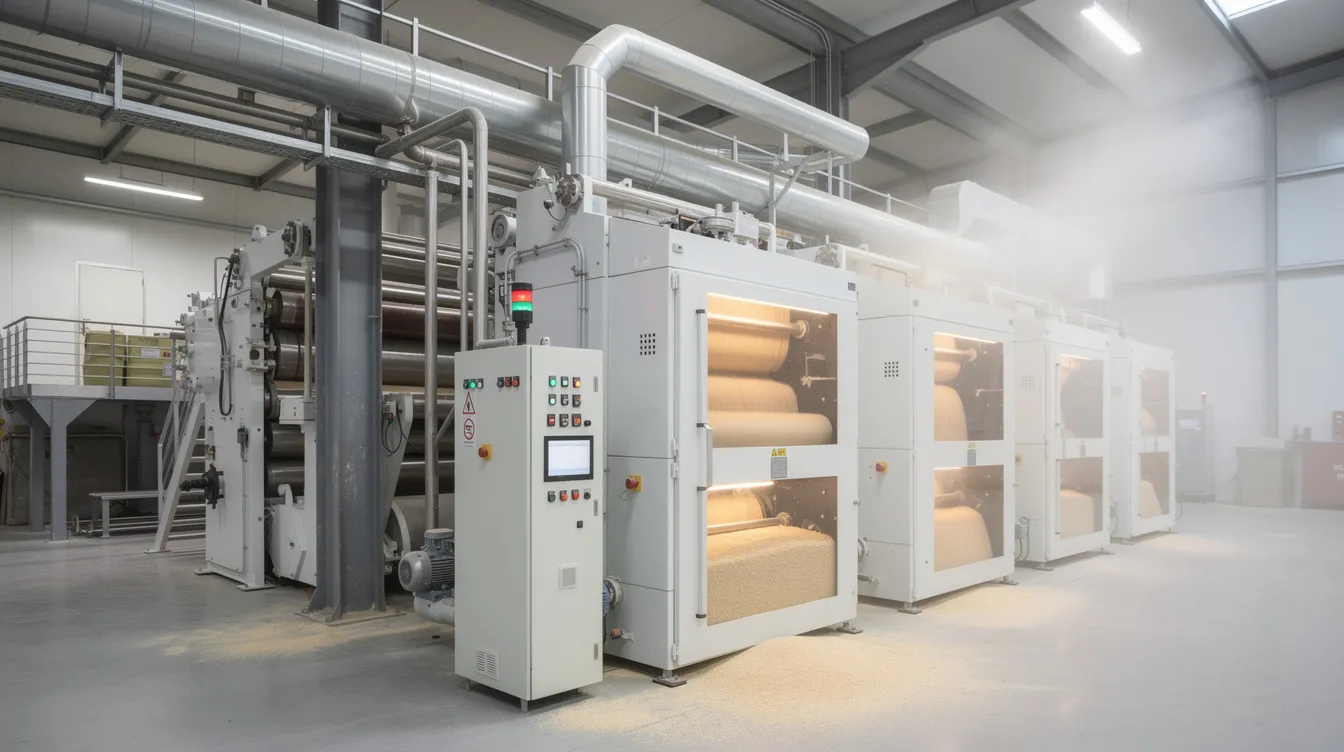
Most commercial atta chakki machines and flour mill plant components are quoted in kg/hr by manufacturers, while project capacity is usually discussed in TPD. Converting between these two units is essential for capacity planning.
The basic formula is straightforward:
Daily Processing Capacity (kg/day) = Machine Output per Hour (kg/hr) × Effective Operating Hours per Day
For example, if a line is rated at 1,000 kg/hr and the plant operates for 10 effective hours, the daily capacity is 10,000 kg or approximately 10 TPD.
Similarly, a 500 kg/hr atta chakki plant running for 10 effective hours produces about 5,000 kg per day, which is 5 TPD. A 200 kg/hr capacity unit, achievable with high-capacity atta chakki plants at the smaller end, would produce about 2,000 kg per day over 10 effective hours, equivalent to roughly 2 TPD.
A 12-hour shift does not mean 12 full production hours. Effective hours per shift are lower because of cleaning, wheat feeding, hopper emptying, machine checks and small stoppages. In most atta projects, effective operating hours are approximately 80–85% of total shift hours.
Atta chakki plant capacities range from hundreds to thousands of kilograms per hour. When multiple chakkis or roller mills operate in parallel, total hourly capacity is the sum of individual machine capacities. However, combined milling capacity must not exceed the throughput of upstream cleaning equipment or downstream packaging units, or it will create bottlenecks that limit actual output.
Typical Atta Chakki Plant Capacities and Their Use Cases
Commercial atta chakki plants span a wide range. Machines are available in fully automatic and semi-automatic types, and atta chakki machines can grind various grains including wheat and maize. The table below summarises common capacity bands and their typical applications.
| Plant Size | Indicative TPD | Approximate kg/hr (at 8–10 Effective Hours) | Typical Application |
|---|---|---|---|
| Micro / Mini Unit | ~1 TPD | 100–150 kg/hr | Village, local retail, captive supply |
| Small Commercial | ~5 TPD | 500–700 kg/hr | Local brand, small-town distribution |
| Small-Medium | ~10 TPD | 1,000–1,250 kg/hr | City / district-level branded and loose atta |
| Medium Commercial | ~20 TPD | 2,000–2,500 kg/hr | Multi-district, institutional, distributor model |
| Medium-Large | ~30 TPD | 3,000+ kg/hr | Regional packaged atta brand, multi-SKU |
| Large Commercial | ~50 TPD+ | 5,000+ kg/hr | State-level, multi-product, large distribution |
These capacity bands are indicative, not rigid. Actual configuration depends on automation grade, number of shifts, technology choice and product range. Small-scale flour mills typically produce 5–10 tons per day. Very small units (1–2 TPD) may use a single commercial atta chakki machine, while 10–50 TPD plants typically use integrated flour mill plant layouts with separate cleaning, milling and packing sections.
Choosing a very high TPD only because it appears more impressive can be risky if market demand and working capital are not aligned. The capacity decision should flow from market reality, not from machinery catalogues.
1 TPD Atta Chakki Plant – When is Mini Capacity Appropriate?
A 1 TPD atta chakki plant, operating at around 100–150 kg/hr over 8–10 effective hours, suits micro-entrepreneurs serving a small town, village cluster or captive customer base with limited daily demand. Micro and mini atta chakki plants are effective for small-scale operations and local markets where demand volume does not justify larger investment.
Typical use cases include local chakki flour service, loose atta sales, supply to a small bakery or hotel, or trial launch of a hyper-local atta brand. At full load, daily wheat requirement is about 1 tonne, and storage needs are modest – a few tonnes of wheat stock and a small finished goods area.
Operationally, this is usually a single-shift, owner-managed unit requiring minimum staff. Smooth operation is achievable with basic commercial atta chakki machines. For reference, a 2 HP atta chakki machine is priced at approximately Rs 24,200, a commercial atta chakki machine at around Rs 62,000, and a 7.5 HP atta chakki machine at approximately Rs 94,500. A small-scale flour mill in this range costs between ₹10 lakh to ₹25 lakh including basic infrastructure. Entrepreneurs exploring small flour mill projects under Mudra Loan can refer to the guide on flour mill project report for small atta chakki business.
The limitation of this production scale is that per-kg overheads tend to be higher, and the capacity to serve institutional buyers or build a packaged brand is restricted. Entrepreneurs starting at 1 TPD should plan layout and utilities so that upgrading to 3–5 TPD remains feasible when demand grows.
5 TPD Atta Chakki Plant – Entry-Level Commercial Scale
A 5 TPD atta chakki plant, roughly 500–700 kg/hr for 8–10 effective hours, is often the first serious commercial capacity for a local or district-level atta business. A 5 ton fully automatic atta chakki plant can process 5,000 kg per day, and this is the capacity rating commonly seen in turnkey automatic plant offerings.
This scale suits small packaged atta brands, traders upgrading from job-work milling, wholesalers supplying nearby retailers and small institutional customers. A simple production estimate: 5 TPD × 25 working days equals approximately 125 tonnes per month of installed capacity, which then needs to be adjusted for actual capacity utilisation.
Operational requirements include slightly larger wheat storage (10–30 tonnes buffer), a defined packaging area, basic quality control and at least 1–2 skilled operators plus helper staff. A 5 TPD capacity can typically be handled in a single shift, but some promoters run extended shifts during peak demand periods.
For reference on machine pricing, a 10 HP atta chakki machine is priced at approximately Rs 1,02,200, the cost of a 10 HP commercial flour mill is around Rs 73,500, and a 7.5 HP commercial atta chakki machine is available for approximately Rs 63,055. A 2.7 ton automatic atta chakki plant costs around ₹6,50,000, which can serve as a starting point for slightly smaller configurations.
At this scale, brand building, retailer relationships, sales service and local marketing start to matter as much as technical plant design. Consistent flour quality and uniform flour texture become important for repeat business.
10 TPD Atta Chakki Plant – A Common MSME Benchmark
A 10 TPD atta chakki plant is a very common target size for MSME flour milling projects aiming to serve one city or district with a mix of branded and loose atta. A 10 ton automatic atta chakki plant has a capacity of 10,000 kg per day. A 500 kg/hr atta chakki plant is suitable for mid-sized operations and, when combined with parallel grinding units, can achieve the 1,000 kg/hr throughput needed for 10 TPD in a single extended shift.
Consider an illustrative example: 10 TPD installed capacity, 300 operating days per year and 70% capacity utilisation from Year 3 onwards results in annual wheat processing of approximately 2,100 tonnes (10 × 300 × 0.70). Saleable atta production would be somewhat lower after adjusting for bran and process losses.
Operationally, a 10 TPD plant requires systematic wheat procurement, a proper warehouse for raw wheat and finished atta, organised packaging in 1 kg, 5 kg and 10 kg packs, and basic logistics infrastructure for deliveries to retailers and dealers. Financial implications are significant – higher fixed costs, greater power load, more labor costs and working capital, but also better ability to service institutional buyers and modern retailers.
Medium-scale flour mills in the 10 TPD range typically cost around ₹35 lakh to ₹80 lakh depending on automation and infrastructure. This plant size requires a more structured DPR, including DSCR analysis and break-even study, for bank finance approval.
The 10 TPD configuration can be designed with modular expansion scope so that capacity can later be taken to 15–20 TPD by adding parallel grinding units or upgrading bottleneck equipment.
20 TPD Atta Chakki Plant – Expanding to a Regional Base
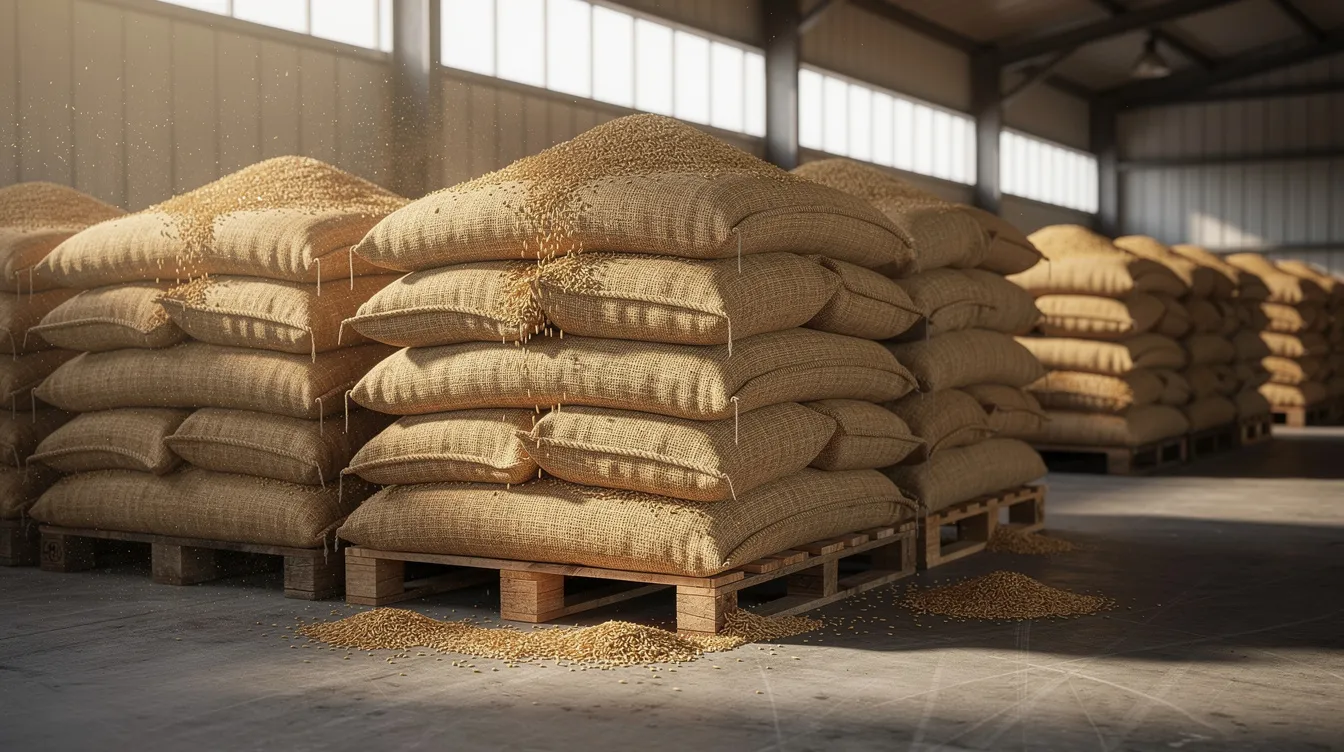
A 20 TPD atta plant moves into a more organised commercial scale targeting city clusters and nearby districts. A 20 ton fully automatic atta chakki plant has a capacity of 20,000 kg per day. This can be achieved through a line operating at 2,000 kg/hr over 10 effective hours, or approximately 1,250 kg/hr over 16 hours in an extended two-shift arrangement.
At this size, continuous wheat procurement from mandis or traders becomes essential, along with larger wheat inventory covering multiple weeks of stock, covered raw material sheds and stronger material handling systems. Automation in cleaning, destoning, magnetic separation and wheat transfer becomes increasingly attractive to maintain consistent production and high operating efficiency.
Higher capacity plants generally improve production efficiency and lower manual labor needs. However, packaging capacity must be aligned. For example, a 20 TPD atta mill producing mainly 5 kg retail packs needs high-speed packers and adequate manpower or minimal manual intervention on packing lines to keep up with milling output.
Project cost and term-loan requirement rise substantially at 20 TPD. Overall capital budgeting – including civil work, machinery, mild steel electricity connection infrastructure and electricals – is covered separately under atta plant setup cost in India. Promoters must have a reasonably well-developed distribution network, institutional tie-ups or private-label contracts before fully ramping up utilisation at this capacity.
30 TPD Atta Chakki Plant – Building a Strong Regional Brand
A 30 TPD atta chakki plant capacity is suitable for regional brands covering multiple districts or a small state, typically operating with established distributor networks and institutional supply contracts. A 1,000 kg/hr capacity line, suitable for large-scale flour production, would need to run across extended shifts or multiple parallel lines to achieve 30 TPD throughput.
At this level, plant design normally integrates fully automatic wheat cleaning, conditioning where applicable, multiple chakkis or roller mills, bulk flour handling and high-speed packaging lines. Fully automatic plants incorporate cleaning, destoning and automated packing systems, enhancing throughput and delivering fine, consistent flour output. Construction, including robust construction of the building with appropriate mild steel framing, warranty considerations on major equipment, and environmental controls become important.
Key planning points include warehouse sizing for wheat and finished goods, distribution vehicle planning, proper dry storage to preserve wheat flour quality, and clear production scheduling per SKU. The danger of creating 30 TPD capacity when the current market can absorb only 8–10 TPD is real – such a mismatch strains working capital, increases per-kg cost and may reduce DSCR if the term-loan repayment obligation is significant.
Large flour mills of this scale may require ₹1 crore to ₹2 crore to set up. Capacity ramp-up over 2–3 years should be modelled in projections – for example, 50%, 60%, 70% and 80% utilisation – to evaluate how profitability and cash flows behave under realistic scenarios. Promoters should invest serious effort in market study and competitor mapping before finalising a 30 TPD project.
50 TPD and Larger Commercial Atta Plants
Plants at 50 TPD and above typically operate as regional or state-level units with established brand presence, large distribution networks and often multiple product lines including atta, maida, suji, bran and speciality flours. Large industrial atta chakki plants can process 5 to 10 tons per hour, and high-capacity models can process up to 2,000 kg/hr per individual milling unit, with multiple units in parallel. India’s machine capacity at this scale represents significant capital commitment.
Project planning here must coordinate capacities across wheat sourcing, cleaning section, milling section, flour storage silos, blending, fortification if applicable, packing and dispatch. The concept of bottlenecks becomes critical – even if milling can handle 3 tonnes per hour, if cleaning or packing manages only 2 tonnes per hour, practical throughput remains limited to 2 tonnes per hour until the bottleneck is resolved.
Higher capacity plants have better energy efficiency ratios per kilogram of flour ground, lower power consumption per unit of output, and benefit from economies of scale in labor costs and overhead absorption. Fully automatic flour mill plants at this scale cost between ₹50 lakh to ₹2 crore depending on configuration, while some large projects go well beyond this range when integrated with roller milling, blending and fortification. For instance, Baba Foods is establishing a plant with 65 TPD whole wheat atta capacity alongside a 300 TPD refined flour mill, illustrating the scale at which organised commercial flour production is expanding.
Such projects usually need higher connected load, robust backup power planning, environmental controls and strong quality systems under FSSAI and possibly third-party certifications. Comprehensive feasibility studies, sensitivity analysis on capacity utilisation and pricing, and detailed DSCR and IRR evaluation are essential before committing capital. Many entrepreneurs choose to start at 20–30 TPD and move toward 50 TPD or beyond once brand demand and procurement strength are validated.
How to Calculate Annual Atta Plant Production Capacity
The standard formula for annual installed capacity is:
Annual Installed Capacity (tonnes) = Daily Rated Capacity (TPD) × Planned Operating Days per Year
Using an illustrative example for a 20 TPD atta chakki plant operating for 300 days per year:
20 TPD × 300 days = 6,000 tonnes per annum installed processing capacity.
To apply capacity utilisation, suppose the plant operates at 70%:
6,000 × 70% = 4,200 tonnes of wheat processed per year.
Finished atta output will be somewhat lower – perhaps around 3,800–4,000 tonnes illustratively – after adjusting for bran, screenings and processing losses. The same calculation logic applies across all capacities:
| TPD | Operating Days | Annual Installed Capacity (Tonnes) |
|---|---|---|
| 1 | 300 | 300 |
| 5 | 300 | 1,500 |
| 10 | 300 | 3,000 |
| 20 | 300 | 6,000 |
| 30 | 300 | 9,000 |
| 50 | 300 | 15,000 |
Illustrative only. Actual operating days depend on local conditions.
Monthly production can be derived by dividing annual saleable production by 12, keeping in mind that these are average figures and actual demand may be seasonal.
Understanding Capacity Utilisation Levels in an Atta Plant
Capacity utilisation tracks how much of installed capacity is actually used. Achieving 100% utilisation over a sustained period is rarely possible in real operations due to maintenance, power interruptions, market fluctuations and operational variability.
For a 10 TPD plant with 3,000 tonnes annual installed capacity, here is how annual wheat processing changes at different utilisation levels:
| Capacity Utilisation | Annual Wheat Processed (Tonnes) |
|---|---|
| 50% | 1,500 |
| 60% | 1,800 |
| 70% | 2,100 |
| 80% | 2,400 |
| 90% | 2,700 |
A typical utilisation pattern in a new flour mill might be: lower utilisation in Year 1 (around 40–50%) as the brand develops and distribution is established, rising in Years 2 and 3 as marketing strengthens, and stabilising at 70–80% from Year 3 or 4 onwards.
Actual utilisation assumptions in a DPR must depend on market study, promoter capability, competition and pricing strategy rather than a standard template applied to every project. Sensitivity analysis – for example, testing what happens if utilisation remains at 60% instead of the projected 75% – is important before finalising capacity and loan quantum.
Capacity Utilisation and Financial Projections – A CA’s Perspective
From a project finance perspective, capacity utilisation is not merely a production metric. It is the single most important variable connecting the technical plan to the financial model.
In financial projections, annual sales quantity is normally calculated as:
Sales Quantity = Annual Installed Capacity × Capacity Utilisation × Extraction or Yield Factor
This drives the entire income statement. Revenue, raw material consumption, gross profit, power cost, packaging cost and variable overheads all flow from this production volume. Higher utilisation improves absorption of fixed costs – salaries, rent, depreciation, interest – reducing per-kg cost and improving profit margins. This is what enables stable performance in profitability and cash flow.
However, higher utilisation also requires more wheat inventory, packing materials and receivables, increasing working capital requirement and the interest cost on working capital borrowings. There is a direct link between production scale and the funds needed to support that production.
DSCR can appear healthy in projections if very optimistic utilisation – say 85–90% – is assumed from Year 1. But if actual performance is 50–60%, the lower sales volume may not generate sufficient cash to meet term-loan instalments and interest, quickly creating repayment pressure. Unrealistic utilisation assumptions can make a DPR appear profitable on paper while creating financial stress in practice.
A professional DPR should use balanced utilisation assumptions, typically ramping up over 3–5 years, and should include scenario analysis for lenders and investors. This is an area where the quality of a financial model depends more on the quality of its assumptions than on the appearance of its ratios.
Production Capacity vs Market Demand for Wheat Flour
Atta chakki plant capacity must be matched to realistic market demand. Capacity alone does not guarantee sales.
Key demand-side factors to evaluate include local per-capita atta consumption, number of households served, existing flour brands and their market presence, retailer and distributor feedback, nearby institutional users such as canteens, hotels, caterers and hostels, and potential for private-label manufacturing contracts.
Consider a scenario: if a promoter’s current distribution network can sell only 8–10 TPD, installing a 30 TPD plant will keep utilisation low for several years. Low utilisation raises cost per kilogram, reduces competitiveness and weakens cash flow. It is often wiser to install a capacity that can be utilised to at least 50–60% in Year 1, with a clear roadmap to reach 75–80% over time, rather than committing to an over-ambitious size.
India produces over 1,175 lakh metric tonnes of wheat annually, so raw material availability is generally not a constraint for most atta plant sizes. The real constraint is usually on the demand and distribution side. Detailed market assessment findings should be included as part of annexures in a bank-finance DPR to support the chosen plant capacity.
Wheat Requirement for Different Atta Plant Capacities
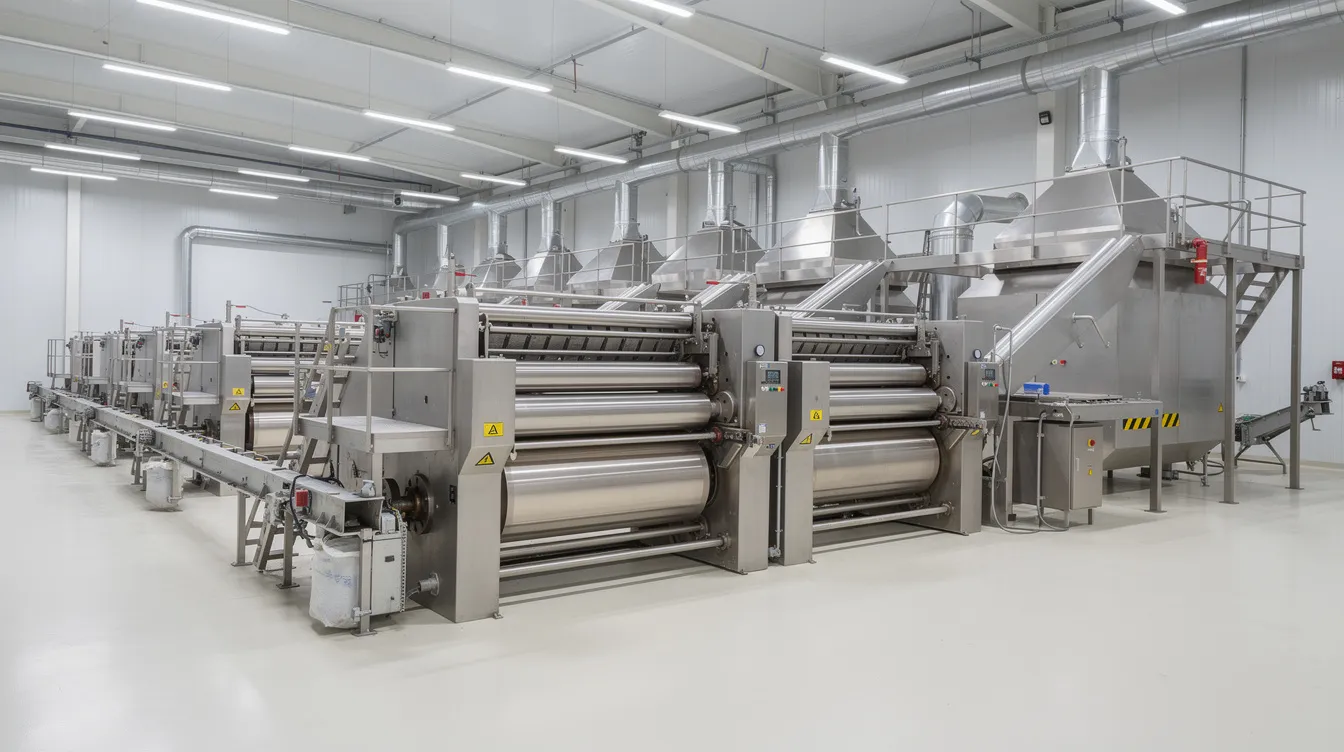
Estimating daily and monthly wheat requirement is central to atta plant capacity planning, procurement strategy and working capital assessment.
The following table provides illustrative wheat input requirements assuming TPD is input-based:
| TPD Capacity | Daily Wheat Input at 100% Utilisation | Daily Wheat Input at 70% Utilisation | Monthly Requirement at 70% (25 days) |
|---|---|---|---|
| 1 TPD | 1 tonne | 0.7 tonnes | ~17.5 tonnes |
| 5 TPD | 5 tonnes | 3.5 tonnes | ~87.5 tonnes |
| 10 TPD | 10 tonnes | 7.0 tonnes | ~175 tonnes |
| 20 TPD | 20 tonnes | 14.0 tonnes | ~350 tonnes |
| 30 TPD | 30 tonnes | 21.0 tonnes | ~525 tonnes |
| 50 TPD | 50 tonnes | 35.0 tonnes | ~875 tonnes |
Illustrative figures. Actual requirement depends on capacity utilisation, operating days and extraction yield.
How many days of wheat inventory to maintain depends on seasonality, mandi distance, price volatility, storage infrastructure and working-capital availability – there is no universal number. Adequate storage covering a reasonable buffer period is necessary to avoid production stoppage during procurement disruptions or price spikes.
Number of Shifts and Effective Plant Capacity
Total flour mill production capacity is a function of both per-hour output and the number of effective operating hours, which depend on shifts operated per day.
- Single shift: 8–10 hours of effective milling. Suitable for 1–10 TPD plants with moderate demand.
- Extended shift: 12–14 hours. Can increase output without a full second shift; common when demand temporarily exceeds single-shift capacity.
- Two shifts: 16 or more hours. Used in 20–30 TPD plants with stronger demand.
- Three shifts or continuous operation: 20–22 effective hours. Typical only for larger automatic plants at 50 TPD and above.
Increasing shifts can sometimes expand atta production per day without immediately investing in a second milling line, but this comes with higher labor costs, greater maintenance requirements and additional utility costs. Practical constraints include the need for a daily maintenance window, operator availability, statutory regulations, noise restrictions, packing line capacity, low maintenance scheduling and dispatch logistics.
DPRs should clearly mention shifts per day and effective operating hours per shift used for capacity calculations, so that bankers can understand the logic behind production estimates.
Balancing Machinery Capacity Across the Flour Mill Plant
An atta chakki plant must be viewed as a complete system – from wheat receiving and cleaning to milling, sifting, blending and packaging – rather than a single machine. Capacity must be balanced across all major sections.
Key sections whose capacities must match include:
- Wheat intake and elevators
- Pre-cleaners and aspirators
- Destoners and magnetic separators
- Conditioning or tempering bins (where applicable)
- Chakkis, pulverisers or roller mills
- Plansifters, vibro graders or separators
- Flour storage bins
- Packaging units and material handling
If the milling section can process 2 tonnes per hour but the cleaning line handles only 1.2 tonnes per hour, then the cleaning section becomes the bottleneck and effective plant capacity is limited to 1.2 tonnes per hour regardless of milling capability. Typical efficiency indicators in well-designed plants include automated cleaning and integrated packing for higher capacity units.
Capacity design should ensure each major section can handle slightly more than the targeted line throughput, so that no single machine chronically limits consistent grinding results across the plant. For a detailed understanding of production flow and section-wise process design, readers can refer to the article on atta manufacturing process and flour mill flow chart.
Packaging Capacity and Its Impact on Atta Production
Even if milling capacity is sufficient, insufficient packaging capacity can restrict saleable output. Packing is often a hidden bottleneck in atta plants that focus on small retail pack sizes.
Common pack sizes include 1 kg, 2 kg, 5 kg, 10 kg and 25 kg or 50 kg bulk or institutional packs. The number of packets per tonne rises sharply as pack size decreases:
| Pack Size | Packets per Tonne |
|---|---|
| 1 kg | 1,000 |
| 5 kg | 200 |
| 10 kg | 100 |
| 25 kg | 40 |
If a 10 TPD plant puts its entire production into 1 kg packs, it needs to pack approximately 10,000 packets per day. In 10 kg packs, only about 1,000 packets per day are needed – a tenfold difference in throughput requirement for packaging units.
Promoters must ensure that the number and speed of packing machines, plus manual support, can handle the required packet count comfortably within available working hours. Packing material procurement – bags, pouches, labels, cartons – must also be planned in line with production capacity, sales mix and price considerations including the minimum order quantity from packaging suppliers.
Storage Capacity Required for an Atta Chakki Plant
Storage planning is as important as machine capacity. Insufficient storage can disrupt operations even in technically well-designed plants.
Main storage requirements include:
- Wheat storage: silos or godowns sized for expected procurement cycle and buffer days
- Intermediate bins: for cleaned wheat, tempered wheat or semi-processed material
- Finished atta storage: adequate covered, dry space for packed flour awaiting dispatch
- Bran and by-product storage: separate area for bran, screenings and other fractions
- Packing material storage: space for bags, pouches, labels and cartons
Storage capacity should be linked to daily TPD, expected procurement cycle and logistics schedule for dispatches. Risks of under-storage include frequent vehicle unloading delays, mixing of different wheat lots, quality deterioration, product quality degradation, dust free operation challenges and production interruptions due to lack of raw material or packing supplies.
In financial planning, land and building cost for storage and interest on stock held should be considered as part of overall project economics.
How Plant Capacity Affects Working Capital Requirement
As atta chakki TPD capacity increases, so does the minimum level of working capital needed to hold wheat inventory, packaging material, finished stock and receivables.
Consider a simple comparison: a 10 TPD plant operating at 60% utilisation and holding 15 days of wheat stock will have a significantly higher wheat investment than a 5 TPD plant at similar utilisation and stock days. The difference in working capital can be substantial enough to affect overall project feasibility.
Bankers usually assess both the term-loan for fixed assets and working-capital limits – cash credit, overdraft – based on projected capacity, inventory days and the credit period offered to customers. The interested request from lenders typically covers both the initial investment and ongoing operating capital adequacy.
Promoters should not choose a large TPD capacity unless they are confident of arranging adequate working capital. Otherwise, the plant may remain under-utilised due to lack of funds to purchase wheat in sufficient quantities, regardless of how much the milling line can technically process.
Capacity Planning for Bank Finance and DPR Preparation
For bankable DPRs, atta chakki plant capacity planning must be transparent, supported by clear assumptions and reconciled across technical and financial sections.
Key capacity-related items that a DPR should show:
- Installed capacity in TPD and tonnes per annum
- Number of operating days per year
- Shifts per day and effective hours per shift
- Capacity utilisation schedule over the projection period
- Yield assumptions for atta, bran and by-products
- Product mix and SKU-level production plan
- Wheat requirement linked to production volume
- Power consumption linked to operating hours
- Labor requirement linked to shifts
- Packaging material linked to sales mix
Production volumes must tie back to projected sales volumes, and any discrepancy – such as sales projections exceeding maximum possible production at stated utilisation – is a red flag for lenders that should be eliminated through proper capacity calculations.
Professionally prepared DPRs typically include scenario and sensitivity analysis around capacity utilisation, sales price and raw-material cost to test project robustness. Entrepreneurs planning a wheat flour mill project can benefit from having these capacity-finance linkages reviewed by an experienced project finance professional.
Common Mistakes in Atta Chakki Plant Capacity Planning
The following errors are frequently observed in atta plant project proposals:
- Relying only on supplier-rated kg/hr without adjusting for downtime, maintenance and operational losses
- Assuming 90–100% utilisation from Year 1 when the business has no established distribution network
- Ignoring packaging and storage bottlenecks that limit actual throughput below milling capacity
- Confusing wheat input with atta output and inflating revenue projections as a result
- Choosing plant size based on maximum loan eligibility or subsidy limits rather than on realistic market demand and working capital availability
- Mismatching machine capacities – high-capacity chakkis paired with low-capacity cleaners or packers resulting in steady output below expectations
- Failing to plan for gradual expansion – civil layout, three phase power infrastructure, and utilities should ideally keep future capacity addition in mind
- Ignoring seasonal demand variation and assuming uniform output and sales throughout the year
Promoters should cross-check all TPD, kg/hr and tonnage assumptions in their proposal before submitting to banks, preferably with professional help. A high performance solution on paper means nothing if the underlying assumptions are unreliable.
How to Select the Right Atta Chakki Plant Capacity
There is no universal “best capacity” for an atta chakki plant. The correct capacity is always project-specific. Here is a practical framework:
- Start from expected daily sales volume in the first 2–3 years rather than from machinery brochures
- Evaluate target geography and population – the catchment area determines realistic demand
- Assess existing competition – number and strength of existing flour brands and local mills
- Determine type of sales – branded retail versus loose versus institutional, and the production capacity each requires
- Confirm wheat availability and proximity to procurement sources
- Evaluate power reliability – three phase material supply, backup power, india power consumption costs
- Assess space and infrastructure – available land, building potential, phase country regulations
- Consider promoter’s marketing strength and risk appetite
- Estimate working capital availability alongside term-loan capacity
- Factor in expansion plans – whether layout and utilities allow future capacity addition
Once expected daily sales are estimated, back-calculate required production capacity and TPD, factoring in capacity utilisation, downtime and a reasonable margin for future growth. A 5 TPD unit might be ideal in a small town, while 20 or 30 TPD may be justified near a metro with strong distribution plans.
Before placing machinery orders, promoters should validate their capacity decision through a brief feasibility note or full DPR. This document can also be shared with potential lenders and investors to demonstrate that capacity has been chosen on a sound basis.
Should You Start Smaller or Build for Future Expansion?
This is one of the most frequently discussed decisions in atta plant projects. Both strategies have merit.
Advantages of starting smaller:
- Lower initial investment and term-loan, reducing interest burden
- Easier working capital management during the market-building phase
- Better ability to fine-tune operations, product quality and uniform output before scaling
- Lower financial risk if market off-take is slower than expected
Advantages of building larger from the start:
- Ability to accept large institutional orders immediately
- Economies of scale – lower per-kg fixed costs and better unmatched efficiency
- Reduced need for frequent machinery additions and plant re-layout
- Smoother long service life of equipment when not constantly modified
A practical middle ground is to design civil works, utilities, three phase stone size electrical infrastructure, dust collection and layout to accommodate future capacity addition with minimum disruption, even if the initial installed capacity is smaller. This preserves capital efficiency while keeping expansion feasible.
The decision should align with demand visibility – secured contracts, strong distribution tie-ups, established customer base – and financing comfort, rather than purely aspirational volumes.
Practical Capacity Planning Example – 10 TPD Atta Plant
The following is a detailed illustrative example for a 10 TPD automatic atta plant. All numbers are clearly labelled as illustrative assumptions and should not be treated as industry benchmarks.
Assumptions:
- Installed capacity: 10 TPD (single shift, approximately 10 effective operating hours)
- Operating days per year: 300
- Capacity utilisation: Year 1 = 50%, Year 2 = 60%, Year 3 onward = 70%
Calculations:
| Parameter | Year 1 | Year 2 | Year 3 |
|---|---|---|---|
| Annual Installed Capacity (tonnes) | 3,000 | 3,000 | 3,000 |
| Capacity Utilisation | 50% | 60% | 70% |
| Wheat Processed (tonnes) | 1,500 | 1,800 | 2,100 |
| Approximate Saleable Atta (illustrative, after bran and losses) | ~1,400 | ~1,670 | ~1,950 |
Breaking Year 3 production further:
- Monthly average saleable atta: approximately 163 tonnes (1,950 ÷ 12)
- Daily average saleable atta: approximately 6.5 tonnes per working day
If the plant packs entirely in 5 kg retail packs, daily packing requirement is approximately 1,300 packets. If packed in 1 kg consumer packs, approximately 6,500 packets per day are needed.
For wheat inventory: if 15 days of stock is maintained at Year 3 utilisation, approximately 105 tonnes of wheat (7 tonnes per day × 15 days) must be in storage at any time. This, plus finished goods inventory and receivables, drives working capital planning.
While these numbers are only illustrative, the method of calculation is what entrepreneurs should apply for any chosen TPD capacity. The exercise connects technical specifications to real financial outcomes.

Capacity Planning Checklist Before Finalising Atta Plant Machinery
Before placing an order for a commercial atta chakki machine or a complete flour mill plant, promoters should verify the following:
Market and Sales:
- [ ] Targeted daily and monthly sales quantity estimated realistically
- [ ] Realistic capacity utilisation assumed for first 3 years
- [ ] Distribution channel and customer base identified
Raw Material and Operations:
- [ ] Confirmed sources of wheat supply and procurement strategy
- [ ] Operating days per year and number of shifts planned
- [ ] Advanced technology requirements and automation grade determined
Technical and Line Balancing:
- [ ] Line balancing checked across cleaning, milling and packaging sections
- [ ] Sufficient storage for wheat, finished atta and packing material
- [ ] Power availability confirmed – three phase connection, motor power, backup arrangement
- [ ] Heat generation, dust collection, ventilation and safety provisions addressed
- [ ] Low power consumption and reliable performance verified for key equipment
Financial:
- [ ] Project cost estimated including all components, not just machinery
- [ ] Comparison with available own funds and term-loan prospects completed
- [ ] Working capital assessment done based on inventory, receivables and operating expenses
- [ ] Projected DSCR and break-even calculated at realistic utilisation
- [ ] Consistent performance of projections verified under sensitivity scenarios
Promoters should discuss this checklist and capacity assumptions with their CA or project finance advisor before approaching banks or finalising machinery contracts. This ensures the initial investment is proportionate to the market opportunity and that long service life of the plant is supported by sound financial planning.
For entrepreneurs exploring related food processing industries and projects – such as multigrain flour manufacturing or besan mill projects – the same capacity planning discipline applies. Whether the project involves grinding wheat, processing wheat into multi grain flour, or producing gram flour, the principle remains: capacity must be technically achievable, commercially sellable and financially sustainable.
Selecting the right atta chakki plant capacity is not about asking “How many TPD machine should I buy?” It is about determining how much can realistically be sold, how many operating hours are available, what capacity utilisation is achievable, whether the complete production line is balanced, whether sufficient raw material and working capital are available, and whether the project remains financially viable at realistic utilisation levels.
The right capacity is the capacity that can be technically operated, commercially sold and financially supported.
Entrepreneurs and MSME promoters planning a new or expanded atta processing project can seek professional assistance for DPR preparation, CMA Data, financial projections, project feasibility and bank finance planning. A professionally prepared project report ensures that capacity assumptions, production planning and financial projections are aligned, realistic and bankable.
CA Manish Gugliya FCA, DISA (ICAI) More than 20 years of professional experience in project reports, DPR, financial projections, CMA Data, project feasibility, project finance advisory and business valuation.
For professional enquiries: WhatsApp is the preferred mode of communication. You can also reach out via the contact options available on ProjectReportBank.com.
Frequently Asked Questions on Atta Chakki Plant Capacity
What is TPD in an atta chakki plant?
TPD stands for tonnes per day and is used to describe how many tonnes of wheat an atta plant can process in a working day under rated conditions. Common ratings include 5 TPD, 10 TPD, 20 TPD and so on. It is important to note that TPD can refer either to wheat input or to equivalent flour output. Project documents should specify which basis is used, because this affects wheat procurement estimates, revenue projections and overall financial modelling in the DPR.
How much wheat is required for a 10 TPD atta chakki plant?
At full installed capacity, a 10 TPD atta plant would normally process about 10 tonnes (10,000 kg) of wheat per effective production day. If the plant operates at 70% utilisation, daily wheat requirement reduces to approximately 7 tonnes. Annual wheat requirement then depends on the number of operating days. At 300 operating days and 70% utilisation, annual wheat procurement would be approximately 2,100 tonnes, plus a buffer for inventory holding.
How is flour mill production capacity calculated from kg/hr machines?
Capacity is calculated by multiplying total effective machine output per hour in kg/hr by effective operating hours per day, then dividing by 1,000 to convert into TPD. For example, a commercial atta chakki line rated at 800 kg/hr running effectively for 10 hours can process about 8,000 kg per day, which is roughly 8 TPD. This method applies whether you are using a single machine or multiple parallel grinding units delivering a combined deliver smooth and uniform grinding output.
Can a 5 TPD atta plant produce more than 5 tonnes per day?
The 5 TPD rating represents the designed daily throughput under rated conditions. Pushing machines beyond this consistently can cause higher wear, breakdowns and product quality issues. Short-term peaks slightly above 5 tonnes may occasionally occur, but for planning a DPR, working capital and term-loan, promoters should treat 5 TPD as the upper technical limit and then apply realistic utilisation percentages. Reliable performance over long periods matters more than occasional peak output.
Can production capacity be increased later without replacing the entire atta plant?
Modest increases can sometimes be achieved by adding another shift, upgrading specific bottleneck machines – such as an extra chakki or packing line – or improving operating efficiency through better operator training and reduced minimal downtime. For significant capacity jumps, such as moving from 10 TPD to 30 TPD, it is better to plan a modular plant layout and adequate civil, electrical and utility infrastructure from the beginning. This approach makes future expansion easier and avoids costly reconstruction. The country of origin of machinery and technical specifications should also be considered to ensure compatibility when adding equipment later.