
Key Takeaways
- Banks evaluate a puffed rice project primarily on cash accrual and Debt Service Coverage Ratio (DSCR), not just accounting profit or sales turnover.
- DSCR for a puffed rice project is calculated from Profit After Tax, depreciation, and term loan interest, compared against yearly principal and interest obligations.
- Most lenders look for a minimum DSCR threshold of 1.20 to 1.50 before approving loans, though exact thresholds vary by bank, scheme, and risk profile.
- A realistic year-wise DSCR projection over 5–7 years – aligned with capacity utilisation ramp-up and market conditions – is critical in any detailed project report submitted for bank finance.
- Project Report Bank, under guidance of CA Manish Gugliya, prepares bankable DPRs with integrated DSCR workings, CMA data, and financial projections for puffed rice manufacturing units across India.
Introduction – Why DSCR Matters More Than Profit in a Puffed Rice Project
A puffed rice plant may show accounting profit from its very first year. Yet, if cash flows are tight or principal instalments are front-loaded, the promoter may struggle to pay scheduled loan repayments on time. Indian banks sanction puffed rice plant project finance mainly on the basis of loan repayment capacity – not just projected net profit or sales turnover.
The Debt Service Coverage Ratio for a murmura plant tells the banker one thing clearly: whether yearly cash accrual is sufficient to meet the combined principal and interest outgo on the term loan. This is especially relevant in the Indian context, where MSME units are setting up 1–3 TPD puffed rice plants with term loans ranging from ₹20 lakh to ₹1.50 crore under government schemes like Mudra, CGTMSE, or standard MSME loans.
India produces over 100 million tonnes of rice annually, yet only 10 percent of India’s rice is processed into value-added products. With the country’s snack market valued at ₹40,000 crore and puffed rice being a popular ingredient in street foods like bhel puri, the opportunity is large. A small murmura unit can produce 500 kg per day with a startup investment of just ₹2–5 lakh, while larger plants require significantly more capital. Murmura manufacturing qualifies for PMEGP’s food processing category, making bank finance accessible – but only if the project’s repayment capacity is demonstrated convincingly.
This article, written in the voice of CA Manish Gugliya for ProjectReportBank.com, focuses on practical DSCR calculation, repayment schedule design, and cash-flow-based structuring for a puffed rice and murmura manufacturing plant in India.
What Is DSCR in a Puffed Rice Manufacturing Project?
The Debt Service Coverage Ratio is a key metric for assessing loan viability. In the context of a puffed rice unit, DSCR compares a company’s net operating income to total debt service obligations – that is, the term loan principal repayment plus interest payable in a given year.
DSCR is linked to three primary items from the projected Profit and Loss Account: Profit After Tax (PAT), depreciation, and interest on term loan. Since depreciation is a non-cash expense, it does not consume actual cash from the business. It is therefore added back while measuring cash available for debt servicing capacity of the murmura plant.
A DSCR greater than 1 indicates the business generates sufficient income to pay debts. A DSCR of 1.0 means operating income equals debt obligations, with no safety margin whatsoever. Bankers at PSU banks, SIDBI, and private lenders all use DSCR to judge whether the plant can meet its scheduled instalments without relying on fresh borrowing or sale of fixed assets. A puffed rice plant might show net profit but still face cash pressure due to working capital blockage, high principal repayment, or delayed collections.
DSCR Formula for Puffed Rice Project
The standard formula used in puffed rice plant bank loan DSCR calculation is:
DSCR = Cash Available for Debt Service ÷ Total Debt Service
Where:
- Cash Available for Debt Service = Profit After Tax + Depreciation + Interest on Term Loan
- Total Debt Service = Scheduled Principal Repayment + Interest on Term Loan
Total Debt Service includes the total cash needed to pay principal and interest in that financial year. Net Operating Income is calculated as revenue minus operating expenses, and tax payments and interest affect the net operating income available for debt service calculations.
Some banks may use Profit Before Interest and Tax or PAT with specific adjustments depending on their appraisal format. While working capital interest influences overall profitability and appears in the P&L, the DSCR calculation for puffed rice manufacturing plant term loan usually focuses specifically on the term loan principal and interest. Project Report Bank structures DSCR calculations clearly within the puffed rice manufacturing project report so bankers can verify logic and figures without ambiguity.
Practical DSCR Calculation Example for Puffed Rice Plant
Consider a 2 TPD puffed rice plant commencing operations in FY 2026–27. The following figures are purely illustrative:
| Item | Amount (₹ lakh) |
|---|---|
| Profit After Tax (PAT) | 35 |
| Depreciation | 12 |
| Term Loan Interest | 14 |
| Principal Repayment | 25 |
Step 1: Cash Available for Debt Service = 35 + 12 + 14 = ₹61 lakh
Step 2: Total Debt Service = 25 + 14 = ₹39 lakh
Step 3: DSCR = 61 ÷ 39 = 1.56
A DSCR of approximately 1.56 indicates that the project generates about 56 percent more cash than required to service its term loan obligations in that year. This provides a reasonable cushion against adverse events such as raw material price hikes, lower-than-expected sales, or temporary production disruptions.
Actual DSCR will vary with plant capacity, total project cost, term loan amount, interest rate, moratorium period, capacity utilisation, selling price of murmura, paddy cost, and overheads.
Year-Wise DSCR Projection for Puffed Rice Plant
Banks rarely rely on a single DSCR number. They examine year-wise DSCR projection for at least 5–7 years of the term loan tenure. DSCR is calculated using projected cash flows and debt obligations for each year individually. Below is an illustrative 5-year projection (all figures in ₹ lakh, illustrative only):
| FY | PAT | Depreciation | Interest | Principal | Cash Available | Total Debt Service | DSCR |
|---|---|---|---|---|---|---|---|
| 2026–27 | 18 | 12 | 14 | 18 | 44 | 32 | 1.38 |
| 2027–28 | 26 | 11 | 12 | 18 | 49 | 30 | 1.63 |
| 2028–29 | 35 | 10 | 10 | 18 | 55 | 28 | 1.96 |
| 2029–30 | 38 | 9 | 7 | 18 | 54 | 25 | 2.16 |
| 2030–31 | 40 | 8 | 4 | 8 | 52 | 12 | 4.33 |
DSCR tends to be lower in the first 1–2 years because of lower capacity utilisation, market development phase, and higher initial interest outgo. As principal reduces, interest amounts decline, and if sales volumes improve, DSCR strengthens significantly. The repayment schedule should align instalments with expected cash generation based on realistic production ramp-up.
Project Report Bank integrates this year-wise DSCR projection within the financial projections for a puffed rice plant DPR to help both bank and promoter understand repayment stress points.
Average DSCR for Puffed Rice Project and What Is a Comfortable DSCR?
Average DSCR is calculated as the sum of yearly Cash Available for Debt Service divided by the sum of yearly Total Debt Service over the full loan tenure. Lenders examine both minimum year-wise DSCR and overall average DSCR to assess the puffed rice plant’s debt servicing capacity.
There is no single universal guideline. However, Indian bank MSME policies frequently specify an average DSCR benchmark of about 1.50, with minimum year-wise DSCRs often required at 1.25. Some banks may consider projected DSCR comfortable when the average is modestly above 1.3–1.5, subject to collateral, promoter profile, and industry risk. Minimum DSCR thresholds can vary by lender based on project and risk profiles.
A healthy average DSCR cannot compensate for one or two very weak years where DSCR drops near 1.0 or below. A DSCR below 1 indicates insufficient cash flow for debt repayment in that specific year, which raises serious concerns. DSCR is always interpreted alongside collateral strength, working capital financing, and puffed rice plant profitability and break-even analysis.
How Banks Assess Loan Repayment Capacity of a Puffed Rice Plant
DSCR for a puffed rice project is central but not the sole parameter in bank finance appraisal. Bankers review projected P&L (sales, gross margin, EBITDA, PAT), break even analysis, capacity utilisation trajectory, and contribution margins. The debt equity ratio, promoter contribution, and overall means of finance influence puffed rice plant loan eligibility and the stress placed on DSCR.
Banks also evaluate interest coverage, the working capital cycle (inventory of paddy, finished puffed rice stock, receivables), and adequacy of working capital limits alongside the term loan. Promoter background, market demand, raw material availability, plant location, management capability, and collateral are all assessed. A well-prepared puffed rice plant DPR for bank loan should present all these aspects coherently in a structured project report format.

Factors Affecting DSCR of a Puffed Rice Manufacturing Unit
DSCR ratio for puffed rice manufacturing business is sensitive to multiple interconnected assumptions. Here are the critical ones:
Plant Capacity Utilisation
Assuming immediate 90–100 percent utilisation is a common and costly mistake. Realistic ramp-up looks more like 55 percent in year one, 65 percent in year two, and 75–80 percent from year three onward. Capacity utilization affects puffed rice production, as demand can fluctuate seasonally. Banks prefer gradual ramp-up projections that reflect ground reality.
Paddy/Rice and Raw Material Cost
Raw material costs such as paddy prices directly impact a puffed rice production project’s operating margin. An increase of even ₹1–2 per kg in raw rice price can materially reduce contribution per kg of puffed rice, lowering debt repayment ability. Process losses from soaking, broken rice grains, and grading rejects must be factored in.
Selling Price and Product Mix
Selling plain loose murmura to wholesalers yields gross margins of 30–50 percent, while branded and flavoured puffed rice packs can push margins to 50–70 percent. Health-conscious customers prefer organic murmura with no preservatives, opening premium pricing opportunities. A small murmura unit can earn ₹25,000–₹50,000 per month in profits even at modest scale. Better product mix directly improves cash accrual for loan repayment.
Machinery and Project Cost
Puffed rice production involves capital expenditure on machinery and working capital for raw materials. Over-investing in high-end equipment or elaborate civil works increases project cost, term loan amount, and annual instalments, leading to lower DSCR unless revenue rises proportionately. Appropriate machinery sizing based on realistic market demand is essential.
Debt-Equity Ratio and Promoter Contribution
Higher equity investment (say 30–35 percent of project cost) reduces term loan requirement and improves DSCR. Banks typically expect promoter contribution in the order of 20–35 percent, with a standard debt-equity ratio of 2:1 to 3:1 for MSME manufacturing projects.
Interest Rate and Tenure
A 1 percent increase in interest rate on a ₹50 lakh term loan increases annual interest burden by approximately ₹50,000 – material for smaller units. A very short tenure (4–5 years instead of 7) sharply increases annual debt service and weakens DSCR.
Moratorium Period
A moratorium of 6–12 months on principal allows the puffed rice project to stabilise operations and build sales before full-scale repayment begins, smoothing DSCR in initial years. NABARD-linked schemes for rice processing sometimes allow repayment over 7 years with moratorium periods of 6 quarters.
Working Capital Requirement
Insufficient limits for the working capital requirement for a puffed rice plant can constrain production and sales, reducing cash accrual and making DSCR projections unreliable.
Designing Term Loan Repayment Schedule for Puffed Rice Plant
A well-structured term loan repayment schedule must be synchronised with projected cash flows. A typical structure might involve a term loan of ₹80 lakh, moratorium of 6–12 months, tenure of 6–7 years, and quarterly instalments with gradually declining interest as principal is repaid.
Front-loading too much principal in the first two years can depress DSCR during the start-up phase, even if the project is otherwise viable. Project Report Bank aligns the puffed rice plant repayment schedule for bank loan with realistic capacity utilisation milestones to keep DSCR reasonably stable. However, restructuring repayment assumptions merely to make DSCR look artificially high, without realistic sales and cost backing, can be counter-productive and will be questioned by experienced lenders.
Profitability vs Loan Repayment Capacity – Why Cash Accrual Matters
Accounting profit is calculated after non-cash expenses like depreciation, while cash accrual for loan repayment focuses on actual cash generated. A puffed rice plant may show PAT but still have weak loan repayment capacity due to heavy principal instalments, high inventory build-up of paddy or finished goods, or delayed collections from dealers.
Depreciation reduces profit for tax purposes but does not reduce cash – hence it is added back when assessing DSCR. Importantly, term loan principal repayment does not appear in the P&L at all, yet it consumes real cash from the business. This is precisely why DSCR calculation for puffed rice manufacturing plant focuses on cash surplus after considering both principal and interest.
Role of Cash Accrual in Puffed Rice Plant Loan Repayment
Cash accrual, defined simply as PAT plus depreciation and other non-cash expenses, is central to puffed rice plant debt servicing capacity. Banks check whether yearly cash accrual is comfortably higher than the yearly principal and interest due.
The logical chain is: projected sales and margins → EBITDA → PAT → cash accrual → DSCR → overall loan repayment capacity. Stable and improving cash accrual over years corresponds to improving DSCR and enhances lender confidence. While preparing the detailed project report and CMA data, all assumptions regarding cash accrual must be traceable back to detailed financial projections, not guessed figures.
DSCR and Working Capital – Why Both Must Be Analysed
DSCR primarily analyses term loan repayment, but a puffed rice unit also requires sufficient working capital to buy paddy, fuel, salt, packaging material, and to hold inventory and receivables. Even if DSCR looks strong on paper, inadequate working capital can force the plant to operate at lower capacity, reducing sales and cash accrual.
While working capital interest is considered in P&L projections, term loan DSCR calculations generally focus on term loan servicing. However, bankers will evaluate overall liquidity including cash credit usage. Both term loan and working capital must be properly sized in the DPR.
Link Between Financial Projections and DSCR
DSCR numbers are only as reliable as the underlying financial projections. The detailed project report should include logically connected projected P&L, balance sheet, and cash flow statement for at least 5–7 years. Depreciation, interest calculations, and the term loan repayment schedule feed into the DSCR calculation, and internal consistency between schedules is crucial. Promoters should base their DSCR projection for puffed rice plant DPR on realistic, documented assumptions.
Impact of Profitability and Break-Even Point on Repayment Capacity
The break-even point for a puffed rice plant represents the minimum capacity utilisation or sales volume required to cover all fixed and variable costs. A higher break-even level (say 70 percent of capacity) leaves a narrow margin of safety and may weaken DSCR in years where demand dips or raw material cost rises.
A plant with lower fixed overheads and reasonable contribution margins reaches break-even at lower utilisation and generates surplus cash earlier for loan repayment. Banks cross-check DSCR with puffed rice plant profitability and break-even analysis to verify that projections are not aggressive.
Revenue Model and Its Impact on DSCR
Common revenue channels for puffed rice and murmura units include bulk loose sales to wholesalers, supplies to bhel puri and chaat vendors, contract manufacturing for brands, and own branded packaged products sold through retail markets. Each stream carries a different margin profile and directly affects EBITDA and DSCR.
The difference between local wholesale distribution and pan-India branded distribution is significant in terms of revenue assumptions and growth rates. Over-optimistic price escalation or volume growth can artificially inflate DSCR and will typically not be accepted by experienced credit officers. For deeper understanding of market-side assumptions, refer to the puffed rice and murmura revenue model.
Project Cost and Means of Finance Affect DSCR
Key components of total project cost include land and building, plant and machinery, utilities, civil works, pre-operative expenses, and margin money for working capital. Means of finance options – promoter contribution, term loan from bank, and possible subsidies – determine the debt-equity ratio and DSCR.
A higher term loan component with limited equity raises annual principal and interest obligations, potentially pulling down DSCR despite similar earnings. Proper project structuring keeps the puffed rice plant debt equity ratio reasonable and matchable with expected cash flows. For typical cost structures, refer to the detailed guide on puffed rice plant project cost and means of finance.
Government schemes significantly reduce the funding burden. PMEGP offers up to 35 percent subsidy for murmura units. Mudra Loan provides collateral-free loans up to ₹10 lakh. PMFME scheme offers 35 percent capital subsidy for upgrading micro units. CGTMSE provides collateral-free credit guarantees up to ₹2 crore. SC/ST and women entrepreneurs can access loans from ₹10 lakh to ₹1 crore under various scheme provisions.
Machinery Cost and Debt Burden
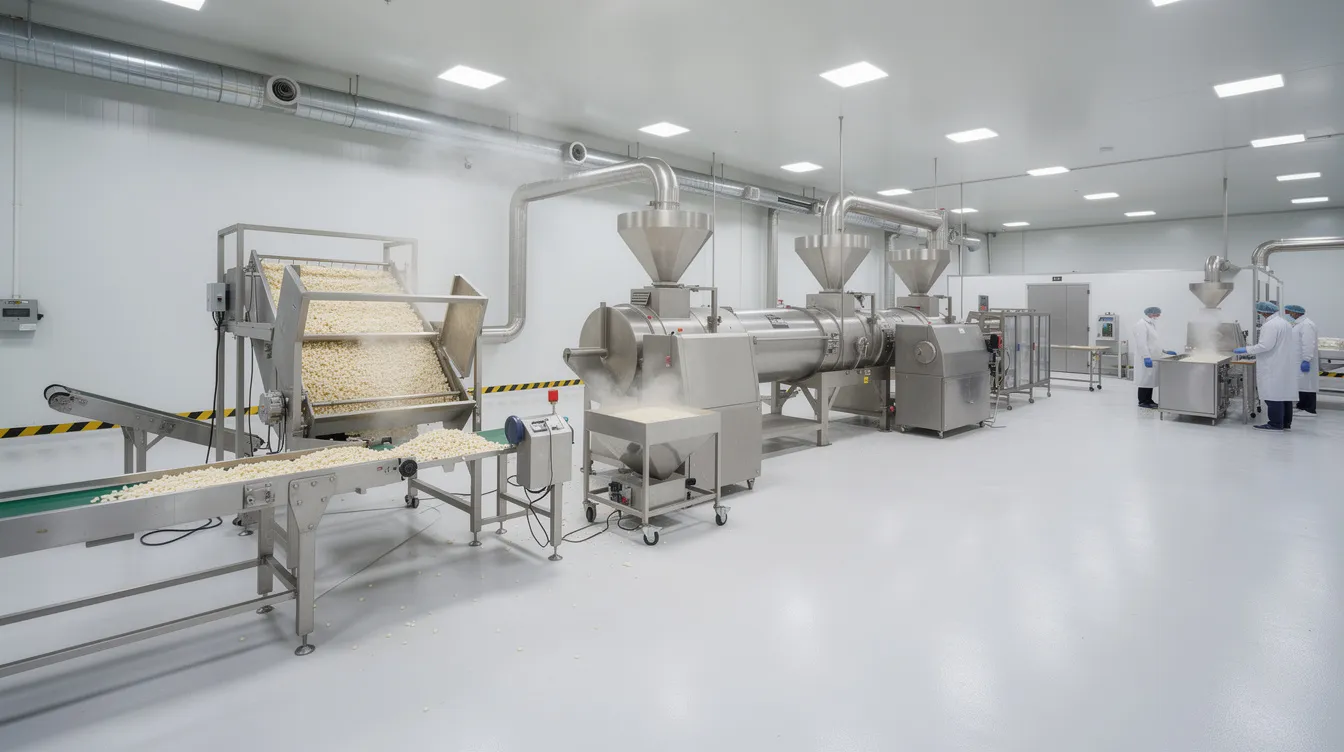
Major machinery for a puffed rice and murmura plant typically includes a paddy cleaner, roaster or sand roaster, puffing machine, cyclone separator, grading machine, and packaging machine. Selecting very high-capacity or imported equipment increases project cost, term loan requirement, and yearly debt servicing without guaranteeing proportionate sales.
Appropriate sizing of machinery to realistic market demand keeps capital cost, depreciation, and instalments manageable, improving DSCR. Energy-efficient and well-maintained machines reduce operating costs and indirectly improve cash accrual for loan repayment. For detailed machinery choices and pricing, refer to puffed rice plant machinery and equipment cost.
Capacity Planning and DSCR
Setting an over-ambitious installed capacity – say 5 TPD when realistic near-term demand supports 2–3 TPD – leads to under-utilisation and weak DSCR in initial years. There is a meaningful difference between rated capacity of machinery and practically achievable utilisation given local demand, shift pattern, and maintenance downtime.
Phased expansion is advisable: starting with moderate capacity and adding production lines once the brand or institutional sales are established. Banks prefer projections where capacity utilisation increases gradually. For working out appropriate plant size, see the guide on puffed rice plant capacity planning.
Manufacturing Process, Operating Efficiency, and DSCR
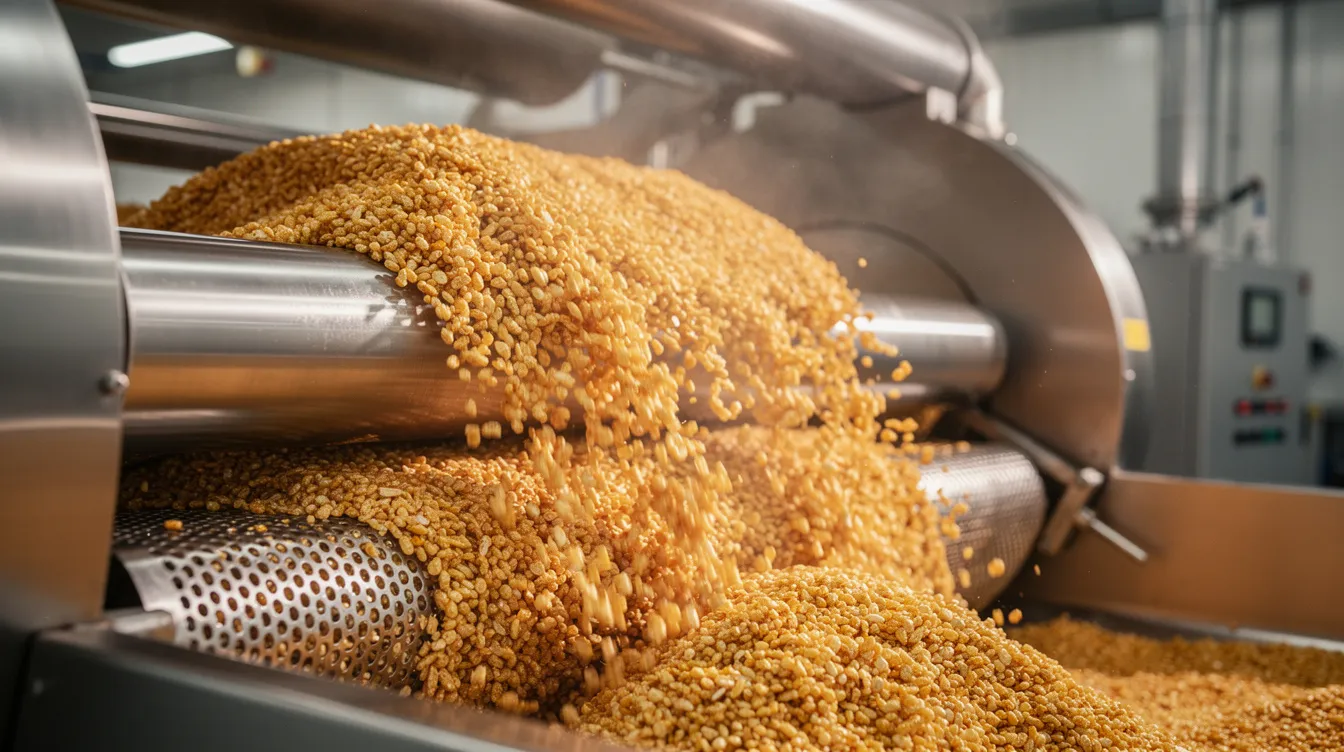
The puffed rice manufacturing process involves paddy and rice cleaning, soaking, drying, roasting or puffing under heat and steam pressure, separation, grading, and packing. The puffing process converts starch in the grain under high pressure and heat, and yield control at each stage is critical.
Better yield – more kg of puffed rice produced per kg of paddy – and lower wastage directly improve contribution margin and hence DSCR. Fuel efficiency, labour productivity, and processing control significantly influence EBITDA margins. In a detailed project report, operating assumptions on yield and wastage should be based on actual machine specifications, not arbitrary numbers. See the puffed rice manufacturing process and flow chart for aligning financial assumptions with technical process steps.
Raw Material Planning and Repayment Capacity
Paddy and raw rice account for a major portion of production cost. The puffed rice industry depends on seasonal rice availability and pricing, which influence profitability directly. Buying during harvest season at lower rates, maintaining optimal inventory through suitable storage including cooling facilities, and securing reliable suppliers helps avoid plant stoppages.
Sharp spikes in paddy prices or supply disruption can compress margins, reduce cash accrual, and weaken DSCR. The DPR must reflect realistic raw material consumption and stock levels in both working capital and DSCR projections. For procurement strategies, refer to raw material planning for puffed rice manufacturing.
Utilities and Manpower Cost in DSCR Projections
Major operating costs include electricity for blowers and motors, fuel (husk, LPG, or diesel) for roasting, water, wages and salaries, repairs and maintenance, and factory overheads. Underestimating power tariffs, fuel consumption, or labour costs leads to overstated EBITDA and artificially high DSCR in projections.
Banks check whether these assumptions are reasonable for the chosen capacity and technology. Detailed operating cost workings should appear in annexures of financial projections so DSCR calculations remain transparent. See utilities, power and manpower requirements for a puffed rice plant for benchmarks.
Land, Building and Layout Considerations
Excessive spending on land purchase, large building areas, or elaborate civil infrastructure unnecessarily inflates total project cost and term loan requirement. Banks prefer economically designed layouts with smooth material flow, safety, and quality – without disproportionate capital expenditure relative to projected turnover.
Using existing units or leased premises can reduce initial capital cost and debt burden, subject to technical suitability. For layout and infrastructure guidance, see land, building and plant layout requirements for a puffed rice plant.
How to Improve DSCR of a Puffed Rice Project
Improving DSCR involves both financial structuring and operational efficiency:
- Optimise project cost by avoiding over-capacity and non-essential civil works, reducing term loan and yearly principal repayment.
- Increase promoter contribution where feasible to improve debt-equity ratio and lower annual debt service.
- Improve contribution margin through better product mix – value-added flavoured murmura, branded packs with suitable packaging – and better procurement strategies for raw paddy.
- Maintain realistic capacity utilisation assumptions, tighter control over wastage and power/fuel usage, and lean fixed overheads.
- Negotiate an appropriate repayment tenure and moratorium period so that instalments match the expected build-up of cash flows.
- Strengthen sales realisation by diversifying into retail, branded products, and institutional customers rather than relying solely on wholesale bulk sales.
Assumptions must remain commercially realistic. Manipulating projections purely to inflate DSCR without operational backing damages credibility during bank appraisal and can lead to approval delays or rejection.
Sensitivity Analysis of DSCR for a Puffed Rice Plant
Sensitivity analysis on cash flow is important to identify risks associated with debt servicing. Consider a base case where DSCR is 1.60 in a given year. If sales realisation falls by 5 percent, DSCR might drop to approximately 1.35. If capacity utilisation is 10 percent lower than planned, combined with a 5–10 percent increase in paddy cost, DSCR could compress further to around 1.15.
A 1 percent increase in interest rate or an increase in fixed overheads (electricity tariff, salaries) similarly reduces available cash for debt servicing. A robust murmura manufacturing project DSCR calculation in the DPR should present at least basic sensitivity scenarios so the bank can judge resilience of repayment capacity across plausible adverse conditions.
Common Mistakes in Puffed Rice Project DSCR Calculation
Common errors observed in DPRs include:
- Assuming immediate 90–100 percent capacity utilisation without market analysis or confirmed orders
- Aggressive sales growth projections without a credible document supporting market demand
- Underestimating raw material, utility, or fuel costs
- Using incorrect depreciation rates or misaligning loan balance and interest calculations
- Ignoring actual moratorium structure in DSCR computation
- Treating depreciation as a cash outflow in DSCR or omitting income tax impact while estimating PAT
- Ignoring working capital interest and its effect on net profitability, showing inflated cash accrual
- Copying generic DSCR ratios from other projects without aligning them to the specific puffed rice plant’s cost, capacity, and market conditions
- Front-loading principal repayment in years with the weakest cash generation
Each of these errors can lead to either loan rejection or, worse, post-sanction stress when actual repayment falls short of projections.
DSCR Presentation in a Puffed Rice Plant DPR for Bank Finance
A professionally prepared puffed rice manufacturing project DPR should present DSCR alongside other key ratios in a clearly structured annexure. Essential sections include project cost, means of finance, market analysis, technical details of the manufacturing method, projected financial statements, working capital assessment, repayment schedule, and DSCR analysis.
The DSCR projection must be logically linked to the profit and loss, balance sheet, cash flow statement, and term loan repayment schedule – not prepared as an isolated formula sheet. Bankers increasingly expect sensitivity analysis, break even analysis, and commentary on risk factors along with DSCR. Project Report Bank prepares these integrated DPRs with bank-friendly formats for puffed rice manufacturers and entrepreneurs across the country.
Role of CMA Data and Bank Financial Appraisal
CMA data is a structured set of projected and historical financial statements widely used in Indian banking for working capital and term loan appraisal. For a puffed rice plant, CMA data includes projected balance sheet, operating statement, analysis of current assets and liabilities, and fund flow – all supporting DSCR-based appraisal.
DSCR is one of several ratios derived from CMA data, alongside current ratio, debt-equity ratio, and interest coverage. Consistency between DPR projections and CMA data is essential; any mismatch creates doubt during bank scrutiny. Understanding how CMA data differs for new versus existing businesses is important for proper document preparation. CA Manish Gugliya assists promoters in structuring and reviewing CMA data to align with realistic DSCR and repayment analysis.
Practical Example – Structuring a Bankable Puffed Rice Project
All figures below are illustrative only and do not represent any actual project or guarantee any financial outcome.
Consider a puffed rice plant with total project cost of ₹1.20 crore, promoter contribution of ₹40 lakh, term loan of ₹80 lakh, and working capital limits of ₹20 lakh (cash credit). Installed capacity is 2.5 TPD, with capacity utilisation ramping from 55 percent in year one to 80 percent by year four.
| Year | Capacity % | Sales (₹ lakh) | EBITDA (₹ lakh) | PAT (₹ lakh) | Dep (₹ lakh) | Interest (₹ lakh) | Principal (₹ lakh) | DSCR |
|---|---|---|---|---|---|---|---|---|
| 1 | 55% | 110 | 28 | 14 | 10 | 10 | 10 | 1.70 |
| 2 | 65% | 135 | 36 | 20 | 9 | 8 | 14 | 1.68 |
| 3 | 75% | 160 | 44 | 28 | 8 | 6 | 14 | 2.10 |
| 4 | 80% | 175 | 48 | 32 | 7 | 4 | 14 | 2.39 |
| 5 | 80% | 180 | 50 | 34 | 6 | 2 | 14 | 2.63 |
By structuring a 7-year term loan with a 12-month moratorium on principal, realistic sales assumptions, and controlled project cost, the project achieves an acceptable average DSCR while keeping minimum year-wise DSCR well above prudent levels. The revenue model includes bulk sales, supplies to snack food manufacturers, and retail-packaged products – each contributing differently to profitability and funds generation.
This example shows how all elements – project cost, means of finance, pricing, raw material cost, overheads, and repayment schedule – must work together to make the puffed rice project financial viability acceptable to banks and lenders in the agri and food-processing sector.
Frequently Asked Questions
What is the minimum DSCR for bank loan approval in a puffed rice project?
Banks do not publish a single fixed minimum. In practice, many lenders prefer year-wise DSCR not falling below around 1.20–1.25 and an average DSCR moderately higher – often 1.50. These are indicative comfort levels, not guaranteed approval benchmarks. Each proposal is assessed on its overall merits, security, promoter strength, and access to government schemes.
Can a puffed rice project still get financed if initial DSCR is weak?
If DSCR is relatively low only in the first year or two due to ramp-up, banks may still consider the proposal provided later years show strong repayment capacity and the repayment schedule is suitably structured – longer tenure, stepped-up instalments, or adequate moratorium. Promoters may also improve initial DSCR by increasing equity or optimising project cost.
Does subsidy from schemes like PMFME or PMEGP improve DSCR?
Capital subsidy, when received, effectively reduces the net cost of the project and may be used to partly prepay the term loan or strengthen net worth, thereby reducing future interest and principal burden and improving DSCR. Banks generally appraise DSCR on the conservative assumption that subsidies are received later, not at the start.
Is working capital loan repayment included in DSCR calculation?
Classic DSCR for term loan considers only the principal and interest of the term loan. However, banks simultaneously evaluate whether cash flows are sufficient to service interest on working capital borrowings as reflected in the projected profit and loss. Some lenders may calculate an overall coverage ratio factoring in total debt obligations – so the DPR should disclose all borrowing costs clearly.
How many years of projections are ideal for a puffed rice plant DSCR analysis?
For a new puffed rice manufacturing unit, projections and DSCR analysis are typically prepared for the entire term loan tenure – often 5–7 years. Some institutions may ask for projections up to 8–10 years if the loan tenure is longer or if the project has expansion phases. Understanding how many years of projections lenders expect helps in structuring the DPR correctly.
Conclusion – Using DSCR Wisely in Puffed Rice Project Planning
DSCR for a puffed rice project is one of the most important indicators of whether cash accrual from the murmura business is sufficient to meet scheduled principal and interest obligations over the loan tenure. But it should never be analysed in isolation.
A reliable assessment requires proper integration of project cost, means of finance, capacity utilisation, sales projections, operating costs, profitability, working capital, cash accrual, and realistic repayment schedule. A well-structured puffed rice plant DPR integrates DSCR with financial projections, sensitivity analysis, and market understanding – helping both promoter and banker assess project risk and viability with confidence.
CA Manish Gugliya, through Project Report Bank, assists entrepreneurs and MSME promoters in preparing detailed project reports, projected financial statements, CMA data, and bank finance proposals for manufacturing projects – including puffed rice, brown rice, parboiled rice, fruit processing, and other food-processing units. If you are planning to set up or expand a puffed rice or murmura manufacturing plant, consider seeking expert support when structuring your DSCR and loan repayment analysis so that your proposal is technically sound, internally consistent, and ready for bank appraisal.