

Key Takeaways
- A bankable puffed rice plant project report must clearly present total project cost, fixed capital, working capital and a realistic means of finance combining promoter funds with bank loan.
- For a small commercial murmura manufacturing unit in India (around 1 to 2 TPD capacity), small commercial puffed rice plants typically cost between ₹10 lakh to ₹22 lakh to set up, while larger automated puffed rice plants can require investments of ₹50 lakh or more. Actual figures depend on land, building, machinery automation and working capital cycle.
- Banks expect a healthy debt-equity ratio (often 2:1 to 3:1 for MSME projects), clear promoter contribution of 20 to 35%, and a structured term loan plus working capital finance plan supported by DPR, CMA Data and 5 to 7 year financial projections.
- All figures in this article are illustrative only. ProjectReportBank.com, through CA Manish Gugliya, assists entrepreneurs in preparing customised, bank-ready puffed rice plant DPRs for term loan and working capital limits.
Why Correct Puffed Rice Plant Project Cost Estimation Matters Before Bank Finance
A realistic puffed rice plant project cost and means of finance is the foundation of any bankable DPR, CMA Data and loan proposal. From my experience preparing project reports for food processing units across India, I have seen projects stall mid-construction because the initial cost estimate missed entire heads like electrical installation, packaging machinery or margin for working capital.
A small error in estimating puffed rice plant setup cost can lead to a situation where the sanctioned term loan falls short of actual requirements. The promoter is then forced to arrange emergency funds at unfavourable terms, delay commissioning, or compromise on equipment quality. On the other end, inflating the project cost weakens DSCR, raises debt-service burden and reduces the project’s attractiveness to lenders.
Puffed rice manufacturing is a relatively low-technology manufacturing business, but the cost of project still covers many heads: civil work, electrical installation, packaging equipment, storage, pre-operative expenses and margin for working capital. Banks and financial institutions in India carefully examine the project cost, means of finance, projected balance sheet, profit and loss account, and cash flow statement before deciding puffed rice plant bank loan and working capital limits.
This article walks through the entire puffed rice plant project cost breakdown, typical means of finance, and key ratios like debt-equity, DSCR and promoter contribution for Indian entrepreneurs planning a murmura manufacturing unit.
What Is Included in Puffed Rice & Murmura Plant Project Cost?
The cost of project for a puffed rice plant includes both fixed capital (long-term assets) and margin for working capital, presented in the project report under clearly separated heads.
Fixed capital components include:
- Land (purchase cost or lease deposits), land development (leveling, compound wall, internal roads, drainage)
- Factory building and civil construction: production hall, raw material godown, finished goods store, utility block, office area. Basic civil works may cost an additional ₹1 lakh to ₹4 lakh for small setups. Infrastructure for puffed rice production typically requires around 200 to 300 sq. meters of space.
- Plant and machinery: cleaning and grading machines, puffing machine, roasters, sieving equipment, conveyors, weighing scales, packaging machines, dust collectors. Installation, erection and commissioning charges often add 10 to 20% to ex-factory machinery cost.
- Electrical installations (wiring, panels, transformers), utilities (boiler or furnace, compressor, water system, DG set where needed)
- Storage facilities, material-handling equipment, laboratory and quality-control instruments, office furniture
Pre-operative and intangible items are grouped under preliminary and pre-operative expenses: company formation, consultancy fees, architect and legal fees, FSSAI food license, trial run expenses, pre-operative salaries, electricity before commercial operation date, and interest during construction where applicable. Food safety licenses and registrations are essential compliance requirements for operation; you must obtain a food license from the FSSAI and register your business with the Registrar of Companies.
Contingency (usually 5 to 10% of building, machinery and electrical heads) covers unforeseen cost increases during implementation.
Margin for working capital is the promoter’s portion of the working capital requirement: stock of raw materials (rice, paddy), packaging materials, finished goods, receivables and minimum cash balance, minus creditors and other spontaneous liabilities.
The distinction is straightforward: fixed capital covers long-term assets you build or buy once, while working capital requirement represents funds tied up in daily inventory, receivables and operating expenses.
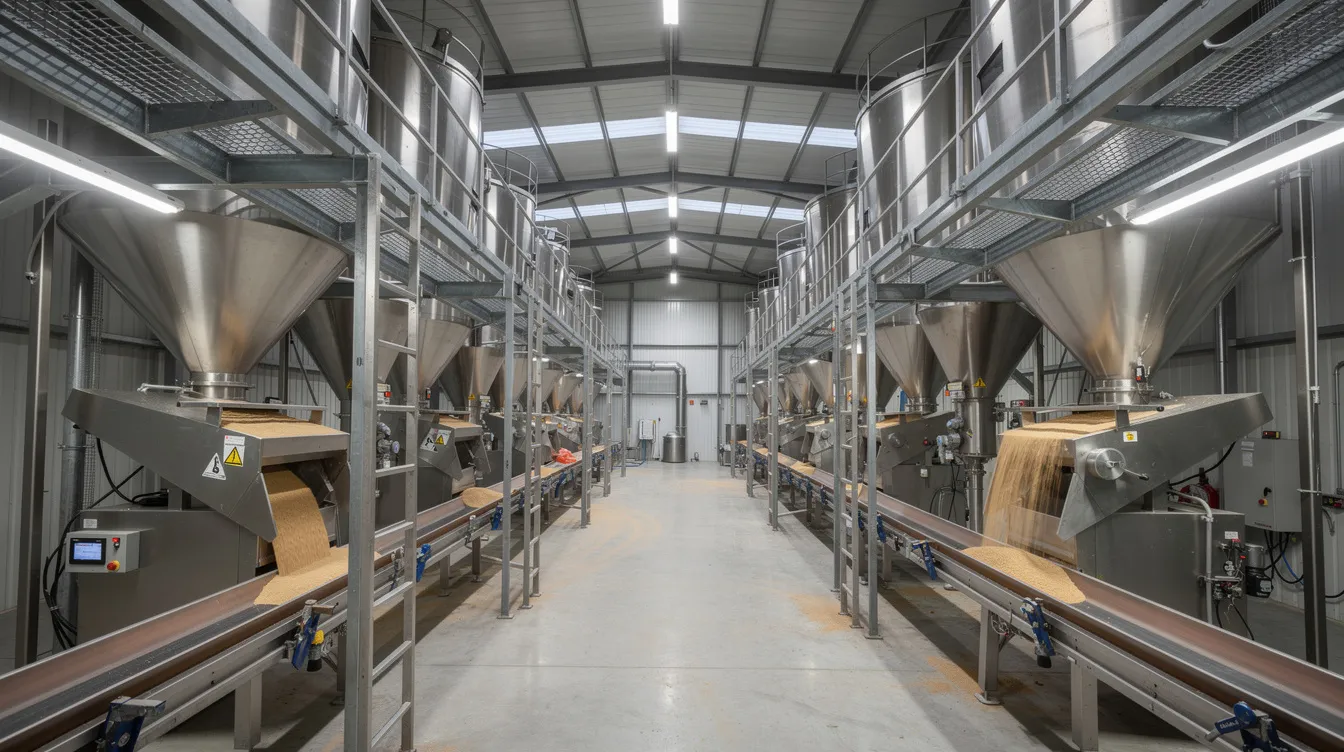
Indicative Puffed Rice Plant Project Cost in India
The figures below are illustrative only, based on typical MSME-scale puffed rice plant investment in India for approximately 1 to 2 tonnes per day capacity. Cost structures for puffed rice production vary by capacity, automation level and location-specific factors.
| Particulars | Indicative Amount / Range |
|---|---|
| Land & Site Development | ₹2 lakh to ₹15 lakh |
| Factory Building & Civil Work | ₹5 lakh to ₹30 lakh |
| Plant & Machinery (incl. installation) | ₹3 lakh to ₹25 lakh |
| Electrical Installation | ₹1 lakh to ₹5 lakh |
| Utilities (fuel system, water, compressor) | ₹1 lakh to ₹10 lakh |
| Storage & Material Handling | ₹0.50 lakh to ₹5 lakh |
| Packaging Equipment | ₹1 lakh to ₹10 lakh |
| Office & Miscellaneous Assets | ₹0.50 lakh to ₹2 lakh |
| Preliminary & Pre-operative Expenses | ₹0.50 lakh to ₹5 lakh |
| Contingency (5-10%) | ₹0.50 lakh to ₹5 lakh |
| Margin for Working Capital | ₹1 lakh to ₹20 lakh |
| Total Project Cost | Illustrative only; actual cost from project-specific quotations |
Micro-scale puffed rice plants may require an initial investment of around ₹2.5 to ₹4 lakh, while you can start a murmura unit with ₹2 to ₹5 lakh investment at the very basic level. Minimum investment for a small commercial puffed rice unit is around ₹10 lakh. Estimated initial investment ranges based on production capacity and automation.
Where the promoter already owns suitable land, its cost may be excluded from financing analysis and treated as promoter contribution. Lenders may consider puffed rice plant investment cost excluding land while assessing eligible term loan, especially where land is unencumbered.
Land and Building Cost for Puffed Rice Plant
Land and building cost varies widely between states and industrial areas. Purchased land adds purchase price, stamp duty and registration to project cost. Already-owned land can be brought into the project at a supportable value as promoter contribution in the balance sheet.
Renting or leasing factory premises reduces upfront puffed rice plant capital requirement. Security deposits and basic modifications may be capitalised or treated as preliminary expenses. Many promoters compare PEB (Pre-Engineered Building) sheds, which lower setup cost and speed up implementation, against RCC structures that may be preferred where multi-storey storage for raw paddy is needed.
The layout must separate raw paddy and rice storage, puffing and roasting section, sieving and grading area, packaging zone, finished goods warehouse, utility block (boiler, compressor, roaster fuel), QC lab and administrative office. Promoters should refer to the detailed guide on Puffed Rice Plant Land, Building & Plant Layout Requirements while finalising civil estimates. Coordinate with local architects or civil contractors to prepare realistic per-sq-ft cost estimates for inclusion in the DPR.
Plant & Machinery Cost for Puffed Rice & Murmura Unit
Puffed rice plant machinery and setup cost is usually one of the largest components of total project cost. Capital expenditure involves machinery and equipment costs for the processing unit. An estimated cost for machinery in a small puffed rice unit can start from ₹2 lakh, while full machinery for 500 to 1,500 kg/day plants often falls in the ₹7 to 25 lakh range depending on automation.
Key machinery for a murmura manufacturing plant includes: cleaning and grading equipment, soaking and conditioning tanks (where required), sand roasting or continuous roaster systems, puffing machine, sieving and grading units, bucket elevators or conveyors, weighing scales and packaging machines. Puffed rice machinery includes soaking tanks, the puffing machine, sieves and packaging machines. Auxiliary systems cover dust-control equipment, cyclones, blowers, material-handling trolleys and seasoning machines if flavoured murmura is planned.
Machinery cost is influenced by Indian versus imported equipment, stainless steel food-contact parts, energy efficiency, output per hour and safety features. For a detailed comparison framework, see Puffed Rice & Murmura Plant Machinery Cost. Banks typically insist on formal machinery quotations attached to the DPR to support the term loan requirement. Always include GST and installation charges in quoted figures.
Production Capacity and Its Impact on Puffed Rice Plant Project Cost
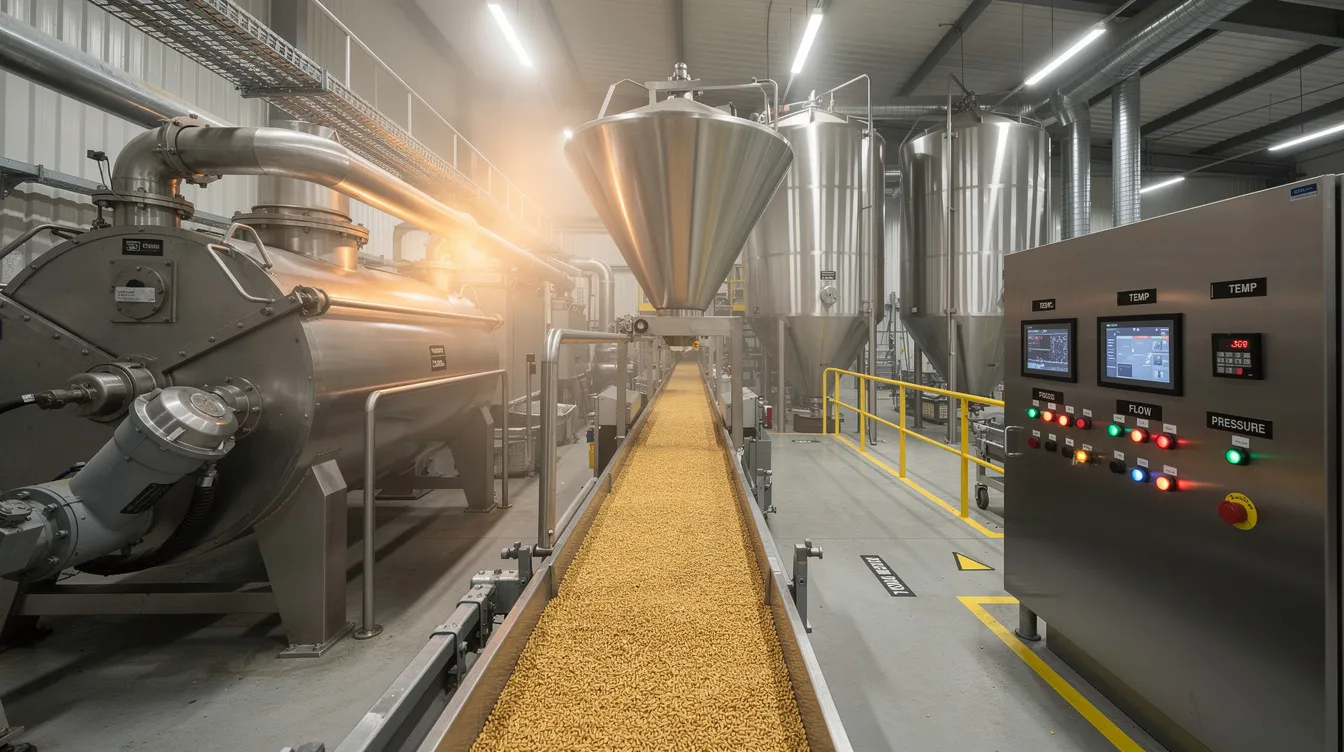
Planned production capacity directly influences puffed rice plant investment cost, machinery selection, building size, utility load and working capital requirement. A small unit can produce 500 kg of puffed rice daily; larger plants may target 5 to 10 TPD or more. Capacity is measured in tonnes per day, hourly production rate, number of working shifts and annual operating days (commonly 250 to 300 days).
Higher capacity benefits from economies of scale on per-kg cost, but requires higher initial capital. Puffed rice production can be categorised into micro, small, medium and large scales based on daily capacity. Starting a puffed rice production plant can range from manual units to automated facilities.
Capacity utilisation assumptions in DPRs commonly start at 50 to 60% in Year 1, rising to 80 to 85% by Year 3 or 4. Assuming 100% utilisation from day one misleads lenders about profitability and DSCR. Promoters should also plan provision for future expansion. For detailed guidance, see Puffed Rice Plant Capacity Planning & Production Capacity.
Selecting machinery based solely on lowest initial quotation is risky; life-cycle cost, maintenance availability, vendor credibility and quality parameters matter equally.
Raw Material and Initial Inventory Requirement
The main raw material for puffed rice is rice. India produces over 100 million tonnes of rice annually, yet only 10% is processed into value-added products. Raw materials for puffed rice include paddy, salt and fuel. Other raw materials include sugar and spices for flavoured varieties. Packaging materials constitute a significant portion of ongoing costs.
Inventory norms in a DPR typically specify 15 to 30 days of raw paddy stock, 10 to 20 days of packaging material and 3 to 7 days of finished goods. In some rice belts, procuring paddy at harvest season and storing for several months can be economical but increases warehouse requirement and working capital tied up in stock.
Supplier credit from rice millers and packaging vendors reduces net working capital. Advance payment terms increase it. These assumptions must be realistic in the puffed rice plant project report. For detailed estimation of quantities, see Raw Material Planning for Puffed Rice & Murmura Manufacturing. Initial inventory at commissioning is covered partly from promoter contribution and partly from working capital finance.
Utilities, Power and Manpower Cost
Utilities in a puffed rice plant include electricity and fuel for roasting. Power-related capital items cover new electricity connections, switchgear, internal electrification for machinery and optional DG set backup. Utility systems include fuel-fired roasters or boilers (coal, LPG, biomass, PNG), compressors and water storage.
Monthly operating costs for a puffed rice plant can vary widely based on scale and production. Running a puffed rice plant requires ongoing costs for raw materials, utilities and labor. Employing skilled labor is essential for the operation of puffed rice manufacturing machinery. Manpower categories include production workers, helpers, machine operators, quality-control staff, packaging labour, supervisors and administrative staff.
For reference while preparing MSME financial projections, see Puffed Rice Plant Utilities, Power & Manpower Requirements. One-time utility connection costs are capitalised; recurring salaries and utility expenses appear in projected P&L and cash flow, influencing DSCR.
Understanding the Manufacturing Process Before Estimating Cost
Puffed rice plant project cost should never be finalised before the promoter understands the selected puffed rice manufacturing process. Puffed rice is made by heating rice kernels until they pop, which is the fundamental principle across all methods. Traditional puffed rice is made using sand roasting methods. Modern methods use machines to puff rice under high pressure. In some modern configurations, rice kernels are ground into powder before puffing. Puffed rice production can also be done at home using simple methods, though commercial plants use industrial equipment.
Process configurations include gun puffing, sand roasting in iron kadais, semi-automatic roasters with continuous feeding, and automated systems using mechanical puffing or hot air technology. Each path has different capital cost, fuel consumption and labour needs. The process flow covers raw paddy cleaning, soaking or conditioning, roasting and puffing, separation of unpuffed grains, sieving, cooling, seasoning (for flavoured products) and final packaging.
See Puffed Rice Manufacturing Process & Process Flow Chart for selecting the right process before estimating machinery cost and utility calculations. Choosing the cheapest process without evaluating quality, food safety and fuel efficiency may lead to poor product acceptance and higher running costs.
Working Capital Requirement for Puffed Rice Plant
Working capital is the money blocked in day-to-day operations: inventory, debtors and minimum cash, minus short-term liabilities. Initial working capital is needed to cover expenses like raw materials and salaries for operators.
Key components include:
- Raw material inventory (paddy, rice, seasonings)
- Packaging material inventory
- Finished goods stock
- Receivables from distributors and wholesalers
- Cash and bank balance
- Monthly operating expenses (wages, utilities, repairs)
Creditors, supplier advances and statutory liabilities (GST, PF/ESI) reduce net working capital. The distinction between “working capital requirement” (total amount needed) and “margin for working capital” (promoter’s portion included in project cost) is critical. The balance is funded by the bank via cash credit or overdraft.
For illustration: if total working capital requirement is ₹25 lakh, the promoter may contribute 25 to 30% (₹6 to 7.5 lakh) as margin, with the remaining 70 to 75% funded through bank cash credit. Banks assess working capital finance using operating cycle and turnover methods, requiring proper CMA Data and projected balance sheet. Inadequate working capital provision in the DPR often leads to cash-flow stress even after the term loan for machinery and building has been sanctioned.
What Is Means of Finance for a Puffed Rice & Murmura Plant?
While “Cost of Project” answers where money will be spent, “Means of Finance” answers where it will come from. If the total puffed rice plant project cost is ₹100 lakh (illustrative), it may be financed through promoter contribution, term loan, working capital limits, unsecured loans and possible subsidies, all adding up to the total cost. Startup costs include land, machinery and working capital.
Promoter Contribution
Promoter contribution represents the entrepreneur’s own funds: savings, capital introduced, or sale proceeds of other assets. Banks typically expect 20 to 35% of total project cost as equity. Land or building already owned may be included, but lenders prefer a mix of fresh cash and existing assets. Proof of own funds (bank statements, FDs, sale deeds) is required during appraisal.
Term Loan
Term loan is a medium- to long-term bank loan financing puffed rice plant fixed capital: building, plant and machinery, utilities, electrical installations and part of pre-operative expenses. The amount is determined after deducting promoter margin from eligible fixed capital. Repayment tenure is commonly 5 to 7 years, sometimes with a moratorium period for construction. According to NABARD cost norms, repayment for puffed rice plant projects may include a moratorium period of 6 quarters.
Working Capital Finance
Working capital finance is given as cash credit, overdraft or packing credit, secured by hypothecation of stocks and receivables. Although margin for working capital appears once in the cost of project, recurring working capital is financed through bank limits and internal accruals during operations. The DPR must show the monthly working capital cycle and proposed CC limit.
Unsecured Loans
Unsecured loans from promoters, directors or relatives may be accepted as part of long-term funds subject to the bank’s conditions. Some lenders treat subordinated unsecured loans as quasi-equity while calculating debt-equity ratio; others classify them purely as debt. Terms must be documented and reflected in balance sheet projections.
Subsidy / Government Assistance
The PMFME scheme provides a capital subsidy of 35% of eligible project costs, up to ₹10 lakh. PMEGP offers up to 35% capital subsidy for murmura units. A Mudra loan may also be available for smaller units. Eligibility and disbursement terms vary by location and policy. Subsidy should not be treated as guaranteed funding; promoters should plan to meet all loan obligations even if subsidy is delayed.
Illustrative Means of Finance Structure for a Puffed Rice Plant
This table illustrates a hypothetical structure for a puffed rice plant project cost of ₹100 lakh (illustrative):
| Means of Finance | Amount (₹ Lakh) | Percentage |
|---|---|---|
| Promoter Contribution | 25–35 | 25–35% |
| Term Loan | 55–70 | 55–70% |
| Unsecured Loan (if applicable) | 0–10 | 0–10% |
| Subsidy (if appropriately considered) | Subject to approval | Varies |
| Total | 100 | 100% |
The total of all means of finance must exactly match the cost of project in the DPR. Acceptable debt-equity structure for MSME manufacturing projects in India often ranges around 2:1 to 3:1 (term debt to equity), though individual banks and schemes may have different norms. Interest during construction and margin for working capital are funded partly from promoter contribution and partly from term loan, as permitted by lender policy.
Promoter Contribution and Margin Money in Puffed Rice Projects
Banks insist on adequate promoter contribution because it demonstrates financial commitment, reduces default risk and improves the project’s ability to absorb initial teething issues. The promoter typically provides equity (own cash), margin for term loan and margin for working capital.
Land and building already owned may be accepted as part of promoter margin based on acceptable valuation, especially where the property is mortgaged to the bank. Common sources include own savings, capital from family, sale of non-core assets, subordinated unsecured loans and retained profits from existing businesses.
Documentation is critical: bank statements showing fund availability, timing of capital introduction and avoiding last-minute deposits with unclear sources. Undervaluing promoter margin or relying on undocumented unsecured loans can lead to queries and possible rejection of the loan proposal.
Debt-Equity Ratio for Puffed Rice Manufacturing Project
Debt-equity ratio reflects the relationship between term debt and promoter equity: Debt-Equity Ratio = Total Term Debt divided by Tangible Net Worth (or Promoter Equity), as per the lender’s definition.
Many Indian banks prefer this ratio not exceeding 2:1 or 3:1 for small and medium enterprises, while exact norms differ by scheme, collateral and risk perception. Very high debt-equity strains interest and instalment payments, weakens DSCR and reduces chances of term loan approval. Promoters should test different combinations of equity and debt using realistic projections before finalising the capital structure.
Term Loan for Puffed Rice & Murmura Plant
Term loan is the primary instrument funding puffed rice plant fixed capital. Eligible cost heads typically include factory building, puffed rice machinery cost (including installation and GST), electrical installations, utilities and certain pre-operative expenses.
Key parameters: repayment period of 5 to 7 years, possible moratorium during construction, floating interest rate linked to the bank’s internal benchmark. Security structure covers hypothecation of plant and machinery, mortgage of land and building, and possible third-party guarantees. CGTMSE-backed loans may reduce collateral requirements.
Banks require machinery quotations, building estimates, implementation schedules and a CA-prepared project report showing DSCR and projected cash flows sufficient to service the loan. Approval depends on project viability, promoter profile, CIBIL score, collateral and the bank’s credit policy at appraisal.
Bank Loan Documentation for Puffed Rice Plant
Banks require a complete set of documents to appraise puffed rice plant project cost and means of finance. Missing documents often delay sanction.
- Promoter documents: PAN, Aadhaar, photographs, constitution documents (Partnership Deed, LLP Agreement, MOA/AOA), Udyam Registration, GST registration
- Property documents: Land ownership or registered lease deed, building plans, encumbrance certificate where property is offered as collateral
- Technical and financial documents: Detailed project report, CMA Data, projected balance sheet, P&L, cash flow statement and ratio analysis for 5 to 7 years, machinery quotations and proforma invoices
- Compliance documents: FSSAI licence, municipal or industrial approvals, pollution NOC where applicable
- Financial history: Promoter’s income-tax returns for past 2 to 3 years, net-worth statements, 6 to 12 months’ bank statements
Requirements vary by bank, loan size and scheme.
Importance of DPR for Puffed Rice Project Finance
A detailed project report integrates puffed rice plant capacity, manufacturing process, cost of project, means of finance and financial projections into one bankable document. A good DPR connects installed capacity and capacity utilisation to production volumes, raw material consumption, power and fuel usage, labour and revenue projections.
Essential financial outputs include: projected P&L, balance sheet, cash flow statement, fund flow, DSCR (usually expected above 1.3 to 1.5), break-even analysis, sensitivity analysis and IRR where required. Lenders check whether assumptions (selling price per kg, raw material cost, labour, utilities) are reasonable and whether DSCR stays comfortable over the loan tenure.
Common Mistakes While Estimating Puffed Rice Plant Project Cost
Many first-time entrepreneurs underestimate components of puffed rice plant project cost, leading to cost overruns after implementation starts.
- Relying only on machinery quotation and ignoring building, electrical, utilities and statutory fees
- Not budgeting for installation, freight and GST on machinery
- Overlooking storage space for raw paddy and finished goods
- Underestimating packaging machinery and consumable costs
- Ignoring preliminary expenses, contingency and interest during construction
- Planning too-low inventory days and assuming all sales will be cash-based
- Using unrealistic 100% capacity utilisation from Year 1
- Assuming subsidies will come immediately and fully offset promoter contribution
These mistakes create funding gaps, forcing promoters to arrange expensive emergency funds or compromise on equipment quality, damaging long-term viability.
How to Prepare a Bankable Cost of Project for Puffed Rice Plant
A step-by-step methodology:
- Finalise production capacity and target market (local wholesale, branded retail, flavoured murmura)
- Finalise manufacturing process based on quality, fuel and labour considerations
- Obtain multiple machinery quotations with detailed specifications and cost break-up
- Estimate land and building requirement with architect or engineer, including layout and storage
- Calculate electrical load and utility infrastructure
- Estimate preliminary and pre-operative expenses
- Determine working capital cycle: inventory days, receivable days, creditor days
- Calculate working capital requirement and decide margin for working capital
- Add 5 to 10% contingency on selected capital cost heads
- Decide promoter contribution percentage based on own funds and acceptable debt-equity ratio
- Estimate term loan requirement by deducting promoter margin from eligible capital cost
- Prepare 5 to 7 year financial projections linked to capacity utilisation
- Test loan repayment capacity and DSCR under base-case assumptions
- Conduct sensitivity analysis (e.g., 5 to 10% increase in raw material price)
- Finalise DPR and funding proposal, aligning total means of finance with total project cost
Each step should be supported with verifiable documents: quotations, estimates, market data.
Cost Reduction Without Compromising Puffed Rice Project Viability
Thoughtful optimisation improves returns without compromising safety or quality:
- Evaluate leased industrial sheds instead of purchasing land and constructing buildings
- Start with semi-automatic machinery and upgrade once sales stabilise (phased automation)
- Select machinery capacity matching realistic near-term demand rather than oversizing
- Compare local, reputed manufacturers with large branded suppliers, factoring in service availability and spare parts
- Use efficient roasters, insulation and appropriate fuel to reduce recurring power and fuel expenses
Avoid cost cutting that affects food safety (ignoring stainless steel contact parts, poor ventilation) or compromises structural strength and worker welfare.
Why Puffed Rice Plant Project Cost Cannot Be Standardised
Two plants with identical nominal capacity can still have different project cost structures. Factors causing variation include:
- Geographical location (land price, labour cost differ between states)
- Civil construction specification (RCC vs PEB shed)
- Puffing and roasting technology (traditional sand roasting vs semi-automatic vs fully continuous)
- Fuel system (LPG, biomass, coal, PNG)
- Storage requirements (seasonal bulk vs just-in-time sourcing)
- Packaging formats (loose bulk bags vs retail pouches with automatic FFS machines)
- Product mix (plain puffed rice vs flavoured snack foods vs puffed grain based breakfast cereal)
- Target market (cash-based wholesale vs modern retail with 30 to 60 days credit)
Treat all figures in this article as broad guidance only. Rely on customised estimates and local inputs while preparing your DPR. India’s snack market reaches ₹40,000 crore, and growing demand for puffed rice driven by health trends and its position as a popular street food (bhel puri, mixed with vegetables, spices and sauces) and popular low-cost breakfast cereal means market opportunity exists. Puffed rice is distinct from flaked rice, regular white rice and standard cereal products. Across the Indian subcontinent, India is the largest producer of rice. Puffed rice, sometimes called popped rice, is lower in fat and calories compared to many savory snacks. Puffed rice demand is increasing due to health trends, and the product offers various health benefits. Profitability in puffed rice production can improve with value-added products that meet consumer demand. Puffed rice production typically sees gross margins of 30% to 50% for plain varieties, and a small unit producing 500 kg/day can earn ₹25,000 to ₹50,000 per month. Export markets also offer potential for manufacturers meeting quality parameters.
The puffed rice industry in India remains attractive for small and medium enterprises given these fundamentals, but project cost and expected returns must be grounded in project-specific data.
Role of CA Manish Gugliya & ProjectReportBank.com in Puffed Rice Plant DPR & Project Finance
CA Manish Gugliya is a practising Chartered Accountant with extensive experience preparing detailed project reports, CMA Data, financial projections and bank loan documentation for MSME manufacturing projects, including puffed rice and murmura plants across India.
Through ProjectReportBank.com, he assists entrepreneurs in estimating accurate puffed rice plant project cost, segregating fixed capital and working capital, and structuring means of finance. Key services include: preparation and review of puffed rice plant DPRs, CMA Data preparation, financial projections (P&L, balance sheet, cash flow, DSCR), working capital assessment, break-even and sensitivity analysis, and assistance in shaping a bankable loan proposal.
The role is to prepare, advise, assist and structure; not to certify projected financial statements as guaranteed outcomes. The approach integrates technical aspects like capacity, process and machinery layout with financial modelling, rather than treating projections as theoretical numbers detached from plant reality.
Frequently Asked Questions on Puffed Rice Plant Project Cost & Finance
How much does a puffed rice plant cost in India?
Small commercial puffed rice plants (1 to 2 TPD) may require total project cost in the range of ₹10 to ₹22 lakh, while larger semi-automatic or fully automatic plants can exceed ₹50 lakh. Exact puffed rice plant cost in India depends on land, building, machinery automation, storage and working capital cycle. A project-specific DPR is necessary to determine the actual figure.
How much investment is required for a murmura manufacturing plant?
Murmura manufacturing business investment includes not only the murmura making machine cost but also civil construction, electrical installations, pre-operative expenses and margin for working capital. At the micro scale, you can start a murmura unit with ₹2 to ₹5 lakh. Small commercial units require ₹10 lakh or more. These are illustrative tiers; actual cost must be finalised after quotations and site assessment.
Can I get a bank loan for a puffed rice manufacturing plant?
Many entrepreneurs obtain term loans and working capital finance for puffed rice manufacturing plants under regular MSME finance, CGTMSE-backed schemes or state-level programmes. Sanction depends on project viability, promoter profile, collateral, documentation quality and bank policy. No article or consultant can guarantee approval.
Is working capital included in puffed rice plant project cost?
The entire working capital requirement is not capitalised. A portion called margin for working capital is included in the cost of project and financed through promoter funds or term loan. The remaining working capital is supported by bank cash credit or overdraft facilities during operations.
Can a puffed rice plant be established in a rented industrial shed?
Many MSME puffed rice units operate from rented or leased industrial sheds, provided the structure meets FSSAI and local regulations. Rent and security deposits are factored into the DPR and cash flows. Banks focus on viability, lease tenure and collateral offered for the loan.
Is machinery cost the largest part of puffed rice plant project cost?
In many small and medium projects, plant and machinery plus electrical and utilities together form a large share. But in high-priced locations, land and building can exceed machinery cost. A comprehensive project cost breakdown is necessary to understand the actual proportion for your specific rice plant and factory.
Why is a DPR required for bank finance for a puffed rice plant?
Banks require a structured DPR to understand cost of project, means of finance, revenue model, profitability, DSCR and risk factors. A professionally prepared detailed project report by a practitioner like CA Manish Gugliya increases clarity during appraisal, though it does not by itself guarantee sanction.
What government schemes support puffed rice manufacturing projects?
The PMFME scheme provides a capital subsidy of 35% of eligible project costs up to ₹10 lakh. PMEGP offers up to 35% capital subsidy for eligible units. Mudra loan may support smaller units. Eligibility, terms and disbursement timelines vary; promoters should verify current scheme status with the relevant authorities before relying on subsidy as a funding source.
Conclusion
Setting up a puffed rice or murmura manufacturing plant in India involves much more than purchasing a puffing machine. Entrepreneurs must integrate technical capacity, plant layout, cost of project, working capital requirement, promoter contribution, term loan and realistic sales assumptions into a coherent financial plan. The rice manufacturing business, whether producing plain puffed rice, flavoured murmura or puffed grain based snacks for the food processing market, requires disciplined cost estimation from the start.
A carefully prepared puffed rice plant project cost and means of finance statement, supported by DPR, CMA Data and financial projections, forms the foundation of a successful bank loan proposal. Without this foundation, even a technically sound plant faces financing risk, cash-flow stress and implementation delays.
ProjectReportBank.com, under the guidance of CA Manish Gugliya, assists entrepreneurs in converting their puffed rice plant idea into a structured, bankable financial model. Final decisions on loan sanction and subsidy eligibility rest with lenders and government authorities; the DPR and project finance documentation ensure the entrepreneur’s case is presented with clarity and credibility.
Author: CA Manish Gugliya