
Key Takeaways
Utilities (power, fuel, water) and manpower are core drivers of puffed rice manufacturing cost, capacity utilisation and the overall bankability of any murmura manufacturing business. A small error in these assumptions can materially distort profitability, DSCR and break-even projections in your project report.
- A bankable puffed rice plant project report must link utility and labour assumptions to plant capacity, machinery specifications, number of shifts and local tariffs-not arbitrary thumb rules or percentages of turnover.
- Puffed rice plant power requirement and fuel requirement should be estimated equipment-wise and process-wise, with separate treatment of connected load, actual consumption and DG backup.
- Manpower requirement for puffed rice plant in India should be structured by department-production, maintenance, quality, administration and contract labour-and escalated annually in financial projections.
- This article is written from the perspective of CA Manish Gugliya (ProjectReportBank.com) to help entrepreneurs, MSME promoters and lenders prepare a detailed, bankable puffed rice plant DPR.
Introduction: Why Utilities & Manpower Matter in a Puffed Rice DPR
Puffed rice-known as murmura, muri or kurmura across India-is a low-margin, high-volume product. The puffing process expands rice kernels dramatically, resulting in a light, porous, and crispy product that serves as a core ingredient in various snacks, breakfast cereals, and confectioneries. Puffed rice is naturally gluten-free and easily digestible, ideal for infants and sensitive diets, while supplying low-calorie, sodium-free, cholesterol-free inputs for diet-conscious consumers. It retains basic carbohydrates, iron, and B vitamins while eliminating fats and cholesterol.
This industry supports small and medium-scale enterprises that enhance rural livelihoods. Puffed rice processing supports decentralized micro-enterprise growth and rural industrialization, and creates higher economic value for farmers and millers by reducing post-harvest losses. It is also commonly used in traditional South Asian rituals and offerings, giving it a uniquely stable demand base across India’s population.
In such a business, puffed rice plant utilities, power, fuel and labour directly affect cost of production, operating margin and break-even point. Accurate estimates of these items influence capacity utilisation, working capital, DSCR and repayment capacity in a bank loan appraisal. In DPRs and CMA data prepared for banks, utility assumptions must be backed by machinery specifications, process technology, number of shifts and local electricity or fuel tariffs.
For a typical commercial murmura manufacturing business in India, utilities can form 10–25% of total operating cost. Even small estimation errors can materially change profitability and feasibility. This article focuses specifically on commercial puffed rice and murmura manufacturing plant utilities and manpower-not generic food processing.
Understanding Puffed Rice Plant Utilities and Factory Services
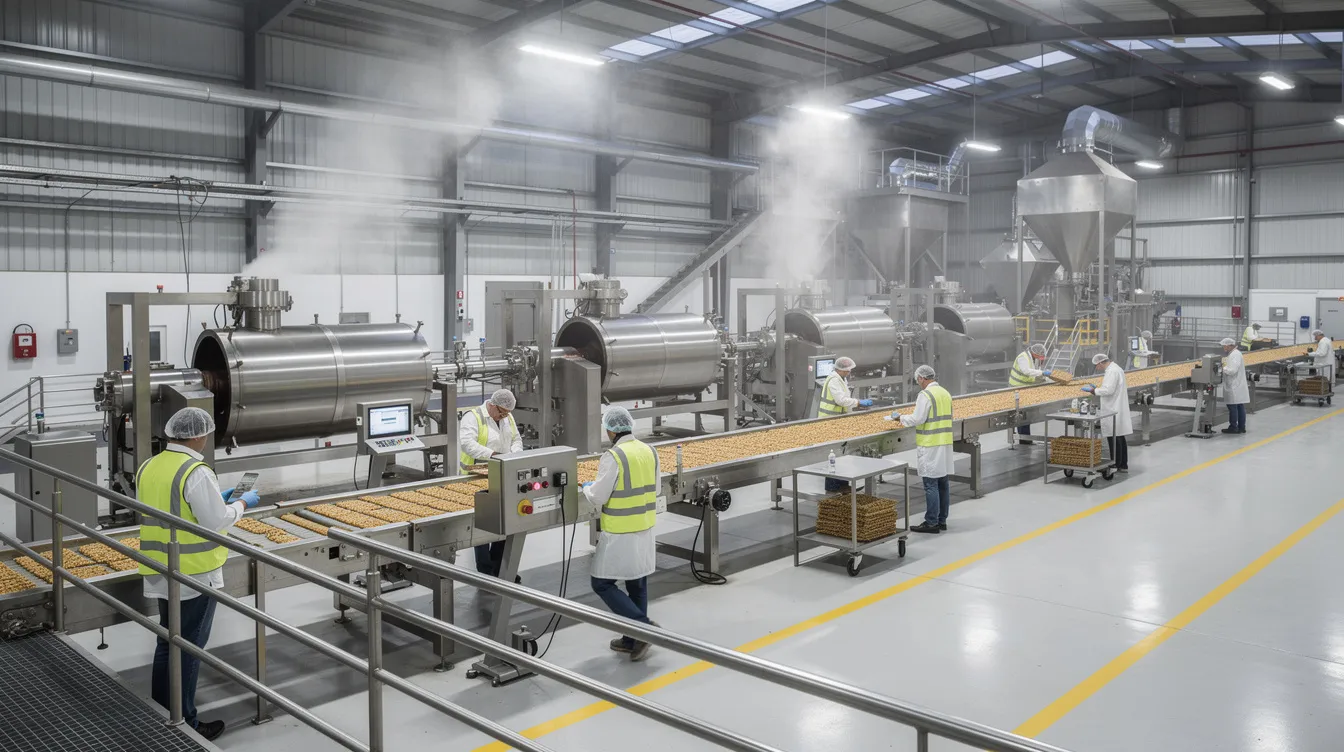
In a typical DPR, puffed rice factory utilities cover everything required to keep the plant running beyond raw materials and machinery. Facilities for puffed rice production range from traditional setups to automated industrial lines, and the utility configuration varies accordingly.
- Electrical power and lighting: machinery load, office and lighting, murmura making machine auxiliaries, CCTV and miscellaneous equipment.
- Thermal energy and fuel: roasting, puffing, dryers, hot air generators or furnace-based systems. Steam and fuel requirement for puffed rice production applies wherever steam is used for conditioning or drying.
- Process and non-process water: soaking and conditioning, cleaning, sanitation, domestic usage and cooling where applicable, including water storage and pumping.
- Compressed air: required where pneumatic packaging or automatic conveying systems are installed, adding to puffed rice processing plant utilities.
- DG backup: diesel generator capacity and fuel storage for areas with unreliable power supply. DG power cost is significantly higher than grid power (typically ₹25–35 per kWh) and must appear separately in the cost sheet.
- Factory services: fire-fighting systems, ventilation, exhaust systems, sanitation utilities. Their capital cost forms part of puffed rice plant project cost.
Puffed Rice Manufacturing Process and Its Impact on Utilities
Before estimating utilities required for puffed rice manufacturing, promoters should first understand the complete puffed rice manufacturing process and process flow chart, because each stage has a different power and thermal-energy requirement.
Puffed rice is produced by roasting conditioned rice grains. Processed rice grains must have 10–20% moisture content for puffing. The key process stages are:
- Raw paddy or rice procurement → cleaning and grading → soaking or conditioning → drying → roasting and heating → puffing → sieving → cooling → grading → packaging → storage
- Electricity-intensive stages: cleaning and grading machines, elevators, conveyors, dryers and blowers, sieving, packaging machines and material-handling equipment.
- Fuel and thermal-energy-intensive stages: drying (if hot air or steam based), roasting cylinders or sand roasters, and continuous puffing systems.
Whether the unit processes paddy (with parboiled rice preparation) or purchases ready rice influences fuel demand, water usage and utility cost per kg. The low final moisture content of puffed rice ensures stable, long-term storage, but achieving it requires careful thermal processing. Puffed rice produces lightweight, ready-to-eat breakfast cereals and traditional snacks at scale, and can lower shipping and packaging costs by expanding product volume without increased weight. It also acts as a crisp binding ingredient in chocolate bars and energy snack bars, and serves as a lightweight snack base or texturizer in many processed food applications.
Hygienic puffed rice uses salt instead of sand for heating, while the domestic puffed rice machine also uses salt instead of sand. Puffed rice can be flavored or salted to increase market diversification and product appeal. A DPR should attach a process flow diagram and machinery list corresponding to each step so bankers can verify the link between installed capacity and utilities.
Electrical Power Requirement of a Puffed Rice Plant
Puffed rice plant power requirement and murmura plant power requirement are expressed in terms of connected load (kW or kVA) and sanctioned demand from the electricity distribution company.
Major electrical loads include paddy and rice cleaner, de-stoner, grader, elevators and conveyors, soaking and conditioning pumps, dryers and blowers, puffing machine motors and gearboxes, cooling blowers, sieving and grading machines, packaging machines and sealing machines. Auxiliary loads cover air compressors, water pumps, lighting, office equipment and miscellaneous plug loads. Puffed rice machines can be powered by 2 HP or 3 HP motors for roasting and auxiliary functions, though total connected load across all equipment is substantially higher.
Key concepts for a puffed rice plant project report:
- Connected load: sum of all motor ratings (kW)
- Maximum demand: peak kVA actually recorded during operation
- Actual energy consumption: kWh consumed over a billing period
- Load factor: ratio of average load to maximum demand-typically 55–65% in food plants
Sanctioned load should not blindly equal total motor horsepower. Not all machines run simultaneously; diversity factor and process sequencing reduce actual demand. Puffed rice machines have an output capacity of 200 kg/hr to 1 ton/hr, and the table below shows indicative ranges.
| Plant Scale | Approx. Connected Load | Typical Sanctioned Demand |
|---|---|---|
| Small semi-automatic (200–300 kg/hr) | 25–40 kW | 20–30 kVA |
| Medium plant (500–700 kg/hr) | 60–100 kW | 50–80 kVA |
| Large automated (≥1 ton/hr) | 120–200+ kW | 100–160 kVA |
These are indicative only. Actual puffed rice manufacturing plant power consumption must be confirmed from machinery quotations and supplier data sheets.
Two-shift operation improves utilisation of fixed electrical infrastructure and spreads demand charges over higher output, reducing per-kg electricity cost.
Estimating Electricity Consumption and Power Cost
Electricity consumption of a puffed rice plant should be calculated systematically for DPR and CMA data, not estimated as a flat percentage of turnover.
Formula: Installed kW × Operating Hours × Load Factor = Daily kWh
Example: 80 kW connected × 16 hours (2 shifts) × 60% load factor = 768 kWh per day. Over 25 working days, monthly consumption is approximately 19,200 kWh.
Monthly power cost = kWh consumed × applicable energy tariff (₹4–8 per kWh depending on state) + demand charges per kVA per month + electricity duty + fixed charges.
Power factor penalties can increase energy charges if average PF falls below 0.90. Many state Electricity Regulatory Commissions now enforce Time-of-Day (ToD) tariffs for consumers above 10 kW: solar hours are roughly 20% cheaper, while peak hours are at least 20% higher. Practical feasibility of off-peak operation depends on labour availability and market dispatch timings.
DG set usage should be estimated separately: diesel consumption per kWh (typically 3.5–4 kWh per litre) yields a unit cost of ₹25–35 per kWh. The DPR should account for seasonal power cuts and load shedding rather than assuming 100% grid availability.
Machinery Selection and Its Impact on Power Requirement
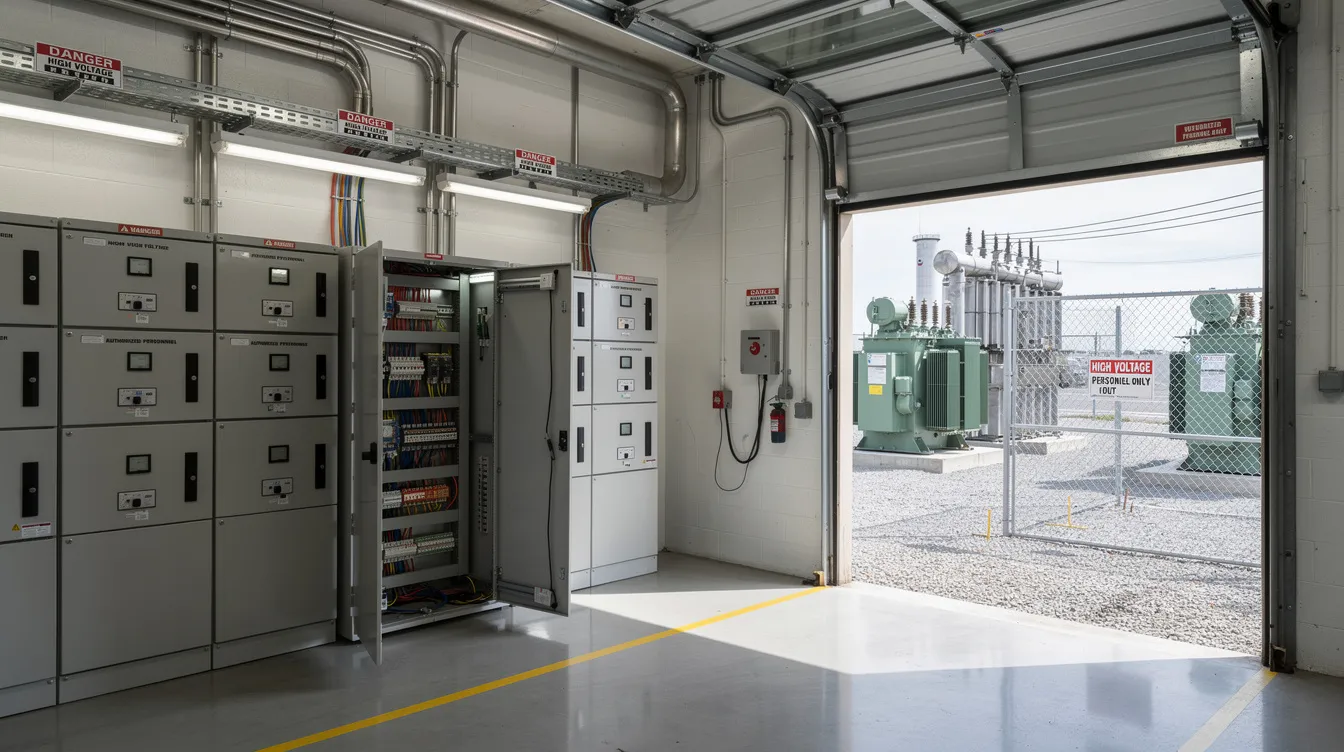
Puffed rice plant power requirement is directly driven by machinery choice, automation level and plant layout. Adding automatic bucket elevators, continuous dryers and form-fill-seal packaging machines increases connected load but reduces manual labour and handling loss.
The electrical load should be derived from the final puffed rice and murmura plant machinery configuration rather than using a generic benchmark. In the DPR, the machinery list must mention motor HP or kW for each item so total connected load and panel size can be justified to bankers.
Energy-efficient motors, VFDs for blowers and conveyors, and well-designed control panels can reduce actual consumption even if connected load remains similar. Promoters should compare quotations not only on machinery price but also on stated power consumption and production capacity, as this impacts long-term puffed rice plant utility cost.
Fuel Requirement and Thermal Energy for Puffed Rice Manufacturing
Puffing and roasting are heat-driven processes. These machines operate at temperatures between 180–210°C, and temperature for puffing rice should be maintained at 200–210°C for optimal quality parameters and expansion. Puffed rice plant fuel requirement and fuel consumption are therefore critical for both quality and cost.
Common fuels used in murmura manufacturing plants:
- Rice husk and other biomass (briquettes, firewood, pellets)
- LPG and PNG
- Coal in some regions
- Electric heating in limited cases
Fuel choice depends on plant location, availability, calorific value, local price, emission norms, furnace design and operator skill. Fuel consumption should be expressed as kg per tonne (or litres/SCM per tonne) of finished puffed rice so promoters can derive fuel cost in the cost sheet. Sand roasting and drum roasting systems have different thermal efficiencies; poorly insulated or older furnaces increase puffed rice plant energy requirement per unit of output.
Puffed rice production can create pollution from heating methods, so proper chimney height, ash handling, gas leak detection for LPG/PNG, and compliance with pollution control norms are statutory requirements. Unhygienic methods expose workers to health hazards-another reason to invest in properly designed thermal systems.
Rice Husk as a Fuel: Advantages and Practical Considerations
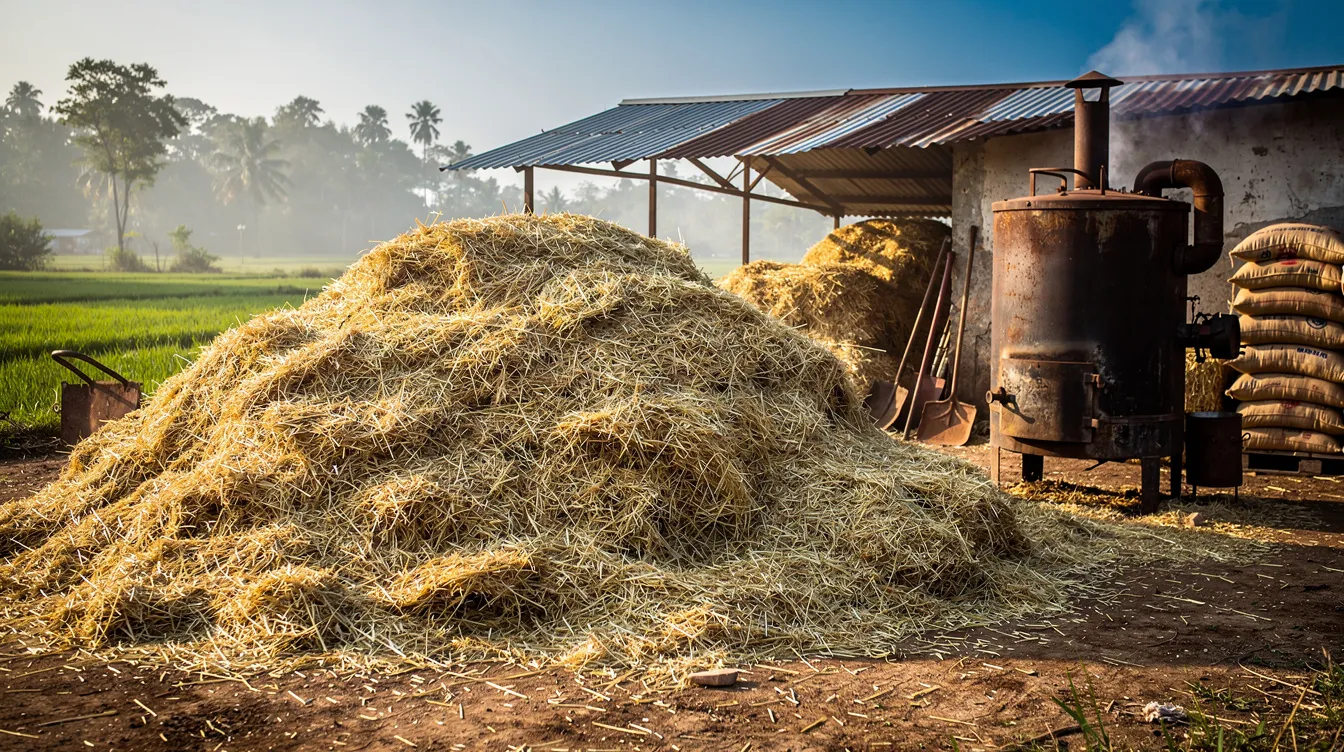
Rice husk is often preferred in puffed rice production units located near rice mills, especially when parboiled rice is the raw material and husk is locally available at the source.
- Cost advantages: linkage between rice procurement and husk availability, lower per-unit fuel cost compared to LPG or PNG, reduced dependence on external fuel vendors. Calorific value of rice husk is approximately 3,500 kcal/kg for dry husk.
- Practical issues: need for covered storage space, sensitivity to moisture content, low bulk density and associated handling cost.
- Ash and efficiency: high ash generation (15–20%) requires suitable furnace design and ash removal systems. Research on rice husk furnaces shows thermal efficiencies ranging from 50% to 80% depending on moisture, airflow and design.
- Transport cost: loading, unloading and transport of husk can erode the apparent price advantage. DPR should evaluate delivered fuel price per useful kCal, not ex-mill price alone.
Rice husk and bran from processing can be repurposed as animal feed or energy sources. Puffed rice generates processed agricultural byproducts that can be redirected to livestock feed, creating additional revenue or cost offset.
Fuel Cost per Tonne of Puffed Rice and Its Impact on Profitability
Fuel is often the largest variable cost in a murmura manufacturing business, so its impact on puffed rice manufacturing cost per kg must be clearly quantified.
Formula: Fuel Cost per Tonne = Fuel Consumption per Tonne × Delivered Fuel Price
Illustrative example: 60 kg husk per tonne × ₹3 per kg = ₹180 per tonne. Compare this with LPG at substantially higher cost per tonne of output.
This fuel cost flows into total monthly and annual puffed rice plant operating cost at different capacity utilisation levels. A sensitivity analysis showing the effect of 10%, 20% and 30% fuel price increases on gross profit, contribution margin and DSCR should be present in any puffed rice plant bank loan project report. A prudent DPR should discuss multi-fuel options or backup fuel plans in case of supply disruption.
Water Requirement and Water Management in a Murmura Plant
While puffed rice plant water requirement is medium compared to other food industries, it is essential for process quality and compliance. Main uses include soaking or conditioning of paddy or rice, washing, cleaning machines and floors, and domestic needs. Water requirement should be estimated process-wise and per tonne of input rice.
Water sources may include borewell, municipal supply or industrial water connection. Wastewater from soaking and cleaning should be disposed of safely. Capital cost of borewell, submersible pump, overhead tank and pipelines must form part of puffed rice plant project cost.
Manpower Requirement for Puffed Rice Plant in India
Puffed rice manufacturing manpower and murmura manufacturing plant manpower require structured planning across categories:
Management and administration: plant manager, production supervisor, accountant, purchase and store in-charge, sales and dispatch coordinator.
Core production: puffing machine operators, roaster and dryer operators, helpers for feeding and unloading, material handlers, sieving and grading operators, packing machine operators. These workers are typically fed into the process in shifts aligned with production capacity.
Quality and maintenance: quality-control assistant for sampling and moisture checks, electrician, fitter or mechanic, and maintenance technician.
Support staff: security guards, housekeeping, loading and unloading labour, driver where required.
The distinction between permanent employees on payroll, contract labour and piece-rate labour matters-each appears differently in the puffed rice plant labour requirement and cost sheet. Manpower planning should reflect realistic shift patterns and avoid assuming full three-shift operation in the first year unless justified by market demand.
Capacity and Manpower Planning Across Different Plant Scales
Manpower requirement for puffed rice plant in India changes with installed capacity, automation level and number of working shifts. Manpower planning should be aligned with the production capacity of the puffed rice plant and the number of operating shifts so that labour productivity and cost per kg remain viable.
| Plant Scale | Operators & Helpers per Shift | Supervisory, QC, Maintenance | Admin & Support | Approx. Total per Shift |
|---|---|---|---|---|
| Small (200–300 kg/hr) | 5–8 | 2–3 | 2–3 | 8–12 |
| Medium (500–700 kg/hr) | 10–15 | 3–5 | 3–5 | 15–25 |
| Large (≥1 ton/hr) | 15–22 | 5–8 | 5–8 | 30–40 |
These are indicative and depend on technology and automation level.
Supervisory and administrative positions are relatively fixed, while helpers and packing staff grow with tonnage and shifts. Banks compare projected manpower against proposed capacity; unrealistically low figures invite queries during appraisal.
Labour Cost Calculation and Salary Structuring in the DPR
Wages and salaries in a puffed rice plant project report are typically split into direct labour, factory overhead and administrative staff cost.
- Monthly wages are assigned per category based on local labour market rates and statutory minimum wages (which vary by state and year).
- Statutory benefits must be factored in: EPF, ESI, bonus, leave wages, overtime and gratuity provisioning.
- Overheads include uniform and PPE, training cost, and labour welfare provisions.
- Annual escalation assumptions of 5–10% should be clearly stated in puffed rice plant financial projections.
- Contract labour is usually costed on a per-day or per-tonne basis and classified as variable cost.
Automation Versus Labour: Balancing Power, Fuel and Manpower Cost
Higher automation increases puffed rice plant power requirement and may raise maintenance cost and spare parts inventory. However, automation can reduce manual handling, packing labour and production bottlenecks, improving throughput, hygiene and quality consistency. This can in turn reduce puffed rice manufacturing cost per kg.
Promoters should evaluate overall economics: incremental capital cost, higher electrical load and possible fuel savings from efficient continuous systems versus labour and wastage savings. The chosen automation level should match the promoter’s skill set, available manpower and targeted market size rather than blindly copying a competitor’s setup. Trial runs should be conducted before finalising production assumptions.
Raw Material Handling, Storage and Its Link with Utilities & Labour
Raw material volumes-whether paddy or rice, often parboiled rice in large quantity-determine storage area, handling equipment, power consumption and labour requirement. Mechanical conveying via bucket elevators or screw conveyors uses more electricity but reduces per-tonne labour cost and spillage. A variety of handling approaches exist depending on plant size.
Utility and labour requirements should also be assessed along with raw material planning for puffed rice and murmura manufacturing, particularly where large volumes of paddy or rice are handled daily. Seasonal procurement strategy may require additional godown space, lighting and ventilation. Handling of by-products such as broken rice, husk and dust may need blowers or dust collectors found locally.
Land, Building and Utility Infrastructure Requirements
Utility infrastructure is both an operating cost component and a significant part of capital expenditure. Dedicated utility infrastructure includes electrical panel room, transformer yard, DG set platform, fuel storage area, furnace or boiler area, water storage tanks and pump rooms. Production, packing and storage areas need adequate clear height, ventilation and lighting.
Promoters should review puffed rice plant land, building and plant layout requirements to ensure that poor layout does not increase labour movement, energy loss or production inefficiency. Space for fire-fighting equipment, safe fuel storage (LPG cylinders, husk storage) and worker amenities must be present. Costs of electrical cabling, earthing, fire-fighting systems and civil work around furnaces must be captured in puffed rice plant project cost.
Utility and Manpower Cost in Cost of Production & Financial Projections
Puffed rice plant utility cost and labour cost must be integrated into the projected cost of production statement. Utility cost heads include grid electricity, DG fuel, primary fuel (biomass, LPG, husk), water, and compressed air. Labour heads include direct production wages, packing labour, contract labour, supervisor salaries, security, housekeeping and statutory costs.
These costs feed into contribution margin, EBITDA and net profit in the puffed rice plant financial projections. The DPR should clearly distinguish factory overheads from administrative and selling expenses for clarity in DSCR analysis. This view is essential when the market price of murmura sold in bags is mixed with other products or packed under different brands.
Fixed Versus Variable Utility and Labour Costs
Correctly classifying fixed and variable costs is essential for break-even analysis:
- Fixed or semi-fixed: minimum electricity demand charges, basic lighting, supervisory salaries, maintenance technician wages, security, insurance.
- Variable: production-related electricity, fuel for roasting and puffing, packing labour, loading and unloading labour, water consumption directly proportional to tonnage.
At lower capacity utilisation (50–60%), fixed utilities and salaries per kg are high. They spread and reduce per kg at higher utilisation (75–90%). This distinction is critical for the day your plant scales from initial production to full capacity.
Utility Planning at Different Capacity Utilisation Levels
Puffed rice plant operating cost varies as the plant scales from trial production through 60%, 75% and 90% of rated capacity. Electricity and fuel are predominantly variable and move broadly with output, though efficiency may improve slightly at higher loads. Lighting and basic ventilation do not reduce significantly at lower utilisation.
Promoters should clearly state the assumed capacity utilisation trajectory in the puffed rice plant DPR and ensure utility and manpower costs are scaled accordingly. A worked example showing how cost per kg falls from year one to year three as utilisation improves from 50% to 75–80% supports better profitability and DSCR in projections.
Utility-Related Capital Cost and Means of Finance
Capital items related to utilities-transformer, DG set, boiler or furnace, hot air generator, compressor, water system, fire-fighting device-are integral parts of puffed rice plant project cost. These should be itemised under “Plant and Machinery” or “Utilities” in the project cost section with realistic supplier-sourced price estimates. Inclusion affects total fixed capital investment, debt-equity mix, interest during construction and margin money. Banks typically expect utility infrastructure to be fully funded before commissioning.
Utility Assumptions and Bank Appraisal Expectations
Bankers scrutinise puffed rice plant power requirement, fuel assumptions and manpower strength to assess whether projected turnover and profits are realistic. Key parameters include installed capacity, working days, shifts, connected load, fuel sources, water availability and manpower strength. Unsupported low estimates of puffed rice plant utility cost can result in overstated DSCR and IRR, attracting queries and delays.
Attach supplier quotations, process flow diagrams, machinery lists with motor ratings and a manpower chart as annexures to the puffed rice manufacturing project report submitted to banks. Accurate, well-documented utility and manpower planning enhances credibility.
Energy Efficiency Opportunities in Puffed Rice Plants
Beyond sizing utilities correctly, promoters should look for efficiency measures to reduce ongoing puffed rice plant utility cost:
- High-efficiency motors, VFDs on blowers, proper motor sizing and power factor correction
- Improved furnace or roaster design, adequate insulation, proper combustion control-studies in Indore food SME clusters showed that even small improvements in blower efficiency and insulation can yield 5–10% annual fuel savings
- Rooftop solar for office and lighting loads where viable; process heating typically remains fuel-based
- Energy-efficiency investments should be evaluated on payback period and mentioned in the DPR as margin-enhancing measures
A study in Karnataka found that optimising puffing temperature to 210°C and cylinder speed improved puffing efficiency, meaning less thermal energy wasted per kg of output. The method of roasting and the machine design are both critical.
Improving Manpower Productivity and Operational Efficiency
Manpower planning for puffed rice factory is not only about headcount but also about skills, training and process discipline. SOPs for puffing, drying, packing and cleaning reduce rejections. Regular operator training on machinery operation, safety and basic maintenance reduces downtime. Production planning and shift scheduling minimise idle time, change in process settings and under-utilisation.
Tracking metrics such as output per shift, output per operator and rework percentage helps improve performance. Well-designed plant layout and automation in packing enhance output per employee and help manage labour requirement for murmura production unit more efficiently.
Key Risks and Common Mistakes in Utility & Manpower Estimation
In project reports prepared for manufacturing units, I generally find that common mistakes in utility and manpower estimation materially affect viability assessments:
- Technical risks: underestimating connected load, ignoring demand charges, assuming all machinery runs at rated efficiency from day one
- Fuel risks: ignoring furnace efficiency, assuming unrealistically low consumption per tonne, not accounting for fuel moisture content and transport cost, omitting DG diesel cost
- Labour risks: projecting too few operators, assuming full productivity from month one, ignoring overtime, not factoring statutory wage revisions
- Copy-paste risk: copying utility figures from other cereals or corn grits processing units and inserting them into a puffed rice plant DPR without adjustment for location, size or technology
All critical assumptions should be labelled as indicative and cross-checked against suppliers or existing similar units.
Practical Checklist for Promoters Before Freezing the DPR
Before finalising your puffed rice plant project report, confirm the following:
- Final machinery list with motor HP/kW; total connected load; sanctioned load requirement; DG backup capacity
- Primary fuel type (rice husk, briquettes, LPG), expected fuel consumption per tonne from supplier data, delivered fuel price range and storage arrangements
- Estimated monthly kWh consumption at target capacity, electricity tariff assumptions, water source and daily requirement, key utility capital items (transformer, panel, boiler, compressor)-all featuring easy installation where possible
- Category-wise manpower headcount (management, operators, helpers, maintenance, QC, support), shift pattern, monthly wages per category and annual escalation assumption
- Confirmation that all utility and manpower-related operating and capital costs are captured in total puffed rice plant project cost, working capital requirement and DSCR analysis
Conclusion: Role of Utilities, Fuel, Power & Manpower in Project Feasibility
Power, fuel, water and manpower are central to project feasibility, production cost, working capital, profitability, break-even and DSCR for a puffed rice manufacturing plant in India. These are not minor line items to be left to imagination-they must be quantified, justified and supported by machinery quotations and realistic operating assumptions.
A robust, bankable puffed rice plant DPR links puffed rice plant utilities, fuel requirement, power requirement and manpower requirement clearly with capacity, technology and layout. Promoters who present well-documented, internally consistent utility and labour data to bankers will continue to find smoother appraisal and sanction processes.
CA Manish Gugliya and ProjectReportBank.com assist entrepreneurs and MSME promoters with puffed rice plant project report preparation, murmura manufacturing DPR, CMA data, financial projections, project cost and means of finance, working capital assessment, DSCR analysis and overall financial feasibility studies. If you are planning a puffed rice manufacturing project in India, reach out with your capacity, location and technology overview so that we can help you build a credible, bankable project report.
FAQ – Puffed Rice Plant Utilities, Power, Fuel & Manpower
These FAQs address practical queries frequently raised by new entrepreneurs and consultants during DPR preparation.
What is the typical electricity connection required for a new puffed rice plant?
The requirement depends on machinery and capacity. Most small commercial units can start with LT supply (25–40 kW), while larger automated plants may need 100–200 kVA sanctioned demand under HT supply. The actual requirement must be confirmed from machinery suppliers and the local DISCOM before applying. Never assume a generic figure found online without verifying it against your specific equipment list.
Can a puffed rice plant run only on LPG or PNG without biomass or rice husk?
Technically, it is possible to design LPG or PNG-fired roasters and puffing systems, which offer better temperature control and cleaner operation. However, fuel cost per kg of puffed rice is often higher compared to rice husk or briquettes. In a study conducted in Karnataka, an LPG-heated puffing machine at 45 kg/hr yielded a production cost of approximately ₹41.50 per kg. The DPR should compare total economics of each fuel option based on local prices and availability.
Is it necessary to install a DG set for a murmura manufacturing unit?
In areas with reliable power supply and low outage, a DG set may be optional. However, in many semi-urban or rural locations across India, DG backup is strongly recommended to avoid production loss. DG capacity and diesel cost must be incorporated in both project cost and operating cost. At present diesel prices around ₹100–110 per litre, DG-generated electricity costs roughly ₹25–35 per kWh-significantly higher than grid tariff.
How many workers are required per shift for a 500–700 kg/hr puffed rice plant?
Actual numbers depend on automation, but illustratively, a medium plant may need 10–15 operators and helpers, 3–5 supervisory and QC staff, and 3–5 support staff per shift-approximately 15–25 persons total. Promoters should finalise exact headcount based on their machinery supplier’s recommendations and local labour norms. Banks will cross-check this against the proposed capacity.
Can utility and manpower estimates from another food unit be reused for a puffed rice DPR?
It is risky to copy figures from unrelated food processing units because machinery, thermal processes, packaging and labour intensity differ significantly. A corn grits or an extruder-based snack line, for example, has entirely different power and fuel profiles. Use such data only as a rough reference and always rework utilities and manpower based on the specific puffed rice plant design, machinery quotations and process flow.