
Key Takeaways
- A dairy processing plant project report (DPR) is the backbone document for planning capacity, product mix, project cost, bank finance and feasibility of any dairy processing unit in India. A comprehensive project report is essential for a dairy processing plant aiming at commercial viability.
- Project cost and profitability depend on milk availability, technology, automation, packaging, dairy plant layout and product portfolio – there is no single “standard” figure applicable to every project.
- A bankable DPR connects milk procurement, plant design, the manufacturing process, working capital and DSCR into a coherent term-loan proposal that lenders can appraise with confidence.
- Indian regulatory context – FSSAI, pollution control, MSME, local approvals – and current industry trends shape the project configuration; the focus of this guide is on processing, not dairy farming.
- CA Manish Gugliya and ProjectReportBank.com specialise in preparing detailed, bank-oriented DPRs and financial projections for milk and dairy processing projects across multiple product segments.
Introduction: Dairy & Milk Processing Plant Projects in India
India’s dairy sector is growing due to rising demand for packaged milk, and the industry in 2026 has moved well beyond basic liquid milk supply. Today, dairy processing plants across the country handle cheese, UHT milk, ice cream, milk powder, fermented and value-added dairy products – each demanding distinct technology, infrastructure requirements and capital. The organized dairy sector in India was valued at approximately ₹1.1 lakh crore in FY2026, projected to reach about ₹1.9 lakh crore by 2033, driven by urbanisation and cold-chain expansion.
India remains the world’s largest milk producer, yet the share of organised processing remains relatively modest. Urban consumers increasingly prefer hygienic, branded dairy products over loose milk, creating significant scope to expand milk processing capacity, especially in Tier-2 and Tier-3 cities. The global demand for pasteurized milk is increasing in urban areas, and milk accounts for 35.7% of the global dairy market – underscoring the scale of the opportunity.
This article is the central pillar page for all dairy processing plant projects on ProjectReportBank.com, written from the practical perspective of CA Manish Gugliya as a project-finance and DPR specialist. If you are a promoter, entrepreneur or investor researching a dairy processing plant project report that covers capacity, plant layout, machinery, project cost, working capital, profitability and bank finance, this guide will help you navigate the landscape. The focus here is strictly on industrial milk and dairy products processing – not cattle farming or dairy farm management.
Dairy Processing Project Opportunities – Navigation Table
The table below helps you quickly navigate to detailed project reports for specific dairy processing opportunities covered on ProjectReportBank.com.
| Dairy Processing Opportunity | Main Products / Focus | Explore Detailed Project Guide |
|---|---|---|
| Cheese Manufacturing | Mozzarella, cheddar, processed cheese, paneer-type cheese | Cheese Manufacturing Plant Project Report & DPR |
| Dairy Beverages & Flavoured Milk | Flavoured milk, milkshakes, protein beverages, RTD drinks | Dairy Beverages & Flavoured Milk Manufacturing Plant Project Report |
| Ghee, Butter & Milk Fat | White butter, table butter, ghee, anhydrous milk fat | Ghee, Butter & Milk Fat Processing Plant Project Report |
| Industrial Ice Cream & Frozen Dairy | Ice cream, frozen desserts, novelties | Industrial Ice Cream Manufacturing Plant Project Report |
| Integrated Multi-Product Dairy | Pouch milk, curd, paneer, cream, butter, ghee | Integrated Dairy Processing Plant Project Report |
| Milk Powder & Drying | SMP, WMP, dairy whitener, fat-filled powders | Milk Powder Manufacturing Plant Project Report |
| UHT Milk & Aseptic Packaging | Shelf-stable UHT milk, flavoured UHT beverages | UHT Milk Processing & Aseptic Packaging Plant Project Report |
| Fermented & Value-Added Dairy | Dahi, yogurt, Greek yogurt, lassi, shrikhand, paneer | Value-Added Dairy Products Manufacturing Plant Project Report |
| Whey Processing & Dairy Ingredients | Whey powder, WPC, WPI, lactose, permeate | Whey Processing Plant Project Report |
What Is a Dairy Processing Plant and How Does It Differ from Dairy Farming?
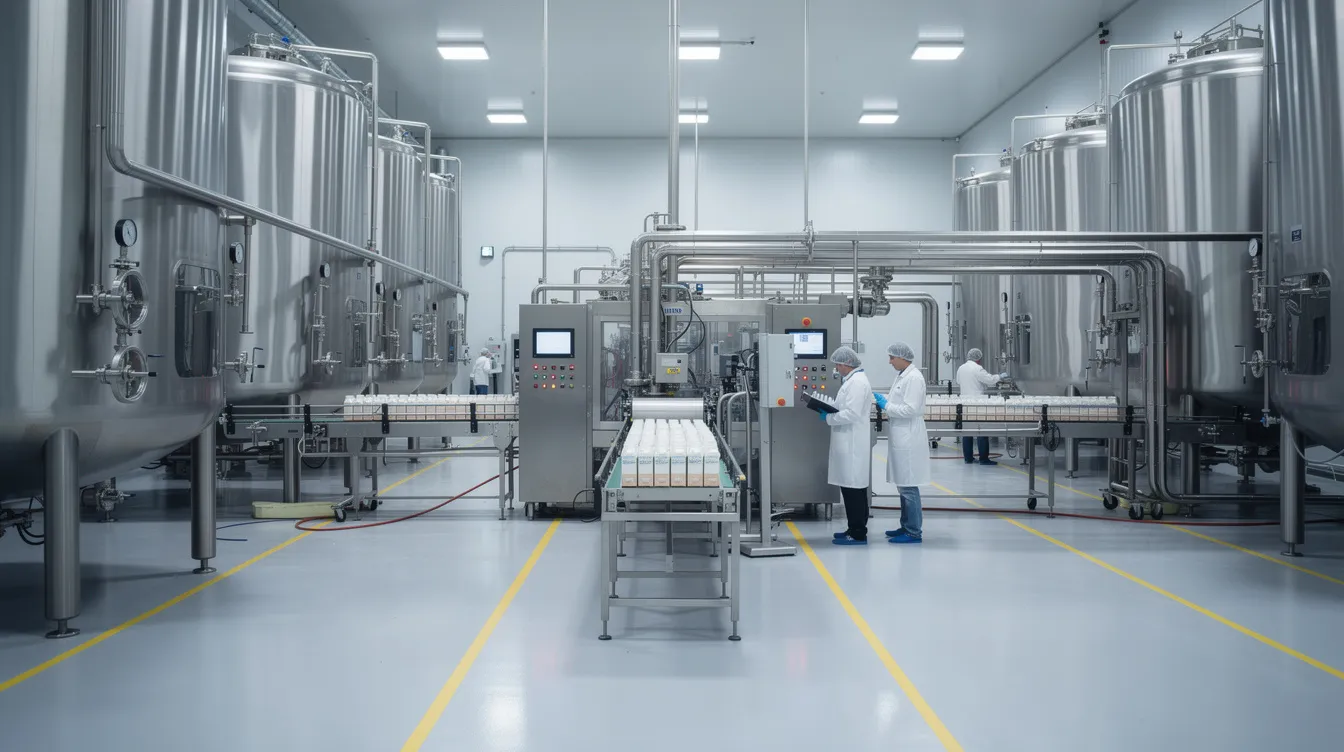
A dairy processing plant is an industrial facility where raw milk is received, tested, chilled, standardised, pasteurised, homogenised and converted into multiple dairy products before being packaged and dispatched through a cold chain. Milk processing involves ten key steps from procurement to distribution, each requiring specific equipment and quality controls.
Core operations of a typical dairy processing unit include:
- Raw milk reception, weighing and sampling
- Quality testing – fat content, SNF, MBRT, acidity, adulteration checks
- Filtration, clarification and bulk milk chilling
- Milk standardisation and cream separation
- Homogenisation and pasteurisation
- Product-specific processing (fermentation, cheese-making, drying, UHT treatment, etc.)
- Filling and packaging into pouches, bottles, cups or cartons
- Cold storage, dispatch and distribution
Dairy processing units can produce paneer, curd, butter, ghee, cheese, milk powder and many other milk products. This is fundamentally different from dairy farming, which involves rearing cattle, feed management, veterinary care and milk production at the farm level. This article is dedicated entirely to the milk processing and dairy products manufacturing side – plant equipment, utilities, project finance and regulatory compliance.
Why Value Addition Matters in Dairy Processing
Value addition means converting fresh milk into higher-value dairy products with better shelf life, improved utilisation of milk solids and stronger market realisation per litre. India’s dairy industry is evolving rapidly, with the global milk market accounting for 35.7% of dairy market share, signalling vast processing potential.
Commercially important value-added dairy products include paneer, cheese, ghee, butter, yogurt, curd, flavoured milk, dairy beverages, ice cream, milk powder, UHT milk, shrikhand, lassi and whey-based ingredients.
How value addition can help a dairy processing business:
- Better utilisation of both fat and solids-not-fat (SNF) fractions
- Extended shelf life enabling wider geographic distribution
- Product diversification reducing dependence on a single market channel
- Potential for shelf stable dairy products that reach areas with limited cold chain
- Capacity to manage seasonal milk surpluses by routing excess into powders or ghee
Value addition does not automatically guarantee higher profits. Project viability still depends on raw milk cost, product recovery, capacity utilisation, trade margins, distribution cost and working capital management. The concept of milk balance – deciding how much raw material goes to liquid milk versus ghee, butter, cheese or milk powder – is central to product mix planning and directly shapes the financial projections in a DPR.
Major Dairy Processing Plant Project Opportunities (Nine Clusters Overview)
This section provides concise overviews of the nine major dairy processing project types covered on ProjectReportBank.com. Each represents a distinct industrial-scale opportunity with its own technology, infrastructure requirements, capital intensity and market focus. The purpose is to help dairy entrepreneurs shortlist their preferred segment before commissioning a detailed project report.
Cheese Manufacturing Plant Projects
Cheese manufacturing in India covers mozzarella (driven by pizza chains and QSR), cheddar, processed cheese and regional varieties. Key stages include high-quality milk procurement, standardisation, pasteurisation, culture and rennet usage, curd formation, cutting, draining, pressing, salting, ageing (for hard cheeses) and cold storage.
Whey generation is a critical by-product. Integration with a dairy ingredients project guide can recover significant value from milk solids. Target markets include retail, institutional supplies to hotels, restaurants, pizza chains and bulk cheese for food processing industries. Explore the Cheese Manufacturing Plant Project Report & DPR for detailed analysis.
Dairy Beverages & Flavoured Milk Processing Plants
Flavoured milk, chocolate milk, ready-to-drink milkshakes, probiotic drinks and protein-enriched dairy beverages are rising demand segments targeting urban consumers. Key processing stages include standardisation, homogenisation, heat treatment, formulation with flavours and stabilisers, filling into bottles or cartons, and cold-chain or ambient distribution.
Infrastructure requirements span mixing tanks, homogeniser, pasteuriser or UHT unit, filling lines and quality-control labs. Market segments include retail, school canteens, gyms, QSR chains and institutional buyers. See the dairy beverage manufacturing project report for comprehensive project planning.
Ghee, Butter & Milk Fat Processing Plant Projects
Fat-rich dairy products – white butter, table butter, ghee and anhydrous milk fat – form a core component of any dairy processing business in India. The manufacturing process involves cream separation, cream ageing, butter churning, washing, working, melting and clarification to produce ghee, followed by filtration and packaging. Even at small scale, a 100-litre kettle is used for ghee manufacturing operations.
Fat balance and cream availability in an integrated plant are critical to ensure efficient utilisation without undermining liquid milk and curd revenues. The milk-fat processing project guide covers detailed project cost, CAPEX, working capital and profitability analysis.
Industrial Ice Cream & Frozen Dairy Products Plants
Industrial ice cream and frozen desserts require a strong cold chain and season-aware demand planning. Core stages include mix formulation, pasteurisation, homogenisation, ageing, continuous freezing, hardening in blast freezers and storage at sub-zero temperatures.
Infrastructure needs include mix preparation tanks, continuous freezers, hardening tunnels, deep freezers and refrigerated vehicles. Channels range from branded retail to institutional bulk packs. The Industrial Ice Cream Manufacturing Plant Project Report offers a detailed project and feasibility framework.
Integrated Multi-Product Dairy Processing Plants
An integrated dairy processing plant handles a range of milk and dairy products – pouch milk, curd, lassi, paneer, cream, butter and ghee – within a single facility using shared utilities and processing lines. The commercial advantage lies in milk balancing: allocating morning and evening milk between different product categories based on season, demand and profitability.
This business model differs from the broader pillar scope: the multi-product dairy processing project report focuses specifically on the integrated plant configuration.
Milk Powder & Milk Drying Plant Projects
Skimmed milk powder (SMP), whole milk powder (WMP), dairy whitener and fat-filled powders serve confectionery, bakery, beverage and institutional segments. The process involves standardisation, evaporation and spray drying – both highly energy-intensive, requiring careful boiler and heat-recovery design.
Milk powder helps balance seasonal surpluses and offers storage stability. For detailed technology and cost analysis, refer to the Milk Powder Manufacturing Plant Project Report.
UHT Milk & Aseptic Packaging Plant Projects
UHT milk is heated to approximately 135–150°C for a few seconds and packed aseptically, achieving several months of ambient shelf life – ideal for regions with limited cold chain. The process requires specialised UHT systems, sterile pipelines, aseptic filling machines and rigorous sterility testing.
Applications include plain UHT milk, flavoured UHT beverages and fortified milk for school feeding programmes. The UHT milk processing plant DPR and project guide provides full project planning detail.
Fermented & Value-Added Dairy Products Plants
Fermented and cultured products popular in India include curd, dahi, yogurt, Greek yogurt, probiotic drinks, lassi, chaas and shrikhand. The manufacturing process covers standardisation, pasteurisation, cooling, culture inoculation, incubation, fermentation, rapid chilling and cold-chain distribution.
Growing demand for high-protein, probiotic and low-fat variants presents attractive market trends for dairy plant profitability. The fermented dairy processing project report covers these opportunities in depth.
Whey Processing & Dairy Ingredients Plant Projects
Whey – the liquid by-product from cheese and paneer manufacturing – is rich in lactose, proteins and minerals. Product opportunities include whey powder, whey protein concentrate (WPC), whey protein isolate (WPI) and lactose. Core technologies involve ultrafiltration, nanofiltration, evaporation and spray drying.
An efficient whey processing plant improves overall dairy project viability by recovering value from streams that would otherwise add to ETP load. Explore the Whey Processing Plant Project Report for scale requirements and financial analysis.
Choosing the Right Dairy Processing Project – Comparison Table
This decision-support table helps promoters compare different dairy processing plant options before selecting a project configuration.
| Project Category | Typical Key Consideration | Shelf-Life / Distribution Characteristic | Detailed Guide |
|---|---|---|---|
| Cheese Manufacturing | Milk quality, cold chain, whey utilisation | Chilled; weeks to months depending on variety | Cheese plant DPR |
| Dairy Beverages | Formulation, filling, packaging technology | Chilled or ambient (UHT-based) | Flavoured milk plant guide |
| Ghee & Butter | Fat availability and cream balance | Ambient (ghee); chilled (butter) | Ghee & butter project report |
| Ice Cream | Freezing, hardening and frozen logistics | Frozen distribution at sub-zero | Frozen dairy project guide |
| Integrated Dairy | Product mix and milk balancing | Mixed – fresh and ambient products | Integrated dairy project report |
| Milk Powder | Energy-intensive evaporation and spray drying | Ambient; long storage stability | Milk drying project guide |
| UHT Milk | Aseptic technology and packaging integrity | Ambient; several months shelf life | UHT dairy project guide |
| Fermented Dairy | Cultures, incubation and cold chain | Chilled; short shelf life | Fermented dairy project report |
| Whey & Ingredients | Membrane/separation technology and scale | Ambient (powders); chilled (liquid whey) | Dairy ingredients project guide |
Dairy Processing Plant Capacity Planning
Capacity planning is a critical step in any dairy processing plant project report India. Plant capacity should be driven by realistic milk availability, market demand and financial feasibility – not merely by the sizes offered by machinery suppliers.
Key factors to evaluate:
- Daily milk procurement potential in both lean and flush seasons
- Fat and SNF composition of the milk shed
- Desired product mix and conversion ratios
- Market size and expected future demand in the target geography
- Number of shifts and planned capacity utilisation build-up (typically 3–5 years to reach 70–80%)
- Separate capacity assessments for milk reception, pasteurisation, cream separation, fermentation, evaporation, spray drying, filling, cold storage and utilities
DPRs should model “peak season vs lean season” scenarios to ensure equipment and cold chain are sized appropriately. Over-sizing inflates CAPEX and under-utilises assets – per-litre CAPEX drops significantly with scale, from about ₹11,600–16,800 per LPD at 1,000 LPD to roughly ₹3,780–5,440 at 25,000 LPD – while under-sizing restricts future growth.
Product Mix Planning for a Dairy Processing Business
Product mix selection – liquid milk vs curd vs paneer vs ghee vs beverages vs milk powder – is one of the most important strategic decisions in a dairy processing plant business plan.
Different products consume fat and SNF differently:
- Ghee uses primarily fat; skim milk is the residual
- SMP and dairy whitener use SNF; cream is the residual
- Cheese uses both fat and SNF but generates whey
- Liquid market milk marketing may leave surplus cream or skim milk
For example, a plant processing 25,000 litres per day might allocate 60% to pouch milk, 25% to curd and 15% to paneer. This type of balanced allocation typically shows better fixed-cost absorption and profitability compared to a pure liquid milk operation.
Diversifying into too many dairy products at the start can strain management, working capital and market development. The DPR should phase product introduction based on realistic marketing capacity. A balanced mix of fresh short-shelf-life products and long shelf life products like UHT milk, milk powder and ghee can help manage milk seasonality and reduce distress sales.
Raw Milk Procurement Strategy & Milk Collection Network
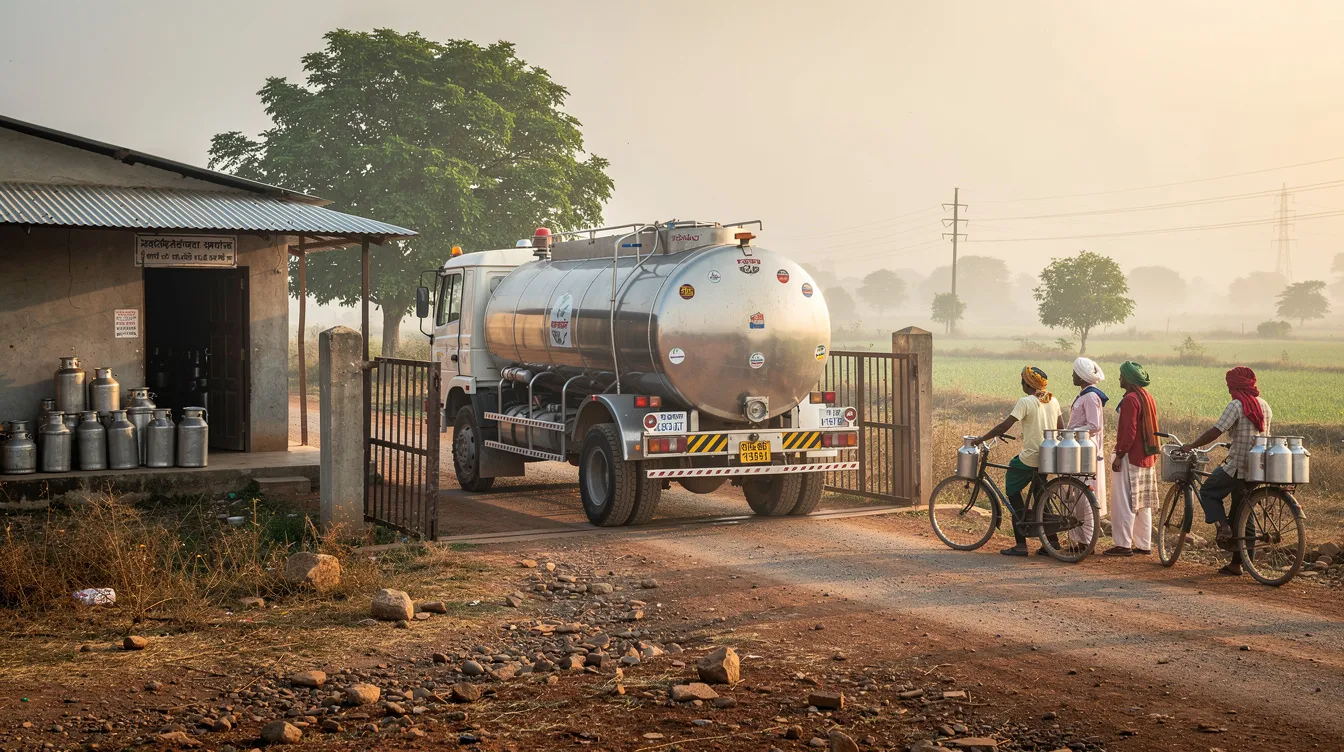
In project appraisal, I generally find that reliable raw milk procurement is more critical than installing maximum processing capacity. A dairy processing plant should have a clear raw material procurement strategy firmly grounded in local milk availability.
Components of a procurement system:
- Identifying the milk-shed area – milk procurement must ensure reliable supply, typically within 20 to 30 kilometres of the plant
- Setting up village collection centres and installing bulk milk coolers (BMCs) – dairy processing requires a bulk milk cooler for quality control at the collection point
- Arranging insulated or refrigerated tankers for daily transport
- Raw milk procurement should include sourcing from local farmers or cooperatives
Quality parameters checked at collection include fat, SNF, acidity, adulteration, temperature and sometimes microbial load. These influence procurement price and product recovery in the manufacturing process. Transparent pricing, prompt payment to farmers (within 24–48 hours in many successful models), and digital weighing and testing equipment build trust-based relationships critical for sustaining milk production volumes.
The DPR should contain realistic assumptions on procurement price trends, seasonal availability and logistics cost, as these materially affect dairy processing plant profitability and DSCR.
Land, Building & Dairy Plant Layout
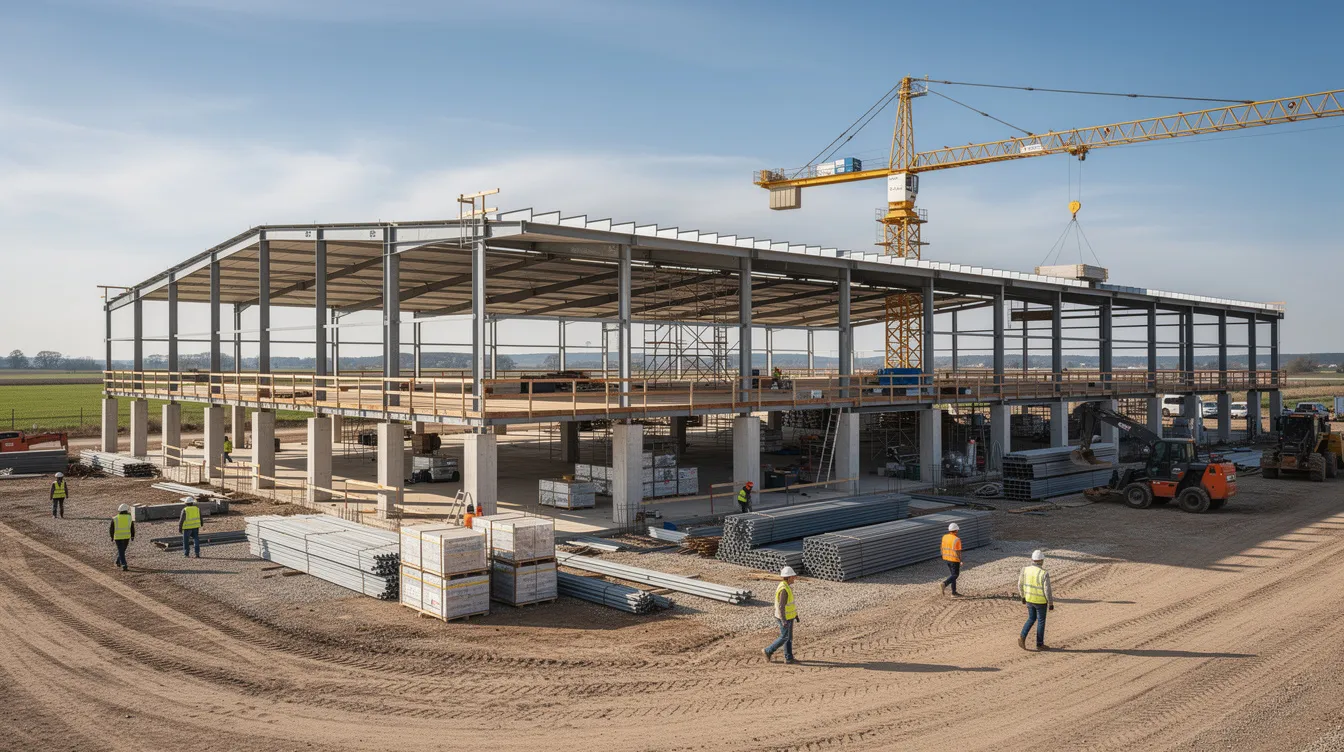
Hygienic and efficient dairy plant layout is essential for both operational efficiency and compliance with FSSAI and food safety standards in India. A 500-litre-per-day plant requires 1,500 to 2,000 square feet of space, while industrial-scale plants need substantially larger footprints.
Key functional zones in a dairy plant design:
- Milk reception dock and raw milk storage
- Processing hall (pasteurisation, homogenisation, product-specific areas)
- Fermentation/incubation rooms where applicable
- Packaging hall, cold rooms and dry-goods storage
- Laboratory for quality control
- Utilities – boiler room, refrigeration plant, compressor room
- ETP (Effluent Treatment Plant)
- Administrative block and staff facilities
The principle of unidirectional process flow – from raw milk entry to finished goods dispatch – minimises cross-contamination. The DPR should discuss land area assumptions including provision for future expansion, vehicle circulation, tanker bay and fire-safety clearances, without prescribing a single universal area requirement.
Dairy Processing Plant Machinery & Equipment Framework
Specific machinery varies significantly depending on whether the project is a liquid milk plant, integrated dairy, cheese plant, ice cream unit, milk powder plant or whey processing facility. Modern milk processing machinery minimises manual intervention and improves consistency.
Core equipment common to many processing plants:
- Milk reception equipment (weighing scale, dump tank), storage tanks
- Plate heat-exchanger pasteurisers and cream separators
- Homogenisers, process tanks, CIP (Cleaning-in-Place) systems and milk pumps
- Milk processing machinery includes pasteurizers and packaging machines across all configurations
Product-specific equipment examples include paneer presses, yogurt incubators, cheese vats, butter churns, UHT systems, evaporators, spray dryers, ice-cream freezers, membrane filtration units and advanced machinery for specialised filling lines.
Lab equipment – milk analysers, fat and SNF testing devices, microbiology set-up and calibration instruments – supports dairy quality control and regulatory compliance. For detailed machinery requirements and cost estimates, refer to the relevant cluster-specific pages linked in the navigation table above.
Utilities & Infrastructure Requirements for Dairy Processing Units
Utilities represent a major part of dairy processing plant infrastructure requirements, impacting both CAPEX and ongoing operating costs. At a mid-scale plant (25,000 LPD, mixed products), electricity consumption is estimated at roughly 45–65 kWh per 1,000 litres of milk processed.
Major utilities include:
- Electrical power with DG backup
- Steam generation (boilers and fuel)
- Refrigeration plant (ammonia or Freon-based)
- Chilled water and hot water systems
- Compressed air
- Potable and process water supply
- Wastewater and effluent treatment plant (ETP)
Refrigeration load for milk chilling, cold rooms, blast freezers and ice cream hardening tunnels significantly affects plant design. The DPR should outline approximate utility loads and associated costs to support realistic financial projections and bank appraisal. Energy-efficiency measures – heat recovery, VFDs, insulation – can meaningfully improve dairy processing plant profitability.
Dairy Processing Plant Project Cost Structure (CAPEX & Initial Investment)
There is no single fixed cost of setting up a dairy processing plant in India. The total capital investment depends on milk-handling capacity, product mix, level of automation, packaging technology, location and land cost.
Major fixed-capital (CAPEX) components typically included in a dairy processing plant project cost:
- Land and site development
- Civil construction and building
- Plant and machinery
- Refrigeration and cold storage
- Utilities (boiler, compressor, water system)
- Electricals and instrumentation
- Laboratory and quality-control equipment
- ETP and wastewater management
- Vehicles (if part of project), furniture, office
- Preliminary and pre-operative expenses, contingencies
A small dairy processing plant costs between ₹20 and ₹30 lakhs for basic configurations at around 500 litres per day. At larger scales, indicative benchmarks show a 10,000 LPD plant requiring approximately ₹5–7 crore and a 50,000 LPD integrated plant in the ₹25–50 crore range, depending on specifications. For a large scale dairy processing plant project report, DPRs may also capitalise interest during construction. Financial analysis should cover capital expenditures and operating expenses in detail.
The DPR must present a clear dairy project cost and means of finance table, aligned with machinery quotations, building estimates and infrastructure layouts, so that banks can meaningfully appraise the proposal.
Means of Finance for Dairy Processing Plant Investment
Common means of finance for a dairy processing plant investment include:
- Promoter’s equity contribution
- Unsecured loans from promoters or group entities (where applicable)
- Term loan from banks or financial institutions
- Working-capital limits (cash credit, overdraft)
- Government subsidy or incentive components, where genuinely applicable – government schemes offer 25–33.33% subsidies for dairy processing startups through programmes like AHIDF and Sampada Yojana
The DPR should provide a detailed dairy project cost and means of finance statement showing how fixed capital investment and margin for working capital will be funded. Interest rates, moratorium period and repayment tenure for the dairy plant term loan should align with projected cash flows and capacity ramp-up.
A robust dairy plant DPR for bank loan improves the quality of appraisal but does not guarantee sanction. Final decisions depend on lender policies and overall credit assessment, including the promoter’s financial assistance capacity and net worth.
Working Capital Requirement & Dairy Plant Liquidity Planning
Dairy processing plant working capital is often substantial because milk must be purchased daily, while sales realisation – especially from institutional or modern-trade buyers – may come with credit periods. Operating costs are primarily driven by raw milk, accounting for 80–85% of total variable cost.
Major working-capital components include:
- Raw milk procurement (daily outflow)
- Cream, sugar, flavours and other dairy inputs
- Packaging materials (pouches, cups, cartons)
- Cultures and ingredients for fermented products
- Wages, utilities, distribution and transport expenses
A milk processing plant project report for bank loan should include a detailed working-capital assessment, often supported by CMA Data, to demonstrate how daily milk purchases will be financed. Even a fundamentally profitable project may face stress if working capital is underestimated, leading to payment delays to farmers and supply disruption.
Revenue Model & Market Channels for Milk and Dairy Products
Dairy processing business income arises from a mix of B2C and B2B channels, each with different margins, credit terms and logistics requirements.
Key channels include:
- Pouch-milk distribution through local dealers
- Retail sales of curd, paneer, ghee and yogurt via traditional and modern trade
- Supply to supermarkets, online grocery platforms and modern retail chains
- HORECA and institutional contracts
- B2B ingredient sales (powders, butter, cheese, whey products)
- Private-label manufacturing for large brands
Market analysis should evaluate local and regional supply and demand for dairy products. The DPR should project product-wise sales volumes, selling prices, trade discounts and wastage or returns percentages. Strategic considerations like SKU mix (small vs family packs), regional flavour preferences, brand-building expenditure and transportation cost per litre significantly influence present market position and overall profitability.
Profitability Analysis of a Dairy Processing Plant
Dairy processing plant profitability depends on multiple variables – no generic margin figure can be applied across all projects, capacities and product mixes. Profitability analysis is central to a dairy processing plant project report.
Key drivers:
- Raw milk procurement price and quality (fat content, SNF)
- Conversion yields and recovery rates per product
- Capacity utilisation ramp-up over early years
- Selling prices and trade margins across channels
- Energy and fuel costs, packaging material cost, labour and logistics
- Product mix between high-margin and commodity dairy products
Gross profit margins for milk processing typically range between 15–25%, while profit margins for paneer and ghee can reach 20–40% in India. Profit margins for paneer specifically can reach 20–30% in local markets. These figures vary with scale, procurement efficiency and competitive landscape.
Break-even analysis is crucial for understanding financial feasibility in project reports. A 5,000 LPD plant (pasteurised milk, flavoured milk, dahi) at approximately ₹4.81 crore CAPEX shows a break-even at about 55% capacity utilisation and a rate of return of around 28%. Sensitivity analysis – testing the impact of a 5–10% increase in milk procurement price or a reduction in average selling price – is essential to evaluate how robust dairy project viability is under adverse conditions.
Financial Projections & Statements Required in a Dairy DPR
A bankable dairy processing plant detailed project report generally includes a full suite of financial projections. Key components of a dairy processing project report include market analysis and financial projections prepared in line with lender expectations.
Core projected statements:
- Project cost and means of finance
- Projected sales and production volumes with capacity utilisation assumptions
- Raw material and utility consumption schedules
- Projected Profit and Loss Account, projected balance sheet and cash flow statement
- Working-capital assessment
- Depreciation chart and term-loan amortisation schedule
- Break-even analysis, DSCR computations, ROI, IRR and payback period
The project report must include financial balance sheets and profitability estimates. The dairy project report should also detail the organizational structure and staffing requirements. These are projected or assessed figures based on assumptions – they are not guarantees of future performance.
At ProjectReportBank.com, financial models for dairy projects are prepared to be transparent, with clearly stated assumptions so that both promoters and bankers understand the logic behind the numbers.
Understanding DSCR & Loan Repayment Capacity in Dairy Projects
DSCR (Debt Service Coverage Ratio) is the ratio of cash available for debt servicing to total debt service (interest plus principal) in a given period. Lenders typically look for a comfortable average DSCR over the loan tenure. From recent mid-scale dairy project examples, a DSCR of 1.25–1.35x is considered acceptable when capacity utilisation and product mix assumptions are reasonable.
Dairy projects with high seasonality or volatile raw-milk costs should test DSCR under conservative scenarios to avoid unrealistic repayment schedules. The repayment schedule should be based on projected cash accruals and seasonal working-capital cycles, not engineered merely to achieve a mathematically high DSCR figure. Lenders may also evaluate other ratios and qualitative aspects, but DSCR remains a central yardstick for dairy project loan repayment capacity assessment.
ROI, IRR, Payback Period & Sensitivity Analysis
Return indicators help promoters compare a dairy processing plant investment with alternative uses of capital.
- ROI: simple return on total capital investment over a defined period
- IRR: the discount rate at which net present value becomes zero – often expected above 20–30% for well-configured dairy projects
- Payback period: time required to recover initial investment from net cash inflows
Key variables for sensitivity analysis in dairy projects:
| Scenario | Change Tested | Likely Effect on IRR / DSCR |
|---|---|---|
| Base case | As per DPR assumptions | Benchmark IRR and DSCR |
| Higher milk cost (+10%) | Raw material price increase | Significant reduction in margins and DSCR |
| Lower sales realisation (−5%) | Market pressure or competition | Moderate decline in IRR |
| Lower capacity utilisation (60% vs 75%) | Demand ramp-up delay | Extended payback, lower DSCR in early years |
Note: These are illustrative scenarios. Actual sensitivity depends on project-specific numbers.
Promoters should look beyond the headline IRR and understand how sensitive the project is to these variables before committing to a large dairy processing plant capital investment.
Bank Loan & Project Finance for Dairy Processing Plants
Industrial dairy processing projects in India are typically financed through a mix of term loan and working-capital limits from PSU or private-sector banks, along with promoter contribution. The project report is required for securing bank financing and regulatory approvals.
Key aspects lenders normally examine:
- Promoter background, experience and net worth
- Milk-shed and raw-milk availability assessment
- Market potential and major competitors in the target geography
- Technology and machinery selection with vendor quotations
- Project cost realism and competitive edge of the product mix
- Environmental and statutory compliance
- Security and collateral offered
A dairy processing plant DPR for bank finance should include realistic assumptions, implementation schedules and sensitivity analysis. For larger projects, lenders may also expect a techno-economic feasibility report or independent site visits before sanctioning term loans.
What Makes a Dairy Processing Plant Project Report “Bankable”?
“Bankable” refers to the quality and credibility of the DPR, not its size. A concise, consistent and data-backed processing plant project report is preferred over a bulky but weak document.
Elements of a bankable dairy processing plant project report:
- Realistic milk procurement assumptions tied to milk-shed analysis
- Technically appropriate plant capacity and coherent product mix
- Clearly structured project cost aligned with machinery quotations
- Transparent means of finance with adequate promoter contribution
- Robust financial projections with credible DSCR and viability indicators
- Explicitly stated key assumptions (milk price, yield, selling price, capacity utilisation)
The critical test is internal consistency: milk availability must support planned production; production must align with sales projections; working capital must match inventory and debtor cycles; and cash flows must support term-loan repayment. A bankable DPR also addresses statutory approvals, environmental considerations and risks, demonstrating that the promoter has thought through operational and regulatory realities of running a dairy plant in India.
Feasibility Assessment of Dairy Processing Plant Projects
Feasibility assessment is a multi-dimensional evaluation covering technical, market, financial and operational aspects before finalising the dairy processing plant project configuration. The project report demonstrates technical feasibility and financial viability.
- Technical feasibility: suitability of selected technology, capacity and machinery, dairy plant design, utility systems, and availability of skilled manpower. A project’s technical feasibility must address compliance with food safety standards.
- Market feasibility: demand for chosen dairy products, competitive landscape, price positioning, distribution strategy and expected market share. Understanding industry trends and present market position matters here.
- Financial feasibility: project cost, capital structure, projected profitability, break-even, DSCR, ROI and IRR, plus sensitivity to adverse changes. Reduce costs wherever possible through efficient planning.
- Operational feasibility: reliability of the milk procurement system, logistics for inbound raw milk and outbound processed milk, manpower availability, quality-control systems and management bandwidth.
Statutory Approvals & Compliance for Dairy Processing Units in India
Regulatory requirements vary by state, plant size, product portfolio and location. Promoters must verify current rules with competent professionals. Statutory approvals required may include FSSAI registration and local licenses.
Typical registrations and approvals that may be applicable:
- Entity formation (proprietorship, partnership, LLP, company)
- FSSAI Manufacturing License – mandatory for dairy processing plants
- GST registration – required if turnover exceeds ₹20 lakhs annually
- MSME Udyam Registration – provides access to government subsidies and financial assistance
- Factory or shops-and-establishment registration and labor laws compliance
- State Pollution Control Board NOC – necessary for dairy operations (especially ETP, whey and wash-water discharge)
- Local Body Trade License from municipal authorities
- Fire NOC, building plan approvals, power connection and load sanction
- Labelling and packaging compliance with FSSAI and Legal Metrology norms
India’s dairy sector regulatory framework continues to evolve. A brief checklist of possible approvals should be included in the DPR, with a note that the final list depends on site-specific and product-specific factors.
Quality Control, Food Safety & Hygienic Dairy Plant Design
Dairy products are highly perishable and require strict quality standards and hygiene controls. Quality assurance processes are critical in dairy production to ensure product safety. Training and safety protocols should be established for all staff involved in dairy processing.
Key quality-control measures:
- Raw-milk testing: fat, SNF, adulterants, microbial load
- In-process controls: pasteurisation temperatures, holding times, CIP records
- Finished-product testing, shelf-life studies and traceability
- Hygienic design: stainless-steel contact surfaces, proper slopes and drainage, segregated high-risk and low-risk zones, controlled personnel movement
Documented SOPs, staff training, personal hygiene and CIP systems are fundamental to maintaining food safety standards compliance. The DPR should indicate the planned quality-control framework and associated laboratory investments, which lenders often appreciate when assessing the seriousness of a dairy processing plant project.
Project Implementation Roadmap for a Dairy Processing Plant
Implementation schedules outline key milestones from land acquisition to commercial production. A high-level roadmap for an industrial dairy project in India typically spans 9–15 months for a medium-to-large plant.
Main stages:
- Months 0–2: Idea and product-mix selection, preliminary market research, milk-shed and raw-milk availability assessment
- Months 2–4: Capacity planning, technology selection, preliminary cost estimates and viability check, land or site short-listing
- Months 3–5: Machinery RFQs and vendor selection, DPR preparation and submission to banks, financial closure
- Months 4–9: Detailed engineering, civil construction, utilities installation
- Months 7–12: Plant and machinery erection, ETP commissioning
- Months 11–14: Trial runs, quality validation, commercial launch
Many activities run in parallel. Realistic scheduling is important for accurate interest during construction and cost projections. Strong coordination between technical consultants, civil contractors, machinery suppliers and the DPR and finance team keeps the project on time and within budget.
Common Mistakes in Dairy Processing Plant Project Planning
From a DPR and bank-appraisal perspective, many dairy projects face delays or stress due to avoidable planning errors.
Frequent mistakes include:
- Deciding plant capacity without a realistic milk-shed study
- Copying generic DPR templates without location-specific data
- Relying only on machinery suppliers’ back-of-the-envelope economics
- Underestimating cold-chain and utility costs
- Ignoring milk-price seasonality and fat and SNF variability
Financial planning errors:
- Over-optimistic capacity-utilisation assumptions
- Unrealistic selling prices or gross margins
- Inadequate working-capital provision
- Excessively tight repayment schedules designed solely to achieve a target DSCR
- High leverage with insufficient promoter equity
Operational oversights:
- Weak product-mix planning without fat and SNF balance
- Inadequate ETP design (ETP CAPEX for a 50 KLD dairy unit can range from ₹35–70 lakh up to ₹1.5–3 crore for stricter treatment)
- Insufficient space for future expansion
- Neglecting skilled manpower and training needs
A professionally prepared dairy processing plant DPR helps identify and address these issues on paper before capital is committed.
Small Dairy Processing Units vs Industrial Dairy Plants
A small dairy processing plant can handle 500 litres per day serving local markets, while large industrial plants process tens of thousands of litres daily across multiple product categories. A 500-litre-per-day plant requires 1,500 to 2,000 square feet. A small dairy processing plant costs ₹20 to ₹30 lakhs at basic configurations.
Complexity increases with scale:
- Larger milk collection networks and more sophisticated cold chain logistics
- Greater automation (advanced machinery with PLC/SCADA control), instrumentation and strict quality standards
- More stringent statutory and environmental compliance requirements
- Structured management and formal bank-finance proposals
- Higher working capital and total milk production throughput
The principles of capacity planning, product-mix selection, milk balance and working-capital management remain relevant at both scales. ProjectReportBank.com primarily focuses on serious commercial and industrial-scale dairy processing plant project reports, while also guiding small-scale promoters on financial planning where required.
When Should a Promoter Prepare a Detailed Project Report (DPR)?
A DPR should ideally be prepared before finalising large machinery orders, approaching banks for term loans or committing to heavy civil-construction contracts.
Typical triggers:
- Planning a new dairy processing plant or food processing unit
- Expanding capacity (e.g., 10,000 LPD to 50,000 LPD)
- Adding a new product line like UHT milk or milk powder
- Entering a new geographic market or bringing in investors
- Evaluating alternative capacities and product mixes on a financial basis
Preparing a DPR only after machines are ordered limits the ability to adjust capacity, layout or finance structure. Lenders often insist on a bankable DPR or techno-economic feasibility report for larger industrial dairy processing projects. Promoters should also use DPRs internally – comparing investment options, testing assumptions and validating the food business case before large capital is deployed.
Role of CA Manish Gugliya & ProjectReportBank.com in Dairy DPR & Finance
CA Manish Gugliya is a practising Chartered Accountant with experience in preparing dairy processing plant DPRs, CMA Data and financial projections for bank-loan and project-finance proposals across multiple industries, including milk and dairy products processing.
Professional services for dairy projects include:
- Preparation of detailed project reports for dairy processing plants – integrated dairies, cheese, UHT, milk powder, ice cream and fermented dairy products
- Project cost and means-of-finance structuring
- Working-capital assessment and CMA Data
- DSCR and repayment analysis, ROI, IRR and sensitivity analysis
- Support in presenting financials in formats accepted by banks and financial institutions
ProjectReportBank.com offers industry-specific financial models and templates designed for dairy processing plant DPRs in India, tailored to plant capacity, product mix, location and technology choices. While a strong DPR and well-presented financial projections can significantly assist in bank appraisal, they do not guarantee loan sanction, subsidy approval or future profitability. Outcomes depend on multiple external and policy factors.
Conclusion: Aligning Milk, Market, Technology & Finance in Dairy Processing Projects
The success of a dairy processing plant project depends on aligning milk procurement potential, appropriate technology, capacity and product mix with realistic market demand, investment capacity, working-capital planning and bank-finance structure. India’s dairy sector offers substantial opportunity, but only projects with coherent planning and realistic assumptions deliver sustainable results.
A comprehensive dairy processing plant project report – or milk processing plant project report – is essential for evaluating feasibility, projecting profitability and presenting a credible case to lenders and investors. Promoters should explore the nine specialised dairy cluster project guides linked throughout this article for deeper sector-specific insights.
ProjectReportBank.com and CA Manish Gugliya can assist in converting plans into structured, bank-oriented DPRs and financial models for dairy processing plant projects in India. Treat the DPR not merely as a bank requirement but as a practical planning tool to test assumptions, manage risk and support informed decision-making before large capital is deployed.
Frequently Asked Questions (FAQ)
The following questions address practical issues commonly raised by promoters planning dairy processing plant projects and DPRs.
What is included in a dairy processing plant project report for bank loan purposes?
For bank-loan purposes, a dairy processing plant project report usually includes a detailed project description, capacity and product mix, milk procurement plan, dairy plant layout and infrastructure requirements, machinery list with vendor quotations, project cost and means of finance, a regulatory compliance overview and comprehensive financial projections – including projected P&L, balance sheet, cash flow, DSCR, ROI and IRR. Lenders also look for sensitivity analysis to understand risk, making these essential components of a bankable dairy processing plant project report India.
How long does it typically take to implement a medium-scale dairy processing plant in India?
Timelines vary with size and complexity, but a medium-scale integrated dairy plant (20,000–30,000 LPD) may typically require around 9–15 months from land finalisation to commercial production. Broadly: 2–3 months for DPR, approvals and loan processing; 3–5 months for civil construction; 3–5 months for machinery manufacturing, delivery and installation; and 1–2 months for trial runs and stabilisation. Delays in regulatory approvals or equipment import can extend this.
Do existing dairy plants need a new DPR for capacity expansion or product diversification?
While micro-expansions may sometimes proceed without a full DPR, any significant capacity expansion, addition of new technologies (such as UHT or milk powder lines) or large fresh term-loan requirement generally benefits from a new or updated DPR. For existing plants, the DPR focuses on incremental investment, revised capacity utilisation, updated financial projections and combined DSCR on old plus new loans, which banks closely examine.
Should a new dairy entrepreneur start with one dairy product or multiple products?
From a risk and execution perspective, many first-time promoters find it practical to start with a focused but balanced product mix – such as pouch milk, curd and one or two fat-based products – rather than a very wide portfolio from day one. The DPR can model phased product introduction: starting with core products and adding items like flavoured milk, ice cream or milk powder once procurement, processing and market channels stabilise. Dairy cooperatives often follow this phased approach successfully.
Who should prepare financial projections and CMA Data for a dairy processing project?
Financial projections and CMA Data for dairy processing projects are best prepared by professionals familiar with both dairy-industry economics and bank-finance appraisal norms – such as experienced Chartered Accountants or specialised project-finance consultants. ProjectReportBank.com, under the guidance of CA Manish Gugliya, focuses specifically on preparing such projections and DPRs so that assumptions, cash flows and DSCR can be realistically evaluated by lenders and promoters alike.