

Key Takeaways
- A ghee butter plant feasibility study for India must evaluate four dimensions together: technical configuration, market demand, operational logistics and financial viability. This article addresses industrial-scale plants (10-50+ TPD), not small home-based ghee making units.
- Raw material (milk fat) cost accounts for 85-90% of operating expenses, making procurement security, fat pricing and seasonal supply the single largest driver of profitability and bankability in any ghee or butter manufacturing project.
- Lenders do not sanction term loans based on projected profit alone. They examine DSCR (typically requiring 1.25-1.5x or higher), break-even capacity utilisation, cash flow timing, sensitivity analysis and promoter contribution before approving a ghee butter plant bank loan project report.
- Plant capacity, product mix (ghee, table butter, industrial butter, AMF), capacity utilisation ramp-up and working capital structure collectively determine whether the project generates positive cash flows or remains a cash trap despite showing accounting profits.
- CA Manish Gugliya and www.projectreportbank.com prepare customised DPRs, financial projections, CMA data and bank-finance-ready project reports for serious investors and promoters planning industrial dairy fat processing plants in India.
Introduction: Purpose of a Ghee Butter Plant Feasibility Study
I am CA Manish Gugliya, and I work with entrepreneurs, dairy companies and investors who are evaluating capital commitments of ₹10-50 crore or more into industrial ghee and butter manufacturing plants across India. This article is a practical guide for anyone assessing such a project for the 2026-2030 planning horizon.
A ghee butter plant feasibility study is a structured evaluation of whether a proposed ghee, butter and milk-fat processing plant can operate reliably, sell its output profitably, service its debt and generate adequate returns for promoters. It is not a guide for micro or home-based ghee making businesses. While a small ghee unit can earn ₹50,000 to ₹1,00,000 per month selling 200-400 kg, the economics of an organised manufacturing plant with 10-50 TPD capacity are fundamentally different in scale, risk and capital structure.
India produces over 230 million tonnes of milk annually and over 3 million tonnes of ghee every year. India’s dairy market is worth ₹13 lakh crore. Demand for traditional dairy products like clarified butter (ghee) and table butter continues to grow, driven by rising disposable incomes and consumer preference for natural foods. But intense competition from cooperatives and large ghee manufacturers, combined with thin margins if raw material cost is not managed, means that feasibility must be analysed rigorously before committing capital.
Throughout this article, I will reference financial terms like DSCR, IRR, break-even and working capital cycle. All numerical examples are illustrative and must be customised to each project’s capacity, location, raw material pricing and product mix.
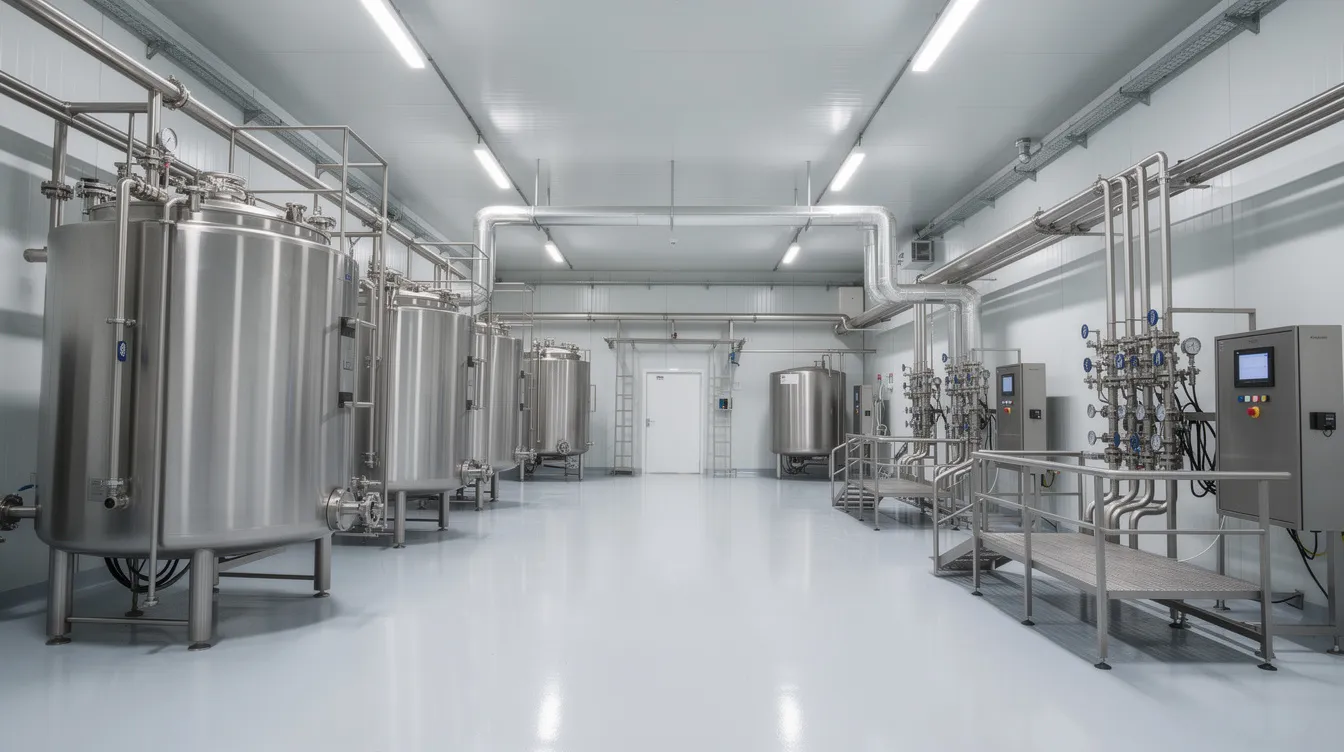
Understanding Ghee & Butter Manufacturing Plant Feasibility
Feasibility is not a synonym for “Will I make profit?” A ghee butter manufacturing plant feasibility assessment answers a more layered question: can this specific plant, at this location, with these raw materials, this capacity, this product mix, this financing structure and this team, operate sustainably and generate value for all stakeholders?
Four dimensions must be assessed together.
Technical feasibility determines whether the proposed plant can consistently produce ghee, butter or AMF at rated throughput. This covers process route (batch or continuous), automation level, machinery capacity, utility sizing, quality control systems, factory layout compliance with FSSAI and AGMARK standards, and whether technical requirements include a thorough plant layout and equipment specification for the planned capacity.
Market (commercial) feasibility evaluates whether the output can be sold at prices that cover costs and generate margin. Demand and supply analysis identifies the target customer group and regional consumption patterns. Market feasibility studies require evaluation of competitor pricing, channel dynamics (B2B, retail, export) and industry trends in the ghee market and butter market.
Operational feasibility examines manpower availability, logistic access, milk/cream supply chain reliability, local infrastructure (power, water, roads, cold chain) and management bandwidth to run the plant.
Financial and economic feasibility combines project cost, funding mix, operating margins, tax, interest and multi-year cash flows into a structured assessment of project financials. All four dimensions must align. A technically sound plant without reliable milk-fat procurement or adequate cash flow will still be unviable.
Why Project Viability and Bankability Assessment Is Critical
Ghee butter plant project viability matters equally to promoters putting in equity, investors seeking returns and bankers evaluating credit exposure. A projected P&L showing profit in Year 1-2 is not enough for any of these stakeholders.
Promoter perspective. Promoters risk personal capital and often personal guarantees. They need clarity on expected ROI/IRR, payback period and what happens to their net worth if utilisation stays at 50% for two years instead of the planned 70%. Low utilisation years generate weak cash accruals and can erode cumulative cash flows even when the P&L shows nominal profit.
Investor perspective. Equity investors in MSME food processing projects typically expect IRR in the 15-25% range over a 5-7 year horizon. They evaluate sensitivity to raw material price shocks and selling price erosion before committing capital.
Bank and FI perspective. Lenders use ghee butter plant bank loan project reports to evaluate DSCR (which NDDB infrastructure projects require at a minimum of 1.5x after 10% sensitivity tests), security coverage, promoter contribution (usually 25-30% equity), break-even utilisation and stress scenarios. They examine cash flow timing and loan repayment capacity, not just accounting profit.
Viability assessment also guides capacity selection, phased expansion plans and risk management strategy before long-term contracts or debt are locked in.
Technical Feasibility of an Industrial Ghee & Butter Plant
A ghee manufacturing plant feasibility study must first confirm that the proposed configuration can deliver required output with consistent fat recovery and quality. Technical feasibility requires assessment of raw material sourcing and plant location alongside equipment sizing.
Processing capacity. Industrial plants typically range from 10 to 100+ TPD milk-fat equivalent. A quality assurance and food safety plan is critical in ghee production at any scale. Ghee manufacturing plant capacity ranges from 5,000 to 10,000 MT annually for mid-to-large installations. The project scope should define target capacity and product range early in the feasibility study.
Product scope. Options include desi ghee (traditional ghee with a rich nutty taste), white ghee, table butter, industrial butter, anhydrous milk fat and fat-rich blends. Each product changes process steps and utility loads. Butter must contain a minimum of 80% milk fat content per FSSAI standards.
Raw material type. Ghee can be manufactured from liquid milk, cream or butter. Cream-based processing (cream separation at 30-40% fat) requires separator investment and chilling infrastructure. Butter-based ghee skips some separation steps but adds procurement cost. Fat recovery rates differ: traditional bilona ghee yields 88-92% fat recovery versus higher rates in continuous cream-based processes.
Process technology. Batch boilers require large kettles and manual stirring. Continuous methods (developed by NDRI/NDDB) use scraped-surface heat exchangers and vapour separators, reducing energy consumption to approximately 325 kcal/kg of ghee. Ghee production requires controlled heating at 105-120°C, and ghee kettles must maintain temperatures within this range throughout the manufacturing process. Safety protocols must be implemented throughout the ghee manufacturing process.
Utilities. For a 10-TPD ghee line, steam demand runs several tonnes per hour. Refrigeration is required for butter and cream product lines. Power, water treatment and effluent treatment for serum and wash water add to utility costs.
Packaging and cold chain. Ghee is packed in bulk tins, pouches and jars. Butter requires cold chain from production through retail. Automated packaging machines are necessary for ghee production at industrial scale.
Quality control. Lab setup must test fat content, FFA, moisture, peroxide value and microbiology. Food safety standards dictate that ghee production must comply with regulations such as FSSAI or FDA. Factory layout must follow hygienic design principles with SS 304/316 stainless steel for all contact surfaces.
Raw Material Availability and Milk Fat Procurement Feasibility
Raw material (milk fat through milk, cream or butter) often forms 80-90% of variable cost, making procurement the most critical part of any ghee butter manufacturing plant investment feasibility assessment. Milk/butter accounts for 85-90% of operating expenses in a typical plant. Operating costs for ghee production are primarily driven by raw materials, accounting for 85-90% of expenses.
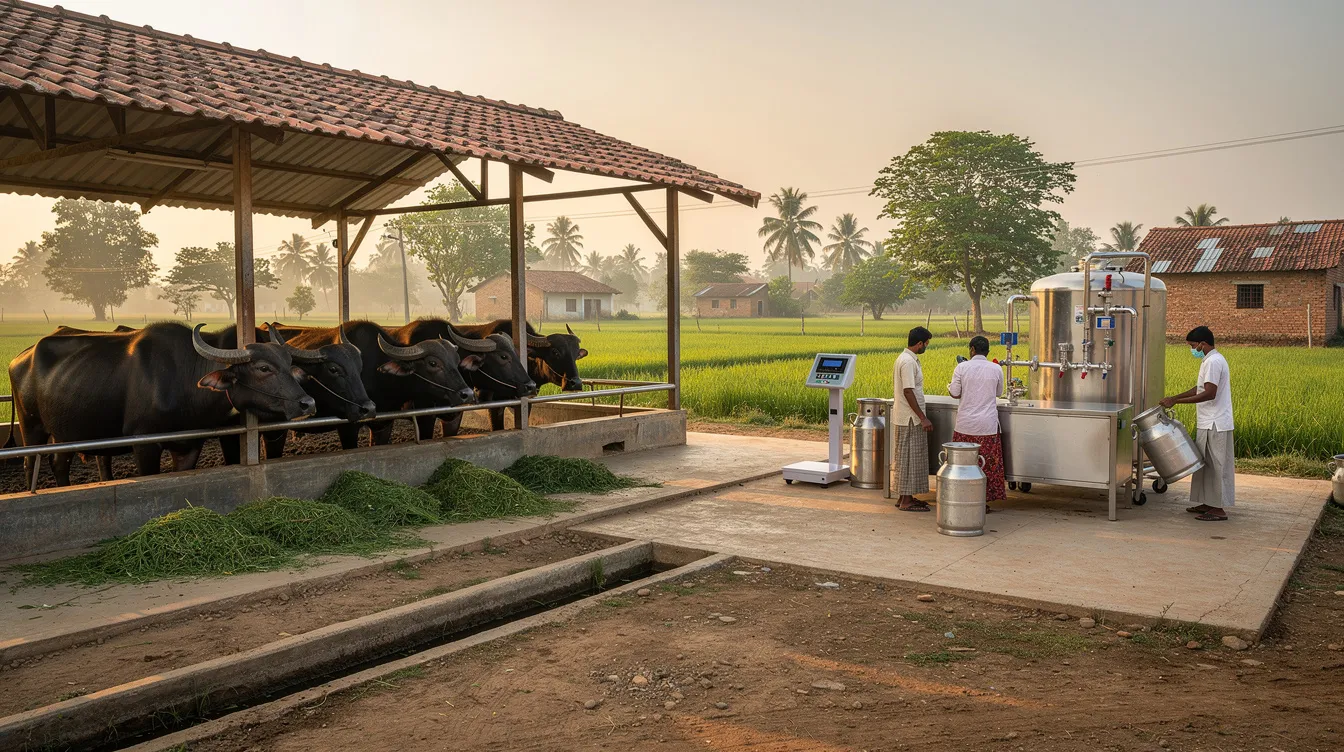
Milk and cream availability. Fresh cow or buffalo milk is essential for ghee production. Ghee production requires high-quality milk or cream. The catchment area (typically 50-150 km radius) must have sufficient milk production volumes, and sourcing from local suppliers minimizes transportation costs. Competition from existing cooperatives and ghee manufacturers for the same milk pool must be factored in. Raw material feasibility focuses on sourcing and supplier reliability for milk or cream. Establishing reliable supply chains for raw materials directly impacts ghee production costs.
Butter and AMF procurement. Some plants source white butter or AMF from other dairies as input, using long-term supply contracts with pricing linked to SMP/butter benchmark markets. This reduces separation infrastructure but adds procurement complexity.
Seasonality and fat percentage. Flush season increases milk supply and lowers procurement cost; lean season does the opposite. Sabar Dairy’s revised procurement rates show buffalo milk at 5.1% fat commanding approximately ₹92 per litre, illustrating how fat content drives per-litre cost. A flexible procurement strategy with buffer stocks is essential.
Cost sensitivity. A ₹2/kg change in fat procurement price can shift EBITDA by several crores annually for a 20 TPD plant. This sensitivity makes procurement pricing the single largest variable risk in a ghee butter plant profitability analysis.
Supplier risk. Dependence on a few large suppliers increases vulnerability. Diversified farmer networks, cooperative tie-ups, quality incentives and clearly structured payment terms reduce supply disruption risk.
For a deeper look at procurement strategy, see our guide on raw material and milk fat procurement for ghee and butter plants.
Capacity Planning, Product Mix and Economies of Scale
Plant capacity selection is one of the most strategic decisions in a ghee butter manufacturing plant feasibility study. It drives CapEx, operating cost per kg and market risk. The project scope should define target capacity and product range before detailed financial modelling begins. Ghee manufacturing plant capacity ranges from 5,000 to 10,000 MT at industrial scale.
Installed vs effective capacity. A plant installed for 15 TPD ghee-equivalent will have effective capacity of roughly 80-90% of installed, after accounting for maintenance shutdowns, holidays and process downtime.
Capacity utilisation ramp-up. Typical assumptions: Year 1 at 50-60%, Year 2 at 65-75%, Year 3 at 75-80%, stabilising at 85-90% by Year 4-5. These ramp-up rates feed directly into financial projections. A plant planned only for 40-50% steady utilisation may struggle to cover fixed costs.
Product mix. Combining ghee, table butter, industrial butter and AMF changes plant utilisation patterns, profitability and market exposure. Branded retail ghee commands higher margins than bulk industrial butter, but requires brand-building investment and a competitive pricing strategy for ghee market positioning. The product mix decision affects equipment utilisation and revenue per kg.
Unit economics by utilisation. Fixed costs (depreciation, interest, salaries, overheads) are spread over output volume. At 50% utilisation, per-kg overhead burden is roughly double that at full capacity. Break-even utilisation for many such plants falls in the 55-65% range.
Details on alternative capacity and product strategies are covered in our article on ghee, butter and milk fat plant capacity planning and product mix.
Land, Building, Factory Layout and Utilities Planning
Land and building decisions influence hygiene compliance, production efficiency, future expansion capability and overall project cost analysis. Initial capital cost estimates must cover land, buildings, and equipment for ghee production.
Land area. A modest 10-15 TPD industrial plant typically requires 0.5-1.0 acre, while integrated dairies with milk reception need more. Actual land requirement depends on layout, local zoning regulations and provision for expansion.
Functional zoning. The factory must segregate raw milk/cream reception, cream/butter processing, ghee boilers (which operate at 105-120°C), butter packing, finished-goods storage, cold rooms, utility block, boiler house, ETP and administrative areas. This zoning maintains product safety and facilitates compliance with FSSAI standards.
Hygienic flow and expansion. Linear workflow from raw material to finished product avoids cross-contamination. Adequate space should be reserved for future capacity doubling or additional product lines.
Utilities block. Dedicated zones for boilers, chilling plant, DG sets, water treatment and air compressors feed the production area through planned routing.
For detailed layout guidance, refer to land, building, utilities and factory layout for a ghee and butter plant.
Machinery, Technology Selection and Process Line Feasibility
Machinery must be correctly sized and integrated to the planned plant capacity and product mix for the manufacturing plant to be technically and financially feasible. Equipment costs form a substantial portion of total capital investment.
Key equipment categories. Ghee production requires cream separators and butter churners at the front end. Downstream: ghee boilers (batch or continuous), melting and holding tanks, filtration units (essential for removing milk solids from ghee), storage tanks for ghee (which should be insulated stainless steel), CIP systems, filling and packaging machines, and refrigeration equipment for butter lines.
Automation and hygiene. SS 304/316 construction, CIP-able designs and PLC/SCADA automation reduce labour cost and improve consistency. The level of automation (manual, semi-automatic, fully automatic) should match the project’s scale and budget.
Energy and utility compatibility. Steam, power and chilled-water demand from machinery must match boiler, transformer and refrigeration capacities. Bottlenecks here reduce effective throughput below rated capacity.
Technology for ghee. The ghee manufacturing process in industrial settings follows cream separation, butter churning, controlled heating (105-120°C), moisture removal, filtration and packaging. Continuous methods offer lower energy use and more consistent output. For detailed process steps, see industrial ghee manufacturing process and production line.
Technology for butter. Industrial butter manufacturing uses continuous butter-making machines that process cream into butter and buttermilk in a single pass. The process is detailed in our article on industrial butter manufacturing process and production line.
For CapEx budgeting on equipment, refer to ghee manufacturing plant machinery and equipment cost.
Project Cost Structure and Means of Finance
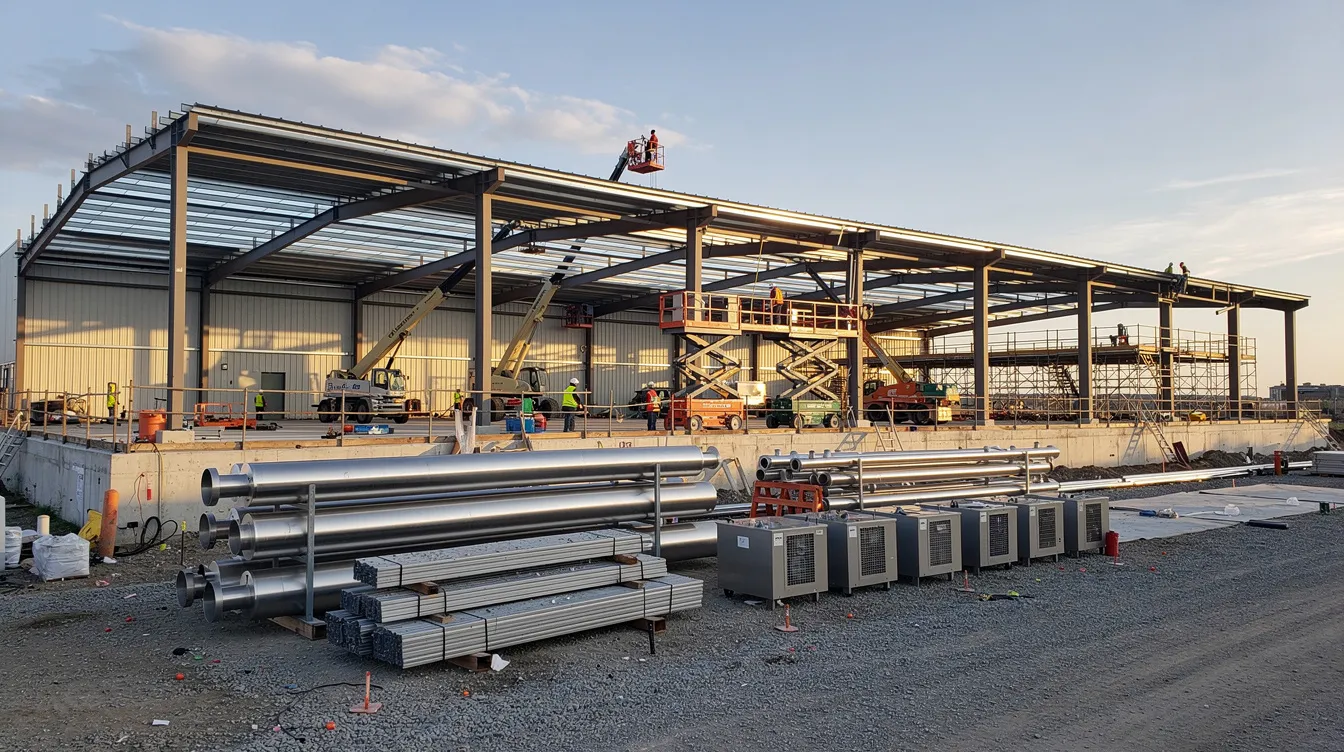
Any ghee butter plant project viability assessment starts from a realistic estimate of total project cost and a balanced means of finance. Establishing a ghee plant typically takes 12 to 18 months from planning to commissioning.
Project cost components. These include land, site development, building and civil works, plant and machinery, electrical installations, utilities (boiler, refrigeration, DG), lab equipment, furniture, pre-operative expenses, contingencies and margin for working capital. Financial feasibility includes calculating capital and operating expenditures for ghee production in granular detail.
Illustrative distribution. For a 10-15 TPD ghee-butter plant with a total project cost of approximately ₹25-30 crore, the typical split runs: machinery ~30-35%, civil works and land ~25-30%, utilities ~12%, electricals ~5%, erection ~4%, lab and office ~2%, pre-operatives ~4%, contingency ~4%, and working capital margin ~9%. Actual figures vary by location, scale and technology vendor.
Means of finance. Promoter equity typically covers 25-30% of project cost. Term loans from banks or FIs cover 60-70%. Schemes like AHIDF provide interest subvention of approximately 2.5-3% per annum for eligible dairy processing units. Subsidies must be project-specific and not assumed blindly in financial projections.
Leverage considerations. Higher debt-to-equity improves ROE when margins are strong but worsens DSCR and increases risk during low-utilisation years. The debt-equity mix directly affects loan repayment capacity.
For deeper costing guidance, see project cost and means of finance for a ghee, butter and milk fat processing plant.
Revenue Model, Market Feasibility and Pricing Strategy
Ghee butter plant commercial viability analysis depends on realistic product-wise revenue projections. Applying a single average selling price across all products produces misleading feasibility numbers.
Market context. The global ghee market was valued at USD 58.99 billion in 2025 and is projected to reach USD 97.32 billion by 2034. The global ghee market is also projected to reach ₹5 lakh crore by 2027. India’s butter market is forecast at approximately 1,321 thousand metric tons in 2026, growing at about 4.9% CAGR through 2031. Ghee consumption is driven by rising demand for natural foods and traditional dairy products in both domestic and international markets. The study should include a detailed analysis of market trends and consumer preferences for ghee.
Product-wise pricing. Bulk ghee (unbranded, large tins) sells at lower per-kg prices than branded retail ghee in consumer packs. Organic ghee and A2 cow ghee command premiums. Table butter and industrial butter have different price points and margin structures. DPRs must calculate revenue line by line for each product.
Customer segments. B2C (retail packs through distributors and e-commerce), B2B (bakeries, sweet manufacturers, food processing units), HoReCa and institutional buyers, and export customers (GCC and Middle East markets). Each channel has different credit terms and margin profiles. Market feasibility studies require evaluation of regional consumption patterns and competitor pricing for each segment.
Competition and positioning. Large cooperatives often undercut on price. Branded ghee manufacturers invest in marketing. Options for differentiation include premium positioning (organic ghee, bilona ghee), value-for-money bulk butter for the food processing industry, or niche export products. A competitive pricing strategy is essential for ghee market positioning.
Distribution and logistics. Distribution strategies must consider logistics for getting ghee products to market. Freight cost from plant to key Indian markets affects landed price and competitiveness. Seasonal demand peaks during festivals like Diwali and Holi must be factored into production planning.
For detailed marketing approach guidance, see revenue, product mix and market strategy for ghee and butter plants.
Financial Projections and DPR-Level Analysis
A bankable ghee butter plant DPR must contain 7-10 year financial projections, not just a one-year estimate or generic profitability claim. A feasibility study should have an executive summary highlighting key findings and recommendations, supported by detailed year-wise numbers.
Projection assumptions. These cover capacity utilisation by year, sales volume by product, selling price growth, raw material cost escalation, utility tariffs, wage inflation, interest rate assumptions and other project financials. Each assumption should be documented and defensible.
Statements required. Projected Profit & Loss, Cash Flow Statement and Balance Sheet must be prepared for the full loan tenure. These statements tie into DSCR computation and overall bankability assessment.
Cost structure. Separate line items for raw material cost (milk/cream/butter), packing material cost, power and fuel expenses, labour, repairs, administration expenses, selling and distribution expenses, freight, interest and depreciation. Financial feasibility includes calculating capital and operating expenditures at this level of detail.
Outcome metrics. EBITDA margin, PAT margin, cash accruals, cumulative cash position and net worth trajectory over the projection period. These reveal whether the project builds financial strength over time or erodes it.
Detailed modelling insights are available in our article on financial projections for a ghee, butter and milk fat plant DPR.
Profitability Assessment and Break-Even Analysis
Ghee butter plant profitability analysis must go beyond gross margin and incorporate capacity utilisation and fixed-cost coverage into the picture. Gross profit margins for ghee manufacturing typically range between 20-30%, but net profit depends on fixed cost absorption and financing charges.
Contribution and margins. Contribution per kg equals selling price minus variable cost per kg (raw materials, fuel expenses, packaging, freight). EBITDA margin in well-run dairy fat plants can range from 10-20% depending on product mix and scale. Net profit margin is lower after interest, depreciation and tax.
Break-even computation. Break-even for a ghee manufacturing business typically ranges from 2 to 4 years. The break-even capacity utilisation for many medium-scale plants falls around 55-65%. If a plant’s break-even point sits very close to rated capacity, the operating risk is elevated because any supply disruption or demand shortfall pushes the plant into losses.
Illustrative example. Consider a plant with fixed costs of ₹10 crore per year and contribution margin of ₹50 per kg. Break-even volume equals 20 lakh kg per year. If rated capacity is 30 lakh kg, break-even utilisation is approximately 66%. If projected utilisation is 80%, the margin of safety is 14 percentage points. These numbers are illustrative only; actual break-even depends on each project’s specific cost structure and pricing.
Margin of safety. The gap between projected utilisation and break-even utilisation is the buffer against demand or supply shocks. A healthy margin of safety (15-20 percentage points) provides comfort to both promoters and lenders.
For formula-level detail, see ghee and butter plant profitability and break-even analysis.
Working Capital Requirement and Liquidity Feasibility
Even a profitable ghee manufacturing business can face cash crises if working capital is inadequate or poorly structured. Working capital feasibility is as important as term-loan viability.
Components. Major items include inventory of raw materials (milk, cream, butter), work-in-progress, finished goods (ghee stocks, butter in cold storage), packing material, trade receivables (B2B credit typically 15-30 days), and trade creditors. Working capital tied up in a 10-15 TPD plant can run to several crores depending on product mix and credit terms.
Operating cycle. The dairy fat processing cycle runs from raw milk purchase through cream separation, butter churning, ghee production, packaging and sale to cash realisation. Perishable inputs and outputs require faster turnover than non-food manufacturing projects.
Bank limits. Cash credit or working-capital demand loan limits for a ghee manufacturing unit are assessed against projected levels of stocks and receivables, minus creditors. Banks apply drawing power calculations based on stock statements and book debts.
Growth stress. Rapid volume growth increases inventory and receivable levels before sales revenues catch up, creating temporary cash pressure despite healthy P&L profits. This is a common trap in the first 2-3 years of operation.
Details on working capital calculations are covered in working capital requirement for a ghee and butter manufacturing plant.
DSCR, Loan Repayment Capacity and Term Loan Assessment
DSCR (Debt Service Coverage Ratio) is cash accruals divided by annual term-loan principal plus interest due. It is the central metric in any ghee butter plant bankability assessment.
Cash accruals. Lenders calculate cash accruals as profit after tax plus depreciation (and sometimes other non-cash charges). This is the pool available for debt servicing, not accounting PAT alone.
Average vs minimum DSCR. Banks examine both the average DSCR over the entire loan tenure and the lowest single-year DSCR. NDDB requires minimum DSCR of 1.5x after 10% sensitivity tests on core variables for dairy infrastructure projects. No year should show DSCR below 1.0 after principal repayment begins.
Repayment structure. Loan tenure for dairy processing plants typically runs 6-10 years, with a principal moratorium of up to 1-2 years. Longer tenure reduces annual instalment burden but increases total interest cost. The repayment schedule must be designed so that even in low-utilisation early years, DSCR remains adequate.
Profit vs cash flow. A project may show profit but still have weak loan repayment capacity if working capital requirements or ongoing CapEx absorb cash in early years. Cash flow analysis, not just P&L, determines debt servicing ability.
For in-depth banking ratio analysis, see DSCR and loan repayment capacity for ghee and butter projects.
ROI, IRR and Payback Period in Ghee Butter Plant Investment Analysis
Equity investors and promoters evaluate Return on Investment (ROI), Internal Rate of Return (IRR) and payback period when judging ghee butter plant economic viability. These metrics complement DSCR, which is primarily a lender’s tool.
ROI and ROE. Simple ROI divides average post-tax profits (at stable utilisation) by total capital investment. Return on Equity (ROE) can be higher due to leverage, but leverage also amplifies downside risk. Economic analysts typically evaluate both metrics together.
IRR. IRR is the discount rate at which the net present value of project cash flows becomes zero. It allows comparison against alternative investment opportunities. Projects deemed moderate-risk in the food processing industry may target IRR of 18-25%, though this is not a universal benchmark.
Payback period. Simple (undiscounted) payback for a well-planned 10-15 TPD plant often falls in the 4-6 year range. Discounted payback will be longer. The projected pay back period depends on capacity ramp-up speed, margin levels and debt servicing requirements. All payback examples should be treated as indicative only.
No universal “good IRR” or “acceptable ROI” exists. Required returns vary by investor profile, risk appetite, cost of capital and sector norms.
Sensitivity Analysis and Stress Testing of Project Viability
Sensitivity analysis is one of the most important parts of a ghee butter plant feasibility study and of any lender-focused DPR. It separates sound business decisions from speculative projections.
Key variables to test:
| Scenario | Variable Change | Typical Impact |
|---|---|---|
| Raw material cost increase | +5% to +10% | EBITDA drops, break-even utilisation rises |
| Selling price decline | -5% | Contribution per kg falls, DSCR weakens |
| Capacity utilisation delay | 70% instead of 90% in Year 3 | Fixed cost per kg rises, cash accruals fall |
| Power and fuel cost increase | +10% to +15% | Operating costs increase, net profit erodes |
| Interest rate hike | +1% to +2% | Interest burden rises, DSCR declines |
| Receivable days increase | 30 to 60 days | Working capital tied up, cash flow pressure |
Downside combinations. When low utilisation coincides with higher milk-fat procurement cost and delayed receivables, an apparently profitable project can turn cash negative within 2-3 years. Risk assessment should address potential supply shortages and price fluctuations in raw materials.
Use in decision-making. Promoters and bankers use sensitivity analysis outcomes to refine capacity selection, adjust debt levels, modify product mix and develop specific risk-mitigation strategies before committing capital. A project that shows comfortable DSCR only under optimistic assumptions is not a bankable project.

Major Risks Affecting Ghee Butter Plant Project Viability
Every ghee butter manufacturing project carries risks that must be identified and mitigated at the feasibility stage.
Raw material and price risks. Milk-fat price volatility, dependence on few suppliers and seasonal availability can erode margins. Mitigation: diversified sourcing across a wide farmer base, forward contracts with cooperatives, in-house chilling centres to expand procurement radius, and buffer stock of butter or AMF during flush season. Buffalo milk fat percentage varies between seasons, adding to procurement cost unpredictability.
Market and competition risks. Large cooperatives may undercut on price. Consumer preferences can shift toward low-fat or alternate oil products. Brand-building costs for new entrants are substantial. Mitigation: niche positioning (A2 cow ghee, organic ghee for health benefits), long-term institutional contracts, and presence across multiple channels (retail, HoReCa, export).
Operational risks. Low capacity utilisation, machinery breakdowns, energy cost spikes and quality control failures leading to product rejection. Mitigation: preventive maintenance schedules, redundant utility systems, strong QC lab, and trained operators. Compliance with environmental regulations is necessary in ghee manufacturing to avoid operational shutdowns.
Financial and liquidity risks. High leverage, tight working capital, delayed customer payments and (for exporters) currency risk. Mitigation: prudent gearing (keeping promoter equity at 25-30%+), credit monitoring, receivable controls and working capital discipline.
Regulatory risks. FSSAI licensing, AGMARK registration, labour law compliance, environmental and pollution-control clearances. All licences and certifications should be in place before operations commence.
How Banks and FIs Appraise Ghee & Butter Manufacturing Projects
When a dairy fat processing plant approaches a bank for term loan and working capital finance, the appraisal process follows a structured path.
Promoter assessment. Banks examine promoter experience in dairy or food processing, financial strength (personal net worth, CIBIL score), past project track record and management capability. Strong promoter profiles improve credit terms.
Project assessment. Lenders review total project cost, means of finance, technical arrangements (consultant credentials, machinery supplier reputation), raw material tie-ups, location feasibility (access to milk, power, water, transport) and market potential. Research reports and market research supporting demand assumptions strengthen the appraisal.
Financial assessment. Banks scrutinise DPR assumptions (utilisation ramp-up, fat yield, sales price escalation, cost inflation), projected profitability, year-wise DSCR, break-even analysis, working capital adequacy, security/collateral offered and sensitivity analysis. RBI guidelines require current ratio of at least 1.0 and adequate DSCR, though each bank applies its own risk framework and credit policies.
No specific ratio or figure automatically guarantees loan sanction. Each bank follows its own policies, and approval depends on the overall comfort with the project’s viability and risk profile.
When Is a Ghee & Butter Manufacturing Plant Considered Viable?
Viability is a combination of quantitative metrics and qualitative comfort, not a single number.
Raw material and capacity. Sustainable access to milk fat and a realistic plant capacity aligned with market reach are preconditions for considering any ghee manufacturing plant profitable in India. Without raw material security, no amount of financial engineering makes the project viable.
Profitability and margins. Contribution and EBITDA margins should allow reasonable net profit even under moderate adverse scenarios. The margin of safety above break-even utilisation should be comfortable (at least 10-15 percentage points).
Debt servicing and liquidity. DSCR should remain adequate across all years of the loan tenure, with manageable instalments and sufficient working capital to avoid frequent cash stress.
Return to promoters. ROI/IRR and payback period must meet promoter and investor expectations. The project should generate positive cumulative cash flows within a reasonable horizon. A profitable project is one that rewards both debt providers and equity holders.
Resilience. The project must remain viable under key sensitivity tests (5-10% raw material cost increase, delayed ramp-up, moderate price pressure) rather than only under ideal assumptions. Market growth alone does not guarantee viability for a specific plant; plant economics must work under realistic conditions.
Importance of a Professionally Prepared Detailed Project Report (DPR)
A ghee butter plant DPR is an integrated technical, market and financial document that forms the basis for investment decisions and bank appraisal. It is the core deliverable in any project identification and project feasibility exercise.
Core contents. A DPR should include technical configuration, capacity planning, plant layout, machinery specification, project cost estimates, financing plan, detailed financial projections, break-even analysis, DSCR computation, ratio analysis and a projected repayment schedule. A feasibility study should have an executive summary highlighting key findings and recommendations.
Sensitivity and risk sections. Lender-oriented DPRs must contain structured sensitivity analysis and risk identification with mitigation strategies specific to the proposed location, scale, product mix and target market.
Customisation. DPRs should be customised to each project’s capacity, raw material source, product mix, fixed assets, and market rather than relying on generic templates. A business plan or project report based on another region’s data or different scale will not survive bank scrutiny.
Clarification. DPR financials are estimates based on assumptions. They do not amount to certification or guarantee of future performance by the CA or business consultant preparing them.
Role of CA Manish Gugliya and ProjectReportBank.com
I assist promoters and dairy companies in preparing project-specific detailed project reports, bank finance DPRs and financial projections for ghee, butter and milk-fat processing plants across India. My approach centres on realistic assumptions, bankability, risk analysis and customisation to each client’s capacity, location, machinery, raw materials and market plan.
Services include:
- Ghee butter plant DPR and project report preparation
- Bank loan project reports and CMA data
- Financial projections and project financials
- Project cost and means of finance structuring
- Working capital assessment
- DSCR analysis and term loan assessment
- Break-even analysis and profitability assessment
- ROI/IRR evaluation and sensitivity analysis
While these reports are prepared to meet typical bank appraisal requirements, no guarantee is provided regarding sanction, subsidy approval, investment returns or business success. These outcomes depend on market conditions, execution quality, management decisions and multiple external factors.
Serious entrepreneurs and dairy companies planning an industrial ghee, butter or milk-fat processing project in India can connect for a customised feasibility study and project finance advisory.
CA Manish Gugliya Project Report, DPR, CMA Data & Project Finance Advisory www.projectreportbank.com
FAQ: Ghee & Butter Plant Feasibility and Viability
Is a ghee manufacturing plant profitable in India at an industrial scale?
Industrial ghee manufacturing can be profitable in India where there is secure milk-fat supply, efficient plant utilisation (typically 70%+ after ramp-up), disciplined cost control and a clear market strategy. India produces over 3 million tonnes of ghee annually, and market growth continues. Profitability varies by capacity, location, product mix, pricing power and financing structure. A project-specific profitability analysis is necessary before committing capital.
How is the feasibility of a combined ghee and butter plant actually assessed?
Feasibility is assessed through a structured study covering technical configuration, raw material procurement, capacity planning, market potential, project cost, financial projections, working capital needs, DSCR, IRR and sensitivity tests. This integrated approach is documented in a ghee butter plant DPR used by promoters and lenders to judge project viability and bankability. The four dimensions (technical, commercial, operational, financial) must all show positive signals.
What capacity utilisation is usually required for viability in such plants?
Many medium-scale ghee and butter plants in India require at least 60-65% capacity utilisation to cross break-even, with 75-85% utilisation typically targeted for comfortable profitability. The precise break-even point must be calculated for each project, considering its own fixed costs, contribution margin and financing structure. A plant designed for a product mix with higher contribution margins may break even at lower utilisation.
Why is raw material (milk fat) cost so crucial in a ghee butter plant feasibility study?
Milk, cream or butter typically represent 80-90% of variable production cost. Even a small increase in procurement price can sharply reduce contribution per kg, erode EBITDA and weaken DSCR. A sound milk fat procurement strategy, including diversified sourcing, negotiated contracts with cooperatives and procurement during flush season, forms the core of any commercial viability analysis for a dairy fat processing plant.
What information is needed to prepare a detailed feasibility report and DPR for bank finance?
Key inputs include proposed project capacity, location, type of products (ghee, butter, AMF), raw material sourcing plan, estimated project cost, means of finance, targeted markets, expected selling prices, operating expenses, staffing plan and existing financial position of the promoters. Accurate data on land, building design, machinery quotations and tentative loan terms improves the reliability and acceptability of the project report. A prepare project report exercise requires all these inputs to be collected and validated before financial modelling begins.
Conclusion: Integrating Technical, Market and Financial Analysis for True Feasibility
A ghee butter plant feasibility study must integrate raw material security, plant capacity and layout, process technology, product mix, market demand, project cost, working capital, profitability, break-even, DSCR, IRR and risk analysis into a single coherent assessment. Each of these elements interacts with the others. A change in raw material cost alters break-even; a shift in product mix changes revenue and working capital needs; a delay in capacity ramp-up weakens early-year DSCR and cash flows.
Decisions should not rest on projected turnover or theoretical gross margins alone. They must be validated through comprehensive financial feasibility analysis and stress-tested projections that account for realistic adverse scenarios. The ghee manufacturing industry and the broader food processing industry offer investment opportunities for well-prepared promoters, but the line between a viable project and a stranded investment runs through the quality of feasibility work done before the first rupee is committed.
Promoters and dairy companies planning an industrial ghee, butter or milk-fat processing project in India can obtain a customised feasibility study, DPR and project finance advisory from CA Manish Gugliya through www.projectreportbank.com.