

Key Takeaways
Ghee manufacturing plant profitability depends on contribution margin, capacity utilization, and cost control rather than on top-line revenue alone. There is no fixed profit margin in this business; results vary with every plant’s specific circumstances.
- Raw materials account for 85–90% of total operating expenses in ghee production, making milk fat procurement cost the single largest determinant of margins.
- Break-even for ghee manufacturing typically ranges from 2 to 4 years, depending on scale, market access, and capacity utilization ramp-up.
- Industrial ghee manufacturing plant profitability in India is highly sensitive to capacity utilization; high-capacity plants achieving over 70% utilization can significantly reduce per-unit costs.
- Contribution margin (sales minus variable cost), not gross revenue, is the foundation of meaningful break-even and profitability analysis.
- Professional financial projections, a detailed project report, and sensitivity analysis by a Chartered Accountant like CA Manish Gugliya help assess true project viability before committing capital.
Introduction: Why Profitability & Break-Even Matter More Than Revenue
A ghee manufacturing plant or butter manufacturing plant can generate impressive turnover figures and still struggle with cash flow and loan repayment. Revenue alone does not establish financial viability. What matters is the spread between selling realization and the sum of raw material cost, conversion cost, packaging cost, and selling and distribution expenses at a realistic capacity utilization level.
India’s dairy market is valued at ₹13 lakh crore, and the country produces over 3 million tonnes of ghee annually. The global ghee market is projected to reach ₹5 lakh crore by 2027. These numbers signal strong demand in domestic and international markets, but demand alone does not make every plant profitable.
This article focuses on three core financial concepts: contribution (sales minus variable costs), operating profit or EBITDA, and break-even point (the sales level where profit is zero). Even a technically efficient industrial ghee manufacturing process with modern equipment can be financially unviable if assumptions on milk fat price, average realization, and volume are unrealistic. This analysis is written from the perspective of CA Manish Gugliya at ProjectReportBank.com.
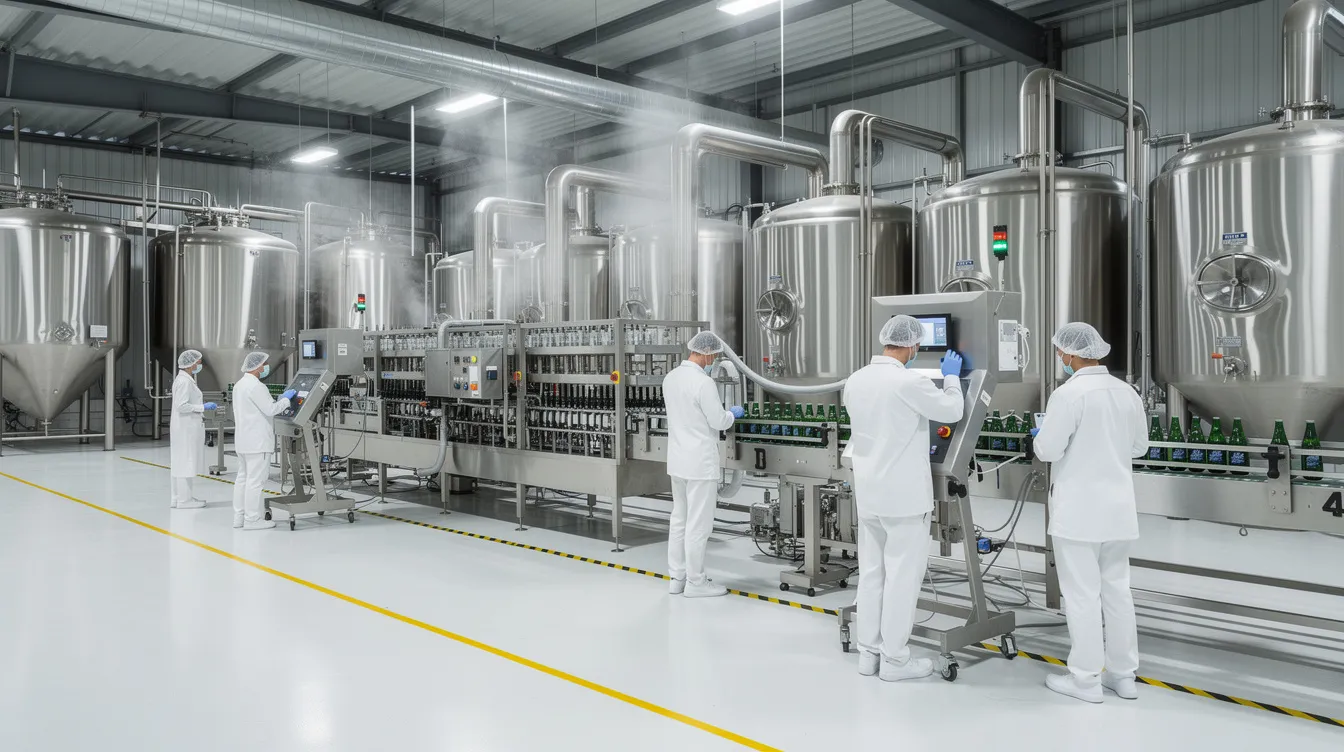
Understanding Ghee & Butter Manufacturing Plant Profitability
Profitability in an industrial ghee and butter plant refers to both accounting profit and cash profit. Promoters often fixate on a single net profit percentage, but a meaningful ghee butter plant financial analysis requires understanding multiple metrics:
- Gross margin: sales minus cost of goods sold
- Contribution margin: sales minus all variable costs
- EBITDA: earnings before interest, tax, depreciation, and amortisation
- EBIT: EBITDA minus depreciation
- PBT and PAT: profit before and after tax
- Cash profit: PAT plus non-cash charges like depreciation
Gross profit margins for ghee manufacturing range from 20–30%, but these can shrink significantly after accounting for selling expenses, finance cost, and depreciation on ghee manufacturing plant machinery and equipment. EBITDA and contribution margin are generally more critical for judging operating strength, while PAT and cash accrual determine long-term sustainability and debt servicing ability.
Major Revenue Drivers in a Ghee & Butter Plant
Revenue size alone does not guarantee profitability. The structure and quality of revenue are equally important. Key revenue drivers include:
- Installed capacity versus actual throughput and realistic operating days per year
- Overall ghee plant capacity utilization and butter plant capacity utilization
- Product mix: bulk ghee in tins for institutional buyers, branded retail ghee, premium desi ghee variants, butter blocks for bakeries, and consumer butter packs
- Sales channels: B2B institutional contracts, HoReCa, private label dairy brands, branded retail, e-commerce, and direct-to-consumer sales channels
The global ghee market is expected to grow at a CAGR of 5.7%, driven by rising consumer preference for traditional and natural foods in both domestic and international markets. However, theoretical production capacity and saleable output differ due to processing losses and stock build-up. Understanding ghee and butter plant capacity planning and a clear ghee butter plant revenue model are essential for realistic projections.
Major Cost Components Affecting Profitability
The ghee butter plant operating cost structure is dominated by raw materials and packaging, followed by utilities, labour, and distribution.
Raw material cost is the single largest expense. Ghee production costs are primarily driven by raw materials at 85–90% of operating expenses. Key raw materials include milk, cream, butter, and milk fat. Seasonal variation in milk procurement, fat percentage, transit and chilling losses, and procurement logistics all affect ghee manufacturing cost per kg and butter manufacturing cost per kg. Building relationships with dairy cooperatives can ensure a stable supply of quality raw materials, while direct sourcing from farmers can optimize raw material costs. A sound raw material and milk fat procurement strategy is fundamental.
Total value recovered from raw material includes ghee and by-products like buttermilk and skimmed milk. Utilizing by-products can help offset the costs of raw materials.
A ghee manufacturing plant requires specialized machinery for processing, including cream separators for extracting cream from milk, butter churners that convert cream into butter, ghee kettles used for controlled heating and clarification of butter, filtration units that remove impurities after clarification, storage tanks for holding processed ghee, milk storage tanks for raw milk, and automated packaging machines that fill and seal containers efficiently.
Packaging cost covers tins, jars, HDPE containers, pouches, cartons, shrink wrapping, and butter foil. Retail SKUs carry higher packaging cost but can command higher selling prices.
Energy and utility costs account for 5% to 8% of operational costs in ghee manufacturing, covering electricity, steam generation, refrigeration for butter cold storage, water, and CIP systems. Details on infrastructure requirements are covered in the ghee and butter plant land, building and utilities guide.
Labour and factory overheads include production staff, supervisors, quality-control personnel, maintenance, and factory administration. Selling and distribution expenses include distributor and retailer margins, logistics, cold chain for butter, promotional expenditure, and warehousing.
Finance cost covers term-loan interest and working-capital interest. Depreciation on plant and machinery, especially in early years, reduces PAT significantly. The ghee and butter plant project cost and means of finance article covers capital expenditure and financing structures in detail.
Ghee Manufacturing Cost Per Kg – What Should Be Included?
No single standard ghee production cost per kg applies across India. Costs vary by location, scale, procurement contracts, and product positioning. FSSAI mandates a minimum of 99.5% milk fat and a maximum of 0.5% moisture in ghee products, and meeting this standard affects yield and quality-control costs.
A complete cost build-up must include: raw material (milk fat equivalent), process loss, fuel and power, direct labour, packaging, factory overheads, quality-control cost, logistics, selling expenses, and finance cost where applicable. Some analyses compute ex-factory manufacturing cost while others include landed cost up to the distributor.
Illustrative Example Only: If raw material cost per kg of ghee is ₹350, utilities and labour add ₹15, packaging adds ₹12, and overhead adds ₹8, total manufacturing cost would be approximately ₹385 per kg. Against a selling price of ₹450 per kg, contribution before fixed costs would be approximately ₹50–65 per kg. These numbers are hypothetical and must not be treated as industry benchmarks.
Butter Manufacturing Cost Per Kg – Key Drivers
Butter manufacturing cost per kg depends heavily on cream quality, churning efficiency, and cold chain requirements. Higher fat in input cream and better butter recovery directly improve butter plant profitability analysis.
Moisture control is critical: legal and quality constraints on moisture percentage influence saleable output per unit of fat processed. Refrigeration, blast cooling, insulated transport, and power consumption for chilled storage add to butter production cost. Packaging for butter (foil, cartons, bulk blocks) and distribution losses such as returns or spoilage in hot regions are additional cost factors. The industrial butter manufacturing process article explains production-line efficiency in more detail.
Contribution Margin – The Core of Break-Even Analysis
Contribution is defined as sales revenue minus variable cost. This is the foundation of ghee plant break-even analysis and butter plant break-even analysis.
Variable costs in a ghee and butter plant typically include raw material, packaging, variable utilities, sales-linked freight, and commissions. Contribution can be expressed per kg, per tonne, per month, or as a percentage of sales (the P/V ratio).
Illustrative Example Only: If ghee sells at ₹460 per kg and total variable cost is ₹390 per kg, contribution is ₹70 per kg, or a P/V ratio of approximately 15.2%. Even a ₹10 per kg change in contribution margin can significantly affect ghee butter plant EBITDA and net profit margin because of the large volumes handled in industrial plants.
Fixed vs Variable Costs in a Ghee & Butter Manufacturing Plant
Clear separation of fixed and variable costs is essential for accurate ghee plant profitability analysis.
Typical fixed costs include: salaries of management and supervisory staff, factory rent, depreciation on plant and machinery, fixed maintenance, insurance, statutory fees, property taxes, and fixed electricity demand charges. Interest on term loans is often treated as below-EBITDA for operating break-even but becomes relevant for financial break-even and DSCR.
Typical variable costs include: milk, cream, butter, or milk fat procurement, packing material per kg, throughput-linked fuel and power, outbound freight, and sales commission. Semi-variable expenses such as certain plant overheads and maintenance require careful treatment in contribution margin analysis.
How to Calculate Break-Even Point for a Ghee or Butter Plant
Break-even point is where total contribution equals total fixed costs and profit is zero.
- Break-Even Sales (₹) = Fixed Costs ÷ P/V Ratio
- Break-Even Quantity (kg) = Fixed Costs ÷ Contribution per kg
Illustrative Example Only: If annual fixed costs for a medium-sized ghee manufacturing plant are ₹70 lakh, average selling price is ₹460 per kg, and contribution is ₹70 per kg, then break-even quantity is approximately 1,00,000 kg (100 MT) per year, and break-even sales value is approximately ₹4.6 crore. These figures are for explanation only and should not be applied to any specific ghee manufacturing business.
Break-Even Capacity Utilization and Risk Profile
For industrial projects, break-even capacity utilization (percentage of installed capacity required to cover fixed costs) is often more insightful than absolute break-even volume.
Break-Even Capacity Utilization (%) = (Break-Even Production ÷ Installed Annual Capacity) × 100
A ghee and butter plant that breaks even at around 45–50% capacity utilization has a more comfortable risk cushion than one requiring 80–90% utilization. Practical factors affecting achievable utilization include ramp-up period during the first 2–3 years, raw material availability, market absorption capacity, seasonal milk volume, and planned operating days. Break-even for ghee manufacturing typically ranges from 2 to 4 years. Detailed production capacity and product mix planning helps align capacity assumptions with reality.
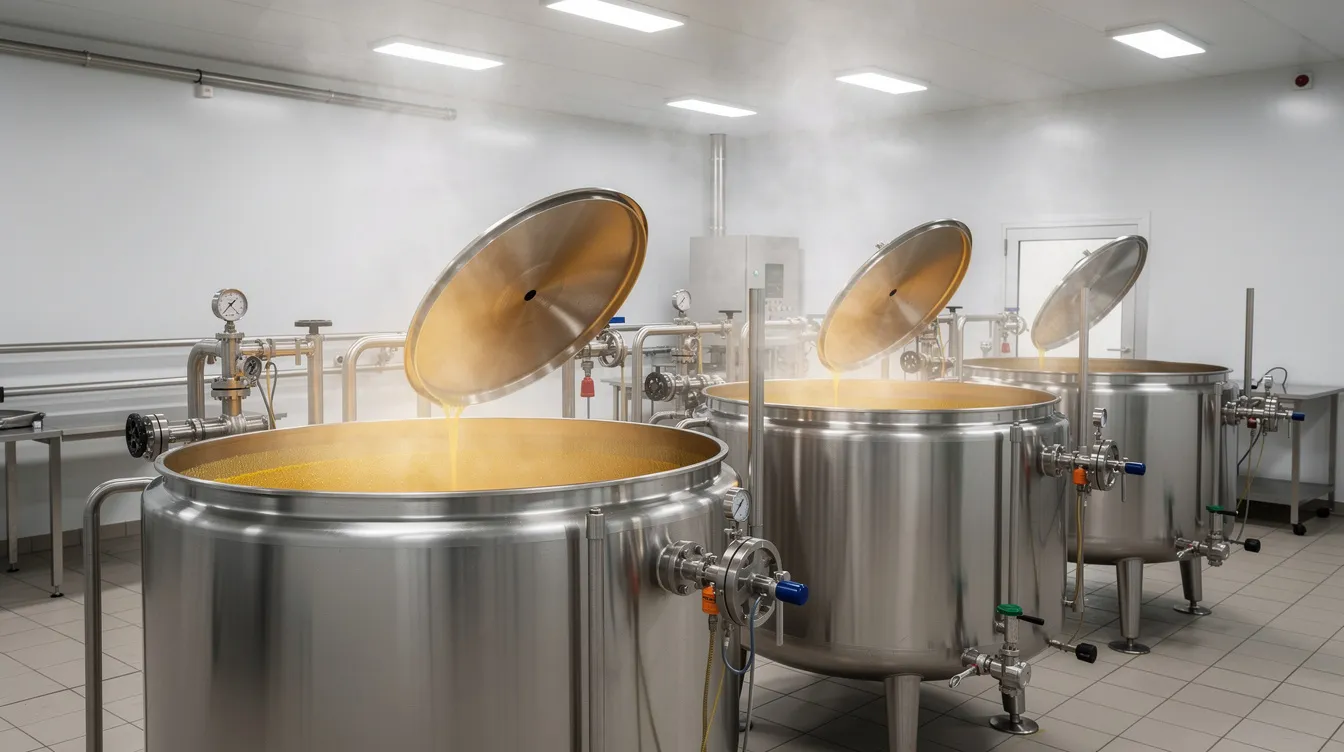
Illustrative Ghee Plant Break-Even & Profitability Snapshot
Illustrative Example Only: The following table demonstrates how contribution, EBITDA, and break-even capacity utilization might look for a hypothetical ghee plant. These figures should not be treated as industry norms or guaranteed outcomes.
| Parameter | Value |
|---|---|
| Installed Capacity | 500 MT / year |
| Assumed Utilization | 60% |
| Saleable Quantity | 300 MT |
| Average Selling Price | ₹460 / kg |
| Total Sales Revenue | ₹13.80 crore |
| Total Variable Cost (₹390/kg) | ₹11.70 crore |
| Contribution | ₹2.10 crore |
| Fixed Operating Expenses | ₹0.90 crore |
| EBITDA | ₹1.20 crore |
| Depreciation | ₹0.30 crore |
| Interest | ₹0.25 crore |
| Profit Before Tax | ₹0.65 crore |
| Break-Even Sales (approx.) | ₹5.92 crore |
| Break-Even Capacity Utilization | ~43% |
This table format is similar to what appears in ghee plant financial projections and detailed project reports used by bankers and investors.
Illustrative Butter Plant Break-Even & Profitability Snapshot
Butter manufacturing plant profitability and break-even can differ from ghee even when using the same milk fat resource, mainly because of cold chain and packaging differences.
Illustrative Example Only:
| Parameter | Value |
|---|---|
| Installed Butter Capacity | 400 MT / year |
| Assumed Utilization | 60% |
| Saleable Quantity | 240 MT |
| Average Realization | ₹380 / kg |
| Total Sales Revenue | ₹9.12 crore |
| Variable Cost (₹330/kg) | ₹7.92 crore |
| Contribution | ₹1.20 crore |
| Fixed Costs (incl. refrigeration) | ₹0.70 crore |
| EBITDA | ₹0.50 crore |
| Depreciation | ₹0.22 crore |
| Interest | ₹0.18 crore |
| Profit Before Tax | ₹0.10 crore |
| Break-Even Capacity Utilization | ~58% |
Institutional butter blocks may have a different margin structure compared to branded table butter. Actual butter manufacturing plant profit margin in India will depend on local procurement conditions, customer base, and plant configuration.
Ghee Manufacturing Plant Profit Margin – How to Evaluate It Properly
The common question “How much profit is there in ghee manufacturing?” cannot be answered with a single number. Net profit margins in ghee production typically range from 8% to 12%, while gross profit margins for ghee manufacturing range from 20–30%. Premium cow ghee variants, organic ghee, or gir cow ghee can command significantly higher realizations, but also require higher marketing and procurement investment.
Different ways to evaluate ghee plant profit margin include per-kg contribution, EBITDA margin on sales, PAT margin, and return on capital employed. A moderate percentage margin with high asset turnover and good plant capacity utilization can generate stronger returns than a small plant claiming very high margin but low volume. Promoters should align their ghee manufacturing business profit expectations with realistic assumptions validated through a professional DPR rather than informal estimates.
Capacity Utilization and Its Impact on Profitability
As capacity utilization improves, fixed costs are spread over more units, improving per-unit profitability if contribution per kg remains stable. The utilization rate of a ghee manufacturing plant influences fixed cost allocation directly.
Consider the same hypothetical plant:
| Utilization | EBITDA (approx.) | Net Profit per kg |
|---|---|---|
| 40% | ₹0.50 crore | Low / marginal |
| 60% | ₹1.20 crore | Moderate |
| 75% | ₹1.65 crore | Healthy |
| 90% | ₹2.10 crore | Strong |
Higher utilization only translates to profit if sales volumes are achieved without heavy discounting. Too aggressive ramp-up assumptions in years 1–2 can overstate ghee butter plant operating profit and mislead lenders about DSCR and repayment capacity. A ghee plant typically requires 5,000 to 10,000 MT annual production capacity ranging across different project scales, and capacity assumptions must match procurement and market reality.
Product Mix and Its Impact on Ghee & Butter Plant Profitability
Ghee butter plant production economics depend not only on volume but on the mix of products. Bulk ghee for institutional use may have lower realization but lower packaging and marketing costs. Premium products such as A2 ghee, desi cow ghee, or pure desi ghee can improve realization but typically require higher marketing spend and quality positioning. Product positioning impacts profitability; premium ghee can command significantly higher prices. Establishing strong branding can enhance profit margins in ghee sales.
Butter product economics vary between large institutional blocks for bakeries and food processors, retail butter in small packs, and flavored milk or value-added butter formats. Some integrated dairy-fat plants may also evaluate Anhydrous Milk Fat manufacturing plant projects as part of a wider product portfolio.
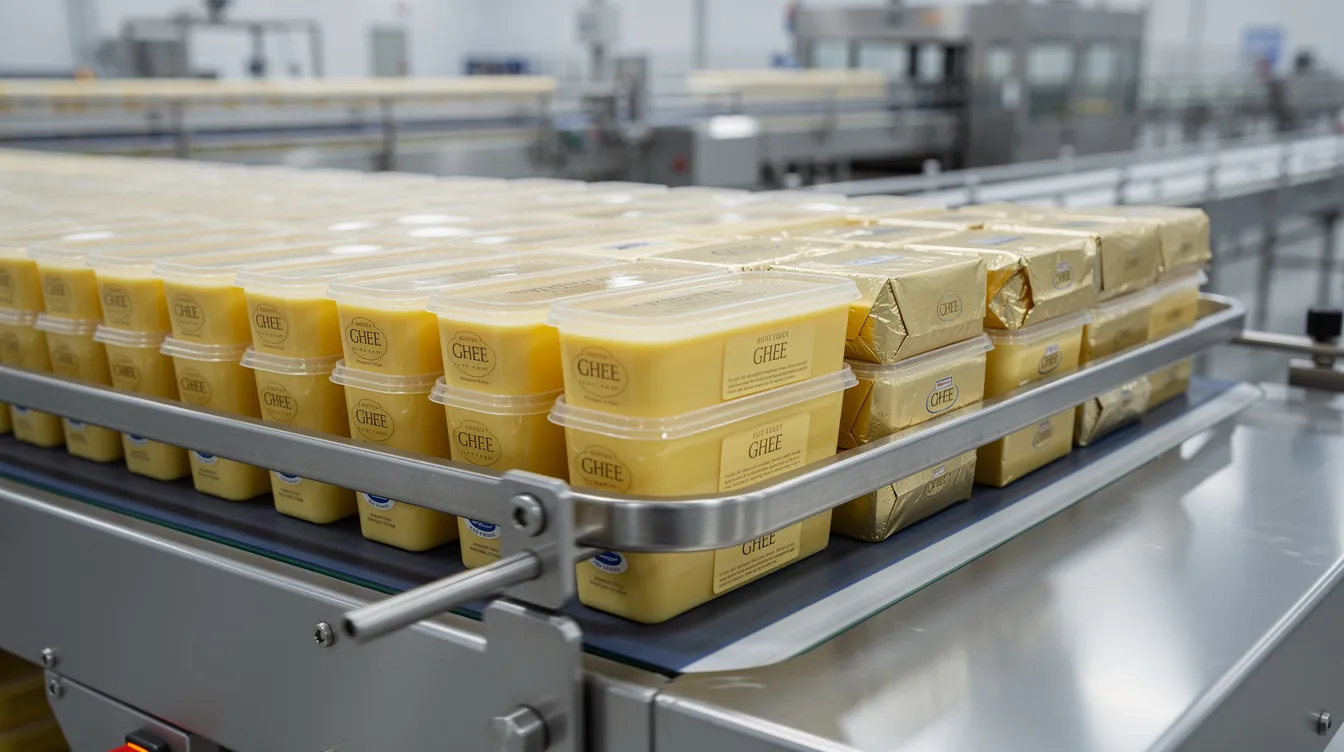
Raw Material Price Sensitivity and Its Effect on Margins
In most ghee butter plants, milk fat cost forms 70–85% of total variable cost, so contribution margin is extremely sensitive to procurement price changes. Climate affects raw material availability and pricing in ghee manufacturing, adding further volatility. Milk procurement efficiency directly affects the cost structure in ghee production.
Consider a simple sensitivity framework:
| Scenario | Impact on Contribution per kg |
|---|---|
| Base Case | ₹70 / kg |
| Raw Material +5% | ₹50 / kg (↓29%) |
| Raw Material +10% | ₹31 / kg (↓56%) |
| Raw Material –5% | ₹90 / kg (↑29%) |
When raw material prices rise faster than selling prices, ghee manufacturing plant profit margin and butter plant profit margin compress sharply. According to IMARC industry analysis, raw materials make up 85–90% of operating expenses, confirming why all serious feasibility studies must include raw-material price sensitivity runs. The average milk procurement price in India was approximately ₹49.03 per kg in 2024-25, and even modest changes at this level cascade into ghee conversion costs.
Selling Price and Market Sensitivity
Selling price and average realization per kg are affected by competition, brand strength, institutional contracts, and broader commodity cycles. If average realization falls by ₹5 per kg while variable cost remains constant, contribution drops proportionally, pushing the break-even point upward. Common causes of price pressure include aggressive discounting by competitors, institutional tenders, seasonal demand dips, and consumers prefer snacks or alternative products during certain periods.
Realistic pricing assumptions should be benchmarked with current trade levels. Premium desi ghee or pure ghee may sustain better realizations but require sustained brand investment. Aspirational MRP figures alone should not form the basis of a detailed project report.
Ghee vs Butter – Comparative Profitability Considerations
The question of which product is more profitable has no universal answer. Key comparative factors include: ghee’s longer shelf life and ambient storage versus butter’s need for refrigeration and cold chain; relative selling realizations in ethnic and regional cuisines and food processing industries; and working capital requirements. Ghee, especially export-grade or premium products, may generate higher realization per kg of fat, while butter can provide large-volume institutional demand. An integrated ghee and butter plant can sometimes achieve superior asset utilization by switching production to whichever product offers better contribution.
Working Capital, Cash Flow, and Their Impact on Real Profitability
Even a profitable ghee manufacturing plant on paper can face severe stress if working capital is inadequate. Major components include raw material inventory, packaging inventory, finished goods, trade receivables, and trade payables. The cash-conversion cycle in dairy processing can be challenging: raw milk requires quick payment while distributors and institutional buyers expect credit. Interest on working-capital borrowings is a real cost and must be included when assessing ghee butter plant cash flow and net profit. Setting up a ghee plant requires reliable access to milk or cream, and the payment terms for this procurement directly impact working capital needs. Professional financial projections consider seasonal inventory build-up and collection periods using a cash flow statement format.
EBITDA, Net Profit & Cash Profit – Which Number Matters When?
EBITDA measures operating performance before interest and depreciation. Net profit is the bottom-line after all expenses and taxes. Cash profit adjusts net profit for non-cash items like depreciation. Lenders focus on EBITDA and cash accrual for assessing DSCR and repayment capacity, while promoters may first look at PAT margin. For capital-intensive projects with significant machinery investment, depreciation can be high in initial years, depressing accounting PAT even when cash flows are reasonable. Sound ghee and butter plant profitability analysis tracks all three metrics over at least 7–10 years.
ROI, IRR & Payback Period for Ghee & Butter Projects
Return on Investment (ROI) expresses average annual profit or cash accrual over total capital investment. Internal Rate of Return (IRR) is the discount rate making the net present value of cash flows zero. Payback period is the time required to recover initial investment. High ROI or IRR alone do not guarantee success; raw-material security, market access, and realistic break-even analysis are equally important. Lenders consider these metrics along with DSCR and sensitivity analysis rather than in isolation. A small ghee unit can earn ₹50,000–₹1,00,000 per month, but returns at industrial scale require rigorous project-specific analysis.
DSCR and Loan Repayment Capacity for Ghee & Butter Plants
DSCR (Debt Service Coverage Ratio) is the ratio of cash available for debt servicing to total debt service (interest plus principal). Year-wise DSCR is examined over the full loan tenure. Even if a ghee and butter plant appears profitable at the PAT level, excessive debt, short repayment tenure, or delayed ramp-up can lower DSCR below acceptable levels. DSCR may be assessed as part of financial projections and project finance analysis, not certified as guaranteed performance. Appropriate debt–equity ratio, adequate moratorium, and working-capital limits should be planned alongside project cost and means of finance.
Sensitivity Analysis Framework for a Ghee & Butter Plant
Sensitivity analysis tests how changes in key assumptions affect profitability, break-even, and DSCR. Main variables commonly tested include raw material cost, selling price, plant capacity utilization, power and fuel cost, packaging cost, interest rate, and ramp-up delay. A one-variable-at-a-time approach (testing ±5% or ±10% in milk fat procurement cost) reveals the impact on contribution and EBITDA. For larger investments, scenario analysis with best case, base case, and conservative case is more meaningful than single-point projections. The production process yield and energy efficiency heavily impact profitability in ghee manufacturing, making these critical sensitivity variables.
Greenfield Ghee & Butter Plant vs Expansion of an Existing Dairy
Break-even analysis and risk differ between a new standalone plant and a ghee butter line added within an existing dairy. A greenfield project typically involves higher capital expenditure on land and site development, standalone utilities, and initial marketing establishment, leading to higher break-even capacity utilization. An expansion within an existing dairy benefits from established procurement networks, shared boilers and refrigeration, common administration, and existing distribution. However, transfer pricing of milk fat internally and allocation of overheads must be modelled carefully. Both options should be evaluated through detailed project reports rather than assuming expansion is inherently lower risk.
Common Mistakes in Ghee & Butter Plant Profitability Projections
Overly optimistic projections are a frequent cause of stress in food processing projects. Common errors include:
- Assuming near-100% capacity utilization from year one
- Ignoring processing and handling losses during the manufacturing process
- Using unrealistic selling prices that do not match current trade levels
- Underestimating dealer margins, freight, and packaging cost
- Excluding working-capital interest from operating cost
- Assuming constant milk-fat prices across seasons
- Treating GST as additional revenue
- Confusing gross margin with net profit
- Failing to include break-even analysis and sensitivity analysis in DPRs
Regulatory compliance with standards such as FSSAI is essential for ghee production; ignoring compliance costs is another oversight. Promoters should insist on rigorous financial analysis in any business plan they rely on.
What Bankers Typically Examine in Ghee & Butter Plant Projections
Banks look beyond optimistic sales figures, focusing on consistency and bankability. Key aspects examined include realistic capacity utilization build-up, credible sales and pricing assumptions, raw-material sourcing strategy, contribution margin, EBITDA, cash accrual, break-even point, DSCR, and debt–equity structure. Bankers also review sensitivity analysis to understand how the project behaves under less favourable conditions. While a strong DPR and CMA data can support appraisal, bank sanction depends on each lender’s policy, risk appetite, and overall assessment.
What Investors and Strategic Partners Look For
Institutional investors evaluate ghee and butter plants from a long-term value-creation perspective. Focus areas include scalability, EBITDA potential at mature utilization, return on capital employed, and asset-turnover ratio. Qualitative factors matter: brand strength, product differentiation (premium cow ghee, specialty butter), competitive advantage, and market size. Investors stress-test cash flow and downside scenarios and expect transparent, well-structured financial projections along with a thorough market assessment and clear business plan.
Practical Strategies to Improve Ghee & Butter Plant Profitability
Profitability can often be improved more reliably through operational discipline than by chasing ambitious pricing alone:
- Strengthen milk or cream procurement through direct farmer linkages and route optimization; milk procurement efficiency directly affects cost structure
- Improve yield and reduce process loss through efficient plant operations and better control of the ghee manufacturing process
- Automation and energy-efficient technology can improve yield and lower operational costs in ghee manufacturing
- Optimize product mix between bulk and premium SKUs for a mix of volume and margin
- Profitability increases with effective supply chain management and direct-to-consumer sales channels
- Tighten working-capital management: shorter receivable cycles, better inventory planning, alignment between production and confirmed orders
- Preventive maintenance reduces downtime and extends equipment life
None of these strategies should compromise quality, safety, or regulatory compliance. Quality ghee and consistent standards are non-negotiable for long-term brand value.
When Is a Ghee & Butter Manufacturing Project Financially Viable?
Viability is always project-specific. Key conditions include: sustainable contribution margin on chosen product mix, realistic break-even capacity utilization, positive and stable EBITDA, and comfortable DSCR over loan tenure. Integrated assessment covering technical feasibility, market feasibility, raw-material security, operating profitability, working capital, and financing terms is necessary. Generalized profitability claims should be treated with caution. The global ghee industry continues to strengthen market demand, and increasingly, consumers and food processing industries are recognizing ghee as a staple in traditional food preparation, ayurvedic herbal preparations, and cultural and religious practices, but each project must stand on its own financial merit. Promoters exploring high quality milk sourcing, the perceived health benefits of natural dairy fats, or the growing export demand for pure ghee and organic ghee should ground their projections in realistic numbers.
Role of a Detailed Project Report (DPR) in Profitability & Break-Even Analysis
A detailed project report integrates technical details, market analysis, and comprehensive financial projections for a ghee and butter manufacturing project. Core components include installed capacity and utilization build-up, machinery investment summary, total project cost, means of finance, raw-material sourcing assumptions, product mix, and raw material requirements.
A DPR prepared by a Chartered Accountant like CA Manish Gugliya typically includes projected profit and loss, cash flow statement, balance sheet, break-even analysis, DSCR calculation, and sensitivity analysis. While a professional DPR significantly improves decision quality and supports bank appraisal, it does not guarantee loan sanction or project success. Entrepreneurs can obtain professionally prepared project reports and financial projections tailored to their specific capacity and market plans through ProjectReportBank.com.

Frequently Asked Questions (FAQs)
The following FAQs address common questions from Indian entrepreneurs, dairy processors, and investors exploring industrial-scale ghee and butter projects. Answers are practical and do not guarantee returns or funding.
Is a ghee manufacturing plant always profitable in India?
Many ghee plants are profitable, but there is no “always.” Results depend on raw-material economics, selling prices, capacity utilization, and financial discipline. India’s dairy market worth ₹13 lakh crore and steady ghee consumption create favourable conditions, but each proposal needs its own profitability and break-even analysis. Ghee manufacturing has steady high-value demand, yet the profitable business outcome depends on project-specific execution.
What capacity is ideal for a new ghee manufacturing plant?
Ideal capacity depends on assured milk-fat supply and market access. A ghee plant typically requires an annual production capacity ranging from 5,000 to 10,000 MT for industrial scale, though smaller plants can also be viable. Promoters should choose a size where break-even capacity utilization is comfortably below their realistic sales and procurement potential.
How does milk-fat price affect ghee plant profitability?
Since raw materials account for 85–90% of total operating expenses, even a 5% increase in milk-fat procurement cost can reduce contribution margin by 25–30%. Long-term procurement contracts and direct farmer relationships can partially stabilize costs, but commodity price risk cannot be eliminated entirely.
Which is more profitable – ghee or butter?
Neither is universally more profitable. Ghee offers longer shelf life, ambient storage, and higher per-kg realization, especially for premium or export products. Butter provides steady institutional demand but requires refrigeration and cold chain. An integrated plant processing both products can achieve better asset utilization and commercial flexibility.
Do banks require sensitivity analysis in ghee plant DPRs?
Many banks and financial institutions now expect sensitivity or scenario analysis, especially for larger term loans. This helps lenders understand how the project may behave under less favourable conditions such as higher raw-material cost, lower selling price, or delayed capacity ramp-up. Including robust sensitivity analysis strengthens loan proposals.
Conclusion: Building a Financially Sound Ghee & Butter Manufacturing Project
Ghee manufacturing plant profitability and butter manufacturing plant profitability cannot be judged by generic margin claims. They must be derived from project-specific data on raw-material cost, selling realization, capacity utilization, and fixed-cost structure. The global ghee market size continues to expand, promoting healthier food choices and driving ghee consumption across the Indian healthy snacking summit discussions, ethnic and regional cuisines, and broader food processing applications. Industry trends point to growth, but growth in the ghee market does not automatically translate to profitability for every plant.
Thorough break-even analysis, sensitivity checks on milk-fat price and selling price, and integrated evaluation of contribution margin, EBITDA, cash flow, DSCR, ROI, IRR, and payback period are essential before final investment decisions. Whether the focus is cream separation and butter churning for a butter plant, or heating butter through ghee kettles for clarified butter production, or evaluating unit operations involved in a complete ghee production line, the financial fundamentals remain the same.
Entrepreneurs, dairies, and investors planning ghee, butter, AMF, or integrated milk-fat projects can approach CA Manish Gugliya through ProjectReportBank.com for detailed project reports, financial projections, break-even analysis, DSCR assessment, sensitivity analysis, and project finance documentation support.
Visit www.projectreportbank.com for professional guidance on your ghee and butter manufacturing project.