
Key Takeaways
- A cheese plant’s total project cost includes land, building, machinery, utilities, pre-operative expenses and margin for working capital – not just equipment cost. Cheese plant setup costs include machinery and land expenses, but these are only part of the picture.
- A small 2,000–3,000 litre per day cheese manufacturing plant in India may typically require total investment in the range of about ₹3.5–₹6 crore, while medium units (10,000–20,000 LPD) can go above ₹12–₹25 crore, depending on technology and product mix.
- Means of finance usually combine promoter contribution (equity), bank term loan, working capital limits and, where available, subsidies or soft support. Banks closely examine debt-equity ratio and DSCR before sanctioning any cheese manufacturing plant bank loan.
- Ripened cheese (cheddar, gouda, etc.) needs additional ripening rooms and higher working capital than fresh or processed cheese, which directly affects project cost and loan requirement. Aged cheeses require significant cash reserves as they take time to mature.
- A bankable detailed project report and properly prepared CMA data are essential for securing finance on realistic and viable terms.
Introduction: Why Cheese Plant Project Cost & Means of Finance Matter
I am CA Manish Gugliya, and over more than 20 years of preparing project reports, CMA data and bank-loan proposals, I have seen one mistake repeated by promoters across industries: they finalise land, order machinery and approach a banker – without first understanding the full cheese plant project cost and the correct means of finance. Starting a commercial cheese processing plant requires significant capital investment, and starting a cheese plant requires careful financial planning across capital expenditures and working capital needs.
Many first-time entrepreneurs treat the machinery quotation as the total cost. In reality, civil construction, utilities, refrigeration, pre-operative expenses and working capital margin can together exceed the machinery budget. Underestimating any of these heads leads to cost overruns, delayed commissioning and immediate pressure on loan repayment.
This article does not discuss the technical industrial cheese production process in detail. Instead, it focuses on how to estimate investment, structure term loans and working capital, and prepare a bankable financial plan. “Project cost” means everything you must spend to bring the plant to sustainable commercial operation. “Means of finance” is how that spending is funded – equity, loans, subsidies and other sources. All figures here are indicative, based on Indian conditions as of 2026, and will vary with plant capacity, location, product mix, technology requirements and level of automation.
What Is Included in the Cost of a Cheese Manufacturing Plant?
The cheese manufacturing plant project cost is much broader than the cost of machinery alone. If you first want to understand the broader cheese manufacturing plant setup cost in India, you can read that separately; here we focus on how that total cost translates into project funding and finance.
The major cost heads that together make up the total project cost are:
- Land purchase or long-term lease and site development (including land registration and boundary development)
- Factory building and civil construction – production hall, ripening rooms, cold storage, admin, staff amenities
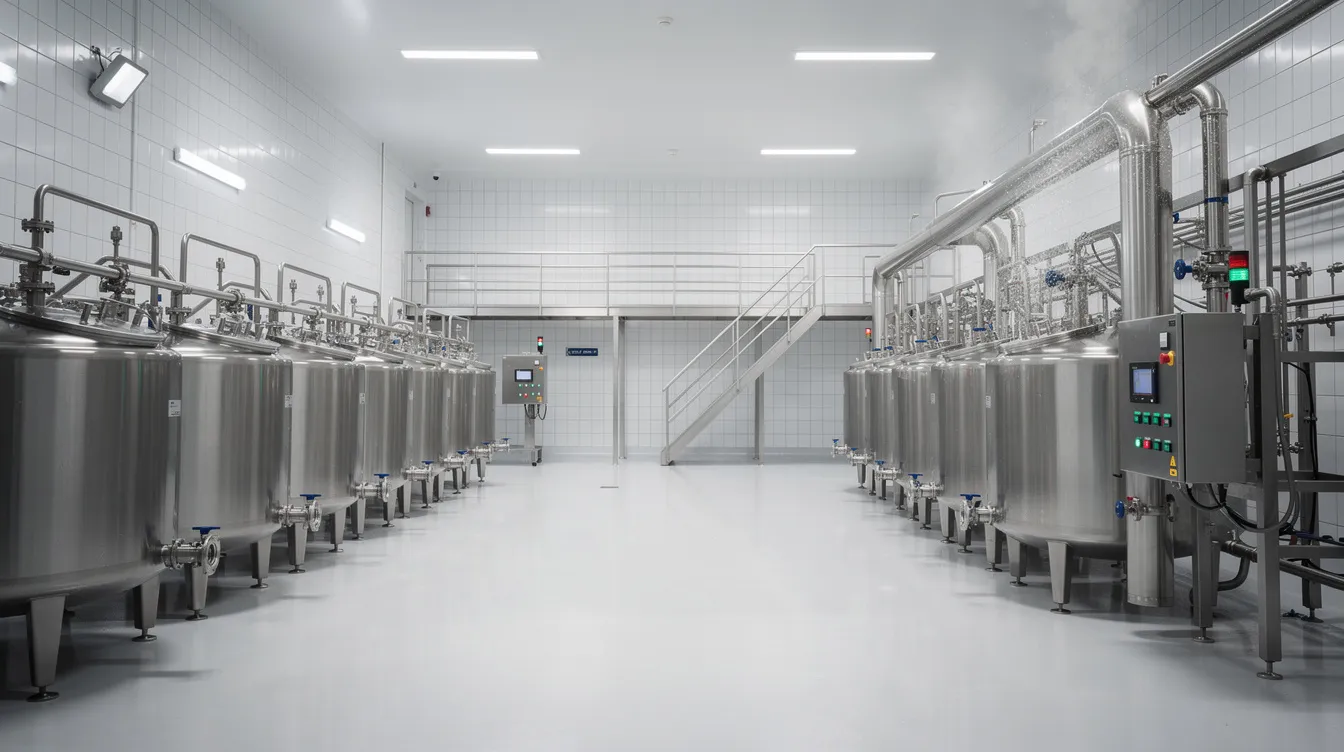
- Cheese manufacturing machinery and process equipment, including heavy-duty industrial equipment such as pasteurisers and cheese vats
- Milk reception, chilling and storage systems
- Cold storage, aging rooms and refrigeration systems – specialized infrastructure such as climate-controlled aging rooms is necessary for effective cheese production
- Utilities and support equipment: boiler, compressor, DG set, electricals, water treatment
- Laboratory and quality-control facilities
- Effluent treatment plant and waste-handling systems
- Packaging machinery for consumer and bulk packs
- Furniture, IT, office equipment and basic vehicles
- Preliminary and pre-operative expenses (consultancy, DPR, interest during construction)
- Contingency provision for price escalation and unforeseen items
- Margin money for working capital
Banks evaluate the complete project cost including margin money for working capital, because this funding is needed to run the plant at viable capacity after commissioning. Capital investments cover machinery, land, and site development costs – but they extend well beyond these items.
Factors That Determine Cheese Plant Project Cost
No two cheese factories cost exactly the same. Banks and investors will always ask for clarity on what drives your capital budget. The global cheese market was valued at USD 98.0 billion in 2025 and is expected to reach USD 153.08 billion by 2034, creating strong investment opportunities. But your specific cheese plant capital cost depends on these factors:
- Milk-handling capacity per day (e.g., 2,000 LPD, 10,000 LPD, 50,000 LPD)
- Expected quantity of cheese produced per day based on realistic milk-to-cheese yields – the yield of cheese can differ significantly based on the type of cheese being produced
- Type of cheese: fresh/soft, mozzarella, processed cheese manufacturing plant, cheddar, gouda, specialty cheeses
- Product mix and flexibility of the line (block, slice, shredded, pizza cheese, processed cubes)
- Level of automation and hygiene standards
- Choice between indigenous and imported machinery, and their respective costs
- Ripening and maturation requirements – duration, temperature, humidity control and storage capacity
- Cold-storage volume for finished goods and ripening inventory
- Packaging formats and packaging requirements (bulk 20 kg blocks vs 200 g retail packs)
- Location-specific factors: land price, building rates, local labour cost, power tariffs, water availability
- Target quality, food-safety and key certifications required (FSSAI, BIS, ISO 22000)
- Need for captive boiler house, DG set, solar power or advanced effluent treatment
Understanding cheese plant capacity and product mix is essential because capacity planning and product strategy together drive overall investment and bank-loan requirement. Promoters should freeze the intended plant capacity and key product categories before finalising machinery quotations and DPR financials.
Indicative Capacity-Wise Project Cost for Cheese Plants in India
The figures below are illustrative ranges for guidance, not quotations. They assume mid-level automation, mixed product profile and Indian conditions. Cheese production capacity can range from 5,000 to 10,000 MT annually for medium-to-large operations. A cheese manufacturing plant requires capacity planning aligned to realistic cheese demand and milk procurement.
| Plant Category | Milk Processing Capacity (LPD) | Approx. Cheese Output (kg/day) | Indicative Total Project Cost (₹ crore) | Typical Business Model |
|---|---|---|---|---|
| Small | 2,000–3,000 | 200–300 | ₹3.5–₹6 | Local B2B supply to bakeries, QSR, regional retail |
| Medium | 10,000–20,000 | 1,000–2,000 | ₹12–₹25 | Regional distribution, modern retail, institutional sales |
| Large | 50,000+ | 5,000+ | ₹60+ (can exceed ₹100+ crore) | National brand, multi-product dairy, export |
For reference, a processed cheese manufacturing plant with capacity of about 12 MT/day was reported with a total capital investment of approximately ₹19.21 crore, while Milky Mist is investing approximately ₹450 crore in what is described as India’s largest single-location cheese making unit.
A dedicated cheddar cheese manufacturing plant will usually incur higher cost per tonne of capacity due to extra ripening infrastructure and longer inventory cycle compared to a fresh mozzarella or processed cheese unit. Lenders always prefer a DPR showing how proposed capacity aligns with realistic market trends and milk procurement arrangements.
Detailed Components of Cheese Plant Project Cost
This section breaks down the major CAPEX items so that promoters and bankers can see how the total cheese plant investment cost builds up. This breakdown is typically presented in the detailed project report and supported by civil estimates and machinery quotations.
Land and Site Development
- Whether land is purchased, already owned or taken on long-term lease determines how its value is treated in project cost. Site development includes land registration and boundary development, levelling, fencing, internal roads, drainage, borewell and basic landscaping.
- Banks normally accept independent valuation and clear title documents before considering the land cost as part of the project. The land required should match the plant layout and future expansion plans.
Factory Building and Civil Construction
The functional areas in a cheese manufacturing unit include:
- Milk reception dock, can/road-milk bay and chilled milk storage
- Main processing hall with pasteurisation and cheese-making zones
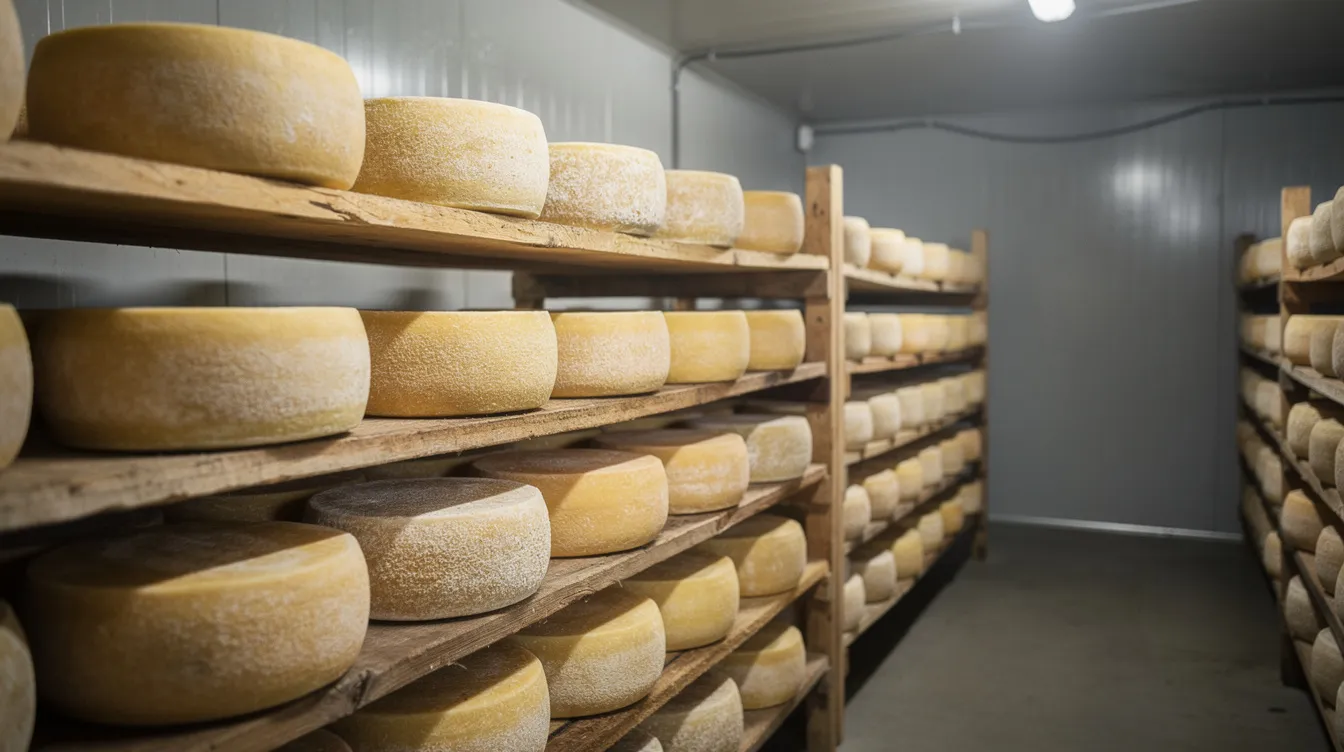
- Ripening rooms and cold storage with insulation and hygienic flooring
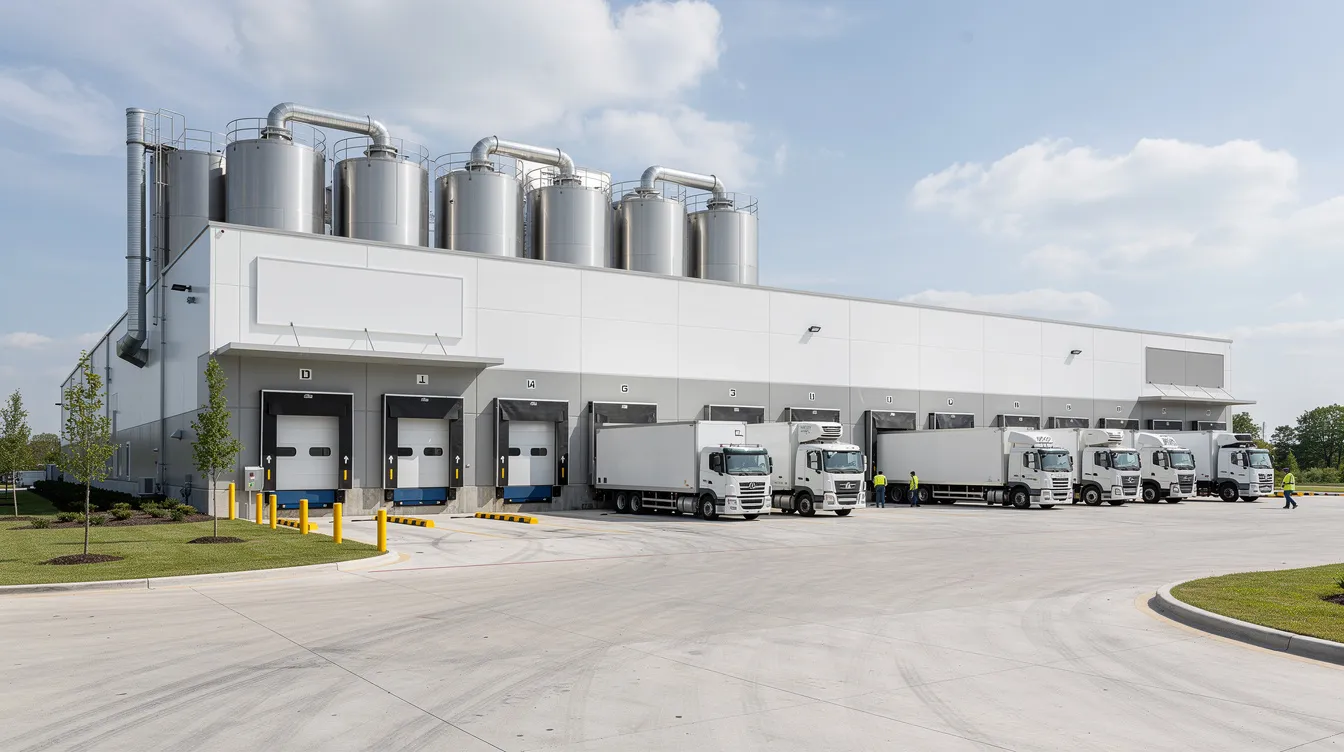
- Packaging area, finished-goods cold room and dispatch loading bay
- Utility block for boiler, refrigeration plant, compressors and electrical panels
- Laboratory and quality-control section
- Administration office, security cabin, staff amenities, changing rooms and washrooms
Infrastructure costs and civil-construction costs vary widely by state and design standard. The DPR should indicate built-up area and prevailing per-sq-ft construction rates.
Plant and Machinery
Machinery costs are the largest portion of capital expenditure in most cheese plants. Specialized food-grade equipment is crucial for cheese processing plants. Key equipment includes:
- Milk reception tanks, weighing systems and plate chillers
- Pasteurisers, standardisation tanks and cream separators
- Cheese vats, coagulation and cutting equipment, curd handling and whey separation
- Moulding, pressing, brining, cheddaring, stretching (for a mozzarella cheese manufacturing plant) and associated conveyors
- Cutting, slicing, shredding and grating equipment
- Primary and secondary packaging lines
Full detail of cheese plant machinery and equipment cost is covered separately. Quotations from reputed suppliers, with clear scope of supply and exclusion lists, are essential attachments to the DPR for bank appraisal. The machinery and technology requirements must be clearly documented.
Utilities and Support Infrastructure
Utility requirements are essential for plant operations. This sub-section covers:
- Refrigeration system: compressors, condensers, evaporators, glycol/brine circuits and cold-room panels
- Steam generation: boiler and accessories for pasteurisation and CIP
- Electrical infrastructure: HT/LT line, transformer, panels, cabling, DG set for backup
- Air compressors, water-treatment plant, pumps, pipelines and CIP systems
- Effluent treatment plant sized for whey and wash-water
High electricity and water consumption are significant costs in cheese processing operations. Utility costs often account for 15–25% of total plant-and-machinery cost but are critical for uninterrupted, compliant cheese production.
Preliminary and Pre-Operative Expenses
These are non-tangible expenditures incurred before commercial production starts:
- DPR preparation, financial consultancy, architecture and engineering design fees
- Statutory approvals, registration charges, legal and professional fees
- Interest during construction (IDC) on term loans and processing fees
- Trial-run expenses, test batches, marketing launch expenses
- Recruitment, training and initial establishment costs – addressing human resource requirements early
Banks expect realistic estimates of IDC and pre-operative expenses, especially when implementation exceeds 9–12 months.
Contingency Provision
Contingency is normally kept at 3–5% of total hard costs to cover price escalation in steel, cement, imported machinery and exchange-rate movements, plus minor design changes and unforeseen statutory requirements. Banks may question a contingency that is unrealistically high or suspiciously low.
Margin Money for Working Capital
Margin money is the promoter’s contribution towards working capital requirements during initial operations and is treated as part of the total cheese plant project cost. Working capital covers stocks of raw milk, ingredients, packing materials, wages, utilities and receivables. Banks finance a portion through cash-credit limits; the balance must come as margin from the borrower.
Fixed Capital Versus Working Capital
Fixed capital (CAPEX) covers one-time investments in land, building, machinery and utilities. Working capital covers recurring funds needed to operate the plant daily.
| Parameter | Fixed Capital | Working Capital |
|---|---|---|
| Meaning | One-time investment in permanent assets | Funds for day-to-day operations |
| Examples | Pasteuriser, building, cold room | Milk stock, finished cheese, receivables |
| Finance Source | Term loan + promoter equity | Cash credit + promoter margin |
| Repayment | Long-term instalments (5–10 years) | Revolving facility, renewed annually |
| Typical Promoter Margin | 15–25% of fixed capital | 20–25% of assessed working capital |
A plant may be fully erected but fail commercially if there is no adequate working capital to buy milk, process it and hold inventory – especially for ripened cheeses. Banks often require a separate working capital assessment even after sanctioning the term loan for fixed assets.
Working Capital Requirement of a Cheese Plant
The working capital cycle runs from procuring raw milk to collecting payment from distributors. For cheese, this cycle is longer than for liquid milk because cheese is a perishable product that requires continuous refrigeration and, for aged varieties, months of holding before sale. Cheese production requires continuous raw milk supplies, microbial cultures, rennet, and salt.
Main components of working capital:
- Raw milk procurement – often paid daily or weekly; raw milk prices fluctuate based on seasonal availability and local market supply, and raw materials account for 70–80% of operating expenses
- Other raw material requirements: cultures, rennet, emulsifying salts for processed cheese, salt, additives
- Packaging materials: film, laminates, cartons, labels, corrugated boxes
- Consumables: cleaning chemicals, lubricants, laboratory reagents
- Salaries, wages and manpower requirements for production, QA, maintenance and sales staff
- Power, fuel, water, steam and refrigeration – operating costs for cheese plants are driven by raw materials, mainly milk, but utility costs also form a significant share
- Finished-goods inventory in cold storage
- Ripening inventory for cheddar and other aged cheeses, which may tie up cash for 2–6 months – the operational costs for cheese production are tied up in aging inventory before generating revenue
- Trade receivables: credit given to distributors and institutional buyers
- Minimum cash and bank balance
Supplier credit (e.g., 7–15 days on milk, 30 days on packing materials) reduces net working capital, while customer credit increases it. In one documented example of a 12 MT/day processed cheese plant, one month’s working capital alone was approximately ₹10.63 crore – over 50% of total project cost.
Means of Finance for a Cheese Manufacturing Project
Once total project cost is estimated, the next step is structuring project funding through a balanced mix of equity and debt. Traditional bank loans are a common financing option for cheese production facilities, and commercial term loans are typically part of the funding structure for cheese processing projects.
Common means of finance for a cheese factory project:
- Promoter’s capital or equity contribution
- Unsecured loans from promoters, friends and family (subject to lender policy)
- Bank or financial-institution term loan for fixed assets
- Working capital cash-credit limit and working capital demand loan
- Specific machinery-finance schemes from banks or NBFCs
- Eligible subsidies, capital incentives or interest-subvention schemes
- Equity from a strategic investor in larger projects
- Internal accruals in the case of an existing dairy product company diversifying into cheese
| Source | Illustrative Share |
|---|---|
| Promoter Contribution (Equity + Margin) | 20–25% |
| Bank Term Loan | 55–65% |
| Subsidy / Capital Assistance (if eligible) | 5–15% |
| Other Sources (if any) | As applicable |
| Total Means of Finance | = Total Project Cost |
Banks carefully examine whether unsecured loans are genuinely long-term and subordinated to bank finance before treating them as quasi-equity.
Promoter Contribution and Debt-Equity Ratio
Promoter contribution is the money the promoter brings from own funds and acceptable long-term sources.
- Banks insist on adequate margin to ensure serious commitment and cushion against risk factors.
- Land already owned by the promoter, if unencumbered and properly valued, may be counted as part of contribution, subject to lender’s policy.
- Equity capital and unsecured loans from promoters are treated differently; banks verify source, trail and KYC.
- Contribution should come through transparent banking channels.
The debt-equity ratio measures borrowed funds relative to owner’s funds. Acceptable ratios differ between schemes and institutions – typical illustrations range from 1.5:1 to 2:1, but there is no universal rule. Excessively high debt raises interest burden and may weaken the DSCR, making bank sanction difficult. Under AHIDF, MSMEs may need promoter equity of 10–15%, while larger enterprises may need 20–25%.
Term Loan for Cheese Plant Fixed Assets
A term loan is a medium- to long-term facility used to finance fixed assets, repayable in instalments over several years. Assets typically financed include civil construction, plant and machinery, refrigeration and cold-storage systems, electrical installation, boiler, compressors, laboratory instruments and eligible vehicles.
Key features:
- Loan tenure: 5–9 years including moratorium, depending on lender and project economics
- Moratorium period on principal during construction and initial stabilisation (often 1–2 years)
- Repayment schedule (quarterly or monthly) aligned with projected DSCR – most banks require DSCR of at least 1.25, with 1.50 preferred for larger projects
- Interest rate linked to external benchmark; interest during construction capitalised as part of project cost
- Primary security: hypothecation/mortgage of factory land, building and machinery
- Additional collateral, personal or corporate guarantees often required
- Conditions precedent: margin contribution, approvals, documentation
Each lender sets its own sanction terms. Entrepreneurs must verify current requirements directly with the lending institution.
Working Capital Finance for Cheese Manufacturing
Working capital facilities allow the plant to finance day-to-day operations and manage the time gap between paying for milk and collecting from customers.
- Cash-credit (CC) limit against current assets such as stock and receivables
- Working Capital Demand Loan (WCDL) for seasonal peaks in milk procurement
- Export packing credit or bill-discounting facilities if the plant exports cheese
Key assessment concepts: inventory norms for raw materials and finished goods, receivable days based on actual trade terms, creditor days that reduce net requirement, and Drawing Power calculated from monthly stock and debtor statements after applying bank-specified margins. A cheese plant’s CC limit must account for additional ripening inventory and cold-storage stock, particularly for cheddar and other aged cheeses.
Subsidies and Government Support for Cheese Projects
Government bodies often offer grants and subsidized loans for value-added dairy processing projects. Cheese production can benefit from various public funding schemes aimed at agricultural development. Several dairy processing plant financing schemes may be relevant:
- Capital subsidy or grant on eligible plant and machinery under central or state schemes
- Interest-subvention on term loans – the DIDF scheme offers about 2.5% interest subvention, while AHIDF offers approximately 3%
- Subsidies for cold-chain, refrigeration and energy-efficient equipment
- MSME loan for cheese manufacturing unit – MSME-focused incentives like reimbursement of quality-certification costs or electricity-duty exemption
- State-level incentives for units in designated industrial or backward areas
Important cautions:
- Do not assume any cheese manufacturing project subsidy until eligibility is verified with the concerned authority
- Some schemes require prior approval before placing orders or starting construction; violating this may disqualify the project
- Subsidy should be treated conservatively in the means-of-finance statement
- Promoters must always verify latest scheme details on official government portals
In practice, the DPR should show the project as fully viable even without subsidy, treating it as an additional safety cushion rather than the main pillar of financial viability.
Illustrative Project Cost and Means of Finance (Example)
Consider a hypothetical 5,000 LPD cheese plant producing a mix of mozzarella, processed cheese and basic cheddar with moderate automation. The proposed cheese plant has an annual production capacity of 5,000–10,000 MT depending on product mix and shifts. These figures are for illustration only, not a quotation.
Table 1: Project Cost
| Cost Head | Amount (₹ Lakh) |
|---|---|
| Land and Site Development | 85 |
| Building and Civil Works | 195 |
| Plant and Machinery | 310 |
| Utilities and Refrigeration | 95 |
| Laboratory and QC Equipment | 18 |
| Furniture, Office Equipment, Vehicles | 22 |
| Preliminary and Pre-Operative Expenses | 45 |
| Contingency (approx. 4%) | 30 |
| Margin Money for Working Capital | 100 |
| Total Project Cost | ₹900 Lakh (₹9.00 Crore) |
Table 2: Means of Finance
| Source | Amount (₹ Lakh) | Share (%) |
|---|---|---|
| Promoter Contribution | 225 | 25% |
| Bank Term Loan | 585 | 65% |
| Eligible Subsidy / Capital Assistance | 90 | 10% |
| Total Means of Finance | ₹900 Lakh | 100% |
The total cost and total means of finance match exactly at ₹9.00 crore. The illustrative debt-equity ratio here works out to approximately 2.6:1, and the bank would verify that projected DSCR remains above 1.25–1.50 across the loan tenure before sanctioning.
Financial Projections Required by Banks
Along with the cheese plant DPR, banks insist on detailed financial projections and CMA data (cheese factory CMA data in bank-prescribed format) to evaluate long-term viability. Financial projections include capital investment and operating costs analysis. Gross profit margins for cheese manufacturing typically range between 30–40% at stabilised capacity.
Key statements and analyses to prepare:
- Projected profit and loss account for 7–10 years, including income and expenditure projections and profit projections
- Projected balance sheet over loan tenure
- Cash-flow and fund-flow statements
- Working capital assessment and seasonality analysis
- Break-even analysis showing capacity utilisation required to cover fixed costs
- DSCR calculation – banks typically expect 1.25–1.50 or higher
- Interest-coverage ratio, current ratio and projected debt-equity ratio
- Internal Rate of Return (IRR), net present value and payback period
- Sensitivity analysis for changes in milk price, selling price, capacity utilisation and interest rate – market price fluctuations can significantly impact the profitability of cheese production
- Term-loan repayment schedule with interest and principal for each instalment
Assumptions must align with realistic phased capacity utilisation (e.g., 50–60% in year 1, 70% in year 2, 80–85% in stabilised years) and market-based selling prices. Operating costs increase significantly by the fifth year of operations as volumes scale up. A Chartered Accountant can assist in preparing, stress-testing and presenting these projections and CMA data – but does not “certify” future performance. The profitability analysis, financial analysis and economic analysis must be consistent and credible.
Documents Required for Cheese Plant Project Finance
A practical checklist for entrepreneurs approaching banks for a cheese manufacturing plant bank loan. Dairy processing is heavily regulated, so key regulatory procedures and approvals must be addressed upfront. Quality assurance is critical in cheese manufacturing setup, and dairy processing operations incur substantial ongoing costs for quality control and compliance testing.
- Promoter KYC: PAN, Aadhaar, photographs and address proofs
- Constitution documents: partnership deed, LLP agreement, MOA/AOA, Udyam registration
- Last 3 years’ audited financial statements and income-tax returns
- Bank statements (6–12 months) for all major accounts
- Net-worth statement and asset-liability details of promoters
- Land documents: title deeds, sale deeds, lease agreements, NA conversion orders
- Building layout plans, civil estimates and statutory approvals
- Machinery quotations and proforma invoices including utility equipment
- Technical write-up on manufacturing process, product mix, plant capacity and target markets
- Milk procurement plan covering source area, pricing mechanism and procurement model
- FSSAI registration, GST, pollution clearance and other key certifications
- Detailed project report and CMA data in bank-prescribed format
- Details of existing loans, security offered and repayment track record
- Collateral property documents
- Promoter experience profile and management team background
Well-organised documentation speeds up appraisal and enhances the credibility of the proposal.
Common Mistakes in Estimating Cheese Plant Project Cost
Many proposals get delayed or revised because of basic costing mistakes:
- Treating the machinery quotation as total cost and ignoring land, building, utilities and pre-operative expenses
- Leaving out freight, customs duty, GST, unloading, installation and electrification costs
- Underestimating cold-storage, insulation and ripening-room infrastructure requirements for aged cheeses
- Ignoring whey-handling and effluent-treatment costs
- Providing insufficient working capital for raw milk and long ripening inventory
- Assuming unrealistically high capacity utilisation in the first year – a common cause of DSCR failure
- Over-optimistic selling prices without considering competitive landscape and distributor margins
- Treating unconfirmed subsidy as guaranteed income or promoter margin
- Not matching the cheese project loan repayment structure with cash-flow projections
- Changing plant capacity or product mix after loan appraisal without revising the DPR
I strongly encourage promoters to get the project report reviewed by an experienced professional before submitting it to the bank.
How a Bankable Cheese Plant DPR Helps Promoters and Lenders
A “bankable” DPR is one that is technically sound, financially viable and presented in a language that lenders understand. It provides a complete roadmap from project planning through commissioning to repayment. It brings together:
- Technical capacity, product mix, various unit operations involved and key machinery specifications
- Capital-expenditure estimates including civil, machinery, utilities and contingency – covering both direct and indirect costs
- Raw-material and milk-procurement strategy, including buffalo milk sourcing if relevant
- Operating-cost build-up, expected ROI and realistic selling-price assumptions based on comprehensive market overview and price trends
- Working capital needs and proposed banking facilities
- Detailed means-of-finance structure with promoter contribution and term loan
- Profitability analysis, DSCR, IRR, break-even point, net present value and repayment capacity
- Risk analysis and sensitivity to key variables like milk price and sales volume, covering risk factors and various feedstocks
For integrated dairies planning cheese along with other products, an integrated dairy processing plant project report can capture the combined economics and shared utilities.
CA Manish Gugliya, through ProjectReportBank, prepares customised cheese plant DPRs and CMA data tailored to capacity, location, product profile and bank requirements – without guaranteeing loan sanction. The reports provide detailed insights, micro level information and regional breakup aligned to real market segmentation, industry trends and competitive landscape within the cheese market and broader dairy industry.
Frequently Asked Questions on Cheese Plant Project Cost & Finance
These concise answers cover practical gaps that promoters usually ask.
What is the approximate cost of setting up a small cheese manufacturing plant in India?
- A basic 2,000–3,000 LPD plant with mixed cheese types may typically need a total cost of around ₹3.5–₹6 crore.
- This assumes owned or moderately priced land, standard construction and mid-level automation.
- Costs change with imported machinery, high-spec buildings or expensive locations. Always obtain current quotations and prepare a customised project report.
Is machinery cost the same as total cheese plant project cost?
Machinery cost usually represents only 40–60% of the total cheese plant capital cost once land, building, utilities, pre-operative expenses, contingency and margin money for working capital are included. Banks evaluate the complete project cost – not machinery invoices alone – when deciding term-loan eligibility.
How much promoter contribution is generally required for a cheese plant?
Expectations differ between schemes and banks. As a broad indication, lenders typically expect 15–25% of total project cost from the promoter’s own funds. Under specific MSME schemes like AHIDF, the margin requirement may be as low as 10% for eligible borrowers. The key success factor is demonstrating both adequate margin and healthy DSCR.
Does ripened cheese require more working capital than fresh or processed cheese?
Yes. Ripened products like cheddar or gouda must be stored for several weeks or months before sale, tying up funds in inventory for a longer period. This increases both cold-storage infrastructure costs and working capital requirements compared with a plant focused on fresh or processed cheese with faster turnover.
What financial ratios are examined by banks for a cheese plant loan?
Banks primarily examine DSCR (minimum 1.25–1.50), debt-equity ratio, current ratio, interest-coverage ratio, internal rate of return and break-even capacity utilisation. Sensitivity analysis under scenarios like a 10–20% drop in sales or increase in milk prices is also standard. The cheese market performed strongly in recent years, but lenders still stress-test projections before sanctioning.
Conclusion: Choosing the Right Cost and Finance Structure for Your Cheese Plant
An accurate estimate of cheese plant project cost and a balanced means-of-finance plan are essential foundations for a viable cheese manufacturing business. The total cost will depend on plant capacity, cheese variety, level of automation, location, milk-procurement strategy, transportation requirements, business requirements and ripening period.
A well-designed mix of promoter contribution, term loan, working capital limits and eligible incentives – supported by a realistic bankable cheese plant project report and CMA data – improves the project’s chances of timely commissioning and sustainable repayment. The cheese industry and the global cheese market continue to grow, offering strong investment opportunities for well-planned projects.
If you are planning a cheese manufacturing plant, cheddar cheese manufacturing plant or processed cheese manufacturing plant in India, I invite you to reach out through www.projectreportbank.com for customised project reports, financial projections, CMA data and bank-loan presentation support.