
Sanctioning a term loan for a luxury hotel is not simply about evaluating the building or the land beneath it. Banks treat a luxury hotel proposal as a project finance exercise-testing whether the property can generate enough cash flow to service debt comfortably over its lifetime. In my experience as a practising Chartered Accountant, I have seen proposals with impressive architectural plans face objections because the underlying financial model did not hold up under scrutiny. This article explains, step by step, what banks actually examine when they appraise a 4-star or 5-star hotel term loan proposal in India.
Key Takeaways
- Luxury hotel term loan assessment focuses on project viability and sustainable cash flow, not just property value or collateral. Banks test occupancy, ARR and DSCR before sanctioning a bank loan for a luxury hotel.
- Lenders evaluate promoter profile, market demand, realistic project cost, means of finance, financial projections and security together as one integrated appraisal, especially for 4-star and 5-star hotel project finance.
- A strong luxury hotel DPR for bank loan, backed by practical assumptions, a detailed revenue model and DSCR analysis, significantly improves comfort for sanctioning a luxury hotel term loan.
- Banks perform sensitivity checks on occupancy, ARR and project delays to see how cash flow and DSCR for a luxury hotel project behave under stress before finalising the loan amount and repayment schedule.
- In my experience, realistic numbers and transparent explanations generally build more trust than aggressive financial projections or overstated valuations in luxury hotel loan appraisal.
Explore Luxury / 4-Star & 5-Star Hotel Project Report Guides
Explore our complete Luxury, 4-Star and 5-Star Hotel Project Report and DPR guides covering setup cost, equipment, project cost, revenue, financial projections, occupancy, feasibility, project finance and bank loan assessment.
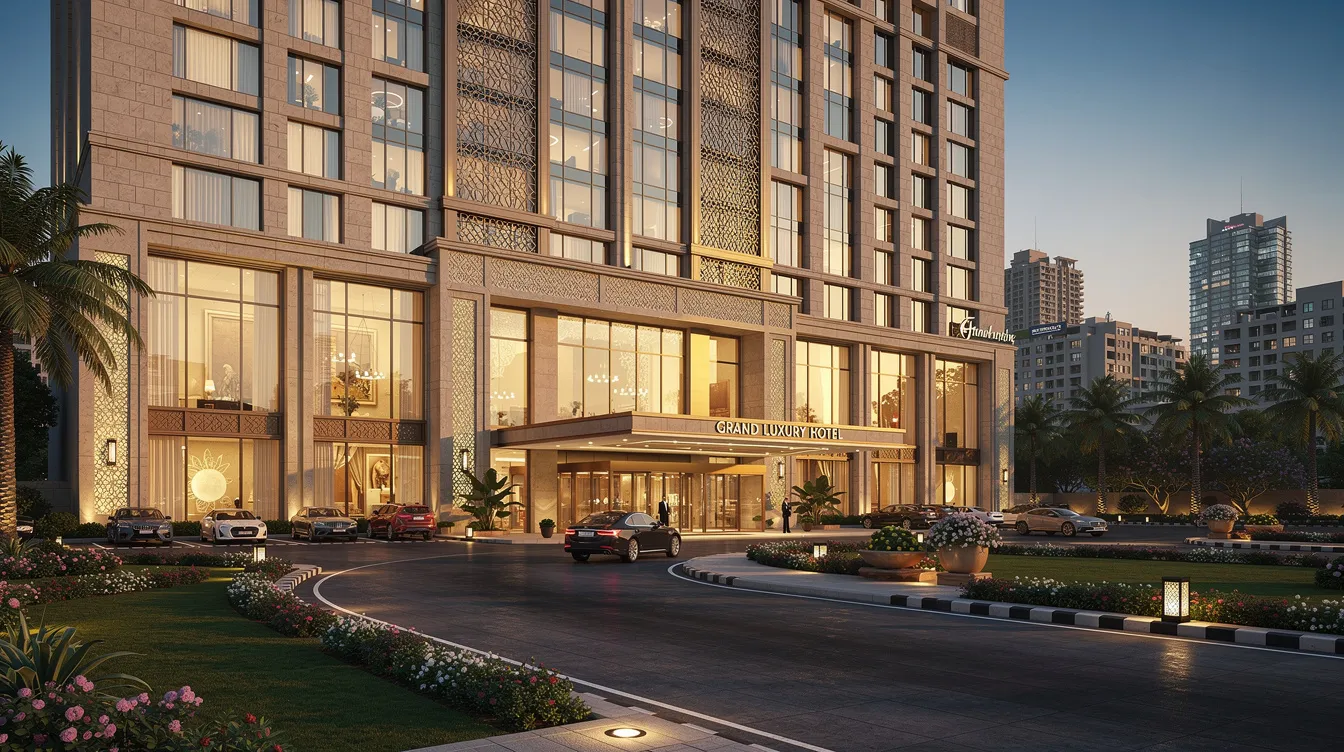
What Is Luxury Hotel Term Loan Assessment?
Luxury hotel term loan assessment is the bank’s structured credit appraisal of a proposed 4-star or 5-star hotel project, where the lender evaluates risk, repayment capacity, and policy compliance-not merely collateral value. It is important to understand the distinct stages involved:
- Preparing a loan proposal and assembling basic documents (application, KYC, financials).
- Preparing a detailed project report (DPR) or feasibility study that presents the hotel concept, market, cost, revenue and financial projections.
- Bank’s internal credit appraisal, where the credit team recasts numbers, conducts site visits and may commission an external TEV (techno-economic viability) review.
- Sanction, documentation and staged disbursement tied to construction milestones.
Submitting a DPR only starts the process. Luxury hotels carry high operating leverage and capital intensity, involve substantial construction and FF&E expenditure, and face occupancy risk during ramp-up. This is why banks typically apply project finance-style analysis rather than standard term loan appraisal norms. The core question for any lender is whether the hotel project can generate sustainable operating cash flow to service the proposed debt comfortably over 8–12 years.
Bank’s Overall Framework for Luxury Hotel Term Loan Assessment
Lenders view a luxury hotel proposal as a chain of linked elements:
Promoter → Project → Market → Cost → Means of Finance → Revenue → Profitability → Cash Flow → DSCR → Security → Risks
- Promoter: Experience, net worth, ability to fund equity and absorb early losses.
- Project: Category, configuration, brand tie-up, design appropriateness.
- Market: Demand depth, competition, seasonality, ARR potential.
- Cost: Completeness of total project cost, supporting quotations, cost per key benchmarking.
- Means of Finance: Debt-equity split, genuineness of promoter contribution.
- Revenue: Occupancy and ARR assumptions, F&B, banquet and ancillary income.
- Profitability & Cash Flow: EBITDA margins, cash accruals under realistic and stressed scenarios.
- DSCR: Year-wise and average debt service coverage ratio.
- Security: Mortgage, hypothecation, guarantees.
- Risks: Delay, cost overrun, demand shortfall.
Evaluating luxury hotel financing requires analyzing specialized hospitality metrics and cash flow predictability. Luxury hospitality requires a specialized underwriting approach due to high operational volatility-asset value or construction quality alone cannot offset weak RevPAR or a sub-par DSCR. Banks align this framework with internal rating models, hospitality sector guidelines and exposure limits for the hotel industry and resort properties.
Promoter Profile, Net Worth and Management Capability
For a capital-intensive hotel project, banks assess both the promoter’s financial stability and the hotel’s operational viability. Promoter strength is often a deciding factor.
Key checks include:
- Business background, 10–15 year track record, experience in the hospitality industry or adjacent sectors, and any existing hotel projects.
- Promoter net worth, liquidity, income tax returns, cash accruals from existing businesses, and capacity to bring promoter contribution and support cost overruns or initial operating losses.
- Credit reports, repayment history, banking conduct, existing borrowings and outstanding guarantees.
- Quality of the professional management team-general manager, finance head, operations head. Management quality can significantly affect credit risk in luxury hotels.
For first-time hotel promoters, banks generally expect either strong financials, an experienced operating partner, or a reputed hotel management or franchise tie-up. Without demonstrated execution capability, even a financially attractive project report may invite scepticism from seasoned bankers.
Location and Market Assessment for a Luxury Hotel Project
Even a beautifully designed 5-star hotel cannot compensate for a weak market. In my experience, lenders spend considerable time understanding location and demand generators. Location analysis is critical for hotel loan repayment capacity, and a data-backed location analysis improves proposal credibility.
Banks examine:
- Corporate clusters, IT and industrial belts, tourist attractions, airports, highway connectivity, convention centres, medical tourism hubs, and wedding or banquet demand within the catchment area. Demand generators include tourist attractions and industrial clusters.
- Benchmark occupancy and ARR against existing and upcoming competing hotels. Lenders analyze market competition by studying local supply pipelines for new luxury developments.
- Seasonality (peak vs lean months), weekday-weekend mix, and how these affect cash flow stability.
- Market analysis validates financial projections with real-world data; without it, projected financials risk being dismissed as assumptions without foundation.
A concise market note in the DPR with actual competitor tariffs and occupancy references strengthens luxury hotel project viability during appraisal. According to HVS-ANAROCK data (April 2026), premium hotels in India reported ARR of ₹10,000–₹10,200 and occupancy of 67–69%. Using such industry benchmarks adds credibility.
Hotel Category, Configuration and Scale (4-Star vs 5-Star)
Banks analyse the proposed category-4-star, 5-star or upscale resort-and whether the positioning is supported by brand tie-up, location and demand depth. Configuration aspects under review include:
- Number of rooms, room mix (standard, deluxe, suites), F&B outlets, specialty restaurants, bar or lounge, spa, gym, swimming pool, banquet halls, meeting rooms, parking, and back-of-house areas.
- Whether room inventory, banquet capacity and F&B scale are aligned with realistic market demand. Oversizing the project relative to local demand can depress occupancy and raise break-even occupancy.
- Brand or franchise arrangements influence both projected ARR and operating costs (management fees, franchise fees), which the bank builds into hotel loan financial appraisal. Luxury hotels can command premium rates if their value is demonstrable through brand, amenities or scarcity.
Project Cost Assessment for Luxury Hotel Term Loan Appraisal
In luxury hotel project finance, banks test whether total project cost is complete, realistic and supported by third-party estimates. Both underestimation and overestimation create later stress-understated costs lead to funding gaps; inflated costs raise questions about diversion.
Major cost heads include:
- Land and land development (land cost and site preparation)
- Civil construction, interior finishes
- MEP systems-HVAC, electrical, plumbing, fire-fighting, lifts
- Kitchen and laundry equipment, IT and security systems
- Furniture, fixtures, FF&E, and OS&E
- Pre-operative expenses, professional fees, approvals
- Contingency, interest during construction, initial working capital
Lenders cross-check key numbers with architect’s BOQ, contractor quotations, and comparable properties (completed hotels in similar locations). Inflated land valuation, missing FF&E, or inadequate provision for pre-operative and IDC are common reasons for bank queries and reworking of the DPR.
For a detailed understanding of major cost heads, promoter margin and funding structure, refer to the guide on Luxury Hotel Project Cost & Means of Finance.
Equipment, Furniture and FF&E Examination
For a 4-star or 5-star property, equipment, furniture and FF&E can form 25–40% of total hard cost. Luxury assets require continuous capital reinvestment to maintain standards, so banks review this schedule carefully.
Key items include guest-room furniture, mattresses, wardrobes, premium bathroom fixtures, HVAC systems, elevators, kitchen and bar equipment, laundry plant, IT backbone, Wi-Fi, PMS, CCTV, access control, fire alarm, and public-area furniture.
Banks look for balance between guest experience and cost discipline. Excessive luxury leading to overcapitalisation or very low FF&E budgets signalling quality compromises both raise concerns. Preparing a banker-friendly fixed-asset schedule with vendor quotes or budgetary offers helps justify the FF&E component. For detailed item-wise lists, refer to the resource on luxury hotel equipment, furniture and FF&E cost.
Means of Finance and Hotel Project Debt–Equity Ratio
Total project cost equals promoter contribution (equity and internal resources) plus the luxury hotel term loan plus any acceptable unsecured loans or quasi-equity. This split is central to hotel project loan appraisal.
- Banks assess genuineness and timing of promoter contribution-own funds, business accruals, documented unsecured loans. Front-loading equity before heavy term loan disbursement builds credit comfort.
- Loan amounts for hotels typically range from ₹10 lakhs to ₹25 crores under various MSME and bank schemes, though larger hospitality projects can attract significantly higher financing. Eligible entities include individuals, firms, and companies. The minimum loan amount is ₹10 lakhs under MSME schemes, and the maximum can reach ₹25 crores. Businesses seeking credit under MSME schemes must register under the UDYAM portal.
- Lenders apply tighter leverage constraints for luxury hospitality than standard real estate. There is no universal debt-equity ratio, but very high leverage typically increases approval hurdles. Interest rates for hotel loans can range from 8% to 18% annually, depending on security, promoter strength and lender type.
- For large 5-star hotel bank loan proposals, banks may stagger disbursements against pre-defined equity infusion milestones and construction stages.
The DPR should clearly show year-wise fund flow during construction so bank officers can see how project finance and equity will meet progressive bills without funding gaps.
Revenue Assumptions and Luxury Hotel Revenue Model
When banks evaluate hotel project loans, they examine how projected revenue is built up from operational drivers rather than accepting a single topline number. Revenue components include rooms, F&B outlets, banquet and conference income, weddings and social events, spa and wellness, laundry, transportation, and other service charges typical for luxury hotels and resort properties.
Room revenue projections depend on occupancy and ARR assumptions. A banker tests room revenue as: Available Rooms × Occupancy % × ARR × 365, and then compares ARR and RevPAR with benchmark hotels in the same hospitality sector and city tier. Conservative, well-researched assumptions carry more weight than aggressive numbers designed only to produce attractive profitability analysis.
Promoters should build their projections using a structured luxury hotel revenue model that separates each income stream with clear drivers.
Occupancy, ARR, RevPAR and Luxury Hotel Break-Even Analysis
For luxury hotel loan appraisal, banks closely examine occupancy ramp-up, ARR trajectory and RevPAR because even a 5–10% deviation can materially affect DSCR. Key definitions:
- Occupancy %: Rooms sold as a percentage of rooms available.
- ADR (Average Daily Rate): The average rental revenue per occupied room.
- RevPAR: Revenue per Available Room, calculated as RevPAR = ADR × Occupancy Rate.
All-India hotel occupancy averaged around 64% in 2025. Financial projections must include realistic occupancy ramp-up patterns-lenders generally expect lower occupancy in the first 1–2 operating years, stabilising by year 3 or 4.
Banks calculate break-even occupancy: the occupancy level at a realistic ARR at which operating profit plus depreciation roughly covers interest and principal instalments. A 10% drop in occupancy or ARR can push DSCR below comfort levels, so banks test these scenarios carefully.
For deeper formulas and worked-out illustrations, refer to the separate guide on occupancy, ARR, RevPAR and break-even analysis for a luxury hotel.
Operating Cost Assessment and Profitability
Understated operating expenses artificially inflate EBITDA and DSCR, so banks scrutinise expense projections carefully. Luxury hotels have high fixed and variable operating costs across:
- Salaries and wages, F&B cost of goods sold, housekeeping and linen
- Utilities (power, fuel, water), maintenance, IT infrastructure
- Franchise and management fees, marketing and OTA commissions
- Licence and compliance costs, insurance, property-related expenses
Lenders compare projected cost ratios with hospitality industry benchmarks for similar hotels. Abnormally low payroll-to-revenue or power-cost ratios are questioned. Banks pay particular attention to stabilised EBITDA margin and how it behaves in low-season months, because this margin ultimately feeds into luxury hotel loan repayment capacity.
Financial Projections and Integrated Statements
For luxury hotel term loan assessment, banks require 7–10 years of financial projections covering construction, ramp-up and full repayment. Integrated financial projections include P&L, cash flow, and DSCR, along with:
- Projected balance sheet, depreciation schedules, working capital estimates
- Term loan amortisation schedule, key ratio analysis
- CMA data where required by the bank
All line items must be internally consistent-occupancy and ARR assumptions should flow into revenue, which drives expenses, EBITDA, cash accruals and DSCR. In my experience, well-structured projections with transparent assumptions invite focused queries instead of fundamental doubts, which speeds up the appraisal process.
For detailed formats and guidance, refer to the resource on financial projections for a luxury hotel DPR.
DSCR and Luxury Hotel Loan Repayment Capacity
The Debt Service Coverage Ratio measures cash flow relative to debt payments. It is the central metric in hotel project loan appraisal:
DSCR = Cash Available for Debt Service ÷ (Interest + Principal)
Banks evaluate both year-wise and average DSCR, paying special attention to the first 3–5 operating years when occupancy is ramping up. A minimum debt service coverage ratio of 1.25 is typically required, and DSCR should typically be between 1.25 and 1.40 for hotels. Luxury lenders often look for a robust DSCR above 1.35x–1.40x. Luxury hotels require a solid cash flow cushion, often demanding a DSCR of 1.40x or higher, reflecting the inherent revenue volatility. Luxury hotels often require adequate liquidity reserves during economic downturns to maintain debt service.
Illustrative Example
The figures below are illustrative only and should not be treated as lending norms or guaranteed outcomes.
Consider a year where a 150-room luxury hotel generates ₹18 crore net cash accrual (PAT + depreciation + interest) against annual debt service (interest + principal) of ₹13 crore:
DSCR = ₹18 Cr ÷ ₹13 Cr = 1.38x → Within acceptable range.
If occupancy drops 10%, cash accrual falls to ₹14.5 crore:
Stressed DSCR = ₹14.5 Cr ÷ ₹13 Cr = 1.12x → Below comfort, raising credit concerns.
Banks also consider qualitative aspects: availability of contingency reserves, promoter’s ability to support temporary shortfalls, and flexibility in repayment structuring.

Repayment Schedule, Tenure and Moratorium Design
In luxury hotel term loan assessment, lenders design the repayment schedule so that instalments align with realistic cash-generation capacity after the commercial operations date. Term loans for hotels can have a repayment period of up to 10 years, and larger projects may extend to 12 years.
Key elements include:
- Construction period, expected COD, principal moratorium during construction and initial ramp-up (typically 1–2 years for large projects)
- Repayment tenure, frequency of instalments, and repayment terms
- Projected cash flows in each year to verify whether planned payments leave adequate cushion
Banks may revise the requested tenure or moratorium if their cash flow analysis shows the initially proposed schedule is too aggressive. A tighter schedule with higher instalments produces stressed DSCR, while a more spread-out schedule with lower instalments preserves healthier margins.
Feasibility, Viability and TEV Perspective
Before relying on projected repayment, banks must satisfy themselves that the luxury hotel project is technically, commercially and financially viable. Feasibility dimensions include:
- Market feasibility: Demand, competition, ARR potential
- Technical feasibility: Design, capacity, services
- Operational feasibility: Staffing, brand tie-up, management capability
- Financial feasibility: NPV, IRR, average DSCR, payback under realistic assumptions
For larger 4-star and 5-star hotel project finance, lenders may rely on internal TEV notes or external consultant reports. A well-prepared luxury hotel feasibility study and project viability analysis, with sensitivity checks, often anticipates the bank’s questions. However, positive feasibility alone does not guarantee sanction; credit policy, exposure limits and promoter profile still influence the final decision.
Security, Collateral and Risk Mitigation
Banks distinguish between primary security (mortgage of hotel land and building, hypothecation of plant and machinery and FF&E) and collateral security (additional properties, guarantees). Collateral can include mortgage of land and building, and personal guarantees may also be required.
Key requirements:
- Collateral security must be at least 25% of exposure in many schemes. Combined primary and collateral securities must equal 100% of the loan amount.
- Banks typically require a loan-to-value ratio of 65% to 75% for standard hotel financing. However, loan-to-value ratios for luxury hotels typically range from 50% to 65%, reflecting the higher risk profile.
- Lenders evaluate the physical condition of the property by assessing deferred maintenance needs and construction quality.
Good collateral strengthens credit comfort but does not convert an unviable project into a bankable one. Cash flow and DSCR remain the primary repayment sources.
Approvals, Construction and Cost-Overrun Risk
Even a financially sound luxury hotel can face stress if approvals are delayed or construction overruns budget. Banks assess:
- Clear land title, zoning and land-use permissions, building plan approval, environmental clearances, fire and safety NOCs, and key hotel operating licences.
- Construction timelines, contractor experience, escalation provisions, and contingency provision in the project cost.
Example: A hypothetical 5-star hotel whose COD is delayed by 12 months faces higher interest during construction (IDC), delayed revenue commencement, and compressed DSCR in early operating years-exactly the scenario banks stress-test.
Lenders expect promoters to demonstrate capacity to bring additional funds in case of cost overrun, often captured in sanction terms. Luxury hotels are sensitive to economic cycles and require special risk assessments during appraisal.
Existing Debt, Overall Leverage and Credit History
For large luxury hotel loan appraisal, banks do not look at the project in isolation. They consider the promoter group’s existing term loans, working capital, guarantees, and long-term obligations. These affect free cash flows, ability to support the new hotel project, and overall leverage.
Lenders review bank statements, credit bureau reports, overdue positions, and restructuring history to evaluate financial discipline and risk rating. Borrowers with NPAs are ineligible for the scheme under most MSME and bank-specific lending programmes. High group-level leverage may not automatically disqualify a project but typically leads to more conservative assumptions, stricter covenants or reduced exposure in financing decisions.
Promoters should proactively disclose all existing facilities and provide a consolidated debt summary in the DPR.
Sensitivity Analysis and Stress Testing of Hotel Cash Flows
Prudent lenders do not base judgement only on the base-case DPR. A hotel’s cash flow can change quickly with occupancy, ADR, seasonality, and competition. Banks test how the project behaves under adverse but plausible scenarios.
| Stress Scenario | Possible Effect | What the Bank Evaluates |
|---|---|---|
| Lower occupancy | Lower room revenue | Debt servicing ability and DSCR |
| Lower ARR | Reduced RevPAR | Cash flow and break-even shift |
| Cost overrun | Higher funding requirement | Promoter’s ability to fund shortfall |
| Project delay | Delayed revenue, higher IDC | Moratorium adequacy, repayment pressure |
| Higher operating expenses | Lower EBITDA | Repayment capacity and margin erosion |
| Higher interest cost | Increased debt service | DSCR and cash availability |
Promoters should include at least 2–3 such sensitivity cases in their DPR so the credit officer sees that risks have been realistically acknowledged.
Why Luxury Hotel Loan Proposals Get Delayed or Rejected
Most luxury hotel loan proposals face difficulty not due to one ratio but due to a combination of weaknesses. Common reasons include:
- Unrealistic occupancy and ARR assumptions for that micro-market
- Incomplete or inflated project cost, inadequate promoter contribution
- Weak DSCR profile across early operating years
- Inconsistencies between DPR and application forms, missing quotations
- Unsupported land valuations and lack of clarity on group exposure
- Gaps in statutory approvals or unclear implementation schedule
Lenders may sometimes consider a reduced loan amount, increased equity or revised configuration instead of outright rejection if the underlying business plan remains broadly viable. Getting the DPR professionally reviewed before submission helps identify these issues early.
How to Strengthen a Luxury Hotel Term Loan Proposal
From a bank-appraisal perspective, building a strong proposal is about credibility, internal consistency and realistic buffers:
- Prepare realistic project costing with supporting quotations and benchmark against comparable properties.
- Base occupancy and ARR on market data rather than aspirations. Use industry benchmarks from agencies like ICRA and CARE Ratings.
- Provide clear evidence of promoter contribution, liquidity and financial strength.
- Include structured financial projections with clear assumptions, detailed DSCR analysis, break-even analysis and downside scenarios.
- Finalise brand or franchise arrangements, key management roles and implementation schedule before approaching the bank.
- Engage experienced professionals for DPR preparation, especially for first-time or large 5-star hotel project finance proposals.
Role of DPR in Luxury Hotel Loan Appraisal
A detailed project report is crucial for loan approval. It is the primary document through which the promoter communicates the entire hotel concept, numbers and risk-mitigation plan to the bank.
Core components of a strong DPR:
- Promoter profile, project concept and category
- Location and market study with competitor data
- Detailed project cost, means of finance, implementation schedule
- Revenue assumptions, operating-cost build-up
- Integrated financial projections, DSCR analysis, break-even, sensitivity analysis
- Proposed security and risk mitigation
A DPR should avoid best-case-only projections. During term loan appraisal, banks often recast DPR numbers with their own conservative assumptions; a transparent project report makes this process easier and builds trust.
For more detailed guidance on bank loan and project finance for a luxury hotel, explore ProjectReportBank’s dedicated resources.
Practical Banker’s Checklist for Luxury Hotel Term Loan Assessment
| Area | What Bank Examines | Key Concern |
|---|---|---|
| Promoter | Experience, net worth, credit history | Execution capability |
| Location | Demand, competition, connectivity | Revenue potential |
| Project Cost | Reasonableness, quotations, cost per key | Over or under-estimation |
| Promoter Contribution | Source, availability, timing | Financial commitment |
| Revenue | Occupancy, ARR, F&B, banquet | Assumption credibility |
| Profitability | EBITDA and operating margins | Sustainable operations |
| Cash Flow | Cash generation, working capital | Debt servicing |
| DSCR | Year-wise and average coverage | Loan repayment capacity |
| Security | Mortgage, hypothecation, guarantees | Credit protection |
| Implementation | Timeline, approvals, contractor | Delay and cost-overrun risk |
| Approvals & Title | Land title, building and fire NOCs | Legal and regulatory clarity |
| Sensitivity | Stress-tested occupancy, ARR, costs | Risk preparedness |
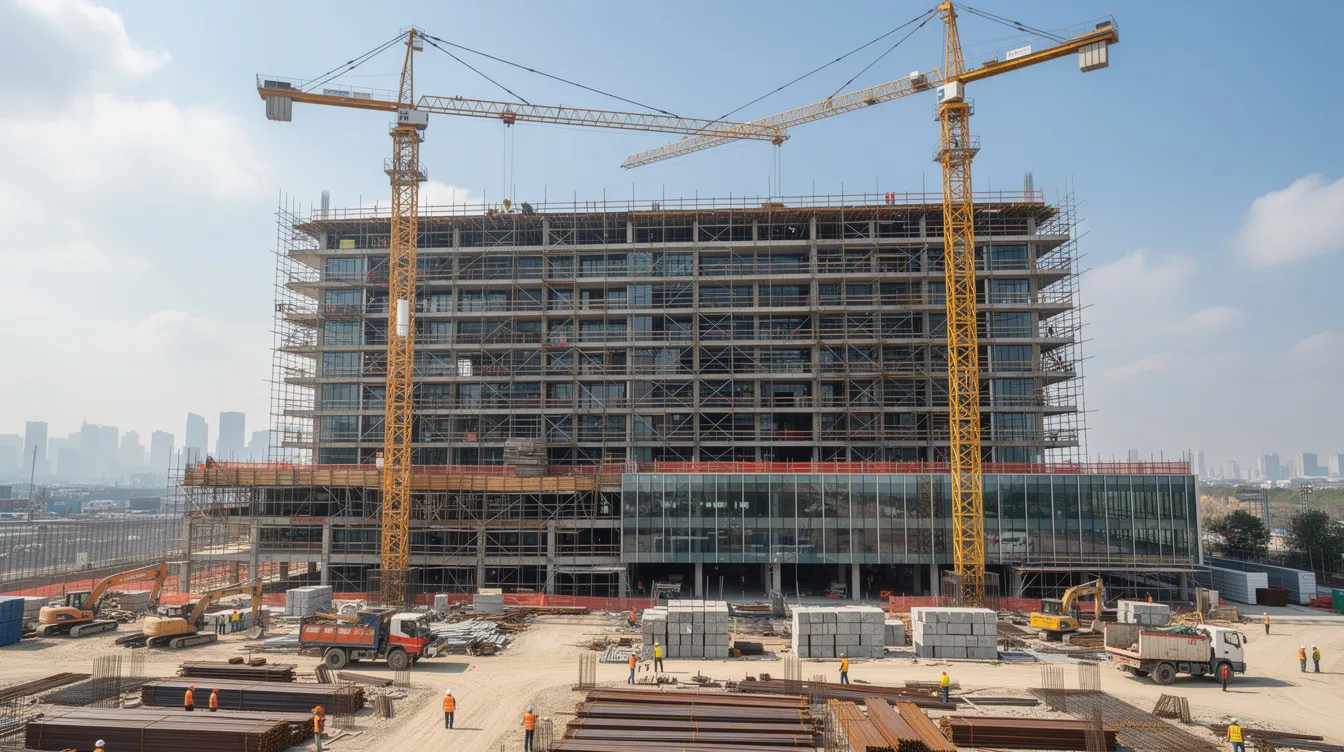
Illustrative Example: Appraisal of a 5-Star Hotel Term Loan Proposal
The figures below are illustrative only and should not be treated as lending norms or guaranteed financial outcomes.
Project: 150-room 5-star city hotel in a Tier-I metro in India.
| Parameter | Value |
|---|---|
| Total project cost | ₹300 crore |
| Promoter contribution (35%) | ₹105 crore |
| Proposed term loan (65%) | ₹195 crore |
| Occupancy Year 1 / Year 3 / Year 5 | 50% / 65% / 72% |
| Illustrative ARR | ₹9,500 per room night |
| Stabilised F&B + banquet (as % of room revenue) | ~45% |
| Repayment tenure | 10 years post moratorium |
Year 4 snapshot (stabilising operations):
- Room revenue: 150 rooms × 65% × ₹9,500 × 365 = ₹33.8 crore
- Total revenue (rooms + F&B + banquet + ancillary income): ~₹49 crore
- EBITDA (~32%): ~₹15.7 crore
- Cash accrual (PAT + depreciation + interest): ~₹19 crore
- Annual debt service (interest + principal): ~₹14 crore
- DSCR: ~1.36x
Stress case (occupancy 10% lower): Revenue drops, EBITDA contracts, DSCR falls to ~1.10x-below comfortable levels.
What gives comfort to a banker: adequate promoter contribution, realistic ARR benchmarked to market, conservative ramp-up, and demonstrated ability to fund shortfalls. What triggers conditions: thin DSCR in early years, aggressive ARR relative to competitors, or unclear promoter equity deployment.
Preparing a Bankable Luxury Hotel Term Loan Proposal
Banks assess luxury hotel term loans as an interconnected financial model:
Promoter Strength + Market Demand + Realistic Project Cost + Balanced Means of Finance + Credible Occupancy & ARR + Sustainable EBITDA + Cash Flow & DSCR + Adequate Security + Sensible Risk Mitigation = Stronger Bankability
In my experience as CA Manish Gugliya, conservative and well-explained assumptions paired with a professionally structured DPR make it easier for credit teams to understand the proposal. However, sanction always remains subject to the lender’s independent appraisal, credit policy and approval process.
I encourage readers to review the linked resources on project cost, revenue model, occupancy metrics, financial projections and feasibility to refine your own preparation.
If you are planning a Luxury, 4-Star or 5-Star Hotel Project and need professional assistance with your Detailed Project Report, financial projections or bank finance proposal, connect with ProjectReportBank.com.
Perspective shared by CA Manish Gugliya, FCA, DISA (ICAI), practising Chartered Accountant with experience in project reports, financial projections, project finance and hospitality-sector loan proposals.
FAQ – Luxury Hotel Term Loan Assessment
Does a strong brand or management tie-up guarantee approval of a luxury hotel term loan?
While an international or reputed domestic brand often improves marketability, ARR potential and operational credibility, banks still examine overall project viability, promoter strength, cost structure and DSCR. A brand tie-up strengthens the proposal but does not guarantee sanction. The lender’s final decision depends on the complete appraisal, not any single factor.
How do banks look at resort properties compared to business-city luxury hotels?
Resort properties may face different seasonality, demand drivers and occupancy risk. Lenders pay special attention to leisure demand, travel connectivity, length of peak season and how lean months affect debt service. Cash flow analysis for a resort project typically reflects wider month-to-month variance than a city hotel, so banks may apply stricter stress scenarios or expect higher promoter contribution.
Can banks reassess a luxury hotel project if configuration or cost changes mid-appraisal?
Banks can and often do reassess when room inventory, facilities or project cost change during the appraisal process. Minor revisions may need only limited review, but major changes-such as adding a banquet wing or significantly revising the development plan-may require an updated DPR, revised financial projections and fresh term loan appraisal.
Is working capital always appraised together with the luxury hotel term loan?
Many banks evaluate basic working capital needs along with the term loan, but sanction may be through a separate limit or in phases. Promoters should present both capital and working capital requirements coherently in the DPR so the bank can assess total financial needs holistically.
How early should I start preparing my Luxury Hotel DPR for Bank Loan before approaching lenders?
Preparing the DPR, market analysis and financial projections at least a few months before formal application gives time to refine assumptions, arrange promoter contribution, collect quotations, and address structural issues. In my experience, rushing the document often leads to avoidable rework, delays in access to funds, and weakened credibility during the appraisal discussion.
Explore More Luxury / 4-Star & 5-Star Hotel Project Report Guides
Continue exploring our Luxury, 4-Star and 5-Star Hotel DPR guides covering setup cost, equipment, project cost, revenue, financial projections, occupancy, feasibility, project finance and bank loan assessment.