Key Takeaways
- A luxury hotel feasibility study tests market demand, pricing power, project cost, financing structure and risk before you commit crores to land acquisition, construction and interiors. A feasibility study can save investors millions in failed ventures by identifying deal-breakers early.
- Project viability for a 4-star or 5-star hotel in India depends on linking realistic occupancy and ARR/ADR, controlled construction cost, operating profitability, adequate cash flow, comfortable DSCR and acceptable investor returns – not just tourism growth or competitor tariffs.
- Feasibility must be completed before major irreversible commitments such as land purchase, architectural design freeze or brand tie-up. Optimistic assumptions on occupancy rates or room rates can make an otherwise unviable proposed project look attractive on paper.
- From my Chartered Accountant perspective, feasibility is the bridge between market opportunity and a bankable luxury hotel project report, DPR and project finance proposal.
- This article provides a step-by-step framework for luxury hotel feasibility study in India, covering key ratios like RevPAR, ROI, IRR, NPV, DSCR and payback period, with links to deeper guides on revenue model, occupancy/ARR/RevPAR, project cost & means of finance, equipment/FF&E and financial projections.
Explore Luxury / 4-Star & 5-Star Hotel Project Report Guides
Explore our complete Luxury, 4-Star and 5-Star Hotel Project Report and DPR guides covering setup cost, equipment, project cost, revenue, financial projections, occupancy, feasibility, project finance and bank loan assessment.
Introduction – Why Feasibility Comes Before Hotel Construction
Luxury, 4-star and 5-star hotels in India are among the most capital-intensive real-estate projects an entrepreneur or developer can undertake. Land, civil structure, high-specification interiors, FF&E, MEP and HVAC systems, commercial kitchens, pre opening expenses and 6–12 months of working capital can together cross ₹75–₹150 crore for a 100–150 room hotel project in Tier-1 cities. These are indicative ranges – actual numbers vary significantly by city, category and project scope.
An attractive site on a national highway, near an IT park, or at a tourist destination like Jaipur, Udaipur or Goa does not automatically translate into a financially feasible luxury hotel business. Tourism growth alone is not a feasibility study. A feasibility study evaluates hotel project viability by connecting market demand, location economics, achievable pricing and realistic cost structures into a coherent financial picture.
The fundamental feasibility equation I use in my project-finance work is:
Market Demand + Right Location + Appropriate Positioning + Sustainable Occupancy + Achievable ARR/ADR + Controlled Project Cost + Operating Profitability + Adequate Cash Flow + Sensible Financing = Viable Hotel Project
In my experience while evaluating project reports, many hotel proposals are built around narratives like “tourism is increasing” or “competitors are charging ₹12,000 per night” without proper feasibility analysis. Luxury hotel projects require rigorous feasibility studies due to high capital expenditure – and this analysis should precede land finalisation, architectural design and brand tie-up, because findings may require changing category from 5-star to 4-star, adjusting room count, scaling back facilities, or even reconsidering the proposed project entirely.
What Is a Luxury Hotel Feasibility Study?
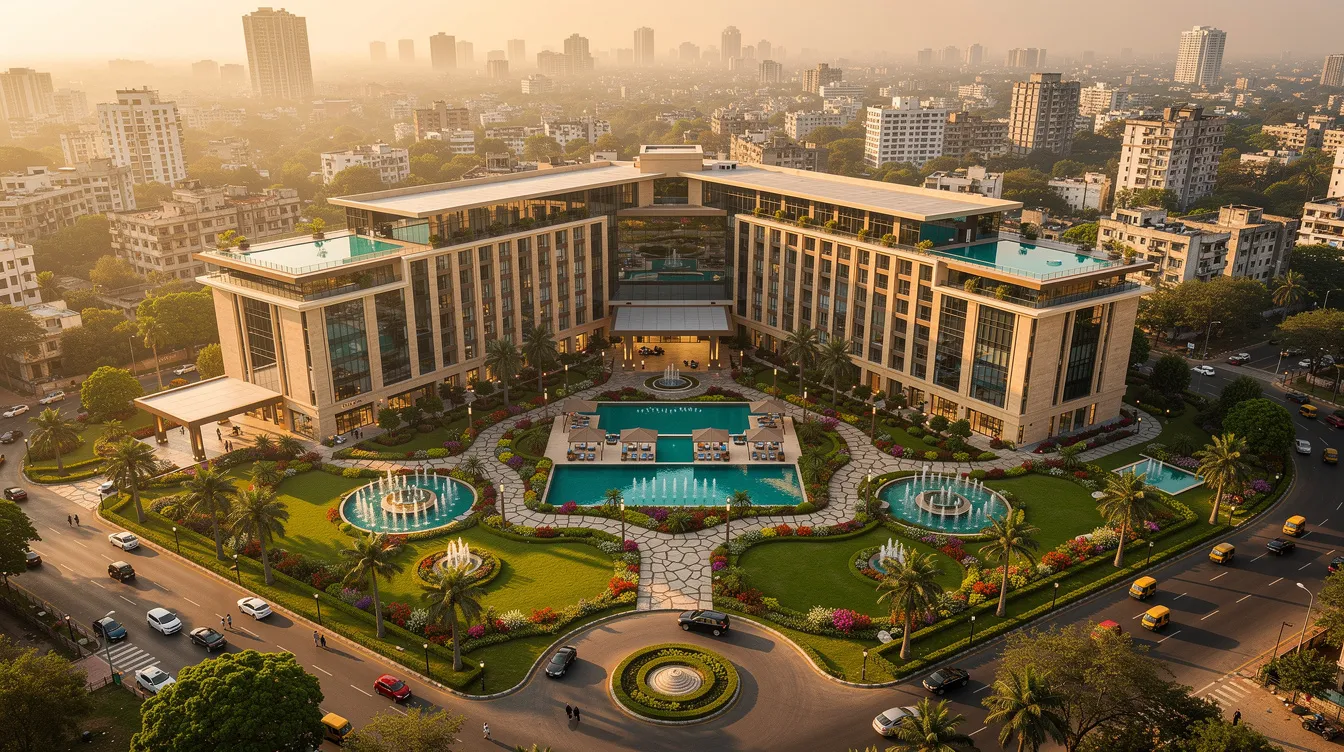
A luxury hotel feasibility study is a structured evaluation of whether a proposed 4-star or 5-star hotel can be commercially, operationally and financially viable at a specific location, over a realistic time horizon. A feasibility study for a luxury hotel evaluates market, financial and operational viability – it is not a marketing brochure or a brand presentation.
The typical components include hotel market feasibility study, hotel location feasibility analysis, hotel demand and supply analysis, technical feasibility that assesses construction and operational capabilities, operational feasibility, project-cost feasibility, revenue and pricing feasibility, financial feasibility, financing feasibility, investment-return analysis and risk assessment. Legal feasibility ensures compliance with laws and regulations, including building codes, labor laws and local regulations. Executive summaries in feasibility studies provide overviews of project concepts and market potential.
| Feasibility Component | What It Checks |
|---|---|
| Market Feasibility | Demand segmentation, competitive intensity, market trends |
| Location Feasibility | Access, demand generators, land economics, visibility |
| Technical Feasibility | Construction capability, design compliance, regulatory considerations |
| Financial Feasibility | Profitability, cash flow, Hotel ROI, Hotel IRR, Hotel NPV, Hotel DSCR, payback period |
| Operational Feasibility | Staffing, service standards, hotel operations capability |
| Risk Feasibility | Downside scenarios, market risks, operational risks, contingency plans |
A feasibility study answers “Is this hotel project worth doing?” – while a business plan describes “How will we operate and market the hotel once built?” Lenders and sophisticated investors increasingly expect a structured feasibility report, not just a narrative concept note or a marketing-driven presentation.
Feasibility Study vs DPR vs Business Plan
Promoters often confuse a feasibility study, Detailed Project Report (DPR) and business plan. These documents serve different purposes in a hotel project cycle.
| Feasibility Study | DPR / Luxury Hotel Project Report | Business Plan | |
|---|---|---|---|
| Key Question | Should we undertake this hotel project? | How will it be implemented, financed and operated? | What is the business strategy and operating model? |
| Main Contents | Market analysis, demand-supply, pricing, financial viability | Technical specs, item-wise project cost, means of finance, financial projections, implementation schedule | Market positioning, sales & distribution, branding, organisation |
| Primary User | Promoter, investor, lender (initial stage) | Lender, project team, contractor | Management, investors (post-approval) |
| Stage | Before committing capital | After feasibility confirms viability | During and after project launch |
On ProjectReportBank.com, feasibility acts as the first filter. Once viability is reasonably established, we move to prepare a full luxury hotel DPR and comprehensive report for bank submission.
Step 1 – Define the Proposed Luxury Hotel Concept
Feasibility analysis cannot begin until the basic hotel concept is defined: 4-star vs 5-star, city vs resort, business vs leisure or mixed, independent vs branded, management contract vs franchise vs self-managed.
The key elements to specify include proposed number of rooms (80, 120, 180), room mix (standard, deluxe, suites), restaurants, bar and lounge, banquet halls, lawns for weddings, conference and meeting rooms, spa, pool, gym, kids’ area, business centers, parking and potential retail spaces. Assessment of brand positioning is crucial for aligning luxury hotels with target customer expectations and guest expectations in the chosen segment.
Consider how concept shapes economics: a 5-star hotel with large banquets in Jaipur may rely heavily on weddings and MICE, whereas a 4-star business hotel near Bengaluru’s Outer Ring Road will depend on weekday corporate travelers and IT traffic. “Overbuilding” – adding two large banquet halls and an oversized spa in a location with limited event demand – increases project cost, operating overheads and may depress profit margins.
In my experience, revisiting the proposed concept after preliminary demand analysis, for instance revising a 5-star luxury to a 4-star upscale, often significantly improves hotel project feasibility and bankability.
Step 2 – Location Feasibility Analysis
Location analysis is critical for hotel project success. It goes beyond “prime frontage” or “near tourist spot” – it must connect the site to actual demand generators, accessibility and land economics. Site analysis examines physical characteristics like accessibility and utilities, while site analysis in a luxury hotel feasibility study includes zoning and environmental regulations. Environmental impact assessments evaluate potential ecosystem effects and must be factored into regulatory compliance.
| Location Factor | What to Check for Luxury Hotels |
|---|---|
| City Tier | Metro, Tier-1, Tier-2, Tier-3 – affects demand depth |
| Business Activity | IT parks, SEZs, industrial estates, financial hubs |
| Tourism | Heritage sites, leisure circuits, pilgrimage, key attractions |
| Connectivity | Airport distance, railway, highways, public transportation |
| Neighbourhood | Safety, profile, complementary commercial activity |
| Land Cost | Per-key economics; excessive land price can kill viability |
Location feasibility varies by hotel concept. A 5-star city hotel in Gurugram might prioritise corporate offices and airport access, while a luxury resort in Udaipur would focus on lake views, wedding demand and high-end leisure tourists. The property’s location must align with the target market’s spending habits and travel patterns.
Understanding demand generators is essential in location analysis. Location analysis also helps identify competition within a 5-10 kilometer radius, giving a realistic view of the local market. The “best-looking” plot – a large parcel 30 km from the city with scenic views but weak accessibility – may not be the best location financially for a new hotel.
Step 3 – Hotel Market Demand Analysis
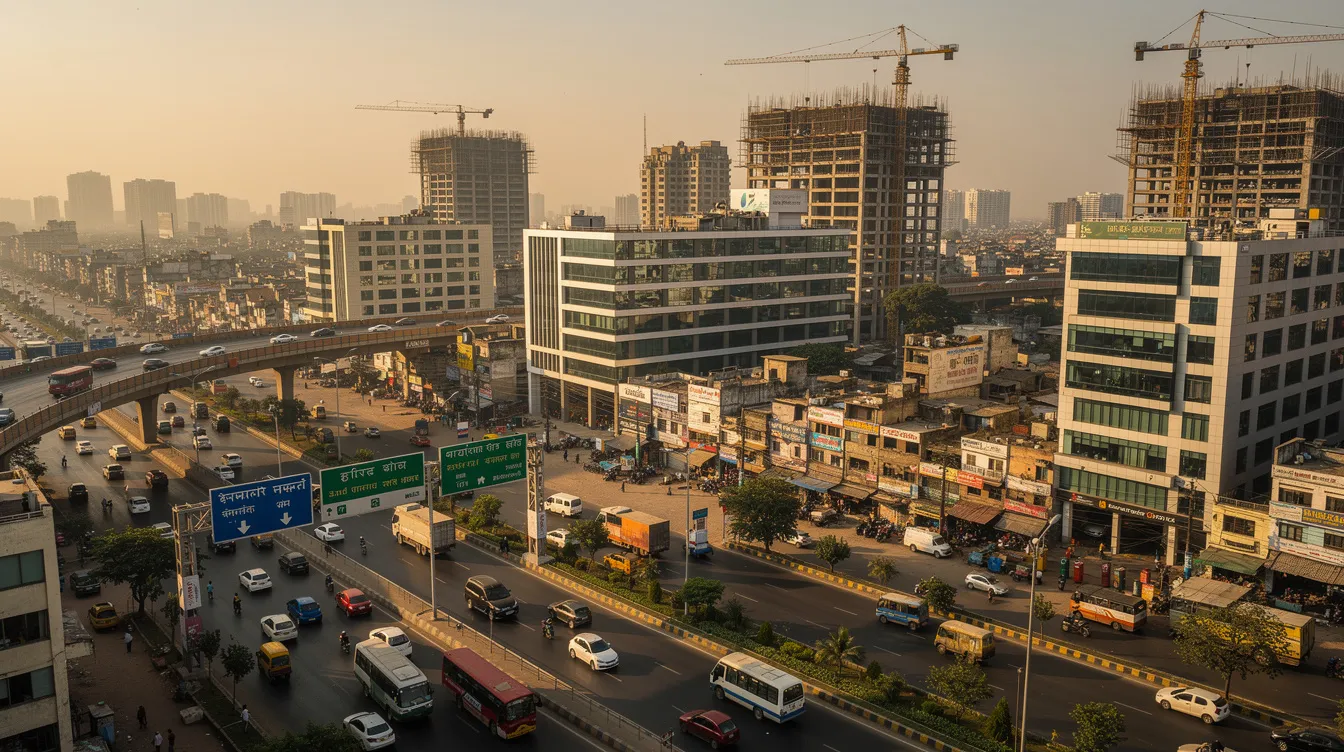
Demand analysis is the core of any hotel market feasibility study. You must understand who will use the proposed hotel, why, at what frequency and at what price point. Demand analysis studies potential customers for hotel services, while market demand analysis assesses macroeconomic indicators and competitor profiles. Market feasibility analysis examines demand and supply dynamics in the catchment.
| Segment | Typical Booking Pattern | Seasonality | Relevance for 4-Star/5-Star |
|---|---|---|---|
| Corporate Travelers | Weekday-heavy, repeat | Stable except holidays | High in metro/Tier-1 business hubs |
| Leisure Tourists | Weekend/holiday peaks | Oct–Mar in most regions | Strong in tourist destinations |
| Destination Weddings | Seasonal blocks | Nov–Feb (North India) | Very high for banquet-heavy hotels |
| MICE/Conferences | Event-driven | Variable | Relevant in convention cities |
| Medical Tourism | Year-round | Low seasonality | Niche, city-specific |
| Airline Crews/Long-Stay | Contractual | Stable | Airport corridor hotels |
Promoters should analyse demand drivers specific to their market research: industrial clusters in Gujarat, IT/ITeS in Bengaluru, financial services in Mumbai, pilgrimage-driven stays in Varanasi or Tirupati. Demand projections must distinguish between one-time event spikes and recurring, sustainable demand. A G20 meeting boosts occupancy temporarily; corporate travel from an IT park generates ongoing revenue.
Step 4 – Competition and Supply Analysis
A comprehensive feasibility study must compare the proposed hotel with its competitive set: hotels of similar star category, positioning, location and target customer. A competitive analysis evaluates direct luxury competitors including their room count and pricing strategies. Supply analysis evaluates existing competition within a 5-10 kilometer radius.
Evaluate competitor hotels on brand, star category, room inventory, location, observed occupancy, ARR/ADR, indicative RevPAR, banquet capacity, F&B positioning, online ratings and service offerings. Understanding local hotel supply helps project occupancy levels and rates for the proposed project.
Critically, hotel development feasibility must account for future supply – under-construction or planned hotels, brand entries announced in the city, and upcoming mixed-use projects. For example, a proposed 5-star in Ahmedabad should assess existing luxury hotels on SG Highway, CBD and airport corridor, current occupancy levels and upcoming branded openings over the next 3–5 years. Underestimating future competition is a common cause of hotel project underperformance.
Step 5 – Determine Appropriate Room Inventory
Deciding whether to build 60, 100, 150 or 200 rooms is a critical feasibility decision. Room count drives project cost, staffing, operating leverage and ability to absorb market demand.
Consider: if a mid-sized Tier-2 city has estimated sustainable demand of 40,000 room nights annually in the target segment, a 100-room hotel (36,500 available room nights) could achieve ~70% occupancy, while a 160-room hotel (58,400 available room nights) might struggle at ~50%. More rooms do not always mean higher profits; beyond a point, additional keys dilute occupancy and require deeper discounts.
Per-key construction cost for 5-star properties in India currently falls in the range of ₹1.5 to ₹2.0 crore excluding land, according to ICRA research. Common-area ratios for luxury hotels are significantly higher than business-class properties. In my project-appraisal work, I often test multiple room-count scenarios in financial models before freezing inventory.
Step 6 – Occupancy Feasibility and Ramp-Up
Occupancy feasibility examines whether projected luxury hotel occupancy rate is realistic given demand analysis, competition, brand strength and sales effort. A comprehensive market analysis includes occupancy and average daily rate as interconnected variables.
| Year | Illustrative Occupancy | Notes |
|---|---|---|
| Year 1 | 50–55% | Soft opening, building contracts, OTA positioning |
| Year 2 | 60–65% | Corporate contracts building, repeat guests |
| Year 3 | 65–70% | Approaching stabilisation |
| Year 4–5 | 68–72% | Stabilised, seasonal patterns established |
These are illustrative only and will vary by location, brand and segment.
Corporate-heavy markets show high midweek occupancy and softer weekends, whereas leisure and wedding destinations may have the reverse pattern. Assuming 70–80% occupancy from Day 1 is a common and dangerous mistake. FY 2023-24 data shows Five-Star Deluxe hotels averaging ~69.2% occupancy – and these are established, branded properties with years of reputation.
A more detailed framework for hotel break-even occupancy analysis is covered in our luxury hotel occupancy, ARR and RevPAR analysis guide on ProjectReportBank.com.
Step 7 – ARR/ADR Feasibility
Luxury hotel ARR (Average Room Rate) and ADR (Average Daily Rate) feasibility must estimate what guests will actually pay on average over the year – not headline website rates or peak-season tariffs.
Factors influencing achievable luxury hotel ADR include city and micro-location, brand strength, property quality, competition pricing, demand mix, seasonality and discounting via OTAs and corporate contracts. A 5-star hotel in a Tier-1 city might publish ₹10,000 per night but realise an effective ARR of ₹7,500 after discounts, corporate negotiated rates and promotions. FY 2023-24 industry data shows Five-Star Deluxe ADR at approximately ₹15,655 and regular Five-Star at ~₹8,756 – these are averages across established branded properties.
Feasibility analysis should cross-check proposed ARR with competitor realised ADR and RevPAR, not just rack rates appearing on OTAs. Published online room rates should never be treated as realised ARR. Detailed ARR and pricing-modelling techniques are discussed in our detailed ARR, RevPAR and break-even analysis article.
Step 8 – RevPAR and Integrated Performance Metrics
Revenue per Available Room (RevPAR) combines occupancy and ARR into one metric: RevPAR = ARR × Occupancy Rate. It is generally more meaningful for hotel performance comparison than either measure alone.
| Hotel | Occupancy | ARR (₹) | RevPAR (₹) | Comment |
|---|---|---|---|---|
| Hotel A | 80% | 6,000 | 4,800 | High occupancy, lower rate |
| Hotel B | 60% | 8,000 | 4,800 | Lower occupancy, premium pricing |
Both hotels generate identical RevPAR, yet their operating economics differ – Hotel A likely has higher variable costs from greater volume, while Hotel B may achieve better per-guest profit margins. Higher RevPAR generally indicates better ability to cover fixed operational costs and achieve operating leverage.
For context: a 100-room hotel at 70% occupancy and ₹4,000 ADR earns approximately ₹10.22 crores in annual room revenue. This simple calculation demonstrates how RevPAR feeds directly into luxury hotel profitability analysis and avoids the trap of chasing high occupancy at unsustainably low room rates.
Step 9 – Revenue Feasibility and Revenue Mix
A robust luxury hotel feasibility study must look beyond room revenue. Revenue projections estimate earnings based on occupancy and room rates, but luxury hotels generate additional revenue streams from F&B, banquets, weddings, meetings, spa, laundry, transport and memberships.
| Revenue Source | Illustrative Share (City Hotel) | Illustrative Share (Wedding/Resort Hotel) |
|---|---|---|
| Rooms | 45–55% | 25–35% |
| Restaurants & Bars | 15–20% | 10–15% |
| Banquets & Events | 15–25% | 35–50% |
| Spa, Laundry, Other | 5–10% | 5–10% |
Percentages are illustrative and vary significantly by hotel concept and location.
Revenue mix differs by concept. Wedding-heavy hotels in Jaipur or Ludhiana may derive 40–60% of revenue from banquets, while airport hotels are more room revenue dominated. Feasibility must test whether projected banquet and F&B revenue forecasts are supported by local demand and competition, not just optimistic per-cover assumptions.
For a deeper breakdown of rooms, F&B and banquet revenue model and detailed hotel revenue projections, see our dedicated luxury hotel revenue model guide on ProjectReportBank.com.
Step 10 – Estimate Total Project Cost
Total project cost is a major driver of luxury hotel financial feasibility. Total costs calculation includes development and operating expenses, and cost overruns can convert an otherwise sound opportunity into an unviable hotel project. The hotel feasibility study cost of getting analysis wrong at this stage is far higher than the cost of doing it properly upfront.
| Cost Head | Illustrative Share of Total Project Cost |
|---|---|
| Land & Registration | 15–30% (varies enormously by city) |
| Civil Construction | 25–35% |
| Interiors & MEP/HVAC | 15–20% |
| FF&E (Furniture, Fixtures, Equipment) | 8–12% |
| Kitchen, Laundry, IT Systems | 5–8% |
| Pre-Operative Expenses & Professional Fees | 3–5% |
| Interest During Construction (IDC) | 5–8% |
| Contingency & Working Capital Margin | 3–5% |
Ranges are indicative. Actual distribution varies by city, specification and project scope.
For reference, construction cost per key in India ranges from approximately ₹25 lakh for lean economy products to over ₹2 crore for luxury hotels in gateway cities, according to NOESIS Hotel Advisory. The ITC Royal Bengal in Kolkata (456 rooms) cost approximately ₹1,400 crore, while the Hilton Hyderabad (230 rooms) was budgeted at ~₹235 crore.
A detailed list of luxury hotel equipment and FF&E cost is discussed in our dedicated guide on ProjectReportBank.com, which supports feasibility-level cost estimation.
Step 11 – Means of Finance and Capital Structure
Once project cost is broadly estimated, feasibility analysis must evaluate a realistic means of finance: promoter equity, partner equity, term loans, quasi-equity, unsecured loans and possibly strategic or institutional investors. Land acquisition cost and how it is funded materially affects capital structure.
Typical debt–equity balance in hotel projects ranges from 60:40 to 70:30. However, high leverage can strain cash flows even when EBITDA margins appear healthy, especially during the ramp-up period when occupancy is building.
| Component | Illustrative Example (₹ crore) | Share |
|---|---|---|
| Total Project Cost | 120 | 100% |
| Promoter Equity | 48 | 40% |
| Term Loan | 66 | 55% |
| Unsecured Loans | 6 | 5% |
Purely illustrative. Actual structures depend on promoter strength, lender appetite and project risk.
From my viewpoint, lenders scrutinise both promoter contribution and repayment capacity. Feasibility must ensure that projected DSCR remains comfortable across the loan tenure, not just in stabilised years. Mortgage lenders and banks each have their own minimum norms.
For a more detailed discussion on luxury hotel project cost and means of finance, including typical financing structures, refer to our dedicated guide.
Step 12 – Operating Cost Feasibility
Luxury hotel operating-cost feasibility focuses on key expense heads. Luxury hotel feasibility studies typically include operational and staffing plans to outline service standards and project ongoing costs accurately. Cost analysis identifies fixed and variable expenses for hotel operations, which is essential for break-even and sensitivity work.
| Expense Head | Illustrative Range (% of Revenue) |
|---|---|
| Employee Cost | 18–25% |
| F&B Cost of Sales | 8–12% |
| Power, Water, Fuel | 5–8% |
| Repairs & Maintenance | 3–5% |
| Sales, Marketing & OTA Commissions | 4–7% |
| Admin & General | 3–5% |
| Management/Brand Fees | 3–8% |
| Insurance & Property Costs | 1–3% |
Illustrative and may vary significantly by location, brand and operating model.
Categorising operating expenses into fixed, semi-variable and variable is critical. Salaries and base utilities are largely fixed; F&B costs are variable; maintenance and marketing are semi-variable. Energy efficiency, staffing ratios and procurement practices can materially improve margins. Unrealistically low operating-expense assumptions are a red flag when I review hotel project finance proposals – they often mask weak underlying economics.
Step 13 – EBITDA and Operating Profitability
EBITDA in hotel context represents revenue minus operating expenses – a measure of operating profitability and capacity to service debt. Financial feasibility assesses revenue against operational costs at this stage.
Illustrative Example:
- Total Revenue: ₹42 crore
- Operating Expenses: ₹27 crore
- EBITDA: ₹15 crore
- EBITDA Margin: ~35.7%
Luxury hotels often aim for EBITDA margins of 30–45% at stabilisation, but margins vary by city, category and ownership structure. Industry data shows well-managed luxury properties achieving 35–48% EBITDA margins, aided by cost rationalisation and strong ancillary revenues.
When I review hotel project reports, I check whether proposed occupancy, ARR, revenue mix and operating costs collectively yield an EBITDA profile that can realistically support interest and principal repayments. A hotel showing 40% EBITDA margin at 55% occupancy warrants closer scrutiny of its cost assumptions.
Step 14 – Multi-Year Financial Projections
A luxury hotel feasibility study should include summary multi-year financial projections covering 10–15 years, reflecting occupancy ramp-up, ARR growth and debt repayment. Financial projections estimate occupancy, average daily rate and revenue per available room across these years. Revenue projections estimate earnings based on occupancy and room rates for each projected period.
| Year | Occupancy | ARR (₹) | Total Revenue (₹ Cr) | EBITDA (₹ Cr) | DSCR |
|---|---|---|---|---|---|
| Year 1 | 52% | 7,000 | 28 | 7 | 0.85 |
| Year 2 | 62% | 7,500 | 36 | 12 | 1.15 |
| Year 3 | 68% | 8,100 | 42 | 15 | 1.35 |
| Year 4 | 70% | 8,700 | 46 | 17 | 1.50 |
| Year 5 | 72% | 9,400 | 50 | 20 | 1.65 |
Illustrative assumptions only. Not benchmarks or guaranteed outcomes.
Projections should be internally consistent – revenue growth aligned with occupancy/ARR, cost escalations aligned with inflation and wage trends. Detailed line-by-line financial modelling belongs in a full DPR, covered in depth in our luxury hotel financial projections for DPR guide. Projections should not be tuned merely to show a target IRR.
Step 15 – Break-Even Analysis
Break-even analysis is a core part of hotel financial feasibility. Different concepts apply:
- Accounting break-even: P&L shows zero net profit
- Operating break-even: EBITDA covers operating costs
- Occupancy break-even: percentage of rooms occupied required to cover fixed and variable costs
- Cash break-even: sufficient cash to cover all outflows including debt service
| Occupancy | EBITDA (₹ Cr) | Cash Surplus/(Deficit) After Debt Service |
|---|---|---|
| 45% | 5 | (5) – Cash shortfall |
| 55% | 10 | 0 – Near break-even |
| 65% | 15 | 5 – Comfortable surplus |
Illustrative. Small changes in occupancy materially change financial outcomes.
Before declaring a proposed project feasible, I prefer to see comfortable buffer between projected stabilised occupancy and occupancy break-even, rather than a knife-edge scenario. Detailed methodologies are covered in our luxury hotel occupancy, ARR and RevPAR analysis.
Step 16 – DSCR and Debt-Servicing Capacity
Lenders evaluate hotel investment feasibility primarily through the Debt Service Coverage Ratio over the loan tenure.
DSCR = Cash Available for Debt Service ÷ Total Debt Service Obligations (Interest + Principal)
Values below 1.0 indicate cash shortfall. Lenders typically expect average DSCR of 1.20 or higher over the loan tenure.
| Year | Cash for Debt Service (₹ Cr) | Debt Service (₹ Cr) | DSCR |
|---|---|---|---|
| Year 1 | 6.0 | 7.5 | 0.80 |
| Year 2 | 10.5 | 8.0 | 1.31 |
| Year 3 | 13.0 | 8.5 | 1.53 |
| Year 4 | 15.5 | 9.0 | 1.72 |
Illustrative only. Each bank has its own credit policies and minimum DSCR norms.
Hotel proposals often underestimate debt burden by assuming long moratoria or concessional interest rates. Feasibility work should test realistic rates and repayment schedules. I have rejected financial models where DSCR falls below 1.20 in early years under reasonable downside scenarios.
Step 17 – ROI, IRR, NPV and Payback Period
These luxury hotel investment analysis metrics help promoters and equity investors assess whether the hotel project justifies the capital deployed.
- ROI (Return on Investment): Accounting profit or cash return relative to total invested capital. Simple but limited for long-gestation projects.
- IRR (Internal Rate of Return): The discount rate at which present value of project cash inflows equals outflows. The internal rate of return is often benchmarked against alternatives – equity IRR expectations in gateway markets typically range from 15–25%.
- NPV (Net Present Value): Sum of discounted future cash flows minus initial investment. Positive NPV at the chosen discount rate indicates value creation.
- Payback Period: Approximate years for cumulative cash flows to recover investment. Luxury hotels in strong locations often see 7–10 year payback periods.
Projected ROI is crucial for securing funding and investment decisions. Investors should examine these metrics collectively – a project with attractive IRR but very back-ended cash flows may still be risky in practice.
Step 18 – Sensitivity Analysis
Sensitivity analysis helps assess the impact of various economic scenarios on project feasibility. This is one of the most critical sections of any comprehensive feasibility study. A luxury hotel project that works only under optimistic assumptions is fragile, and feasibility must test downside scenarios.
Variables to stress-test include occupancy 10–15% below projections, ARR 10–15% lower, project cost escalation of 10–20%, opening delayed by 6–12 months, operating expenses higher than budgeted, lower-than-expected banquet revenue and higher interest rates.
| Scenario | Occupancy | ARR (₹) | EBITDA Margin | Avg DSCR | Equity IRR |
|---|---|---|---|---|---|
| Base Case | 68% | 8,100 | 35% | 1.40 | 18% |
| ARR –10% | 68% | 7,290 | 30% | 1.15 | 13% |
| Occupancy –15% | 58% | 8,100 | 26% | 0.95 | 10% |
| Cost +15% | 68% | 8,100 | 35% | 1.20 | 14% |
Illustrative hypothetical numbers only.
From my standpoint, lenders and serious investors pay close attention to how resilient DSCR and cash flows remain under such adverse but plausible conditions. If a project remains just marginally viable under optimistic assumptions, promoters should reconsider or restructure before proceeding. This is a time consuming process, but it provides valuable insights that can prevent catastrophic capital loss.
Step 19 – Base Case, Optimistic Case and Downside Case Modelling
A practical luxury hotel feasibility analysis in India should present at least three scenarios with internally consistent assumptions.
| Parameter | Base Case | Optimistic Case | Downside Case |
|---|---|---|---|
| Stabilised Occupancy | 68% | 75% | 58% |
| Average ARR (₹) | 8,100 | 9,000 | 7,200 |
| Total Revenue (₹ Cr) | 42 | 50 | 33 |
| EBITDA Margin | 35% | 40% | 25% |
| Average DSCR | 1.40 | 1.70 | 0.95 |
Illustrative values only. Not industry benchmarks.
I pay particular attention to the downside case to understand how much equity cushion and working capital may be needed during economic downturns or if market conditions are less favourable than expected. Scenario analysis should also guide discussions with brands, architects and contractors, potentially leading to design or scope optimisation – for instance, reducing room count or phasing banquet development to improve financial resilience.
Step 20 – What Can Make a Luxury Hotel Project Unviable?
Risk analysis identifies potential threats to hotel project success. Based on real-world project-appraisal experience, here are red flags that push luxury hotel projects into negative-return territory:
- Excessive land cost per key: When land acquisition cost exceeds 25–30% of total investment, achievable RevPAR must be proportionally higher to justify the economics.
- Over-designed property: Excessive built-up area and facilities versus demand drives up both capital and operational costs.
- Unrealistic ARR and occupancy: Assuming ₹12,000 ARR from Year 1 in a market where competitor hotels realise ₹7,500 is a recipe for cash-flow crisis.
- Single-segment dependence: Relying exclusively on one segment (weddings only, or corporate only) creates seasonal and cyclical vulnerability.
- Inadequate working capital: Failing to budget for significant resources needed during the 12–18 month ramp-up.
- Overleveraging with short repayment tenures: A project with 75% debt and 8-year repayment in a market that takes 3 years to stabilise may breach DSCR covenants early.
- Execution risks: Delays in approvals, cost overruns due to design changes and strong new competition announced after launch.
- Weak location fundamentals: Poor access roads, limited visibility or distance from core demand generators.
A candid feasibility report should clearly flag these unviability factors, even if they challenge the promoter’s initial vision. Mitigation strategies include diversifying revenue sources and securing insurance against key operational risks.
Step 21 – Green Flags of a Potentially Viable Hotel Project
Balancing the warning signs, certain positive indicators – in combination – suggest that a luxury hotel project may be viable. None individually guarantees success.
Diversified and growing demand in the catchment, a defensible and visible location with good connectivity, realistic project-cost budgeting and a logical room count aligned with market depth all point in the right direction. Differentiated market positioning – a strong banquet product in a wedding market or boutique luxury in a unique leisure destination – helps the hotel hold pricing strategies even as competition increases.
Financial green flags include conservative yet healthy occupancy and ARR assumptions, reasonable operating-cost estimates, satisfactory projected EBITDA margin, acceptable DSCR across loan tenure and robust IRR/NPV under base and moderate downside scenarios. On the promoter side, adequate equity contribution, relevant hospitality industry or real-estate experience, willingness to adapt the hotel concept based on feasibility findings and openness to professional management are all positive signals.
Step 22 – Hotel Feasibility from a Banker’s Perspective
From a lender’s perspective, a hotel feasibility report is a tool to assess repayment capacity, risk and promoter credibility – not to validate lifestyle aspirations or brand preferences. Hotel project appraisal at banks focuses on economic feasibility and cash-flow security.
| Banker Focus Area | What They Look For |
|---|---|
| Promoter Background | Track record, financial strength, industry experience |
| Project Cost & Means of Finance | Realistic costing, adequate equity, viable debt structure |
| Market Demand | Evidence-based demand, not just tourism statistics |
| Occupancy & ARR Ramp-Up | Conservative and realistic projections |
| DSCR Pattern | Comfortable coverage across tenure, not just stabilised year |
| Sensitivity Analysis | DSCR resilience under adverse but plausible conditions |
| Security/Collateral | Land, building and other assets offered |
Each bank has its own internal credit policies, sector exposure limits and minimum ratio thresholds. A good feasibility study does not automatically guarantee loan approval. In my project-finance work, aligning feasibility projections with realistic banking norms and preparing a coherent luxury hotel project report significantly improves the quality of lender discussions.
Step 23 – Hotel Feasibility from an Investor’s Perspective
Equity investors focus on growth, upside potential and overall returns, while being prepared to absorb more risk than banks. The hospitality industry attracts investors looking for both cash yield and asset appreciation.
| Bank Perspective | Investor Perspective | |
|---|---|---|
| Primary Concern | Repayment capacity | Return on capital |
| Key Metrics | DSCR, cash flow | IRR, NPV, equity multiples |
| Risk Appetite | Conservative | Higher, for higher return |
| Security Focus | Collateral, guarantees | Value creation, exit options |
Investors may accept slower initial cash yield if long-term equity IRR and value-creation prospects are compelling – for instance, IHCL’s strategy targets ~20% ROCE in its portfolio. Whereas lenders remain focused on regular servicing of debt.
A strong luxury hotel feasibility study should answer both questions: “Can the project reliably service its debt?” and “Does it generate acceptable risk-adjusted equity returns?” Hotel consultants preparing feasibility reports must address both audiences.
Step 24 – Illustrative Luxury Hotel Feasibility Example (India)
Below is a concise numerical case study for a hypothetical 120-room 5-star hotel in a Tier-1 Indian city. All figures are illustrative assumptions only, not benchmarks or guaranteed outcomes.
Operating Assumptions:
| Parameter | Value |
|---|---|
| Rooms | 120 |
| Total Project Cost | ₹150 crore |
| Debt (60%) | ₹90 crore |
| Equity (40%) | ₹60 crore |
| Year 3 Occupancy | 68% |
| Year 3 ARR | ₹8,500 |
| Year 3 RevPAR | ₹5,780 |
| Room Revenue (Year 3) | ₹25.3 crore |
| F&B + Banquet Revenue | ₹16.7 crore |
| Total Revenue (Year 3) | ₹42 crore |
Financial Outcomes (Year 3 – Illustrative):
| Metric | Value |
|---|---|
| EBITDA | ₹15 crore |
| EBITDA Margin | ~35.7% |
| Annual Debt Service | ₹11 crore |
| DSCR | 1.36 |
| Estimated Payback Period | 8–9 years |
| Estimated Equity IRR Range | 15–20% |
If project cost increases by 10% (to ₹165 crore), DSCR drops to ~1.20 and equity IRR falls to ~13–15%. If ARR is 10% lower (₹7,650 vs ₹8,500), EBITDA may fall to ~₹11 crore and DSCR to ~1.00, potentially making the project’s viability questionable. These sensitivities demonstrate why feasibility analysis must stress-test multiple scenarios rather than presenting only the base case.
Step 25 – Luxury Hotel Feasibility Checklist for Promoters
This checklist is a quick-reference tool for promoters to review before commissioning a detailed DPR or approaching lenders. It covers the key elements of a comprehensive feasibility study.
| Area | Key Questions to Answer Before Proceeding |
|---|---|
| Market | Is there evidence of sufficient, recurring demand? How many competitor hotels exist and what are future supply pipelines? |
| Location | Does the site offer strong access, visibility and proximity to demand generators? Is land cost per key sustainable? |
| Project | Is the room count aligned with market depth? Are facilities justified by local demand? Is project cost validated? |
| Operations | Are projected occupancy and ARR achievable based on competitor data? Is the revenue mix realistic? |
| Finance | Does EBITDA support debt service (DSCR ≥ 1.20)? Is equity IRR acceptable? Is payback period reasonable? |
| Risk | Have downside scenarios been tested? Are contingency plans in place for delays, cost overruns and demand shortfalls? |
This checklist should help promoters decide whether to refine the concept, seek professional feasibility support from experienced hotel consultants, or step back from the proposed project. Its purpose is to use the luxury hotel feasibility study as a disciplined filter before committing significant resources and borrowing.
Conclusion – Using Feasibility as a Decision-Making Bridge
A luxury hotel should not be deemed viable merely because tourism is increasing, competitors show premium room rates, or projected P&L looks profitable on optimistic assumptions. A credible feasibility assessment must connect the entire chain:
Demand → Occupancy → ARR/ADR → RevPAR → Revenue → Operating Costs → EBITDA → Cash Flow → Debt Service → Investor Returns → Risk
Realistic, internally consistent assumptions and rigorous sensitivity analysis are more valuable than glossy presentations with untested projections. The final feasibility conclusion should recommend actionable adjustments based on project assessments – whether that means reducing room count, phasing construction, repositioning from 5-star to 4-star, or in some cases, not proceeding at all.
Promoters, developers and investors considering luxury, 4-star or 5-star hotel projects can benefit from professional assistance for feasibility assessment, luxury hotel DPR preparation, financial projections and project-finance documentation. This is not about guaranteeing outcomes – it is about making informed, data-backed decisions before committing capital that takes a decade to recover.
ProjectReportBank.com offers structured, financially grounded hotel project evaluation for developers and investors across India – because the most expensive feasibility study is the one you never commissioned.
FAQ – Luxury Hotel Feasibility Study & Viability
The following questions address practical concerns not fully covered in the main sections above.
How early should I commission a luxury hotel feasibility study in India?
Feasibility should ideally be commissioned before finalising room count, architectural design or brand selection, and preferably before closing land purchase. This allows findings to influence category (4-star vs 5-star), scale and facilities. Doing feasibility after committing to land and design often turns the exercise into a justification document rather than a genuine decision-making tool. An executive summary of feasibility findings should guide all subsequent investment decisions.
Is a feasibility study mandatory for obtaining a hotel term loan?
There is no single nationwide legal requirement making feasibility studies mandatory. However, most banks and financial institutions expect some form of independent or well-prepared feasibility report and comprehensive report for sizeable luxury hotel loans. Legal feasibility ensures compliance with laws and regulations and is usually part of this documentation. Exact requirements differ by lender, ticket size and risk policy; in larger projects, banks may commission third-party appraisal.
What occupancy rate is typically needed for a luxury hotel to break even?
There is no universal break-even occupancy. It depends on ARR/ADR, revenue mix (rooms vs banquets vs F&B), fixed vs variable costs, staffing levels and leverage. Feasibility analysis should calculate project-specific occupancy break-even and compare it with realistic market-based occupancy projections rather than relying on a rule-of-thumb percentage.
Can an existing mid-scale hotel be upgraded to 4-star or 5-star based on feasibility results?
Feasibility can indicate whether sufficient market demand and pricing power exist to justify an upgrade, but successful repositioning also depends on building configuration, scope for adding amenities, brand fit and incremental capital required. Owners should commission a targeted feasibility and capex-return analysis before deciding, including assessment of whether the property’s location and structure can deliver the guest expectations associated with luxury positioning.
How often should hotel feasibility assumptions be revisited after opening?
Track actual performance against feasibility projections at least quarterly during the first 2–3 years and annually thereafter. Revisit assumptions on occupancy rates, ARR, cost ratios and cash flow. This periodic review helps refine pricing strategies, identify early warning signs and decide on course corrections in cost control or capital structure. Market research should be an ongoing discipline, not a one-time exercise at feasibility stage.
Explore More Luxury / 4-Star & 5-Star Hotel Project Report Guides
Continue exploring our Luxury, 4-Star and 5-Star Hotel DPR guides covering setup cost, equipment, project cost, revenue, financial projections, occupancy, feasibility, project finance and bank loan assessment.