Expert Mudra Loan Reports Online

Get your Mudra Loan Project Report prepared by CA Manish Gugliya, a Chartered Accountant with 20+ years of expertise. We deliver bank-ready reports online across Telangana, ensuring accuracy, speed, and complete documentation support.

Why Choose Project Report Bank’s Trusted Expertise

With over two decades of experience, Project Report Bank delivers accurate, bank-ready reports tailored to your needs. Our team, led by CA Manish Gugliya, ensures every project is handled with professionalism, quick turnaround, and transparent pricing. Rely on our dedicated support and proven track record to secure your business’s financial future with confidence.
A professional office setting with CA Manish Gugliya reviewing financial documents, exuding confidence and expertise, suitable for a consultant’s website emphasizing trust and authority.
20+ Years of Chartered Accountancy Experience

Benefit from the deep industry knowledge and hands-on experience of CA Manish Gugliya, who has been preparing project reports and financial documents since 2006 for clients across India.
A consultant in formal attire handing over a completed project report to a satisfied client, symbolizing professionalism and prompt service delivery, for a financial consultancy website.
Professionalism and Timely Delivery Guaranteed

Our team is committed to delivering your project reports on time, every time. We maintain the highest standards of professionalism, ensuring your documents are accurate, compliant, and ready for bank submission.
A friendly support representative assisting a client via laptop, with visible charts and documents, representing dedicated customer support and affordability for a financial consultancy website.
Affordable Pricing and Dedicated Support
We offer competitive pricing without compromising on quality. Our support team is always available to answer your queries and guide you through every step of the project report process.

Mudra Loan Project Report Telangana – Complete Guide for PM Mudra Loan Applicants (2026)

Key Takeaways

  • The Pradhan Mantri Mudra Yojana (PMMY) offers collateral-free business loans up to ₹10 lakhs for micro and small enterprises in Telangana, categorized into Shishu (up to ₹50,000), Kishore (₹50,001 to ₹5 lakhs), and Tarun (₹5 lakhs to ₹10 lakhs) based on business stage and loan size.

  • A professionally prepared mudra loan project report is critical for higher approval chances at banks and NBFCs in Telangana. Generic, copy-paste project reports are among the top reasons for loan rejection.

  • This guide is written from the perspective of a Chartered Accountant with over 20 years of hands-on experience in preparing project reports, CMA data, and MSME finance documentation for bank loan applications across India.

  • Our firm prepares customized, bank-ready Mudra loan project reports for Telangana applicants entirely online via WhatsApp, Email, and Phone-you do not need to visit our office.

  • The article covers everything Telangana borrowers need: eligibility criteria, documents required, interest rates, a step-by-step application process, common rejection reasons, and detailed FAQs to address edge cases.

Introduction – Mudra Loans and Project Reports for Telangana Entrepreneurs

If you are a first-time entrepreneur, a shop owner, a trader, or a small manufacturer in Telangana looking for funding to start or expand your business in 2026, the PM Mudra Loan is one of the most accessible options available to you. The Mudra Loan scheme supports small and micro-enterprises in Telangana by providing collateral-free credit up to Rs. 10 lakhs under the pradhan mantri mudra yojana. Whether you want to open a mobile repair shop in Hyderabad, set up a tiffin centre in Warangal, or run a tailoring unit from home in Karimnagar, this scheme can help you access the money you need without pledging any property.

But here is something most applicants miss: getting a Mudra loan approved is not just about filling a form. Every bank, whether it is State Bank of India, Canara Bank, or a regional rural bank in Telangana, will evaluate your loan application using standard banking appraisal. And the single most important document in that appraisal is a well-prepared project report. A strong mudra loan project report clearly presents your business idea, cost estimation, expected revenue, repayment plan, and financial projections in a format the banker can trust.

While the PMMY guidelines are framed centrally in New Delhi, the practical requirements-what the branch manager actually asks for, how deep the financial analysis needs to be, and what quotations they expect-vary from branch to branch across Telangana. That is where expert guidance from a practicing Chartered Accountant makes a real difference. In this guide, you will learn everything about the PMMY scheme, the detailed contents of a professional project report, the documents required, a step-by-step application process, common rejection pitfalls, and how our CA-led team supports Telangana entrepreneurs online.
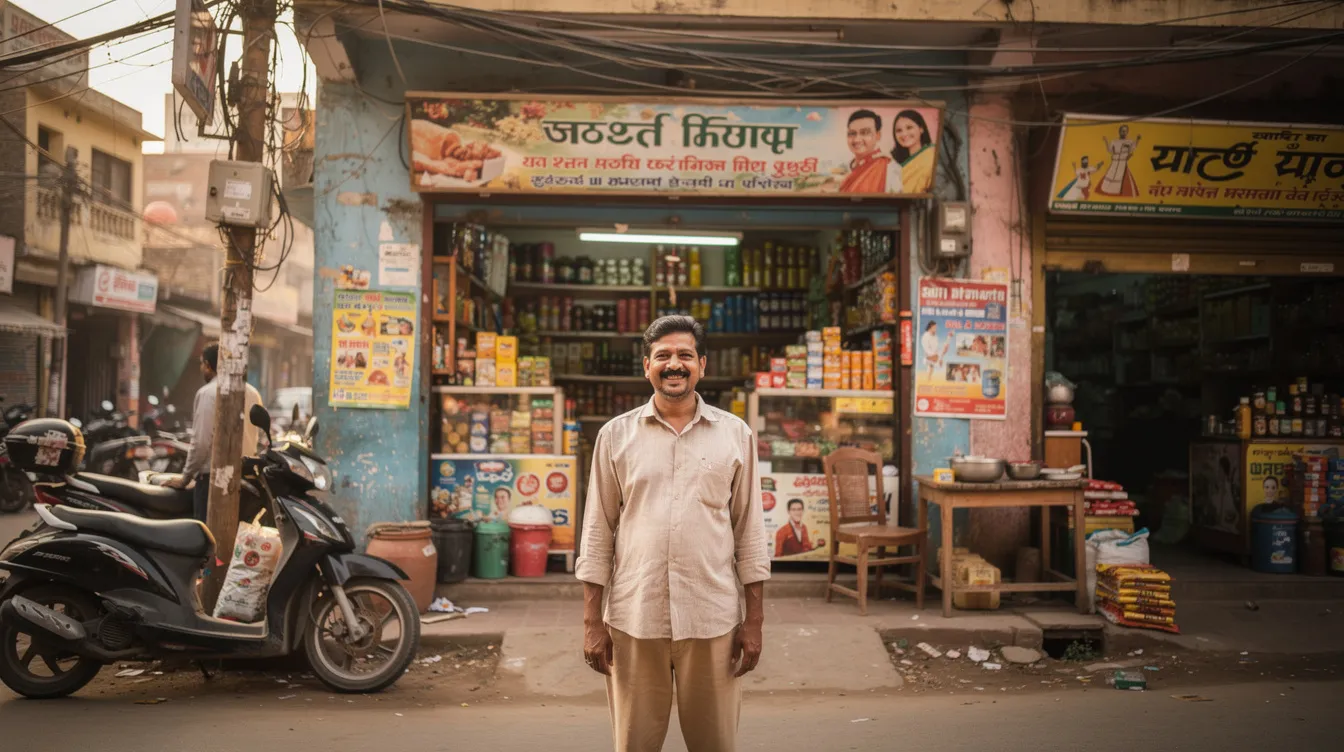
A small business owner stands proudly in front of their neighborhood shop in an Indian city, showcasing their entrepreneurial spirit. This scene reflects the essence of micro enterprises and the opportunities provided by the Mudra loan scheme, which supports small businesses through financial assistance and business plans.

Pradhan Mantri Mudra Yojana (PMMY) – Scheme Explained

The Pradhan Mantri Mudra Yojana, commonly called PMMY or the mudra scheme, was launched on 8 April 2015 under the vision of the hon’ble prime minister. Its core objective is to provide financial assistance to non corporate, non-farm micro and small enterprises across India, including Telangana. The scheme is designed to promote financial inclusion, support self-employment, and help formalize micro enterprises that were previously outside the formal banking system.

The MUDRA Yojana is designed to support non-farm micro and small enterprises in India, and Mudra loans are classified into three categories based on the stage of business development:

  • Shishu: Loans up to ₹50,000 for very small or new businesses. Shishu loans provide up to Rs. 50,000 for startups and early-stage ventures. These are the easiest to obtain and typically come with the least documentation burden.

  • Kishore: Loans from Rs. 50,001 to Rs. 5 lakhs for enterprises that are already established and need to scale up operations, add inventory, or purchase equipment. Kishore loans range from ₹50,001 to ₹5 lakhs.

  • Tarun: Loans from Rs. 5 lakhs to Rs. 10 lakhs for businesses that have been running for a while and want to expand capacity, diversify, or move into the next phase of growth. Tarun loans offer funding from Rs. 5 lakhs to Rs. 10 lakhs.

  • Tarun+: A newer extension where Tarun+ loans provide funding from Rs. 10 lakhs to Rs. 20 lakhs for eligible enterprises that have already availed Mudra and demonstrated good repayment.

The maximum loan amount under the standard PMMY is ₹10 lakhs, with no collateral required for loans up to Rs. 10 lakhs. Mudra loans provide funding up to Rs. 10 lakhs, and the funds can be used for various non-farm sectors including manufacturing and trading.

Mudra Loan interest rates range from 8% to 12% per annum, with interest rates for Mudra Loans deregulated by banks-meaning each lender sets its own rate based on risk assessment and internal policy. According to the Telangana MSME Handbook (2024), the stated range in the state is between 8.40% and 12.45% p.a. MUDRA loans offer flexible repayment tenures of up to 7 years, though most loans are sanctioned with repayment periods of 3 to 5 years, sometimes with an initial moratorium for new units.

Eligible businesses include:

  • Manufacturing units (food processing, packaging, handicrafts, plastic items)

  • Trading businesses (kirana stores, hardware shops, wholesale traders)

  • Service providers (repair shops, salons, consultants, IT services)

  • Transport operators, small food businesses, medical stores, and digital businesses

  • The scheme covers only non-farm income-generating activities

Target entities for MUDRA loans include small and micro-enterprises in manufacturing and services. Mudra loans are available for proprietorship and partnership firms, as well as other legally constituted small business entities.

Participating lending institutions in Telangana:

Type

Examples

Public Sector Banks

State Bank of India, Canara Bank, Indian Bank, Union Bank, Bank of Baroda

Regional Rural Banks

Telangana Grameena Bank, Andhra Pradesh Grameena Vikas Bank

Cooperative Banks

District and urban cooperative banks across Telangana

Small Finance Banks

Various small finance banks operating in the state

NBFCs and MFIs

Eligible NBFCs and micro finance institutions

These commercial banks, NBFCs, and other financial intermediaries act as the delivery channel for the scheme. MUDRA itself functions primarily as a refinance agency, providing support to lending institutions.

For applicants from other states, we also provide detailed guides on Mudra Loan Gujarat and Mudra Loan Karnataka. Similar project report formats are accepted in states like Rajasthan, Tamil Nadu, and West Bengal.

In terms of scale, according to RAMP strategic data, in 2022-23 Telangana sanctioned approximately 6.39 lakh Mudra loan accounts amounting to about ₹8,134.81 crores. That figure represented just 1.03% of the national total, even though Telangana hosts around 3.2% of India’s MSMEs-suggesting significant room for more entrepreneurs to benefit from this scheme.

Why a Professional Mudra Loan Project Report is Critical in Telangana

Bank’s Own Money: Although the Pradhan Mantri Mudra Yojana (PMMY) is government-backed, banks lend their own funds, making thorough appraisal essential.

Local Market Feasibility: Banks assess business feasibility specific to Telangana’s diverse markets, considering local demand and competition.

Realistic Cost Estimation: Verification of machinery, furniture, and working capital costs through authentic supplier quotations is mandatory.

Working Capital Assessment: Accurate calculation of working capital needs ensures the requested loan limit is justified.

Financial Projections: Sales, expenses, profits, and cash flow projections over 3 to 5 years help banks evaluate repayment capacity.

Risk Metrics: Banks use Debt Service Coverage Ratio (DSCR) and break-even analysis to gauge financial viability and risk, typically expecting DSCR above 1.25.

Pre-emptive Clarity: A detailed project report answers potential credit officer queries upfront, speeding approval.

Reduced Queries: Well-prepared reports minimize back-and-forth, accelerating loan processing.

Demonstrates Seriousness: A professional report shows the entrepreneur’s understanding and commitment, building banker confidence.

Customization Importance: Telangana-specific factors like rental rates and labor costs must be reflected; generic templates often fail.

Comprehensive Analysis: Our firm prepares PMMY-compliant reports including CMA data when deeper financial analysis is needed.

Additional Resources: For broader MSME loan insights, see our MSME Mudra Loan Guide.

Contents of a Professional Mudra Loan Project Report – Structure and Components

This section breaks down each component of a complete mudra loan project report prepared for banks in Telangana. Whether you are applying for a Shishu, Kishore, or Tarun loan, the structure below covers what bankers expect to see.

Executive Summary

This is the first page of your report. It should contain a crisp business overview-your business idea, the loan amount requested, the Mudra category (Shishu/Kishore/Tarun), the location in Telangana, and key financial highlights like projected annual turnover, expected profit, and DSCR. Keep it to about half a page. The executive summary is the banker’s first impression of your proposal.

Business Profile

Describe the nature of your activity-manufacturing, trading, or service. State the legal form (proprietorship, partnership, LLP, or small company), the registered address, and the year of establishment (or proposed date of commencement for new units). Ensure consistency with your Udyam Registration and other registrations.

Promoter Details

Include the promoter’s name, age, education qualification, professional skills, relevant experience, and existing business track record. Banks pay close attention to this. A promoter with relevant industry experience, even if informal, inspires confidence. If you lack formal education but have hands-on skills, highlight that clearly.

Market Analysis

This is one of the key areas where local Telangana context matters most. Cover:

  • Local demand for your products or services

  • Competition in your specific area (urban markets like Hyderabad and Secunderabad vs semi-urban towns like Karimnagar and Nalgonda vs rural pockets)

  • Target customers and their purchasing behavior

  • Your pricing strategy relative to competitors

A banker sitting in Warangal knows the local market. If your numbers don’t match ground reality, the report loses credibility immediately.

Products and Services

List your key products or services along with their margins and any unique selling proposition. If you are a trader, describe the product categories you deal in. If you are a manufacturer, list the items you produce. Ensure alignment with your GST registration and industry classification where applicable.

Manufacturing or Business Process

For manufacturers, describe the step-by-step production process, raw materials, labour requirements, and power consumption. For traders and service providers, outline the procurement process, service workflow, and delivery model. This section shows the banker you understand the operational side of your business.

Machinery and Equipment Details

Specify types of machinery, equipment, computers, vehicles, furniture, and fixtures you plan to purchase. Attach supplier quotations from recognized vendors. Accurate quotations strengthen cost estimation and prevent under-financing. Quotation mismatches-where the report says one figure and the quotation says another-are a common red flag.

Cost of Project

Present a clear break-up:

Component

Amount (₹)

Machinery and Equipment

As per quotations

Furniture and Fixtures

Estimated

Renovation / Lease Deposit

As per agreement

Preliminary and Pre-operative Expenses

Estimated

Working Capital Margin

Calculated

Total Cost of Project

Sum

This section must be consistent with your quotations and rent agreements.

Means of Finance

Show how the project is funded: Mudra loan from the bank, promoter’s margin money (own contribution), and any other sources like family contribution or existing savings. Most banks expect a minimum margin of 10% to 25% depending on the activity and the borrower’s profile.

Working Capital Requirement

Describe the method used to calculate working capital: covering stock holding, debtors (receivables), cash balance needed, and credit period available from suppliers. Correct working capital assessment prevents future cash crunch during the early months of operation.

Sales Projection

Prepare month-wise or year-wise sales forecasts for at least 3 to 5 years. Base these on realistic assumptions-daily customer footfall, average ticket size, capacity utilization, and seasonal variations. Document the assumptions clearly. The expected revenue figures should be achievable, not aspirational.

Profit and Loss Projection

Include projected revenue, direct costs (cost of goods sold), fixed and variable overheads, depreciation, interest on the loan, and taxes. The P&L projections must align with your sales assumptions and reflect local cost levels in Telangana.

Cash Flow Statement

Banks look at monthly or annual cash flows to ensure sufficient surplus exists to service EMIs on time. If your business is seasonal (for example, a garment shop with peak demand during festivals), highlight the peak and lean months so the banker understands the cash flow pattern.

Projected Balance Sheet

Include assets (fixed and current) and liabilities (loan outstanding, promoter’s capital, creditors) year-wise. This helps the banker see the financial position during the entire loan tenure and confirm that net worth improves over time.

Break-even Analysis

Calculate the break-even sales level using fixed costs and variable costs. This shows the minimum revenue required for the business to avoid losses. A low break-even relative to projected sales signals a healthy margin of safety.

DSCR (Debt Service Coverage Ratio)

Compute DSCR for each year and the average DSCR across the loan tenure. DSCR is the ratio of net operating income to total debt repayments (principal plus interest). Banks typically look for DSCR above 1.25, though this varies by bank and sector.

CMA Data (if required)

For higher Mudra limits closer to ₹10 lakhs, or when banks club Mudra with other facilities, they may ask for CMA Data. We prepare CMA statements in bank formats showing past performance and future projections.

Assumptions

List all key assumptions used: growth rates, interest rates, rent, power cost, salary levels, working days, capacity utilization, and depreciation rates. Transparency here is critical-bankers must be able to trace every number back to a stated assumption. Any typographical errors in this section can undermine the entire report.

Bank Formats

Many banks have their own Mudra loan application and project report formats. We align our project report with bank-specific templates to make the appraisal process faster and smoother for the credit officer.
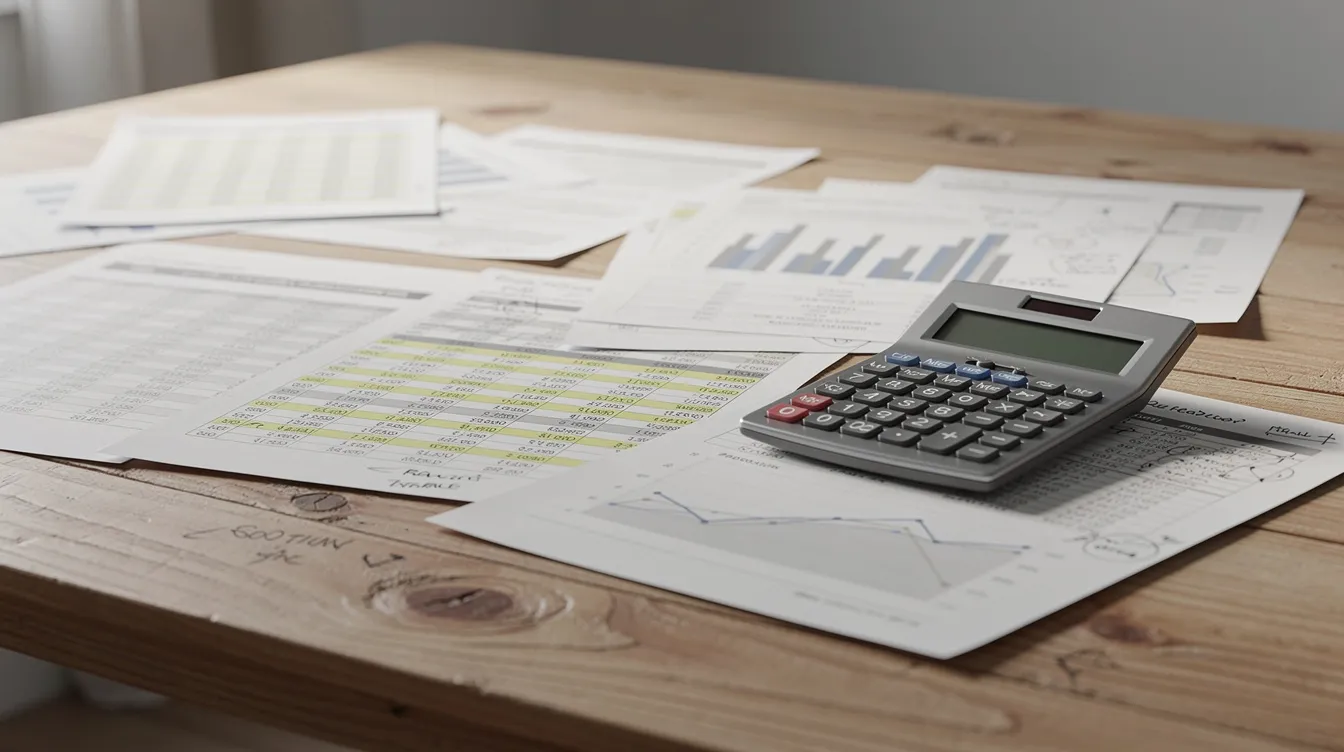
The image features a set of financial documents alongside a calculator on a wooden desk, suggesting a workspace focused on business planning and financial analysis. This setup may relate to preparing a project report for a mudra loan or assessing the financial needs of micro enterprises.


Types of Businesses Eligible for Mudra Loans in Telangana

Almost all non-farm income-generating micro enterprises can be considered under the Mudra scheme in Telangana, subject to each bank’s internal policy. Mudra Loans are categorized into three types: Shishu, Kishore, Tarun-and applicants from virtually every small business sector can apply under the appropriate category.

Manufacturing: Small fabrication units, packaging units, mineral water bottling, food processing, paper products, plastic items, handicrafts, and small-scale assembly units. The focus is on micro units with investment within MSME limits.

Trading: Kirana and general stores, provision stores, hardware shops, electronics shops, wholesale traders, agro-input dealers (non-farm trading), and other retail outlets.

Service Sector: Repair and maintenance services, printing and DTP centres, courier and logistics services, travel agencies, consultants, and IT-enabled services.

Retail and Food Businesses: Restaurants, tiffin centres, fast-food outlets, bakeries, sweet shops, tea and coffee stalls, juice centres, and small catering units.

Medical and Healthcare: Medical stores, pathology collection centres, small clinics (where permitted), physiotherapy centres, and diagnostic support services.

Garment and Fashion: Readymade garment shops, tailoring units, embroidery units, boutiques, saree shops, and textile traders.

Mobile, Electronics, and Digital: Mobile shops, mobile repair centres, computer repair units, photocopy and internet cafes, small online service centres, and digital marketing freelancers. E-commerce sellers operating on platforms like Amazon, Flipkart, or Meesho can also apply with relevant sales documentation.

Dairy, Poultry, and Allied: While core farming (crop cultivation) is excluded, allied activities like small dairy units, poultry trading, milk collection and distribution, and cold-chain related micro units may qualify per bank policy.

Automobile and Repair: Two-wheeler and four-wheeler workshops, tyre shops, spare parts traders, washing centres, and small transport operators.

Beauty, Wellness, and Education: Beauty parlors, salons, spa units, gyms, yoga centres, tuition centres, coaching institutes, and training centres.

Digital, Freelancers, and Home-Based: Home-based catering, cloud kitchens, online sellers, handicraft makers, designers, content writers, and freelancers working from home.

Women Entrepreneurs and Startups: Mudra loans are particularly suited for women entrepreneurs and first-time borrowers who lack collateral. Telangana also has complementary state schemes like T-PRIDE that offer additional incentives for SC/ST and women-led units.

Similar sectors are eligible across India. For a comparison of eligible micro businesses in North India, see our guides on Mudra Loan Uttar Pradesh and Mudra Loan Bihar.

Documents Required for Mudra Loan in Telangana

While exact requirements differ slightly between banks, most Telangana branches follow a common checklist. The required documents for MUDRA loans typically include ID proof and business registration evidence. Here is a practical, detailed list.

Identity and Address Proof

  • Aadhaar Card (mandatory in most banks for KYC and e-KYC)

  • PAN Card, Voter ID, Driving Licence, or Passport as alternate ID where needed

  • Utility bill, rental agreement, or property tax receipt for address proof

PAN and Tax-related

PAN is strongly recommended for all mudra loans and practically mandatory for higher-ticket Kishore and Tarun categories. For applicants who do not have a PAN, banks may restrict the loan size or ask for alternatives. Read more about this in our guide on Mudra Loan Without PAN Card.

Business Proof

  • Shop and Establishment registration or trade licence

  • GST registration (if applicable based on turnover threshold)

  • Professional licence (for professionals like pharmacists, doctors)

  • Udyam Registration certificate

  • Partnership deed or incorporation certificate (for firms and companies)

  • For very small shishu loans, banks may accept simple declarations or local-body licences

Udyam Registration

We strongly recommend obtaining Udyam Registration for MSME recognition. It strengthens your Mudra loan application and also makes you eligible for other central and state MSME incentives.

GST Registration (if applicable)

GST is required only when turnover and business type exceed statutory limits. However, having GST registration improves transparency and credibility, especially for higher-ticket loans.

Quotations and Estimates

You will need quotations for machinery, equipment, furniture, vehicles, computers, and interior work from recognized suppliers. These quotations must match the cost of project in your project report. Mismatches between quotations and report figures are a common reason for queries and delays.

Ownership or Rental Documents

  • For owned premises: property tax receipt, electricity bill, and property documents

  • For rented premises: copy of rent or lease agreement and NOC from landlord if the bank insists

Bank Statements

Typically last 6 to 12 months of bank statements from your main operating account. Banks use these to study your existing cash flow and financial obligations.

Photographs and KYC Forms

Latest passport-size photographs and completed bank KYC and Mudra loan application forms.

Existing Business Proof

For existing units: previous years’ financials such as ITR, GST returns, basic profit and loss summary, or stock statements wherever available.

Income Proof

  • For self-employed: ITR copies, audited or unaudited financial statements

  • For cases where ITR has not been filed: banks may rely more heavily on projected financials in the project report and on-ground verification

Other Bank-specific Documents

Some banks may ask for a declaration of not being a defaulter to any financial institution, CIBIL consent form, guarantor details (if any), and photographs of the business premises. Applicants for MUDRA loans must not be defaulters to any financial institution. A minimum CIBIL score of 685 is recommended for approval.

For applicants with limited credit history, refer to our guide on Mudra Loan Without CIBIL Score. If you are a senior citizen or a differently-abled applicant, check our resources on Mudra Loan for Senior Citizens and Mudra Loan for Disabled Persons.

Step-by-Step Mudra Loan Application Process in Telangana

The process is broadly similar across India, but this section describes the practical steps as followed by banks and NBFCs in Telangana. Applications can be submitted online or offline in Telangana, depending on the bank and loan size.

Step 1 – Choose the Correct Mudra Category

Decide between Shishu, Kishore, and Tarun based on your project size and financial needs. If your total requirement is ₹3 lakhs, apply under Kishore. Do not inflate the amount to ₹10 lakhs hoping to get more-banks will assess viability against the requested amount and may reject an unnecessarily large request.

Step 2 – Finalize Your Business Plan

Clearly define your business idea, location, and scale. A small restaurant in Hyderabad has a fundamentally different business plan compared to a dairy unit in Nalgonda. Write down your target customers, pricing, expected monthly sales, and how you plan to develop the business over the next few years.

Step 3 – Prepare a Bank-ready Project Report

This is the most critical step. Get a professionally drafted mudra loan project report that covers all the components described earlier in this guide. Our CA team customizes financial projections and assumptions to your exact business model, location, and the specific bank you intend to approach.

Step 4 – Arrange All Required Documents

Collect KYC documents, business proof, supplier quotations, rent agreement, and bank statements before visiting the bank. Incomplete documentation is one of the top reasons for delays. Use the checklist in the previous section as your reference point.

Step 5 – Select the Right Bank or Branch

Apply at a branch where you already maintain a savings or current account. Branches familiar with PMMY processing will handle your application more smoothly. Some branches in metros like Hyderabad and Warangal have dedicated MSME desks, which can be particularly helpful.

Step 6 – Submit Application and Project Report

Fill out the Mudra loan application form carefully, attach passport-size photographs, sign consent forms for CIBIL check, and submit the project report along with all quotations and documents in one complete file. Presenting everything together signals preparedness.

Step 7 – Bank Appraisal and Verification

The bank will verify your KYC, check your CIBIL score, and may conduct a field visit to your business location. The credit officer will assess your financial projections, verify quotations, and review security documents if any. A clear, professionally prepared project report reduces clarification calls significantly. Mudra Loans help entrepreneurs access funds quickly, often within 48 hours for well-documented Shishu applications, though Kishore and Tarun may take longer.

Step 8 – Sanction, Documentation, and Disbursement

Once approved, the bank issues a sanction letter specifying the loan limit, interest rate, repayment tenure, and other terms. You will sign the loan agreement and mandate forms. Disbursement happens either to your current account or directly to suppliers for machinery purchases. Each borrower receives a Mudra Card for managing working capital drawdowns.

Step 9 – Post-sanction Compliance

Maintain proper records, route business transactions through the bank account, and pay EMIs on time. Timely repayment builds your credit history, which will help when you need to move to the next phase of your business and apply for larger facilities.

Some banks and NBFCs also provide online application options through portals like JanSamarth and Udyami Mitra. For understanding how the process works in other states, you can also refer to our guides on Mudra Loan Maharashtra and Mudra Loan Madhya Pradesh.

A person is handing over a file of documents at a bank counter, likely related to a mudra loan application for a small business. The scene captures the interaction with a financial institution, emphasizing the importance of proper documentation for securing financial assistance under the Pradhan Mantri Mudra Yojana.


Interest Rates, Tenure, and Key Terms for Mudra Loans in Telangana

Interest rates and other terms for Mudra loans are not fixed by PMMY centrally. They are governed by reserve bank guidelines and each bank’s internal lending policy. Banks must charge reasonable interest rates for Mudra Loans, and MUDRA loans offer low interest rates generally lower than traditional business loans like a standard business loan or home loan from the same lender.

Interest Rate Range

The typical range in 2026 is around 8% to 13% per annum, depending on the bank, loan size, activity type, and risk perception. Shishu loans sometimes enjoy slightly lower interest rates within the permitted range, while Kishore and Tarun categories may be priced higher. NBFCs and MFIs may charge rates toward the upper end of this spectrum. Interest rates for Mudra Loans are deregulated by banks, meaning each financial institution decides its own rate.

Processing Fees and Other Charges

Shishu Loans have no processing charges at most banks. Kishor and Tarun categories may have minimal processing charges-typically a nominal percentage of the sanctioned amount. Other possible charges include documentation fees, insurance premium for the borrower or asset being financed, and statutory charges. Always ask your bank branch for the complete fee schedule before signing.

Repayment Tenure

MUDRA loans offer flexible repayment tenures of up to 7 years. Most loans are sanctioned with repayment periods of 3 to 5 years. Banks may allow a short moratorium period for newly established units-typically 3 to 6 months-before EMIs begin. The tenure depends on the nature of the business and the type of asset financed.

Security and Collateral

Loans up to ₹10 lakhs require no collateral security as per PMMY guidelines. However, banks will typically take hypothecation of assets financed (machinery, equipment, stock) and may obtain necessary guarantees or insurance. The credit guarantee mechanism under the mudra scheme provides additional comfort to the lender. Some banks also participate in the credit guarantee scheme through MUDRA, which acts partly as a refinance agency.

Subsidies and Interest Benefits

PMMY itself is not a subsidy scheme. However, certain state or central subsidy schemes can sometimes be combined with a Mudra loan. Telangana offers schemes like T-PRIDE for SC/ST and women-led enterprises, which provide separate capital incentives. Applicants should check with their bank branch for any current Telangana-specific benefits.

Always confirm the latest interest rates and charges directly with your chosen bank branch, as rates change with RBI policy updates and internal bank decisions.

Common Reasons for Mudra Loan Rejection and How to Avoid Them

Many applications are declined due to avoidable mistakes in the project report, documentation, or applicant profile-not because of scheme limitations. Here are the most common reasons and how to steer clear of them.

Poor or Incomplete Project Report

Vague or copy-paste reports without clear financial projections are routinely ignored by credit officers. A report that says “I will open a shop and earn good profits” tells the banker nothing. Use a professional CA-prepared project report tailored to your business, location, and bank norms. This alone can transform your approval chances.

Unrealistic Financial Projections

Extremely high sales estimates, abnormally low expenses, or sudden profit jumps in year two make bankers doubt feasibility. For local Telangana markets, branch officers are especially vigilant about whether demand assumptions match ground reality. Base projections on reasonable assumptions-realistic customer footfall, actual capacity utilization, and verifiable market size.

Incomplete Documents

Missing KYC, business proof, quotations, or bank statements cause delays or outright rejection. The fix is simple: use the checklist provided earlier in this guide and submit everything in one complete file. Do not give the bank a reason to send you back.

Existing Loan Defaults or Poor CIBIL

Active defaults, settled write-offs, or very low CIBIL scores reduce sanction chances significantly. Applicants must have a minimum CIBIL score of 685 for most banks to consider the application favorably. If you have limited or weak credit history, read our detailed guide on Mudra Loan Without CIBIL Score.

No Clear Repayment Capacity

If projected cash flows or existing income do not cover the EMI comfortably, banks will decline or reduce the sanctioned amount. Show realistic alternate income sources when available-salary from a family member, income from existing business, or rental income. Your repayment plan should demonstrate a comfortable surplus after all expenses.

Incorrect Cost Estimation and Quotations

Underestimating or overestimating project costs without supporting quotations signals poor planning. Use updated quotations from genuine vendors based in Telangana or nearby cities. Ensure the cost of project in your report matches the attached quotations exactly.

Poorly Defined Business Model

Confusion about target market, pricing, or competition makes the proposal look risky. Clearly explain how the business will attract customers and sustain revenue. A small business in Siddipet competing with established players needs a different strategy than one entering an underserved rural market.

Taking professional help for project report preparation and documentation significantly improves your chances of approval and saves weeks of back-and-forth with the bank.

Our Professional Mudra Loan Project Report Services for Telangana Applicants

We specialize in preparing professional, bank-ready mudra loan project reports for applicants across Telangana-from first-time entrepreneurs to existing small business owners looking to expand.

Chartered Accountant Expertise: All project reports are prepared and reviewed under the guidance of an experienced Chartered Accountant with over 20 years in project finance and bank documentation. This is not template work-it is practical, banker-tested expertise.

Customization to Each Business: Reports are tailored to specific sectors (manufacturing, trading, services) and specific Telangana markets (Hyderabad, Warangal, Siddipet, Nizamabad, and others). We adjust financial projections and assumptions to fit the scale and risk of each business. A pharmacy report looks very different from a mobile shop or restaurant report, and we customize each accordingly.

Bank-friendly Formats: We use formats and structures preferred by banks, RRBs, and NBFCs, incorporating DSCR, break even analysis, and where needed, CMA Data.

Professional Financial Projections: We prepare realistic sales, profit, cash flow, and balance sheet projections for 3 to 5 years, with clear assumptions so bankers can easily understand and evaluate. We avoid unrealistic numbers and focus on balanced projections that are credible.

CMA Data and Advanced Analysis: For larger Mudra limits or combined facilities, we prepare detailed CMA Data statements as required by banks.

Multiple Revisions: We offer revisions based on banker feedback at the appraisal stage, so applicants can respond quickly to queries without starting from scratch.

Fast Turnaround and PAN India Service: Most standard reports are completed within a few working days. We serve clients not only in Telangana but also across India, including in states like Uttar Pradesh and Bihar, through our online platform.

Our guidance covers selection of the proper Mudra category, structuring of cost and means of finance, and fine-tuning of financial projections to satisfy bank norms. Share your basic details and business idea with us for an initial assessment and quotation.

Online Mudra Loan Project Report Services Across Telangana – Our Service Area

Although our physical office is not located in Telangana, we provide end-to-end online Mudra loan project report preparation services for the entire state. Distance does not affect the quality or acceptance of our reports by banks.

How the Online Process Works

  1. Initial Consultation: We discuss your business plan, loan requirement, and preferred bank through Phone or WhatsApp.

  2. Document Collection: Basic details and supporting documents are shared via Email or WhatsApp.

  3. Draft Preparation and Review: We prepare the draft project report, share it with you for review, and incorporate your feedback.

  4. Final Delivery: The finalized PDF and Word report is delivered, ready for submission to your bank.

Cities and Districts We Serve

We provide services across every city, district, and town in Telangana, including:

  • Hyderabad, Secunderabad, Medchal–Malkajgiri, and Rangareddy

  • Warangal, Hanamkonda, Mahabubabad, and Jangaon

  • Karimnagar, Jagitial, Peddapalli, Rajanna Sircilla

  • Khammam, Bhadradri Kothagudem

  • Nizamabad, Kamareddy

  • Adilabad, Komaram Bheem Asifabad, Nirmal, Mancherial

  • Nalgonda, Suryapet, Yadadri Bhuvanagiri

  • Mahabubnagar, Nagarkurnool, Wanaparthy, Jogulamba Gadwal

  • Sangareddy, Medak, Siddipet, Vikarabad

  • Jayashankar Bhupalpally, Mulugu, Narayanpet, Kumuram Bheem, and all other towns and villages

Clients do not need to visit our office. All clarifications and revisions are handled via Phone, Email, and WhatsApp for convenience. Similar 100% online services are already provided successfully to entrepreneurs in other states-see our guides for Mudra Loan Maharashtra and Mudra Loan West Bengal.

Whether you are in a metro like Hyderabad or a small town in Mulugu district, the report quality remains the same and is fully accepted by banks across Telangana.
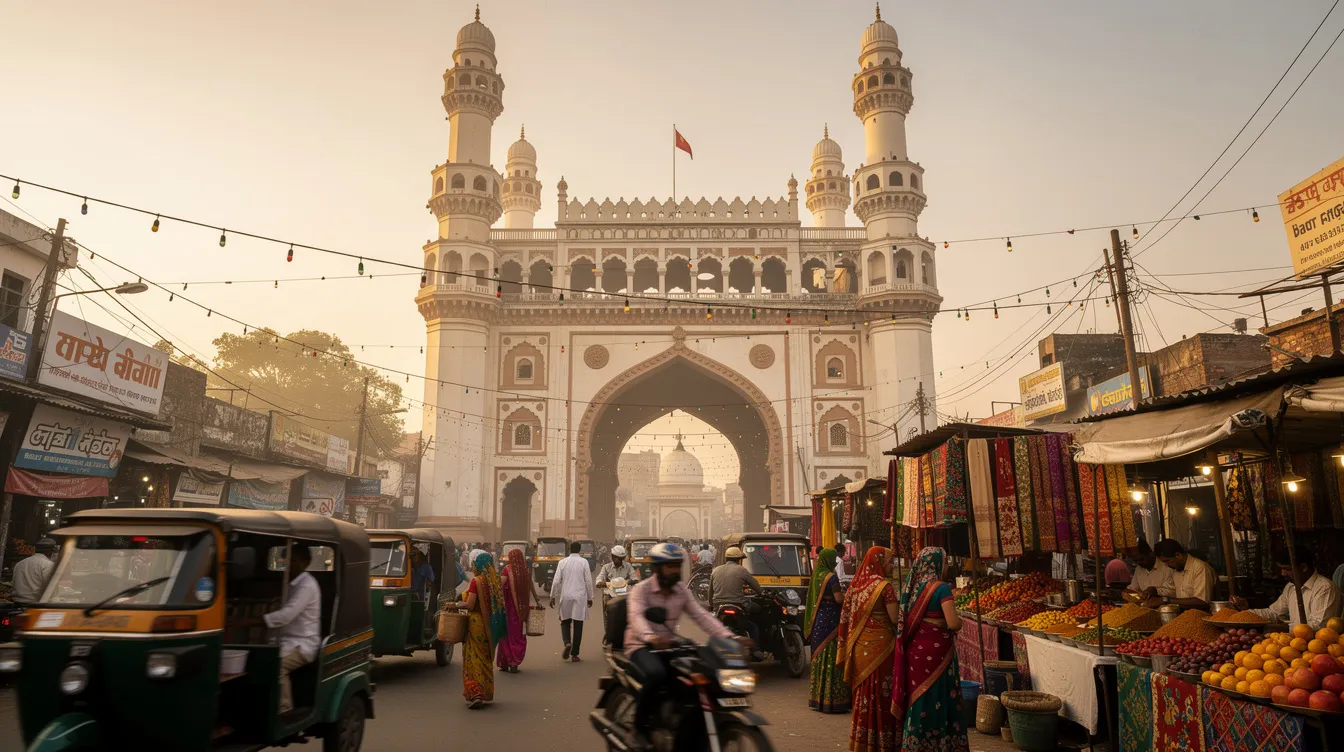

The image shows the iconic Charminar monument in Hyderabad, surrounded by a bustling street market filled with vendors and shoppers. The vibrant atmosphere highlights the intersection of historical architecture and daily life, reflecting the dynamic culture of the city.


Why Telangana Entrepreneurs Prefer Our Services

Our clients choose us for the combination of CA expertise, deep customization, and online convenience. Here is what sets us apart:

Professional CA Guidance: Every client interacts with a team led by a Chartered Accountant who understands practical banking expectations for Mudra loans-not just theory, but what actually gets approved at the branch level.

Customized, Sector-specific Reports: We do not use one-size-fits-all templates. Each report is built from scratch based on the applicant’s specific business, sector, and market within Telangana.

Accurate and Bank-acceptable Financial Projections: We present balanced numbers that bankers find credible, avoiding both overly optimistic and overly conservative projections.

Affordable and Transparent Pricing: Our fee is clearly communicated in advance, with no hidden charges. You know exactly what you are paying before we begin.

Quick Turnaround: Most standard Mudra loan project reports are completed within a few working days, subject to timely data sharing by the client.

PAN India Online Support: Apart from Telangana, we assist entrepreneurs in states like Madhya Pradesh, Rajasthan, and Tamil Nadu using the same online framework.

Support for Special Categories: We are familiar with documentation nuances for women entrepreneurs, senior citizens, SC/ST applicants, and differently-abled applicants. For specific guidance, refer to:

Responsive Customer Support: Queries are responded to promptly through WhatsApp and Email, and clients receive guidance through the entire process till loan sanction wherever possible.

Conclusion – Take the Next Step Towards Your Mudra Loan in Telangana

A Mudra loan under PMMY is one of the most powerful tools available for micro and small businesses in Telangana. It provides collateral-free finance at reasonable interest rates, and the scheme is accessible through virtually every bank and financial institution in the state. But the difference between a successful application and a rejected one almost always comes down to preparation.

Banks use the project report to judge business feasibility, repayment capacity, and overall risk. A professionally prepared, CA-reviewed project report with realistic financial projections, accurate cost estimation, and clear assumptions can significantly increase your approval chances and cut processing time. It is not just paperwork-it is your strongest argument for why the bank should trust your business.

If you are ready to apply for a Mudra loan in Telangana, contact our team for a customized project report. The entire process-discussion, data collection, draft preparation, revisions, and final delivery-is handled online through WhatsApp, Email, and Phone. Whether you are a shop owner in Hyderabad, a freelancer in Karimnagar, or a manufacturer in Khammam, share your business idea and approximate loan requirement with us. We will guide you on the appropriate Mudra category-Shishu, Kishore, or Tarun-and prepare a bank-friendly project report that gives your application the best possible chance.

About the Author – CA Manish Gugliya

CA Manish Gugliya is a practicing Chartered Accountant with more than 20 years of experience in project report preparation, CMA data, bank loan documentation, MSME financing, startup advisory, and financial consulting. He has assisted entrepreneurs across India in preparing professional, bank-ready project reports for Mudra Loans, MSME Loans, CGTMSE Loans, term loans, and working capital finance. Through ProjectReportBank.com, he provides reliable, customized, and completely online project report preparation services to clients in Telangana and all other states, ensuring that reports are practical, banker-friendly, and aligned with current lending practices. Leverage his experience and team support to improve your Mudra loan approval chances and start or expand your business with confidence.

Frequently Asked Questions (FAQ) – Mudra Loan Project Report Telangana

This section answers the most common questions Telangana applicants ask about Mudra loans, project reports, eligibility, interest rates, and documentation.

While very small shishu loans may sometimes be sanctioned with a basic application and simple business details, in practice most banks in Telangana insist on at least a basic project report. For Kishore and Tarun categories, a detailed, professionally prepared project report is strongly recommended to improve approval chances. Banks need to assess business feasibility, cost estimation, and repayment capacity-and the project report is the primary document for this assessment.

Yes, startups and first-time entrepreneurs can apply. The pmmy scheme was designed to support exactly such applicants. Banks will assess the promoter’s education, skills, and market understanding. A clear business plan, proper KYC, and a sensible project report with realistic financial projections become even more important when you do not have prior business experience to demonstrate.

No. Loans up to ₹10 lakhs under the Pradhan Mantri Mudra Yojana are generally collateral-free. Banks do not ask for property as security. However, they secure the loan by hypothecating stocks, receivables, and assets created from loan funds and may insist on insurance or a simple guarantee in some cases. The beneficiary micro unit is not burdened with property pledging, which is one of the biggest advantages of this scheme.

Many banks and NBFCs accept online or partially online applications through their own portals or platforms like JanSamarth and SBI’s e-Mudra facility. However, applicants will still need to visit the branch for KYC verification, document submission, and signing of loan documents. Our project report services are fully online-so you can get a complete, bank-ready project report without visiting our office, regardless of whether you are in Hyderabad or a remote village.

Timelines vary by bank and case complexity. For a well-documented application with a clear project report, many branches process and sanction Mudra loans within 7 to 15 working days. For very small Shishu loans, some banks process applications within 48 hours. Delays almost always arise due to incomplete documentation or unclear business projections, which can be minimized with professional assistance.

All major commercial banks, regional rural banks, cooperative banks, small finance banks, and eligible NBFCs and MFIs operating in Telangana provide Mudra loans. This includes State Bank of India, Canara Bank, Indian Bank, Bank of Baroda, Union Bank, Telangana Grameena Bank, and many others. You can apply at any branch that handles MSME or small business lending.

Absolutely. Women entrepreneurs are among the primary target groups of the mudra scheme. Many banks have special cells or concessions for women-led micro enterprises. The scheme is particularly beneficial for women who want to start or expand a small business but lack collateral. Telangana’s state scheme T-PRIDE also provides complementary support for women and SC/ST entrepreneurs.

GST registration is not compulsory for Mudra loans. It is required only when your business turnover and activity type exceed the statutory threshold for GST registration. However, having GST registration improves your credibility with the bank, especially for Kishore and Tarun category loans.

A minimum CIBIL score of 685 is recommended by most banks. Applicants with scores below this threshold face higher chances of rejection. However, for Shishu loans with very small amounts, some banks and MFIs may be more flexible. Building a positive credit history through timely repayment of existing obligations is the best long-term approach.

CMA Data is not compulsory for all Mudra loans. It is typically required when the loan amount is on the higher side (closer to ₹10 lakhs), when the bank combines Mudra with other credit facilities, or when the bank’s internal policy mandates it. Our team prepares CMA Data in the prescribed bank format whenever needed.

Yes. Mudra loans are not limited to new businesses. Existing micro enterprises can apply for working capital, equipment purchase, renovation, or expansion under the Kishore or Tarun categories. For existing businesses, banks will also review past financial performance in addition to projected financials.

Senior citizens can apply, subject to the bank’s age eligibility criteria and the requirement that the loan tenure should not extend beyond the maximum permissible age (often 65 to 70 years). A sound business plan and repayment capacity are assessed just as with any other applicant. MUDRA does not impose mutual funds or investment-like restrictions-it is purely a business loan scheme.

Our fees are affordable and clearly communicated in advance. The cost depends on the complexity of the business, the Mudra category, and the level of detail required. Contact us with your business details for a specific quotation.

For Shishu loans up to ₹50,000, some banks may process applications without PAN using Aadhaar-based KYC. For Kishore and Tarun categories, PAN is practically mandatory. Read our guide on Mudra Loan Without PAN Card for detailed options.

In some cases, the Mudra loan covers both term loan (for fixed assets like machinery) and working capital components within the overall ₹10 lakh limit. The bank may structure it as a composite loan or split into separate facilities. The project report should clearly break down the term loan and working capital portions to help the bank structure the loan appropriately.