


Mudra Loan West Bengal – CA-Prepared Project Report, DPR & Financial Projections

Introduction – Mudra Loan West Bengal & Why Project Report Matters

If you are running or planning to start a small business in West Bengal – whether in Kolkata, Asansol, Siliguri, Durgapur, Howrah or any other city – a Mudra loan under the Pradhan Mantri Mudra Yojana (PMMY) could be the financial assistance you need. The Pradhan Mantri Mudra Yojana provides collateral free business loans to micro and small enterprises, helping them meet working capital and term loan requirements without pledging property or assets.

As a Chartered Accountant with over 20 years of hands-on experience in project finance and bank loans, I have seen hundreds of Mudra loan applications from West Bengal – some sail through, many get stuck or rejected. The single biggest difference between approvals and rejections? The quality of the project report submitted with the loan application.

Banks in West Bengal – from SBI and PNB branches in Kolkata to cooperative banks in Purulia or Bankura – insist on a proper project report, detailed project report (DPR), CMA data and realistic financial projections before granting loan approval. A professionally prepared mudra loan project report significantly improves your approval chances compared to a self-made, incomplete submission. Our online project report services are available across every district, municipality and town in West Bengal including Bidhannagar (Salt Lake), Kharagpur, Malda, Berhampore, Haldia, Jalpaiguri, Cooch Behar, Darjeeling, Tamluk, Contai, Barasat, Barrackpore, Chandannagar, Serampore, Habra, Bongaon, Basirhat, Krishnanagar, Kalyani, Nabadwip, Ranaghat, Alipurduar, Raiganj, Balurghat, Bolpur, Rampurhat, Islampur, English Bazar, Diamond Harbour and Jhargram.

Why a CA-prepared report is critical in West Bengal banking practice:

  • Banks assess based on documented repayment capacity, not verbal promises

  • Credit officers look for realistic financial projections and cash flow analysis

  • Reports are rejected if they are incomplete or unrealistic

  • A structured DPR reduces back-and-forth queries and speeds up processing

  • Professional formatting matches the standard project report format accepted by most banks

A small business owner is seen carefully arranging products in a vibrant shop within an Indian market, showcasing a variety of items that reflect local culture. This scene highlights the entrepreneurial spirit essential for accessing financial assistance through schemes like the Mudra loan, aimed at supporting micro enterprises and small businesses.


PM Mudra Loan Scheme Overview (Shishu, Kishore, Tarun & Tarun Plus)

The Pradhan mantri mudra yojana pmmy was launched in April 2015 to support micro units and small business enterprises with institutional credit. The mudra scheme channels financial assistance through bank loans from public sector banks, private banks like ICICI Bank, regional rural banks (RRBs), cooperative banks and eligible NBFCs acting as financial intermediaries. MUDRA itself functions as a refinance agency under the Micro Units Development and Refinance Agency Ltd.

Mudra loans are available to support income-generating activities in manufacturing, trading, and services. Mudra loans are categorized into Shishu, Kishore, and Tarun – and since Budget 2024-25, a fourth category called Tarun Plus has been introduced. Funding is categorized into three stages based on business growth: Shishu, Kishor, and Tarun, with Tarun Plus serving repeat borrowers who have cleared earlier Tarun loans. Collateral free loans are guaranteed by the Credit Guarantee Fund for Micro Units (CGFMU), ensuring that no collateral is required for Mudra loans. Mudra loans can go up to ₹20 lakh under Tarun Plus.

Interest rates are not fixed centrally but decided by each bank or financial institution according to Reserve Bank of India deregulated guidelines. Banks must keep rates “reasonable.”

As of June 2025, approximately 34,697 borrowers were sanctioned ₹4,930 crore under Tarun Plus nationwide, reflecting strong demand for higher loan size among established businesses. For a broader understanding of the scheme, refer to our MSME Mudra Loan Guide.

Feature

Shishu

Kishore

Tarun

Tarun Plus

Loan Amount

Up to ₹50,000

₹50,001 – ₹5,00,000

₹5,00,001 – ₹10,00,000

₹10,00,001 – ₹20,00,000

Target Borrower

New/early-stage micro units

Growing small business

Expanding business

Repeat Tarun borrowers with clean record

Typical Use

Small working capital, inventory

Working capital + equipment

Capital assets, machinery, expansion

Larger asset purchase, scaling

Documentation Level

Basic KYC + simple form

KYC + project report + CMA

Full DPR + CMA + financial projections

Full DPR + audited books + CMA

Indicative Interest Rate

8.85% – 12% (PSBs)

11% – 15%

12% – 16%

12% – 16%

Typical Tenure

12 – 24 months

2 – 5 years

3 – 5 years

Up to 7 years

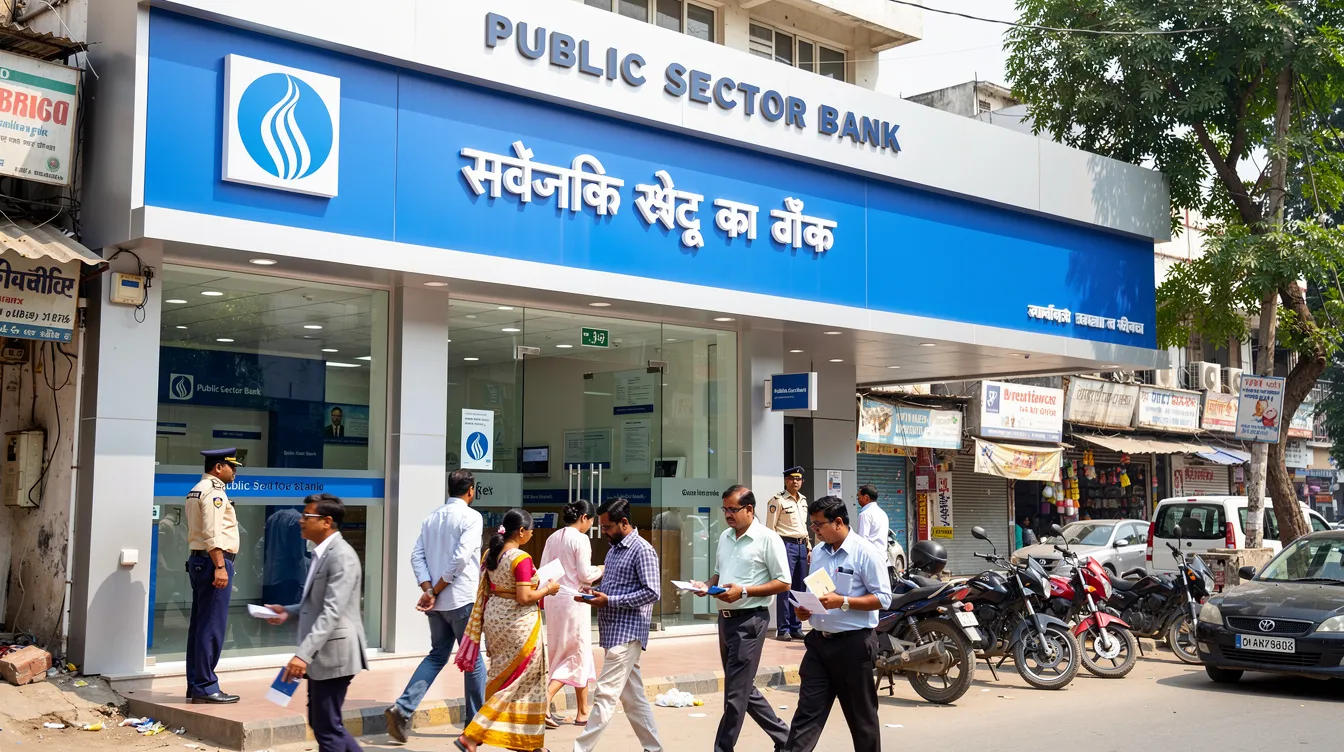
The image shows the exterior of an Indian public sector bank branch, with customers entering and exiting, indicating a busy atmosphere. This scene reflects the bank's role as a financial institution providing services such as loan applications and financial assistance to individuals and micro enterprises under schemes like the Mudra loan.

Eligibility Criteria – Who Can Get Mudra Loan in West Bengal?

The eligibility criteria are straightforward. Eligible borrowers include non-farm, non-corporate micro and small enterprises in manufacturing, trading and services. The business must be located in West Bengal for Mudra loan eligibility. Individuals, proprietorship firms, partnership firms, or private limited companies can apply for a Mudra loan, as well as entities in other legal forms like LLPs.

  • Manufacturers: Small engineering units, food processing, packaging, plastic products in Durgapur, Haldia, Kharagpur and similar industrial areas

  • Traders: Grocery stores, garment shops, electronics and mobile shops in Kolkata, Howrah, Siliguri and tier-2 towns

  • Service providers: Beauty parlours, mobile repair shops, coaching centres, online service businesses, restaurants

  • Professionals: Doctors, CAs, architects, advocates starting or expanding clinics, offices or consultancy – education qualification or educational qualification in the relevant field strengthens applications

  • Women entrepreneurs: Women-led businesses are given a specific focus under the mudra scheme, and many public sector banks offer lower interest rates to women entrepreneurs

  • Startups: First-time individual borrowers with a viable business idea and strong business plan can apply – even without prior business experience

  • Home businesses and franchise businesses: Eligible with proper KYC and documentation of proposed activity

Quick Self-Check for Eligibility:

  • [ ] Non-farm business activity (manufacturing, trading, service, agri-allied)

  • [ ] Located in West Bengal

  • [ ] Age 18–65 years

  • [ ] No major existing loan default – satisfactory credit track record

  • [ ] Udyam Registration obtained (strongly recommended)

  • [ ] Basic legal forms ready (trade licence, GST where applicable)

  • [ ] Mudra loans must be for income-generating activities

Documents Required for Mudra Loan in West Bengal – Full Checklist

Proper documentation is crucial for smooth loan approval. Banks reject applications that lack complete financial information or have mismatched details information across documents. To qualify for a Mudra loan, applicants must have a viable business plan and documented funding requirements.

Identity & Address:

  • Aadhaar Card, PAN Card – Mudra loan proof of identity documents include Aadhaar, PAN Card, and Voter’s ID

  • Recent passport-size photographs

  • Address proof: utility bill, voter ID, driving licence, passport, ration card

Business Proof:

  • Udyam Registration certificate

  • GST Registration (where applicable – learn about Mudra Loan Without GST Registration)

  • Shop & Establishment certificate or trade licence from local municipality/panchayat

  • Professional tax registration in West Bengal

Financial Documents:

  • Last 6–12 months bank statements

  • Past 2–3 years ITR (existing businesses)

  • Provisional P&L and Balance Sheet

  • Existing loan statements, if any

Property/Premises:

  • Rental agreement or ownership documents reflecting space or land requirement

  • Electricity bill and property tax receipts

  • Consent letter from property owner for home business

Quotations & Estimates:

  • Machinery quotations with supplier details

  • Furniture and fixture estimates

  • Renovation cost estimates

  • Working capital margin details

Project Report & CMA:

  • Detailed project report with 3–5 year financial projections

  • CMA Data in standard format

  • Break even analysis and DSCR calculation

A standard project report format is accepted by most banks. Project reports should be concise and easy to understand while covering all key areas the bank evaluates.

Why Banks in West Bengal Insist on Project Report for Mudra Loan

Public sector banks like SBI, PNB, Bank of Baroda and UCO Bank follow strict RBI and internal credit policies even for small loans under the Mudra scheme. For Shishu category, a brief application and basic discussion may suffice. But for Kishore and Tarun categories, banks almost always demand a project report and CMA data.

A mudra loan project report outlines business plans and financial needs. The project report should include market analysis and funding needs. Here is what banks specifically examine:

  • Business feasibility: Is the proposed activity realistic for the location and market?

  • Repayment capacity: Can the borrower pay EMIs from monthly cash flows?

  • Cash flow and profitability: Are financial projections supported by reasonable assumptions?

  • Break-even point and DSCR: Debt Service Coverage Ratio must stay above 1.20–1.35

  • Consistency: Loan application, KYC documents and project report must match without contradictions

Studies on West Bengal’s Mudra performance show that Shishu category NPAs exceeded 16% in some years, making banks cautious even for small business lending.

CA Note – Observations from Real Bank Appraisals in West Bengal:

  • Branch managers in Kolkata, Asansol and Siliguri are increasingly strict about DPR quality

  • Covering loans for working capital without clear cash flow evidence is a common rejection trigger

  • Reports not aligned with bank repayment expectations are rejected outright

  • Inconsistent information in reports results in loan denial even when the business itself is sound

What a Professional Mudra Loan Project Report for West Bengal Should Contain

A bank-approved mudra loan project report for West Bengal, prepared by an experienced Chartered Accountant, follows a structured format that credit officers expect. This is not a generic business plan downloaded from the internet – it is a document tailored to your specific business, location and bank’s internal appraisal process.

Key sections every professional DPR must cover:

  • Executive Summary: One-page business overview summarising loan project purpose, amount sought and expected outcomes

  • Project Company Profile / Company’s Background: Legal structure, registration details, promoter background including necessary skills and relevant experience

  • Promoter Profile: Personal details, educational qualification, prior business or employment history

  • Market Analysis: Local demand assessment in cities like Kolkata, Siliguri, Bardhaman or Malda, competition mapping, advertising strategies and customer acquisition approach

  • Industry Analysis: Sector trends, growth potential, project commercial aspects in the West Bengal context

  • SWOT Analysis: Strengths, weaknesses, opportunities and threats specific to the business and region

  • Technical Feasibility: For manufacturing – description of commercial manufacturing processes, machinery specifications, capacity utilisation, raw material sourcing; for services – process flow and resource requirements; for trading – product range and inventory management

  • Project Logistics Details: Supply chain, transportation, space or land requirement, employees working in the unit

  • Cost of Project: Fixed capital assets (machinery, furniture, renovation), preliminary expenses, margin for working capital

  • Means of Finance: Mudra loan amount, own capital contribution, any subsidies (unlike a PMEGP loan, Mudra does not offer direct subsidy but provides collateral free credit)

  • Financial Projections (3–5 years): Projected P&L, Balance Sheet, Cash Flow Statement with clear assumptions on expected revenue, growth rate, margins, interest rates and repayment plan

  • CMA Data: Working capital assessment, current ratio, DSCR, required third party details for guarantees if any, and third party details of major suppliers/customers

  • Break Even Analysis: Monthly and annual break-even sales volume

  • Risk Analysis: Mitigation strategies showing how EMIs will be serviced from monthly cash flows

  • Achievements Export Orders: If applicable, mention existing orders, contracts or letters of intent that demonstrate business viability

Lack of clarity in business plans leads to rejection. Every section should practically support loan approval by addressing the specific concerns a credit officer in West Bengal will have.

Financial Projections & CMA Data for Mudra Loan – Practical CA Perspective

Realistic financial projections sit at the heart of any bank loan appraisal for mudra loan West Bengal applications. Banks do not just want numbers – they want numbers that make sense for your specific business, location and industry.

How to build credible projections:

  • Estimate monthly sales based on local demand, footfall and competition in your area (a tea stall near Burrabazar operates differently from one in Purulia town)

  • Calculate direct costs, gross profit margin, operating expenses and net profit using benchmarks for your sector

  • For manufacturing, factor in raw material costs, labour wages (which differ across West Bengal districts) and manufacturing processes efficiency

  • Prepare a clear EMI schedule linked to projected monthly cash flows so that DSCR stays comfortably above 1.20–1.35

  • CMA Data format should summarise working capital requirement, stock levels, debtor and creditor cycles, and bank finance needed

Year

Projected Sales (₹)

Net Profit (₹)

DSCR

Break-Even Sales (₹)

Year 1

As per business plan

After all expenses

>1.20

Monthly threshold

Year 2

Growth % applied

Improved margins

>1.30

Adjusted for scale

Year 3

Stabilised

Sustainable

>1.35

Confirmed viability

CA Tip – Common Mistakes in Financial Projections:

  • Overestimating sales in Year 1 without supporting market data

  • Underestimating rent, utility and labour costs specific to West Bengal locations

  • Ignoring seasonal business patterns (tourism in Darjeeling, festive demand fluctuations)

  • Not accounting for GST liability impact on cash flows

  • Setting unrealistic financial projections that no bank officer will believe

Types of Businesses Covered Under Mudra Loan Project Reports

A bank approved mudra loan project report can be prepared for a wide range of business activities across West Bengal. Mudra loans are available to support income-generating activities in manufacturing, trading, and services.

  • Manufacturing: Small engineering workshops, food processing units, packaging businesses, plastic products in Durgapur, Haldia, Kharagpur – covering loans for machinery and raw material

  • Trading: Grocery stores (₹2–5 lakh), garment shops, mobile shops, hardware stores, electronics shops, medical stores in urban and semi-urban markets

  • Service businesses: Restaurants, fast food counters, beauty parlours, boutiques, coaching centres, mobile repair, cyber cafés, small IT services

  • Agricultural allied: Dairy, poultry, rice mills, flour mills, spice grinding units in rural districts like Purulia, Bankura, Birbhum – the beneficiary micro unit gets working capital loans and term loan support

  • Home businesses: Tailoring, tiffin services, handicrafts, online selling from home

  • Franchise businesses: Branded food outlets, courier service franchises, education centre franchises

Each business type has different financial needs – a beauty parlour in Siliguri may need ₹3 lakh for equipment and interiors, while a small rice mill near Midnapore may require ₹8–10 lakh for machinery and working capital.
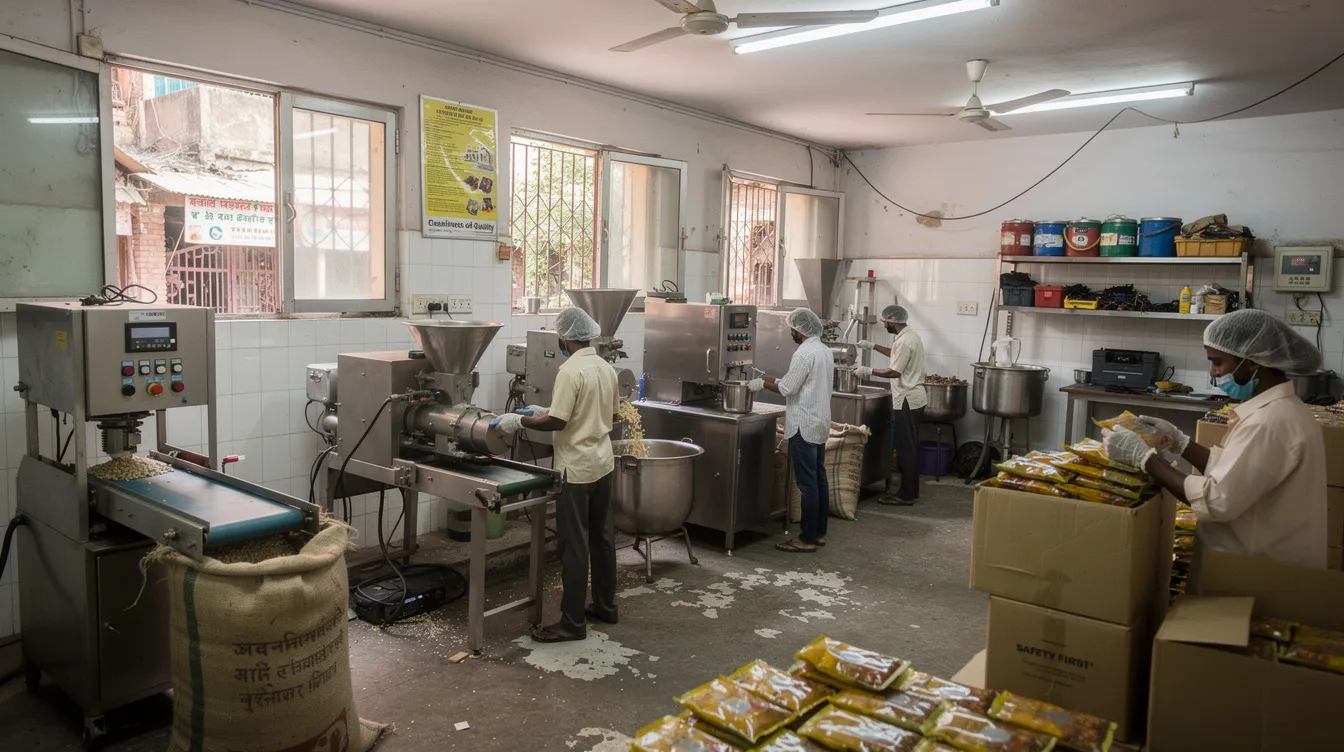
The image depicts a small food processing workshop in India, where several workers are engaged in operating machinery, highlighting the commercial manufacturing processes essential for micro enterprises. This scene reflects the vibrant activity within the industry, which often requires a detailed project report for securing financial assistance through schemes like the Mudra loan.

Interest Rates, Tenure & Loan Amounts for Mudra Loan in West Bengal

Mudra loan interest rates are not centrally fixed but decided by each financial institution according to Reserve Bank deregulated guidelines. Mudra loans offer lower interest rates compared to traditional unsecured business loans from NBFCs. Many public sector banks offer lower interest rates to women entrepreneurs under the Mudra scheme.

The loan amount is decided based on real financial needs of the business and repayment capacity as demonstrated in the project report. Loan size should match genuine business requirements – inflating project cost to get a bigger loan backfires during appraisal.

Category

Typical Interest Rate (PSBs)

Tenure

Loan Amount

Shishu

8.85% – 12%

12 – 24 months

Up to ₹50,000

Kishore

11% – 15%

2 – 5 years

₹50,001 – ₹5,00,000

Tarun

12% – 16%

3 – 5 years

₹5,00,001 – ₹10,00,000

Tarun Plus

12% – 16%

Up to 7 years

₹10,00,001 – ₹20,00,000

Women entrepreneurs, borrowers with strong CIBIL scores and existing customers with clean records often receive slightly better terms or processing fee waivers. Working capital loans typically have shorter tenure than term loans for asset purchase.

Loan Application Process for Mudra Loan in West Bengal – Step-by-Step

Obtaining a Mudra loan involves applying through commercial banks, RRBs, small finance banks, or MFIs. Borrowers can apply for Mudra loans through local bank branches or online via specific portals. Mudra loans can only be applied online through specific governmental websites or local bank branches.

Step-by-step process:

  1. Finalise your business idea and proposed activity clearly

  2. Get your project report and CMA data prepared by a qualified professional

  3. Choose the right bank branch in your city or town – proximity and existing relationship matter

  4. Fill the Mudra loan application form (available at the branch or downloaded online)

  5. Submit KYC, business documents and project report as a complete package

  6. Attend the bank interview/discussion – be prepared with your basic numbers

  7. Bank field verification – officer visits your business premises

  8. Sanction and loan documentation – loan terms are finalised

  9. Disbursement – loan amount credited to your business account

Processing time varies: Shishu applications may be processed in 7–15 working days; Kishore and Tarun may take 3–6 weeks depending on document completeness and branch workload. A strong project report makes the entire process smoother for first-time borrowers.

Loan Approval Tips – Practical CA Advice for West Bengal Borrowers

Over two decades of working with msme loan applications and small business clients, I have observed certain patterns that consistently lead to faster approvals.

  • Ensure your name is spelled identically across Aadhaar, PAN, bank passbook and all documents

  • Maintain clean bank statement behaviour – no frequent cheque bounces, no suspicious cash patterns – for at least 6 months before applying

  • Select the correct project cost based on genuine financial needs rather than inflating figures

  • Be ready to explain your expected revenue, monthly margins and EMI affordability during the branch manager discussion

  • Avoid submitting multiple simultaneous loan applications across banks – it creates a negative impression and hurts approval chances

CA Tips for Mudra Loan West Bengal:

  • ✅ Keep Udyam Registration and trade licence updated before applying

  • ✅ Maintain a separate business bank account with regular transactions

  • ✅ Attach local machinery quotations from West Bengal suppliers, not generic internet printouts

  • ✅ Reference local market specifics (footfall, competition) in your market analysis

  • ✅ Know your break-even point and DSCR numbers by heart before the bank meeting

The image features a collection of financial documents, a calculator, and a pen neatly arranged on an office desk, suggesting preparation for creating a business plan or a project report related to a mudra loan. This setup is indicative of the financial planning process necessary for securing loans from banks or financial institutions.

Common Reasons for Mudra Loan Rejection & How to Avoid Them

A significant percentage of Mudra loan applications get rejected due to avoidable issues. Incomplete project reports lead to loan rejection. Unrealistic financial projections can cause rejection. Here are the key reasons and practical solutions:

Rejection Reason

Solution

Weak or generic project report

Use a CA-prepared, data-backed DPR – not internet templates

Incomplete documents or mismatched KYC

Cross-verify all documents for name, address and date consistency

Poor CIBIL score or existing overdue loans

Clear outstanding dues and maintain a satisfactory credit track record for 6+ months

Unrealistic sales projections

Use conservative, market-supported estimates

Unclear business location or premises

Provide rental agreement, utility bills, photographs of premises

Inconsistent information in report and application

Ensure loan application and DPR tell the same story

For detailed guidance on handling rejections, read our article on Reasons for Mudra Loan Rejection. If you have already been rejected, the Rejected Mudra Loan Appeal Process explains next steps clearly.

Warning: Never hide existing home loan, personal loan or other liabilities from the bank. Banks verify through CIBIL and internal systems. Hiding information guarantees rejection.

Difference Between Mudra Loan and Regular Business Loan in West Bengal

While both are business loan products, there are fundamental differences between PM Mudra Loan and standard unsecured business loans offered by banks and NBFCs in West Bengal.

Feature

Mudra Loan (PMMY)

Regular Business Loan

Loan Amount

Up to ₹20 lakh

₹1 lakh to several crores

Collateral

No collateral required

Often requires property/asset security

Target Borrower

Micro enterprises, startups, first-timers

Established businesses with track record

Interest Rates

Lower, regulated range

Market-driven, often higher

Scheme Backing

Government of India, MUDRA

Bank’s own product

Documentation

Moderate (project report + KYC)

Extensive (audited accounts, ITR, collateral valuation)

Mudra focuses on financial inclusion and first-time entrepreneurs, while larger bank loans target scale and robust financials. Some borrowers combine Mudra with CGTMSE Loan Without Collateral for higher funding needs. Unlike mutual funds or equity-based funding, Mudra is pure debt financing with structured repayment. Banks also offer various other loan schemes, but Mudra remains the most accessible for micro units.

Benefits of Hiring a Chartered Accountant for Mudra Loan Project Report

In my experience across hundreds of loan project files, banks in West Bengal respond far more favourably to structured CA-prepared DPR and CMA reports than to self-drafted documents. The difference is not cosmetic – it is substantive.

  • Professional financial projections built on realistic assumptions and local cost benchmarks

  • Correct format acceptable to both public sector and private sector banks

  • Alignment with RBI norms and internal credit policies

  • Optimised project cost and working capital requirement balancing financial needs with comfortable EMI burden

  • CA support during bank queries and clarification stage

When you must definitely use a CA:

  • Loan amount above ₹2–3 lakh (Kishore and Tarun categories)

  • Startups without prior business experience – your report compensates for lack of track record

  • Businesses with multiple income streams where complete financial information needs careful presentation

  • Any application where you need to demonstrate DSCR, break even analysis and ratio analysis convincingly

Our Online Mudra Loan Project Report Services for West Bengal

We provide professional online Mudra Loan Project Report Preparation Services across the entire state of West Bengal. Although our physical office is located outside West Bengal, we successfully serve clients throughout the state through digital consultation, document collection, report preparation, revisions and online delivery via phone, WhatsApp, email and video calls.

Our reports are prepared for:

  • Public sector banks (SBI, PNB, Bank of Baroda, UCO Bank, etc.)

  • Private banks (ICICI Bank, HDFC Bank, Axis Bank, etc.)

  • Regional Rural Banks and Cooperative Banks

  • NBFCs and Small Finance Banks

Key Deliverables:

  • Bank-ready DPR with business overview, market analysis and technical feasibility

  • CMA Data with working capital assessment

  • 3–5 year financial projections with P&L, Balance Sheet and Cash Flow

  • Ratio analysis, DSCR, break-even and EMI schedule tailored to chosen bank’s format

Service Coverage: Kolkata, Howrah, Bidhannagar (Salt Lake), Asansol, Durgapur, Siliguri, Bardhaman, Kharagpur, Malda, Berhampore, Haldia, Jalpaiguri, Cooch Behar, Darjeeling, Bankura, Purulia, Midnapore, Tamluk, Contai, Barasat, Barrackpore, Chandannagar, Serampore, Habra, Bongaon, Basirhat, Krishnanagar, Kalyani, Nabadwip, Ranaghat, Alipurduar, Raiganj, Balurghat, Bolpur, Rampurhat, Islampur, English Bazar, Diamond Harbour, Jhargram – and every district, municipality and town in between.

Services extend to manufacturing business, trading business, service business, home business and franchise business across West Bengal. Share your business idea, tentative loan amount and preferred bank – we will prepare a suitable project report tailored to your financial needs.


The image shows a professional focused on their laptop, with financial charts displayed on the screen, likely analyzing data for a project report related to a mudra loan or business plan. The setting suggests a workspace dedicated to financial planning, possibly for a micro enterprise seeking funding from a bank or financial institution.

Internal Resources & Guides Related to Mudra Loan (Cross-State)

If you are expanding your business beyond West Bengal or want to compare practices across states, these resources will help.

Entrepreneurs setting up operations in Gujarat can refer to our Mudra Loan Project Report Gujarat guide. For those with business interests in southern India, our Mudra Loan Project Report Karnataka and Mudra Loan Project Report Tamil Nadu pages offer state-specific insights.

Business owners in central India will find the Mudra Loan Project Report Madhya Pradesh useful, while western India entrepreneurs can check Mudra Loan Project Report Maharashtra. For north and east India, we have dedicated pages for Mudra Loan Project Report Uttar Pradesh and Mudra Loan Project Report Bihar.

Additional topic-specific guides include Mudra Loan for Startup, Mudra Loan for Franchise Business, Mudra Loan for Home Business, and Mudra Loan Without GST Registration.

Conclusion – Take Professional Help for Stronger Mudra Loan Approval

The PM Mudra Loan remains one of the most accessible loan schemes for small business owners across West Bengal – from a garment trader in Kolkata to a food processing unit in Bankura. But accessing this financial assistance requires more than just filling a form. Banks evaluate your repayment capacity, business viability and cash flow sustainability through your project report and financial projections.

A CA-prepared mudra loan project report West Bengal gives you a clear edge. It presents your business loan proposal in the exact format credit officers expect, with realistic projections, proper CMA data and thorough break even analysis. Do not depend on generic templates or copied reports – invest in a customised DPR aligned to your real financial needs and business model.

Whether you are in Kolkata, Siliguri, Durgapur, Bardhaman, Darjeeling or any town across West Bengal – reach out to us for expert online project report preparation. We support Shishu, Kishore, Tarun and Tarun Plus categories with complete confidentiality, timely delivery and continuous guidance until your loan approval is through.

About the Author – CA Manish Gugliya

CA Manish Gugliya is a Chartered Accountant with more than 20 years of professional experience in project finance, bank loan consultancy, financial projections, CMA report preparation, business planning, MSME advisory, startup funding, and project report preparation. He has assisted entrepreneurs across India – including numerous clients in West Bengal – in preparing professionally structured project reports for Mudra Loans, MSME finance, working capital finance, term loans, PMEGP loan applications, and various government-sponsored loan schemes.

Through ProjectReportBank.com, CA Manish Gugliya provides reliable online project report preparation services across India. His approach is grounded in practical, implementable financial planning rather than theoretical models. Every report is built on real banking expectations, current RBI guidelines and sector-specific cost benchmarks, ensuring that entrepreneurs receive documentation that genuinely supports their funding journey with any bank or financial institution.

Get Your Mudra Loan Report Now

Quick, professional, and hassle-free online service to prepare your Mudra Loan project report. Trust our expertise to help you secure your loan with confidence. Start your report today and take the first step towards your business growth.

Frequently Asked Questions

For Shishu, a brief form may suffice. For Kishore and Tarun, most banks in West Bengal insist on a detailed project report with financial projections and CMA data.

Individuals, proprietorship firms, partnership firms, or private limited companies can apply. The business must be non-farm, non-corporate and located in West Bengal.

GST registration is required if your business turnover exceeds the threshold. Very small home businesses below the threshold may apply without it.

Yes, provided the applicant has a strong business plan, realistic financial projections and proper documentation demonstrating the viability of the proposed activity.

No. Mudra loans are collateral free. No property or third-party guarantee is needed.

Shishu loans may be processed in 7–15 working days. Kishore and Tarun applications typically take 3–6 weeks.

Yes. Many public sector banks offer preferential interest rates and faster processing for women-led businesses.

CMA (Credit Monitoring Arrangement) data summarises working capital requirement, stock levels, creditor and debtor cycles and projected fund flow. It helps banks assess the financial health and working capital adequacy of the business.

Very important. Banks check credit history thoroughly. A poor score or existing default can lead to rejection regardless of business potential.

Yes. Borrowers can apply through local bank branches or online via specific portals. However, final sanction usually requires physical document verification.

Debt Service Coverage Ratio measures your ability to service loan EMIs from business cash flows. Banks typically expect DSCR above 1.20–1.35.

Yes. Home businesses like tailoring, tiffin services, online selling and handicrafts are eligible with proper documentation.

You can address the deficiencies, improve your project report and reapply. The appeal process allows you to approach the same or a different bank.

Not legally mandatory for Shishu, but strongly recommended. For Kishore and Tarun, most bank branches insist on it.

Yes. Professionals starting or expanding clinics, offices or consultancy practices are eligible provided the activity qualifies as non-corporate, non-farm business.

Mudra loans are a subset of MSME lending, specifically designed for micro enterprises up to ₹20 lakh. Standard MSME loans can be much larger and may require collateral.

Yes. Franchise businesses are eligible under Mudra provided the franchise agreement and business plan are documented properly.

For Shishu and small Kishore loans, provisional financials may work. For Tarun and Tarun Plus, banks may require audited statements.

Yes. Mudra provides both working capital loans and term loan for asset purchase. The loan project structure in your DPR should clearly separate both components.