A road-fed grain silo project report is among the most important documents an investor or promoter prepares before committing capital to modern grain storage infrastructure in India. Unlike conventional godowns where bagged grain sits on plinth floors, a road-fed grain silo storage facility uses vertical galvanized steel silos with mechanised handling, aeration, temperature monitoring, and automated grain management – all served entirely through road-based logistics without a private railway siding. Whether the facility is designed to store bulk quantities of wheat, rice, maize, or other agricultural commodities, its financial viability depends on capacity planning, realistic revenue contracts, project cost estimation, and debt-servicing ability. This article examines the technical, commercial, and financial dimensions that promoters, bankers, and investors must evaluate before proceeding.
Key Takeaways
- A road-fed grain silo storage facility is a mechanised bulk grain storage complex where all inflow and outflow happens by road (trucks, tippers, tractors), using flat bottom galvanized steel storage silos with typical capacities ranging from 10,000 MT to 50,000 MT per location.
- A bankable road-fed grain silo project report must cover technical design, grain storage capacity, detailed project cost, means of finance, revenue model, DSCR analysis, and comprehensive risk assessment from a lender’s perspective.
- Such projects can serve FCI and state procurement agencies, private grain traders, flour millers, feed manufacturers, and institutional buyers – but demand and contracts are not guaranteed and must be assessed on a location-specific basis.
- Modern silos equipped with aeration systems, temperature monitoring cables, and moisture control reduce post-harvest losses significantly (traditional storage losses can reach 10% to 15%, while silo storage minimises loss to less than 1%) and lower operating costs over the long term compared to traditional godowns.
- Project Report Bank, led by CA Manish Gugliya (FCA, DISA (ICAI), 20+ years of professional experience), prepares customised DPRs, financial projections, and bank finance documentation for road-fed grain silo projects across India.
Road-Fed Grain Silo Storage Facility – Project Overview
A road-fed grain silo storage facility is a mechanised bulk grain storage complex designed to receive, store, and dispatch foodgrains entirely through road transport. Instead of manual bag-stacking in conventional warehouses, grain is handled in loose (bulk) form – received through truck unloading pits, cleaned, elevated by bucket elevators and conveyors, and stored in vertical steel silos. The facility is engineered to protect grain from moisture, pests, and extreme weather through a sealed, controlled environment.
These facilities commonly store wheat, paddy (after drying where applicable), maize, barley, corn, soybeans, and other cereals. The specific grain type influences silo height, diameter, aeration system design, and handling capacity. A road-fed grain silo integrates direct heavy-vehicle transportation access with automated vertical storage, streamlining regional grain intake from local farmers or collection centres and reducing transit delays.
How It Differs from Other Storage Models
- A traditional warehouse or godown relies on manual or semi-mechanised handling with bagged storage, leading to higher losses and limited quality preservation. For a detailed comparison, readers can refer to the Modern Food Grain Warehouse & Godown Project Report.
- A rail-linked grain silo terminal includes a private railway siding for rake handling, enabling bulk long-distance movement but requiring substantially higher capital expenditure.
- A hub-and-spoke grain silo network connects smaller road-fed spoke silos to a larger rail-linked hub for aggregation and distribution.
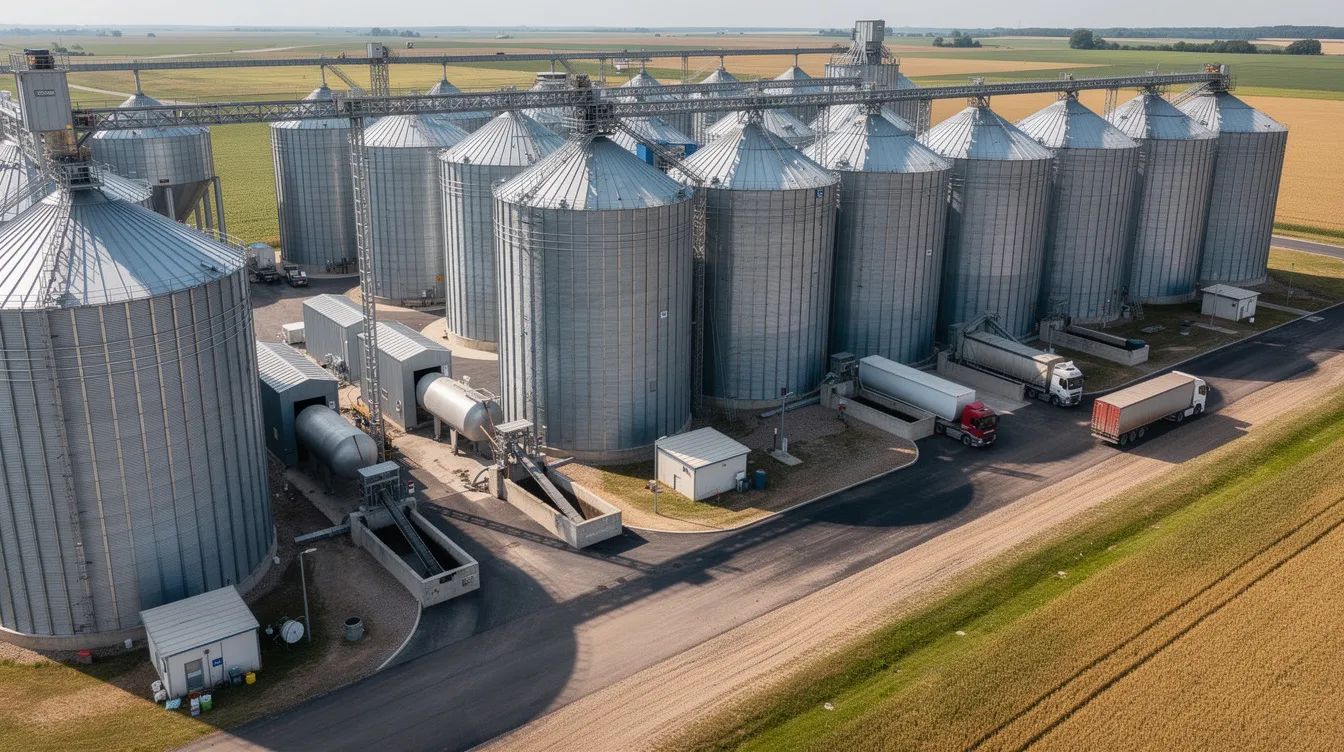
Typical Facility Components
A road-fed grain silo facility is typically equipped with:
- Flat bottom galvanized steel grain silos with access ladders, platforms, and safety systems
- Truck receiving pits and unloading bays
- Bucket elevators, belt or chain conveyors, and sweep augers
- Grain cleaners and pre-cleaners
- Aeration fans and ducts for moisture control
- Temperature monitoring cables and sensors
- Control room with instrumentation and automation panels
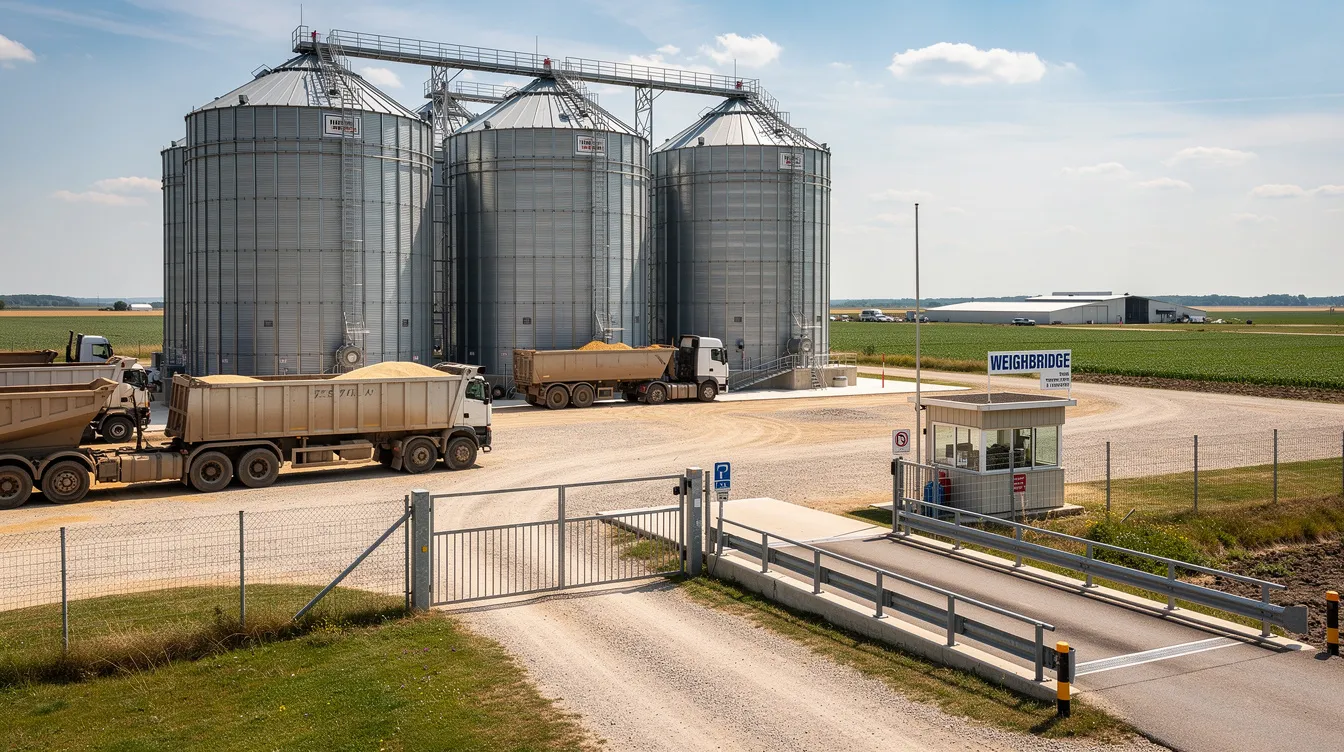
- Weighbridge at entry and exit points
- Internal roads, fire-fighting systems, and lightning protection
Commercial grain silos can store over 20,000 tons of grain. High-quality galvanized steel silos, constructed from corrugated galvanized steel sheets (the standard material for grain silo construction), last over 25 years with proper maintenance.
Who Invests in Road-Fed Grain Silo Projects?
Investors typically include agro-logistics operators, grain traders, storage infrastructure developers, flour millers, feed manufacturers, corporate agri-business groups, cooperatives, and PPP concessionaires selected through FCI or state tenders. A standalone commercial road-fed grain silo does not automatically become an FCI project; government-linked projects depend on specific tenders, concession agreements, and eligibility criteria available on official portals such as FCI and DFPD.
Planning to establish a road-fed grain silo storage facility in India? CA Manish Gugliya provides professional assistance in preparing Detailed Project Reports, financial projections, feasibility studies, and bank finance proposals. Connect through WhatsApp to discuss your project capacity, investment plan, and financing requirements.
Investment Opportunities and Market Demand in India
India procures massive volumes of wheat and rice annually for public distribution and buffer stock management. Post-harvest losses in traditional storage can reach 10% to 15%, while properly designed silos reduce post-harvest grain losses to less than 1%. This gap creates a substantial opportunity for scientific grain storage infrastructure.
The Government of India has approved an action plan to construct 100 Lakh Metric Tonnes (LMT) of steel silo capacity under PPP mode. As of September 2024, approximately 23.25 LMT had been completed across multiple locations, with further capacity under implementation. FCI aims to add approximately 5 million MT of silo capacity via PPP in the coming years. Since 2021, private players have completed silos with capacities of 25,000 to 50,000 MT each across 76 locations.
Demand Sources
- FCI and state procurement agencies (where contracts are successfully obtained through competitive tenders)
- Large flour mills and rice mills requiring bulk wheat or rice storage
- Private traders consolidating grain from mandis during harvest season
- Feed manufacturers, food processing units, and institutional buyers
- Cooperatives and large scale aggregators seeking long term storage
Seasonal procurement during rabi and kharif cycles, combined with buffer stock norms, creates sustained demand for bulk grain storage. However, promoters must understand that government procurement-related demand is channelled through formal schemes and tenders. There is no assured allocation simply by setting up a silo. Independent contracts with private customers or successful government tender participation must be secured.
Road-fed grain silos located near major mandis, procurement centres, or processing clusters can support lower transport costs, faster truck turnaround, and better price realisation by preserving grain quality throughout storage.
Road-Fed Grain Silo vs Rail-Linked and Hub & Spoke Storage Models
Grain storage infrastructure in India is being developed under multiple models. Selection depends on grain flow patterns, target customers, nearby rail infrastructure, land profile, and applicable tender or concession structure.
- A road-fed silo is commonly located near production or consumption centres, receiving and dispatching grain by road only, without a private railway siding.
- A rail-linked silo terminal includes a private railway siding for rake loading and unloading, serving as a regional distribution or aggregation hub. Readers can explore this model further in the Rail-Linked Grain Silo Terminal Project Report & DPR.
- A hub-and-spoke model connects smaller road-fed spoke silos to a larger rail-linked hub. More details are covered in the Hub & Spoke Grain Silo Project Report & DPR.
| Feature | Road-Fed Silo | Rail-Linked Silo | Hub & Spoke Network |
|---|---|---|---|
| Connectivity | Road only | Road + Railway siding | Road (spokes) + Rail (hub) |
| Land Requirement Drivers | Silo footprint, truck areas, roads | Silo footprint + rail siding, rake area | Multiple sites (spokes + hub) |
| Key Additional Capital Items | Truck handling infrastructure | Railway siding, rake handling systems | Network logistics, multiple locations |
| Typical Use-Case | Local/regional procurement and storage | Regional distribution and aggregation | Networked procurement-to-dispatch |
| Relative Project Cost | Lower per location | Higher due to rail infrastructure | Distributed across multiple sites |
Hopper bottom silos or hopper bottom configurations are preferred for high-turnaround distribution hubs where rapid gravity-based unloading is essential, while flat bottom designs are recommended for long term strategic reserves in grain storage.
Site Selection, Land Requirement and Infrastructure Planning
Location and land selection can decisively impact project viability, logistics cost, and suitability for FCI, state, or private contracts.
Location Factors
- Proximity to grain-producing belts, major mandis, or procurement centres
- Access from National or State Highways enabling smooth truck movement
- Reasonable distance from potential institutional customers (flour mills, processors)
- Availability of reliable power supply, water, and communication facilities
- Legally permitted land use (industrial, warehousing, or commercial as per local regulations)
Land and zoning investigations are critical for obtaining necessary permits for silo construction. Geotechnical investigations are essential for designing silo foundations based on soil conditions. A silo’s foundation must support immense weight, and silo foundation designs must account for massive vertical and lateral loads from stored grain.
Site Infrastructure
- Internal concrete roads with adequate turning radius for 16–20 tonne and higher capacity trucks
- Truck parking, queuing space, and waiting areas
- Weighbridge at entry and exit points
- Truck unloading pits with covered sheds
- Drainage network to prevent waterlogging around silo foundations
- Fire-fighting system layout and emergency access routes
Civil & Structural Planning
- Soil investigation report for bearing capacity assessment
- Silo foundation design (ring beam or raft) based on soil data and silo load
- Construction of retaining walls, fencing, and gate complex
- Separate buildings for administration, QC lab, control room, and staff amenities
Total land requirement depends on the number and diameter of storage silos, inclusion of future expansion space, presence of ancillary structures, and local setback norms. No universal acreage figure should be assumed without engineering inputs.
Road-Fed Grain Silo Storage Capacity Planning
Storage capacity is expressed in metric tonnes (MT) of a particular grain type. Bulk density varies – wheat, paddy, and maize each occupy different cubic volumes per tonne – affecting silo dimensions and the ability to store bulk quantities efficiently.
Capacity Planning Approach
- Decide total complex capacity (e.g., 10,000 MT, 25,000 MT, 50,000 MT)
- Break it into multiple flat bottom grain silos (for example, 4 × 12,500 MT)
- Plan for future expansion by reserving silo pad space
The Darbhanga Silo Project, for example, has a storage capacity of 50,000 MT, illustrating the large scale at which modern silo infrastructure is designed in India.
Key Capacity Concepts
- Installed storage capacity: sum of nominal silo capacities
- Annual throughput: total quantity handled in a year, often multiple times the static capacity
- Average occupancy: percentage of capacity utilised on an average day over the year
Financial viability is driven by throughput and occupancy, not just static silo size. A 25,000 MT complex with multiple turnovers can handle 75,000 to 100,000 MT per year depending on the operating pattern. Capacity utilisation of grain storage facilities should be managed to avoid bottlenecks during harvest peaks.
| Illustrative Scale | Approximate No. of Silos | Daily Truck Handling | Typical Use-Case | Capital Intensity |
|---|---|---|---|---|
| 10,000 MT | 2–4 | 15–30 trucks | Local trader / processor storage | Moderate |
| 25,000 MT | 4–6 | 30–60 trucks | Regional storage hub | Substantial |
| 50,000 MT | 6–10 | 50–100+ trucks | Large scale institutional / PPP | High |
Silos designed for specific grain types must accommodate varying moisture levels and quality requirements. Properly prepared DPRs model capacity utilisation over at least 5–7 years, testing scenarios like 60%, 75%, and 90% occupancy to assess DSCR and ROI.
Machinery, Equipment and Technology Requirements
A modern road-fed grain silo storage facility relies on integrated mechanical handling, cleaning, storage, and control systems. The choice of equipment directly influences project cost, operational efficiency, and the facility’s ability to handle different types of grains over its lifespan.
Principal Equipment Components
- Truck receiving hopper or pit with dust extraction
- Belt or chain conveyors for grain transfer
- Bucket elevators sized for target throughput (tonnes per hour)
- Grain cleaner and pre-cleaner to remove foreign material
- Galvanized steel grain storage silos (flat bottom design for long term storage) with access ladders and safety systems
- Aeration fans and ducts – effective aeration systems help control the temperature and moisture levels of stored grain, and proper aeration prevents heat buildup and grain rot
- Temperature monitoring cables and sensors for early detection of hot spots
- Sweep augers for unloading flat bottom silos
- Reclaim conveyors and truck loading spouts for road dispatch
- Moisture sensors that help maintain grain quality in storage
Automated systems monitor grain inventory, temperature, and aeration in storage facilities, improving operational efficiency. Aeration systems require specific cubic feet per minute calculations tailored to silo volume and grain type. Sealing joints must be airtight to prevent moisture ingress, and silos must withstand internal pressure from grain weight. Silos must adhere to ASABE engineering standards for structural and operational design.
Optional and Project-Specific Systems
- Integrated grain drying systems that extend storage life significantly and ensure proper moisture content before storage – grain moisture levels above 12% to 14% cause spoilage
- Advanced automation and SCADA for remote monitoring
- Centralised dust collection and aspiration for environmental control
- Fumigation systems and gas-tight sealing for long term storage
- Grain silos should include dust suppression and fire safety control systems to manage hazards
Modern silos utilise advanced aeration systems for grain quality preservation. Readers interested in silo fabrication and steel structure design standards can refer to the Steel Grain Silo Plant Project Report & DPR for a more detailed technical discussion.
Machinery cost varies substantially based on capacity, degree of automation, imported versus Indian components, and vendor selections. Reliable vendor quotations and layout-specific engineering are essential inputs for the DPR.
Grain Receiving, Storage and Road Dispatch Process
The operational flow in a road-fed grain silo facility is designed for mechanised handling that supports grain quality, traceability, and quick truck turnaround.
Process Flow
- Truck Arrival → Entry at gate, initial weighment on weighbridge (gross weight)
- Sampling & QC → Moisture, foreign matter, and infestation checks at quality control lab
- Unloading → Grain tipped into receiving pit after quality acceptance
- Pre-Cleaning → Aspiration and cleaning to remove dust, chaff, and impurities
- Elevation & Distribution → Bucket elevator lifts grain; conveyors distribute to selected silo
- In-Silo Storage → Continuous aeration, periodic temperature monitoring, fumigation cycles
- Quality Monitoring → Monitoring grain quality during storage helps mitigate risks of spoilage and contamination in silos
- Dispatch → Silo reclaim through sweep auger and reclaim conveyors → truck loading spout → final weighment
Post-harvest management includes quality control procedures to maintain grain standards throughout storage. Grain storage structures should provide controlled environments to prevent spoilage and contamination. Proper aeration prevents grain spoilage and mold growth, while silos provide a sealed environment to protect grain from pests and moisture.
Operational KPIs
- Average truck turnaround time (target: under 2 hours)
- Loading and unloading rate in tonnes per hour
- Moisture and temperature benchmarks for stored grain
- Stock reconciliation via weighbridge records and silo level calculations
Batch-wise grain storage and separation of different grain types or quality grades across silos maintains traceability for institutional buyers and government agencies.
Road-Fed Grain Silo Project Cost and Capital Investment
Project cost for a road-fed grain silo facility is highly sensitive to storage capacity, soil conditions, land cost, level of automation, and whether land is already owned or needs to be purchased. Modern silos can reduce labor costs by automating grain handling, but upfront capital investment is substantial.
In recent PPP tenders, one silo project’s complete cost – including land, financing, and pre-operative expenses – has been estimated at Rs 46–48 crores. The government’s older cost norm of Rs 5,900 per MT for silos (inclusive of civil, electrical, and machinery) is likely outdated for modern automated facilities with higher instrumentation and current steel prices.
| CAPEX Head | Description | Key Cost Drivers |
|---|---|---|
| Land | Acquisition or long-term lease | Location, area, ownership status |
| Site Development | Grading, boundary walls, internal roads | Terrain, soil condition, access |
| Civil Works | Silo foundations, buildings, QC lab, utilities block | Soil bearing capacity, structural loads |
| Grain Storage Silos | Galvanized steel structures and accessories | Steel prices, capacity, wind/seismic rating |
| Mechanical Handling | Conveyors, elevators, sweep augers, cleaners | Throughput rate, automation level |
| Electrical Works | Transformers, DG sets, cabling, panels | Power load, backup requirements |
| Instrumentation | Temperature monitoring, SCADA, controls | Automation scope, modular design |
| Safety Systems | Fire-fighting, lightning protection, dust control | Regulatory requirements, facility size |
| Pre-Operative Expenses | Engineering, approvals, interest during construction | Project duration, financing terms |
| Contingencies | Escalation margin | Steel and labour price trends |
A Detailed Project Report consolidates engineering inputs, vendor quotations, and civil estimates into a structured project cost. Under-estimation of pre-operative expenses, contingencies, and interest during construction can distort DSCR and repayment calculations.
Important project factors include logistics, storage capacity, site selection, and grain preservation strategies – all of which feed into the cost structure.
Means of Finance and Bank Loan Requirements
Grain storage silo projects in India are typically financed through a combination of promoter equity and term loans from banks or financial institutions.
Standard Financing Structure
| Component | Typical Share | Notes |
|---|---|---|
| Promoter Equity | 25%–35% | Land value may be included depending on lender |
| Term Loan | 65%–75% | For civil, P&M, electrical, and soft costs |
| Others | As applicable | VGF, quasi-equity, internal accruals if documented |
Silos can utilise project financing models such as Public-Private Partnerships to fund construction where applicable.
What Banks Examine
- Promoter track record in agriculture, logistics, or infrastructure
- Clarity of project concept supported by a detailed DPR
- Signed or proposed storage and handling contracts
- Realistic project cost and implementation schedule
- Projected profitability, cash flows, and DSCR
- Adequacy of collateral or project security
Interest rates, moratorium periods, repayment tenors, and margin norms are lender-specific and time-specific. Infrastructure-style assets like grain silos commonly see 7–10 year repayment tenors. Promoters requiring lender-ready documentation can explore Bank Finance DPR & Loan Proposal Assistance and Project Finance Advisory & Loan Structuring Services for professional support.
Loan approval is always subject to the bank’s independent assessment, credit policy, and risk perception. No DPR can guarantee sanction.
Revenue Model and Commercial Viability
The viability of a road-fed grain silo facility depends on a clear, contracted revenue model rather than merely owning a modern grain storage silo complex. Projects should outline potential revenue models from storage, handling, and additional services offered to clients.
Revenue Streams
- Storage charges (per MT per month or similar structure) for bulk grain storage
- Handling charges for receiving, cleaning, loading, and unloading
- Value-added service fees for drying, blending, or bagging where provided
- Contract-based availability or annuity payments under PPP models where applicable
- Ancillary revenues from weighbridge services or third-party logistics
Illustrative Revenue Calculation
For a 25,000 MT complex at 75% average occupancy:
Annual Storage Revenue = 25,000 MT × 75% × Storage Tariff per MT per Month × 12 Months
The actual tariff depends on location, customer contracts, and competitive conditions. This formula-based approach allows promoters to test multiple scenarios.
Key Commercial Risks
- Under-utilisation of capacity reducing revenue below debt-servicing requirements
- Customer concentration creating dependency on a single large client
- Seasonality in inflows and outflows affecting cash flow consistency
- Price competition from traditional godowns or other modern storage facilities
Robust modelling of revenue, tariffs, and occupancy scenarios is critical before finalising investment decisions. Financial Projections & Financial Modelling Services offered by Project Report Bank support this analysis.
Financial Projections, Working Capital and DSCR
A bankable road-fed grain silo project report must include 5–7 year financial projections showing profitability, cash flows, and debt-servicing ability under realistic utilisation assumptions. Financial analyses should incorporate sensitivity evaluations of operating scenarios regarding different market conditions.
Projection Components
- Projected income statement: storage and handling revenue, other operating income
- Operating expenses: manpower, electricity for aeration and handling, repairs and maintenance, insurance, administrative overheads
- Depreciation on civil structures and silos, finance costs on term loans
- Profit before and after tax estimations
- Projected cash flow and balance sheet
Working Capital
Working capital requirements are generally lower in a pure storage-service model where revenue is fee-based and inventory belongs to third parties. Requirements increase significantly if the promoter also trades in grain and owns the stored inventory.
DSCR
DSCR (Debt Service Coverage Ratio) measures cash available for debt service relative to total debt obligations for the period. Banks look for adequate average DSCR and satisfactory minimum DSCR throughout the loan tenure. A detailed project report should assess market demand, site suitability, and potential financial viability – and the DSCR analysis is central to this assessment.
| Driver Category | Key Variables |
|---|---|
| Revenue Drivers | Capacity, utilisation rate, storage tariff |
| Cost Drivers | Electricity, manpower, repairs, insurance |
| Debt Service Drivers | Loan amount, interest rate, tenor |
| Key Ratios | DSCR, break-even utilisation |
Properly structured CMA Data Preparation aligned with financial projections is usually required by banks for term and working capital loan appraisal.
ROI, IRR, NPV, Payback and Sensitivity Analysis
Serious investors and lenders evaluate road-fed grain silo projects using investment metrics drawn from long-term cash flow projections.
- ROI measures return relative to total investment at both project and equity levels
- Project IRR evaluates the internal rate of return on total project cash flows; Equity IRR focuses on returns to promoter equity
- NPV discounts future cash flows relative to the cost of capital
- Payback Period measures how long before cumulative cash flows recover the initial investment
Sensitivity Framework
| Variable Tested | Impact Area |
|---|---|
| Project cost overrun (10%–20%) | IRR reduction, longer payback |
| Capacity utilisation drop (to 60%) | Lower DSCR, stressed cash flow |
| Storage tariff reduction (10%–15%) | Reduced revenue, break-even risk |
| Interest rate increase | Higher finance cost, lower DSCR |
| Commissioning delay (6–12 months) | Revenue gap, capitalised interest increase |
Lenders are particularly concerned about downside scenarios rather than optimistic forecasts. Any numerical examples used in the DPR should be labelled as hypothetical illustrations, not universal benchmarks.
FCI, PPP and Government-Linked Road-Fed Silo Projects
FCI and the Department of Food & Public Distribution have been promoting steel grain silo infrastructure through PPP models. FCI has six operational silo projects across India, with significant additional capacity under implementation. Road-fed silos can form part of hub-and-spoke PPP networks or be separately tendered where road-fed bulk storage is required.
Common PPP Models
- DBFOO (Design, Build, Finance, Own, Operate): concessionaire procures land and retains ownership
- DBFOT (Design, Build, Finance, Operate, Transfer): construction on government land, transferred after concession period
Both models typically involve 30-year concession periods with fixed and variable storage charges adjusted by inflation indices.
Key Aspects for Investors
- Eligibility criteria and technical experience requirements (e.g., minimum past project cost of INR 21–32 crores depending on capacity)
- Land ownership and encumbrance conditions
- Storage capacity and performance obligations
- Payment mechanism including capacity charges, handling charges, and penalties
- Contract tenure and termination or compensation clauses
Promoters should not assume automatic availability of FCI or state contracts. Each project must be bid for and awarded separately through competitive tenders.
Statutory Approvals, Compliance and Implementation Schedule
Statutory approvals vary with state, municipality, and project scale. Typical requirements include:
- Land use confirmation for industrial or warehousing purposes
- Building plan and layout approval from local authorities
- Fire safety clearance and installation of mandated fire-fighting systems
- Electrical safety approval and power load sanction
- Environmental clearances where triggered by project size or location-specific regulations
- Labour law compliances and health and safety norms
Project implementation should follow structured phases with formal approval and quality reviews at each stage. Structural design must be certified as per relevant Indian Standards for wind, seismic, and structural loading. Operational handover involves training staff and establishing preventive maintenance routines for facilities.
Implementation schedules typically cover design and engineering, civil construction, silo erection, equipment installation, electrical and automation integration, trial runs, and commissioning. DPRs usually present Gantt-style schedules based on realistic contractor and vendor inputs – medium-size facilities may require 12–18 months depending on site conditions and approvals.
Project Feasibility and Major Investment Risks
Project feasibility comprises technical, commercial, financial, and regulatory assessments. All four must be satisfactory for a road-fed grain silo to be viable. Comprehensive risk assessments are vital to identify potential challenges in silo projects.
Feasibility Dimensions
- Technical: silo design adequacy, grain type compatibility, utility reliability
- Market: local grain flows, competing storage silos and godowns, potential client base
- Financial: project cost, revenue model, DSCR, IRR under realistic assumptions
- Regulatory: land use permissions, environmental and statutory approvals
Major Risks
- Demand risk: lower-than-expected storage and handling volumes
- Tariff risk: competitive pressure reducing storage rates from traditional godowns or other modern silos
- Operational risk: equipment breakdowns, poor moisture control leading to grain spoilage, mold, and pest infestation
- Credit risk: delayed payments from customers impacting cash flow
- Policy risk: changes in government procurement patterns or concession terms
A structured Project Feasibility Study helps promoters understand these risks and model downside scenarios before finalising their investment.
Importance of a Detailed Project Report for Bank Finance and Investors
A professional DPR for a road-fed grain silo storage facility is not merely a template but a comprehensive document banks and investors use to decide whether the project is bankable.
Essential DPR Components
- Executive summary and project concept
- Promoter profile and relevant experience in logistics, storage, or infrastructure
- Location analysis, land details, and customised site assessment
- Market study and demand assessment including FCI depots, processors, and mandis
- Technical details of grain storage silos, grain type, and capacity planning
- Layout, site development, and infrastructure plan
- Detailed project cost estimates with supporting assumptions
- Means of finance and proposed loan structure
- 5–7 year financial projections including profitability and DSCR analysis
- Sensitivity analysis and risk assessment
- Implementation schedule and project organisation
A well-prepared DPR provides clarity on assumptions, answers standard lender questions in advance, reduces back-and-forth on data gaps, and supports internal credit note preparation within the bank.
Professional DPR Preparation and Project Finance Advisory
CA Manish Gugliya is a practising Chartered Accountant (FCA, DISA (ICAI)) with over 20 years of professional experience in project reports, CMA Data, financial projections, and project finance advisory for manufacturing and infrastructure projects, including grain and cereal storage and processing.
Project Report Bank offers:
- Customised road-fed grain silo project reports and DPRs
- Detailed financial models tailored to specific capacities (10,000 MT to 50,000 MT and beyond)
- CMA Data and bank loan proposal documentation
- Sensitivity analysis on capacity utilisation, tariff, and project cost scenarios
- Guidance on interaction with banks and financial institutions
Advisory is provided online across India based on client-supplied information on land, capacity, proposed customers, and funding plan. Bank Finance DPR & Loan Proposal Assistance generally starts from ₹25,000, subject to project scope and complexity.
Professional support improves documentation and project structuring, but it cannot guarantee bank loan sanctions or future profitability, as those depend on lender policies, market conditions, and actual project implementation.
Need a bankable DPR for your proposed road-fed grain silo storage facility? Share your project location, planned storage capacity, land availability, and estimated investment with CA Manish Gugliya via WhatsApp for professional DPR preparation and financial advisory assistance.
Frequently Asked Questions (FAQ)
What is the typical size of a road-fed grain silo project for a new entrant?
Many first-time promoters in India explore capacities in the 10,000 to 25,000 MT range. However, actual capacity choice depends on land availability, target customers, capital budget, and bankability as analysed in the DPR. Smaller capacities may suit local traders, while larger facilities (25,000–50,000 MT) are more common for regional storage or PPP projects.
Can I use the same grain storage silo complex for multiple grain types?
Steel grain silos can handle different grain types over time – for example, wheat followed by maize – provided proper cleaning and segregation protocols are followed between cycles. However, long term contracts with FCI or large institutional buyers may require dedicated silos for specific grain and quality standards. The facility’s design must accommodate varying moisture levels and quality requirements across grain types.
Do I need to own land before approaching the bank for a grain silo term loan?
Most banks prefer clear land title or a registered long-term lease before final sanction. While preliminary discussions can begin earlier, final DPR submission and legal appraisal typically require clear land documentation. Land brought in by the promoter may be treated as part of promoter contribution depending on the lender’s policy.
Is it necessary to link my road-fed grain silo project with FCI or government schemes?
Private standalone projects are entirely feasible and can serve traders, processors, and institutional buyers. Linking with FCI or state procurement through competitive tenders is one option but not mandatory. Each path has different risk-return profiles and contractual implications. A privately operated facility offers more flexibility but carries demand risk, while a government-linked project may offer more predictable revenue but involves concession compliance.
How early should I start preparing the DPR for my road-fed grain storage silo project?
It is ideal to begin DPR work soon after shortlisting land and tentative capacity. Early preparation allows project cost, means of finance, bank approach, and implementation planning to be aligned well before placing major machinery orders or committing to vendor contracts. Starting early also provides adequate time for statutory approvals and lender discussions.