
Why a Professional Project Report Matters for Your Loan

A well-prepared project report by an experienced Chartered Accountant can significantly boost your chances of Mudra Loan approval. It demonstrates financial clarity, business viability, and compliance with lender requirements, making your application stand out. Trusting an expert ensures accuracy, saves time, and helps you avoid costly mistakes during the loan process.
A confident business owner sitting with a Chartered Accountant, reviewing a detailed project report with charts and financial statements, in a bright, modern office setting.
Expert Guidance from a Chartered Accountant

Benefit from the insights of a seasoned professional who understands exactly what banks and lenders look for in a project report. Our expertise ensures your report meets all compliance and quality standards.
A close-up of a professionally bound project report with financial graphs, checklists, and approval stamps, placed on a clean desk with a laptop and pen.
Increase Your Loan Approval Chances
A professionally crafted project report presents your business plan clearly and convincingly, addressing all lender concerns. This increases your credibility and the likelihood of your Mudra Loan application being approved.
A business owner smiling while submitting a project report at a bank counter, with a bank officer reviewing the documents and giving a reassuring nod.
Save Time and Avoid Costly Errors
Letting an expert handle your project report preparation means fewer mistakes, faster processing, and less stress. You can focus on your business while we ensure your documents are accurate and complete.

Mudra Loan Rajasthan – Complete Guide & Project Report Support (2026)

If you are a small business owner, trader, manufacturer, or service provider in Rajasthan looking for affordable, collateral-free funding, the Pradhan Mantri Mudra Yojana (PMMY) could be exactly what you need. This guide covers everything from eligibility and interest rates to the project report that can make or break your application, written from the perspective of a practicing Chartered Accountant with deep experience in MSME finance.

Key Takeaways

  • Under प्रधानमंत्री मुद्रा योजना (PMMY), eligible borrowers in Rajasthan can access collateral-free mudra loans up to ₹10 lakh for small business, trading, services, and allied agriculture activities. A Mudra loan is a government-backed initiative aimed at providing affordable credit to small enterprises.

  • Three main categories are available: Shishu (up to ₹50,000), Kishore (up to 5 लाख), and Tarun (up to 10 लाख), each with bank-specific interest rates and repayment terms. Mudra loans are available up to ₹20 lakh for certain categories under the newer Tarun Plus tier.

  • A strong, bankable Mudra Loan Project Report with CMA data and realistic financial projections significantly improves approval chances, especially for proposals of ₹5 lakh and ₹10 lakh.

  • Project Report Bank provides online, Rajasthan-specific mudra loan project report services for all cities, including Jaipur, Jodhpur, Udaipur, Kota, Ajmer, Bikaner, and more, even without a physical office in the state.

  • This article is written from the perspective of CA Manish Gugliya, a Chartered Accountant with 20+ years of experience in MSME finance, bank loans, and project reports.

What is Pradhan Mantri Mudra Yojana (PMMY)?

PMMY was launched by the Government of India on 8 April 2015 to provide collateral-free business loans up to ₹10 lakh to non-corporate, non-farm micro enterprises across India, including Rajasthan. It is designed to formalize micro businesses and boost financial inclusion.

  • MUDRA (Micro Units Development & Refinance Agency Ltd.) is a refinancing institution, not a direct lender. Actual mudra loans are disbursed by Member Lending Institutions such as Public Sector Banks, Private Banks, Regional Rural Banks, NBFCs, MFIs, and Small Finance Banks. Entrepreneurs can apply for Mudra loans through regional rural banks and small finance banks, as well as commercial banks and micro-finance institutions.

  • The scheme targets non-corporate small businesses in manufacturing, trading, services, and allied agriculture activities like dairy, poultry, beekeeping, and food processing. Mudra loans are provided for income-generating activities in various sectors.

  • As per RBI norms, no collateral is required for loans up to ₹10 lakhs under PMMY. The loan may be structured as a term loan or working capital facility.

  • PMMY has three core loan categories: Shishu, Kishore, and Tarun. Some banks also offer a Tarun Plus extension, but the standard PMMY limit remains ₹10 lakh for new applicants. Mudra loans are available for micro and small enterprises.
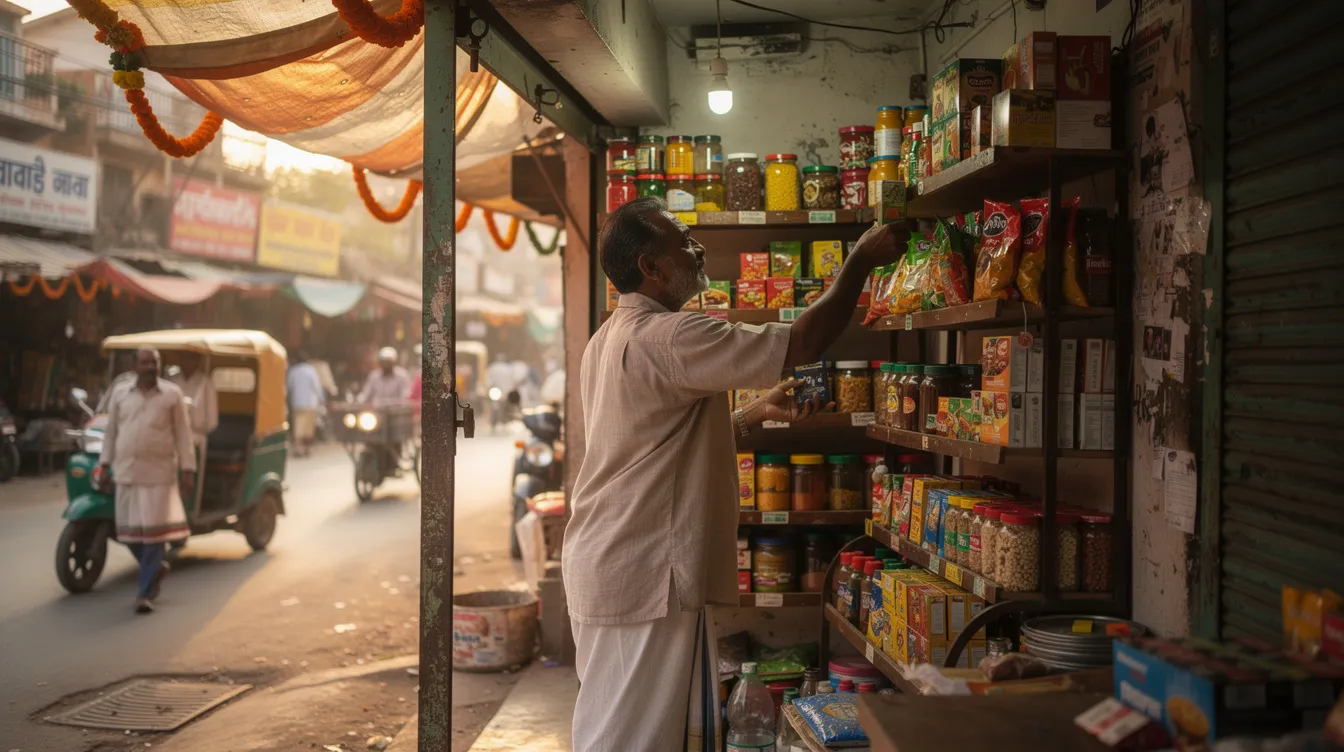
A small shop owner is diligently arranging various products on shelves in a bustling Indian market street, surrounded by vibrant stalls and shoppers. The scene reflects the lively atmosphere of micro enterprises in India, where eligible borrowers often seek financial support through schemes like the प्रधानमंत्री मुद्रा योजना for their business needs.

Mudra Loan in Rajasthan – Overview (2026)

Mudra loan in Rajasthan is widely available for shopkeepers, traders, small manufacturers, transport operators, service providers, women entrepreneurs, and rural youth. Mudra loans support various sectors including handicrafts, agriculture, tourism, and manufacturing across the state.

  • Almost all major PSBs (SBI, Bank of Baroda, PNB, Union Bank of India, Canara Bank, etc.), Regional Rural Banks, cooperative banks, and many private banks in Rajasthan disburse PMMY loans. As of April 2025, over 2.26 crore beneficiaries in Rajasthan have been empowered by Mudra Yojana.

  • Typical use cases include a kirana shop in Jaipur, a dairy unit in Alwar, small textile trading in Bhilwara, a mechanic workshop in Jodhpur, a tourist taxi service in Udaipur, or a mobile repair shop in Kota.

  • Under मुद्रा योजना, banks in Rajasthan finance both new and existing businesses for machinery purchase, shop renovation, working capital, vehicle purchase, and expansion up to ₹10 lakh तक का loan amount.

  • State-level and district-level bank committees regularly set PMMY targets. Rajasthan has disbursed approximately ₹1.45 lakh crore under the scheme since 2015. Borrowers should approach their existing bank branch first for faster processing.

Mudra Loan Categories – Shishu, Kishore, Tarun

Mudra loans are categorized into Shishu, Kishore, Tarun, and Tarun+. Here is a clear breakdown of each:

Category

Loan Amount

Typical Borrower Profile

Documentation Level

Shishu

Up to ₹50,000

Street vendors, home-based businesses, small stall owners

Minimal

Kishore

₹50,001 to ₹5 lakhs

Growing businesses needing working capital or small machinery

Moderate (project report recommended)

Tarun

₹5 lakhs to ₹10 lakhs

Established micro units expanding capacity, adding vehicle or shop

Detailed (DPR, CMA data required)

Tarun+

₹10 lakhs to ₹20 lakhs

Proven borrowers with successful previous loans repayment track

Strict (past Mudra loan history mandatory)

  • Shishu loans provide up to ₹50,000 and are ideal for first-time very small borrowers. Documentation is simpler, and repayment tenor ranges from 1 to 5 years.

  • Kishore loans range from ₹50,001 to 5 लाख. For the किशोर category, a detailed project report and basic CMA data are highly recommended. These businesses typically need more working capital or small machinery.

  • Tarun loans range from ₹5 lakhs to ₹10 lakhs. Banks in Rajasthan typically insist on a well-prepared DPR, financial projections, and a proper banking track record for this category.

  • Tarun+ loans provide between ₹10 lakhs and ₹20 lakhs, but only for borrowers who have successfully repaid previous loans under PMMY. Nationally, about ₹4,930 crore has been disbursed to approximately 34,697 borrowers under Tarun Plus as of June 2025.

  • Many bank-specific sub-products (vehicle loans, trader finance) are sanctioned under the PMMY umbrella but still fall under these categories.

Eligibility Criteria for Mudra Loan in Rajasthan

Eligibility is mostly uniform across India, but here are the criteria contextualized for Rajasthan:

  • Eligible entities include proprietorship firms, partnership firms, small companies, SHGs, JLGs, and individuals running micro businesses in manufacturing, trading, services, and allied agriculture activities. Eligible businesses include manufacturing, services, and trading sectors.

  • Applicant age is typically minimum 18 years and maximum 65 years at loan maturity (confirm with your lender). Applicants must not be defaulters to any bank or financial institution to qualify for a Mudra loan. The credit score (CIBIL) is evaluated.

  • New startups can also apply for Mudra loans. For new businesses, a clear business idea and a simple project report are expected. For existing units, past financial performance and bank statements will be assessed.

  • Some banks in Rajasthan may require Udyam Registration, GST registration (if turnover crosses the mandatory threshold), and local licences such as Shop & Establishment registration under the Rajasthan Shops & Commercial Establishments Act, 1958, FSSAI for food businesses, or a trade licence from the local body.

Mudra Loan Interest Rates and Repayment Terms

There is no single fixed mudra loan interest rate for Rajasthan. Banks set their own interest rates for Mudra loans based on RBI guidelines, borrower profile, and internal policies. Interest rates for Mudra loans vary by lender and category.

Category

Indicative Interest Rate (p.a.)

Processing Fee

Shishu

8.5% to 12%

Nil or very low

Kishore

10% to 14%

~0.50% + GST

Tarun

10% to 14% (up to 16% at NBFCs)

~0.50% + GST

  • Typical interest rates range from 8.5% to 12% for shishu loans. Kishor and Tarun loans have rates from 10% to 14% per annum. Actual rate must be confirmed from the lending branch at the time of application.

  • Interest may be linked to repo-based lending rate (RBLR) or MCLR plus spread. There is no interest subsidy under the Mudra scheme.

  • The repayment period for Mudra loans can extend up to 84 months depending on the type. Generally, repayment is up to 5 years for standard working capital and term loans, but banks may allow slightly longer tenors depending on cash flow projections.

  • Banks may offer a moratorium period of 3 to 6 months for some term loans, especially for manufacturing units or businesses that need time to stabilize operations before starting principal repayment.

Documents Required for Mudra Loan in Rajasthan

Documents are largely similar across banks, with some variations based on business nature and loan amount.

  • KYC documents: Aadhaar card, PAN card, voter ID, or driving licence. For partnerships or companies, constitution documents (partnership deed, registration certificate, MoA/AoA) are needed. Standard documentation for Mudra loans includes identity, residence, and business proof.

  • Address proof for residence and business: electricity bill, rent agreement, or municipal tax receipt. Recent passport-size photographs of the applicant/partners.

  • Business documents: Udyam Registration, GST registration (if applicable), shop licence, FSSAI licence for food businesses, and sector-specific registrations. Existing bank statements (minimum last 6 to 12 months) are required.

  • Applicants must submit last year’s income tax return for loans, especially for Kishore and Tarun categories.

  • For Kishore and Tarun loans (₹5 lakh and ₹10 lakh), banks require a project report for Kishor and Tarun loans. A bankable Project Report with CMA data, projected P&L, balance sheet, cash flow, and DSCR calculation is strongly preferred by banks in Rajasthan.

Importance of a Strong Mudra Loan Project Report

From a Chartered Accountant’s viewpoint, a well-prepared project report is often the single biggest factor separating approved applications from rejected ones, especially for Kishore and Tarun loans in the ₹5 lakh to 10 लाख range.

  • A project report demonstrates business viability, repayment capacity, and clarity of business model. It covers market analysis, cost estimation, profit margin, and working capital cycle, giving the credit officer confidence to recommend your file.

  • For Rajasthan, the report should consider local factors: seasonal demand patterns (tourism peaks, agricultural cycles), local competition, input cost variations, state-specific charges like mandi tax, and local transport costs.

  • Banks rely on financial projections (3 to 5 year projected P&L, balance sheet, cash flow, DSCR) to decide EMI structure and loan tenor. Accurate CMA data is essential for fulfilling the bank’s appraisal requirements.

  • Common mistakes in weak project reports include unrealistic sales projections, underestimation of expenses, missing licences, and incomplete promoter profiles. These issues lead to queries or outright rejection.

An entrepreneur is focused on reviewing financial documents and charts on a desk, accompanied by a calculator, as they assess their business's eligibility for mudra loans under the प्रधानमंत्री मुद्रा योजना. The scene conveys a sense of diligence and the importance of understanding interest rates and previous loans to secure working capital for micro enterprises.

Understanding CMA Data and Financial Projections

Credit Monitoring Arrangement (CMA) data is a structured financial format used by banks to assess fund-based and non-fund-based working capital limits. It is increasingly asked even for larger mudra loans under the Kishore and Tarun categories.

  • Main components include: past financials (if any), projected profit & loss, balance sheet, fund flow, ratio analysis, and working capital assessment.

  • For mudra loans of ₹5 lakh and ₹10 lakh in Rajasthan, properly prepared CMA data helps demonstrate realistic turnover, gross profit, net profit, stock levels, receivable days, and DSCR above benchmark (typically ≥ 1.25).

  • A Chartered Accountant with experience in MSME finance can prepare CMA data as per IBA/RBI norms so that banks feel comfortable sanctioning limits.

  • Example: A small textile trader in Bhilwara seeking ₹7 lakh under Tarun category would need to show projected annual turnover of, say, ₹30 lakh with a net margin of around 8–10%, demonstrating clear EMI coverage. The CMA data would detail stock holding period, debtor days, and monthly cash inflows versus loan repayment obligations.

Step-by-Step Process to Apply for Mudra Loan in Rajasthan

Here is a practical, step-by-step process for Rajasthan borrowers. Mudra loans can be applied online or offline.

  1. Decide loan category and amount: Choose Shishu, Kishore, or Tarun based on your need. For example, ₹2 lakh for a salon in Jaipur, ₹5 lakh for a dairy farm in Alwar, or ₹10 lakh for a transport business in Jodhpur.

  2. Prepare documents and project report: Gather all KYC, business proofs, and get a bankable project report prepared professionally, especially for loans above ₹1 lakh. Include financial projections and CMA data.

  3. Choose a lending institution: Approach the bank where you already maintain a savings or current account. PSU banks, RRBs, cooperative banks, and NBFCs active in Rajasthan all participate.

  4. Submit application: Fill the PMMY application form (separate for Shishu, combined for Kishore/Tarun), attach KYC, business documents, and your project report. Submit at the branch or through online platforms like Udyamimitra.

  5. Bank appraisal and sanction: The bank will conduct field verification, credit appraisal, and CIBIL check. Approval for Shishu loans takes 7-10 days. Kishore and Tarun may take 15 to 30 days. Upon satisfaction, the bank will sanction the mudra loan and credit the amount to your current account or issue a Mudra card.

Online Application Options – Jan Samarth and Udyamimitra

Central government portals help entrepreneurs from Rajasthan apply online for mudra loan under प्रधानमंत्री मुद्रा योजना (PMMY) के तहत.

  • The Udyamimitra portal (www.udyamimitra.in) allows applicants to register, fill basic details, upload project summaries, and connect with banks for PMMY loans.

  • The Jan Samarth portal is another option. You can learn more about the process in our detailed guide on Jan Samarth Mudra Loan.

  • Even when the initial application is submitted online, most banks in Rajasthan will call you to the branch for document verification and signing of loan papers.

  • Borrowers who are not comfortable with the online process can directly visit the nearest bank branch and submit a physical application.

Common Reasons for Mudra Loan Rejection in Rajasthan

Understanding why applications get rejected helps you prepare better and improve approval chances.

  • Low or poor CIBIL/credit score, existing overdue loans, or inaccurate information in the application are top reasons.

  • Incomplete documentation, a weak or unrealistic project report (especially for ₹5 lakh and ₹10 lakh proposals), and lack of clarity on the business model are major causes of rejection.

  • Businesses falling outside the मुद्रा योजना scope, such as purely agricultural land purchase or speculative activities, will not be financed.

  • Mismatch between declared income and proposed EMI, or high existing bank exposure relative to repayment capacity, often leads to decline.

  • Early discussion with your branch manager and professional help for project report preparation can significantly reduce rejection risk.

Tips to Improve Mudra Loan Approval Chances

If you are a first-time borrower in Rajasthan, here is how to increase your approval probability:

  • Maintain a clean banking record. Avoid cheque bounces, clear small overdue loans, and download your credit report to check for errors before applying.

  • Prepare a concise but detailed mudra loan project report with realistic sales, margin, and expense projections. Attach supporting documents like quotations for machinery or vehicle.

  • Choose the bank where you already maintain a savings or current account. An existing relationship usually speeds up appraisal.

  • Start with a reasonable loan amount. If your business scale is small, apply for ₹3 to 5 लाख तक instead of the full ₹10 lakh. Be ready to explain in simple language how funds will be used and repaid.

  • Ensure all licences and registrations (Udyam, GST if mandatory, Shop Act) are in place before submitting your application.

Combining Mudra Loan with Other Government Schemes

Mudra loan under PMMY can sometimes be combined with state or central subsidy/benefit schemes, subject to conditions.

  • Central schemes like Stand-Up India and various credit guarantee schemes may complement your mudra loan. State-level MSME policies in Rajasthan may provide interest subvention or capital subsidy for specific sectors.

  • While PM Mudra Yojana itself does not offer a direct interest subsidy, banks may route government-sponsored schemes where subsidy is provided for particular projects (dairy, food processing, rural enterprises, etc.).

  • Entrepreneurs in Rajasthan should consult the District Industries Centre (DIC) or local industry department office to check if any state-specific subsidy can be availed alongside a mudra loan.

  • Double benefits where not permitted must be avoided. Always obtain the bank’s written clarification before claiming multiple schemes simultaneously.

Project Report Bank – Online Mudra Loan Project Report Services in Rajasthan

Project Report Bank is a specialized online service provider for mudra loan project reports across India, with particular expertise in Rajasthan-specific reports. प्रधानमंत्री मुद्रा योजना के लिए प्रोजेक्ट रिपोर्ट सेवाएं सभी जिलों में उपलब्ध है और सूक्ष्म उद्यमों को यह सेवा प्रदान किया जाता है।

  • Although the firm does not have a physical office in Rajasthan, it provides professional, fully online project report and CMA data preparation services for all districts and cities of the state.

  • Cities and districts covered include: Jaipur, Jodhpur, Udaipur, Kota, Ajmer, Bikaner, Alwar, Bharatpur, Bhilwara, Sikar, Pali, Sri Ganganagar, Churu, Hanumangarh, Nagaur, Barmer, Jaisalmer, Tonk, Chittorgarh, Bundi, Sawai Madhopur, Dausa, Dholpur, Karauli, Jhalawar, Rajsamand, Pratapgarh, Banswara, Dungarpur, Jhunjhunu, and all other towns and rural areas.

  • Reports are prepared in bank-accepted formats (PDF, Word, Excel) including CMA data, DSCR calculation, 5-year financial projections, and sector-specific assumptions suitable for Rajasthan markets. से अधिक 100 प्रकार की गतिविधियों की रिपोर्ट की गई है।

  • Project Report Bank’s mudra loan reports are accepted by a wide range of banks and financial institutions. Consultation is provided fully online through calls, email, and WhatsApp, saving time for busy entrepreneurs.


A professional is seated at a modern desk, focused on preparing financial reports on a laptop, which may include details about eligible borrowers for mudra loans and interest rates for micro enterprises. The workspace is organized, reflecting a commitment to finance and business management.

Other State-Specific Mudra Loan Resources

If you are comparing mudra loan requirements across states or need guidance for another region, these detailed guides can help. Requirements are similar in nature, but minor documentation or state incentive differences may exist:

Mudra Loan for Women, Senior Citizens and Special Segments in Rajasthan

Women entrepreneurs, senior citizens, and other special categories in Rajasthan can benefit from मुद्रा योजना with certain relaxations offered by some banks.

  • Many banks offer slightly lower interest rates or processing fee concessions for women borrowers under PMMY. Mudra loans support women entrepreneurs with collateral-free loans. Women can receive up to ₹10 lakh under Mudra loans for businesses such as boutiques, beauty parlours, tiffin services, coaching centres, or handicraft units.

  • Senior citizens in Rajasthan can take mudra loans if they are actively engaged in small business and meet the bank’s age and income norms. Learn more in our detailed guide on Mudra Loan for Senior Citizens.

  • Banks still evaluate repayment capacity strictly. Even for women and senior citizens, a solid project report and clear cash flow plan are essential for ₹5 lakh to ₹10 lakh mudra loans.

  • Family-owned micro businesses in Rajasthan should consider mudra yojana for expansion while keeping liabilities within manageable limits. No collateral is needed for loans up to ₹10 lakhs, making it accessible for individuals from all backgrounds.

About the Author – CA Manish Gugliya

CA Manish Gugliya is a practicing Chartered Accountant with over 20 years of experience in project finance, MSME funding, startup advisory, and bank loan consultancy across multiple Indian states, including Rajasthan.

  • His expertise spans preparing detailed project reports, CMA data, DSCR analysis, business plans, and financial projections for mudra yojana loans ranging from ₹50,000 to ₹10 lakh.

  • He has worked extensively with traders, manufacturers, service providers, professionals, women entrepreneurs, and allied-agriculture businesses, helping them secure funding through PSU banks, RRBs, NBFCs, and cooperative banks.

  • Through Project Report Bank, CA Manish Gugliya and his team provide fully online, bank-ready mudra loan project reports for clients in Jaipur, Jodhpur, Udaipur, Kota, Ajmer, Bikaner, and every other district of Rajasthan. You can download sample formats and reach out via the website.

  • His long practical exposure, understanding of banking norms, and up-to-date knowledge of PMMY guidelines ensure that every report and recommendation aligns with what banks actually expect when evaluating mudra loan proposals in Rajasthan.

Frequently Asked Questions

Find quick answers to common questions about Mudra Loan reports, eligibility, documents, and services in Rajasthan.

PM Mudra Yojana itself generally does not provide interest subsidy. However, certain state or central schemes for specific sectors (like dairy, food processing, rural industries) may offer a subsidy that can be combined, subject to conditions and bank approval. Applicants should check with the District Industries Centre (DIC) or their local bank branch for current subsidy schemes applicable in Rajasthan districts.

For straightforward Shishu and Kishore cases, expect 7 to 15 working days. For Tarun loans, the process may take 15 to 30 days or longer, depending on documentation quality, project complexity, and the specific bank’s internal processes. A complete, professionally prepared project report often reduces back-and-forth queries and speeds up sanction significantly.

Yes. New startups without prior financial history can apply, provided they have a clear business plan, required licences, and a satisfactory personal credit profile. For example, a first-time cloud kitchen operator in Jaipur planning to start with ₹3 lakh under the Kishore category can apply with a simple, well-drafted project report showing expected revenue and costs.

GST registration is not mandatory solely for mudra loan. It is required only if the business turnover crosses the threshold set under GST law or falls under a mandatory registration category. Discuss your expected turnover with your CA so that GST registration can be planned appropriately along with the project report preparation.

While a borrower may technically have multiple business loans, banks consider overall exposure and repayment capacity. Duplication of mudra loans for the same purpose can lead to rejection and CIBIL issues. Disclose all existing loans honestly in your application. If additional funds are needed, seek an enhancement or top-up from the same bank rather than applying at multiple banks simultaneously. Loans up to ₹10 lakhs are available under Mudra scheme per eligible unit.

Get Your Answers

Explore our FAQs to understand Mudra Loan reports and services in Rajasthan.

Request Your Project Report Now

Get your professional Mudra Loan project report quickly and easily online. Trust our experts to deliver accurate and comprehensive reports tailored to your needs.