A maida manufacturing plant represents a well-established wheat processing investment opportunity in India. However, the difference between a project that secures bank finance and one that stalls often comes down to the quality of its Detailed Project Report. This article provides a structured overview of what goes into planning, costing and evaluating a maida flour mill project from a project finance perspective.
Key Takeaways
- A maida manufacturing plant is a specialised wheat roller flour mill producing refined wheat flour along with suji, atta and bran, typically designed in the 30–200 TPD wheat input range in India.
- A bankable maida manufacturing plant project report must go beyond machinery quotes – it requires realistic assumptions on wheat prices, maida recovery, selling prices, working capital and DSCR-based loan repayment capacity.
- Total project cost includes land, building, machinery, installation, utilities, pre-operative expenses and margin for working capital; machinery is a major but not the only cost component.
- Project viability depends on extraction ratios, by-product realisations, capacity utilisation ramp-up and careful working capital planning – not just installed capacity.
- Project Report Bank, led by CA Manish Gugliya (20+ years’ experience), prepares customised maida manufacturing DPRs, financial projections, CMA Data and feasibility studies for bank loans and investors.
Maida Manufacturing Plant Project Report & DPR – Project Overview
Maida is refined wheat flour – the fine, white endosperm fraction of wheat with bran and germ largely removed. It is a source of complex carbohydrates and caloric content, though it retains only minimal amounts of b vitamins, trace elements and other trace elements compared to whole wheat flour, which has more nutritional values. Commercially, maida is manufactured through roller flour milling of wheat, a process that simultaneously yields suji (semolina), resultant atta and wheat bran. Wheat is milled to produce flour, bran and pollard, and the milling process aims to maximise flour extraction while maintaining product quality.
The flour mill industry in India comprises roughly 1,000–1,400 organised roller flour mills with a combined installed capacity of approximately 28–30 million metric tonnes per year, though most operate at around 55–60% utilisation. Roller flour mills in India produce about 12 million tons of atta annually, alongside maida and suji. A Detailed Project Report serves as a blueprint for project feasibility and regulatory compliance, helping promoters evaluate technical requirements, project cost, means of finance, profitability, cash flows, DSCR and project risks before committing capital.
In my experience of preparing manufacturing project reports, the distinction between a product-centric maida manufacturing plant project report and a broader Roller Flour Mill Project Report & DPR matters. Many plants are designed as integrated maida–suji–atta units, and the DPR should reflect the intended product mix, extraction rates and market positioning rather than treating all flour mill projects identically.
| Parameter | Details |
|---|---|
| Project Type | Maida Manufacturing Plant (Roller Flour Mill) |
| Raw Material | Milling wheat (hard and semi hard wheat varieties) |
| Typical Capacity | 50–100 TPD wheat input |
| Main Products | Maida, suji, atta, wheat bran |
| Key Machinery | Cleaning section, roller mills, plansifters, purifiers, packing |
| Target Customers | Bakeries, biscuit manufacturers, institutional buyers, wholesalers |
| Financing | Promoter equity, bank term loan, working capital limits |
Maida Manufacturing Business Opportunities in India
Wheat flour is the most consumed flour globally, and maida finds extensive use across India’s food processing chain. India produces over 70 million tonnes of wheat annually, making raw materials readily available for flour milling operations. Wheat is an important crop and a primary food crop – the area planted under wheat cultivation has remained substantial, with India ranking among the top wheat produced nations worldwide.
Major applications of maida include industrial bakeries producing bread, biscuits and cakes, noodle and pasta manufacturers, packaged snacks, ready-to-cook food products, and hotel-restaurant-institution kitchens. Wheat flour is used in various bakery products like bread and pasta, while demand for wheat flour in 5 to 10 kg consumer packs continues to increase daily. Market potential should include analysis of target customers like bakeries, biscuit manufacturers and retail distributors, and market analysis should assess local and regional demand for refined flour products.
B2B bulk supply in 25–50 kg bags serves factories and institutions, while B2C retail requires branding, consumer packaging and distribution networks. The competitive landscape includes large branded companies like Shakti Bhog Foods and other leading manufacturers alongside regional mills and local atta chakki operations. People nowadays increasingly purchase branded flour, though health conscious people often prefer whole wheat flour for daily meal consumption, which means a new maida plant should position itself clearly – as a specialised industrial supplier, private-label partner or regional brand.
Investment opportunities exist for MSMEs supplying consistent-quality maida to food processors who prefer stable suppliers over spot market purchases. However, promoters should conduct location-specific market research and study industry trends rather than relying on broad national per capita consumption figures or assumed growth rate numbers alone. Future flour demand projections should be grounded in verifiable data about the specific region’s food processing clusters and distribution networks.
Maida Manufacturing Plant Capacity and Product Mix
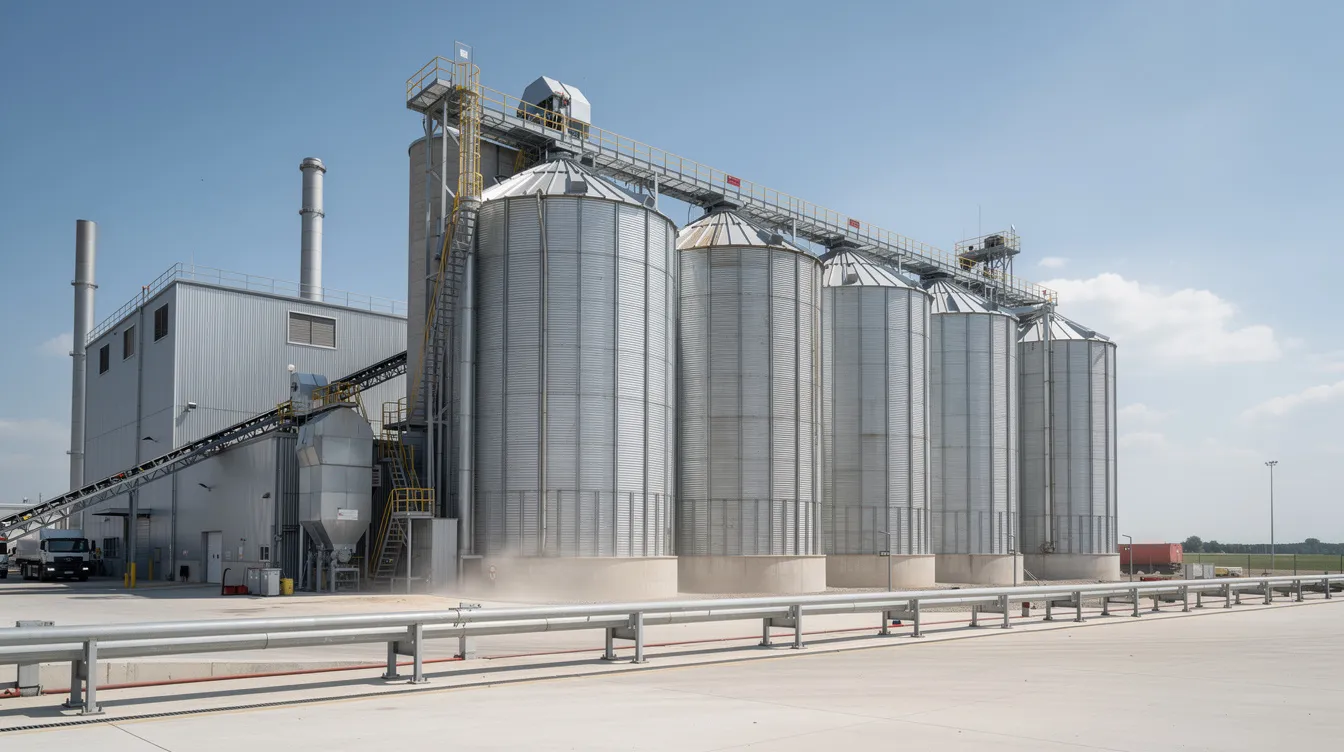
Plant capacity in maida manufacturing is expressed as tonnes per day of wheat input, not finished maida output. Common project sizes range from small scale flour mill operations at 30 TPD to larger commercial flour mill installations at 100–200 TPD. Production capacity significantly influences flour mill project costs and overall investment requirements.
Key capacity concepts include installed capacity (designed maximum throughput), effective operating capacity (accounting for maintenance and downtime), annual working days (typically 300 days) and ramp-up utilisation – often around 60% in Year 1, increasing to 80–85% at stabilisation. Product mix depends on target market requirements: the share of maida versus suji versus atta, bran separation level and contractual specifications of key buyers.
Illustrative Product Recovery – Not an Industry Standard
| Product | Recovery (%) | Quantity per Tonne of Wheat (kg) |
|---|---|---|
| Maida | ~30% | 300 |
| Suji | ~12% | 120 |
| Atta | ~30% | 300 |
| Wheat Bran | ~25% | 250 |
| Process Loss | ~3% | 30 |
| Total | 100% | 1,000 |
These ratios are plant-specific and depend on wheat quality (including whether hard durum, semi hard wheat compared to softer varieties, or basic varieties are used), conditioning parameters and milling efficiency. Wheat flour contains 9 to 15 percent protein, and the protein and gluten characteristics of the input wheat have great bearing on extraction outcomes.
For a 50 TPD maida manufacturing plant operating 300 days at 75% utilisation, annual wheat input would be approximately 11,250 tonnes. Financial projections should model maida, suji, atta and bran as separate product lines with distinct quantities and selling prices – not a single blended flour figure.
Maida Manufacturing Process and Production Flow Chart
The manufacturing process for maida includes cleaning, conditioning, milling and packaging. The sequential steps are:
- Wheat receipt and inspection – checking moisture, test weight, foreign matter and damaged grains
- Pre-cleaning – removing large impurities, stones, dust and other grains
- Fine cleaning – sieves, aspirators and magnetic separation
- Destoning – dedicated destoners for residual stones
- Conditioning/tempering – adjusting moisture and allowing rest time for proper endosperm-bran separation
- Break milling – initial roller mill passes to crack wheat kernels
- Sifting and purification – plansifters and purifiers classify intermediate streams
- Reduction milling – progressive roller passes refine endosperm into fine flour
- Product classification – separating maida, suji, atta and bran streams
- Quality testing, blending and packing – moisture, ash, colour checks before dispatch
Process Flow: Wheat reception → Cleaning → Destoning → Conditioning → Roller milling (break & reduction) → Plansifting & purification → Maida/suji/atta separation → Blending & fortification (if applicable) → Packing & dispatch
Conditioning is particularly critical – it directly impacts the maida extraction ratio and determines whether the endosperm separates cleanly from bran. Quality standards for maida are defined by the FSSAI and Bureau of Indian Standards, covering parameters such as moisture, ash content, fineness and gluten characteristics. For a deeper technical understanding, entrepreneurs may refer to the Atta Manufacturing Process & Flour Mill Flow Chart Guide which covers roller flour milling stages in detail.
Maida Manufacturing Plant Machinery and Equipment
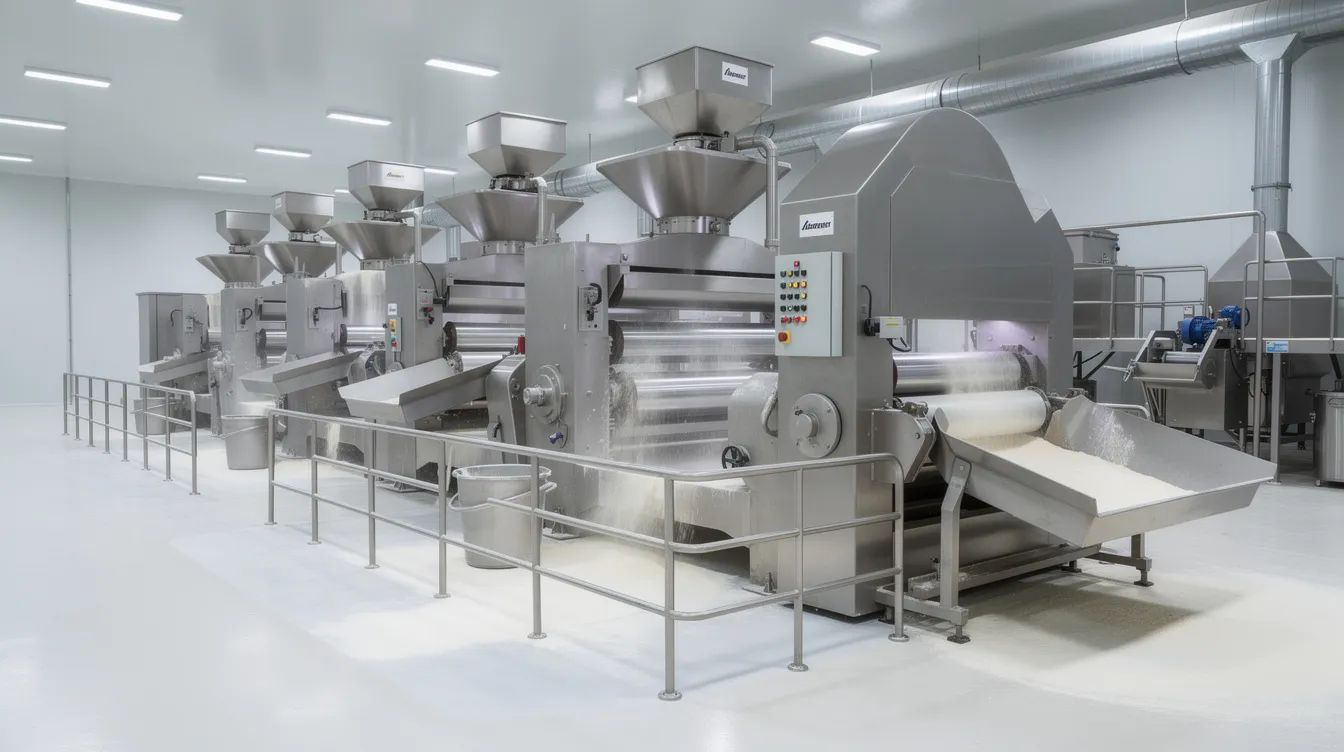
Machinery requirements depend on plant capacity, desired automation level (semi-automatic versus a fully automatic maida manufacturing plant) and required product mix. Core equipment includes:
- Wheat intake systems (conveyors, bucket elevators)
- Pre-cleaners, vibro separators and destoners
- Magnetic separators
- Conditioning bins
- Roller mills (break and reduction rolls)
- Plansifters and purifiers
- Bran finishers
- Pneumatic conveying and dust collection systems
- Flour storage bins, blending equipment
- Packing machines (semi-automatic or automatic bagging)
- Electrical panels, MCC/PCC and control systems
- Laboratory equipment (moisture meters, lab mill, gluten testing)
| Equipment Category | Purpose | Key Procurement Considerations |
|---|---|---|
| Cleaning Section | Remove impurities from wheat | Capacity match, multi-stage configuration |
| Roller Mills | Grind wheat into flour fractions | Number of passages, roll surface quality |
| Plansifters & Purifiers | Classify and purify flour streams | Sieving area, mesh specifications |
| Packing Machines | Bag finished products | Speed, accuracy, bag size flexibility |
| Dust Collection | Control particulate emissions | Compliance, filter efficiency |
| Lab Equipment | Quality testing | Accuracy, calibration support |
Advanced machinery with higher automation costs more but can improve consistency and reduce labour. Machinery cost is typically the largest single component of fixed capital expenditure, but designing efficient plant layouts also requires accounting for foundations, structures and electrification. For detailed machinery cost analysis, readers can explore Atta Chakki Plant Setup Cost in India.
Land, Building and Infrastructure Requirements
Land requirement depends on plant capacity and layout configuration. A 50–100 TPD maida production plant typically needs industrial land with adequate space for the milling tower, godowns, vehicular movement and future expansion. The land required should accommodate:
- Raw wheat godown and finished goods godown
- Multi-storey milling tower (roller mills, plansifters, purifiers)
- Cleaning and conditioning section
- Packing area, laboratory and QC room
- Administrative office and staff amenities
- Utility areas (transformer, DG set, compressors)
A plant layout should ensure efficient workflow and comply with food safety regulations. Infrastructure needs include internal roads, drainage, boundary wall, power connection, water supply and compressed air lines. Safety requirements cover dust control systems, fire-fighting equipment, emergency exits and proper stacking of wheat bags. Exact land and built-up area must be finalised based on machinery layout drawings and local development rules.
Maida Manufacturing Plant Cost in India
Maida manufacturing plant setup cost varies considerably with capacity, location, building requirements and automation level. Flour mill setup costs range from ₹10 lakh to ₹2 crore for machinery alone across different scales. Operating costs for flour mills include machinery, installation and working capital components.
At the machinery-only level:
- A small scale flour mill of 5–10 TPD costs ₹10 lakh to ₹25 lakh
- A small 10–20 TPD atta plant may cost ₹15 lakh to ₹30 lakh
- Medium-scale plants of 20–40 TPD cost around ₹35 lakh to ₹80 lakh
- Large 80–120 TPD flour mills may require ₹1 crore to ₹2 crore
- Large 80+ TPD units cost around ₹1 crore to ₹2.5 crore
- Fully automatic flour mill plants cost between ₹50 lakh to ₹2 crore
However, the total cost of a maida flour mill project extends well beyond machinery. Here is an illustrative project cost structure:
Illustrative Project Cost – 50 TPD Maida Plant (Approximate)
| Cost Component | Indicative Range (₹ Lakh) |
|---|---|
| Land & Development | Project-specific |
| Building & Civil Works | 80–150 |
| Plant & Machinery | 90–180 |
| Installation & Erection | 15–30 |
| Electrical & Instrumentation | 15–25 |
| Utilities (Transformer, DG, Compressor) | 10–20 |
| Packing Equipment | 8–15 |
| Lab & Office Equipment | 3–8 |
| Pre-operative Expenses | 10–20 |
| Contingency | 10–20 |
| Margin for Working Capital | 100–200 |
| Total Project Outlay | ~₹700–1,000 |
Actual costs will differ by project. Machinery quotations and civil estimates should be obtained before finalising the DPR.
The overall investment depends on cost components that promoters sometimes underestimate – electrification, foundations, dust collection, pre-operative interest and contingency. For a capacity-wise cost discussion, see Atta Chakki Plant Project Cost & Means of Finance.
Raw Material Requirements and Maida Production Yield
Wheat is the primary raw material. Varieties commonly used for maida production include hard and semi hard wheat types with adequate protein and gluten for producing enriched wheat flour suitable for baking flour applications. Key quality parameters include moisture, test weight, foreign matter, damaged grains and protein content. Understanding raw material availability and procurement logistics is crucial for project planning.
Procurement strategies range from seasonal bulk purchases during harvest to staggered buying from mandis or traders. Utilities and raw materials planning are critical for operational efficiency – adequate covered storage is essential to maintain grain quality and avoid losses. Wheat also finds use beyond flour – in starch production, ethanol production and as feed stock for animal nutrition – but for a maida plant, the focus is on maximising saleable flour recovery.
Illustrative Revenue per Tonne of Wheat (Assumptions Only)
| Product | Recovery (kg) | Assumed Price (₹/kg) | Revenue (₹) |
|---|---|---|---|
| Maida | 300 | 32 | 9,600 |
| Suji | 120 | 35 | 4,200 |
| Atta | 300 | 28 | 8,400 |
| Bran | 250 | 14 | 3,500 |
| Total Revenue | 25,700 | ||
| Wheat Cost (1 tonne) | ~22,000–24,000 |
By-products like wheat bran materially contribute to overall revenue. Ancillary inputs include packaging materials, power and fuel, lubricants, laboratory consumables and maintenance spares. The nutritional values of each product differ – maida has lower fibre while bran retains more nutrients – but the commercial focus in a DPR is on recovery ratios and realisation prices.
Maida Manufacturing Plant Project Cost and Means of Finance
Total project cost equals fixed capital expenditure plus margin for working capital. A DPR should outline sources of funding including loans and equity contributions. For a 50 TPD maida flour mill project with an illustrative total cost of ₹700–1,000 lakh, a typical financing structure might include:
| Source | Approximate Share |
|---|---|
| Promoter’s Equity | 25–35% |
| Bank Term Loan | 45–55% |
| Working Capital Finance | 15–25% (separate assessment) |
The initial investment from promoters should be adequate to demonstrate commitment. Acceptable debt-equity ratios vary across banks and schemes – lenders examine both project viability and promoter background. A DPR should align project cost estimates with actual machinery quotations and civil estimates rather than relying on rough thumb rules. For professional help structuring project finance, entrepreneurs can explore Project Report Bank’s feasibility study services.
Maida Manufacturing Plant Working Capital Requirement
In flour milling, working capital is often substantial because wheat inventory and receivables from bulk buyers tie up significant funds. Major current asset components include:
- Raw wheat stock (15–45 days of consumption)
- Packaging material inventory (7–15 days)
- Finished goods stock – maida, suji, atta, bran (5–10 days)
- Trade receivables from institutional and wholesale buyers (15–30 days)
Offsetting current liabilities include credit from wheat suppliers (10–20 days), packing vendors and other short-term payables.
Illustrative Working Capital Assessment – 50 TPD Plant at 75% Utilisation
| Component | Holding Period | Approximate Amount (₹ Lakh) |
|---|---|---|
| Wheat Inventory | 30 days | 180–220 |
| Packaging & Consumables | 15 days | 5–10 |
| Finished Goods | 10 days | 60–80 |
| Receivables | 25 days | 150–180 |
| Less: Creditors | 15 days | (90–120) |
| Net Working Capital | 305–370 |
Underestimating working capital in the DPR creates cash flow stress – inability to procure wheat at favourable times, production disruption and supplier payment delays.
Maida Manufacturing Financial Projections and Profitability
Financial projections include capital investment, working capital and profitability analyses spanning 5–7 years. Core projection elements include capacity utilisation by year, product-wise sales quantities and prices, wheat consumption based on recovery ratios, power and fuel costs, labour, repairs, selling expenses and overheads.
Illustrative Profitability Snapshot – Year 2 at ~75% Utilisation (₹ Lakh)
| Particular | Amount |
|---|---|
| Net Sales Revenue | 2,300–2,600 |
| Raw Material Cost | 1,850–2,100 |
| Power, Fuel & Consumables | 80–100 |
| Employee Cost | 30–45 |
| Other Overheads | 40–60 |
| EBITDA | 180–300 |
| Depreciation | 30–50 |
| Interest (TL + WC) | 60–90 |
| Net Profit (Pre-Tax) | 90–160 |
These are illustrative only and will vary with actual assumptions.
Profitability depends heavily on wheat purchase price versus finished goods realisation. Even profitable maida plants can face cash strain if receivable cycles are long or if term loans carry aggressive early repayment schedules. A business plan should project cash flow alongside profitability to present a complete picture.
DSCR, Break-Even, ROI and Project Viability
Financial metrics such as DSCR, ROI and payback period are vital for evaluating project feasibility. DPRs are typically required by financial institutions and investors for funding approval.
DSCR measures cash available for debt servicing (net profit + depreciation + term loan interest) against annual principal and interest obligations. A government sample DPR for a flour mill project showed an average DSCR of approximately 1.81 with a break-even capacity of around 48–50%. Lenders generally prefer DSCR above 1.5x over the loan tenure.
Break-even analysis helps determine the minimum sales volume to cover costs – for maida plants, this typically falls in the 45–60% capacity range depending on fixed cost structure and margin per tonne.
ROI and IRR assess whether project returns justify the capital employed over the planning horizon. Payback period estimates how long it takes to recover the overall investment through cash flows. In my experience, project viability assessment should focus on conservative assumptions and stress-testing rather than projections designed only to secure sanction.
Sensitivity Analysis and Major Project Risks
Sensitivity analysis is essential in project reports to assess impacts of variable costs on profitability and DSCR. Key risks include:
- Rise in wheat procurement prices (an important factor given price volatility)
- Decline in maida, suji or atta realisations
- Lower extraction due to poorer wheat quality
- Capacity utilisation below plan
- Higher power tariffs or unplanned maintenance
- Delayed debtor recoveries and funding gaps
Illustrative Sensitivity Impact
| Scenario | Impact on EBITDA |
|---|---|
| Wheat cost +5% | EBITDA declines ~₹90–105 lakh |
| Finished product prices –5% | EBITDA declines ~₹115–130 lakh |
| Capacity utilisation drops to 60% | EBITDA declines ~₹45–75 lakh |
Mitigations include long-term wheat sourcing relationships, diversified customer base, conservative pricing assumptions, adequate contingency in project cost and maintaining financial headroom. A well-prepared feasibility report explicitly includes such downside scenario analysis.
Maida Manufacturing Plant Licences and Regulatory Requirements
Regulatory approvals for food processing plants must comply with FSSAI and pollution control requirements. Key registrations include:
- Business entity registration (proprietorship, partnership, LLP or company)
- MSME/Udyam registration (if eligible)
- FSSAI licence for food manufacturing – the scale determines whether basic registration, state licence or central licence applies
- GST registration where turnover exceeds applicable thresholds
- Factory/Shops & Establishment registration
Additional permissions may include State Pollution Control Board consent, fire safety NOC, local municipal approvals and legal metrology compliance for packaged food products. Food safety requirements cover hygienic plant design, pest control, traceability and proper labelling. A qualified technical person must supervise production. The DPR should summarise proposed compliance steps and associated costs.
What Should a Bankable Maida Manufacturing DPR Include?
A maida manufacturing plant project report must align technical details and financial projections so that bankers can evaluate the proposal objectively. Key sections of a DPR include executive summary, market analysis and financial projections. Essential contents are:
Narrative sections: Promoter profile, project rationale, flour mill industry overview focusing on the maida segment, proposed location, capacity and product mix, target customers and competitive positioning.
Technical documentation: Manufacturing process description, machinery list with capacities, vendor quotations, plant layout, land and building plan, utilities, manpower and implementation schedule.
Financial components: Item-wise capital cost, working capital assessment, means of finance, product-wise sales and cost assumptions, projected P&L, cash flow and balance sheets, term loan repayment schedule, DSCR analysis, break-even, ROI/IRR and sensitivity analysis.
Banks look for internal consistency: capacity versus output versus sales, wheat input versus product recovery, credit terms versus working capital, and realistic DSCR trends. Any mismatch weakens appraisal. CMA Data for bank loans presents projected balance sheets, funding patterns and performance ratios in the format Indian banks require.
Professional DPR and Project Finance Advisory by CA Manish Gugliya
Project Report Bank is a Chartered Accountant-led professional advisory platform headed by CA Manish Gugliya, FCA, DISA (ICAI), with more than 20 years of experience in manufacturing project reports, financial modelling and bank finance documentation.
Services relevant to maida manufacturing projects include customised DPR preparation, financial projections, CMA Data preparation, project feasibility studies, cost and means-of-finance planning, DSCR and repayment analysis and loan structuring support. Services are tailored to project-specific assumptions rather than generic templates.
Entrepreneurs planning a maida manufacturing plant or atta chakki plant expansion may connect through the official website’s enquiry form or WhatsApp facility for a discussion on customised DPR and feasibility requirements. Professional documentation improves preparedness and clarity but does not guarantee loan sanction, subsidies or project success.
Frequently Asked Questions About Maida Manufacturing Plants
What minimum plant capacity is practical for a new maida manufacturing unit in India?
A commercial maida manufacturing plant targeting institutional buyers is generally viable from around 30–50 TPD wheat input upwards. While a small scale operation is possible at lower capacities, economies of scale, ability to utilise capacity and marketing strength should guide the decision. Capacity choice should balance available working capital against realistic sales projections rather than chasing maximum TPD alone.
How long does it typically take to commission a maida manufacturing plant after project approval?
Many medium-scale maida plants require roughly 6–12 months from land finalisation to trial production. This includes civil construction, machinery delivery, installation, electrical work and testing. The DPR should include a realistic implementation schedule, and delays in approvals or machinery supply should be factored into contingency planning and interest during construction estimates.
Do I need an in-house laboratory for a maida flour mill?
Even a medium-scale plant benefits from a basic in-house lab to test wheat moisture, foreign matter, flour moisture, ash, colour and gluten characteristics. This ensures consistent quality for institutional buyers. More specialised testing can be periodically outsourced to external NABL-accredited labs, but daily routine checks should be done within the plant.
What type of workforce is required to run a maida manufacturing plant?
The workforce typically includes a plant manager, experienced millers and shift in-charges, mechanical and electrical maintenance technicians, quality control staff, packing operators, helpers and administrative personnel. Trained technical staff significantly influence plant efficiency and extraction ratios, so promoters should budget for adequate training and competitive salaries. Industrially processing wheat at scale requires skilled oversight that should not be underestimated.
Can an existing atta chakki or flour mill be upgraded to produce refined maida?
Some existing atta or basic flour mills can be upgraded with additional machinery – improved cleaning systems, roller mills, plansifters and purifiers – to produce atta and also produce maida-grade flour, subject to layout and structural feasibility. Promoters of existing units should obtain a customised technical and financial assessment to determine incremental investment, achievable capacity and expected returns before committing to an upgrade.
Conclusion – Planning a Financially Viable Maida Manufacturing Project
A maida manufacturing plant is a technically mature but financially sensitive business where success depends on integrating plant capacity, reliable wheat sourcing, realistic extraction and pricing assumptions, robust working capital and disciplined financial management. A well-prepared, project-specific detailed project report supported by sound financial projections and risk analysis is essential before committing to land, machinery and bank loans.
Entrepreneurs and MSME promoters planning a maida flour mill project are welcome to connect with Project Report Bank via the website or WhatsApp for customised maida manufacturing plant project report preparation, feasibility studies and bank-ready financial documentation.