
Every promoter considering a ghee and butter manufacturing project eventually faces the same question: will this investment generate adequate returns over its operating life? Estimating project cost and expected profit gives only a partial answer. A meaningful ghee butter plant ROI analysis requires a disciplined evaluation of Return on Investment, Internal Rate of Return, Payback Period, break-even capacity, Debt Service Coverage Ratio, cash generation and resilience to adverse business conditions. This article, written from the perspective of CA Manish Gugliya – a practising Chartered Accountant and project finance consultant – walks you through each of these parameters with India-centric context, illustrative numbers and practical insights.
Key Takeaways
- A ghee butter plant ROI analysis, IRR computation and payback estimate must be evaluated together rather than in isolation. No single ratio can confirm or deny project viability on its own.
- Ghee and butter manufacturing is both capital intensive and raw-material intensive. India produces approximately 1.72 million tonnes of ghee annually, and the global ghee market was valued at USD 58.99 billion in 2025 – market opportunity is substantial, but realistic assumptions on milk fat prices, selling prices and capacity utilisation are critical for accurate ghee butter plant investment returns.
- Investors and banks simultaneously evaluate ROI, Project IRR, Equity IRR, Payback Period, DSCR and sensitivity scenarios before accepting a ghee manufacturing business proposal for funding.
- All ₹ values, returns, capacities and margin percentages in this article are purely illustrative for explaining methodology. They are not guaranteed profitability benchmarks for any specific project.
- The article focuses on India-centric industrial ghee manufacturing plant and butter manufacturing projects, addressing the practical questions that promoters, lenders and credit officers typically raise during project appraisal.
Why ROI, IRR & Payback Matter in a Ghee & Butter Plant
Knowing that a ghee manufacturing unit may cost ₹15 crore and generate “some profit” does not tell a promoter whether the project is worth committing capital to. The real question is: what return will my ghee manufacturing plant generate over its 10–12 year economic life, and how quickly will I recover my investment?
Ghee consumption in India accounts for 28% of dairy usage after fluid milk, and the ghee market continues to expand with rising disposable incomes and increasing consumer preference for traditional dairy products. The food processing industry around natural dairy fats is attracting fresh capital investment from entrepreneurs across India. But strong market demand alone does not make every project viable.
Banks, NBFCs and equity investors insist on seeing all three – ghee butter plant ROI analysis, ghee butter plant IRR analysis and ghee butter plant payback period – along with DSCR and sensitivity projections in the Detailed Project Report (DPR). A single ratio viewed in isolation can mislead: a high ROI may ignore the timing of cash flows, a short payback may ignore what happens in later years, and an attractive IRR may rest on aggressive assumptions.
Ghee manufacturing, butter manufacturing and clarified butter processing are long-term capital projects. The time value of money and the project’s full economic life must be factored into any serious evaluation of ghee butter plant financial feasibility. That is what separates a bankable DPR from a back-of-the-envelope estimate.
Understanding Total Investment in a Ghee & Butter Manufacturing Plant
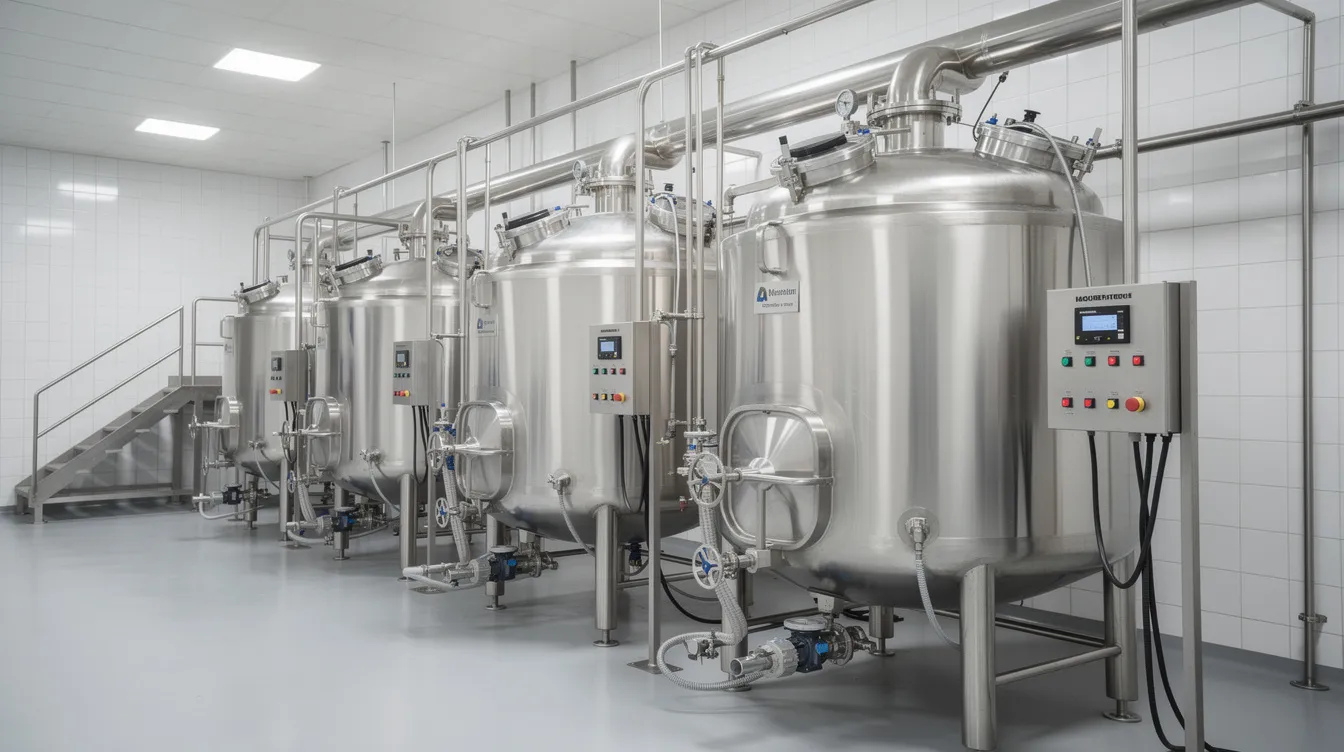
The total economic investment in a ghee manufacturing plant goes well beyond the cost of machinery. Ghee manufacturing plant setup costs include both capital and operating expenses, and the ROI calculation must be based on the complete project outlay.
Capital expenditures typically include costs for land, machinery, and utilities setup. The full investment typically covers:
- Land and compound wall
- Factory building and civil construction
- Milk reception infrastructure (weighbridge, chilling tanks, cream separators)
- Butter churners and ghee clarification kettles
- Ghee boilers, storage tanks and refrigeration systems
- Boilers, compressors and utility installations
- Packaging lines and filling machines
- Quality control laboratory
- Electrical installation and power distribution
- Effluent treatment plant and environmental compliance systems
Beyond hard assets, significant capital investment is required for food processing facilities including compliance with safety standards and regulations. Pre-operative expenses – interest during construction, salaries during implementation, trial-run costs and licensing – must also be included, along with contingencies (typically 5–10% of hard costs) and margin for working capital.
The setup timeline for a ghee plant is typically 12 to 18 months, during which these costs accrue before any revenue begins. Calculating ROI or IRR only on machinery cost rather than the full project outlay will overstate returns and mislead lenders.
For a structured view of capital cost heads and funding pattern, refer to the Ghee, Butter & Milk Fat Processing Plant Project Cost & Means of Finance guide.
Role of Plant Capacity & Product Mix in Investment Returns
The selected production capacity – whether 10 TPD or 30 TPD of ghee and butter – directly influences fixed cost absorption, working capital needs and overall ghee butter plant project economics. The proposed ghee manufacturing plant capacity ranges from 5,000 to 10,000 MT annually for medium-to-large commercial operations. Key equipment includes butter churners, ghee boilers, and storage tanks, and the equipment costs scale with capacity.
A typical dairy plant producing ghee and butter may offer a product basket including:
- Desi ghee (cow and buffalo variants, including grass fed variants)
- Table butter and white butter
- Industrial butter for food processing clients
- Anhydrous Milk Fat (AMF)
- Institutional bulk packs (15 kg tins) and retail consumer packs (500 ml, 1 litre)
Different dairy products have different realizations, extended shelf life characteristics, fat losses and market risks. Premium cow ghee or A2 ghee sold through e commerce platforms or modern retail can deliver margins of 25–40%, while institutional commodity ghee may yield only 8–15% net margin.
Capacity utilisation ramp-up matters significantly. Many ghee production plant operations begin at 50–60% utilisation in Year 1, reaching 80–85% by Year 3. Lower utilisation in early years means fixed costs are spread over fewer kilograms of output, depressing ghee plant profitability analysis results and lengthening the payback period.
Capacity selection and mix of ghee, butter and milk fat products are discussed in detail in Ghee, Butter & Milk Fat Plant Capacity Planning & Product Mix.
Revenue Assumptions Driving Ghee Butter Plant ROI Analysis
ROI, IRR and payback are only as reliable as the revenue assumptions behind them. The global ghee market is projected to reach USD 97.32 billion by 2034, and the European butter and ghee market is projected to reach USD 58.63 billion by 2034, with Germany accounting for 18.2% of the European butter and ghee market in 2025. The Europe butter and ghee market is projected to grow at a CAGR of 15.11%, and the annual growth in ghee production is estimated at 6.4%. These numbers point to strong market growth for both domestic and international markets, but individual project revenue depends on local realities.
Revenue assumptions should address:
- Installed capacity and year-wise practical capacity utilisation
- Production yields (kg ghee per kg butter or cream) and fat recovery rates
- Product mix between ghee, table butter, AMF and other SKUs
- Retail MRP-based sales versus wholesale institutional contracts
- Seasonal demand patterns (festive peaks like Diwali, summer slowdowns)
- Distribution channels, dealer margins and logistics cost
Evaluating market dynamics involves understanding B2B versus B2C supply chains and distribution costs. Selling price and distribution strategies significantly impact revenue and margins in the ghee market. Notably, 55% of consumers prefer snacks made with natural ingredients, which supports growing demand for ghee from health conscious consumers who value its perceived health benefits, nutritional benefits and high smoke point.
Using aggressive selling prices or premium positioning without adequate market research can artificially inflate Project IRR and shorten the projected ghee butter plant payback period. A prudent business plan tests revenue at conservative realisations.
A detailed market-oriented approach to pricing and product strategy is covered in Ghee & Butter Plant Revenue, Product Mix & Market Strategy.
Raw Material Cost & Milk Fat Procurement Impact on Returns
Milk fat – procured through raw milk, milk cream or white butter – is the dominant cost element in any ghee manufacturing business. Raw material sourcing for ghee manufacturing generally constitutes 70% to 80% of recurring expenses. In larger industrial operations, operating costs for ghee production are 85–90% raw material expenses, leaving a thin margin for labour, utilities and overheads.
Operational expenditures typically account for costs associated with raw materials, labor, utilities, and maintenance. Ghee production requires high-quality milk or cream as raw material, and the procurement options available include:
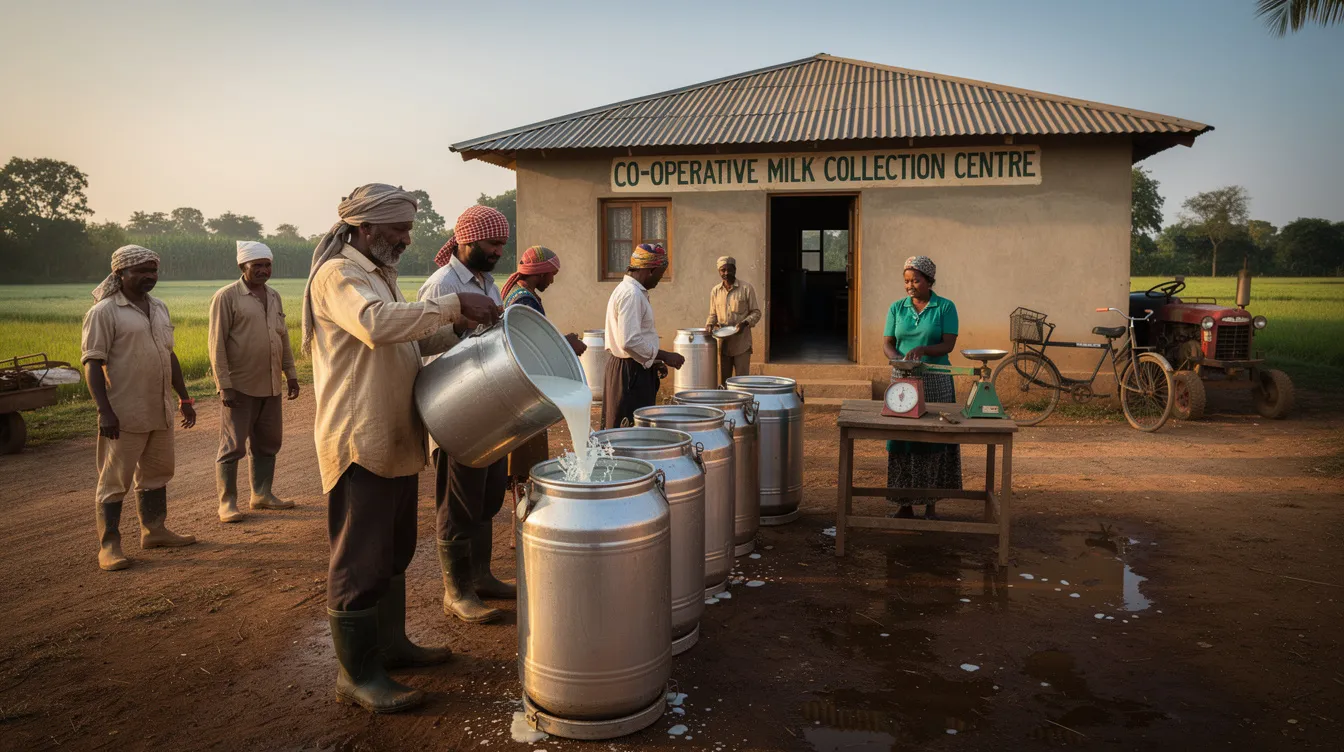
- Direct raw milk procurement from dairy farmers and dairy cooperatives, with in-house cream separation
- Purchase of cream from village-level chilling centres
- Procurement of white butter from cooperative or private dairies
Key variables include milk fat content, SNF recovery, seasonal fluctuations (raw milk prices in India can range from ₹40–₹60 per kg depending on region and season), transport cost, chilling losses and supplier payment terms. The recovery rate of ghee from raw butter or cream typically ranges from 80% to 85% depending on moisture content.
A simple illustration: if fat procurement cost rises by ₹5–₹8 per kg in a given season, the impact on a plant processing 20 tonnes per day cascades rapidly through EBITDA, cash accrual and DSCR. Because raw materials dominate the cost structure, even a 5% price increase can compress net margins by 20–30% of the base case.
Long-term procurement contracts and supplier diversification can stabilise ghee butter plant project viability. Procurement strategies are discussed in Raw Material & Milk Fat Procurement for Ghee and Butter Plants.
Financial Projections Used for ROI, IRR & Payback Calculations
A credible Detailed Project Report for a ghee manufacturing plant includes integrated financial statements that connect every assumption to every result. Both fixed and variable costs must be carefully modeled to understand overall financial performance in ghee manufacturing.
The key statements typically prepared are:
- Projected Profit & Loss Account (year-wise for 8–10 years)
- Projected Balance Sheet
- Cash Flow Statement
- Term loan repayment schedule
- Working capital assessment
- Depreciation schedule (as per Companies Act / Income Tax Act)
- Interest computation
- Tax working and deferred tax, where applicable
- Cash accrual statement
Ghee butter plant ROI IRR payback calculation should always be derived from these integrated projections, not from isolated thumb-rule spreadsheets. The logical chain is: production assumptions → revenue → operating costs → EBITDA → depreciation and interest → profit after tax → cash accrual → loan repayment → surplus for promoters.
A structured approach is explained in Ghee, Butter & Milk Fat Plant Financial Projections for DPR.
What is ROI in a Ghee & Butter Plant?
Return on Investment is a percentage indicating the annual profit generated relative to the total capital invested in a ghee and butter manufacturing project. The basic formula for ROI is Net Profit divided by Total Cost of Investment multiplied by 100.
ROI = (Annual Return ÷ Total Investment) × 100
“Annual return” in this context is typically the average annual post-tax profit (or cash accrual) once the plant reaches stable operations. There are different ROI bases used in practice:
- Return on total project cost
- Return on capital employed
- Return on promoter equity
The basis should always be clearly stated in the ghee butter plant project report financial analysis to avoid confusion between stakeholders.
Hypothetical illustration (for methodology only):
- Total Project Investment: ₹15 crore
- Annual Post-Tax Profit at stabilised operations: ₹2.25 crore
- Illustrative ROI: ₹2.25 crore ÷ ₹15 crore × 100 = 15%
Conducting a return on investment analysis requires evaluating upfront capital expenditures against long-term operational cash flows. ROI is easy to understand, but it does not capture the timing of cash flows or the project life. It should always be read alongside IRR and payback period.
Key Drivers That Improve or Reduce ROI
Return on investment can be heavily influenced by factors such as raw material costs, production efficiency, and pricing strategies. The key operational and financial levers include:
Positive drivers:
- Higher capacity utilisation from early years
- Better milk fat recovery through efficient equipment (e.g., Amul’s adoption of a GEA serum separator reduced fat losses from ~2% to ~0.3%)
- Optimised product mix with more value-added retail packs
- Stronger selling prices through brand positioning and consistent quality
- Energy-efficient boilers, heat recovery and optimised refrigeration
- Better working capital management and credit control
- Reduced wastage and plant downtime
Negative drivers:
- Over-investment in buildings or machinery beyond requirement
- Prolonged under-utilisation of plant capacity
- High interest cost from excessive leverage
- Weak market positioning forcing discounting
- Frequent breakdowns and inconsistent production
Even technically efficient clarified butter production can deliver low ROI if total capital investment is inflated or construction is delayed. Periodic benchmarking of operating ratios against industry trends helps maintain attractive ghee butter plant investment returns.
What is IRR & Why is it Critical for Ghee Butter Plant IRR Analysis?
Internal Rate of Return is the discount rate at which the Net Present Value (NPV) of all project cash flows – both inflows and outflows – becomes zero. In non-technical language, IRR tells you the effective annual compound return that the project generates over its entire life, accounting for when cash is invested and when it is recovered.
For ghee manufacturing plant IRR computations, the typical project life assumption is 10–12 years with a notional terminal value at the end. Investors compare Project IRR with hurdle rates like bank fixed deposit returns, bond yields and the perceived risk of a dairy industry venture. For many Indian MSME dairy projects, a project IRR meaningfully above the long-term borrowing rate (plus a risk premium) is generally considered attractive.
IRR is more informative than plain ROI for long-term capital projects in the food industry, but it still needs to be cross-checked with DSCR and payback period.
Project IRR vs Equity IRR in a Ghee & Butter Plant
There are two main IRR perspectives in a ghee butter manufacturing project financial analysis:
Project IRR
Project IRR evaluates the return generated by total project cash flows irrespective of financing structure. It considers both equity and debt as sources but ignores their specific cost. This tells you whether the project itself generates adequate returns.
Equity IRR
Equity IRR evaluates the return on promoter equity after deducting term loan interest and principal repayments. It focuses on cash available for shareholders.
Moderate debt can improve Equity IRR when Project IRR exceeds the effective interest rate – this is the leverage effect. For example, if a project generates a 20% Project IRR and debt costs 10%, the Equity IRR for promoters will be meaningfully higher than 20%. However, excessive leverage creates cash-flow stress and volatile equity returns.
Promoters must not confuse high Equity IRR (boosted by high debt) with low risk. DSCR and sensitivity analysis must also be checked to ensure that debt repayment is manageable even in adverse conditions.
Is Higher IRR Always Better?
Not necessarily, especially in the context of ghee manufacturing plant DPRs submitted to banks.
An extremely high IRR in a projection may come from unrealistic assumptions: very high selling prices, under-provisioned expenses, optimistic capacity utilisation or inadequate working capital. Lenders look for balanced projections – reasonable Project IRR combined with acceptable DSCR, realistic ghee manufacturing plant payback period in India, and manageable downside risk.
Before accepting an IRR number at face value, examine the assumptions behind it: milk fat price, retail vs institutional sales share, credit period, plant downtime and maintenance expenses. In practice, banks focus more on steady DSCR, reasonable leverage and project robustness than on chasing very high IRR numbers in isolation.
Understanding Payback Period in a Ghee & Butter Plant
Payback period represents the time needed for cumulative cash inflows from operations to recover the initial investment in the ghee butter manufacturing project.
Simple illustration:
- Initial Investment: ₹12 crore
- Average annual project cash generation: ₹3 crore
- Simple indicative payback: ₹12 crore ÷ ₹3 crore = approximately 4 years
In practice, actual cash flows vary annually (lower in early years, higher as capacity ramps up), so a detailed cumulative cash-flow approach is preferable. The proper calculation tracks year-wise net cash flows (post-tax, after loan service if equity payback is being assessed) and identifies when cumulative cash turns positive.
Shorter payback is attractive because it means faster capital recovery, higher comfort in volatile ghee market conditions and better ability to withstand regulatory or demand shocks. However, payback ignores cash generated after the cut-off year and does not adjust for time value of money – it must complement, not replace, ROI and IRR.
Simple Payback vs Discounted Payback Period
Simple payback uses undiscounted cash flows – a straightforward count of years until investment is recovered. Discounted payback discounts future cash flows at a chosen rate (typically the cost of capital, say 12–15%) before computing the recovery period.
Discounted payback is more conservative and is often used by investors or large corporates evaluating dairy industry projects with long economic lives. DPRs for larger ghee manufacturing plants should preferably present both versions, especially when seeking institutional or PE funding.
Banks in India may still reference simple payback for quick comparison but place more analytical weight on DSCR and IRR for term loan appraisal.
Profitability, Break-Even & Their Link to Returns
Profitability and break-even performance directly influence ghee butter plant investment feasibility analysis. The break-even point for a ghee production facility is crucial for understanding financial viability in early years. Break-even for ghee manufacturing businesses ranges from 2 to 4 years depending on capacity utilisation and margin structure.
Key concepts:
- Contribution margin: Selling price minus variable cost per kg
- Fixed costs: Salaries, depreciation, interest, insurance, overheads
- Break-even sales: The revenue level at which total cost equals total revenue
- Operating leverage: Higher fixed costs mean greater sensitivity of profit to volume changes
Gross profit margins for ghee plants typically range from 20–30% at stable operations, but in the early ramp-up phase, lower capacity utilisation depresses margins significantly. Robust contribution even at moderate utilisation (say 60–65%) is a positive sign for bankers reviewing ghee butter plant financial feasibility.
For a more detailed treatment of contribution and break-even, see Ghee & Butter Manufacturing Plant Profitability & Break-Even Analysis.
What is Sensitivity Analysis in a Ghee Butter Plant?
Sensitivity analysis is the process of re-running project projections under changed assumptions to see how ROI, IRR, DSCR and payback respond to adverse (and sometimes favourable) scenarios. Sensitivity analysis should assess the impacts of variations in raw material costs, selling price, and plant utilization.
A well-prepared ghee butter plant sensitivity analysis in the DPR reassures lenders that the project remains viable even if business conditions are not ideal. Typical variables to test include:
- Milk fat / raw material cost
- Ghee and butter selling prices
- Capacity utilisation levels
- Power, fuel and high energy consumption costs
- Wage inflation
- Interest rates
- Total project cost overruns
Sensitivity must be clearly separated from the base case and presented transparently. Multi-variable sensitivities (e.g., simultaneous rise in fat price and fall in selling price) give a more realistic picture than one-variable changes alone.
Sensitivity Scenario 1 – Increase in Milk Fat / Raw Material Cost
Since raw materials dominate operating costs, even modest increases compress ghee butter plant investment returns significantly. Consider a hypothetical scenario where fat procurement cost rises by 5%:
- Contribution per kg falls immediately
- EBITDA margin narrows (for a plant where raw material is 85% of OpEx, a 5% input cost increase can reduce net profit by 20–30%)
- Cash accrual drops, weakening DSCR
- Project IRR declines and payback period extends
At a 10% increase, the impact is roughly doubled. Banks look favourably on DPRs where the project remains bankable – acceptable DSCR and positive NPV – even after such adverse raw material cost shocks. All numerical assumptions here are hypothetical and not industry averages.
Sensitivity Scenario 2 – Reduction in Selling Price
Practical reasons for lower realisation include competition in the ghee manufacturing sector, discounting in modern retail, aggressive institutional contracts, or involuntary shifts in product mix toward bulk packs with lower margins.
A 3–5% fall in average selling price, with the same raw material cost, creates a sharper decline in profit than an equivalent percentage drop in raw material cost. This is because contribution gets squeezed from only one side while fixed costs remain unchanged.
| Parameter | Base Case | Selling Price −5% |
|---|---|---|
| Revenue per kg (illustrative) | ₹450 | ₹427.50 |
| Variable cost per kg | ₹370 | ₹370 |
| Contribution per kg | ₹80 | ₹57.50 |
| Contribution decline | – | ~28% |
Sustainable ghee butter plant return on investment depends on both procurement discipline and pricing power. Promoters should stress-test models for lower realisation, especially if the business plan assumes premium positioning.
Sensitivity Scenario 3 – Lower Capacity Utilisation
Slower market ramp-up, distribution challenges, seasonal variations or raw material constraints can keep capacity utilisation at 50–70% for initial years. The impact on ghee butter plant project economics is significant because of fixed cost absorption.
At 50% utilisation, fixed overheads (depreciation, salaries, interest) are spread over roughly half the output compared to 90% utilisation. The result: cost per kg rises, margins shrink and ROI drops materially.
- At 50% utilisation: fixed costs per kg are highest; margins may barely break even
- At 70% utilisation: margins improve but remain below potential
- At 90% utilisation: full absorption; margins reach projected levels
Lenders often test scenarios where capacity utilisation remains 10–20 percentage points below the base case and check how DSCR and Equity IRR behave. These percentages are illustrative and not standardised benchmarks for every ghee manufacturing unit.
Sensitivity Scenario 4 – Project Cost Overrun & Implementation Delays
Cost overruns of 10–15% due to civil construction changes, equipment upgrades or implementation delays are common in capital-intensive dairy industry projects. Higher project cost increases interest during construction, pushes up term loan requirements and dilutes ghee manufacturing plant ROI and Project IRR.
A 6–12 month delay in commercial operations compounds the problem: revenue is postponed while interest and pre-operative expenses keep accruing. In DPRs, promoters should demonstrate that even with a defined overrun scenario, ghee butter plant project viability and DSCR remain acceptable. Realistic contingency provision and timely monitoring of project execution are essential.
Sensitivity Scenario 5 – Increase in Interest Rate & Finance Cost
A rise in lending rates – for example, from 9.0% to 11.0% per annum – directly affects interest outgo, profit after tax, cash accrual and Equity IRR. Project IRR (which is computed pre-financing) remains unchanged, but promoter returns shift materially.
Higher EMI or a shorter repayment tenor puts pressure on DSCR and lengthens the effective ghee butter plant payback period for promoters. The importance of negotiating appropriate moratorium, realistic repayment schedule and matching project cash flows with term loan obligations cannot be overstated.
Loan servicing capability is analysed in detail in DSCR & Loan Repayment Capacity for Ghee and Butter Manufacturing Project.
Small shifts in interest rate can materially change Equity IRR, especially at high leverage levels.
Illustrative Sensitivity Matrix for a Ghee & Butter Plant
The following table summarises the directional impact of different scenarios on project performance. It is illustrative and shows direction only – actual magnitude depends on each project’s specific assumptions.
| Scenario | Revenue Impact | Cost Impact | ROI Impact | IRR Impact | Payback Impact |
|---|---|---|---|---|---|
| Base Case | – | – | Base | Base | Base |
| Raw Material +5% | – | Higher | Lower | Lower | Longer |
| Selling Price −5% | Lower | – | Lower | Lower | Longer |
| Capacity Utilisation −10% | Lower | Partly Lower | Lower | Lower | Longer |
| Project Cost +10% | – | Investment Higher | Lower | Lower | Longer |
| Interest Rate Increase | – | Finance Cost Higher | Lower Equity Return | Lower Equity IRR | Longer |
Bankers interpret such matrices to assess whether the project remains serviceable under stress. A project that collapses under a single adverse scenario raises red flags. Actual results will depend on each project’s assumptions and market context.
Working Capital Impact on Ghee Butter Plant Investment Returns
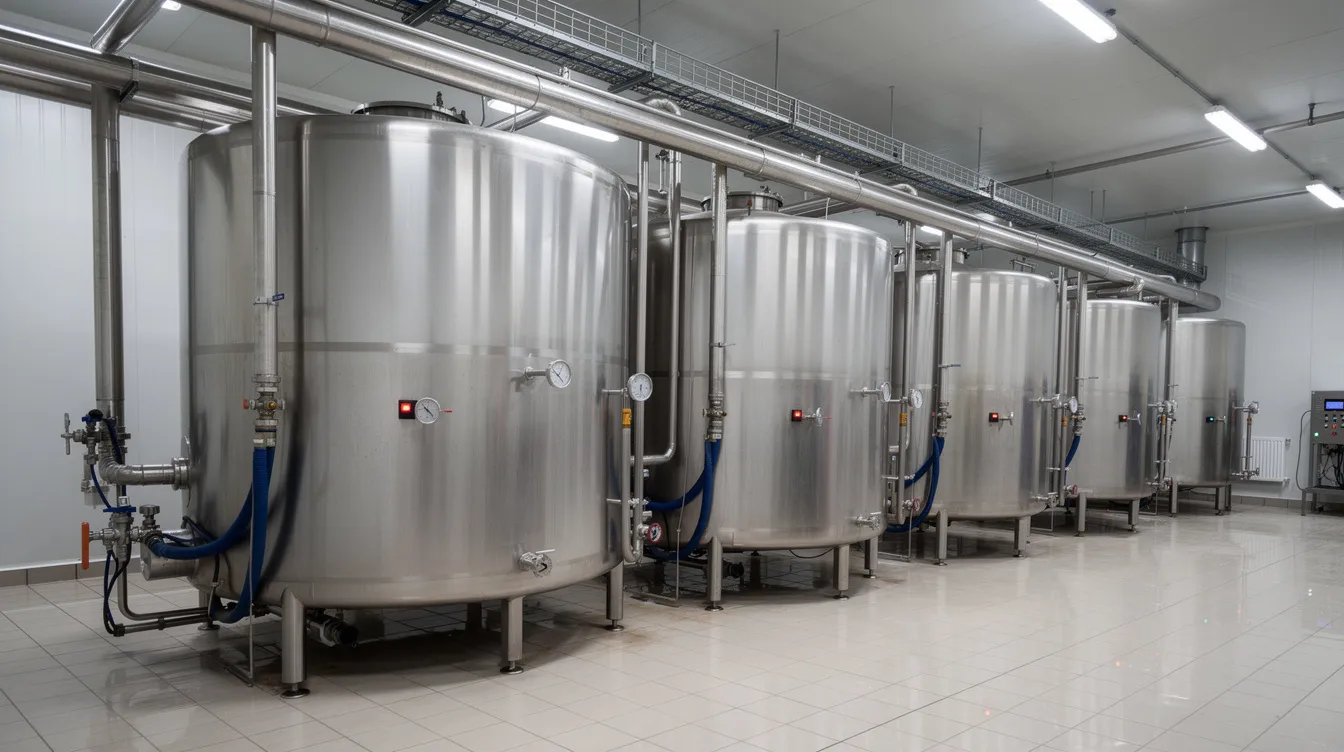
Even a profitable ghee manufacturing plant can face cash crunch due to high working capital locked in milk fat inventory, packaging materials, finished goods stock and credit extended to distributors and institutional buyers.
The working capital cycle is tight: milk and cream procurement often requires near-cash payment to dairy farmers, processing and storage take several days, and dealers may demand 15–45 days credit. Under-estimation of working capital in DPRs may show artificially high IRR (because total funding needs appear lower) but leads to real-world liquidity problems and ad-hoc borrowing at higher interest rates.
Common bank facilities include cash credit, working capital term loan and packing credit for exports. Their cost should be included in ghee butter plant project economics.
For a deeper look at this topic, refer to Working Capital Requirement for Ghee & Butter Manufacturing Plant.
DSCR & Loan Repayment Capacity vs Project Returns
Debt Service Coverage Ratio is defined as:
DSCR = Cash Accrual (PAT + Depreciation + non-cash charges) ÷ Total Debt Service (Interest + Principal repayment)
Strong ghee butter plant profitability and cash generation support good DSCR, which reassures lenders that the term loan will be repaid on time. Indian banks for dairy projects generally look for an average DSCR comfortably above 1.0x across the repayment period, with year-wise DSCR not falling below acceptable thresholds.
A project can show good accounting profit yet weak DSCR if the repayment schedule is too aggressive or working capital is under-funded. The term loan repayment must be designed so that both Project IRR and DSCR remain comfortable across base and adverse scenarios.
Bank Loan & Project Finance Perspective for Ghee & Butter Plants
Bankers examining a ghee manufacturing plant DPR typically evaluate:
- Promoter profile, experience and equity contribution
- Total project cost and means of finance
- Capacity assumptions and production plan
- Revenue assumptions and market positioning
- Profitability projections, DSCR (year-wise and average), break-even level
- Project IRR, Equity IRR, ROI and payback period
- Sensitivity results on milk fat prices, selling prices and capacity utilisation
- Security coverage and collateral
Well-documented ghee butter plant project report financial analysis, supported by realistic industry data and market research, strengthens the case for term loan sanction. Promoters should be prepared to justify assumptions in front of credit officers.
A bank-oriented DPR approach is discussed in Ghee & Butter Plant Bank Loan, Project Finance & DPR.
Term Loan Assessment & Structuring
ROI, IRR and payback period are used by banks during term loan assessment alongside security cover and promoter contribution. Key structuring aspects include:
- Debt-equity ratio (typically 2:1 or 3:1 for MSME dairy projects)
- Repayment tenor (5–8 years for most ghee manufacturing plants)
- Moratorium period (6–18 months to allow ramp-up)
- Instalment structure (equated vs ballooning instalments)
A slightly longer tenor with moderate instalments may sometimes improve DSCR and reduce default risk, even if total interest cost is somewhat higher. The same project with two different repayment schedules can show different DSCR profiles but similar Project IRR – illustrating that financing structure does not change project economics but significantly affects promoter cash-flow comfort.
Loan structuring aspects are covered in Term Loan Assessment for Ghee & Butter Manufacturing Plant.
Assessing Overall Financial Feasibility & Project Viability
A sound ghee butter plant investment feasibility analysis considers a basket of indicators:
- ROI on total project cost
- Project IRR and Equity IRR
- Simple and discounted payback period
- DSCR (year-wise and average)
- Break-even utilisation percentage
- EBITDA margin and net profit margin
- Cumulative cash accrual over project life
Qualitative factors – management capability, procurement network, distribution strength, regulatory compliance and supply chain depth – also affect project bankability. The ghee manufacturing industry is competitive, and investment opportunities are best evaluated by promoters who take a conservative base case and treat upside as bonus.
These aspects are integrated in Ghee & Butter Manufacturing Plant Feasibility & Project Viability.
Manufacturing Efficiency & Its Role in Investment Returns
Technical processing efficiency directly impacts cost per kg, contribution margins and ultimately ghee butter plant investment returns. The ghee manufacturing process involves several energy-intensive steps. Ghee production requires significant thermal energy for heating and electrical energy for refrigeration. The process includes milk cream separation and butter extraction, followed by heating butter at 105–120°C for clarification. Ghee is clarified by removing milk solids and moisture, and ghee manufacturing requires controlled heating at 105–120°C for clarification to achieve the desired colour, flavour and texture.
Filtration is essential for achieving clarity in ghee, and the ghee production process includes multi-stage filtration for quality. The Food Safety and Standards Authority of India mandates a maximum moisture of 0.5% and a minimum milk fat of 99.5% for ghee, making quality control in food processing a non-negotiable requirement. Quality control involves monitoring moisture content and respective parameters to ensure compliance with industry standards.
Key efficiency levers include:
- Higher fat recovery from cream and butter (reducing exergy destruction in the process)
- Reduced processing losses through better temperature control
- Optimum heating profiles and universal exergy efficiency improvements
- Energy-efficient boilers and heat recovery systems to address high energy consumption
- Proper CIP (Clean-in-Place) cleaning and reduced downtime
- Consistent product quality to minimise customer returns
The specific exergy destruction and thermodynamic derivatives calculated during process engineering can inform equipment selection. Exergy efficiency improvements in the ghee boiler and processing systems directly lower energy cost per kg. The percentage relative cost difference between efficient and inefficient processing can be significant over a full year of operations.
Process details are available in Industrial Ghee Manufacturing Process & Production Line and butter-specific aspects in Industrial Butter Manufacturing Process & Production Line.
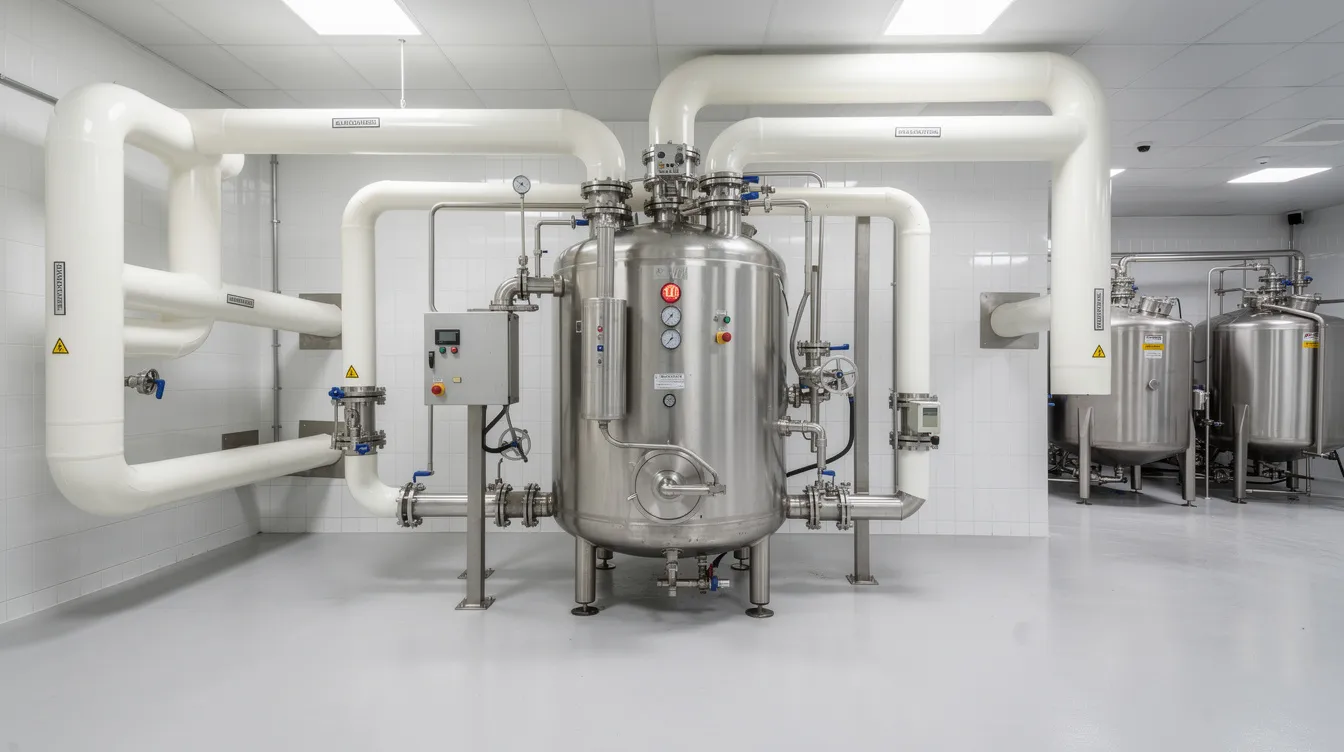
Machinery Selection, CapEx Efficiency & ROI
Appropriate sizing and specification of machinery affect both capital expenditure and operational efficiency. There are trade-offs between fully automated high-capacity lines and semi-automatic smaller lines in terms of throughput, labour cost, energy consumption, flexibility and maintenance.
Over-specification – buying much larger or more sophisticated equipment than needed – can depress ghee manufacturing plant ROI because the higher depreciation and interest burden is not matched by proportionate revenue. Under-specification may constrain future growth or force early replacement capital expenditure.
DPRs should show clear justification for chosen technology level in terms of projected return on investment and payback period. A business consultant experienced in dairy plant projects can help align machinery selection with financial targets.
Indicative machinery and equipment costing is discussed in Ghee Manufacturing Plant Machinery & Equipment Cost.
Suggested Illustrative Financial Model for a Ghee & Butter Plant
The following hypothetical model is for teaching purposes only. All numbers are illustrative assumptions and are not benchmarks for any specific project.
Illustrative parameters for a 20 TPD ghee and butter plant:
| Parameter | Illustrative Assumption |
|---|---|
| Total Project Cost | ₹20 crore |
| Promoter Equity (25%) | ₹5 crore |
| Term Loan (75%) | ₹15 crore |
| Working Capital (CC limit) | ₹3 crore |
| Annual Installed Capacity | ~6,000 MT ghee equivalent |
| Year 1 Utilisation | 55% |
| Year 3+ Utilisation | 85% |
| Average Selling Price (blended) | ₹450/kg (illustrative) |
| EBITDA Margin (at stable ops) | 12–16% |
| Interest Rate on Term Loan | 10.5% p.a. |
| Repayment Tenor | 7 years (1-year moratorium) |
Conceptual base-case outcomes (illustrative only):
| Metric | Illustrative Range |
|---|---|
| ROI on Total Project Cost | 13–18% (at stable operations) |
| Project IRR (10-year) | 18–24% |
| Equity IRR | 22–30% |
| Simple Payback | 5–6 years |
| Average DSCR | 1.5–2.2x |
| Break-even Utilisation | ~55–60% |
These figures are not a benchmark for all ghee manufacturing plants. Actual figures will vary by location, product mix, culinary heritage positioning, market demand and the specific supply chain available. The purpose is to demonstrate how ROI, IRR, payback, DSCR and break-even are evaluated within a single integrated model.
Comparison: ROI vs Project IRR vs Equity IRR vs Payback & DSCR
Different financial parameters answer different questions. The following table summarises what each metric measures and where it is most useful for a ghee butter plant DPR ROI IRR analysis.
| Parameter | What It Measures | Main Advantage | Limitation | Useful For |
|---|---|---|---|---|
| ROI | Annual return as % of investment | Simple, easy to communicate | Ignores timing; static view | Quick project screening |
| Project IRR | Compound return on total project cash flows | Accounts for time value of money | Sensitive to assumptions; ignores scale | Comparing projects; investor decision |
| Equity IRR | Return on promoter equity after debt service | Shows promoter-specific return | Can be inflated by leverage | Promoter/shareholder decision |
| Simple Payback | Years to recover investment | Easy to compute; measures liquidity risk | Ignores cash flows after payback | Risk-averse investors |
| Discounted Payback | Years to recover investment (discounted) | Accounts for time value | Still ignores post-payback flows | Conservative assessment |
| DSCR | Ability to service debt from cash accrual | Directly relevant for lenders | Does not measure equity return | Bank term loan appraisal |
| Break-Even Capacity | Utilisation at which revenue covers total cost | Shows margin of safety | Static; assumes linear cost behaviour | Operational planning |
No single indicator is sufficient. Investors need a balanced view combining return, risk, liquidity and debt-servicing ability. Promoters should present all these indicators in a single section of their project report for clarity and credibility.
Practical Ways to Improve Ghee & Butter Plant Investment Returns
Improving returns requires operational discipline, not just financial engineering:
- Build a strong milk and cream procurement network with multiple supply points and dairy cooperatives
- Focus on fat recovery – reducing traditional methods losses by adopting modern separators
- Optimise energy use: efficient boilers, insulated pipelines, heat recovery from ghee boiler exhaust
- Improve labour productivity through automation where justified
- Minimise wastage across the manufacturing process – packaging, storage and distribution
- Balance retail and institutional sales for margin optimisation and consistent volume
- Target value-added SKUs: branded retail packs, A2 or organic ghee, products for household cooking
- Maintain appropriate debt-equity ratio; avoid over-leveraging
- Plan phased capacity expansion rather than building oversized capacity upfront
- Secure realistic working capital lines and maintain tight credit control
- Monitor key KPIs continuously: contribution per kg, material variance, energy cost per kg and DSCR
These are leading indicators of ROI and IRR health. Consistent monitoring ties operational efficiency to the financial performance projected in the DPR.
Common Mistakes in Ghee Butter Plant ROI, IRR & Payback Projections
Based on experience reviewing ghee manufacturing business plans and DPRs, the most frequent errors include:
- Assuming near-100% capacity utilisation from Year 1
- Ignoring seasonal milk fat price spikes and consumer preference shifts
- Under-estimating repairs, maintenance and power costs
- Omitting marketing and distribution expenses
- Using EBITDA instead of actual cash flow for IRR computation
- Not including principal repayments in DSCR calculation
- Confusing project IRR with equity IRR
- Ignoring replacement capital expenditure after 5–7 years
- Under-budgeting for working capital requirements
- Ignoring distributor margins and trade discounts
- Double-counting depreciation benefits in cash-flow calculations
- Presenting overly optimistic health benefits or therapeutic benefits claims as guaranteed sales drivers without market validation
Engaging a professional for ghee butter plant DPR ROI IRR analysis can reduce these errors and improve credibility with lenders. Periodic revision of projections after 6–12 months of actual operations is also advisable.
Importance of DPR-Based Integrated Financial Analysis
ROI, IRR and payback should emerge from a single integrated model. The logical flow in a well-prepared DPR is:
Project Cost → Means of Finance → Capacity & Product Mix → Production and Sales → Operating Costs → Profitability → Cash Flows → Term Loan Repayment & DSCR → ROI, IRR, Payback → Sensitivity Analysis
Isolated Excel snippets without this linkage reduce confidence for bankers and investors evaluating ghee butter plant financial feasibility. Summary dashboards in the DPR should clearly show both base-case and key sensitivity outcomes for quick decision-making. This integrated approach is standard practice in professional project finance advisory for dairy plants.
Professional Note from CA Manish Gugliya
In my project finance advisory work for ghee, butter and milk-fat processing plants, I have observed that a strong base-case IRR is only the starting point. Lenders and serious investors always ask “what if” questions – what if fat prices rise 10%? What if utilisation stays at 60% for three years? What if the product can only be sold at institutional rates?
Financial projections, CMA Data and ghee butter plant project report financial analysis in DPRs that I prepare, review and assess are structured to ensure that ROI, IRR, DSCR and payback remain reasonable even under adverse scenarios. The objective is not to paint an overly rosy picture but to present a realistic, technically sound and bankable business plan.
No consultant can guarantee bank funding or specific investment returns. What professional advisory can do is help promoters articulate their project’s strengths honestly, quantify the risks transparently and present a DPR that withstands scrutiny. Entrepreneurs seeking support for detailed project reports, financial modelling, CMA Data assistance and term loan assessment are welcome to reach out through ProjectReportBank.com.
Conclusion – Using ROI, IRR, Payback & Sensitivity Together
ROI, IRR, payback period and sensitivity analysis provide different but complementary views of ghee butter plant project economics and risk. No single metric tells the full story. A project with attractive IRR but weak DSCR may not survive its early years. A short payback period means little if it rests on unrealistic selling prices.
A robust ghee manufacturing plant DPR should combine realistic project cost, appropriate capacity, sensible revenue and procurement assumptions, adequate working capital, detailed profitability projections, year-wise DSCR and thorough downside sensitivity analysis. This is how the financial viability of ghee and butter manufacturing plant is properly established – not through optimism, but through disciplined financial planning.
Disciplined analysis before committing major capital can prevent distress later and improve long-term wealth creation for promoters. The ghee manufacturing industry, supported by strong market growth – India’s ghee market alone is estimated at approximately ₹3,774.5 billion in 2025 and projected to grow significantly – offers genuine investment opportunities for those who plan well.
Entrepreneurs planning a ghee, butter or milk-fat processing project can obtain professional assistance for DPR preparation, financial projections, CMA Data assistance, project viability analysis, bank finance documentation and term loan assessment from CA Manish Gugliya through ProjectReportBank.com.
FAQ – Ghee & Butter Plant ROI, IRR & Payback
What IRR is considered attractive for a ghee and butter plant in India?
There is no single “correct” IRR for all projects. Acceptable IRR varies by the promoter’s risk profile, cost of funds and project scale. Many lenders look for a Project IRR that provides a comfortable margin – typically several percentage points – above the long-term borrowing rate. For example, if term loan interest is 10–11%, a Project IRR in the range of 18–25% may be considered reasonable, though this is not a universal benchmark. The key is that IRR should remain attractive even under adverse sensitivity scenarios.
How many years of projections are ideal for ghee butter plant ROI IRR payback calculation?
DPRs for ghee and butter plants typically include 8–10 years of projections, or at minimum, the full term loan repayment period plus 2–3 years. This allows the model to capture the ramp-up phase, stable operations and the full debt repayment cycle. Shorter projection periods may not adequately reflect long-term project value, while excessively long projections (beyond 12–15 years) introduce too much assumption risk.
Can a small ghee manufacturing unit also prepare IRR and sensitivity analysis?
Absolutely. The concepts of IRR, payback and sensitivity apply equally to a small ghee manufacturing unit with ₹25–50 lakh investment and to a large ₹50 crore production plant. The scale of numbers changes, but the methodology remains the same. In fact, many government schemes like PMFME require small units to submit DPRs with these financial parameters.
How often should ROI and IRR be reviewed after the plant starts?
It is advisable to review projections at least annually after commercial operations begin. When major changes occur – such as a significant shift in raw milk prices, a new product launch, capacity expansion or changes in interest rates – a fresh financial re-forecast should be prepared. Comparing actuals against projections helps identify performance gaps early and supports timely corrective action.
Does product mix really affect IRR significantly?
Yes. The difference in net margins between institutional bulk ghee (8–15%) and branded retail or premium A2 ghee (25–40%) is substantial. A shift in product mix toward higher-margin SKUs – even without changing total volume – can improve EBITDA, cash accrual and IRR materially. However, premium products require additional investment in branding, packaging, distribution channels and regulatory compliance, which must be factored into the analysis.