
Key Takeaways
- Ghee butter milk fat plant financial projections in a DPR must demonstrate whether the project can service term loans, sustain working capital, and deliver acceptable DSCR over a 5 to 10 year horizon.
- Ghee plant financial projections should be built from installed capacity, product mix and milk-fat procurement realities, not reverse-engineered from a desired profit figure.
- A robust ghee plant financial model must link project cost, means of finance, projected P&L, balance sheet, cash flow, and loan repayment schedule into one internally reconciled structure.
- Banks rely on ghee butter plant DPR financials to test break-even, DSCR, ROI, IRR and payback under base and stress scenarios before sanctioning term loans and working capital limits.
- This article is written from the perspective of CA Manish Gugliya, Chartered Accountant and Project Finance Professional at ProjectReportBank.com, illustrating how to prepare realistic, internally consistent projections for an industrial ghee, butter or milk-fat plant.
Introduction: Why Financial Projections Drive a Ghee, Butter & Milk Fat Plant DPR
Financial projections are the backbone of any detailed project report for an industrial ghee, butter or milk-fat processing plant. A ghee manufacturing plant setup or butter plant configuration, no matter how well engineered, does not establish financial viability on its own. Lenders and promoters need projected profit and loss statements, balance sheets and cash flow forecasts to judge whether the business can sustain itself over the long term.
The global ghee market was valued at USD 58.99 billion in 2025 and is expected to reach USD 97.32 billion by 2034. India produces over 3 million tonnes of ghee annually, and India’s dairy market is worth ₹13 lakh crore. These numbers point to substantial market demand, yet demand alone does not make a project bankable. Ghee consumption is driven by rising demand for natural foods, rising disposable incomes and population growth, but the financial model must prove the numbers work at the plant level.
Ghee, butter and milk-fat projects carry unique sensitivities: milk-fat procurement cost, fat recovery rates, energy usage, packaging expenses, seasonal milk availability, product mix choices and selling-price volatility. Financial projections must answer whether the plant can cover operating costs, meet interest and principal obligations, fund working capital, generate adequate cash accrual, maintain acceptable DSCR, and provide a reasonable return on the promoter’s capital investment.
What Financial Projections Mean in a Ghee, Butter & Milk Fat Plant DPR
Projected financial statements in a ghee manufacturing plant DPR include the projected profit and loss account, projected balance sheet, projected cash flow statement and, in some formats, a fund flow statement. These are forward-looking estimates, built on assumptions about production, sales, costs and financing.
The logical flow in a ghee butter plant DPR typically follows this chain: Business Concept leads to Promoter Assessment, then Project Design, then Project Cost and Means of Finance, then Production and Sales projections, then Expenses, Profitability, Cash Accrual, and finally Debt Repayment Capacity. Each step feeds the next.
Ghee plant financial projections cannot be built in isolation from the technical sections of the DPR. Capacity, manufacturing process, plant layout, raw material requirements and quality assurance parameters all feed directly into the financial model. A professional ghee butter plant financial model should allow banks and promoters to trace every figure back to an explicit operating or financing assumption. For bank appraisal purposes, projections are typically prepared for at least the full term-loan tenure, with detailed year-wise breakouts for the first 5 to 8 years.
Base Assumptions Sheet: Foundation of the Ghee Plant Financial Model
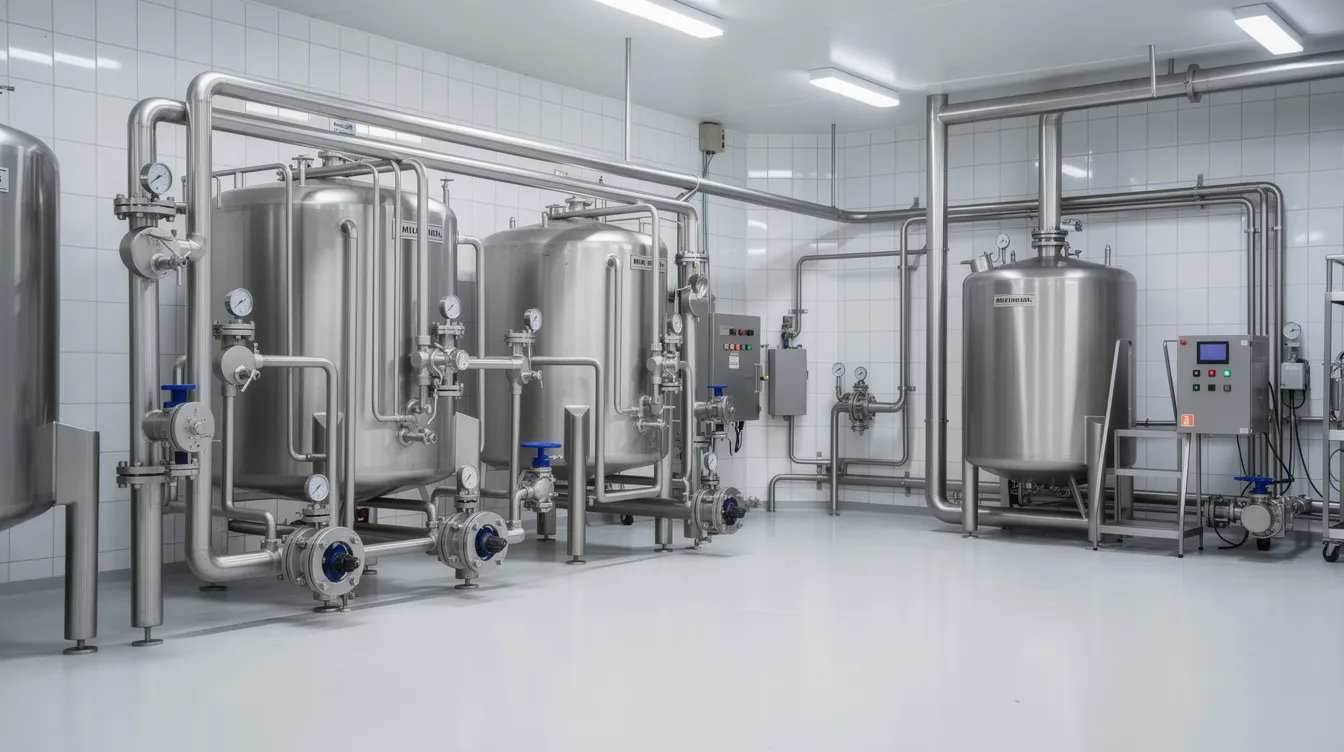
Before drafting a projected P&L or cash flow, a structured assumption sheet must be created. This is the foundation of the ghee plant financial model.
Core assumption blocks include:
- Production capacity per product line (ghee, butter, AMF)
- Capacity utilisation percentages by year
- Product mix and selling prices
- Milk-fat procurement prices and expected yields
- Utility rates (power, steam, refrigeration, water)
- Wage rates and annual escalation
- Overhead and administrative costs
- Total project cost and means of finance
- Interest rates for term loan and working capital
- Tax assumptions and depreciation policy
All later schedules should pull numbers from this single assumption sheet. When a promoter changes one key assumption, such as milk price per kg of fat, that change should automatically flow through to raw-material cost, EBITDA, cash accrual and DSCR. Well-documented assumptions enhance the credibility of ghee butter milk fat plant financial projections for bank loan appraisal.
Installed Production Capacity and Its Impact on Projections
Installed capacity for an industrial ghee manufacturing unit, butter plant or milk-fat processing plant is typically expressed in MT per day or MT per year of finished product, or in litres per day of raw milk or cream handled. Ghee manufacturing plants typically require 5,000 to 10,000 MT annual capacity for mid-to-large scale operations.
Parameters to capture include:
- Input handling capacity for milk, cream or butter
- Ghee kettle or continuous ghee line throughput
- Butter churn or continuous butter-making line capacity
- Number of operating days per year (often 300 rather than 365)
- Number of shifts and effective processing hours
- Expected fat recovery and production losses
Fat recovery is critical: traditional ghee making methods yield roughly 80 to 85% recovery, while modern cream separation or creamery-butter routes achieve 90 to 95%. This difference directly impacts saleable quantity per unit of fat input. For detailed capacity and product-mix planning, refer to the resource on ghee, butter and milk-fat plant capacity planning and product mix. Installed capacity flows into revenue calculations and into decisions on loan size and repayment tenor.
Capacity Utilisation Ramp-Up in Ghee Plant Financial Projections
A new ghee or butter manufacturing plant should not assume 100% capacity utilisation from Year 1. In practice, utilisation often starts at 40 to 50% in Year 1, rising to 70% in Year 2, 85% in Year 3, and stabilising at 85 to 90% from Year 4 onward.
Capacity utilisation assumptions drive:
- Production volume and turnover
- Fixed-cost absorption per kg of output
- EBITDA margin
- Working-capital requirement
- Cash generation and DSCR
- IRR and payback period
From a project-finance perspective, banks look closely at whether Year 1 to Year 3 utilisation is realistic for that location, target market and distribution strategy. A 10% drop in utilisation from the projected level can cut contribution enough to push the project close to or below break-even, especially when fixed costs are high relative to output. Capacity utilisation should be supported by realistic market research and distribution plans documented elsewhere in the ghee butter plant DPR.
Product Mix Modelling for Ghee, Butter and Milk-Fat Lines
A dairy plant financial projections model should separately capture volumes and prices for each product line: desi ghee, organic ghee, clarified butter, table butter, white butter, industrial butter, AMF, and any intermediate milk-fat products.
Different products carry different gross margins and packaging costs. Bulk ghee sold to institutional buyers has lower packaging cost but tighter per-kg margins. Consumer-pack ghee commands better realisations but requires higher investment in branding, packaging and distribution. The ghee butter plant financial model should allow promoters to test alternative product-mix scenarios and see the impact on EBITDA, cash flow and DSCR. A comprehensive quality control system is essential for production across all product lines to maintain consistent milk solids, fat content and product standards.
The competitive landscape also matters. The global plant-based butter market is valued at $2.92 billion in 2025 and is expected to grow at a 7.9% CAGR through 2030, projected to reach $4.26 billion by 2030. Plant-based specialty fats often command a retail price premium of 15 to 30% over traditional dairy products. The financial model for plant-based ghee must account for market demand and regulatory positioning. Many jurisdictions have tightened rules on using dairy nomenclature on plant-based labels, which affects competitive dynamics. Plant-derived fats can offer advantages like no dependence on milk procurement and easier storage, while plant-based fat margins depend on crop yields, exposing manufacturers to agricultural commodity fluctuations. Plant-based fats typically operate with gross margins ranging from 40% to 55% at scale. Financial projections for plant-based alternatives indicate steady high-growth expansion. These market trends are relevant context, though this article focuses on dairy-based ghee, butter and milk-fat plants.
Raw Material and Milk-Fat Procurement Assumptions
Raw materials account for 85 to 90% of total operating expenses in a ghee or butter plant. This single fact makes procurement assumptions the most consequential input in any ghee butter milk fat plant financial projections model.
Key assumptions include procurement source (cooperative, private dairies, own milk collection and chilling centres), pricing basis (fat-based or SNF-based), seasonal price variation, transportation cost, chilling requirements and procurement losses. The primary input costs for plant-based fats include base vegetable oils and fats, but for dairy-based operations, fresh milk, raw milk, cream procurement and butter procurement dominate.
Even a small increase in milk-fat cost per kg, when applied over thousands of MT per year, can materially reduce annual EBITDA. For detailed procurement strategies, see the resource on raw material and milk-fat procurement for ghee and butter plants. From a bank’s perspective, the robustness of procurement arrangements is as important as the accuracy of the ghee plant projected profit and loss.
Project Cost: Starting Point for Ghee Butter Plant DPR Financials
Any ghee plant detailed project report must establish a realistic total project cost before financial projections can be prepared. Project cost underpins depreciation, term-loan requirement, interest, the loan repayment schedule and promoter contribution.
Major project-cost components include land, site development, civil construction, plant and machinery, utilities (boiler, steam, refrigeration, compressed air), electrical installation, water and ETP systems, lab and quality control equipment, material handling, office equipment, preliminary and pre-operative expenditure, contingencies, interest during construction where applicable, and margin money for working capital. An illustrative 10 to 15 TPD ghee and butter plant may have a total project cost in the vicinity of ₹25 to 30 crore, though this varies by product mix, automation level and location. Ghee manufacturing plant setup costs include both capital investments and operating expenditure provisions.
Under-estimating project cost leads to under-financing, cash-flow stress and distorted ghee butter plant project cost and profitability analysis. Over-estimating can make the project appear uncompetitive on return metrics.
Machinery Cost, Capital Expenditure and Depreciation in the Financial Model
Plant and machinery for ghee manufacturing, butter processing and AMF lines typically represent the largest block of capital expenditure. Key equipment includes cream separators, ghee kettles, butter churns or continuous butter machines, clarifiers, AMF concentrators, packing machines and CIP systems. Machinery cost must be based on realistic supplier quotations, not assumed figures. For deeper guidance, refer to ghee manufacturing plant machinery and equipment cost.
Capital expenditure on machinery flows into the ghee plant financial projections as depreciation (reducing reported profit but not consuming cash), insurance premiums, and repairs and maintenance charges. Depreciation rates and methods (whether based on company policy, tax depreciation rates, or asset-life norms) affect projected profit, cash accrual and tax liability in the DPR. Buildings are typically depreciated over 15 to 20 years, while machinery may be depreciated over 8 to 10 years depending on applicable norms.
Land, Building and Utility Assumptions for Financial Projections
Land, building and utilities (power, steam, refrigeration, compressed air, water, ETP) influence both capital expenditure and operating costs in ghee plant financial projections.
Civil and utility elements include the main production block, cold rooms, boiler and utility block, finished-goods warehouse, administrative building, staff amenities, internal roads and drainage. The DPR financial model should include realistic assumptions for power tariff, steam and fuel cost, refrigeration load, water and effluent treatment cost, all linked to production volumes where possible. For layout and utility-design detail, see ghee and butter plant land, building, utilities and factory layout. Underestimating utility costs can artificially inflate EBITDA and mislead both promoters and lenders about the project’s true financial feasibility.
Means of Finance and Capital Structure in Ghee Plant Financial Projections
For every ghee, butter or milk-fat plant:
Total Project Cost = Total Means of Finance
Means of finance typically comprise promoter equity (often 25 to 40% of fixed capital), term loan (60 to 65% of fixed capital), unsecured loans where acceptable and properly structured, and capital subsidies where the project is actually eligible under a specific scheme.
Different debt-equity structures influence interest cost, repayment burden, DSCR and promoter ROI. Working-capital limits (cash credit, OCC, WCDL) must be modelled separately from term loans. A balanced financing structure is critical for acceptable ghee butter plant DSCR calculation. An over-leveraged project faces higher interest expense and tighter cash flow, while excessive equity reduces the promoter’s return and may be unnecessary.
Revenue Projections and Sales Assumptions for Ghee, Butter & Milk-Fat Plants
The basic revenue formula for ghee plant revenue projection and butter plant sales projection is:
Product-wise Saleable Quantity x Expected Net Realisation per kg = Product Revenue
Steps include determining saleable production from capacity and utilisation, adjusting for process and storage losses, allocating volumes among SKUs (bulk vs retail packs), and applying realistic net selling prices after trade discounts. Turnover in a dairy processing plant DPR financials section must emerge logically from capacity and market strategy, not be back-calculated from target profit. For detailed pricing and marketing context, refer to ghee and butter plant revenue, product mix and market strategy.
The global ghee market is projected to reach ₹5 lakh crore by 2027, reflecting strong market growth. Export demand and rising consumer preference for traditional dairy products and nutritional benefits of ghee support revenue assumptions, but each DPR must ground its selling-price projections in identifiable market demand and the business plan’s distribution model.
Illustrative Revenue Projection Methodology (Hypothetical Example)
All figures below are hypothetical and for illustrative understanding only. They do not represent current market quotations or guaranteed outcomes.
Assume a 20 MT/day ghee line operating 300 days per year with the following capacity ramp:
| Parameter | Year 1 | Year 2 | Year 3 |
|---|---|---|---|
| Capacity Utilisation | 50% | 70% | 85% |
| Annual Production (MT) | 3,000 | 4,200 | 5,100 |
| Bulk Ghee (70% of output, illustrative ₹350/kg) | ₹73.50 Cr | ₹102.90 Cr | ₹124.95 Cr |
| Packed Ghee (30% of output, illustrative ₹420/kg) | ₹37.80 Cr | ₹52.92 Cr | ₹64.26 Cr |
| Total Revenue | ₹111.30 Cr | ₹155.82 Cr | ₹189.21 Cr |
A small change in realisation, say an illustrative ₹5/kg difference, applied to 5,100 MT would shift annual revenue by ₹2.55 crore. At a larger production capacity, the revenue impact multiplies further.
Cost of Production and Operating-Expense Projections
The ghee butter plant financial projections must break down cost of production into: raw material and milk-fat, packaging, power and fuel, refrigeration, labour, chemicals and CIP consumables, repairs and consumables, transportation and other direct costs. Milk and butter accounts for 85 to 90% of operating expenses; even small fluctuations in raw material cost can erase projected margins.
Variable costs should be modelled on a per-kg basis and multiplied by projected production volume. Fixed costs (salaries, certain utilities, insurance) are entered as period costs with annual escalation, typically 5% per year. Accurate costing is essential for meaningful ghee butter plant break even analysis, EBITDA margin assessment and cash-flow forecasting. Cost assumptions should be stress-tested for inflation and volatility rather than assumed flat across five projection years.
Employee, Administrative and Selling-Distribution Cost Assumptions
An industrial ghee, butter and milk-fat plant requires production operators, lab and quality control staff, maintenance engineers, store and dispatch staff, a procurement team, sales team, and accounts and administration personnel. The DPR should provide a year-wise manpower plan with salary levels, annual increments and additions as capacity utilisation increases.
Selling and distribution expenses must align with the chosen sales model. B2B bulk sales carry lower freight and marketing cost per kg, while branded retail requires dealer margins, cold-chain logistics, warehousing, branding and market-development spend. Lenders scrutinise whether overhead and selling costs have been adequately provided; unrealistically low overheads can artificially boost projected profitability in the ghee plant projected profit and loss.
Projected Profit and Loss Account for Ghee, Butter & Milk-Fat Plants
The projected P&L in a ghee butter plant project report follows this logical progression:
Sales → Raw-Material and Manufacturing Costs → Employee Costs → Administrative and Selling Expenses → EBITDA → Depreciation → Interest → PBT → Tax → PAT
Gross profit margins for ghee production typically range between 20 and 30%. EBITDA represents operating profitability before non-cash charges and financing costs. Cash accrual is different from EBITDA because it is calculated after tax and adds back non-cash charges like depreciation. A promoter should not look at projected profit in isolation. From a project-finance perspective, PAT must be viewed alongside loan obligations, cash flow and DSCR. Multi-year ghee manufacturing plant 5 year financial projections and butter manufacturing plant 5 year financial projections should be aligned with the debt tenor.
Projected Balance Sheet Structure in Ghee Plant Financial Projections
The projected balance sheet shows financial position at each year-end.
Liabilities: promoter capital and reserves, term loans, unsecured loans, working-capital borrowings, trade creditors and other current liabilities.
Assets: gross fixed assets, accumulated depreciation, net fixed assets, capital work-in-progress during construction, inventory, trade receivables, cash and bank balances, loans and advances, other current assets.
Each year’s closing term-loan balance, working-capital utilisation, inventory and receivable levels must match the figures used in interest, cash-flow and working-capital schedules. Internally consistent ghee plant projected balance sheet, P&L and cash-flow statements substantially enhance lender confidence.
Projected Cash Flow, Cash Accrual and Fund Flow in the DPR
The projected cash-flow statement divides cash movements into operating, investing and financing activities. Banks focus on whether operational cash flows, after working-capital changes, are sufficient to cover debt service in each year.
A commonly used conceptual formula:
Cash Accrual = PAT + Depreciation + Other Non-Cash Charges
A ghee butter plant cash flow projection should also reflect capex timing, subsidy receipts if any, and drawdown or repayment of term loans and working-capital facilities. A profitable P&L does not guarantee availability of cash for instalments if working capital is underfunded.
Working Capital Projections and Dairy Plant Funding Needs
Working capital is the investment in current assets (inventories, receivables, bank balances, operating advances) less current liabilities (creditors, short-term borrowings) required for day-to-day operations.
Net Working Capital = Current Assets – Current Liabilities
For dairy processing units handling high-value milk-fat raw materials, even moderate inventory days create substantial rupee working-capital requirements. The DPR should estimate inventory days for raw materials, packing materials and finished goods, receivable days and creditor days, converting these into rupee requirements. For detailed methodology, see the article on working capital requirement for a dairy processing plant. An under-estimated working-capital requirement is a common weakness that causes cash-flow stress even when the project appears profitable on paper.
Term Loan Repayment Schedule and Interest Calculations
Any ghee butter plant term loan project report must include a detailed repayment schedule capturing opening balance, drawdown, moratorium period, instalment amount, interest and closing balance. Under NDDB-style dairy infrastructure funding norms, loan tenure can extend up to 10 years with a moratorium of up to 2 years.
The moratorium period should align with capacity ramp-up so that principal instalments begin after the plant reaches a reasonable utilisation level. Term-loan interest and working-capital interest must be calculated on appropriate outstanding balances and correctly fed into both the P&L and cash-flow statements. The ghee plant loan repayment projection should make underlying assumptions on interest rates and tenure clearly visible, since these vary by lender and time period.
DSCR, Loan Repayment Capacity and Ghee Butter Plant Financial Feasibility
Debt Service Coverage Ratio is defined as:
DSCR = Cash Available for Debt Service / Total Debt Service (Principal + Interest)
Banks generally look at both annual DSCR and average DSCR over the loan tenure. Cash available for debt service is usually derived from EBITDA or cash accrual after adjusting for taxes, working-capital changes and other commitments, depending on lender methodology. NDDB scheme norms, for example, require a minimum ROI of about 12% and DSCR of 1.50 times, after providing for 10% sensitivity in both procurement cost and sales price.
An unrealistically strong DSCR created by optimistic assumptions reduces the credibility of the ghee plant bank loan project report. DSCR should be evaluated together with break-even analysis, ROI, IRR and payback to assess milk fat plant financial viability comprehensively.

Break-Even Analysis and Profitability Indicators in the DPR
Break-even for a ghee or butter plant is the sales level at which contribution covers all fixed costs and the project moves from loss to profit.
Break-Even Sales = Fixed Costs / Contribution Margin Ratio
where Contribution = Sales minus Variable Costs.
Break-even for a ghee manufacturing business typically ranges from 2 to 4 years. A small ghee unit can earn ₹50,000 to ₹1,00,000 per month selling 200 to 400 kg, while a small ghee unit with ₹2 to 5 lakh investment can generate similar monthly returns. At industrial scale, break-even capacity expressed as a percentage of installed capacity helps promoters understand the margin of safety. For detailed numerical examples, refer to ghee and butter manufacturing plant profitability and break-even analysis. DPRs also include profitability ratios such as EBITDA margin, PAT margin, return on capital employed and asset-turnover to present a fuller picture.
ROI, IRR and Payback Period for Ghee Butter Plant Investments
ROI compares annual profit or cash returns to total capital invested. A ghee plant ROI projection and butter plant ROI calculation should use consistent definitions of “return” and “investment” throughout the model.
IRR is the discount rate at which the project’s net present value of projected cash flows becomes zero. A ghee butter plant IRR analysis evaluates whether the project’s returns exceed the cost of capital.
Payback Period measures the number of years required to recover the initial investment from cumulative cash accrual.
These metrics should be interpreted together with DSCR, break-even and sensitivity outcomes, not as standalone indicators. Use multiple scenarios (base, conservative, stress) when estimating IRR and payback for a ghee, butter or AMF project.
Projection Period and Horizon for Ghee, Butter & Milk-Fat Plant DPRs
Financial projections for ghee manufacturing plant DPRs and butter manufacturing plant DPRs typically cover at least the full term-loan tenure, often 7 to 10 years, with detailed 5-year breakouts. Setting up a ghee plant can take 12 to 18 months, and Year 1 generally reflects commissioning and stabilisation.
The chosen projection period should align with construction time, expected time to full production capacity, and lender expectations for debt appraisal. In the initial years, month-wise or quarter-wise detail may be helpful for internal planning, even though bank-submitted DPRs are usually annual.
Illustrative Five-Year Financial Projection Table Structure
All figures below are hypothetical. They demonstrate projection structure, not financial results.
| Particulars | Year 1 | Year 2 | Year 3 | Year 4 | Year 5 |
|---|---|---|---|---|---|
| Capacity Utilisation (%) | 50% | 70% | 85% | 90% | 90% |
| Sales Revenue (₹ Cr) | 111 | 156 | 189 | 200 | 210 |
| Raw-Material Cost (₹ Cr) | 88 | 122 | 147 | 155 | 163 |
| Manufacturing Expenses (₹ Cr) | 7 | 9 | 10 | 10 | 11 |
| EBITDA (₹ Cr) | 10 | 17 | 23 | 25 | 26 |
| Depreciation (₹ Cr) | 3 | 3 | 3 | 3 | 3 |
| Interest (₹ Cr) | 4 | 3.5 | 3 | 2.5 | 2 |
| PBT (₹ Cr) | 3 | 10.5 | 17 | 19.5 | 21 |
| PAT (₹ Cr) | 2.3 | 7.9 | 12.8 | 14.6 | 15.8 |
| Cash Accrual (₹ Cr) | 5.3 | 10.9 | 15.8 | 17.6 | 18.8 |
| Debt Service (P+I) (₹ Cr) | 4 | 5.5 | 6 | 5.5 | 5 |
| DSCR | 1.33 | 1.98 | 2.63 | 3.20 | 3.76 |
Notice how DSCR improves as capacity utilisation increases and interest cost declines with principal repayment. A 10% rise in raw-material cost or a 10% drop in utilisation in any year would compress these margins and reduce DSCR. The table demonstrates structure; actual project outcomes will differ based on real assumptions.
Critical Linkages and Internal Consistency in the Financial Model
Key linkages that must reconcile in any professional dairy processing plant DPR financials:
- Capacity Utilisation → Production → Sales
- Production → Raw-Material Requirement → Procurement Cost
- Project Cost → Fixed Assets → Depreciation
- Term Loan → Interest and Repayment → Closing Loan Balance
- Production and Sales → Inventory and Receivables → Working Capital
- PAT + Depreciation → Cash Accrual → DSCR
Inconsistencies such as sales units exceeding production, loan balances not matching the balance sheet, or interest mismatches can undermine the credibility of the ghee butter plant project report. The financial model should be formula-driven rather than manually typed, so that changes in base assumptions automatically flow through all schedules. In my experience of preparing and analysing project reports, banks frequently question projections that appear reverse-engineered to show a high profit or DSCR.
Scenario Planning and Sensitivity Analysis for Ghee Butter Milk-Fat Projects
Scenario analysis is a vital part of ghee butter plant financial feasibility assessment. At minimum, the model should include three scenarios:
- Base Case: Most likely assumptions for utilisation, procurement cost, selling prices
- Conservative Case: Lower utilisation (minus 10%), higher procurement costs (plus 10%)
- Stress Case: Combined adverse movements in procurement, sales and utilisation
Key variables to stress-test: milk-fat procurement cost per kg, selling prices, capacity utilisation, energy tariffs, packaging costs, working-capital cycle and interest rates. Internal decision-making should never rely only on a single optimistic ghee plant profitability projection. Scenario outcomes should be compared using DSCR, IRR, payback and break-even, not just PAT.
Importance of Milk-Fat Price Sensitivity in Financial Projections
Among all variables in a ghee plant financial model, milk price and milk-fat price are the most sensitive. Consider this illustrative calculation:
A plant consuming 5,000 MT of butter annually at an illustrative cost of ₹400/kg faces a total raw-material bill of ₹200 crore. A ₹2/kg rise in butter procurement price adds ₹1 crore to annual costs, directly reducing EBITDA by the same amount. At ₹10/kg, the impact becomes ₹5 crore, a level that can push DSCR below threshold.
The financial model should allow users to adjust procurement price assumptions by season or by year and instantly see the effect on cash accrual and DSCR. In milk-fat intensive businesses, a small error in procurement-rate assumption is more damaging than a similar percentage error in overhead assumptions. Serious promoters must build procurement strategies and risk-mitigation mechanisms, not only attractive sales forecasts.
Ghee Manufacturing Plant-Specific Considerations in Financial Projections
Ghee-specific factors include choice of route (cream method, butter route or direct liquid milk processing), fat recovery rates, process and storage losses, clarification energy requirement and packaging mix (tins, pouches, jars). The ghee manufacturing process and its unit operations involved determine yield and cost parameters. For technical detail, see industrial ghee manufacturing process and production line.
Contribution margins differ between bulk ghee and small consumer packs. Buffalo milk typically yields ghee with a rich nutty taste and high smoke point preferred in the Indian market, but fat content and recovery vary by species and feed. Ghee shelf life, storage conditions and product rotation influence inventory holding days and working-capital projections. In financial projections for ghee manufacturing plant DPR, loss assumptions and recovery percentages should be aligned with realistic technical data, not overly optimistic yields. Ghee manufacturers must also consider regulatory compliance and health benefits claims.
Butter Manufacturing Plant-Specific Considerations in Financial Projections
Butter-specific parameters include cream supply consistency, churning or continuous-butter technology efficiency, fat and moisture standards, refrigerated storage duration and packaging options. For process details, see industrial butter manufacturing process and production line.
Butter plants often supply institutional and industrial buyers through larger volume contracts with tighter pricing and potentially longer credit periods, which influences working capital. Energy and refrigeration costs per kg are key variables in butter plant financial projections, especially for plants with large cold-storage infrastructures. The DPR should separately track table butter, white butter and industrial butter margins where relevant.
AMF (Anhydrous Milk Fat) Plant Financial Projection Considerations
AMF is a high-fat, low-moisture product used by industrial dairies, bakeries and the food processing industry. Its financial characteristics differ from ghee and table butter. For dedicated AMF project details, see the Anhydrous Milk Fat (AMF) manufacturing plant project report.
AMF plants typically process cream or butter, with projections driven by fat concentration yields, energy-intensive evaporation processes and bulk industrial pricing. Large storage facilities and bulk handling equipment influence both capital expenditure and operating expenditure and must be captured in the milk fat processing plant financial projections. Key risks include export demand variability and dependency on a limited number of B2B clients in international markets.
Common Mistakes in Ghee Butter Milk-Fat Plant Financial Projections
Frequent errors that weaken DPR credibility:
- Assuming near-100% capacity utilisation in Year 1
- Using unrealistic selling-price growth unsupported by market outlook or industry trends
- Ignoring seasonal milk-fat price volatility
- Underestimating working capital
- Omitting process losses in yield calculations
- Ignoring packaging costs for consumer-pack products
- Using machinery cost estimates without supplier quotations
- Overlooking utility, repairs and maintenance provisions
- Miscalculating depreciation or applying incorrect asset lives
- Applying flat interest rates on the full sanctioned term-loan amount instead of outstanding balances
- Term-loan schedules not reconciling with projected balance sheets
- Not linking principal and interest to DSCR calculations
DPRs that reverse-engineer sales and net profit only to show a strong DSCR face detailed queries during bank appraisal. Promoters should cross-verify their model with an experienced CA or DPR professional before approaching lenders. A business consultant or project report specialist can identify gaps that may not be obvious to the promoter.
What Banks and Financial Institutions Examine in DPR Financial Projections
Lenders focus on:
- Reasonableness of total project cost and operational efficiency assumptions
- Adequacy of promoter contribution and investment opportunities
- Strength of means of finance
- Raw-material availability and key raw materials sourcing
- Market assumptions, market demand and target market validation
- Operating margins and market research backing
- Working-capital requirement
Financial indicators commonly reviewed include projected debt-equity ratio, current ratio, EBITDA and PAT margins, cash accrual, ghee plant debt service coverage ratio, break-even level, ROI, IRR and payback period. Banks test the sensitivity of ghee butter plant financial projections for bank loan to higher procurement prices, lower selling prices or slower ramp-up. The exact appraisal norms vary, but all expect projections to be consistent, transparent and backed by realistic assumptions.
New Greenfield Plant vs Expansion Project: Differences in Financial Projections
Greenfield ghee butter plant DPRs rely more heavily on projected figures and industry benchmarks. Expansion projects can anchor projections to actual historical performance, comparing past gross margins, overhead ratios, working-capital cycles and DSCR with projected values.
Expansion-project financial models should separate “existing business” financials from incremental volumes, costs and profits. Existing plants benefit from shared overheads and established procurement and sales channels, which can strengthen projected profitability and DSCR. Banks may compare historical data with projections to test reasonableness.
Preparing Bankable Financial Projections for a Ghee Butter Plant DPR
A “bankable” ghee butter plant DPR features:
- Realistic capacity ramp-up grounded in market demand
- Technically supported yields based on the chosen cream separation or manufacturing process
- Market-supported selling prices
- Quotation-backed capital expenditure
- Adequate provision for utilities and overheads
- Transparent assumptions clearly stated for lenders
- Total Project Cost = Total Means of Finance, with working-capital margin money included
- Projected P&L, projected balance sheet, projected cash flow, term-loan amortisation, working-capital assessment, DSCR summary and key ratios
Sound projections do not guarantee bank sanction, but they improve the quality and speed of credit appraisal.
Role of a Chartered Accountant and DPR Professional in Dairy-Plant Financial Modelling
A Chartered Accountant with project-finance experience can help promoters integrate technical inputs from engineers with financial structures, project cost and means of finance into a coherent dairy plant financial projections model. Typical services include structuring project cost, designing the ghee plant financial model, preparing projected financial statements, assessing working-capital requirements, building loan-repayment and DSCR schedules, and running sensitivity analysis.
Professional involvement helps identify gaps such as under-costed utilities, insufficient working capital or aggressive pricing assumptions before they become issues in appraisal. Preparing a DPR does not in itself guarantee loan approval or profitability.
About CA Manish Gugliya and ProjectReportBank.com
CA Manish Gugliya is a practising Chartered Accountant and Project Report & Business Finance Professional associated with ProjectReportBank.com. His work spans industrial DPRs and project-finance documentation across dairy processing, ghee manufacturing, butter plants and other food processing industry segments.
ProjectReportBank.com provides structured DPR formats and financial models for ghee manufacturing plant DPR, butter manufacturing plant detailed project report and milk fat processing plant DPR, aligned with typical bank requirements. While the team assists with realistic, technically aligned projections and documentation, final decisions on loan sanction, interest rates and terms rest solely with the respective lenders. Promoters should treat financial projections as decision-support tools, refined as more accurate market and technical data becomes available during project implementation.
Conclusion: Using Financial Projections to Judge Ghee Butter Milk-Fat Project Viability
Credible ghee butter milk fat plant financial projections connect technical capacity, product mix, raw-material procurement, project cost, financing pattern, operating costs, working-capital needs, profitability, cash flow and repayment capacity into a single integrated picture. The quality and realism of assumptions matter more than presenting artificially high profit or DSCR numbers. Lenders can usually identify projections that are internally inconsistent or overly optimistic.
For promoters, a robust ghee plant financial projections exercise is not a formality for bank loans but a tool to understand risk, plan capital structure and prepare for adverse scenarios. Whether building a new ghee production facility or expanding an existing plant setup, invest time and professional effort in the financial model before committing substantial capital to land, building and machinery procurement. Realistic, sensitivity-tested and internally consistent projections give both promoters and lenders a clearer view of long-term financial sustainability in ghee, butter and milk-fat processing projects.
FAQs on Ghee, Butter & Milk Fat Plant Financial Projections
How many years of financial projections do banks usually expect for a ghee or butter plant DPR?
Most banks expect projections at least for the full repayment period of the term loan, typically 7 to 10 years, with more detailed focus on the first 5 years when capacity is ramping up. Some institutions accept 5-year detailed projections plus summarised later years, provided the model clearly shows that the loan will be fully repaid within the projected period. Promoters should confirm horizon expectations with their intended lender, but internally plan for a longer life (10 to 12 years) when evaluating IRR and overall project viability.
Can one set of financial projections be used for all banks and financial institutions?
A strong base ghee butter plant DPR financial model can remain the same across lenders, but individual banks may request different presentation formats, ratios or annexures. Promoters can usually adapt the same underlying financial model into multiple CMA data formats or DPR templates without changing core assumptions. Keep the master model assumption-driven and export customised summaries (P&L, balance sheet, cash flow, DSCR) per each lender’s requirement.
How should subsidies be treated in ghee butter milk fat plant financial projections?
Capital or interest subsidies should be included in projections only when eligibility and scheme conditions are reasonably clear and applicable. Capital subsidies usually reduce net project cost or effective promoter contribution, while interest subsidies reduce effective interest expense, both affecting cash flow and DSCR. Maintain a conservative “without subsidy” base case as well, so that project viability does not depend entirely on uncertain subsidy receipts or timelines.
Are audited past financials necessary when applying for finance for a new ghee or butter plant?
For greenfield projects promoted by existing businesses, lenders usually ask for audited financial statements of existing entities to assess overall financial strength and track record. For first-time promoters, the focus shifts to net worth, collateral support, promoter experience and the intrinsic strength of the project’s financial projections. Clear personal net-worth statements and, where applicable, historical dairy-business financials strengthen the DPR package.
How often should financial projections be updated once the plant starts operating?
Projections should be revisited at least annually, and more frequently in the first 2 to 3 years, to compare actuals with projected figures and adjust assumptions based on real performance. Updating the ghee plant financial model with actual data helps promoters refine procurement strategies, milk processing efficiency, pricing decisions and expansion plans. Timely revisions also assist in discussions with banks regarding limit enhancements, restructuring or additional funding.