Key Takeaways
Before sanctioning any Mudra loan under the Pradhan Mantri Mudra Yojana (PMMY), every bank or financial institution checks one thing above all else: can this business run steadily and repay on time? That single question drives the entire appraisal process.
Business stability does not only mean having an old business. Even a unit started in 2024–2026 can prove stability through proper planning, consistent bank transactions, and realistic financial projections. I have personally helped entrepreneurs with just 8–10 months of operations get approved because their documentation told a convincing, honest story.
Loan officers rely heavily on bank statements, business proof, shop verification, and project reports to judge stability for collateral free loans up to ₹10 lakh and Tarun Plus up to ₹20 lakh where applicable. What matters is whether all these documents tell the same consistent story.
As a practising CA with over 20 years of experience in MSME finance, I can tell you that consistency across documents and practical, down-to-earth projections improve approval chances far more than inflated turnover figures on paper. This article gives you clear, step-by-step guidance on how to present your business as stable and bank-ready before applying for mudra loans.
Introduction: Why Banks Look for Business Stability Before Mudra Loan Approval
Every bank giving a Mudra loan under the Pradhan Mantri Mudra Yojana wants one simple assurance: that your business will survive long enough to repay the EMI comfortably. That is the starting point of every credit decision.
The Government of India launched this flagship scheme on April 8, 2015, to provide financial assistance to micro and small businesses. Under the mantri mudra yojana pmmy, lenders can finance up to ₹10 lakh as collateral free mudra loans, and some now extend Tarun Plus up to ₹20 lakh. Since these are unsecured-meaning the bank has no assets created as security-they must be extra careful about whether your business is genuinely stable.
From my first-hand experience, loan officers focus far more on the strength and continuity of the business than on the borrower’s spoken promises. A confident verbal pitch without supporting bank statements and proper documents rarely convinces anyone in the credit department.
Business stability is not the same as “old business only.” Even a 6-month-old startup can be seen as stable if planning, documents, and financial discipline are strong. In this article, I will cover what stability means, how banks check it, which documents matter, how new businesses are evaluated, common mistakes, and practical ways to improve your approval chances for any small business loan under PMMY.
Table of Contents
Why Business Stability Matters for Mudra Loan Approval
Under government-supported schemes like the Pradhan Mantri Mudra Yojana, Mudra stands as a refinance agency that supports micro units development. But the credit risk still sits with the lending commercial banks, small finance banks, and NBFCs. That is why they carefully test business stability before sanctioning any loan amount.
Here is what a stable business profile signals to the bank:
- Lower lending risk – the bank feels confident that EMIs will be paid even if sales dip in some months.
- Genuine business verification – the unit is physically existing and actually engaged in manufacturing, trading, or services, not just “on paper.”
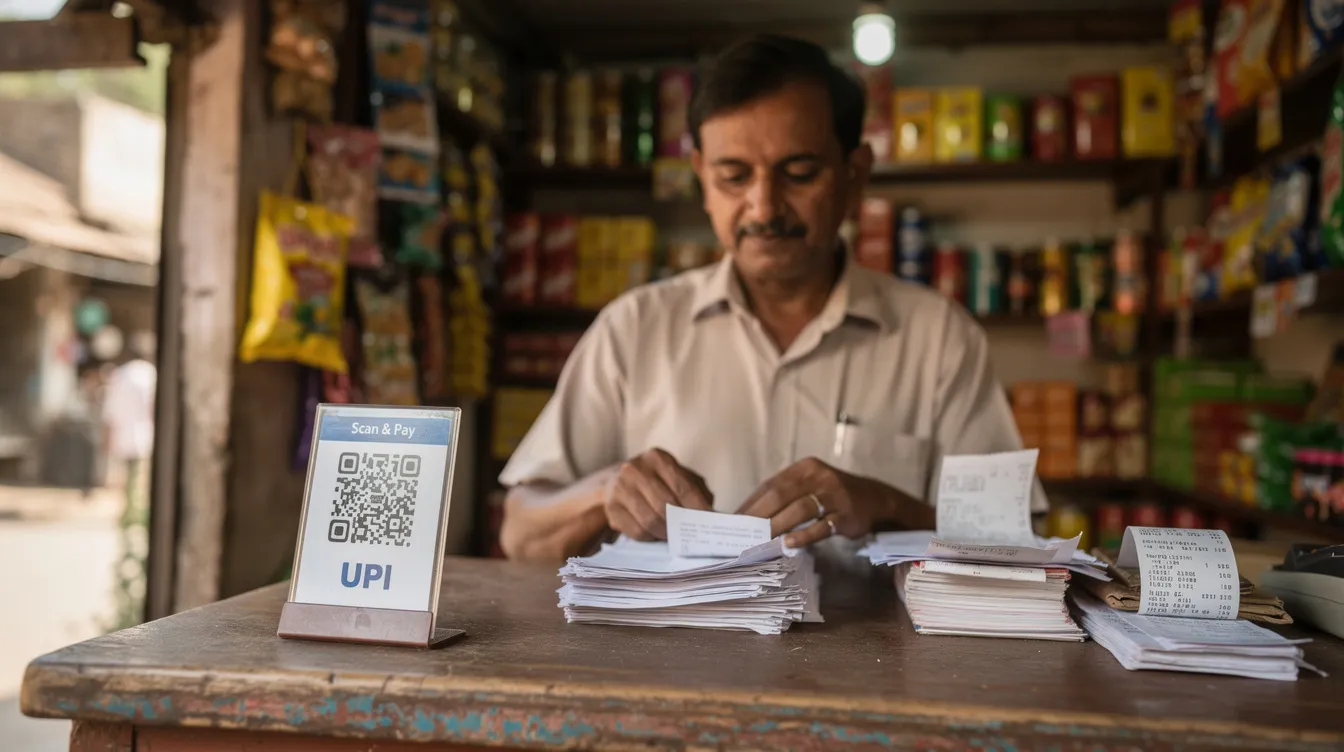
- Sustainable income generation – a shop running steadily for 2–3 years or a service provider with regular UPI inflows is far more convincing than one-time big deposits.
- Employment creation potential – stable units create more local jobs, which aligns with the scheme’s broader goals.
Businesses must demonstrate stability to qualify for higher loan amounts. When banks see stability, they are more comfortable offering smoother processing, timely disbursal of working capital or term loan, and sometimes even better terms within their range. Note that interest rates for Mudra loans are deregulated, meaning each lender decides based on their own risk assessment-and a stable business gets assessed more favourably.
What Does “Business Stability” Actually Mean for Banks?
For lenders, a “stable business” is one that runs regularly, has real customers, and generates enough cash flow to pay expenses plus EMIs without continuous crisis. The business must be a non-farm, income generating enterprise-this is a core eligibility criteria under PMMY.
Here is what stability looks like in practical terms:
- Regular business activity – frequent, consistent sales visible in bank statements, UPI credits, POS settlements, or GST returns.
- Consistent operations – open shop timings, ongoing services, running machinery, and continuous stock movement. Not a unit that opens once in a while only during festival seasons.
- Stable income – not necessarily the same every month, but a reasonable average that comfortably covers expected EMI for the requested loan amount.
- Genuine business location – a shop, office, workshop, or home-based unit that can be physically verified by the bank official during a field visit.
- Financial discipline – using the business bank account regularly, avoiding frequent unexplained cash withdrawals, and not bouncing cheques.
For many small businesses without GST-like very small retailers or service providers-stability is judged more from bank statements, local reputation, and on-site verification than from formal financial statements.
How Banks Judge Business Stability: Key Factors Loan Officers Examine
This is the core practical section. During a Mudra loan appraisal, the officer typically keeps the application form, KYC, bank statements, and project report side-by-side and checks whether all these give the same story about the business.
Business Age
Lenders treat an existing business running since, say, 2021 very differently from a fresh startup proposed in 2026. Two to three years of continuous operations-visible through bank statements, GST returns, or regular stock purchases-usually create strong confidence.
However, even a 6–12 month-old business can qualify if transactions are regular and the project report clearly shows how the loan extended will help stabilize and grow the unit. For brand-new units, banks give more weight to promoter experience, own capital contribution, and realistic projections instead of past figures.
Nature of Business
Banks evaluate viability based on demand, model, and sustainability. They assess stability differently for manufacturing units (small fabrication, food processing), trading businesses (kirana shop, hardware store), and services (salons, coaching centres, repair shops).
Seasonal businesses-like sweets shops or agri-input traders dealing in allied agricultural activities-face extra scrutiny. Lenders focus on full-year cash flow, not just Diwali or harvest season peaks. Local demand, competition around the shop, and uniqueness of the proposed activity all influence how stable the business looks.
Business Location and Premises
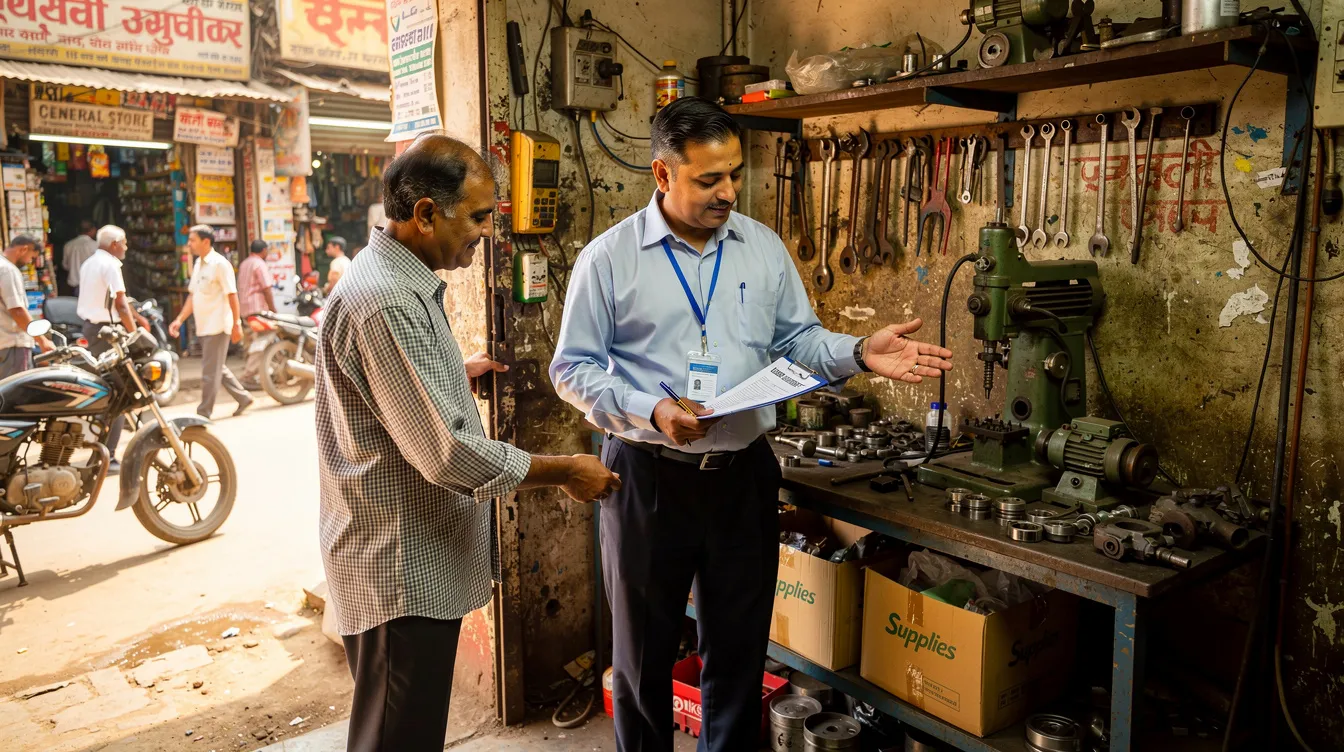
Banks almost always verify the shop or office address before final approval, either through a physical visit or local enquiry. Having a clear rent agreement, electricity bill, or municipal trade licence at the same address as your bank records strengthens stability perception.
Home-based businesses-tailoring, cloud kitchens, online reselling-can absolutely qualify, as long as they are properly documented and explained. Frequent shifting of address without documentation creates doubt, so staying at the same place for at least 1–2 years before applying helps.
Sales Consistency and Cash Flow Pattern
Banks focus on cash-flow-based lending for Pradhan Mantri MUDRA Yojana loans. For existing businesses, banks require 6 to 12 months of bank account statements to understand monthly inflows and outflows. Repayment capacity is assessed through analysis of cash inflows and outflows.
UPI receipts, POS settlements, NEFT/RTGS credits from customers, and digital wallet settlements all help prove regular sales. GST returns (GSTR-3B, GSTR-1) for registered units verify turnover trends.
Wild swings-no transactions for months and then sudden large deposits before the loan application-make officers suspect “managed” bank statements rather than genuine stability.
Customer Base and Market Reach
A business with repeat customers-regular wholesalers, local offices, or fixed service contracts-appears far more stable than one depending only on walk-in, one-time clients.
I always advise including in the project report a simple description of the customer profile-retail walk-ins, nearby housing societies, local farmers, school students-to show that real demand exists. Banks often ask informal questions about competition, typical footfall, and customer retention during field visits.
Promoter’s Business Experience and Skills
The applicant’s experience and skills are evaluated to assess business stability. For both existing and new cases, the owner’s knowledge in that line of business is a major comfort factor.
A mechanic opening his own garage after 7 years of job experience, or a cook starting a tiffin centre-these gain trust quickly. Family business background, informal apprenticeship, educational qualification, or skill training certificates (ITI, PMKVY, beauty parlour courses) all count as proof of necessary skills. During bank interviews, applicants should confidently explain how they manage purchasing, pricing, stock, and marketing.
Financial Discipline and Credit Behaviour
Before approving any business loan-even under credit guarantee schemes-banks check repayment habits through credit bureau reports. A satisfactory credit track record matters significantly. Clean credit history and track record are important factors for loan approval.
If you have successfully repaid previous loans-whether a bike loan, consumer loan, or earlier shishu loans-that actually supports your case. It shows you have availed and successfully repaid loans responsibly. Existing financial obligations like other EMIs or credit card dues can affect repayment capacity, so settle or regularize them before applying.
Maintain at least 6 months of good account conduct before applying for a higher mudra loan amount like ₹5–10 lakh.
Quality and Practicality of Project Report
In many banks, especially for Kishore and Tarun categories, the project report and CMA data are the main tools to judge future stability. A strong project report should include: clear business description, local market analysis, cost estimates from real quotations, realistic sales forecasts, and monthly cash flow statements.
Projections must be believable-growth rates of 10–30% annually are far more acceptable than sudden 10x jumps. Unrealistic margins (70–80% net profit in trading) immediately reduce credibility.
If you want detailed guidance on preparing your application, check out how to apply for a Mudra Loan and how to improve your Mudra Loan approval chances.
Documents Banks Use to Judge Business Stability
Documents are not a formality-they are proof that the story in your application is actually true. Lenders check that the loan purpose aligns with income generating activities, and business continuity must be proven through registration certificates or licenses.
| Document Category | Examples |
|---|---|
| Personal KYC | Aadhaar card, PAN card of proprietor/partners |
| Business Registration | Udyam Registration, GST certificate, Shop & Establishment licence, FSSAI for food processing |
| Address & Location Proof | Electricity bills, property tax receipts, rent agreement, business photographs |
| Financial Records | Last 6–12 months bank statements, ITRs, balance sheets |
| Project Report & CMA Data | Viability study, working capital needs, cash flow projections |
| Supporting Proof | Purchase invoices, sales bills, UPI screenshots, marketplace dashboards, other documents |
Ensure names, addresses, and dates match across all documents. Even small discrepancies-a misspelled name on PAN versus Aadhaar-can delay processing. You can understand the difference between business profile and documents for Mudra Loan to organize your file better.
How Banks Evaluate New or Recently Started Businesses for Mudra Loans
Many pmmy loans are actually granted to new businesses-especially in the Shishu and lower Kishore categories. Mudra Yojana supports non-corporate small businesses, including startups and micro enterprises engaged in income generating activities.
When there is no long business history, banks focus on:
- Promoter’s experience in the same industry and any vocational training
- Evidence of market demand – survey of nearby area, enquiries received, advance bookings
- Own capital contribution – even 10–25% of project cost funded from savings adds confidence. It shows the beneficiary micro unit entrepreneur has “skin in the game”
- Realistic ramp-up plan – 40–50% capacity utilization in year one, gradually increasing, looks more stable than claiming full capacity from month one
- Clear business model – who are the main customers, where raw materials come from, expected selling price, approximate daily sales volume
MUDRA loans are classified into four categories based on the stage of growth development and funding needs of the beneficiary micro unit: Shishu loans offer up to ₹50,000, Kishore loans range from ₹50,001 to ₹5 lakh, Tarun loans are available from ₹5 lakh to ₹10 lakh, and Tarun Plus loans range from ₹10 lakh to ₹20 lakh. The maximum loan amount under PMMY is ₹20 lakh for Tarun Plus. New entrepreneurs should consider starting with Shishu or lower Kishore and building up.
Prepare thoroughly using resources like what to do before applying for a Mudra Loan and the Mudra loan application form step-by-step guide.
Common Reasons Banks Doubt Business Stability in Mudra Applications
In my practice, many rejections happen not because the business is weak, but because the application is badly prepared. Here are the most common reasons banks doubt stability:
- Unrealistic projections – showing ₹50 lakh annual sales for a new small shop without justification
- Poor documentation – missing bank statements, no proper business proof, conflicting addresses across Aadhaar and rent agreement
- Frequent address changes in the last 12–18 months
- Fake or inflated estimates – experienced officers detect these quickly, and it creates mistrust about the entire application
- Inconsistent information – one set of figures in the application form, another in the project report, completely different numbers in bank statements
- Weak financial planning – no idea about working capital requirements, ignoring basic expenses like rent, electricity, and wages
- Applying for too much – requesting the maximum loan of ₹10 lakh when actual operations support only ₹2–3 lakh signals over-ambition
- Hiding existing liabilities – personal loans or credit card dues that surface in the credit bureau report
Understanding why banks hesitate to approve Mudra loans can help you avoid these pitfalls entirely.
How to Improve Business Stability Before Applying for a Mudra Loan
Here are practical steps you can implement 3–6 months before applying:
- Route transactions through your bank account – UPI, QR code collections, and online transfers create clear, verifiable income patterns for eligible borrowers.
- Maintain basic books – a simple sales register, purchase register, or daily cash book supports your project report numbers.
- Prepare a customized project report – not a generic template. Include realistic, location-specific assumptions about your business plan with proper CMA data.
- Ensure document consistency – all KYC and business registration documents should show the same name, spelling, and address.
- Choose the right loan amount – starting with ₹2–3 lakh for a micro unit may be wiser than directly requesting ₹10 lakh without a track record. Individual borrowers should match their ask to their current capacity.
- Build clean repayment history – pay existing EMIs and credit card dues on time for at least 6–12 months. Those who have successfully repaid loans before are viewed more favourably.
- Get formal registrations – Udyam Registration for MSME status and GST registration where turnover justifies it. These formalize the business as a legal entity and improve credibility.
- Learn to mention your loan purpose correctly – banks want clarity on whether funds go toward capital assets, working capital, or equipment purchase.

Typical Mistakes Applicants Should Avoid While Presenting Business Stability
In my experience, many applications fail not due to weak businesses but due to preventable errors:
- Copy-paste project reports downloaded from the internet that don’t match the actual business type, city, or scale-officers recognize these patterns immediately
- Inflated income figures – claiming 70–80% net margins in a trading business immediately destroys credibility
- Incorrect business details – wrong nature of activity, old address, or wrong start date in the mudra application form creates suspicion during field verification
- Missing documents – half-scanned pages, missing bank statement months, or absent business proof
- Hiding liabilities – small personal loans or credit card dues detected in credit bureau reports damage trust instantly
- Last-minute applications – applying just because “the bank is running a target campaign” without proper preparation. The sole discretion of approval still rests with the bank’s credit team, regardless of targets.
Always prepare a pre-submission checklist covering identity, address, business proof, bank statements, and your project report before walking into the branch.
Practical Example: Why One Mudra Application Looks More Stable Than Another
Consider two applicants in 2026, both applying for a ₹5 lakh Kishore category mudra loan for a mobile repair business:
| Parameter | Applicant A | Applicant B |
|---|---|---|
| Bank Transactions | Irregular, mostly cash | Regular UPI/QR + bank deposits for 12 months |
| Business Registration | No Udyam, no GST | Udyam registered, trade licence |
| Rent Agreement | Missing | Proper agreement matching address proof |
| Project Report | Generic template, inflated projections | Customized with CA support, realistic numbers |
| Credit History | Two recent cheque bounces | Clean record, previously repaid a Shishu loan |
| Promoter Contribution | Nil | 20% own funds invested |
The bank will naturally consider Applicant B’s business more stable: documented cash flow, clean repayment track, clear business proof, and practical projections that match past trends. Applicant A may face rejection or heavy questioning.
The lesson? Even small, home-based, or street-level businesses can appear highly stable if their financial behaviour and documentation are well-organized. This is exactly why some Mudra loan applications get approved faster than others.
Frequently Asked Questions on Business Stability and Mudra Loans
These are common doubts entrepreneurs ask me during consultations about the mudra scheme, especially related to how banks assess stability and credit needs of small enterprises.
Can I get a Mudra loan if my business is completely cash-based and I don’t have GST?
Yes. Many micro units like small kirana shops, street food stalls, barbers, and home-based tailors operate mainly in cash and still receive mudra loans under the Pradhan Mantri Mudra Yojana. Collateral is not required for loans up to ₹10 lakh under PMMY.
To strengthen your application, start depositing part of daily cash into the bank account, maintain a simple sales notebook, obtain Udyam registration, and keep basic purchase bills ready. GST is not compulsory for very small turnover businesses, but as the business grows and you want to apply online for larger amounts or loans under the tarun category, GST registration improves confidence. Even without GST, your bank statements and physical verification serve as the primary reference point.
How long should my business be running before I apply for a Kishore or Tarun Mudra loan?
There is no fixed national rule. However, in practice most banks feel comfortable when a business has at least 12 months of stable operations for Kishore (upto rs 5 lakh) or Tarun (₹5–10 lakh) loans. Loans under the Tarun category range from ₹5 lakh to ₹10 lakh and require stronger proof.
If the promoter has strong prior experience and has invested own funds as financial support, even 6–9 months of good performance may sometimes be enough with a strong project report. Very new entrepreneurs should consider starting with Shishu and moving to the next phase after demonstrating 1–2 years of stability. The needs of the beneficiary micro unit are assessed based on both current track record and growth development and funding needs.
Will operating my business from home reduce my chances of Mudra loan approval?
Not at all. Home-based units-tiffin centres, online boutiques, tailoring, coaching, freelancing-are common among non corporate small enterprises and can qualify. Keep clear address proof (electricity bill, gas bill) and, if required by your municipality, a simple trade licence for home-based business or other legal entity registration.
What matters more is consistent income flow and genuine activity, not having a fancy commercial showroom. Financial institutions evaluate the reality of your operations, not the size of your premises.
How important is a project report for a small Shishu Mudra loan below ₹50,000?
For very small Shishu loans, many banks do not insist on a detailed project report. But having even a basic written business plan-expected daily sales, expenses, and EMI coverage-makes the discussion at the branch smoother and quicker.
For Kishore and Tarun categories, a structured project report with financial projections and cash flow is strongly recommended. Covering loans of larger amounts without a written plan puts your application at a disadvantage. Learn how to write the business details section correctly to make your report stand out.
Can previous loan rejection hurt my future Mudra loan application?
A past rejection is not a permanent barrier. Banks mainly want to see whether earlier issues-missing documents, low income, poor credit score-have now been rectified. India launched this scheme to support micro enterprises, and lenders understand that first attempts sometimes fail.
Obtain clear feedback from the previous bank, improve documentation and financial discipline for a few months, and then re-apply with stronger papers. Being transparent about earlier rejection and explaining improvements actually demonstrates maturity, which supports the perception of stability. The four categories of PMMY allow you to start smaller and build upward based on the stage of growth development.
Conclusion: Presenting a Stable, Bank-Ready Business for Mudra Loan Approval
Banks approving mudra loans under the Pradhan Mantri Mudra Yojana carefully judge business stability through age of operations, nature of business, cash flow patterns, promoter experience, documentation consistency, and project report quality. They are not looking for perfection-they are looking for honesty, consistency, and a realistic plan.
Even new or small businesses can look stable if transactions are routed through bank accounts, documents are consistent, and financial projections are grounded in reality instead of exaggeration. Whether you apply for Shishu or Tarun Plus, the fundamentals remain the same.
Treat your Mudra loan application as a professional exercise: organize records, correct your KYC, prepare a practical project report with proper CMA data, and clearly state the correct loan purpose and required loan amount. As CA Manish Gugliya, I have seen that entrepreneurs who prepare early, avoid common mistakes, and present their business honestly almost always find the process smoother and faster. Your business deserves proper financial support-make sure your application reflects that.
- Can a Startup Get Easy Mudra Loan Approval? (Expert Guide by CA Manish Gugliya)


- How Financial Discipline Improves Mudra Loan Approval

- Why Proper Project Costing Helps Mudra Loan Approval

- Turnover vs Profit for Mudra Loan: What Really Matters for Approval?
- Income Assessment in Mudra Loan Approval Explained
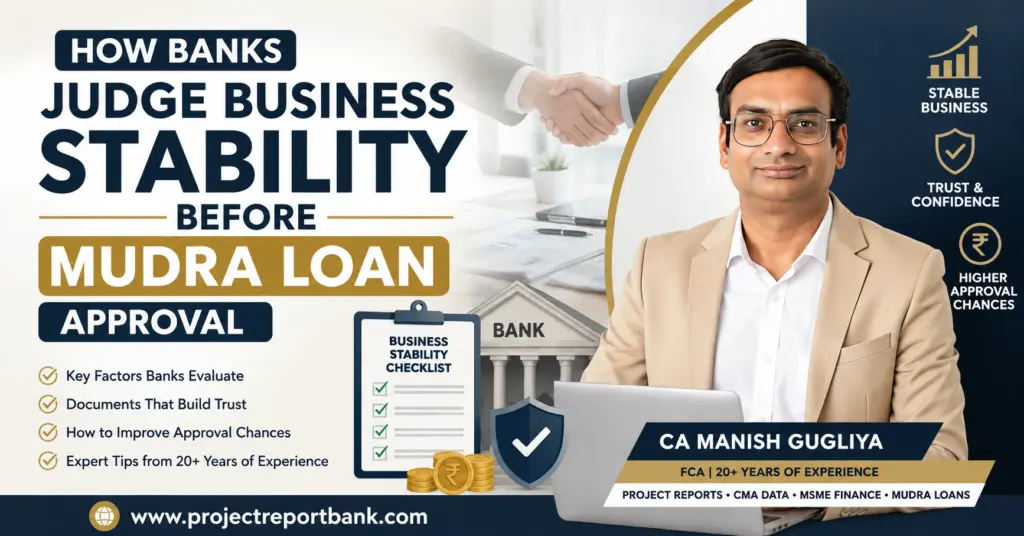
- How Banks Judge Business Stability Before Mudra Loan Approval
- Business Profile vs Documents: Which Matters More for Mudra Loan Approval?

- Common Reasons Banks Hesitate to Approve Mudra Loans

- Why Banks Approve Some Mudra Loan Applications Faster Than Others