Key Takeaways
- When your Mudra loan status shows “pending due to internal bank approval,” it means the branch has completed basic checks like KYC, document verification, and possibly a site visit. The file is now waiting for a decision by higher bank authorities. This is not a rejection.
- At this stage, the loan is neither sanctioned nor rejected. It is a positive sign because the bank or financial institution has moved the file beyond initial scrutiny and into serious evaluation.
- For most genuine applications, internal approval takes 3 to 10 working days. During rush periods, holidays, or when clarifications are needed, this can stretch to 2 to 4 weeks.
- While waiting, stay in touch with the branch every 3 to 5 working days, keep your phone reachable, reply quickly to any query from the bank, and avoid visiting daily or arguing with staff.
- Most small business loans under the Mudra scheme are sanctioned after this stage when documents, project report, and repayment capacity are in order. Professional guidance from an experienced consultant like CA Manish Gugliya can reduce delays and improve approval chances.
Introduction: A Common Mudra Loan Panic Situation
Picture this: Shalini, a ladies’ boutique owner in Jaipur, applied for a ₹5 lakh Mudra loan through her PSU bank branch in February 2025. She submitted all documents, completed her KYC, and even had a site visit at her shop. A week later, she received an SMS: “Your Mudra loan application is pending due to internal bank approval.” Her first thought was that something had gone wrong.
This reaction is common. Every month, thousands of applicants across India see similar status messages on bank portals, Jan Samarth, or via SMS. PSU banks like SBI, Bank of Baroda, and Punjab National Bank use multi-level approval systems, so this status appears frequently during Mudra loan processing.
This stage typically comes after the branch completes its part: collecting your form, verifying identity documents, checking your CIBIL report, and sometimes conducting a physical verification at your business place. The file then moves to a higher authority inside the bank for the final call.
I am CA Manish Gugliya (FCA), and I have spent more than 20 years preparing project reports, CMA data, and guiding MSME finance cases. Since the launch of Pradhan Mantri Mudra Yojana in April 2015, I have helped hundreds of applicants navigate this exact situation. Do not panic. Understand what is happening inside the bank and follow a systematic approach.
In this article, I will explain the meaning of this status, what happens during internal approval, why it takes time, realistic timelines, what you should do while waiting, when to escalate, and a real case study.

Table of Contents
What Does “Pending Due to Internal Bank Approval” Mean?
This status means one thing: the branch has forwarded your Mudra loan file to the next internal authority and is waiting for their decision. That authority could be the branch manager, a credit officer, or the regional office, depending on the loan amount and the bank’s policy.
In simple words: your documents are mostly checked. Now the bank is deciding whether to approve the loan according to their internal rules and limits. You do not need to do anything new unless asked.
Here is where this stage falls in the overall loan process: application submission → document check → CIBIL check → site visit (if required) → internal bank approval → sanction → agreement and disbursement.
MUDRA does not provide loans directly to borrowers; it acts as a refinancing agency through SIDBI. The actual lending is done by Member Lending Institutions: commercial banks, RRBs, NBFCs, and MFIs. Each of these follows its own internal approval process before releasing funds.
Mudra loans are categorized into Shishu (upto rs 50,000), Kishor (₹50,001 to ₹5,00,000), and Tarun (₹5,00,001 to ₹10,00,000). A Tarun Plus category also exists for repeat borrowers, with loans upto rs 20 lakh.
| Customer Verification | Internal Bank Approval |
|---|---|
| You submit documents, answer questions, show your business | Bank officers check policy, risk, loan limits internally |
| KYC, Aadhaar, PAN, business proof verified | CIBIL data, banking pattern, existing liabilities reviewed |
| Site visit at your shop or enterprise | Exposure limits, sector eligibility, RBI norms confirmed |
| Takes 2-5 working days typically | Takes 3-10 working days after branch forwards file |
| You are actively involved | You wait unless the bank asks for clarification |
This status does not confirm sanction, but it is a step ahead of basic scrutiny.
What Happens During Internal Bank Approval?
Once the file enters internal approval, here is the sequence inside the bank:
1. Branch recommendation note: The field officer or Mudra coordinator prepares a summary covering your business details, loan amount, purpose, sales projections, and expenses. This note goes up the chain.
2. Credit assessment: The internal team examines your bank statement from the last six months, income proofs, existing liabilities, and credit bureau data. A low credit score (below 650 on CIBIL) raises red flags. Pending credit appraisal at this stage can contribute to a delay in loan processing.
3. Risk evaluation: Officers assess whether your business is stable, how realistic your project report numbers are, and whether local market conditions support your projections. A clear business plan is essential for a Mudra loan application.
4. Internal policy check: The bank confirms that your business activity is covered under PMMY guidelines. Mudra loans cover activities like manufacturing and trading, food processing and allied services, and purchase of transport vehicles (for which a driver’s licence may be needed). Agricultural activities like crop loans are not eligible.
5. Loan limit verification: The approver checks whether the loan amount fits within their sanctioning powers. Shishu amounts may be approved at branch level. Kishore and Tarun amounts often require higher authority.
6. Approval authority review: The branch manager or regional credit desk examines the note and either approves, queries, or declines.
7. Final decision recording: The system updates the Mudra portal or core banking software with the decision: Approve, Reject, or Clarification Required.
Here is the simplified flow:
- Branch receives complete file
- Branch prepares recommendation note
- System routes file to approver (branch manager / regional office)
- Approver checks risk, policy, and credit data
- Approver records decision
- System updates status; branch informs the borrower
Different banks use different software (LOS, LMS, or internal Mudra modules), but the pattern is broadly similar. For a deeper look at credit appraisal checks, refer to our separate guide.
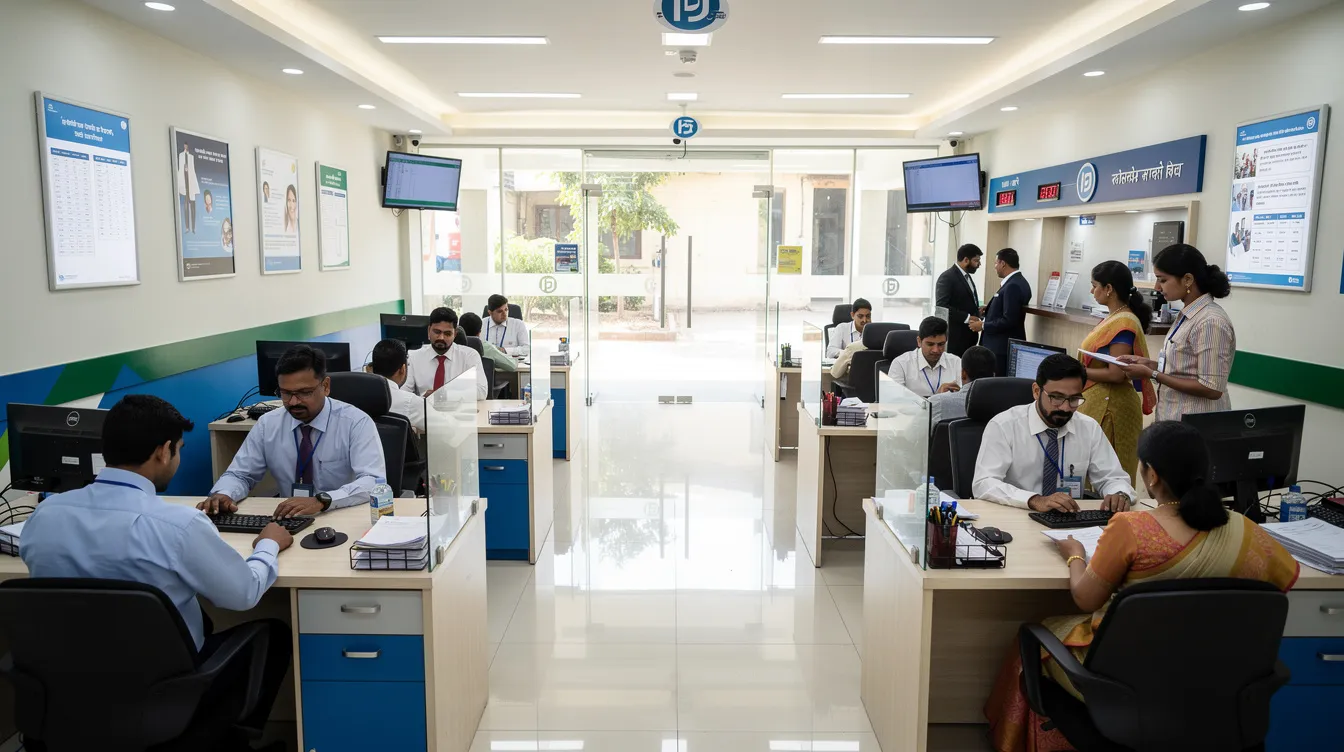
Why Does Internal Bank Approval Take Time?
Even though Mudra loans are designed to be simpler than regular business loans, internal approval takes time because banks must follow RBI norms, internal risk policies, and audit requirements. High application volumes can increase processing times across all categories.
Here are the common reasons for delay:
- Heavy workload or year-end rush: March closing, Diwali season, and quarter-end targets create backlogs. Approving officers handle dozens of files simultaneously.
- Approval hierarchy: For larger Mudra loans (Tarun category, above ₹5 lakh), the branch manager may forward the file to regional or zonal office, adding extra layers.
- Clarification requirements: The approver may ask the branch for updated details on the project report, a KYC mismatch, or banking history inconsistencies.
- Loan amount and risk: Higher amounts attract more thorough checking, especially for new micro units with limited track record.
- Technical or portal issues: Bank software glitches can delay status updates even after a decision is made internally.
- Holidays and staff shortages: Elections, local holidays, or officer transfers reduce the number of available working days.
- Compliance checks: AML/KYC compliance, especially for higher ticket amounts or sensitive industry sectors, adds review time.
- Incomplete documentation: Missing or inconsistent paperwork can stall the file at any level. Incomplete documentation can delay a Mudra loan application by days or weeks.
| Reason | Impact on Your Mudra Loan | Typical Extra Delay |
|---|---|---|
| Festival or year-end rush | File waits in queue longer | 3-7 working days |
| Clarification requested by approver | Branch contacts you for revised data | 2-5 working days |
| File sent to regional office | Additional approval layer | 5-10 working days |
| Portal or system glitch | Status not updated though decision may be made | 1-3 working days |
| Staff transfer or shortage | No officer available to review | 3-7 working days |
| KYC/AML compliance review | Extra verification on identity and source of funds | 2-5 working days |
In many real cases from 2023 to 2025, I have seen internal approval delays of 5 to 12 working days that did not indicate any problem with the applicant’s file.
Is Internal Approval a Good Sign? Can a Mudra Loan Still Be Rejected?
Seeing “Mudra loan pending due to internal bank approval” is usually a positive signal for three reasons:
- The bank has accepted the application for serious consideration.
- Basic eligibility criteria and document checks are generally done.
- The file has moved up the chain instead of being returned or rejected at the branch counter.
That said, it is not a final sanction letter. Rejection can still happen if internal checks reveal problems. Here are the genuine reasons a Mudra loan gets rejected at this stage:
- Weak repayment capacity: Bank statement shows erratic deposits, frequent zero balances, or insufficient turnover relative to the requested loan amount.
- Unrealistic project report: A new shopkeeper projecting ₹5 lakh monthly profit in the first month, without supporting data, will raise doubts.
- Serious credit issues: Recent defaults, written-off loans, existing heavy EMIs, or being a defaulter on another facility. CIBIL scores below 650 fall into a high-risk zone for most banks.
- Business activity not eligible: Pure speculative activities, or applying for agriculture crop loans under Mudra, which are not covered.
- Document inconsistency: Name, address, or PAN mismatch between Aadhaar, business registration, and bank account.
- Policy restrictions: The branch may have already reached its maximum exposure limit for that borrower or sector.
- Cash flow concerns: Projected cash flow not matching actual banking pattern and goods movement.
| Good Signs During Internal Approval | Warning Signs |
|---|---|
| Bank asks for small, specific clarifications | Long silence with hints about CIBIL or income issues |
| Staff mentions the file is “under process, looking positive” | Repeated requests for entirely new documents |
| Status moves from “under review” to “pending approval” | Status does not change for more than 20 working days |
Many rejections can be avoided with a correct project report and properly prepared banking profile. For complex cases, professional help from an experienced consultant often makes a real difference.
How Long Does Internal Bank Approval Usually Take?
For most genuine Mudra loan files, internal bank approval takes 3 to 10 working days after the branch completes its submission. The actual time depends on the bank, branch size, and loan amount.
Here are realistic, India-specific ranges:
| Scenario | Typical Internal Approval Time | Comments |
|---|---|---|
| Small urban PSU bank branch | 3-7 working days | Branch manager often has direct sanctioning power for Shishu and lower Kishor |
| Large metro PSU branch with high volume | 5-12 working days | More files in queue; officers handle multiple scheme types |
| Regional office approval involved (Tarun/Tarun Plus) | 7-15 working days | Extra layer of authority adds time |
| Private bank or NBFC | 2-5 working days | Faster processing but stricter documentation and sometimes higher processing fee |
| Peak season (March closing, festival months) | Add 3-7 extra working days | Staff availability drops; audit-related work increases |
Delays beyond 15 to 20 working days are uncommon. They usually indicate clarifications pending from your side, staff shortage or transfer issues, or the bank being hesitant about the file. If your application crosses this threshold, read our detailed guide on how long a bank can keep a Mudra loan application pending.
Mudra loans can be up to Rs.20 lakh for micro enterprises, and repayment tenure varies by category. Interest rates for Mudra loans start at 9.05% p.a., though the actual rate depends on the lending institution.
What Should You Do While Waiting for Internal Approval?
Here is a practical checklist while your file shows Mudra loan processing pending:
✔ Stay in polite touch with the loan officer every 3 to 5 working days. A brief phone call or visit is enough. To follow up on a Mudra loan application, contact the loan officer directly.
✔ Confirm your contact details are correct in the bank records. A wrong mobile number means missed calls and delays.
✔ Keep your phone switched on during banking hours. Banks often call from landlines or alternate numbers.
✔ Prepare soft and hard copies of all documents: KYC, business proof, quotations, licenses, ITR, GST registration, passport (as identity proof if submitted), and any other paperwork the bank holds.
✔ Re-check your project report. Be ready to explain your sales and profit estimates in simple language if the manager asks.
✔ Avoid unusual transactions. Do not make large cash withdrawals or sudden transfers in your bank account during this period. It can disturb your banking pattern and raise questions.
✔ Respond within 24-48 hours if the branch asks for any clarification. Send written replies with supporting documents.
✔ Use the Udyamimitra Portal or Jan Samarth to track your application status online, so you do not need to visit the branch for every update.
✔ Do not submit extra documents on your own unless the bank specifically asks. Unsolicited paperwork can confuse the file.
✔ Do not argue or visit daily. This creates a negative impression and does not speed up the internal loan process.

When and How Should You Follow Up or Escalate?
Sensible, timed follow-up matters. Over-following irritates staff. No follow-up can leave your file forgotten.
Follow-up milestones:
- After 3 working days: Simple phone call to confirm the file has actually moved to internal approval.
- After 7 working days: Polite request for status update. Ask if any clarification is pending from your side.
- After 15 working days: Firmer follow-up with the branch manager. Ask specifically whether the file is stuck at any higher authority.
- After 30 calendar days without a clear answer: Consider written complaints and formal escalation.
Escalation ladder:
Step 1: Meet or write to the Branch Manager. Include your application number, date of application, and current status (“pending due to internal bank approval”). Request a time-bound response.
Step 2: If no result within another week, email the Regional Office or Zonal Office customer grievance cell. Attach copies of your earlier communication.
Step 3: As a last resort, file a complaint under the RBI Integrated Ombudsman Scheme. Do not jump to this step unless you have exhausted the first two. Legitimate Mudra loans do not require unofficial payments at any stage; if anyone asks, report it.
A simple escalation email should include: your name, branch name, Mudra loan reference number, date of application, current status, and a clear request for a decision within a stated number of days.
For more on handling extended delays, see our guides on Mudra loan processing delays and your rights when a Mudra loan is delayed for months.
Practical Tips from CA Manish Gugliya to Improve Your Approval Chances
These recommendations come from more than two decades of handling project reports, CMA data, and MSME loans for clients across many states.
- Keep your bank statement clean for at least the last six months before you apply. Avoid cheque returns, unnecessary cash withdrawals, and sudden large transfers.
- Prepare a realistic project report. Do not copy random numbers from the internet. Overstated projections are the single biggest reason I see files sent back for revision.
- Ensure KYC documents (Aadhaar, PAN, address proof) and business proofs (Udyam registration, GST, shop license, proof of ownership or rental agreement) all show consistent information. Even a minor name mismatch between PAN and Aadhaar can delay the file.
- For first-time borrowers, keep the loan amount reasonable relative to your current turnover. Do not request the maximum Tarun limit without a sensible growth plan and investment rationale.
- Be honest about existing loans and EMIs. Bank systems see them through CIBIL. Hiding liabilities reduces trust and raises risk flags.
- If your CIBIL report has past issues, be ready with explanations and proof of settlement.
- Choose a bank where you already maintain a good savings or current account with regular turnover and running balance. Existing customers often get faster internal approval.
- Respond to clarifications in writing (email or signed letter) so there is a clear record.
- Do not keep changing your business model or purpose of the loan during processing. This confuses the approving authority.
- Mudra loans have no collateral or security requirement. If anyone at the branch asks for collateral or guarantees, escalate the matter.
- Understand that Mudra loans support employment creation and growth of micro enterprises. Frame your project report to show how the funding will expand your business, create jobs, and improve services.
- If you are purchasing goods, equipment, or assets for your enterprise, keep quotations and invoices ready. For transport vehicles, keep your driver’s licence and RC documents handy.
- The scheme covers traders, shopkeepers, and service providers across many types of activities. Confirm that your business type is eligible before applying.
Real Example: Mudra Loan File Under Internal Bank Approval
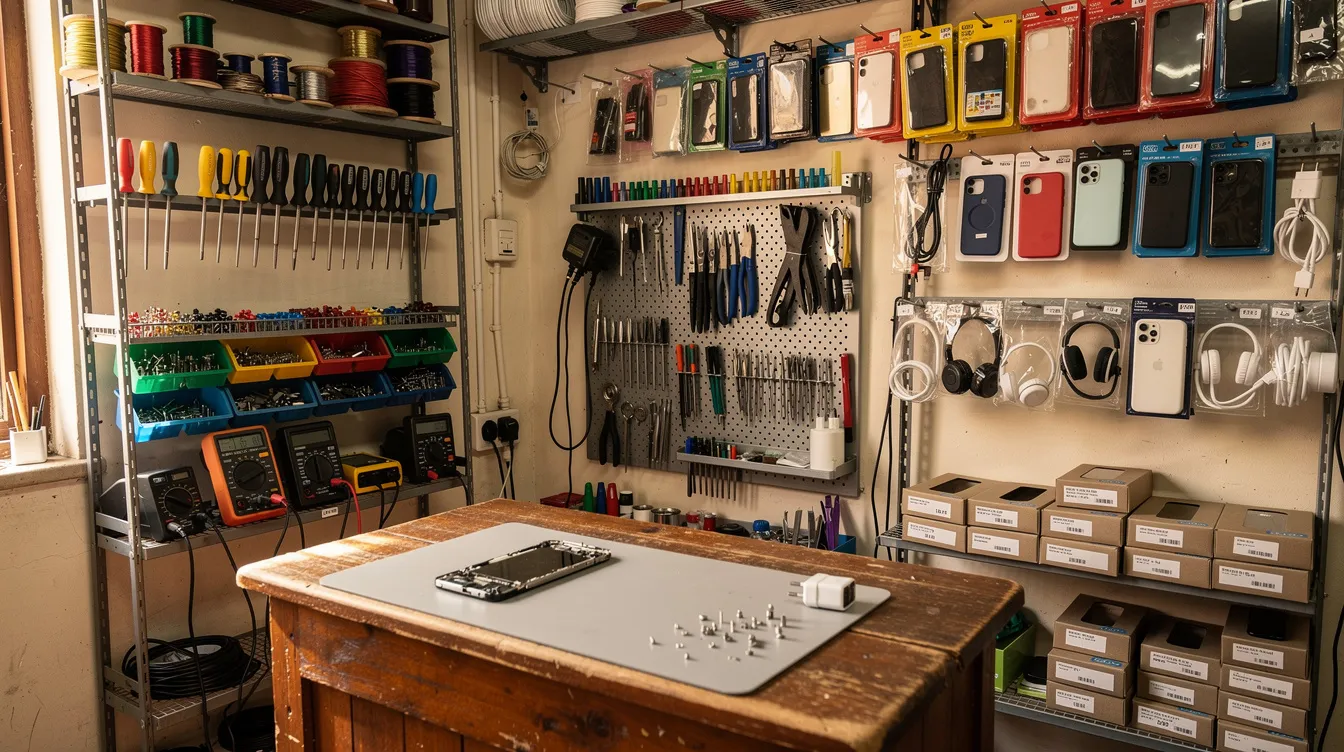
Applicant: Mr. Rahul (name changed), 32 years old, running a mobile repair and accessories shop in Indore.
Loan applied: ₹7 lakh Mudra Tarun term loan with a PSU bank branch in August 2024, for purchasing stock and upgrading repair equipment.
Timeline:
- Day 1-3: Rahul submitted his application form, KYC (Aadhaar, PAN, passport copy), Udyam registration, GST certificate, and project report. Bank completed initial document check and CIBIL verification (score: 710). A physical verification was conducted at his shop on Day 2. A Mudra loan application might be pending due to verification delays, but in Rahul’s case, this part went smoothly.
- Day 5: Status changed to “Mudra loan processing pending; under internal bank approval.”
- Day 5-17: The file was forwarded from the branch to the regional office because the loan amount exceeded the branch manager’s sanctioning limit. The regional office asked for clarification on projected turnover and stock levels compared to actual sales availed in the previous year.
- Day 17-20: Rahul revised his project report with more realistic sales estimates and proper working capital calculation, with help from a CA. The regional office granted internal approval within 4 more working days.
Outcome: Loan sanctioned on Day 21 at 9.40% p.a. interest rate with standard Mudra conditions. Disbursement completed by Day 23.
Lessons learned:
- Internal approval delay does not always mean rejection.
- Realistic numbers and consistent documents help fast approval.
- Calm, written communication with the bank works better than daily arguments.
- Professional help with the project report saved weeks of back-and-forth.
Frequently Asked Questions (Mudra Loan Internal Bank Approval)
Does internal bank approval mean my Mudra loan is almost sanctioned?
Not exactly. It means the file has cleared initial checks and is being reviewed by a higher authority. Most files at this stage do get sanctioned if documents and repayment capacity are solid. But internal approval is not the same as a sanction letter. The final decision comes after the approver completes risk and policy checks.
Can I apply for another Mudra loan at a different bank while my file is under internal approval?
It is not advisable. Multiple simultaneous applications show up on your CIBIL report and can create a negative impression. Wait for a clear outcome from the current bank. If you receive a formal rejection, then you can approach another financial institution with a revised application.
Should I submit extra documents on my own without the bank asking?
No. Sending unsolicited documents can confuse the file and slow down processing. Only provide additional proof or details when the bank specifically requests them. Keep everything ready on your side so you can respond within a day when needed.
Is internal approval different from branch manager approval?
It depends on the loan amount. For smaller loans (Shishu and lower Kishor), the branch manager may be the final approver, so internal approval and branch manager approval are the same step. For larger amounts (upper Kishor, Tarun, Tarun Plus), the file goes to a regional or zonal credit authority beyond the branch manager.
What if internal approval is done but disbursement is getting delayed?
This is a separate issue. Once sanction is recorded, disbursement involves signing the loan agreement, creating the account, and releasing funds. Delays at this stage could be due to agreement execution, insurance requirements, or system processing. Read our guide on Mudra loan disbursement delays for specific steps.
Does the bank charge any processing fee during internal approval?
Some banks charge a nominal processing fee (often 0.25% to 0.50% of the loan amount) at the time of sanction or disbursement. For Shishu loans, many banks waive this fee entirely. The fee is deducted from the disbursed amount or charged separately. No unofficial payment is ever required at any stage.
Conclusion: Stay Patient, Stay Prepared, Stay Informed
“Mudra loan pending due to internal bank approval” is a normal and necessary stage in the bank loan process. It exists to protect both the bank and the borrower by ensuring proper risk and policy checks before money is released. Since its launch, PMMY has facilitated over 40.82 crore loans amounting to approximately ₹23.2 lakh crore, and the vast majority of these passed through this exact internal approval stage before reaching the applicant.
Timelines of 3 to 10 working days are common. Longer delays need polite follow-up and sometimes escalation through proper channels. Strong documentation, a realistic project report, and disciplined banking behaviour improve the chances of timely sanction more than any amount of daily branch visits.
Based on my experience with hundreds of Mudra cases, most genuine applications with proper preparation do get sanctioned, even if the internal approval stage takes a bit of extra time. The knowledge of what is happening inside the bank gives you the patience and confidence to wait it out correctly.
Explore other in-depth Mudra loan guides on ProjectReportBank, covering documents required, credit appraisal, branch manager approval, and delay handling, to understand the full journey from application to disbursement.
- Mudra Loan Delay in Processing: Complete Guide to Every Stage, Reason & Solution

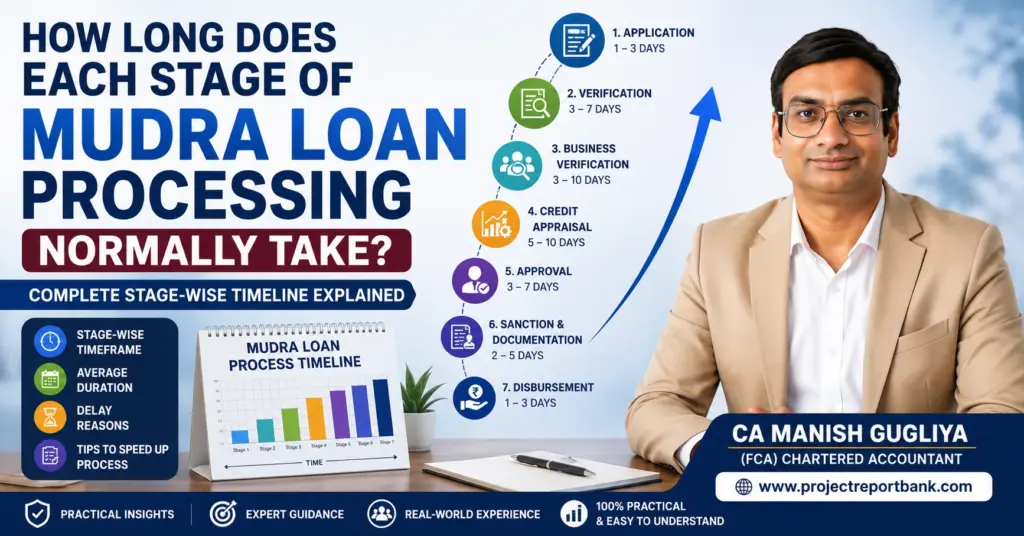
- Mudra Loan Processing Time: Stage-Wise Timeline from Application to Disbursement

- Can Festivals, Holidays or Financial Year-End Delay Mudra Loan Processing?

- Mudra Loan Pending Due to Internal Bank Approval: What Should You Do?
- Mudra Loan Sanctioned but Disbursement Delayed: Reasons & Solutions (By CA Manish Gugliya)
- Why Is My Mudra Loan Still Under Credit Appraisal?

- Mudra Loan Pending After Site Inspection: What It Really Means (From a Banker’s Desk)

- Mudra Loan File Sent to Regional Office: What Happens Next?
- Why Is My Mudra Loan Stuck at Branch Manager Approval?