
Key Takeaways
Most Mudra loan applicants never receive a clear explanation when their application is turned down. If you have faced a mudra loan rejection recently, here is what you need to know before your next step.
- Under the RBI’s Fair Practices Code for Lenders, banks are generally expected to communicate the main reason(s) for rejecting a loan application, including Mudra (PMMY), in writing within a reasonable time.
- Banks do not have to disclose their internal credit scoring models or proprietary formulas. However, they should state practical grounds such as “weak repayment capacity,” “poor credit history or low CIBIL score,” “incomplete or mismatched documents,” or “ineligible business activity.”
- If a bank only says “rejected due to internal policy” or refuses to give any reason at all, you can escalate through the bank’s grievance system and ultimately approach the RBI Integrated Ombudsman after following due process.
- Understanding your exact mudra loan rejection reason lets you correct specific issues – credit score, documentation, project report, current account pattern – and reapply more confidently to the same bank or a different lender.
Introduction: Why Mudra Loan Rejections Feel So Unfair
Every week, thousands of first-time applicants walk out of their bank branch with “Mudra loan rejected” stamped on their file and no clear explanation of why. The branch manager might say “not possible” or “policy issue,” and that is the end of the conversation. For a small business owner who spent days collecting documents and building courage to approach a bank, this feels deeply unfair.
A Mudra loan is a collateral free business loan under the Pradhan Mantri Mudra Yojana (PMMY), designed to fund small and micro businesses. It comes in categories – Shishu (up to ₹50,000), Kishore (₹50,001 to ₹5,00,000), and Tarun (₹5,00,001 to ₹10,00,000) – and targets shopkeepers, traders, service providers, street vendors, and micro-manufacturers.
So can the bank just write “Rejected” and move on? Are they required to give a reason? What do RBI guidelines and PMMY rules actually say? Do you have any rights at all as a mudra loan applicant?
I am CA Manish Gugliya (FCA), and over 20+ years of preparing project reports, CMA data, and handling MSME finance across public sector banks, private sector banks, regional rural banks, and small finance banks, I have seen hundreds of Mudra files get rejected and then approved on the second attempt. In this guide, I will walk you through exactly what happens inside a bank when a mudra loan application is turned down, whether the bank must explain, how to request the reason, the full complaint process if they refuse, and how to fix issues and reapply with a stronger file.

Table of Contents
Understanding Mudra Loan Rejections in Practice
Despite government backing under PMMY, every bank treats a Mudra loan as a normal business loan internally. The branch applies its own risk checks, credit assessment framework, and internal policies before deciding to approve or reject.
Here is how the typical flow works inside a bank branch:
- Receipt of the mudra application form with supporting documents.
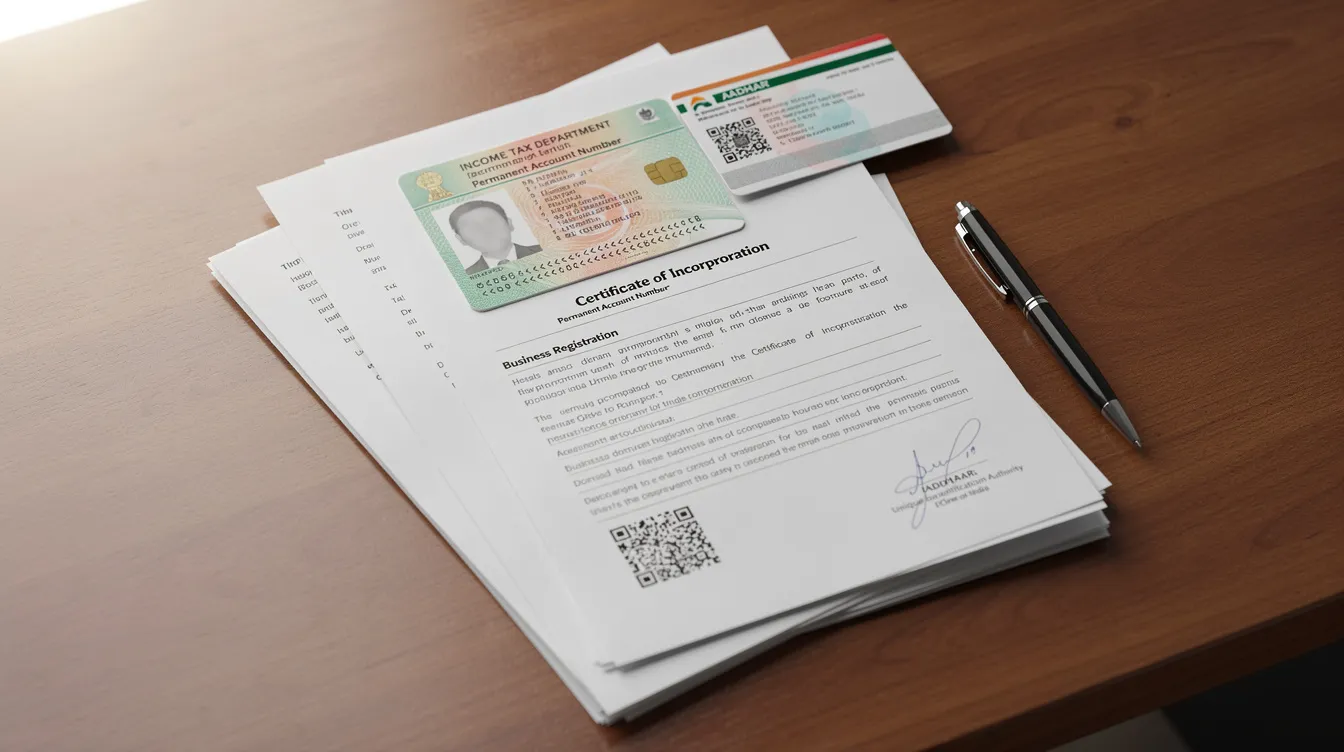
- KYC and documentation check – PAN, Aadhaar, business address proof, utility bill, rental agreement, GST or Udyam certificate.
- CIBIL or credit report pull – the bank checks your credit history and credit score from credit bureaus.
- Business verification – physical or telephonic check of your shop, workshop, or office.
- Credit appraisal – assessment of business viability, repayment capacity, monthly income, outstanding debts, existing EMIs, and bank statements pattern.
- Decision – the bank manager or credit committee approves or rejects.
Mudra loans are primarily intended for non-farm income-generating activities. Eligibility criteria for Mudra loans specify that applicants should be non-corporate micro enterprises. These two conditions alone filter out many applicants who assume any small activity qualifies.
| Stage in Processing | What Bank Checks | Typical Rejection Trigger |
|---|---|---|
| KYC & Documents | PAN, Aadhaar, address, business proof | Missing, expired, or mismatched documents |
| CIBIL / Credit Bureau | Credit score, past repayment record | Score below 650, past defaults, write-offs |
| Business Verification | Physical existence, nature of activity | No visible operations, ineligible business type |
| Credit Appraisal | Income, expenses, existing EMIs, bank statements | Low income, high existing debt, poor banking pattern |
| Sanction / Reject | Overall risk assessment, internal policy | Area blacklisting, sector exposure cap, weak file |
Understanding this internal process is the first step to decoding your mudra loan rejection reason and knowing what question to ask at the branch.
Does the Bank Have to Explain the Mudra Loan Rejection?
The direct answer: banks are generally expected, under RBI’s Fair Practices Code for lenders, to communicate the main reason(s) for rejecting a loan application in writing. This applies to Mudra loans as well.
Every bank and non banking financial companies (NBFC) approved to lend under PMMY must adopt a Board-approved Fair Practices Code. This code includes guidelines on acknowledging applications, deciding within a reasonable time, and conveying rejection reasons to the applicant.
There is an important distinction, however:
- A specific, simple reason like “low credit score,” “insufficient monthly income,” “business activity not eligible under PMMY,” or “incomplete KYC” is what the bank should communicate.
- Internal risk models, proprietary scoring formulas, sectoral caps, or exposure limits are confidential. Banks are not obliged to reveal these in detail.
In practice, many branch managers only tell applicants “not eligible” or “as per policy.” But if you request the principal ground for rejection, the bank should give you at least a brief explanation such as “unsatisfactory CIBIL record” or “no proof of business operations.”
| What Applicant Thinks Is Required | What RBI Fair Practices Actually Requires |
|---|---|
| Full copy of the internal credit file | Only the main reason(s) for rejection |
| Exact CIBIL cut-off score used by bank | General indication like “credit score not satisfactory” |
| Detailed internal scoring formula | Practical ground: documents, income, credit history, or eligibility |
| Guarantee of approval if reason is fixed | No guarantee, but fair reconsideration expected |
This article shares practical banking experience and references RBI guidelines in general terms. It is not a substitute for legal advice or a specific RBI circular citation.
What RBI Guidelines Say About Communicating Loan Rejections
The RBI’s Fair Practices Code (FPC) for banks, NBFCs, and MSME lending emphasises fairness, transparency, and timely communication – including in cases of loan rejection.
In simple terms, the FPC and MSME lending directions expect banks to:
- Acknowledge receipt of every loan application.
- Dispose of it within a reasonable time – not keep applicants waiting indefinitely.
- Communicate the main reason(s) for rejection to the applicant, preferably in writing.
For small borrowers with loans up to ₹2 lakhs – which covers all Shishu and many Kishore category Mudra applicants – the requirement to provide written reasons is specifically emphasised.
While RBI circulars may not mention the word “Mudra” on every page, PMMY loans are treated as MSME micro-enterprise loans. The same fairness and transparency principles apply to every Mudra applicant walking into a public sector bank, private sector bank, or small finance bank.
RBI also expects banks to put their Fair Practices Code on their websites and display key customer rights in branches. So you, as a borrower, are entitled to clear communication about why your mudra loan application was turned down.
Banks should not simply write “rejected” with no context. They are expected to mention whether the cause is documentation, credit score or credit history, ineligible business activity, cash-flow concerns, or internal exposure limit.
If your bank has not given any written or clear reason for your mudra loan rejection, you can politely refer to the bank’s own Fair Practices Code and request a brief written explanation. You can learn more about your Mudra loan applicant rights to bank information to strengthen your position.
Common Reasons Banks Give for Mudra Loan Rejection
While every bank – from HDFC Bank to Canara Bank to your local cooperative – has unique internal policies, the same mudra loan rejection reasons appear repeatedly in real files. Here are the categories I see most often.
Credit-Related Rejections
- A CIBIL score below 650 often leads to loan rejection. CIBIL scores range from 300 to 900, reflecting credit behaviour over time. A low CIBIL score indicates financial indiscipline to banks.
- Banks prefer applicants with a CIBIL score above 700. A CIBIL score above 700 significantly improves mudra loan approval chances.
- Banks check CIBIL scores to assess repayment capacity along with bank statements and monthly income.
- Poor credit history – late payments, cheque bounces, or existing loan defaults – can result in immediate rejection of applications.
- Past defaults or write-offs on a personal loan, gold loan, or any secured loans make approval very difficult.
Documentation Issues
- Mudra loan applications require PAN, Aadhaar, and business proof. Incomplete or mismatched documents can lead to immediate rejection.
- Common mismatches: Aadhaar address differs from business address proof or rental agreement; PAN name doesn’t match bank account.
- Ensure all documents match to avoid automatic rejection – this single step prevents a large share of rejections.
- A basic business plan is required for Kishore and Tarun loans. Submit a clear business plan for loans above ₹50,000. Lack of a clear business plan can lead to loan application denial.
Business Viability Concerns
- Banks require proof of ongoing business operations for loan approval. No visible shop, no invoices, no transaction history means rejection.
- Business activity not eligible under PMMY – for example, certain agricultural or speculative activities. Mudra loans support non-farm micro-enterprises specifically.
- Turnover claimed in the loan proposal does not match business transactions visible in bank statements.
Banking Pattern Issues
- Very low or irregular credits in the current account or savings account.
- Heavy cash deposits without supporting invoices or GST returns.
- No separate current account for business, especially for Kishore and Tarun category loans where lenders prefer seeing clear business banking.
- High existing debt can affect the acceptance of a mudra loan application. If your outstanding debts are high relative to income, most banks will decline.
Internal Policy Reasons
- Area blacklisting due to high NPAs in that locality or sector.
- Bank has hit its exposure limit for unsecured or Mudra-category loans.
- Sector-specific restrictions set by the bank’s Head Office.
| Reason Shown in Rejection Letter | What It Actually Means | Corrective Action Before Reapplying |
|---|---|---|
| “Unsatisfactory credit bureau score” | Your CIBIL is below the bank’s comfort level (often below 650) | Pay all overdue EMIs, avoid new enquiries, wait 3-6 months |
| “Incomplete documentation” | Missing PAN, Aadhaar mismatch, no business proof | Collect all documents, ensure name/address consistency |
| “Activity not covered under PMMY” | Your business type is ineligible | Verify eligible categories on Mudra portal; consider alternate loan |
| “Non-viable project” | Weak project report, unrealistic numbers | Get a professional project report with realistic projections |
| “Internal policy” | Could be area NPA cap, sector restriction | Ask for the principal reason; try another branch or bank type |
| “Insufficient income / repayment capacity” | Your monthly income or turnover is too low for the requested loan amount | Apply for a smaller loan or build up banking turnover first |
For a deeper breakdown, read our guide on detailed reasons why Mudra loan applications get rejected.
Can a Bank Just Say “Rejected Due to Internal Policy”?
Many readers will have already heard this exact phrase at the counter or received a short SMS: “Loan cannot be sanctioned as per internal policy.”
What does “internal policy” generally cover? It can mean several things:
- Risk appetite for certain geographic areas or sectors
- Caps on unsecured lending exposure
- Minimum credit score cut-offs decided at Head Office
- Conditions based on NPA data for that branch or region
While banks are allowed to keep the details of their internal scoring confidential, the spirit of RBI’s Fair Practices Code expects them to still communicate at least the broad, practical reason. For example: “Internal policy does not permit Mudra loans where there is an existing written-off loan” or “where credit score is below our threshold.”
How should you respond? Calmly ask: “Sir/Madam, can you please mention the principal reason in writing – whether it is my CIBIL, my income, my business type, or documents – so that I can correct it before reapplying?”
A completely vague “internal policy” answer with zero specifics is not aligned with fair, transparent customer treatment. If the branch refuses to be more precise even after a polite written request, it becomes a valid ground for complaint against the bank for unfair treatment in Mudra loan processing.
Set realistic expectations: banks may not give you a long explanation or an internal scorecard. But they should indicate whether the main issue is credit history, business viability, documentation, or ineligible activity.
How to Request Your Mudra Loan Rejection Reason Step-by-Step
Verbal conversations get forgotten. Use a simple written process to request your mudra loan rejection explanation.
Step 1: Approach the Branch Manager Visit the bank branch within a few days of learning that your loan is rejected. Ask the bank manager politely for the main reason. Note down the date and what was said.
Step 2: Submit a Written Request Write a short application on plain paper or send an email to the branch. Mention:
- Loan type (Shishu / Kishore / Tarun)
- Loan amount requested
- Date of application
- Specifically request the principal rejection reason under the bank’s Fair Practices Code
Sample Text You Can Use:
To: The Branch Manager, [Bank Name], [Branch]
Subject: Request for Mudra Loan Rejection Reason
Respected Sir/Madam,
I had submitted a Mudra loan application (Shishu/Kishore/Tarun category) for ₹_ on [date]. I was informed that my application has been rejected. I kindly request you to provide the main reason for rejection in writing or via email/SMS, as required under the bank’s Fair Practices Code, so that I can take corrective steps before reapplying.
Thanking you, [Your Name, Contact, Application Reference Number]
Step 3: Attach Supporting Proof Attach a photocopy of your loan application acknowledgement or any SMS reference number. Keep a stamped copy of the request for your own records. Learn more about your right to receive acknowledgement for your Mudra loan application.
Step 4: Escalate If Needed If the branch is unresponsive within 7-10 days, escalate to:
- Customer Care email (listed on the bank’s website)
- Regional or Zonal Office grievance cell
- Bank’s Nodal Officer for customer grievances
Follow up weekly after submitting your application for updates – this applies to both the original loan and your request for the rejection reason.
Keep all communication polite and factual. Cooperative behaviour usually leads to better support from bank staff.
What If the Bank Refuses to Explain? Escalation & Complaint Path
Some branches still avoid giving reasons despite RBI guidelines. In such cases, escalation is both allowed and often effective.
Internal Escalation Ladder:
- Branch Manager – verbal and written request
- Branch complaint register – insist on a written entry with date
- Regional / Zonal Office grievance cell – write or email with copies of earlier requests
- Bank-level Nodal Officer for RBI Ombudsman matters – contact details are on the bank’s website
Every bank must have a formal Grievance Redressal Mechanism with timelines (typically 30 days to respond). These details are displayed at the branch and on the website.
Escalation Flowchart:
Mudra Loan Application → Rejection → Written Request for Reason → No Reply or Vague Reply → Formal Complaint to Bank (Regional/Nodal Officer) → Unsatisfactory or No Reply within 30 Days → RBI Integrated Ombudsman Complaint
When to approach the RBI Integrated Ombudsman:
Only after receiving an unsatisfactory reply from the bank or no reply within the specified time. Submit your complaint online on the RBI CMS portal with all supporting documents – copies of your application, rejection communication, written requests, and any replies received.
The Ombudsman usually does not force a bank to sanction a loan. But it can question unfair treatment or non-communication of reasons, and can direct the bank to adhere to its Fair Practices Code. In the Biju Daniel vs Branch Manager case, the consumer forum upheld the rejection because the bank had properly issued a rejection letter with clear reasons – confirming that proper process matters.
Try resolving at the branch and regional office level first. Use the Ombudsman as a last step. Keep all letters, emails, and SMS as evidence. For more on your rights to timely communication during Mudra loan processing, see our detailed guide.
Can You Reapply After Knowing the Mudra Loan Rejection Reason?
A Mudra loan rejection is usually not permanent. In many real cases I have handled, applicants have succeeded on a second attempt after correcting the original weakness.
Whether you should reapply to the same bank or approach another depends entirely on the reason:
- Documentation gaps or weak project report – often fixable with the same bank. Correct the file and request reconsideration.
- Low credit score or poor credit history – may require 3-6 months of credit behaviour improvement before reapplying, potentially at a different financial institution such as a regional rural bank, small finance bank, or micro finance institutions participating in PMMY.
- Rigid internal policy or area restriction – try a different lender type entirely.
Clear steps to reapply:
- Obtain the rejection reason (use the process described above).
- Fix that specific issue – update KYC, correct address mismatches, consolidate business transactions in a current account, regularise overdue EMIs, or prepare a stronger project report.
- Wait 3-6 months if the problem is credit history or low credit score. Avoid applying to multiple banks simultaneously during this period.
- Prepare a stronger file – include updated bank statements showing improved turnover, regular GST filings, or fresh Udyam registration.
- Clearly mention improvements in your new application or covering letter.
Reapplying immediately with the same weak documents or poor bank statement pattern leads to repeated rejection and multiple hard enquiries on your credit report. Each enquiry appears on your CIBIL and can slightly lower your score further.
Be transparent about previous rejection if asked. Explain what you improved. This builds confidence with the next bank manager. You can also explore whether applying to another bank for a pending Mudra loan is the right move in your situation.

Practical Tips from CA Manish Gugliya for Avoiding Mudra Loan Rejection
These are field notes from 20+ years of preparing project reports, CMA data, and handling MSME and Mudra loan proposals across multiple lenders.
- Never argue at the counter. Talk calmly with the branch manager. Carry a neat physical file with all documents arranged in order. Summarise your business in 2-3 clear sentences: what you do, how long you have been doing it, and how much you earn monthly.
- Prepare at least a simple business plan. Every serious Mudra applicant – especially for Kishore and Tarun loans – should have a basic business plan showing nature of the business activity, expected monthly sales, expenses, profit, and how the EMI will be paid from those profits. Even for small Shishu loans, a clear business plan helps.
- Clean up your bank statement. Route business sales and expenses through one primary current account. Avoid mixing heavy personal transactions. Maintain minimum balance to display financial discipline. This is what lenders prefer seeing.
- Improve credit behaviour 3-6 months before applying. Pay credit card dues on time. Avoid cheque bounces. Do not apply for multiple new loans, a personal loan, or credit cards during this period. Even one late payment during this window can hurt your case.
- Get Udyam Registration. Register your business on the Udyam portal for credibility. Udyam Registration is recommended for better approval chances and is free. Along with GST registration (where applicable) and proper invoices, it significantly increases credibility.
- Get professional help for project reports. Do not rely on agents who promise “100% guaranteed Mudra approval.” Consider a qualified professional who understands what banks actually look for in a loan proposal. The repayment plan must be realistic, not inflated.
- Know your numbers. Banks require proof of ongoing business operations for loan approval. If you cannot show business transactions, invoices, or even a utility bill at your business address, your file will struggle. Keep business assets documented.
Common Mistakes Mudra Applicants Make (and How to Avoid Them)
Most Mudra loan rejections I see are due to avoidable mistakes, not because the business idea is fundamentally bad. Self employed applicants often trip on things they could have fixed in advance.
Frequent mistakes include:
- Applying for a high Tarun loan amount with no prior banking history or relationship with the bank branch.
- Submitting incomplete KYC or using mismatched signatures across forms and documents.
- Running the business entirely in cash with no current account, no GST or Udyam registration, and then expecting Kishore or Tarun loans to get approved.
- Applying right after multiple other loan applications or immediately after an EMI bounce. Timing matters – banks see recent hard enquiries and late payments as high risk.
- Misunderstanding eligibility criteria: trying to finance ineligible activities under PMMY, or assuming that being unemployed automatically qualifies for a Mudra loan without any viable business plan.
- Never asking for the mudra loan rejection explanation, which prevents them from improving future applications.
| Common Mistake | How Bank Views It | What You Should Do Instead |
|---|---|---|
| No current account for business | “Applicant isn’t serious about business” | Open a current account, route business income through it for 3-6 months |
| Applying to multiple banks at once | “Desperate borrower, risky profile” | Fix the weakness first, then apply to one bank with a strong file |
| Unrealistic income projections in project report | “Numbers don’t match, applicant is exaggerating” | Use realistic figures based on actual turnover |
| Ignoring low CIBIL score | “Financial indiscipline” | Clear overdue EMIs, reduce outstanding debts, wait 3-6 months |
| No business proof for Kishore/Tarun | “Business may not exist” | Collect GST certificate, Udyam, shop licence, trade licence |
| Not requesting rejection reason | “Applicant won’t fix the problem” | Always ask for the main reason in writing before reapplying |
Whether you are looking at small Shishu loans with minimal documentation or larger Tarun loans, the principle is the same: prepare properly, or the application will fail. Learn about whether banks can ask for extra documents during Mudra loan processing.
Applicant Rights Checklist for Mudra Loan Rejection Situations
Here is a quick checklist summarising the main rights you have under RBI’s Fair Practices Code and MSME lending norms when you apply for a Mudra loan:
- ✅ Right to acknowledgement – The bank should acknowledge receipt of your mudra loan application with a date and reference number.
- ✅ Right to fair and non-discriminatory treatment – Banks should not reject purely on grounds such as gender, caste, religion, or location alone. Uniform eligibility criteria must apply. Read more about fair treatment during Mudra loan processing.
- ✅ Right to timely communication – The decision on your Mudra loan should be conveyed within a reasonable time. You should not be kept waiting for months without any update.
- ✅ Right to know the principal rejection reason – Banks are expected to tell you the main ground – credit history, income, documentation, ineligible business, etc. – rather than just “rejected.”
- ✅ Right to submit additional documents – If the bank asks for extra documents or clarifications, you should get a reasonable time to provide them before the file is finally rejected.
- ✅ Right to file a complaint – You can use the bank’s grievance mechanism and ultimately approach the RBI Integrated Ombudsman if the bank fails to follow fair practices or refuses to communicate rejection reasons.
- ✅ Right to reapply – There is no permanent ban after rejection. You can reapply to the same bank or a different lender after correcting the deficiency.
- ✅ Right to privacy – Your financial and personal information should be handled confidentially. Learn about your privacy rights as a Mudra loan applicant.
These rights work best when you keep proper records: photocopies of applications, email confirmations, acknowledgement slips, and SMS screenshots. Without evidence, escalation becomes much harder.
Frequently Asked Questions About Mudra Loan Rejection Reasons
Does every bank have to explain why my Mudra loan was rejected?
All scheduled banks, private sector banks, and NBFCs lending under PMMY are expected to follow RBI’s Fair Practices Code, which includes communicating the main reason for loan rejection. This applies to every financial institution participating in the Mudra scheme. While some small branches still only give verbal comments, you are within your rights to request a brief written reason or at least an SMS/email mention of the key ground. The level of detail may vary from bank to bank, but the expectation of communication exists across all lender types – including micro finance institutions and regional rural banks.
Will asking for a written rejection reason reduce my chances of future approval?
Politely requesting the main rejection reason does not negatively affect your profile. In my experience, it often shows seriousness and willingness to correct issues, which many branch managers actually appreciate. Keep the tone respectful and focused on improvement – say something like “I want to fix whatever is weak so I can reapply correctly” rather than making threats or accusations. This approach builds a better relationship with the bank for future dealings.
Can I apply for a Mudra loan with another bank immediately after rejection?
Technically, you can approach another bank at any time. But if you apply for a Mudra loan at a new branch without correcting the original problem – whether it is a low credit score, missing documents, or a weak business plan – the new bank is likely to reject as well. Every new application creates a hard enquiry on your credit report. Multiple enquiries from multiple lenders in a short period can slightly lower your CIBIL score further. Wait long enough to actually fix the issue before reapplying elsewhere.
Does a Mudra loan rejection hurt my CIBIL or credit score?
The rejection itself is not recorded as a “negative event” on your credit report. However, the loan enquiry made by the bank does appear, and multiple enquiries in a short period can slightly lower your score. This is why making one strong, well-prepared mudra loan application is better than sending several weak ones to multiple banks. A single focused application – whether for a smaller loan amount through Shishu or a larger Kishore or Tarun loan – protects your score.
What if the branch manager insists that Mudra loans are closed or not available?
As per the current PMMY framework, individual branches cannot unilaterally “close” the Mudra scheme. Such statements often indicate lack of interest or misunderstanding at branch level. Calmly ask the bank manager to give this refusal in writing or to log a formal remark. If they decline, escalate through the bank’s grievance channels or approach another branch. According to government data, over 53.85 crore Mudra loan accounts have been sanctioned under PMMY – the scheme is very much active. Business owners should not accept verbal denials without questioning them.
Conclusion: Turn Your Mudra Loan Rejection into a Second Chance
A Mudra loan rejection is not the end of your business loan journey. In most cases, it is a signal that something specific in your file – your credit history, your documentation, your business plan, or your banking pattern – needs correction.
RBI’s fair lending framework and each bank’s Fair Practices Code expect lenders to communicate the main reason for rejection so that applicants can address the gap rather than remain confused. This applies whether you are dealing with a public sector bank, a private sector bank, or any other financial institution lending under PMMY.
Use your rights. Request the rejection reason in writing. Follow the complaint process if necessary. Organise proper documents. Improve your credit behaviour. Present a realistic, numbers-backed project report with a clear repayment plan. Get your Udyam Registration. Clean up your current account. And apply again with confidence.
In my two decades of working with small business owners on MSME finance, I have seen many entrepreneurs get their Mudra loan approved on the second attempt. The difference between a rejected file and a mudra loan disbursement is often just a few corrections – a better credit score, a cleaner bank statement, a proper business plan, or simply ensuring that all documents match.
Do not let a single rejection discourage you. Understand the reason, fix the weakness, and come back stronger. That is what successful business owners do.
- Mudra Loan Applicant Rights: Complete Guide to Your Rights During the Loan Application Process


- Does the Bank Have to Explain Why Your Mudra Loan Was Rejected?

- Right to Receive an Acknowledgement After Submitting a Mudra Loan Application

- Your Right to Fair and Non-Discriminatory Treatment in Mudra Loan Processing

- Can Bank Ask for Extra Documents in Mudra Loan? (Practical Guide by a CA)

- Mudra Loan Processing Charges: Your Right to Transparent Fees Under PMMY

- Can a Bank Force You to Buy Insurance with a Mudra Loan?

- Right to Timely Communication During Mudra Loan Processing

- Mudra Loan Privacy Rights: How Banks Should Handle Your Information