Key Takeaways
- Even with complete documents and a decent CIBIL score, a weak Mudra loan personal interview can lead to outright rejection of your loan application.
- The most common reasons behind a Mudra loan interview rejected outcome include poor business understanding, inconsistent answers compared to the project report, unrealistic income or loan amount demands, and inability to explain repayment capacity.
- Banks use the interview to compensate for the absence of collateral – they are judging your character, knowledge, and seriousness as much as your paperwork.
- Proper Mudra loan interview preparation, a realistic business plan, and a clear explanation of daily business operations significantly improve your chances of loan approval.
- If rejected, you have the right to request a written reason from the bank, fix the gaps, and reapply – either at the same bank or another eligible institution.
Introduction: Why Your Mudra Loan Was Rejected After the Bank Interview
Most Pradhan Mantri Mudra Yojana (PMMY) applicants assume that once they submit their Aadhaar, PAN, bank statements, and a project report, the hard part is over. That assumption costs thousands of small business owners their loan every year.
In 2024–2026, banks have significantly tightened internal checks under PMMY. The Mudra loan applicant interview is now a decisive step in the process – not a formality. Even shishu loans and Kishore category loans often involve at least a short conversation with the sanctioning officer. Lenders evaluate both personal creditworthiness and business viability under PMMY, and the interview is where both are tested face-to-face.
In my experience as CA Manish Gugliya (MSME finance consultant with over 20 years of hands-on banking advisory), I regularly see cases where the file is strong on paper but the Mudra loan is rejected due to an unsatisfactory Mudra loan business interview. The applicant simply could not explain their own numbers.
In this guide, you will learn exactly why Mudra loans get rejected at the interview stage, what Mudra loan bank interview questions to expect, how to prepare step by step, and what to do if your application is turned down.

Table of Contents
What Is the Mudra Loan Interview and Why Do Banks Conduct It?
The Mudra loan interview is a face-to-face (or sometimes video/telephonic) discussion where a bank officer directly verifies your profile, business idea, and repayment capacity. Think of it as the bank’s way of going beyond paperwork.
There is an important distinction between document verification and the interview assessment. Document verification checks whether your Aadhaar, PAN, income proof, and business proof are complete and genuine. The interview, on the other hand, tests whether you actually understand the business you claim to run – your seriousness, honesty, and financial awareness.
Which applicants usually face a PM Mudra loan interview? First-time borrowers, anyone requesting a higher loan amount (Kishore: ₹50,000 to ₹5 lakh, and Tarun: ₹5 lakh to ₹10 lakh), those starting a new business, and cases with borderline eligibility criteria. Tarun Plus loans, offering ₹10 lakh to ₹20 lakh for repeat borrowers, almost always involve a detailed interview. Shishu loans (up to ₹50,000 for startups) may sometimes skip a formal interview, but most banks still have a brief discussion.
Mudra loans are available through banks, NBFCs, and micro finance institutions across the country, including public sector banks, private sector banks, regional rural banks, small finance banks, and non banking financial companies. Applicants must be aged between 18 to 65 years. Regardless of the bank or financial institution you approach, the interview serves as the bank verification interview – where officers cross-check details from your mudra loan application, project report, and any earlier discussions.
Why Mudra Loan Gets Rejected in Interview: Key Reasons You Must Understand
Understanding why a Mudra loan rejected due to interview outcome happens is the first step to avoiding it. Here are the practical reasons, with examples.
Lack of Confidence and Vague Answers. Applicants who stammer, give one-word answers, or appear as if an agent or relative is the real decision-maker raise immediate red flags. If you cannot explain your own business operations in simple words, the officer doubts whether the business is real.
Inconsistent Answers. If your project report shows monthly sales of ₹1 lakh but you tell the officer your sales are ₹30,000, the bank sees fabrication. Document discrepancies can be a primary reason for loan rejection, and incomplete or mismatched documents cause immediate rejection even at the interview table.
Poor Business Knowledge. Not knowing basic costs (rent, raw material, staff salary), your customer profile, or who your competitors are makes the bank feel your business plan is only on paper. Lack of a clear business plan can result in rejection, regardless of how well your documents are arranged.
Unrealistic Income or Loan Amount. Applying for an unjustified loan amount – say, requesting ₹4 lakh for a tea stall with monthly turnover of ₹8,000 – is a common Mudra loan interview failure reason. Low income can indicate inadequate repayment capacity for loans, and the bank will not approve an EMI you clearly cannot afford.
Credit and Debt Issues. Mudra loan rejections are often due to poor credit history. A CIBIL score below 650 often leads to rejection, and too many existing debts can lead to rejection of your loan application. Multiple recent loan applications can signal financial distress to lenders. If the officer brings up past defaults or outstanding loans during the interview, and you have no honest explanation, the case collapses.
Appearing to Chase “Free Money.” If your answers focus only on government subsidy or free money under the mantri mudra yojana pmmy instead of long-term business growth, the officer marks you as a high-risk borrower.
For a broader understanding of reasons why Mudra loans get rejected, including cases involving non-viable business models, I recommend reading those detailed guides as well.
How Banks Evaluate You During the Mudra Loan Personal Interview
Bank officers are trained to judge both your numbers and your behaviour during a Mudra loan business interview. They follow an informal – and sometimes formal – checklist.
Character and Seriousness. Are you punctual? Do you maintain eye contact? Are your documents neatly organised? These signals tell the officer whether you are a serious business owner or a casual walk-in. Body language, even the way you handle your papers, silently influences the officer’s comfort level with sanctioning a business loan.
Financial Understanding. Officers check whether your bank statements show regular transactions and consistent cash flow. Maintaining consistent banking transactions can help demonstrate business viability. A low credit score below 700 is considered high-risk by lenders, though a CIBIL score is not mandatory but preferred for Mudra loans. Verification of KYC and business documents is essential before applying.
Cross-Checking Numbers. For PMMY collateral free loans (especially Kishore and Tarun), the bank compensates for the absence of collateral by relying heavily on the borrower’s character and capability. Officers compare your answers on loan purpose, loan amount, expected monthly sales, expenses, and EMI against the project report and mudra loan application form. Any mismatch raises doubt.
Business Viability. The officer wants to know whether your business type is sustainable, whether the market demand exists, and whether you have thought about competition. This is their way of protecting both the bank and you from a loan you cannot repay.
Common Mudra Loan Bank Interview Questions and How to Answer Them
Here are the core Mudra loan interview questions and answers you should be prepared for. For each, I explain why the bank asks it and what a strong answer looks like.
“Tell me about your business or business idea.” The bank wants to see that you understand what you sell, who buys it, and how you make money. A strong answer covers your product or service, target customers (local residents, wholesale buyers, online customers), and how long you have been operating. Avoid saying “I want to start something” without specifics – that is too vague for any loan category.
“Why do you need this Mudra loan?” The officer is checking whether the loan will go toward genuine business purposes – machinery, stock, working capital – or personal expenses. Mention specific items: “I need ₹2.5 lakh for a sewing machine (₹80,000), initial fabric stock (₹1 lakh), and three months’ rent and working capital.” Vague answers like “for business” are weak.
“How did you calculate this loan amount?” This question tests whether you have a basis for your request or are simply asking for the maximum. Explain each cost item with approximate figures. Show that you have collected quotations. Eligible business activities for Mudra loans include manufacturing, trading, and services, and your answer should fit one of these clearly. You must submit a business plan for loans above ₹50,000.
“Who are your main customers and competitors?” Officers want market awareness. Name the locality, type of customer (housewives, office-goers, street vendors), and at least 1–2 competitors. Saying “there is no competition” sounds dishonest.
“What is your expected monthly income and profit?” Be realistic. If your projected monthly income is ₹40,000 and expenses are ₹28,000, say your expected profit is ₹12,000. Do not inflate numbers – officers compare this with your bank statements and transaction history. Remember that Mudra loans are not available for agriculture-related businesses; your income generating activities must fall within eligible non-farm categories including food processing, trading, or services.
“How will you repay the EMI if sales are low?” The bank needs to hear a plan, not hope. Strong answers mention keeping two months’ EMI as reserve, having a secondary income source, or adjusting variable costs. Saying “I will manage somehow” is the weakest possible response.
“Do you have any previous business or job experience?” Honest acknowledgement works best. If you have no experience, explain what training or preparation you have done. If you have worked in someone else’s shop for years, mention it – practical exposure counts. Banks appreciate honesty over fabricated claims. For applicants without prior business experience, preparation and realistic projections matter even more.
“Have you prepared a project report?” If yes, briefly summarise the key numbers from it. If not, this is a problem – especially for Kishore and Tarun loans. A basic business plan with cost breakdown, sales estimates, and repayment plan is expected.
Biggest Interview Mistakes That Lead to ‘Mudra Loan Interview Rejected’
Here is a checklist of the most damaging common Mudra loan interview mistakes.
Memorised or Artificial Answers. Officers immediately sense when someone has been coached by an agent. If your answers sound rehearsed but do not match your real background, the credibility drops. Speak from your understanding, not from a script.
Giving False Information. Lying about past defaults, existing debts, CIBIL score, or current business operations is risky. Banks verify through credit reports and account statements. Providing incorrect information is one of the fastest routes to rejection. Incomplete KYC documentation is a top reason for Mudra loan rejection as well.
Behavioural Red Flags. Arriving late, arguing with staff, dressing as if the interview is not important, using your mobile phone during the meeting, or letting a friend or agent answer on your behalf – all of these signal that you are not serious.
Financial Overconfidence. Claiming ₹3 lakh monthly sales for a new tea stall, ignoring local competition, or not knowing how much EMI you can afford from your profit destroys trust instantly.
Missing Documents at the Interview. Coming without business proof, without the project report referenced in your mudra loan application, or without recent bank statements forces the officer to either postpone or reject.
Documents to Carry for Your Mudra Loan Interview (Practical Checklist)
A neat, complete document file creates a positive first impression before you even start answering questions. Here is what you need.
Start with your identity and address documents: Aadhaar card, PAN card, two recent passport-size photographs, and address proof such as a ration card, utility bill, voter ID, or rental agreement. Documents required include PAN, Aadhaar, and business proof – this is non-negotiable.
For business proof, carry your shop act licence, Udyam Registration certificate, GST registration (if applicable), municipal licence, trade licence, or partnership deed if relevant. Businesses not registered on the Udyam portal may face rejection, especially for Kishore and Tarun loans. Udyam Registration is recommended for better approval chances. Also carry business address proof such as a rent agreement or property ownership document.
Financial documents include the last 6–12 months of bank statements showing your current account or savings account transactions, any existing loan statements (to show your repayment history), income proof if available (ITR, salary slips), and basic cost estimates or quotations for machinery or equipment.
For the project report and financial summary, especially for larger loans, prepare simple CMA-style data covering sales estimates, expenses, profit, cash flow summary, and working capital requirements. Proof of business operations is required for loan approval.
For sector-specific needs, carry vehicle RC and quotation for transport loans, FSSAI licence for food processing businesses, or educational certificates for skill-based services.
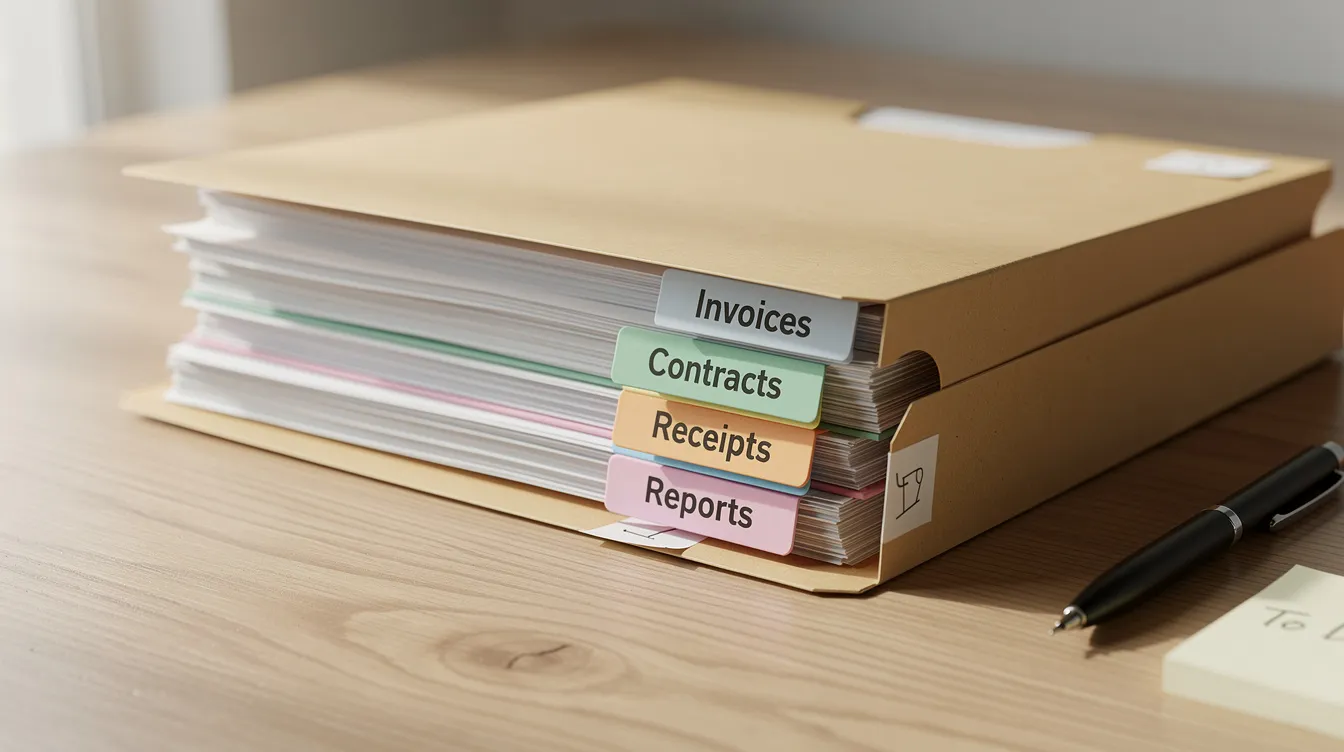
Organise everything in a file with clear separators (KYC, business documents, financials, quotations). This small effort shows professionalism and makes the interview smoother. For a comprehensive list, refer to this guide on Mudra loan documents required.
How to Prepare for a Mudra Loan Interview: Step-by-Step Plan
Follow this action plan 3–5 days before your interview. These Mudra loan interview tips are drawn from real cases I have handled.
Step 1: Write Down Your Business Model on One Page. What will you sell? To whom? At what price? What are your expected daily or monthly sales? What are your main expenses – rent, electricity, staff salary, raw material? What is the expected net profit? If you cannot fit this on one page, you do not understand your business well enough yet.
Step 2: Calculate a Realistic Loan Amount. List every investment item: shop renovation, machinery, initial stock, working capital for 2–3 months. Total them up. That total is your justified loan amount – not a round number you picked because it sounded good. This prevents the problem of applying for an unjustified loan amount.
Step 3: Practice Key Questions Out Loud. Ask a family member or friend to play the bank officer and fire basic Mudra loan interview questions at you. Focus on clear, simple language – not memorised speeches. Practise in Hindi or your local language if that is more comfortable.
Step 4: Know Your EMI. For the loan amount you are requesting, calculate the approximate monthly EMI at the expected interest rate (typically 8–12% for Mudra loans). Be ready to explain from which part of your business profit the EMI will be paid. Your repayment plan should be specific: “My expected profit after expenses is ₹15,000 per month, and the EMI is ₹6,800, so I have a clear margin.”
Step 5: Soft Preparation. Dress neatly (formal or clean casual – no need for a suit). Reach the bank branch 15–20 minutes early. Carry a pen and notepad. Keep your phone on silent.
Step 6: Be Honest About Weak Areas. If you do not have previous business experience, say so – and explain what you have done to prepare (training, market research, working with a mentor). Honest acknowledgement combined with a learning plan impresses officers more than fake claims. Improving a CIBIL score can enhance your eligibility for loans over time.
You can apply for a Mudra loan online or offline through the Jan Samarth portal or directly at a bank branch, but regardless of how you apply, the interview is what seals the deal.
Sample Mudra Loan Interview Conversation: Correct vs Wrong Approach
Here are realistic mini-scenarios to help you understand how to pass a Mudra loan interview.
Scenario 1: Explaining your business Officer: “Tell me about your business.” Good Answer: “I run a kirana shop in Laxmi Nagar. I sell daily groceries, packaged food, and household items. My daily sales are about ₹4,000–5,000. I have been running this shop for two years.” Weak Answer: “I have a shop. I sell things.” Expert Note: Specifics build trust. Vague answers build suspicion.
Scenario 2: Justifying a ₹4 lakh Kishore loan Officer: “Why do you need ₹4 lakh?” Good Answer: “I need ₹1.5 lakh for a new refrigeration unit (I have a quotation), ₹1 lakh for expanding my stock range, and ₹1.5 lakh as working capital for three months of rent and supplies.” Weak Answer: “Business ke liye chahiye. ₹4 lakh lagega.” Expert Note: Item-wise breakdown shows you have planned. A lump-sum demand looks like guesswork.
Scenario 3: Dealing with low bank balance Officer: “Your bank statements show very low balance most months.” Good Answer: “Most of my sales are cash-based. I deposit regularly but withdraw for stock purchases. I am now shifting more transactions through UPI and bank. I can show my purchase receipts.” Weak Answer: “I don’t use the bank much.” Expert Note: Show you understand the concern and have a plan to address it.
Scenario 4: What if sales fall in the first six months? Officer: “What will you do if sales are low initially?” Good Answer: “I have kept ₹30,000 as emergency reserve. My monthly fixed costs are ₹12,000. I will also offer home delivery to attract more customers.” Weak Answer: “Somehow manage kar lunga.” Expert Note: “Somehow” is not a repayment plan. A specific backup is.
Scenario 5: No accounting knowledge Officer: “Do you maintain accounts?” Good Answer: “I don’t use formal accounting software, but I maintain a daily register of sales and purchases. I know my daily profit is roughly ₹800–1,000 after all costs.” Weak Answer: “I don’t know anything about accounting.” Expert Note: You do not need to be a CA. But you must know your daily profit and expenses.
Scenario 6: Previous business failure Officer: “Your earlier garment business closed. Why should we trust you now?” Good Answer: “That business closed due to COVID lockdown and location issues. I learned from that. This time, I have chosen a better location and a different product with steady local demand.” Weak Answer: “That was bad luck. This time it will work.” Expert Note: Lessons learned plus a changed approach is far more convincing than blaming luck.
Avoid treating these as scripts. Adapt the logic to your own business operations and speak naturally.
Case Study: One Mudra Loan Rejected in Interview, Another Approved
Case 1: Rajesh from Indore – Rejected
Rajesh (name changed) applied for a ₹7 lakh Tarun loan in 2025 for a small plastic container manufacturing unit. His documents were in order – Udyam Registration, PAN, Aadhaar, and a project report prepared by an agent. During the interview, the officer asked about his raw material costs. Rajesh could not give a clear answer. When asked about his expected monthly sales, he said “₹2–3 lakh” but could not explain who his buyers would be. The officer asked why he needed exactly ₹7 lakh – Rajesh said “the agent told me to apply for that amount.” The bank rejected the application citing weak business viability and inconsistent information.
Case 2: Priya from Jaipur – Approved
Priya (name changed) applied for a ₹3 lakh Kishore loan to expand her beauty parlour. She brought a simple project report she had prepared with the help of a consultant. She carried three quotations for equipment, her last 8 months of bank statements showing regular transactions, and her Udyam certificate. During the interview, she explained her daily customer count (8–10), average billing (₹400–500), monthly rent (₹6,000), and other expenses. When asked about the EMI, she said: “My monthly profit after all costs is about ₹18,000. The EMI for ₹3 lakh at 10% interest rate for 3 years will be around ₹9,700. I can comfortably pay.” Her Mudra loan was approved within 10 days. Mudra loans are processed within 7 to 10 working days when applications are clean.
Lessons: A realistic loan amount, a clear business plan, preparation for questions, and calm behaviour make the difference. If your project report was earlier questioned, fix it carefully before reappearing.
What to Do If Your Mudra Loan Is Rejected After the Interview
A rejection is not the end. Here is a practical recovery sequence.
Step 1: Get the Reason in Writing. Banks must provide a written reason for loan rejection upon request. Ask politely at the bank branch or send a written request via email. Note down the exact points – “weak business viability,” “insufficient business proof,” “inconsistent information,” or whatever the bank states.
Step 2: Review and Fix. Go through your project report and mudra loan application in light of those reasons. If your sales projections were unrealistic, revise them. If business proof was weak, arrange stronger documentation like a rent agreement, GST registration, or Udyam certificate. If your credit history was the issue, work on clearing past defaults and improving your repayment history over the next 3–6 months.
Step 3: Reapply Strategically. You can reapply to the same bank after improvements, or approach another eligible bank or NBFC under PMMY. Consulting with a bank that has a higher appetite for small business lending can improve approval chances. However, avoid submitting multiple inconsistent business loan applications simultaneously – this signals desperation.
Step 4: Know Your Rights. If the bank refuses without valid reason or declines to even accept your application, you can approach the bank’s internal grievance cell or the RBI Banking Ombudsman. A previous rejection does not permanently block your mudra loan eligibility, but trying again without preparation usually leads to repeat failure.
Role of a Professional Project Report in Passing the Mudra Loan Interview
A well-prepared project report is not just a document for sanction – it is your study material for understanding your own numbers.
The key elements of a strong project report include: business overview (what you do and where), market analysis (customers, competition, demand), detailed cost estimation (machinery, stock, setup costs), sales and profit projections based on realistic assumptions, working capital requirement for the first few months, and an EMI repayment schedule for the requested loan amount.
When these figures are logically worked out, you can answer Mudra loan business knowledge questions confidently instead of guessing. You will know your break-even point, your monthly fixed costs, and how many units or customers you need to cover your EMI. This is what separates applicants who get their Mudra loan approved from those who face rejection.
Professional preparation avoids common traps: overestimated profit, missing operating expenses, or a loan amount that does not match actual investment needs. But the report must stay honest and consistent with ground reality. Exaggerating numbers merely to impress the bank backfires during the verification interview when you cannot defend your own figures.
For a step-by-step approach to structuring your report, refer to this guide on making the perfect project report.
Practical Tips from CA Manish Gugliya for a Successful Mudra Loan Interview
In my 20+ years of helping small business owners and micro enterprises secure business financing through PMMY, here are the lessons that come up again and again.
- Bank officers judge the person more than the paper. Your documents open the door, but your interview closes the deal. A confident, honest applicant with average documents often scores better than a shaky applicant with a perfect file.
- Confidence comes from understanding your own business, not from memorisation. If you know your daily costs, your monthly profit, and your customer base, the interview becomes a simple conversation.
- Choose a realistic loan category. Apply for Shishu if you are starting small. Kishore if you have some traction. Tarun if you have an established business with proven cash flow. Applying for a Tarun loan when your business is at Shishu stage invites rejection.
- Avoid agents promising guaranteed Mudra approval. No agent controls the officer’s decision. Dependence on agents weakens your own interview performance because you never learn your own numbers.
- Be honest about challenges. If local competition is tough or demand is seasonal, say so – and follow it with your plan to handle it. Officers respect awareness more than denial.
- A simple, clear conversation in Hindi or your local language works better than complicated English. The interview is not a language test.
- Eligible borrowers include anyone running non-farm small and micro businesses – from street vendors to small enterprises doing food processing or manufacturing. As long as your business type qualifies and you are not into allied agricultural activities that are excluded, you have a fair chance.
- Keep your current account or savings account active with regular transactions before applying. Dormant accounts with sudden deposits look suspicious during review.
- PMMY operates through Mudra Ltd., which functions as a refinance agency providing financial assistance to lending institutions. The bank branch is your point of contact, but the scheme’s backing gives you access to collateral free loans – use that advantage wisely by meeting the credit needs of the scheme honestly.

Frequently Asked Questions About Mudra Loan Interviews
Below are practical doubts that cover areas not fully addressed above. Review these before you visit the bank.
Is the Mudra loan interview compulsory for every applicant?
Very small shishu loans may sometimes be processed with only a brief discussion or document check. However, most Kishore and Tarun Mudra loan applicants should expect at least one structured conversation with the sanctioning officer. Banks use the interview to understand the basic business plan and repayment capacity in the absence of collateral. Even for Shishu, most banks have at least a short informal chat.
Can poor communication or nervousness cause Mudra loan rejection?
Banks do not expect perfect language skills. They mainly look for clarity and honesty, even if you explain everything in simple Hindi or your local language. Extreme nervousness that prevents you from answering basic questions can harm your chances, but normal nervousness is acceptable when the business understanding is strong. Practice with a family member beforehand to reduce anxiety.
How long does a typical Mudra loan interview take?
For most micro borrowers, the interview lasts about 10–20 minutes depending on the loan amount, business type, and the officer’s comfort level with your answers. For higher Kishore and Tarun loans, officers may schedule an additional visit to the business location or ask follow-up questions on another day.
Can I take someone with me to answer questions during the interview?
A spouse or relative may accompany you to the bank branch for moral support. However, the bank prefers to talk mainly to the actual borrower whose name is on the mudra loan application. If another person does most of the talking, officers may doubt who is truly running the business and may treat the case as risky. You must be the one answering.
Can I reapply if my Mudra loan was rejected after the interview?
Yes. Applicants can reapply after understanding and addressing the reasons for rejection, either at the same bank (after some time and improvement) or at another eligible bank, NBFC, or financial institution. However, reapplying with the same weak answers or without improving the project report usually results in another rejection. Preparation and correction must come first.
Does a project report really help during the interview?
Absolutely. A realistic project report gives you ready answers for almost every question the officer will ask – your costs, sales estimates, profit margins, and EMI capacity. Without it, you are guessing on the spot, which rarely goes well for loans above ₹50,000.
Is business experience mandatory for Mudra loan approval?
It is not strictly mandatory, especially for Shishu loans aimed at startups. But lack of experience means you must compensate with stronger preparation – a clear business plan, market research, and evidence that you have done your homework.
What if the bank asks about my CIBIL score during the interview?
Be honest. If your score is low, acknowledge it and explain what steps you have taken (cleared old dues, maintained regular payments). A credit history issue is not always permanent. If your score is above 700, it strengthens your case significantly. Canara bank and other public sector banks may have different internal thresholds, so preparation matters regardless.
Can I apply for a Mudra loan at a different bank after rejection?
Yes. PMMY is a government scheme and you can apply for a Mudra loan at any participating bank or financial institution. If one bank’s eligibility criteria or lending preference did not work for you, another institution may have a different approach. Just make sure you fix the issues that caused the first rejection before reapplying.
What should I do one day before the interview?
Review your project report and key numbers one final time. Organise your documents. Lay out your clothes. Set an alarm to reach the branch early. Run through 5–6 likely questions with a family member. Get a good night’s sleep. Confidence the next morning will come from this simple preparation – not from last-minute cramming.
Final Word: The Mudra loan interview is not a barrier – it is your opportunity to show the bank that you understand your business and can repay the loan. Thousands of small businesses across India get their Mudra loan approved every day. The ones who succeed are not necessarily the most educated or wealthy – they are the ones who prepare honestly and speak clearly.
Stop fearing the interview. Start preparing for it. Your business deserves that effort.
- Integrated Value-Added Rice Products Processing Plant Project Report & DPR
- Integrated Rice Plant Bank Loan, Feasibility, ROI, IRR, Payback & Sensitivity Analysis


- Integrated Rice Processing Plant Financial Projections, Working Capital & DSCR

- Integrated Rice Products Revenue Model, Market Strategy & Profitability

- Integrated Value-Added Rice Plant Project Cost & Means of Finance

- Raw Material Procurement & Inventory Planning for Integrated Value-Added Rice Plant

- Common Utilities, Warehousing, Packaging & Material Handling for Integrated Rice Plant

- Integrated Rice Processing Plant Land, Building & Multi-Line Plant Layout – A Practical Guide for DPR & Bank Finance

- Integrated Rice Processing Plant Capacity Planning & Product Mix

- Integrated Value-Added Rice Plant Machinery & Equipment Cost – A Practical DPR-Oriented Guide

- Integrated Poha, Puffed Rice & Rice Snacks Manufacturing Process & Line Integration

- Instant Poha Manufacturing Plant Project Report & DPR – Bankable Guide by Project Report Bank

- Ready-to-Cook Rice Breakfast Mixes Manufacturing: Products, Process & Plant Setup

- Cup Poha Manufacturing, Packaging & Business Model – A Practical Guide for Entrepreneurs in India

- Instant Poha Market Potential, Pricing, Branding, Sales Channels & Distribution Strategy