Key Takeaways
- Resort project cost in India is the total application of funds covering land, construction, interiors, equipment, amenities, pre-operative expenses, contingency and initial working capital margin. Means of finance is the identified source plan that funds this cost-promoter contribution, term loan, subsidies and any other eligible sources.
- Hard costs can range from 40% to 60% of total development costs, while soft costs can comprise up to 15%, and the balance is spread across FF&E, amenities and reserves.
- Banks typically finance 60 to 70 percent of total project costs (excluding land in many schemes), and promoter equity contribution is usually 30 to 40 percent.
- A bankable resort DPR must reconcile total project cost with total means of finance, backed by credible financial projections including 5-year P&L, cash flow, balance sheet and a DSCR of at least 1.5 in every loan year.
- The DPR should demonstrate a clear chain: investment → funding → operations → revenue → cash generation → debt repayment.
Explore Resort Project Report / DPR Guides
Explore our Resort Project Report and DPR guides covering setup cost, equipment, project cost, revenue, financial projections, occupancy, feasibility and bank finance.
Introduction: Why Resort Project Cost & Means of Finance Matter
Many resort promoters in India start their planning with construction and interiors. That is natural-the physical property is what guests experience. But from a project finance perspective, a resort project involves major capital expenses like land acquisition and construction, and the cost estimation must go well beyond civil works. Expenses during resort development include hard costs, soft costs, and working capital, each of which needs careful budgeting.
Project Cost = Total Application of Funds Means of Finance = Identified Sources of Funds
Both sides must reconcile in a proper resort project report. A detailed project report is essential for bank loans, and it must present this reconciliation clearly.
This article covers Indian resort projects-boutique resorts, cottages, 20–50 room properties, and larger hotel and resort developments-relevant to MSMEs and hospitality businesses seeking term loans. The discussion is based on ground-level project finance experience: what bankers practically look for while appraising hospitality projects and how promoters should structure cost and funding.
Concept Basics: Project Cost vs Means of Finance
In my experience while preparing project reports, many first-draft DPRs mix up “cost” and “finance.” Separating them is essential for bank appraisal logic.
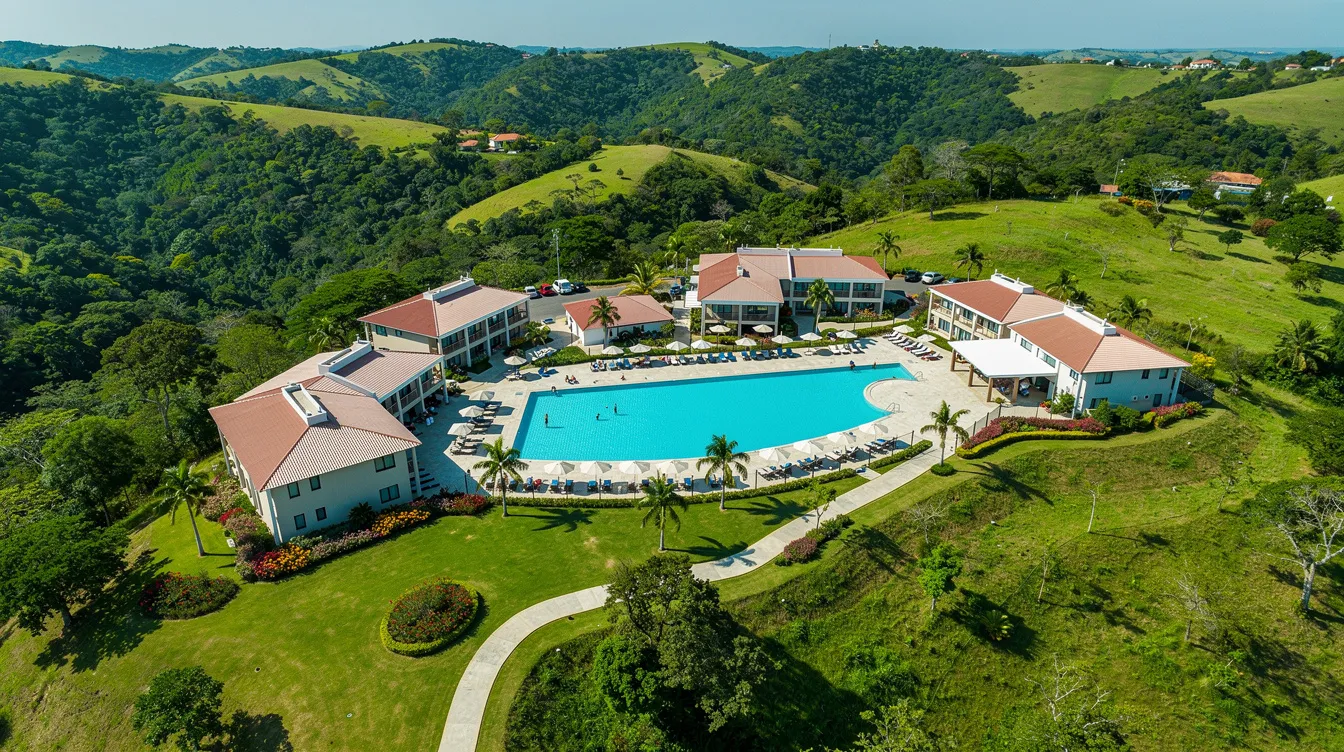
Resort project cost is the detailed breakup of all assets and expenditures required to bring the resort to operating stage: land, civil works, FF&E, amenities, pre-operative expenses, contingency and working capital margin. Means of finance is the funding arrangement: promoter contribution, unsecured loans from promoters or directors, bank term loan and any subsidy or equity partner participation-all clearly quantified.
- Application of Funds: Land, construction, equipment, FF&E, amenities, pre-operative costs, contingency, working capital margin
- Sources of Funds: Promoter equity, unsecured loans from promoters, bank term loan, subsidy/grant, institutional finance
The total of both must be equal. While preparing a resort DPR for bank finance, this reconciled summary should appear as one of the first tables after the project description.
Major Components of Resort Project Cost in India
Accurate resort project cost calculation is the foundation of realistic financial projections and DSCR assessment. The main cost heads in a typical resort project cost breakup in India are:
- Land and site development
- Civil construction and interiors
- Plant, machinery and equipment
- Furniture, fixtures and equipment (FF&E)
- Amenities and recreational infrastructure
- Preliminary and pre-operative expenses
- Contingency
- Working capital margin
Each component should be supported by realistic assumptions-built-up area, cost per sq.ft., vendor quotations and actual local costs rather than generic percentages. Hard costs include physical construction and infrastructure expenses, while soft costs cover professional and administrative fees during construction.
Land and Site Development
Land cost and site development cost are distinct items. Purchase cost of project land includes the price, stamp duty, registration, NA conversion (where applicable), and legal documentation. Land acquisition involves legal fees and title searches, which should be explicitly budgeted.
If the promoter already owns the land, it can be brought in as promoter contribution at a realistic valuation-subject to title clarity and lender acceptance. For newly purchased land, the cost should be shown separately in the project cost.
Site development typically covers:
- Land cutting, levelling and grading
- Boundary wall, entrance gate
- Internal roads, pathways, parking areas
- Rainwater drainage, retaining walls (critical for hilly sites)
- External lighting and basic landscaping preparation
Land documents and building plans are required for loans. Banks commonly view land purchase with limited or no financing under many schemes, but are more willing to finance site development and construction. A hill-station plot near Nainital versus a coastal plot near Alibaug will have very different site development estimates, primarily due to terrain, access and soil conditions.
Civil Construction, Buildings & Interiors
Civil construction plus interiors usually forms the largest portion of resort capital investment-often 40–55% of fixed asset costs. According to the HVS ANAROCK 2025 Hotel Development Cost Report, construction cost levels for luxury hotel development in metros reach ₹12,000–₹15,000 per sq ft, while mid-scale resorts typically range from ₹3,000–₹4,500 per sq ft.
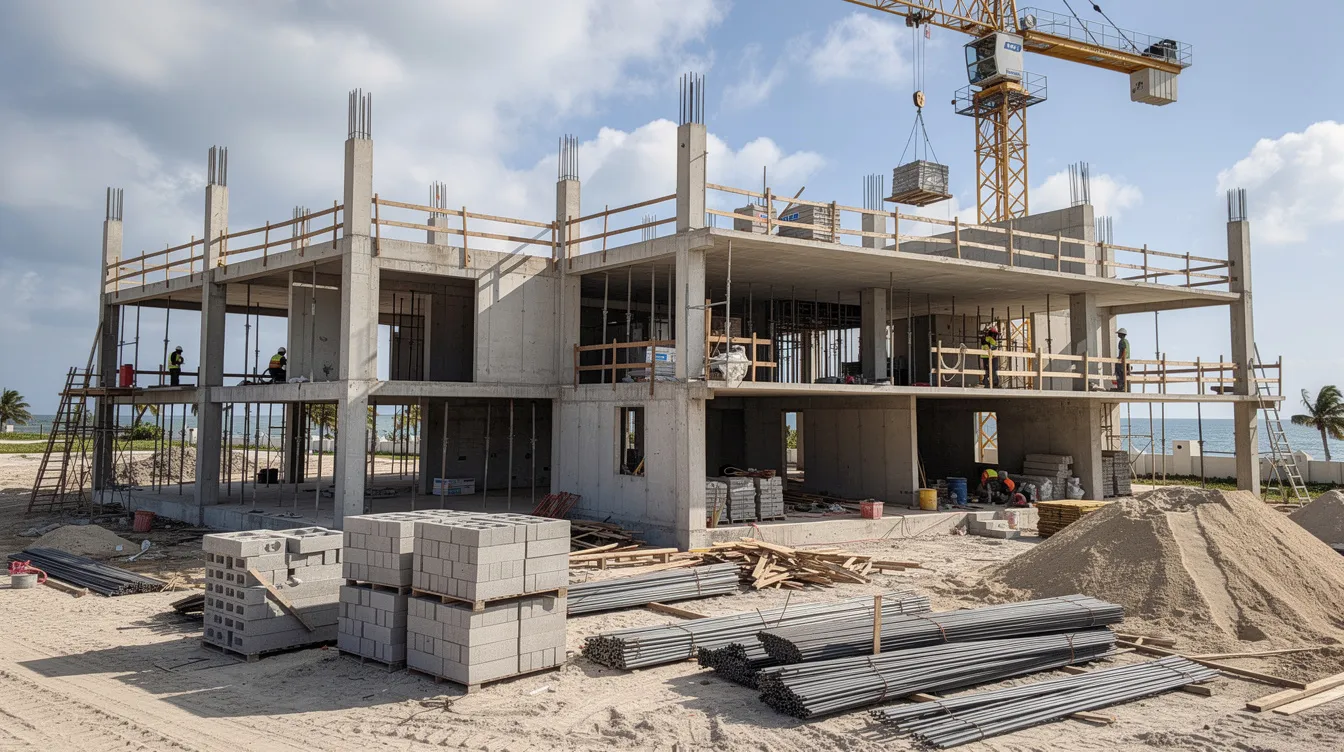
Typical construction components include guest rooms, cottages or villas, reception and lobby, restaurant and kitchen, banquet and meeting rooms, spa and wellness areas, swimming pool deck, staff quarters, back-of-house facilities and utility buildings.
To estimate civil cost, multiply total built-up area in sq.ft. by a realistic cost per sq.ft. for your region and quality level, validated with architect or contractor estimates. Interior works-flooring, wall finishes, false ceiling, sanitary fittings, built-in carpentry-should be costed separately from loose FF&E to avoid double counting.
In a resort DPR, construction cost should be supported with at least a summary estimate from an architect or civil contractor, not just a lump-sum figure.
Plant, Machinery, Utilities & Operating Equipment
A resort is an operational hospitality project. Reliable utilities and equipment are essential for service quality and form a separate cost head. Major items include:
- Commercial kitchen equipment, refrigeration, laundry machines
- HVAC and air-conditioning systems
- DG/backup generator sets, electrical panels
- STP/ETP, borewell, pumps, water treatment
- Solar systems, lifts/elevators (if multi-storey)
- Fire-fighting and safety systems
- IT/POS, CCTV, access control, Wi-Fi infrastructure
Banks usually expect equipment estimates to be backed by budgetary quotations from suppliers. For a more granular item-wise list and cost discussion, refer to the dedicated resort equipment, furniture and FF&E cost guide on ProjectReportBank.com.
Furniture, Fixtures & Equipment (FF&E) and Décor
FF&E refers to movable, non-structural items-beds, wardrobes, sofas, tables, chairs, lights, curtains, loose décor. FF&E accounts for approximately 10% to 15% of development costs, yet this head is frequently underestimated in first drafts of resort projects.
Key FF&E components include:
- Guest rooms: Beds, mattresses, headboards, wardrobes, bedside tables, study tables, luggage racks
- Public areas: Reception desks, lobby seating, restaurant tables and chairs, bar counters
- Banquets/outdoor: Banquet chairs, buffet counters, outdoor furniture, garden seating
Interior décor elements-decorative lighting, wall art, soft furnishings, curtains, carpets-significantly impact the budget for boutique and premium positioning. FF&E costing should be based on per-room and per-seat benchmarks, then rolled up for the resort, using realistic 2026 price ranges.
Resort Amenities and Recreational Infrastructure
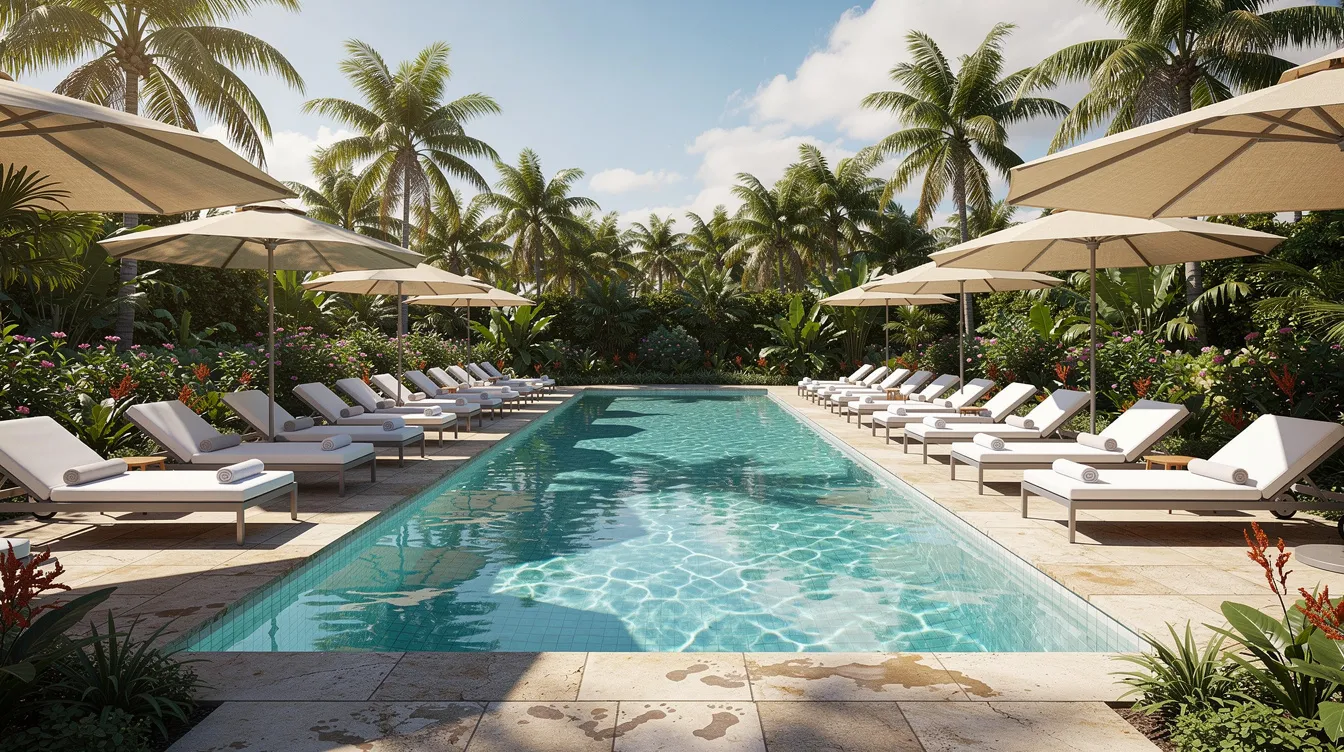
Amenities such as a swimming pool, spa, gym, kids’ play area and adventure activities significantly influence both resort positioning and total project cost. Typical amenities include pool with filtration plant, spa and steam facilities, indoor games room, gym, kids’ zone, walking trails, amphitheatre, bonfire area, and landscaped lawns for weddings and events.
Each amenity involves construction, equipment and associated civil works (decking, plant rooms, pathways, lighting). For a deeper discussion on physical development and amenities, the resort setup cost in India article on ProjectReportBank.com covers granular setup cost.
A resort promoter should carefully evaluate phased development: a small 12-room boutique resort may initially skip expensive amenities like a full spa and focus on high-yield rooms and F&B, planning the first phase around core revenue generators.
Preliminary & Pre-Operative Expenses, IDC and Contingency
Preliminary and pre-operative expenses capture the cost of taking a project from concept to commercial opening. Soft costs can comprise up to 15% of total development expenses.
Preliminary expenses: Company/LLP formation, feasibility study costs, DPR preparation fees, legal documentation, initial branding, early-stage government fees.
Pre-operative expenses: Architect and consultant fees, engineering design, site supervision, pre opening salaries of key staff during construction, interest during construction (IDC), trial runs, pre-opening marketing, staff recruitment and training.
Contingency reserves are allocated for unforeseen delays and regulatory hurdles. A reasonable contingency-typically 5–10% of hard project cost-covers price escalation and minor design changes. Contingency funds should be set aside to address cost escalations and delays, but an arbitrary high figure without basis may raise questions at bank appraisal.
IDC treatment varies by lender. For many MSME resort projects, interest during construction is kept modest depending on the implementation period and banker preference.
Working Capital Margin and Its Treatment in Project Cost
There is a clear difference between fixed project investment (CAPEX) and working capital required to run the resort after opening-inventory, salaries, utilities, marketing and credit to OTAs or corporates. Working capital is necessary to cover initial operational losses and staff training during the ramp-up period.
In many bankable DPRs, an initial working capital margin is included as part of total project cost. However, the revolving working capital limit is generally sanctioned as a separate facility (cash credit or OD). Working capital for resorts ranges from ₹3 lakh to ₹50 lakh depending on size and positioning.
For example, a 30-room resort at 35% initial occupancy might need roughly ₹50–80 lakh to cover 3–4 months of operating expenses. Banks may or may not include the full working capital margin under project cost for term-loan financing-this should be discussed with the lending institution.
Illustrative Resort Project Cost Table (India, 2026)
The following table illustrates a hypothetical mid-scale 30-room resort project cost. All figures are illustrative only.
| Particulars | Illustrative Amount (₹ lakh) |
|---|---|
| Land & Site Development | 280 |
| Civil Construction | 680 |
| Interiors | 150 |
| Plant & Equipment | 200 |
| Furniture & FF&E | 170 |
| Amenities (Pool, Landscaping, Recreation) | 150 |
| Preliminary & Pre-operative Expenses | 100 |
| Contingency (≈7% of hard cost) | 100 |
| Working Capital Margin | 70 |
| Total Project Cost | 1,900 |
These amounts are indicative for explanation purposes, not standard benchmarks. Actual resort investment cost in India varies widely by state, micro-location, land size, number of keys and quality level. This ₹19 crore example will be used in the means of finance illustration below.
Resort Project Cost by Size: Small, Medium and Large
There is no universal standard cost for resort projects in India. Resort project costs range from ₹25 lakh to ₹50 crore, while construction costs for resorts can be ₹10 lakh to ₹25 crore, depending on scale and specifications.
According to Innov Architects’ 2025 benchmarks, cost-per-key (excluding land) varies significantly:
| Resort Type | Indicative Cost per Key (excl. land) | Indicative Total Range |
|---|---|---|
| Small boutique (8–12 keys) | ₹35–60 lakh | ₹3–7 crore |
| Mid-size (20–30 rooms) | ₹50–90 lakh | ₹12–25 crore |
| Large/premium (40–50+ rooms) | ₹1–2 crore+ | ₹40–100 crore |
Land cost alone can change the total drastically-a rural homestay versus a popular hill station or metro-fringe location. These ranges guide planning but must be replaced by project-specific cost sheets and a DPR before approaching banks or investors.
What Is Meant by Means of Finance for a Resort Project?
Means of finance is the plan that answers: “Who will bring how much money, in what form, and when?” to fund the resort project cost. Common components include:
- Promoter’s equity or capital
- Internal accruals from existing business
- Unsecured loans from promoters, directors or relatives (where acceptable to lenders)
- Term loan from bank or NBFC
- Institutional finance (e.g., SIDBI offers loans for hospitality projects below ₹25 crore)
- Confirmed subsidy, capital subsidies or equity participation
Equity financing involves capital provided by developers and private investors, while debt financing refers to commercial loans secured by the property. Joint ventures involve collaborations with established hospitality brands, and mezzanine financing is a hybrid of debt and equity financing used in some larger resort development projects. Government incentives include grants and tax credits provided to stimulate growth in tourism and hospitality businesses. For larger developments, funding packages can range from $7 million to $500 million internationally. Pre-sales provide early development capital for mixed-use resorts involving branded residences, though this is less common for mid-scale Indian resort projects. Private equity firms and PE funds are additional financing options for hotel or resort projects with proven concepts.
While structuring the means of finance, the DPR should indicate the timing of promoter funds, land infusion and proposed loan drawdown schedule, aligned with implementation milestones.
Promoter Contribution, Margin Money and Equity
Promoter contribution is the total amount the resort promoter brings as own stake-developer equity through share capital, capital account contributions, and eligible unsecured loans treated as quasi-equity per lender policy. A promoter must contribute 30 to 40 percent of the project cost in most bank-financed resort projects.
Banks insist on adequate promoter contribution to ensure risk sharing, commitment and sustainable repayment even during off-season and ramp-up years. Common sources include savings, sale of assets, internal accruals from existing business, land already owned (at realistic value), and unsecured loans from family.
Promoter contribution should not be merely on paper. Lenders look for proof of source and actual inflow-bank statements, audited financials and net-worth statements. The DPR should show funds already brought in and the balance to be contributed, sequenced to match the implementation schedule before major loan disbursements. Property owners bringing existing land must ensure clear title and acceptable valuation.
Bank Term Loan for Resort Project: Practical View
For most MSME and mid-size resort projects in India, the bank term loan is the principal external funding source for fixed assets. Banks typically finance 60 to 70 percent of project costs, subject to scheme norms, eligibility criteria and appraisal outcome. NBFCs can provide loans with higher loan-to-cost ratios up to 75 percent, though at higher interest rates.
A term loan typically covers civil construction, interiors, equipment, FF&E, amenities and a part of preliminary expenses. Key features bankers evaluate include loan amount versus project cost, security and collateral, repayment period aligned to projected cash flows, moratorium during construction and ramp-up, and interest rate based on risk rating. Interest rates for resort loans range from 10 to 18 percent per annum depending on lender type and borrower profile.
From a bank appraisal perspective, the role of financial projections is central-projected occupancy, average room rate, F&B and events revenue, operating margins, cash accrual and DSCR all form the base for loan sizing. A DSCR of at least 1.5 is required in all loan years for most lenders. Resort project loan sanction is always subject to lender-specific policy, viability assessment and promoter profile.
Debt–Equity Ratio and Resort Funding Structure
A typical debt-to-equity ratio for hospitality projects is critical to assess viability. The debt–equity ratio expresses the relationship between total debt and promoter’s own funds.
Debt–Equity Ratio = Total Term Debt ÷ Total Equity (as accepted by the lender)
Using the earlier illustrative example of a ₹19 crore total project cost:
| Source | Amount (₹ crore) | Share |
|---|---|---|
| Promoter Contribution | 7.00 | ~37% |
| Bank Term Loan | 12.00 | ~63% |
| Total | 19.00 | 100% |
This gives a debt–equity ratio of approximately 1.7:1-within the range most lenders accept for hotel or resort projects. Excessively high debt increases repayment pressure, while very low debt may underutilise leverage. Banks balance these factors considering project risk, location and market conditions.
Project Cost vs Means of Finance: Reconciled Example
| Application of Funds | ₹ lakh | Sources of Funds | ₹ lakh |
|---|---|---|---|
| Land & Site Development | 280 | Promoter Equity/Capital | 500 |
| Civil Construction | 680 | Land (Promoter’s Own) | 200 |
| Interiors | 150 | Bank Term Loan | 1,200 |
| Plant & Equipment | 200 | ||
| FF&E | 170 | ||
| Amenities | 150 | ||
| Pre-operative Expenses | 100 | ||
| Contingency | 100 | ||
| Working Capital Margin | 70 | ||
| Total Project Cost | 1,900 | Total Means of Finance | 1,900 |
In a live DPR, these tables would be backed by detailed annexures-estimates, quotations, land valuation, net-worth statements. Reconciliation of project cost and means of finance is one of the first checks a banker performs; any mismatch weakens the appraisal.
How Banks Assess Resort Project Cost & Viability
Bank appraisal is not just documentation review-it evaluates cost reasonableness, market feasibility and repayment capacity. Banks assess land valuation, construction costing per sq.ft. against CPWD or local schedule of rates, credibility of architect estimates, sufficiency of FF&E provision and adequacy of contingency.
On the viability side, banks require detailed seasonal occupancy forecasts for resort loans. Occupancy rates should be modeled for peak, shoulder and off-seasons. Revenue projections must include room, F&B, and event income. Banks require a 5-year P&L, cash flow, and balance sheet. Five-year P&L statements are essential for bank loan applications, and the financial model must demonstrate a DSCR of at least 1.5 in every loan year.
A promoter should aim for conservative but defensible projections based on market analysis of comparable properties. Over-optimistic revenue assumptions with thin expense provision usually attract closer scrutiny or rejection.
Cost Overrun Risk and Practical Control Measures
In hotel projects and resort projects, cost overruns are common due to terrain challenges, design changes, inflation in material and labour costs, and underestimation of interiors and FF&E at the planning stage. Common overrun triggers include late finalisation of drawings, addition of new amenities mid-way, unexpected site conditions (rocky soil, retaining walls) and delay in statutory approvals extending the implementation period.
Cost overruns disturb the original debt–equity ratio and may require additional promoter funds. Practical measures: lock basic design early, obtain realistic contractor quotes, include reasonable contingency in the DPR, monitor progress against budget monthly, and keep promoter liquidity for unforeseen expenses.
Presenting Project Cost & Means of Finance in a Resort DPR
A resort DPR for bank finance should present project concept, technical details, cost, means of finance and financial projections as one coherent story. The ideal flow is:
- Project concept and location
- Capacity and room mix
- Market analysis and demand drivers
- Detailed project cost
- Means of finance
- Revenue projections and financial projections
- DSCR and repayment capacity
- Risk analysis and mitigation
Figures in P&L, cash flow, balance sheet and term-loan repayment schedule must reconcile with the project cost, depreciation, interest and promoter contribution. Banks expect full internal consistency, and access to supporting documents strengthens appraisal.
Common Mistakes in Estimating Resort Project Cost & Finance
Many rejection cases arise from avoidable errors in initial costing:
- Ignoring substantial site development costs or underestimating civil cost per sq.ft.
- Omitting or under-budgeting interiors and FF&E
- Missing pre-operative expenses or keeping contingency unrealistically low
- Assuming banks will finance 100% of cost including land purchase
- Overestimating bank term loan without adequate promoter contribution
- Duplicating land value as both asset and source
- Assuming year-one occupancy at 70–80% without ramp-up
- Ignoring seasonality in leisure destinations
- Calculating DSCR on gross profit instead of net cash accrual
Careful review by a finance professional before submission can identify these issues, improving the bankability of the resort project report.
Improving Bankability: Practical Tips for Resort Promoters
Improving bankability is about presenting a realistic, well-supported proposal-not merely chasing a higher loan amount.
- Obtain architect-certified civil estimates and at least indicative quotations for major equipment and FF&E
- Maintain documentary evidence for land cost, building plans and promoter contribution
- Prepare realistic occupancy and ARR assumptions using comparable properties, incorporating seasonality and ramp-up
- Run basic financial ratios before meeting the bank-operating margin, cash accrual, DSCR year-wise
- Align implementation schedule, term-loan drawdown, moratorium period and opening date so that interest during construction and principal repayments match expected cash generation
These steps demonstrate financial expertise and operational expertise, giving lenders and investors comfort in your resort development proposal.
FAQs: Resort Project Cost & Means of Finance
How much does it cost to set up a small 10–12 room resort in India?
A small 10–12 room resort can cost anywhere from ₹3 crore to ₹8 crore excluding land, depending on location, quality of construction, amenities and finishes. With land in a popular hill station or coastal destination, the total may rise significantly. Budget resort projects in rural tourism areas may start lower, but promoters should prepare a project-specific cost sheet rather than relying on generic numbers.
Can land already owned by the promoter be shown as part of project cost and promoter contribution?
Yes, in typical Indian banking practice, land already owned can be shown as part of project cost and credited as promoter contribution at a reasonable valuation-usually government circle rate or independent valuation, whichever the lender accepts. Title must be clear and free of encumbrances.
Does a bank term loan usually cover furniture and equipment for a resort?
Term loans often cover eligible fixed assets including FF&E and equipment, provided these are properly documented with quotations and form part of the sanctioned project cost. Actual coverage depends on bank policy, asset classification and scheme norms.
Is working capital always included in resort project cost for bank finance?
Initial working capital margin may be included as part of project cost in some DPR structures. However, ongoing working capital needs are usually financed through a separate cash credit or overdraft facility, not fully through the project term loan. Discuss the treatment with your lending institution early in the process.
What documents help support resort project cost during bank appraisal?
Key supporting documents include architect or engineer estimates, civil and interior quotations, equipment and FF&E supplier quotations, land valuation and title documents, promoter net-worth statements, and a professionally prepared resort DPR with financial projections, CMA data and DSCR workings.
Continue Exploring Our Resort Project Finance Guides
Continue with our detailed Resort DPR resources for project planning, investment estimation, financial analysis, feasibility and bank loan appraisal.
Conclusion & Author Attribution
A successful resort project in India requires more than an attractive location and appealing design. It needs a well-structured project cost, realistic means of finance, adequate promoter contribution and a viable repayment plan supported by credible financial projections.
The DPR must clearly demonstrate the chain: Investment → Funding Structure → Operations → Revenue → Cash Generation → Debt Repayment. When this relationship is transparent and internally consistent, banks gain the comfort needed to support your resort project with financing.
If you need assistance with resort project reports, DPR preparation, project cost estimation, means of finance planning, CMA data or financial projections for bank term loans, consider engaging professional support through ProjectReportBank.com.
Author: CA Manish Gugliya Chartered Accountant | Project Report, DPR & Project Finance Professional ProjectReportBank.com – specialising in DPR preparation, hospitality projects and bank project finance in India.