Key Takeaways
- A multi feedstock ethanol distillery project report in India must address the technical design for processing more than one raw material (typically grain based feedstocks plus molasses), present realistic cost estimates, and build detailed financial projections with scenario-tested assumptions.
- Feedstock flexibility across maize, broken rice, damaged foodgrains and molasses reduces raw material risk but increases both project cost and operational complexity compared to a single grain based ethanol plant. A multi-feedstock ethanol distillery can process various raw materials flexibly, but that flexibility comes at a price in capex and maintenance.
- A bankable plant project report for a 20 KLPD, 60 KLPD, 100 KLPD or higher capacity ethanol plant must include a feasibility study, a detailed project report (DPR), an ethanol plant feasibility report, sensitivity analysis and CMA Data for bank finance. DPRs help assess project viability and financial projections across multiple feedstock scenarios.
- Project Report Bank, led by CA Manish Gugliya, prepares customised DPRs, financial models and ethanol plant feasibility studies tailored to specific capacity, feedstock configuration and regional conditions rather than relying on generic templates.
- Regulatory policy, offtake arrangements with oil marketing companies, feedstock procurement prices and working capital planning are the primary drivers of profitability and DSCR in any grain based ethanol production plant or multi-feedstock distillery.
Introduction to Multi Feedstock Ethanol Distillery DPR
Ethanol production in India has moved from a sugar-mill by-product activity to a standalone industrial sector. The ethanol blending program targets 20% blending by 2030 in India, and the country achieved E20 ahead of schedule, with blending reaching approximately 20% between November 2025 and June 2026. Biofuel blending mandates are driving growth in ethanol production, while ethanol blending can reduce reliance on imported fossil fuels and reduce vehicular emissions when implemented properly. Ethanol production supports energy security and reduces fossil fuel dependence. Emerging markets in Asia-Pacific are key growth hubs for ethanol, and India sits at the centre of this shift.
This environment has pushed entrepreneurs beyond single-feedstock configurations. A promoter relying solely on maize faces price volatility; one relying only on molasses faces seasonal supply gaps. The result is growing interest in multi feedstock ethanol distillery projects that combine grain based processing (maize, broken rice, damaged foodgrains) with molasses or sugarcane juice streams.
This article serves as a comprehensive guide to what a multi feedstock ethanol distillery plant project report should contain, covering capacities from 20 KLPD to 100+ KLPD. It addresses technical layout, machinery requirements, project cost, financial projections, sensitivity analysis and bank finance structuring. A professionally prepared ethanol plant feasibility report supports bank loan proposals, project finance evaluation and investor assessment by converting operational assumptions into testable financial models.
Project Report Bank is a CA-led advisory platform headed by CA Manish Gugliya, FCA, DISA (ICAI), with over 20 years of experience in DPR preparation, financial projections and feasibility study work for production plant projects across manufacturing sectors, including ethanol and renewable energy.
What Is a Multi Feedstock Ethanol Distillery Project Report?
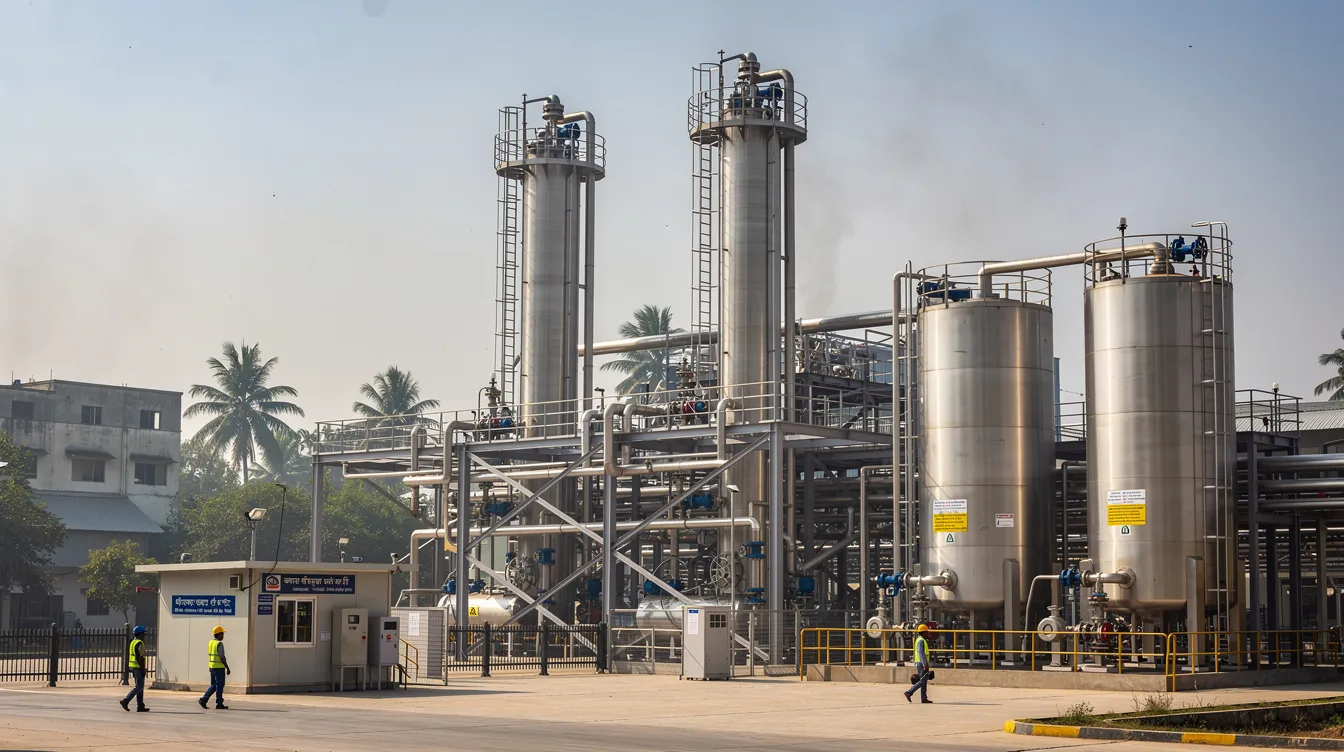
“Multi feedstock” in the context of ethanol production means a plant designed to accept more than one raw material for alcohol production. A multi-feedstock ethanol distillery can operate in several configurations:
- Multi-grain ethanol plant: processes multiple grain based feedstocks such as maize, broken rice, sorghum and other permitted cereals through the same starch-conversion and fermentation line.
- Dual-feed distillery: designed to handle both grain based and molasses-based feedstocks, requiring separate pre-treatment sections converging at or before fermentation.
- Flexible plant with staged upgrades: a grain distillery initially built for one feedstock, with provisions for adding machinery and handling systems for other feedstocks over time.
A plant cannot simply switch between all feedstocks without technology modifications, additional equipment or operational adjustments. The DPR must capture these distinctions from day one.
DPRs outline project details and requirements for ethanol plants, including technical description, process flow, material and utility balance, market analysis, project cost, means of finance, financial projections, DSCR, IRR and risk analysis. A DPR includes capital and operational expenditure analysis across each feedstock scenario. DPRs specify machinery and technology requirements for ethanol production, and the multi-feedstock configuration directly impacts plant layout, machinery sizing, storage design, utility demand and effluent treatment capacity.
Ethanol itself is one of the simplest organic compounds; its chemical properties as a fuel oxygenate make it suitable for blending with petrol. But producing it at commercial scale from varying feedstocks requires careful engineering and financial planning.
Feedstocks for Multi Feedstock Grain Based Ethanol Production
Feedstock choice is central to the ethanol plant feasibility report. Sourcing feedstocks is crucial for ethanol production viability because availability, procurement price, transport cost and government eligibility guidelines determine both operating cost and revenue. Ethanol production relies on carbohydrate-rich feedstocks, whether starch from grains or fermentable sugars from molasses and sugar cane streams.
The National Policy on Biofuels was notified on June 4, 2018, and subsequently amended in 2022 to allow a wide set of feedstocks including maize, broken rice, damaged foodgrains, surplus FCI rice, sugarcane juice, sugar syrup, B-heavy and C-heavy molasses, and even rotten potatoes.
Grain based options commonly used in India:
| Feedstock | Category | Procurement Pattern | Storage Needs | Key Advantage | Key Risk |
|---|---|---|---|---|---|
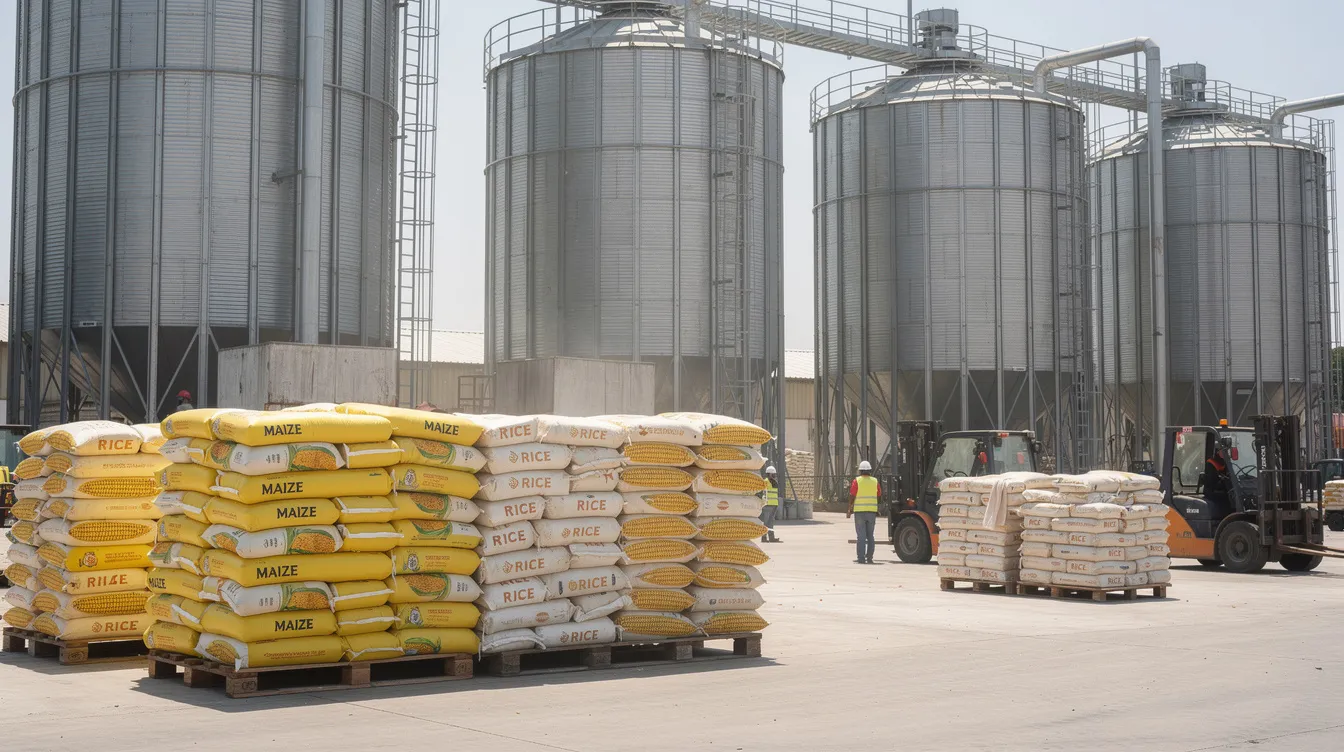
| Maize / corn | Grain (starch) | Year-round, regional clusters | Dry godown, moisture control | High starch content, higher ex-mill ethanol price (₹71.86/litre ESY 2025-26) | Price volatility, global market linkage |
| Broken rice | Grain (starch) | Year-round in rice-surplus states | Dry storage, avoid spoilage | Lower procurement cost, government backing for damaged/surplus grains | Variable moisture, cleaning needed |
| Damaged foodgrains | Grain (starch) | Subject to NBCC declarations | De-contamination, inspection | Very low feedstock cost | Supply uncertain, policy-dependent |
| Other cereals (sorghum, bajra) | Grain (starch) | Seasonal, regional | Standard grain storage | Diversification | Limited commercial-scale data |
Non-grain options in dual-feed projects:
- C-heavy molasses: lowest ex-mill price (₹57.97/litre) but also lowest fermentable sugar content; seasonal, tied to sugar crushing.
- B-heavy molasses: moderate sugar content, ex-mill price ₹60.73/litre; production from sugarcane crushing season.
- Sugarcane juice or syrup: high fermentable content, ex-mill price ₹65.61/litre, but sugar diversion raises food-market and policy concerns.
Second-generation ethanol uses agricultural residues, forestry waste and materials like wood chips. Setting up a second-generation ethanol plant requires advanced pretreatment units and different technology entirely. Biomass feedstock availability influences second-generation ethanol costs, and the second-generation ethanol industry has been expected to grow, but first-generation grain-and-molasses plants remain the commercial mainstream for fuel ethanol in India. Second-generation ethanol reduces greenhouse gas emissions when compared to conventional routes, though its commercial scale remains limited.
Single Feedstock vs Multi Feedstock Ethanol Plant – Strategic Choice
Consider a promoter evaluating two options: a 30 KLPD single grain based ethanol plant using only maize versus a 60 KLPD multi feedstock ethanol distillery that can process maize, broken rice and C-heavy molasses. The trade-offs are real and must be understood before committing capital.
A single-feedstock plant offers simpler machinery, lower capex, easier operations and narrower technical risk. But if maize prices rise 15-20% in a single season, there is no fallback. The plant either absorbs the cost or shuts down.
Multi-feedstock plants can maximize capacity utilization throughout the year because they are not dependent on one raw material’s availability cycle. Multi-feedstock distilleries improve operational flexibility by reducing dependence on seasonal raw materials. When sugar season ends and molasses supply dries up, the plant switches to grain. When grain prices spike, the operator shifts towards molasses if available.
The cost of this flexibility: higher project cost (separate handling, pre-treatment, storage for each feedstock), more complex process controls, higher maintenance budgets and more elaborate quality control systems.
Comparative parameters:
- Capex: Single-feed lower by 15-25% for same ethanol output capacity
- Opex: Multi-feed marginally higher due to switchover, cleaning, enzyme variation
- Feedstock risk: Multi-feed spreads risk across sources
- Operational complexity: Multi-feed requires more skilled operators and lab support
- Maintenance: Multi-feed has more equipment, more downtime risk during switching
- Bank perception: Multi-feed viewed favourably for utilization resilience, but lenders also scrutinize higher capex
For new promoters with limited capital, a smaller single grain based plant at 20 KLPD or 30 KLPD might be safer. For established groups with stronger balance sheets and feedstock procurement networks, a multi-feedstock configuration at 60 KLPD or above can be the more resilient investment.
Technical Layout and Process Flow in a Multi Feedstock Ethanol Production Plant
Ethanol production from different feedstocks requires distinct preparation processes, and the DPR must map these process differences clearly.
Grain based process flow (maize, broken rice, damaged foodgrains):
- Feedstock receiving and cleaning: grain unloading, screening, de-stoning, magnetic separation
- Milling: grain processing typically involves dry milling and enzymatic processes; hammer mills or roller mills reduce grain to flour
- Slurry preparation and liquefaction: flour mixed with water, alpha-amylase enzyme added, heated to convert starch to dextrins
- Saccharification: glucoamylase enzyme converts dextrins to fermentable sugars
- Fermentation: efficient fermentation systems utilize yeast strains optimized for varying sugar profiles; fermentation runs 48-72 hours producing a wash of approximately 10-12% ethanol
- Distillation: multi-pressure distillation columns separate ethanol from wash; rectification produces rectified spirit at ~96% purity
- Dehydration: Molecular Sieve Dehydration Units achieve high-purity ethanol by removing water content, producing 99.5%+ fuel-grade ethanol
- Storage and dispatch: ethanol stored in bonded tanks for supply to oil marketing companies
Technological improvements are reducing enzyme and processing costs in both the liquefaction and saccharification stages, improving per-litre economics for grain based operations.
Where molasses differs: sugar-based feedstocks require sugar extraction, fermentation and distillation processes but skip the milling, liquefaction and saccharification stages entirely. Molasses is unloaded, stored in tanks, diluted and pH-adjusted before going directly to fermentation. For a dual-feed plant, the fermentation and distillation sections can be common, but the pre-treatment lines remain separate.
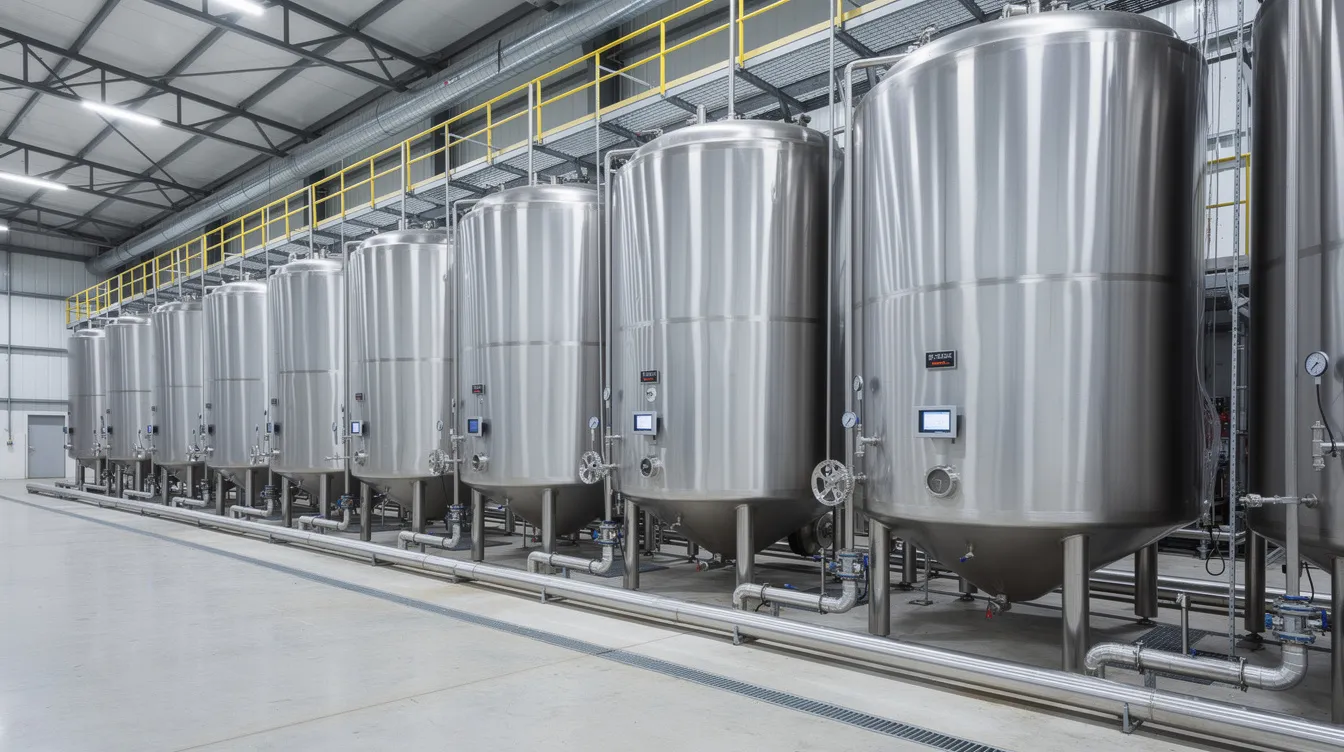
Zero Liquid Discharge (ZLD) minimizes wastewater and ensures environmental compliance. Spent wash treatment via multi-effect evaporators (MEE), bio-methanation and condensate polishing units is now required or strongly encouraged. Water consumption in grain based plants runs at 8-10 KL of water per KL of ethanol produced, making water sourcing and treatment a critical planning input.
Plant Capacity, Machinery and Layout Planning (Example: 20 KLPD to 100 KLPD)
A 20 KLPD ethanol plant produces 20,000 litres of ethanol per day at rated capacity. A 60 KLPD ethanol plant, operating 330 days per year at 90% capacity utilization, yields approximately 17.8 million litres annually. A 100 KLPD plant at the same parameters produces roughly 29.7 million litres. Nameplate capacity never equals actual annual output because maintenance shutdowns, feedstock transitions and seasonal availability reduce effective operating days.
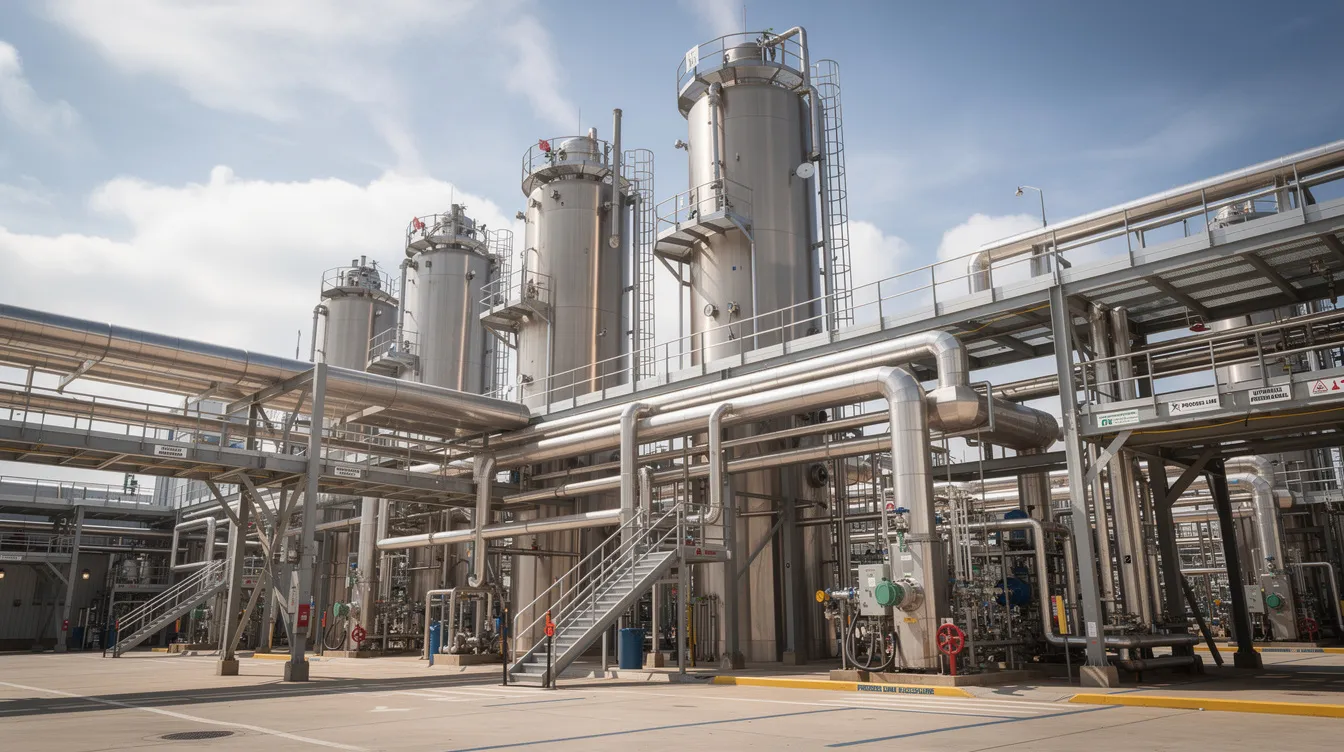
Plant layout is a critical consideration in ethanol production setup. Machinery sizing for fermenters, distillation columns, evaporators, boilers and storage tanks is aligned with chosen capacity and feedstock mix. For a 60 KLPD grain based plant, grain requirement runs approximately 53,500 MT per year at 90% utilization.
Key machinery categories in the DPR:
| Equipment Category | Function | Feedstock-Specific? |
|---|---|---|
| Grain handling, cleaning, screening | Raw material preparation | Grain only |
| Hammer/roller mills | Size reduction to flour | Grain only |
| Slurry tanks, liquefaction vessels | Starch conversion | Grain only |
| Molasses tanks, dilution system | Molasses preparation | Molasses only |
| Fermentation tanks (stainless steel) | Ethanol fermentation | Common (may need adjustment) |
| Multi-pressure distillation columns | Ethanol separation | Common |
| Molecular sieve dehydration unit | Fuel-grade purification | Common |
| Boiler (25-30 TPH typical) | Steam generation | Common |
| Cooling towers | Process cooling | Common |
| Water treatment & ETP/ZLD | Water and waste management | Common |
| DDGS dryer | By-product processing | Grain only |
Utilities and waste management systems are essential for plant setup. A second-generation ethanol plant needs skilled technical staff for operations; the same applies to multi-feedstock first-generation plants where switching between feedstocks demands operator training and process discipline.
Machinery costs for a grain based ethanol plant are approximately INR 55 Crores for a standard 60 KLPD configuration (process plant and machinery, excluding civil, utilities, land and pre-operative). The DPR must distinguish between basic machinery quotation cost and fully installed, commissioned project cost.
Capital expenditure for a grain based ethanol plant at the machinery level is INR 55 crores, but total KLPD ethanol plant cost including all project components ranges much higher.
Project Cost, Capex Structure and Ethanol Plant Feasibility Report
High initial capital costs are a challenge for ethanol projects. Project cost estimates include CAPEX, OPEX and revenue projections, and the DPR must present each component with supporting assumptions.
For a 60 KLPD grain based ethanol plant, recent DPRs show total project cost ranging from ₹134 crore to ₹310 crore depending on scope. The lower figure reflects a basic grain-only plant; the higher figure includes co-generation, comprehensive ZLD, extensive civil works, storage and pre-operative costs. A multi-feedstock configuration typically adds 15-25% to machinery and civil costs because of dual handling, separate pre-treatment and additional storage.
Indicative capex allocation for a 60 KLPD multi feedstock ethanol distillery:
| Cost Head | Approximate Share |
|---|---|
| Process plant and machinery | 40-45% |
| Civil works and factory building | 10-14% |
| Utilities (boiler, power plant, cooling, water treatment) | 12-15% |
| Environmental systems (ETP, ZLD, bio-methanation) | 8-10% |
| Land and site development | 5-8% |
| Storage (grain godowns, molasses tanks, ethanol tanks) | 5-7% |
| Electrical and instrumentation | 4-5% |
| Pre-operative expenses, IDC and contingency | 6-10% |
These percentages are illustrative and will shift based on location, land cost, whether the plant includes co-generation and the specific feedstock mix. The ethanol plant cost analysis in the DPR must reconcile vendor quotations with site-specific civil and utility estimates.
Environmental assessments must identify emissions and require regulatory approvals from State Pollution Control Boards, MoEFCC (where applicable) and fire safety authorities (PESO). The ethanol plant feasibility report should combine the capex structure with break-even capacity utilization (often around 50-55% for grain based plants) and preliminary profitability estimates.
Financial Projections, Working Capital and Bank Finance (DPR & CMA)
An ethanol plant feasibility report for bank finance must include 7-10 year projected Profit & Loss, Balance Sheet and Cash Flow statements built on technical assumptions about capacity, yield, utilities and feedstock prices.
Revenue projections are essential for ethanol plant financial analysis. For a 60 KLPD grain based plant at 90% utilization, annual revenue at the current weighted-average ethanol price of approximately ₹66-72/litre ranges from ₹130 crore to ₹145 crore, depending on feedstock mix. Profit projections include total income and gross profit calculations adjusted for by-product revenue from DDGS (₹12,000-15,000/MT for grain based operations) and, where applicable, CO2 recovery.
Ethanol production costs are influenced by feedstock prices and processing efficiencies. Financial analysis covers operating costs and expenditure projections across:
- Raw material cost (55-65% of total opex for grain based plants)
- Power, steam and fuel cost
- Enzymes and chemicals
- Labour and maintenance
- Effluent treatment and waste management
- Insurance, compliance and overheads
Government incentives support second-generation ethanol production viability, and combining biofuels with other financial incentives can enhance project viability. For first-generation plants, the interest subvention scheme provides 6% p.a. subvention (or 50% of bank interest rate, whichever is lower) for five years including one year moratorium, reducing effective borrowing cost.
Illustrative means of finance for a ₹200 crore ethanol project:
| Source | Share |
|---|---|
| Promoter equity | 25-30% (₹50-60 crore) |
| Term loan | 65-70% (₹130-140 crore) |
| Margin for working capital | 5% (₹10 crore) |
Working capital assessment for a grain based ethanol plant covers stock of grains (15-30 days depending on procurement cycle), stores and spares, finished ethanol inventory, receivables from OMCs (typically 30-45 days) and minimum cash balance. Seasonal procurement of molasses and bulk grain purchases can create lumpy working capital requirements even when the plant is profitable on paper.
CA Manish Gugliya typically prepares CMA Data and detailed cash-flow projections aligned with bank norms through financial projections and modelling services tailored to the specific ethanol project configuration. The DPR should present separate financial scenarios for all-maize, all-broken-rice and mixed-feed operations, showing how DSCR and profitability shift with feedstock pattern and plant utilization. Market assessments analyze demand for fuel ethanol and contractual agreements with OMCs, which are the primary revenue assurance mechanism.
Risk Analysis, Sensitivity and Viability of Multi Feedstock Ethanol Projects
A feasibility study must go beyond static projections and test how key variables affect the project’s ability to service debt and generate adequate returns. Risk assessments are crucial for addressing price volatility and regulatory shifts.
Operational challenges include regulatory compliance and capital expenditure, and both can change during the project’s life. The critical risks for a multi feedstock ethanol project:
- Feedstock price volatility: maize prices are linked to global commodity markets and domestic crop output; broken rice supply depends on milling activity and government surplus declarations
- Supply uncertainty for damaged foodgrains: availability is subject to NBCC declarations, and if permitted quantities reduce, the plant faces raw material shortage
- Ethanol procurement price revisions: ex-mill prices set by the government directly determine revenue; downward revision reduces project returns
- Capacity utilization below projection: the Indian industry may face excess capacity; projects approved under interest subvention since 2018 could add production capacity beyond what E20 requires
- Utility and energy cost escalation: fuel, coal, biomass, power tariffs and enzyme costs have been rising
- Regulatory and policy shifts: state excise permissions, water withdrawal rules, ZLD compliance costs, GST changes
- Implementation delays: every six months of delay increases interest during construction and erodes project economics
Sustainable benefits depend on responsible feedstock sourcing and management. Multi-feedstock flexibility can mitigate raw material risks, but it cannot protect against overall demand slowdown or regulatory shifts.
Illustrative sensitivity matrix for a 60 KLPD multi feedstock ethanol plant:
| Scenario | Change | Impact on IRR | Impact on DSCR |
|---|---|---|---|
| Base case | CU 85%, weighted average price ₹68/litre | ~18% | ~1.65 |
| Grain cost +15% | Higher raw material bill | ~13-14% | ~1.35 |
| Ethanol price -5% | Lower revenue per litre | ~15% | ~1.45 |
| CU drops to 75% | Lower volume, fixed costs remain | ~14% | ~1.40 |
| Utility cost +20% | Higher power and steam bill | ~16% | ~1.50 |
| 6-month delay | Higher IDC, deferred revenue | ~15% | ~1.45 |
The economic analysis should test at least these five or six variables. Under conditions where DSCR falls below 1.3, the project may struggle to meet bank repayment expectations.
For new promoters entering the ethanol project space without established feedstock supply chains or OMC relationships, a smaller single grain based ethanol plant at 20 KLPD or 30 KLPD may present lower risk than an ambitious multi-feedstock configuration. Bioethanol production at scale requires not just technical capability but confirmed offtake, reliable raw material sourcing and adequate working capital reserves.
As of July 2026, the government had not decided to increase nationwide ethanol blending in petrol beyond 20%. India aims for 20% ethanol blending in petrol by 2030 under the national policy framework, but further mandatory increases should not be assumed in project projections. Government mandates aim for 20% ethanol blending in petrol by 2030, and a detailed project report must reflect this ceiling when modelling long-term demand.
Ethanol blending can reduce vehicular emissions when implemented properly, and the programme has contributed to India’s energy security. But these macro benefits do not automatically translate into project-level profitability. The ethanol project report must demonstrate commercial viability on its own terms.
Role of Professional DPR and Feasibility Study – How Project Report Bank Helps
A detailed project report is essential for securing bank loans for capital-intensive ethanol projects. Lenders and investors expect a DPR that reflects customised technical and financial analysis, not a generic template with placeholder numbers. For a multi feedstock ethanol distillery, the complexity of feedstock handling, dual pre-treatment systems and variable operating scenarios makes professional preparation even more necessary.
Project Report Bank, led by CA Manish Gugliya, provides:
- Customised multi feedstock ethanol distillery DPR preparation
- Ethanol plant feasibility report and bankable plant project report
- CMA Data preparation for term loan and working capital finance
- Financial projections, scenario building and sensitivity analysis
- Project finance advisory and loan structuring for promoter contribution planning
Each ethanol project report is built on project-specific assumptions covering capacity, feedstock, technology choice, location and funding structure. The work combines technical inputs from engineering vendors with realistic financial modelling grounded in current government pricing, actual feedstock costs and verifiable operating parameters.
Professional Advisory – Contact
Serious promoters planning a 20 KLPD to 100+ KLPD grain based ethanol plant or multi feedstock ethanol distillery can reach out for a discussion on project-specific DPR requirements through ProjectReportBank.com, preferably by WhatsApp. Professional advisory covers DPR preparation, bank finance structuring, CMA Data, financial projections and project feasibility evaluation.
CA Manish Gugliya FCA, DISA (ICAI) Over 20 years of professional experience in project reports, financial projections, CMA Data, project finance and business advisory.
Frequently Asked Questions (FAQ)
What minimum capacity (KLPD) is practical for a new multi feedstock ethanol plant in India?
Most lenders and technical consultants consider 30 KLPD the practical minimum for a standalone grain based ethanol plant. A 20 KLPD ethanol plant can work for captive or niche applications but faces higher per-litre fixed costs. For multi-feedstock configurations, 60 KLPD or above is generally where the additional capex for dual handling and storage becomes justifiable in terms of operating economics and bank finance viability. The ratings yet to come from lenders on smaller multi-feed projects tend to be more cautious because of thin margins at lower volumes.
Can a running grain based ethanol plant be upgraded to multi feedstock later?
Yes, in principle. The government notified a scheme in March 2025 specifically to help cooperative sugar mills convert existing sugarcane-based ethanol units into multi-feedstock units. For a standalone grain based plant, adding molasses handling requires separate unloading, storage, dilution and feed systems, plus modifications to fermentation parameters. The capex for such conversion is lower than a greenfield dual-feed plant but still requires a detailed feasibility report assessing whether the existing distillation and dehydration capacity can handle the additional feedstock streams.
How long does it typically take to prepare a complete DPR and feasibility report for bank appraisal?
For a multi feedstock ethanol distillery project, a professionally prepared DPR with CMA Data, financial projections, sensitivity analysis and complete technical description typically takes 4-8 weeks, depending on the availability of vendor quotations, land details, feedstock sourcing arrangements and promoter financials. A bio-CNG plant or simpler single-product plant may take less time. The timeline also depends on whether the promoter has already secured land, obtained preliminary environmental clearance and received technology vendor proposals.
What documents and data does Project Report Bank need from promoters to start the DPR?
At minimum: proposed plant capacity and feedstock choice, land details (owned/leased, area, location), machinery vendor quotations or shortlisted technology providers, promoter’s financial background (net worth, existing business financials if any), proposed means of finance, and any preliminary discussions with lenders. For a multi feedstock ethanol distillery project report, data on regional feedstock availability and procurement arrangements is also needed to build realistic operating assumptions.
Is a new ethanol distillery investment still viable in India?
Viability depends on specific conditions rather than a blanket answer. Promoters with confirmed feedstock supply, proximity to OMC depots, adequate promoter contribution, and realistic capacity utilization assumptions (75-85% in early years) can build viable projects. The risk of excess industry capacity is real; projects approved since 2018 could add ethanol capacity beyond E20 requirements. A promoter should not assume guaranteed full offtake. The ethanol project economics must work even at 75-80% utilization with current ex-mill pricing. Conduct the feasibility study before committing capital, not after.