
Key Takeaways
- Ready to cook rice breakfast mixes manufacturing converts low-margin rice and poha into higher-margin branded products such as poha mix, rice upma, idli and dosa premix, and savoury mixes – offering stronger branding potential than commodity rice milling.
- A typical small Indian plant can begin at semi-automatic scale, with investment driven mainly by machinery, building and packaging lines rather than land alone.
- Success depends as much on formulation, moisture control, packaging and FSSAI compliance as on getting a bankable DPR, CMA data and working-capital planning right.
- Rice-based breakfast mixes can provide a balanced meal quickly, making them attractive to urban households, working professionals and institutional kitchens.
- Project Report Bank, under the guidance of CA Manish Gugliya, prepares customised ready to cook rice mix project reports, financial projections and bank-finance proposals for such plants.
Ready-to-Cook Rice Breakfast Mixes Manufacturing: Overview
Unlike plain rice milling or basic rice flour grinding, ready-to-cook rice breakfast mixes are pre-processed, seasoned and packed so that consumers only add water or oil and heat for five to ten minutes to get a familiar breakfast staple. Instant mixes can be prepared in under ten minutes, which is exactly why consumer preferences include convenience and regional flavour profiles in food products across India.
The value-addition concept is straightforward: shift from commodity rice to branded convenience foods with better profit margins and stronger market positioning. Consumer demand has accelerated since 2015 – driven by urbanisation, dual-income households, online grocery, quick-commerce and preference for portion-controlled mornings. The India RTC food market was valued at USD 1.41 billion in 2025 and is projected to reach USD 8.21 billion by 2032, reflecting a CAGR of roughly 25%.
Rice is an excellent base for this industry because it is widely available, cost-competitive, gluten-free by nature, and culturally consumed in breakfast formats across the country. Whole grain cereals are rich in vitamins B1, B2 and B3, and rice fortification adds essential nutrients like iron and folic acid – making fortified rice breakfast products nutritionally meaningful. The rest of this article guides you through products, process, machinery, project cost, DPR and bank finance for a rice breakfast mix manufacturing plant in India.
What Are Ready-to-Cook Rice Breakfast Mixes?
In practical kitchen terms, a ready-to-cook rice breakfast mix is a dry blend that transforms into a complete breakfast bowl when you add hot water, stir and simmer for a few minutes. Rice-based breakfast cereals fall into two main types: cook-required cereals (which include cream of rice and rice porridge) and ready-to-eat cereals that require no cooking and are consumed cold.
For this manufacturing discussion, the key distinctions are:
- Ready-to-cook products – need water and short cooking (poha mix, upma mix, idli and dosa instant mix).
- Ready-to-eat products – need no cooking (chivda mixtures, some snack mixes).
- Instant mixes – powdered or granular premixes requiring hydration and quick steaming or cooking.
- Premixes – standardised blends of rice flour, pulses, spices and additives ready for immediate batter or dough preparation.
- Single-serve breakfast products – cup poha, small pouches for one-time use.
Ready-to-cook products should ideally rehydrate within three to five minutes under normal household conditions. Entrepreneurs should decide early whether they want to focus on ready-to-cook, ready to eat or a mixed portfolio, because the rice breakfast mix manufacturing process and packaging line differ significantly.
Major Ready-to-Cook Rice Breakfast Products That Can Be Manufactured
The same plant can produce multiple SKUs – poha mix, upma mix, idli and dosa premix, rice chivda mixes and regional rice breakfast premixes – using shared roasting, blending and packaging equipment. A new instant breakfast food business can start with three to five core SKUs and expand based on sales data. Instant breakfast mixes often contain essential vitamins and minerals when properly fortified, and fortification can significantly reduce nutrient deficiencies in populations.
Ready-to-Cook Poha Mix
A typical formulation includes cleaned rice flakes, peanuts, chana dal, curry leaves, mustard, turmeric, chilli, sugar, salt, dehydrated onion and potato, and a controlled edible oil coating. The poha base can be sourced as rice flakes or made in-house – for a detailed walkthrough, see the instant poha manufacturing process and production line.
Ready-to-cook poha mix typically requires only hot water and five to seven minutes of resting time, making it ideal for offices, hostels and travel packs. Optional variants include lemon poha, masala poha, low-oil roasted poha and high-protein poha with added pulses or soya. Using clean-label and high-quality ingredients can enhance product appeal significantly in this category.
Cup Poha and Single-Serve Breakfast Products
Cup-based poha (or rice upma) lets the consumer add boiling water in the cup itself and wait five to eight minutes – similar to noodle cups. Target segments include corporate canteens, college hostels, airlines, railways, fuel stations and quick-commerce platforms.
Packaging considerations are critical: high-barrier cups with lids, correct headspace, seasoning separation if needed and shorter pack sizes (60–90 g) priced for impulse purchase. The packaging should preserve product freshness and ensure tamper evidence for consumer trust. Entrepreneurs planning a dedicated cup line should review the cup poha manufacturing and packaging business model.
Rice-Based Upma Mix
Rice-based upma uses rice rawa or rice grits in place of traditional wheat semolina, making the product gluten-free and aligned with rice-based breakfast mix manufacturing. Typical ingredients include rice rawa, pulses, cashew or peanuts, curry leaves, mustard seeds, dehydrated onion and carrot, spices and salt. Products like Indimix Upma Mix require ten minutes to prepare with hot water. Rice upma mix production can share common roasting and blending equipment used for poha mix, improving plant capacity utilisation.
Idli and Dosa Premixes
These are rice flour-based instant mixes combining rice flour, black gram (urad) flour, salt and leavening aids. Idli premix requires steaming to prepare a nutritious breakfast – for example, you can whisk Indimix Multigrain Idli Mix with water and steam for ten minutes. Similarly, you can cook Indimix Multigrain Dosa Mix on a hot pan for crispy texture. Two broad styles exist: traditional-style premix requiring fermentation, and true instant mix where chemical leavening allows faster preparation.
Packaging is moisture-sensitive: use laminated pouches with good oxygen and moisture barrier, and accurate batch coding because shelf life usually ranges from three to six months. Idli mix manufacturing and dosa mix manufacturing expand the customer base and help stabilise plant capacity utilisation through diverse SKUs.
Rice Flakes-Based Chivda and Savoury Mixes
Chivda and savoury mixes use rice flakes, nuts, pulses and spices to create ready-to-eat products that also serve as breakfast or tea-time snacks. Core ingredients include various thicknesses of poha, peanuts, roasted chana, green peas, curry leaves, chilli, masala seasoning and small quantities of edible oil. Natural antioxidants can replace synthetic preservatives for health-conscious consumers. Keep oil content moderate and use permitted antioxidants to manage rancidity and shelf life.
Regional and Specialty Rice Breakfast Mixes
Examples include rice kanji mix, pongal premix, khichdi premix, lemon rice premix, tamarind rice premix and millet-rice blended breakfast mixes. Murukku instant mix is made from raw rice and black gram flour. For idiappam, you would mix 100g of idiappam mix with 90–120ml boiling water and steam for five minutes in an idli cooker. You can even add chopped veggies to Bombay Toast premix before cooking for a different breakfast experience. Regional variants allow premium pricing and strong branding based on local recipes. Pilot-test one to two regional products first to measure repeat purchase and avoid SKU overload.
Product Mix Strategy for a Rice Breakfast Mix Manufacturing Plant
A breakfast mix manufacturing business should not depend on a single product. The product development process should begin with consumer testing and feedback. Practical pack-size options include:
- Economy pouches (400–500 g) for families
- Trial packs (150–200 g) for nuclear families
- Single-serve sachets (40–80 g) and cups for on-the-go consumption
- Institutional packs (1–5 kg) for hotels, hostels and caterers
Value-added variants include millet-rice blends, high-fibre or high-protein versions, low-oil formulations and regional masala profiles. Align product mix with distribution channels – distinguish price-sensitive SKUs from premium health-oriented SKUs. For a deeper dive into formulation strategies, see instant poha raw materials, seasoning and product mix.
Raw Materials Required for Rice Breakfast Mix Production
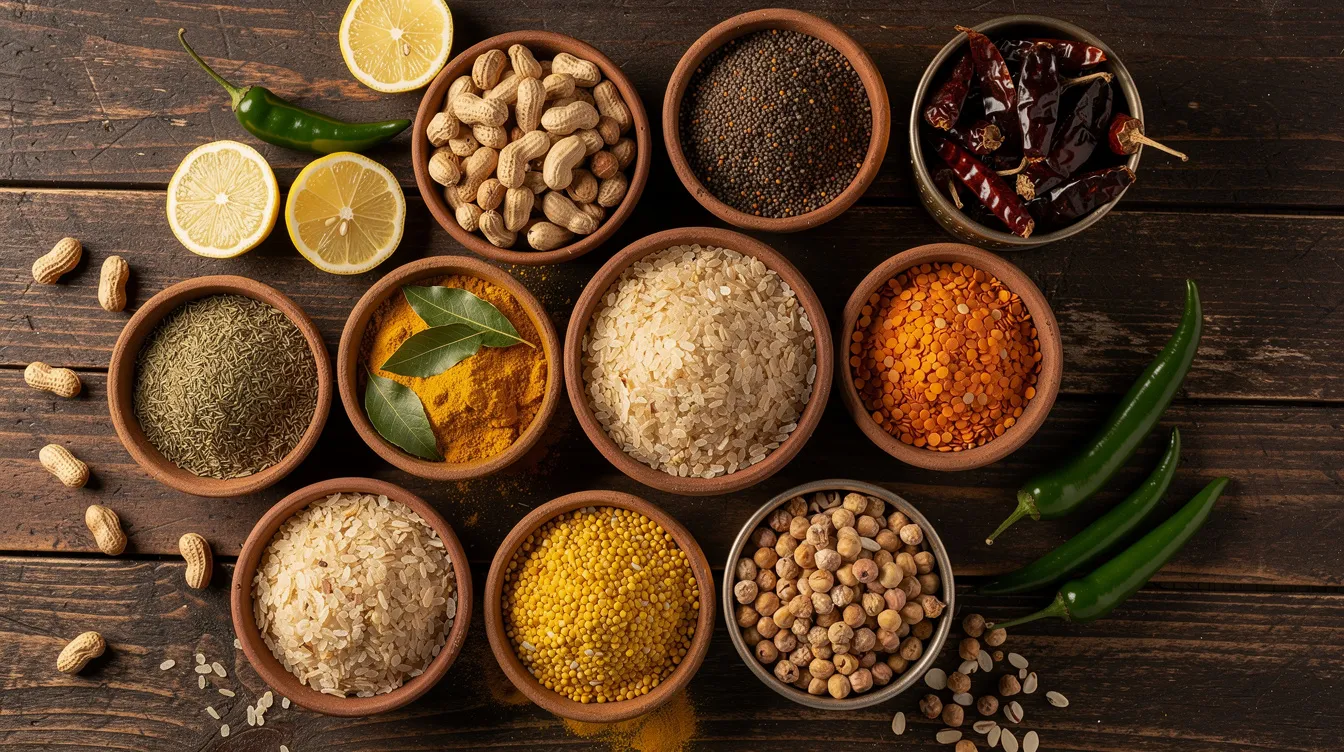
Raw-material planning must balance quality, shelf life, cost and availability. A robust supply chain ensures consistent quality and flavour profile across batches. Key ingredients include:
- Rice (milled, parboiled or raw paddy depending on product) – rice kernels are milled to remove husk, bran and germ before further processing
- Poha or rice flakes of various thicknesses
- Rice rawa or grits for rice upma
- Pulses (urad dal, chana dal, moong dal)
- Peanuts, cashews and other nuts
- Spices (mustard, chilli, turmeric, cumin, coriander, asafoetida)
- Salt and sugar
- Dehydrated vegetables (onion, tomato, capsicum, carrot, peas) – moisture level in dehydrated ingredients must be below 12% to prevent microbial growth
- Seasonings, flavour blends and edible oil
- Food-grade additives where legally permitted (acidity regulators, raising agents)
- Packaging material (laminated pouches, stand-up pouches, cups, cartons, labels)
Food-safety considerations include aflatoxin control in nuts, pesticide residues in spices, microbiological standards in dehydrated vegetables and FSSAI-compliant additives usage. Rice cereals are often fortified with vitamins and minerals post-processing for enhanced nutrition.
Ready-to-Cook Rice Breakfast Mix Manufacturing Process
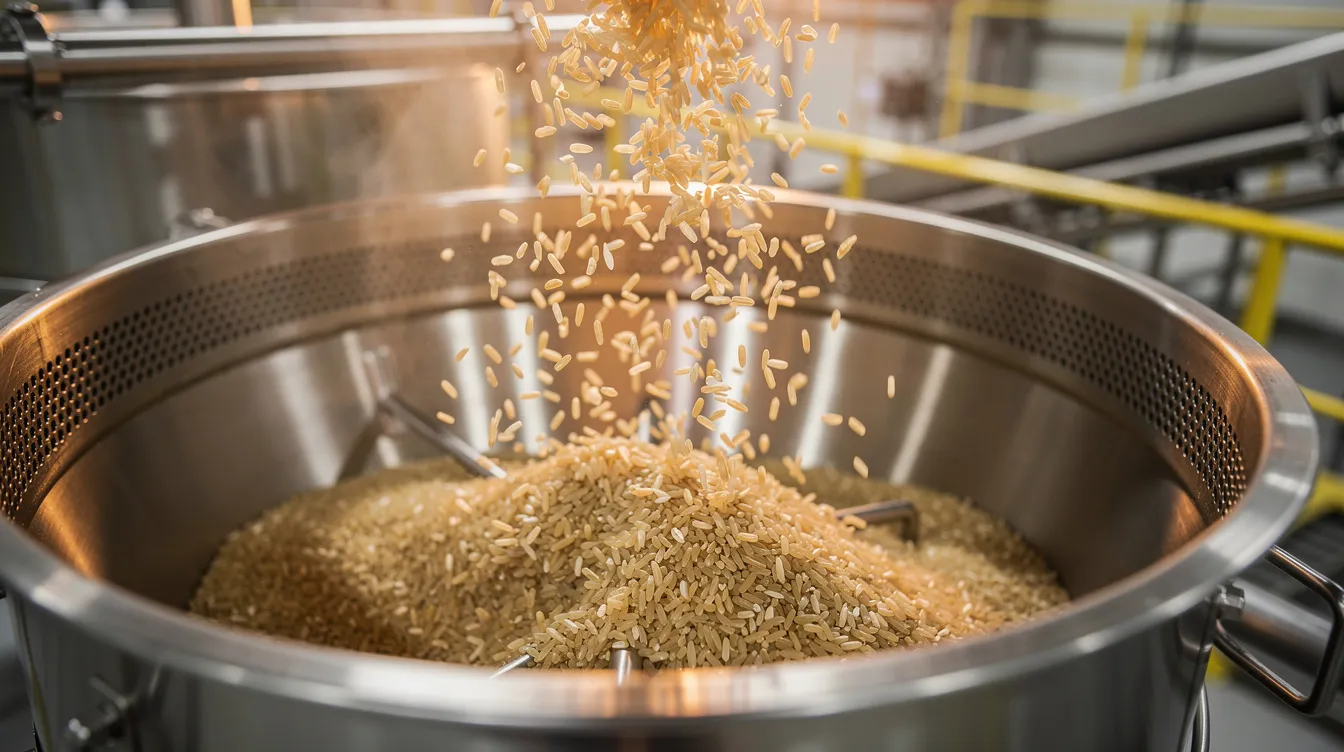
A typical process flow runs as follows: Raw Material Procurement → Inspection → Cleaning → Grading → Rice/Poha Preparation → Roasting/Heat Treatment → Ingredient Preparation → Mixing/Blending → Quality Check → Filling and Packaging → Metal Detection → Secondary Packing → Finished Goods Storage.
Key stages include:
- Cleaning and grading of rice and poha to remove stones, dust, sand and husk
- Size grading or milling to produce rice rawa, grits or rice flour as required – cooked rice is shaped through flaking, puffing or extrusion cooking depending on the product
- Roasting or light frying of poha and rice rawa for flavour development and moisture reduction – flaked cereals are toasted at temperatures between 275–330°C while puffed rice is made by heating grain under high pressure and releasing it; extrusion cooking combines heat and pressure to create cereal textures
- Preparation of seasoning: measured spices, salt, dehydrated vegetables, oil premix
- Controlled mixing in a ribbon blender to ensure uniform distribution and consistency
- In-process quality checks for moisture, bulk density and taste profile
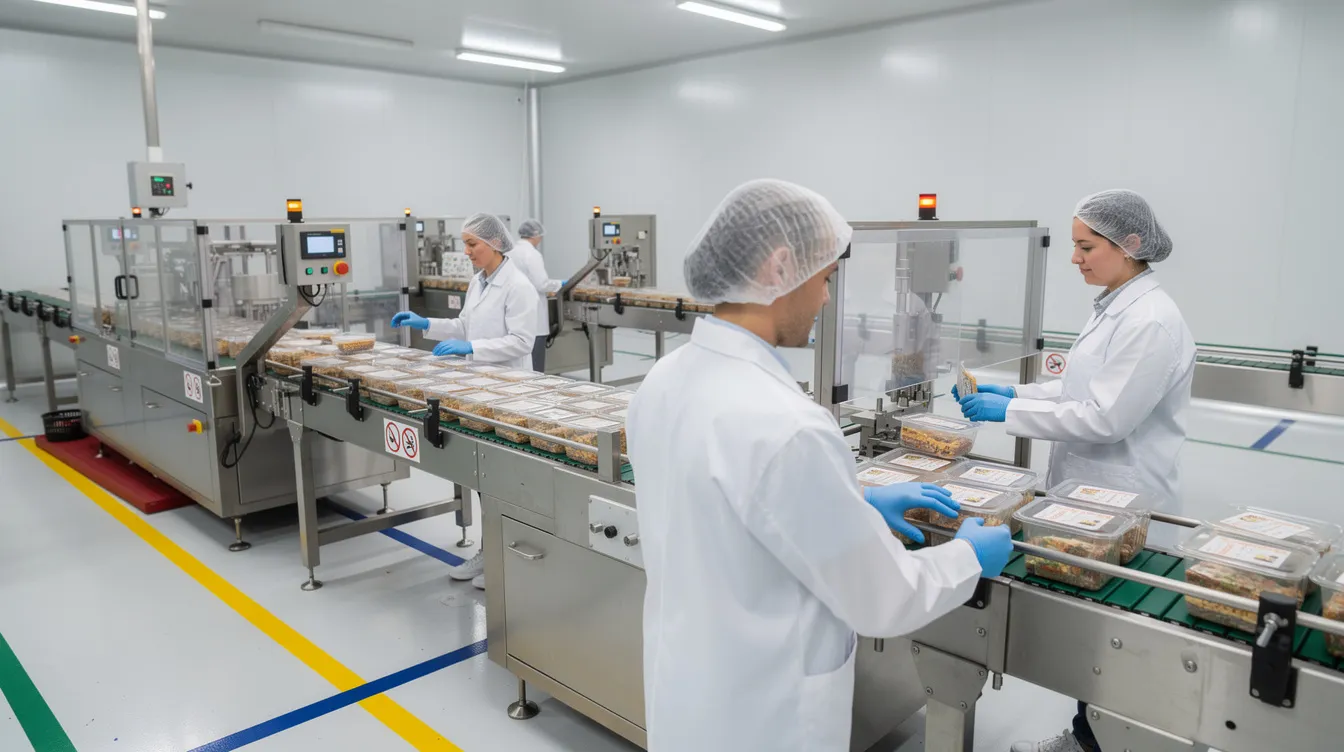
- Filling into pre-formed pouches or form-fill-seal packs, with nitrogen flushing if required
- Final checks: metal detection, weight checks, visual inspection, coding and carton packing
Test products under real-life conditions to ensure ease of preparation before commercial launch. The cooked rice should be dried to a moisture level of less than 5% for shelf-stable products.
Processing of Rice, Rice Flakes and Moisture Control
Two business models exist: buying processed poha or rice rawa and focusing only on seasoning, blending and packaging; or having an integrated rice processing plant for ready-to-cook products including flaking, milling and roasting.
Integration means higher machinery cost, more area and additional utilities – but better control over moisture, flake thickness and breakage. Non-integrated plants can still deliver strong results if suppliers are reliable and incoming quality is properly controlled. Manufacturing ready-to-cook rice mixes requires proper moisture control at every stage.
Key points on roasting and drying:
- Achieve target moisture for a shelf-stable instant mix (low enough to prevent microbial growth but not so low that texture suffers)
- Over-roasting causes burnt flavours and higher breakage; under-roasting leads to poor rehydration and shorter shelf life
- Regular moisture testing using moisture meters is essential for QA
- Product-specific trials must standardise safe and organoleptically acceptable time-temperature combinations – do not copy generic data
Soaked rice or parboiled rice requires careful handling to achieve proper gelatinisation of starches before flaking. The goal is a thin, soft flake that rehydrates easily while delivering the right bite in the final prepared bowl.
Seasoning, Ingredient Blending and Packaging Options
Accurate seasoning and consistent mixing determine repeat purchase and brand loyalty. Batch coding and recipe control maintain the same taste across different production lots.
Blending considerations:
- Use ribbon blenders, double-cone blenders or paddle mixers based on batch size
- Follow a correct sequence of addition (heavy ingredients first, light spices later) to avoid segregation
- For larger plants, automated dosing and PLC-based batching reduce manual errors
- Pre-mixed spice blends from reliable vendors versus in-house blending – both are viable depending on scale
Packaging choices include laminated pillow packs for economy SKUs, stand-up zipper pouches for premium and export lines, PP or paper cups for single-serve formats, and bulk bags for institutional customers. Packaging for ready-to-cook rice products must block moisture, light and oxygen. Shelf-life can be extended with moisture barrier packaging and nitrogen flushing. For detailed packaging guidance, see instant poha packaging, shelf life, quality control and food safety.
Machinery Required for a Rice Breakfast Mix Manufacturing Plant
Machinery configuration depends on product mix and capacity – a 250 kg/day micro unit looks very different from a 5-tonne/day automatic breakfast mix production line. A high-level machinery list for most rice breakfast mix plants includes:
- Raw material cleaner and de-stoner
- Grader and sizer for rice and rice flakes
- Poha or rice roasting machine (batch or continuous)
- Dryer where separate controlled drying is required
- Pulveriser or grinder for rice flour and spice grinding
- Ribbon blender or seasoning mixing machine
- Conveyors and elevators for gentle product transfer
- Weighing and dosing systems
- Form-fill-seal packaging machine for pouches
- Cup filling and sealing machine for cup-based SKUs
- Nitrogen flushing attachment for premium shelf life
- Metal detector and check-weigher
- Batch coding and labelling machines
- Secondary packaging equipment
Small units may start with semi-automatic packaging and manual bag sealing. Larger scale justifies automatic production lines. Obtain three to four quotations before finalising DPR assumptions. For an exhaustive equipment discussion, refer to ready-to-cook rice products machinery and equipment.
Plant Capacity Planning, Land and Layout
DPRs typically assume 300 working days annually for Indian food plants. Start with a realistic utilisation assumption – 40–50% in Year 1, gradually ramping up. Poha, upma and idli mix can share the same blender and roaster with proper scheduling across shifts.
Land and building needs for a small to medium plant include:
- Raw material godown and finished-goods warehouse
- Process hall with separate zones for cleaning, roasting and drying, blending and packaging
- Quality-control lab and sample retention room
- Utility area (compressors, boiler or LPG bank, DG set)
- Change rooms, handwash and hygiene facilities
- Office, security and parking
Layout must follow linear material flow from receipt to dispatch, with segregation of raw and finished product areas. Built-up area may range from about 3,000–5,000 sq ft for a basic MSME unit to 10,000+ sq ft for a multi-product automated plant. See instant poha plant capacity, land, layout and utilities for more detail.
Utility Requirements
Utilities significantly affect manufacturing cost and must be correctly estimated in the DPR. Typical requirements include:
- Electrical power (connected load may range from 40–150 kW depending on plant size and technology)
- LPG, PNG or steam-based heat for roasters and dryers
- Process water and potable water for cleaning and reconstitution trials
- Compressed air for automation and pneumatic controls
- Ventilation and exhaust for the roasting area; optional cooling for the packing hall in warm regions
- Backup power where grid reliability is an issue
Obtain load estimates from equipment suppliers so that monthly electricity and fuel costs in the project report reflect reality rather than guesswork. Safety norms for gas storage, earthing and electrical load approvals must be followed.
Shelf Life, Quality Control, Food Safety and FSSAI Compliance
Quality and compliance directly influence bankability and market acceptance. Quality control must include microbial testing and shelf-life studies conducted over several months under different storage conditions.
Shelf-life factors include product moisture and water activity, oil quality and oxidation, packaging barrier properties and seal integrity, storage temperature, and microbial load in spices and dehydrated vegetables. Food safety management systems are essential for compliance with industry standards, and Hazard Analysis and Critical Control Points (HACCP) frameworks ensure food safety at every stage.
QC systems should cover incoming raw-material checks (moisture, foreign matter, infestation), in-process checks (blend uniformity, taste, moisture, weight control), finished-product testing (microbiology, rancidity, sensory evaluation) and retention samples. Formulations must ensure nutrient content and allergen information is clearly labeled on every pack.
Regulatory compliance requires food safety registration with authorities like FSSAI in India. Mandatory label declarations include ingredient list, nutrition table with data on minerals and vitamins, allergens, net quantity, veg logo, FSSAI licence number, batch number, MRP, manufacturing and best-before dates, and storage instructions. For detailed compliance guidance, see FSSAI licence and labelling requirements for instant poha manufacturing. Always check the latest applicable FSSAI rules – do not rely on outdated label formats.
Project Cost, Working Capital and Profitability
Rice breakfast mix plant investment has two broad components: fixed capital (land, building, machinery) and working capital (inventory, receivables, cash for operations).
Fixed-cost heads include:
- Land or site development (or lease deposits)
- Building and civil works
- Plant and machinery (processing and packaging)
- Electrical installations and utility systems
- Laboratory and QC equipment
- Furniture, computers and office equipment
- Pre-operative expenses (consultancy, formation, interest during construction)
- Contingency margin
A small semi-automatic plant may require investment in the low tens of lakhs, while an integrated automatic plant can run into multiple crores depending on location and capacity. See instant poha plant project cost for a structured cost breakdown in a similar category.
Working capital covers rice and poha inventory, spices and seasoning, dehydrated ingredients, packaging material, finished goods, trade receivables from distributors (often 15–45 days credit), wages, utilities and marketing expenses. Branded packaged-food businesses typically require significant working capital because of distributor credit and inventory buildup.
Major cost drivers include raw material, seasoning, packaging, direct labour, power and fuel, distribution, marketing and finance cost. The difference between manufacturing margin (ex-factory) and net profit after trade margins, promotions and freight can be substantial. No uniform profit margin can be guaranteed – actual results depend on execution, scale, brand building and market acceptance. For financial modelling guidance, see instant poha profitability, financial projections and working capital.
Revenue Model, Market Potential and Branding Strategy
A rice-based food manufacturing business in India can tap multiple revenue streams. A multi-channel distribution approach increases market penetration for food products. Possible revenue sources include:
- Own-brand retail packs through kirana stores, supermarkets and modern trade
- E-commerce channels (Amazon, Flipkart, quick-commerce apps)
- HoReCa and institutional supplies (hotels, canteens, hostels, corporates)
- Private-label or contract manufacturing for other brands
- Exports to regions with Indian diaspora
The ready-to-cook breakfast market in India continues to grow as lifestyle changes accelerate acceptance of convenient, prepared breakfast options across metro cities, tier-1 and tier-2 towns, IT corridors, college hubs and industrial clusters.
Pricing should consider product formulation, pack size, packaging format, distributor and retailer margins, logistics, promotional expenditure and GST. Single-serve formats often command higher selling price per kilogram but incur higher packaging cost. Successful marketing strategies may leverage influencer partnerships and recipe demonstrations to build awareness. For positioning and distribution guidance, refer to instant poha pricing, branding and distribution strategy.
Bank Finance, DPR and Risk Evaluation
As a practising Chartered Accountant working with MSME food projects, I consistently observe that banks in India insist on a detailed, bankable project report before sanctioning finance for a ready-to-cook food plant. Using robust project documentation can facilitate compliance with financial institutions’ requirements and speed up the appraisal process.
A robust rice breakfast mix DPR should contain:
- Promoter profile, project concept and product mix
- Market overview and competition mapping
- Technical configuration, plant layout and capacity phasing
- Detailed project cost and proposed means of finance (promoter contribution, term loan, subsidies where applicable under schemes like PMFME or PMEGP)
- Revenue model, pricing assumptions and sales ramp-up plan
- Five to seven-year financial projections, profitability and cash flows
- Working-capital assessment and CMA data
- DSCR, break-even analysis, sensitivity scenarios and risk analysis
For detailed DSCR and appraisal parameters, see instant poha bank finance, DSCR and feasibility analysis.
Key business risks include raw-material price volatility (especially rice, edible oil and milk-based ingredients where applicable), inconsistent product taste or texture, packaging failure causing moisture ingress, overestimation of sales volume, strong competition from established brands, and food-safety incidents. Mitigation measures include conservative assumptions in projections, supplier diversification, strict QA systems, phased capacity ramp-up and adequate marketing budget. Training of production staff on food safety and machine operation is essential and should be budgeted in operating expenses.
Make or Buy Decision: In-House Poha/Rice Processing vs Buying Ready Poha
This is a strategic decision: whether the plant should be fully integrated or focused only on blending and packaging.
Buying processed poha or rice rawa:
- Lower initial capital investment and simpler plant layout
- Faster implementation and speed to market
- Dependence on external suppliers for quality consistency
- Possibly higher per-kg input cost but lower maintenance
In-house processing:
- Higher fixed investment in cleaning, hulling, flaking and roasting equipment
- Better control over moisture, flake thickness and breakage
- Opportunity to sell plain poha or rice rawa as an additional revenue stream
- Higher power, fuel and technical-skill requirements
Smaller MSMEs may begin with sourcing ground or processed poha and consider backward integration once volumes stabilise. This decision should be supported by comparative financial modelling in the DPR.
Opportunities for Expansion and Long-Term Feasibility
Once the core business stabilises, the same infrastructure can support additional ready-to-cook rice-based products – new flavours, millet-rice blends for healthy weight-conscious segments, instant khichdi premixes, rice-based one-pot meal mixes, and ready-to-eat categories like roasted chivda.
Long-term viability depends on sales volume, capacity utilisation, ability to control manufacturing cost despite raw-material fluctuations, and marketing spend. Debt-equity balance and interest burden significantly affect DSCR and profitability in initial years. Ready to cook rice breakfast mixes manufacturing is not automatically profitable – success depends on disciplined execution, strong branding and continuous product improvement. Revalidate feasibility every 12–18 months using updated data.
Role of a Detailed Project Report and How Project Report Bank Can Help
In my experience working with MSME food-processing projects, a well-structured DPR is what separates an idea from a bankable proposition. Unlike a generic template, a customised rice breakfast mix DPR from Project Report Bank converts technical and market assumptions into integrated financial projections, helps promoters decide optimum capacity and automation level, provides banks with structured information for confident appraisal, and highlights sensitivities that could deliver a mood shift in projected returns – for example, what happens to DSCR if rice cost rises 10% or selling price drops 5%.
My role is to prepare, assist, analyse, structure and evaluate financial projections based on inputs and assumptions shared by the client. No certification of guaranteed outcomes is offered. Related services include detailed project reports, CMA data, financial projections, feasibility studies, pitch decks and legal document templates relevant for MSMEs.
Before committing to any substantial breakfast mix plant investment, commission a DPR tailored to your city, scale, machinery quotations and proposed sales strategy. Do not miss this step – it is the foundation on which everything from bank sanction to operational control is built.
Conclusion
Ready to cook rice breakfast mixes manufacturing allows Indian entrepreneurs to convert basic rice products into higher-value branded convenience foods. The magic lies in combining the right formulation, processing technology, packaging, FSSAI compliance, branding and distribution into a cohesive business model.
Properly planned ready-to-cook rice breakfast mixes manufacturing can become a sustainable MSME opportunity when supported by a realistic DPR and adequate working capital. However, every project is unique and real-world performance depends on execution, not just paper projections.
Entrepreneurs evaluating a rice breakfast mix manufacturing plant setup in India should prepare a customised project report and financial model from Project Report Bank before approaching banks or investors. Plan cautiously, achieve consistency in product quality, and let the range of rice-based breakfast products you deliver grow organically with market acceptance.
FAQ – Ready-to-Cook Rice Breakfast Mix Manufacturing
What is a practical minimum capacity for a new rice breakfast mix plant in India?
Many MSME units begin with a semi-automatic line capable of 300–800 kg/day across all products in a single shift. This scale allows market-testing without over-committing capital. Capacity should be chosen based on realistic sales projections and working-capital strength. Model at least three scenarios (conservative, base, optimistic) in the DPR before finalising installed capacity – hours of productive time matter more than peak machine throughput.
Can I start with a third-party contract manufacturer before installing my own plant?
Yes – entrepreneurs can outsource production to an existing ready-to-cook food processing plant while focusing on branding and market-building. Once volumes and brand traction are established, it makes sense to invest in an in-house plant to improve margins and control. Contract manufacturing agreements should clearly specify quality standards, confidentiality and liability. A DPR can be prepared for a phased model where Year 1 uses contract manufacturing and own plant is added from Year 2 or 3.
How long does it typically take to set up a small rice breakfast mix plant?
A straightforward MSME project may take about four to eight months from detailed planning to commercial production. Typical breakdown: one to two months for DPR and bank sanction, one to three months for civil work and utilities, one to two months for machinery delivery and installation, and a few weeks for trial runs. Build at least one month of contingency into the implementation schedule.
Is it mandatory to have an in-house laboratory?
FSSAI expects appropriate quality-control systems, but micro and small units can combine basic in-house tests with periodic testing at external NABL-accredited labs. Minimal in-house capabilities include moisture testing, basic physicochemical checks, sensory evaluation and packaging integrity tests. Budget for routine external lab testing costs in the operating-expense section of the DPR.
Can I position my rice breakfast mixes as organic or health foods from day one?
It is possible but requires consistent sourcing of certified organic ingredients, strict documentation and adherence to specific labelling rules. Avoid unsubstantiated health or disease-related claims – these must comply with FSSAI nutrition and health-claim regulations. Start with simple, truthful positioning such as “no added preservatives” or “made with whole grains” where legally appropriate, and upgrade to formal organic certification once systems are mature. Organic positioning usually means higher input costs, so pricing and profitability should be carefully modelled in the business plan.