

Cup poha manufacturing represents one of the most promising opportunities in the Indian convenience food segment today. As a practising Chartered Accountant and project-finance consultant, I have seen growing interest from entrepreneurs who want to convert the traditional Indian breakfast into a modern, single-serve format. This guide addresses the practical realities of starting a cup poha business in India – from product development and raw materials to packaging economics, financial feasibility and regulatory compliance.
Key Takeaways
Cup poha is a ready-to-cook or just-add-hot-water breakfast served in a single-serve cup, fundamentally different from bulk or pouch instant poha because of portion control, convenience and significantly higher packaging cost per kilogram. The manufacturing economics are driven by per-cup costing – covering poha mix, seasoning, cup, lid, labour and distribution – not merely per-kg raw material price.
Promoters must finalise product mix (plain, masala, vegetable, regional flavours) and packaging format before freezing machinery, capacity and plant layout. The bankability of a cup poha manufacturing plant depends on a detailed project report (DPR) with realistic financial projections and CMA data. Project reports are essential for securing funding, and entrepreneurs need credible project reports for bank acceptance. MSME loans support small businesses in India and can cover equipment and operational costs, with interest rates for MSME loans ranging from 7% to 15%, and loan amounts that can reach up to ₹2 crore, available as secured or unsecured based on requirements.
Project Report Bank, led by CA Manish Gugliya, prepares customised instant poha project reports, feasibility studies, CMA data and financial projections tailored to the proposed cup poha manufacturing project.
Understanding Cup Poha & Single-Serve Instant Poha
Cup poha is a portion-controlled, cup-based breakfast where the consumer typically needs to add hot water, wait 3–5 minutes and eat directly from the cup. The product delivers an amazingly satisfying quick bite that appeals to anyone seeking a tasty, nutritious snack without kitchen preparation.
Common formats include plain poha with a separate seasoning sachet, pre-seasoned cup poha, vegetable poha with dehydrated onion and peas, masala poha with mustard seeds and curry leaves, lemon poha, spicy variants, and regional favourites like Indori-style cup poha popular in Madhya Pradesh and central parts of western India. Some premium cups use millet bases or offer a lite, high-fibre variant for health-conscious buyers. Coriander leaves and cumin are often included as dehydrated toppings for authentic flavour.
The distinction matters: conventional poha is loose or unpacked; retail packed poha comes in poly bags; instant poha mix in pouches still requires cooking; ready to cook poha needs tempering; and ready to eat poha is fully cooked. Cup poha sits in the ready-to-cook or instant category – the consumer can simply stir the contents after adding hot water and the product is prepared within minutes. From a manufacturer’s perspective, it is essentially an instant poha mix optimised for single-serve convenience and modern retail presentation.

Market Potential for Cup Poha Business in India
The India instant food market was valued at approximately USD 4.4 billion in 2025, growing at around 5.1% CAGR. Within this, the packaged poha market India is estimated at roughly USD 1.2 billion. Demand is fuelled by working professionals, students and travellers seeking on-the-go breakfast products across India.
Key consumption occasions include:
- Urban home breakfast and office pantries
- College hostels and corporate cafeterias
- Railway and bus travel, airports and convenience stores
- Hotels, hospitals and quick-service outlets
- E-commerce, quick-commerce and modern trade channels
Cup poha competes with instant noodles cups, oats, upma and breakfast cereals, but can position itself as a familiar Indian cuisine alternative – vegetarian, lighter, and easy to buy at an affordable price. Products also find demand among Indian diaspora communities in countries like Trinidad and Tobago, Guyana, Mauritius, Bolivia, Guinea, and island nations like Saint Pierre, extending export potential.
Promoters should study detailed Instant Poha market potential, pricing and distribution strategy before finalising capacity.
Cup Poha Product Development, SKUs & Product Mix
Product architecture must be frozen before selecting cup poha manufacturing machine configurations. Typical cup sizes range from 60–80 g (economy) to 80–120 g (standard and heavy breakfast). Flavour families include classic kanda poha, lemon, vegetable, spicy masala and Indore-style with peanuts.
Formats vary: pre-seasoned poha in the cup versus poha plus separate seasoning sachet. Each format changes process complexity and cup poha shelf life. Structure your product mix into economy SKUs for hostels and canteens, mid-range for general trade sellers, and premium cups for modern retail. Detailed formulation guidance is available in Instant Poha raw material, seasoning and product mix.
Raw Materials & Packaging Components
Cup poha manufacturing cost is heavily influenced by the quality of rice flakes and packaging components. Thick or medium-thick flattened rice is used for instant cup poha because thin rice varieties are avoided – they become mushy when hot water is added. Ingredient quality, including moisture content and microbial safety, is crucial for instant poha.
| Ingredient / Component | Purpose |
|---|---|
| Rice flakes (medium/thick) | Base cereal, texture after rehydration |
| Seasoning premix (turmeric, salt, sugar, cumin, mustard seeds) | Flavour, colour, magical taste |
| Dehydrated vegetables (onion, peas, carrot) | Nutrition, visual appeal, protein source |
| Edible oil | Coating, flavour carrier |
| Peanuts / cashews | Crunch, protein |
| Food-grade cup & lid | Primary containment, barrier |
| Lidding film / foil | Hermetic seal, shelf life |
| Corrugated shippers | Transport protection |
Colour in the final instant poha mix should preferably come from turmeric and natural spices rather than artificial color. Cup poha production often involves both in-house ingredient preparation and outsourced dehydrated ingredients. Ensure suppliers hold FSSAI compliance and provide migration certificates for food-contact packaging. Legal document templates are essential for compliance in manufacturing, and templates help in drafting contracts and agreements for suppliers.
Cup Poha Manufacturing Process Flow
There is no single universal cup poha manufacturing process. Steps depend on whether the product is pre-seasoned, separately seasoned, or semi-cooked. The manufacturing of instant cup poha combines traditional rice production with seasoning and automation.
A typical flow for ready-to-cook cup poha:
- Raw-material receiving and inspection
- Poha cleaning, grading and destoning
- Optional roasting or conditioning – the soaked grains must be roasted to eliminate moisture and enhance flavour
- The drying process reduces moisture content after poha is flattened for a stable product
- Seasoning-blend preparation
- The blending phase coats poha flakes with oil and spices for flavour distribution – control of ingredient ratios and blending time is necessary to prevent breakage of poha flakes
- Moisture and bulk density check – standard moisture content for finished instant poha should typically be below 5% to deter spoilage
- Cup denesting and precise dosing – automated filling machines are used to dispense measured quantities of poha and seasonings into cups
- Sachet or topping addition
- Cup filling and sealing must ensure the product is hermetically sealed to maintain freshness
- The final product undergoes metal detection and weight checks for quality assurance before packaging
- Outer-carton packing, storage and dispatch
For deeper line design, refer to Instant Poha manufacturing process and production line.
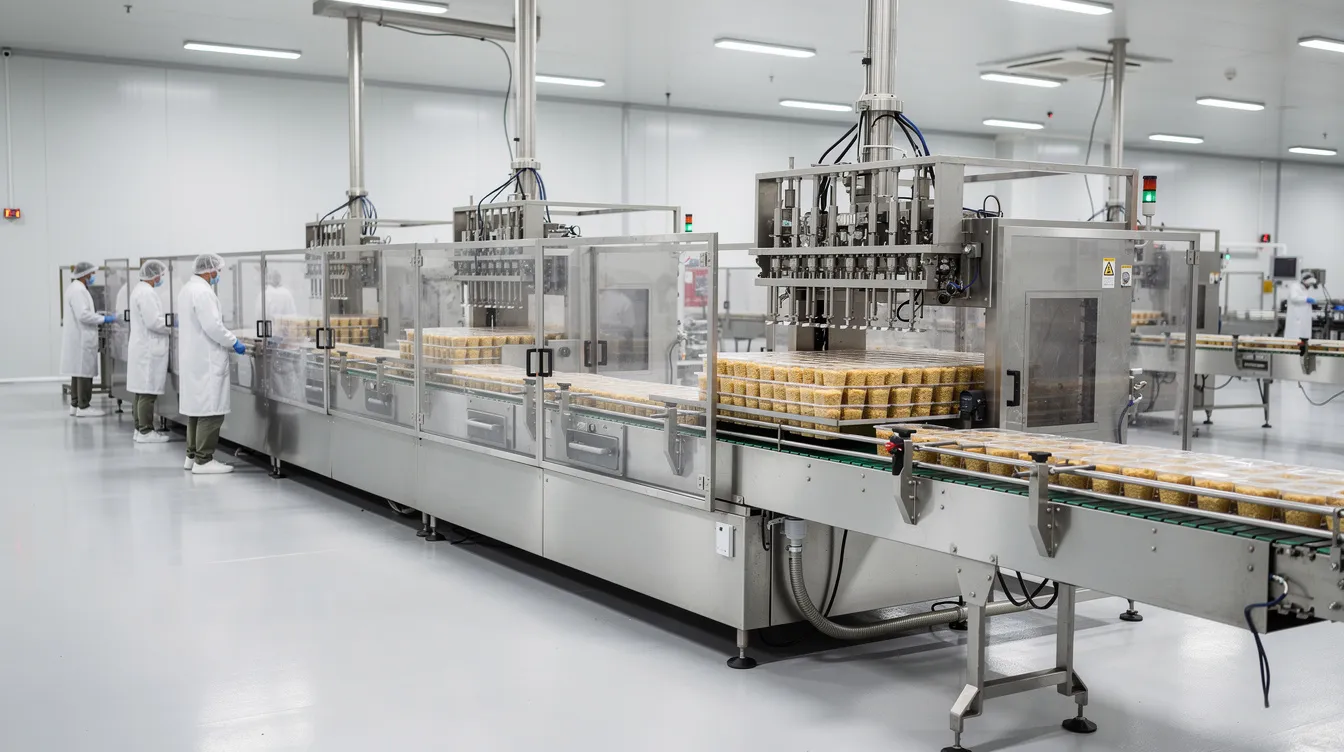
Machinery & Equipment for a Cup Poha Manufacturing Plant
Cup poha plant machinery includes upstream processing equipment plus an integrated instant poha cup packing machine line.
| Equipment | Function |
|---|---|
| Cleaning and destoning machine | Remove stones, dust, foreign matter |
| Grader | Separate flake sizes |
| Roaster / conditioner | Reduce moisture, enhance flavour |
| Ribbon blender / mixer | Uniform seasoning coating |
| Cup denester | Feed empty cups to filling line |
| Volumetric / weigh filler | Accurate poha dosing per cup |
| Sachet dosing unit | Insert seasoning packet |
| Cup sealing machine | Apply lid or film seal |
| Coding machine | Print batch, date details |
| Metal detector & check weigher | Safety and quantity verification |
Semi-automatic setups require manual cup placement, while fully automatic instant poha cup production line systems handle denesting through sealing at high speed. Selection depends on planned cups-per-minute targets and budget. Equipment details are covered in Instant Poha and ready-to-cook rice products machinery and equipment.
Cup Poha Packaging Technology
Commercial instant poha products are packaged in moisture-barrier cups to preserve quality. Packaging must protect against moisture to avoid degradation of poha quality. Cup material options include polypropylene (PP) cups that withstand boiling water contact and paper cups with food-grade inner lining.
Key design aspects: cup rigidity for stacking, headspace for rehydration without overflow, tamper-evident features, and lid or film compatibility. Packaging cost per kg in cup format runs substantially higher than in pouches – a pouch packet of 60 g instant poha might cost ₹3–5 for packaging, while a cup with lid and film can cost ₹15–20 per unit. This directly affects cup poha selling price and the instant poha business model.
For packaging and shelf-life guidance, refer to Instant Poha packaging, shelf life and food safety.
Shelf Life, Quality Control & Food Safety
Moisture control is critical for the shelf life and quality of instant cup poha. Declared shelf life must be supported by formulation, packaging selection and scientific studies. Quality checks include verifying net weight, seal integrity, and moisture levels of final products. Dehydrated vegetables and seasonings are essential components – any residual moisture in these can trigger microbial growth.
Perform both accelerated and real-time shelf-life studies. Maintain retain samples per lot. Products should be stored in a cool, dry place away from direct sunlight. Note that preservatives usage must comply with FSSAI limits.
Plant Capacity, Layout & Utilities
Plan capacity in cups per minute and effective cups per year:
Annual Cups = Rated Cups per Hour × Effective Operating Hours per Day × Operating Days × Capacity Utilisation
(Illustrative formula only – not a universal benchmark.)
Key layout zones include raw-material receiving, processing area, seasoning room, cup-filling zone (high hygiene), QC laboratory and finished-goods warehouse. Utilities requirement covers reliable power, food-grade water, compressed air and appropriate ventilation. Detailed layout guidance is in Instant Poha plant capacity, land, layout and utilities.
Project Cost, Operating Cost & Cost Per Cup
Cup poha manufacturing plant cost in India varies widely by location, capacity and automation level. Major fixed-cost heads: land or lease, building, food-processing machinery, cup filling and sealing line, electrical installation, laboratory setup and pre-operative expenses.
A project report includes financial models and feasibility studies covering all these heads. Feasibility reports assess the viability of business projects, include market analysis and financial projections, and help secure funding from investors or banks.
On a per-cup basis, calculate:
- Manufacturing Cost per Cup = Total Factory Production Cost ÷ Saleable Cups Produced
- Contribution per Cup = Net Realisation per Cup − Variable Cost per Cup
(Illustrative frameworks – actual projections depend on capacity, product mix, machinery and financing structure.)
Variable components include poha, seasoning, cup, lid, sachet, labour, power and secondary cartons. Fixed overheads cover staff salaries, depreciation, interest and admin costs. From a bankability perspective, project reports help businesses meet institutional requirements and assist startups in preparing investor-ready documentation.
Working Capital, Pricing & Business Model
Many cup poha projects underestimate working capital. Printed cup and lid minimum order quantities, finished-goods inventory and distributor receivables create significant capital lock-up. CMA data should separately address raw-material cycle, packaging cycle and receivable cycle. MSME loans can be structured to address both term-loan and working-capital needs.
Cup poha selling price must address manufacturing cost, distributor margin, retailer margin, e-commerce commissions, taxes (GST) and promotional schemes. Per-kg price appears higher than packet instant poha, but consumers evaluate it per breakfast occasion – emphasise convenience and affordability rather than weight alone. Click through to any popular e-commerce platform and you’ll see cup formats command premium positioning; consumers simply add to cart and buy without comparing per-kg price.
Business models include own brand FMCG, contract manufacturing, private label and institutional supply (hotels, hospitals, hostels). An online-first brand via D2C website and marketplaces can touch metro consumers with premium positioning. Each model has different gross-margin, marketing-spend and working-capital implications.
Distribution, Profitability & Bank Finance
Sales channels span general trade, modern trade, e-commerce, quick commerce, railway kiosks and institutional supply. The easy availability of cup poha through multiple channels drives repeat purchase.
In my experience evaluating food-processing projects, instant poha profit margin depends more on capacity utilisation and packaging optimisation than on raw material price alone. Sensitivity analysis on selling price, raw-material cost and utilisation is essential – never rely on a single base-case projection.
Banks typically expect a detailed project report along with CMA data and 5–7 years of financial projections. Key metrics include DSCR, break-even, ROI, IRR and payback period. Lenders also evaluate promoter experience, distribution network and working-capital adequacy. FSSAI certification is crucial for legal compliance in food products. Legal templates ensure adherence to food safety regulations.
For bank-oriented financial modelling, refer to Poha Manufacturing Project Report.
FSSAI, Labelling & Regulatory Compliance
Cup poha requires FSSAI registration or licence, proper product classification under relevant food categories and strict labelling compliance. Label must include: ingredient list, nutritional information per serving and per 100 g, allergen declaration, veg symbol, net quantity, MRP, batch details, date of manufacture, best-before date, storage instructions, preparation instructions and manufacturer address with email and customer-care contact.
Always verify the latest FSSAI notifications – limits and category codes change over time for ready to cook versus ready to eat products. Legal Metrology compliance for weight and MRP declarations is also mandatory. Consider trademark registration for brand protection.
Key Risks & Mitigation
| Risk | Mitigation |
|---|---|
| Seal failure / moisture ingress | Rigorous seal-integrity testing, supplier qualification |
| Inconsistent reconstitution | Lab trials before scale-up, standardised process |
| Low repeat purchase | Focus on taste, pilot launches, consumer feedback |
| High packaging cost inflation | Long-term supplier contracts, alternate materials |
| Under-utilisation of capacity | Conservative initial capacity, phased expansion |
| Slow-moving SKUs | Start with close, proven flavours; read market signals |
Cup Poha vs Pouch Instant Poha
| Parameter | Cup Format | Pouch Format |
|---|---|---|
| Serving control | Single serve, portion-controlled | Multi-serve, consumer-measured |
| Convenience | Eat from cup, no bowl needed | Needs separate bowl |
| Packaging cost per kg | High | Low |
| Travel and portability | High | Moderate |
| Retail shelf visibility | Strong, premium | Standard |
| Freight cost per serving | Higher | Lower |
Neither format is universally superior. Many brands start with pouch instant poha and add a cup line once brand acceptance stabilises.
Who Should Consider This Project?
Cup poha manufacturing suits existing poha and rice-flake processors, snack manufacturers entering the breakfast category, FMCG startups, institutional food suppliers and brands seeking an Indian alternative to cup noodles. Entrepreneurs with distribution networks in regions like Indore, Pune or along popular travel routes can introduce cup poha as an add-on product. Before committing capital, obtain a customised instant poha project feasibility study.
Detailed Project Report & Professional Support from Project Report Bank
As a project-finance and DPR consultant, I can confirm that banks and investors respond far better to a structured, data-backed DPR than to simple cost lists. A professional DPR for cup poha manufacturing includes promoter profile, business concept, market analysis, technical process description, machinery list, capacity planning, itemised project cost, means of finance, projected profitability, cash-flow statements, DSCR, ROI, IRR, break-even and sensitivity analysis – all clearly identified as projections based on stated assumptions.
Project Report Bank prepares instant poha project report templates and fully customised reports including CMA data aligned with bank formats, suitable for MSME loans, term loans and investor presentations. CA Manish Gugliya and the Project Report Bank team provide DPRs, financial projections, feasibility studies and working-capital assessments but do not guarantee loan approvals or certify returns – decisions depend on bank policies and project implementation.
CA Manish Gugliya | www.projectreportbank.com
FAQs – Cup Poha Manufacturing & Instant Poha Business
What is the basic difference between Cup Poha and regular Instant Poha in pouches?
Both use an instant poha mix, but cup poha is a portion-controlled single serve product designed to be eaten directly from the cup after you add hot water. It carries higher packaging cost and typically a higher MRP per kg. Pouches are cheaper per kg but less convenient for on-the-go consumption – the consumer must use a separate bowl.
Can Cup Poha really be prepared only by adding hot water?
Most single serve instant poha cups are formulated for just-add-hot-water preparation. Pour water near boiling temperature, close the lid, wait 3–5 minutes and stir. Some variants may require microwave reheating. Always follow the preparation instructions on the packet for best results.
What minimum capacity should a new entrepreneur consider?
Capacity choice depends on target market and budget. Even small semi-automatic lines can produce a few thousand cups per day. However, better bankability and economies of scale appear at higher throughput levels. This should be determined through a customised feasibility study rather than any fixed thumb rule.
Is it necessary to own a poha mill, or can I buy ready poha mix?
Promoters can either process raw rice flakes in-house or buy ready instant poha mix from reliable suppliers. Buying ready poha mix reduces initial machinery investment but limits control over recipe and margin. Integrated plants need higher capital but offer flexibility and better brand differentiation through proprietary formulations.
How can Project Report Bank help in starting a Cup Poha manufacturing unit?
Project Report Bank, led by CA Manish Gugliya, assists with bankable DPR preparation, detailed financial projections, CMA data, working-capital assessment, DSCR and ROI analysis, and template-based documentation for loan applications – all tailored specifically to the proposed cup poha manufacturing project. Reach out via email through www.projectreportbank.com for further details.