India’s electrical industry is one of the fastest-growing sectors in the economy right now. The electrical industry is evolving due to electrification, renewable energy, automation, and electric vehicles – and entrepreneurs who position themselves correctly stand to benefit enormously. India’s electricity demand is rising due to urbanization, smart city projects, the EV revolution, and massive infrastructure development across residential complexes, highways, and industrial corridors. With the housing sector booming and industrial expansion accelerating, the demand for electrical products continues to outpace supply in several categories.
In my 20+ years of experience as a Chartered Accountant advising MSMEs and manufacturing startups, I’ve seen few windows as promising as 2026 for entering the electrical business in India. In India, the electrical equipment industry is expected to reach $235 billion by 2035, growing from roughly ₹4.42 lakh crore today. Whether you’re considering a manufacturing electrical business, an electrical shop business, a wholesale electrical business, or electrical services, this guide covers the 12 most profitable opportunities – ranked by demand, margins, and practical feasibility.
How We Chose the Best Electrical Business Ideas
Not every electrical business idea deserves your capital and time. Here’s the framework I used to rank these 12 opportunities:
- Investment requirements – accessibility for entrepreneurs at different capital levels (very modest capital to ₹3 crore+)
- Market demand and growth – is the market expanding? Is a readily acceptable market awaiting the product?
- Profit margins and ROI – profit margins for electrical products range from 15% to 35% depending on the category and scale
- Ease of entry – technical skills, certifications, licensing barriers
- Government support – subsidies under PM E-Drive, PLI, Mudra Loan, CGTMSE, state MSME schemes
- Export opportunities – India’s electrical equipment exports are growing to multiple regions including Africa and Southeast Asia
- Competition and saturation – whether a readily acceptable market awaits or whether established brands dominate
Each idea below includes investment estimates, strengths, limitations, and who it’s best suited for – so you can match your own business plan to the right opportunity.
Table of Contents
Top 12 Electrical Business Ideas for Indian Entrepreneurs
1. LED Bulb Manufacturing
LED bulb manufacturing is a proven, high-demand manufacturing business with strong government tailwinds. The UJALA scheme alone has distributed over 360 million LED bulbs, and demand continues rising from smart cities, real estate, and commercial construction projects.
Why It Stands Out: Government push to improve energy efficiency, massive replacement demand (CFL/incandescent to LED), and viable export potential.
Best For: Entrepreneurs with ₹15-30 lakh investment capacity and basic technical knowledge of printed circuit boards and driver circuits.
Key Strengths:
- Gross margins of 30-40% at medium scale; net margins of 10-15%
- Semi-automatic setup possible from ₹5-10 lakh; fully automated from ₹18-25 lakh
- ROI achievable within 12-18 months at sustained volumes
- Raw material cost per 9W bulb: ₹18-35
Possible Limitations: BIS IS 16102 certification is mandatory (3-6 months processing). Competition from established brands and imports is significant. Energy-efficient retrofitting helps meet new energy codes and reduces consumption, which keeps demand strong, but you’ll need competitive pricing to win shelf space.
If you’re serious about this, a detailed LED bulb project report is essential for bank loan approval.
2. Electrical Wholesale Trading
An electrical store or wholesale business is the fastest path into the electrical industry without manufacturing complexity. You stock and distribute electrical switches, cables, socket plugs electrical switches, fans, lighting, and accessories to retailers and contractors.
Why It Stands Out: Lower investment than manufacturing, steady demand, relationship-based retail business model.
Best For: Entrepreneurs with strong networking skills and ₹5-15 lakh working capital. Initial investment for an electrical shop ranges from ₹3 to ₹20 lakh depending on location and inventory depth. Choose a prime location based on accessibility and demand.
Key Strengths:
- Quick setup, diverse product portfolio, stable cash flow
- Margins of 10-20% on accessories; higher on specialty products
- Minimal licensing – GST, Shop Establishment, Udyam Registration
- You can attract customers through competitive pricing and reliable delivery
Possible Limitations: Working capital intensive. Price competition from online platforms. Dependence on supplier relationships and local market dynamics.
3. Solar Panel Assembly and Installation
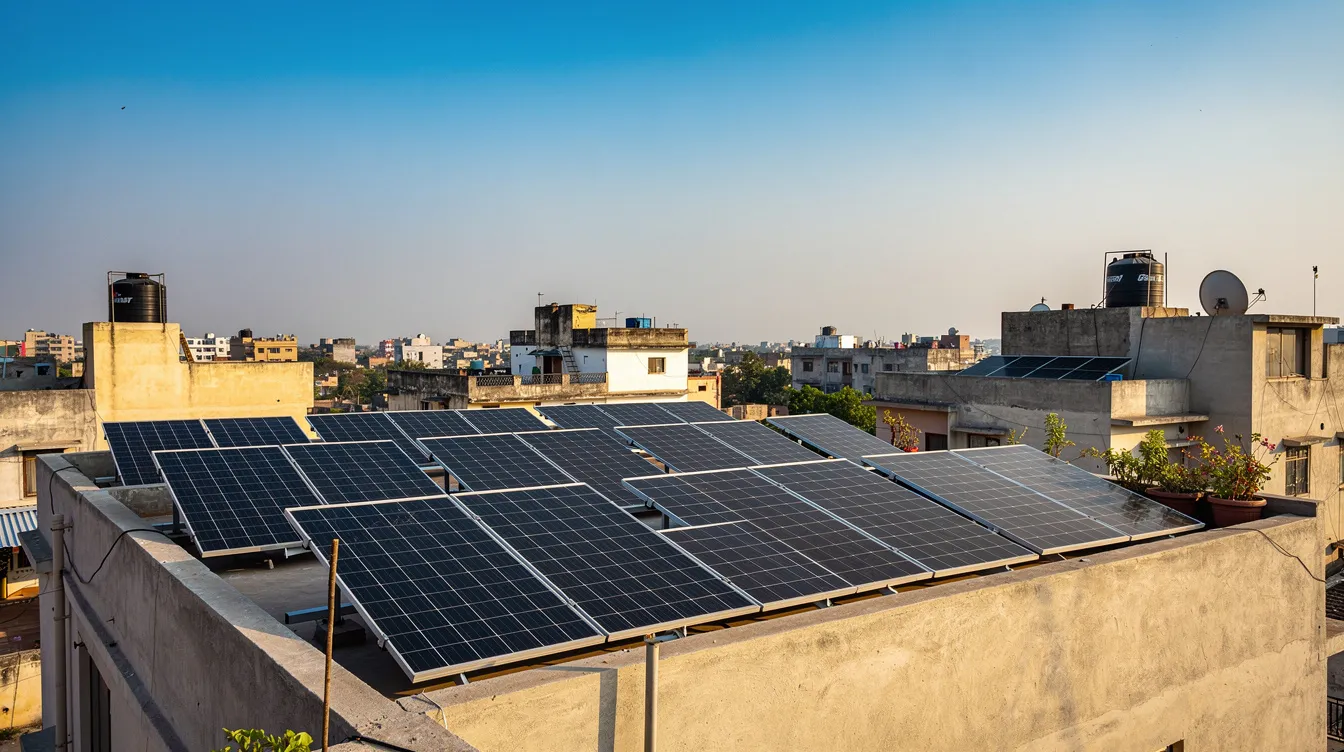
India’s renewable energy targets are boosting solar component demand significantly. With non-fossil sources now accounting for over 52% of India’s installed power capacity, the solar sector offers both assembly and service revenue streams. Manufacturing of solar cables is also a promising startup opportunity within this space.
Why It Stands Out: Government subsidies, environmental trends, long-term maintenance contracts. Businesses are increasingly seeking sustainable electrical products and solutions.
Best For: Technically skilled entrepreneurs with ₹10-25 lakh investment capacity.
Key Strengths:
- Recurring revenue can be built through maintenance contracts in the electrical sector
- Renewable energy maintenance involves servicing solar and wind energy systems
- Growing rooftop solar adoption with net metering policies improving
- Export potential for solar lighting products
Possible Limitations: Import dependency for panels/cells. Technical expertise required. Weather-dependent installation schedules.
For financial projections and bank documentation, check this solar light assembling project report.
4. Electrical Repair and Maintenance Services
Repair services remain one of the most accessible small business ideas in the electrical sector. Predictive maintenance reduces electricity waste by monitoring industrial power consumption, and this concept is gaining traction even with smaller enterprises.
Why It Stands Out: Minimal investment, immediate cash flow, recurring customers through AMC contracts. Energy management includes providing audits to reduce power consumption – a service you can upsell.
Best For: Skilled electricians and technicians with ₹1-5 lakh startup capital.
Key Strengths:
- Low barriers to entry; start with very modest capital
- Local market focus with scalable workforce
- Industrial AMC contracts provide steady income
- Also covers electronic equipment and electronic devices servicing
Possible Limitations: Finding skilled technicians. Seasonal demand fluctuations. Limited scalability beyond local market without building a team.
A structured electronic repair project report helps if you’re applying for a Mudra Loan.
5. Ceiling Fan Manufacturing
Electric motors drive pumps, fans, and manufacturing machinery – and ceiling fans remain one of India’s most consumed electrical products. The market is large, demand is consistent, and there’s room for brand building with energy-efficient BLDC models.
Why It Stands Out: Consistent demand, seasonal peaks, and brand development potential in both economy and premium segments.
Best For: Entrepreneurs with ₹25-50 lakh investment and manufacturing experience.
Key Strengths:
- Large domestic market with export opportunities
- Brand development potential through design and efficiency
- Cooling systems demand remains steady across India’s climate zones
Possible Limitations: Quality control is critical. High initial investment for tooling and motor winding. Established competition from major brands.
Get a comprehensive electric fan manufacturing project report for detailed machinery and cost breakdowns.
6. EV Charging Equipment Assembly
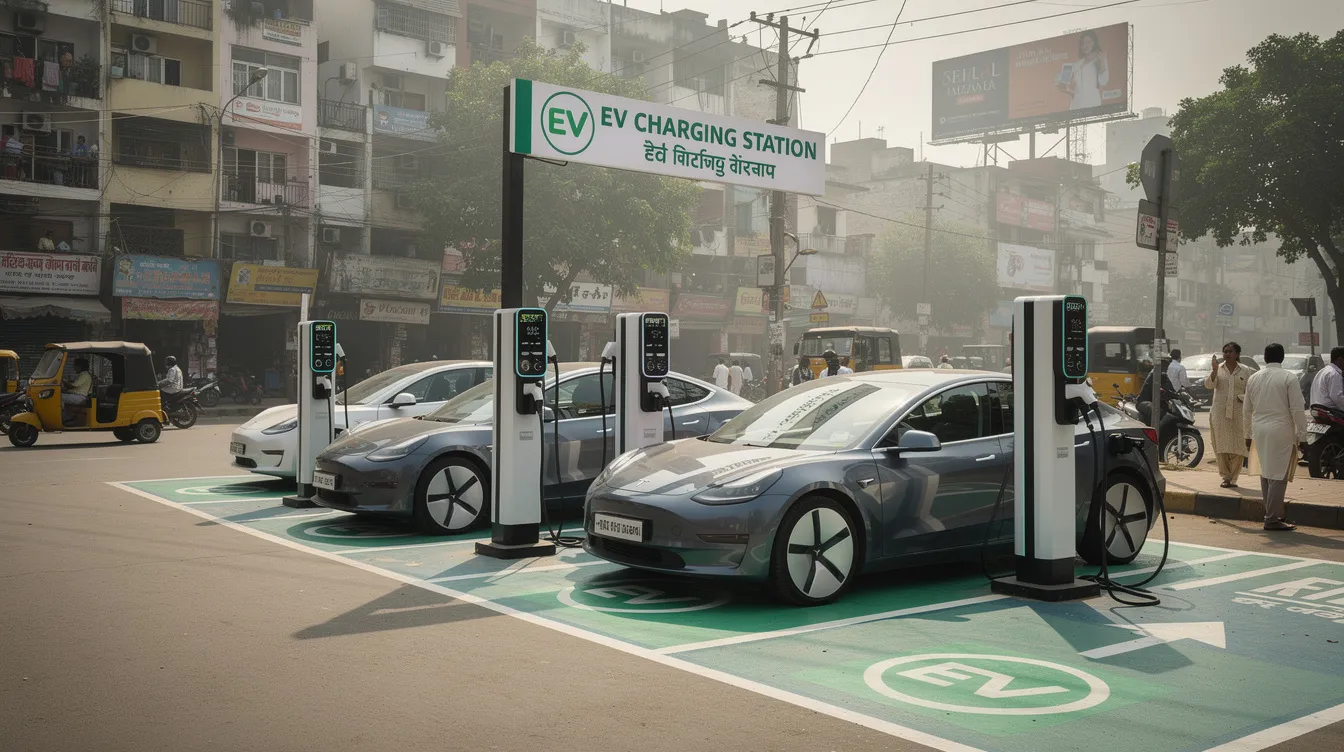
The market for EV charging infrastructure is rapidly expanding due to growing electric vehicle adoption. Electric vehicle growth is driving demand for charging infrastructure, charging cables, and charging components across India. There is high demand for residential and commercial EV charging station installation.
Why It Stands Out: Under PM E-Drive, up to 100% subsidy is available for upstream infrastructure and EVSE costs at government and public locations. Manufacturing chargers and related accessories is a future-focused electronics business.
Best For: Tech-savvy entrepreneurs with ₹20-40 lakh investment capacity.
Key Strengths:
- Government incentives totalling ₹10,900 crore under PM E-Drive
- Electric vehicle growth increases demand for charging cables and components
- Technology-driven with export potential
Possible Limitations: Evolving technology standards. Payback periods of 5-7 years for charging stations without subsidies. Regulatory changes possible.
Explore the electric vehicle spare parts project report for related component manufacturing.
7. Electrical Control Panel Manufacturing
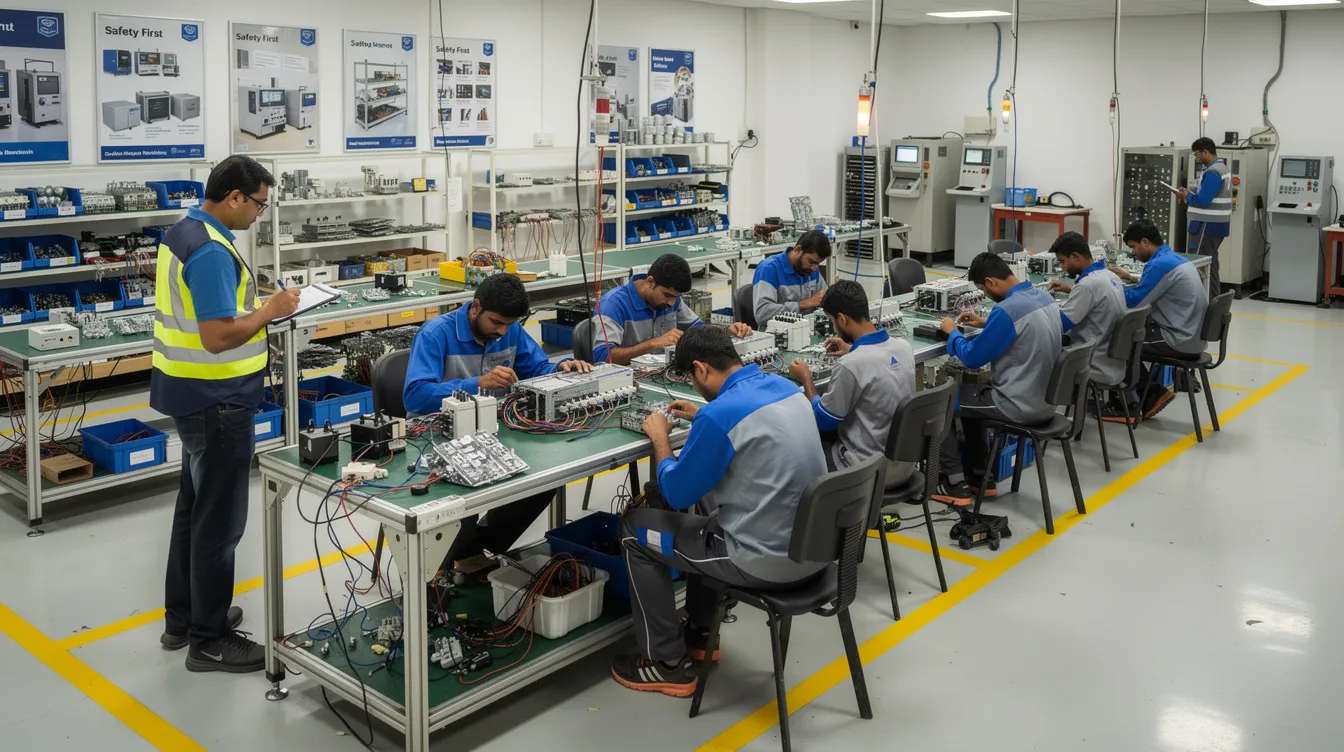
Electrical panels installed in factories, commercial buildings, and power distribution networks represent a high-margin industrial category. Industrial automation is driven by the need for productivity improvements, and control panels are at the heart of every automated system.
Why It Stands Out: Customization opportunities, technical expertise creates barriers for competitors, and long-term contracts with industrial clients. This business serves the analog electronics to digital control spectrum.
Best For: Electrical engineers with industrial experience and ₹15-35 lakh investment.
Key Strengths:
- Custom electrical control panel manufacturing commands premium margins
- Long-term industrial contracts and AMCs
- Commercial and residential sectors are increasingly adopting smart technologies
Possible Limitations: Complex production process. Long industrial sales cycles. Requires skilled workforce familiar with electrical circuit design and safety standards.
8. Cable and Wire Manufacturing
Massive cable requirements exist for infrastructure and renewable energy facilities. India’s cable and wire segment needs 4x capacity growth by 2035 to meet domestic and export demand. India’s demand for transformers and cables is rising sharply, and India’s electrical equipment exports are increasing to Africa and Southeast Asia.
Why It Stands Out: Infrastructure boom demand, diverse applications from power transmission to solar installations, bulk sales potential.
Best For: Entrepreneurs with ₹50 lakh+ investment and manufacturing background.
Key Strengths:
- 10-15% CAGR growth forecasted in wires and cables
- Essential product for every construction project and manufacturing unit
- Export opportunities growing steadily
Possible Limitations: High capital requirement. Raw material price volatility (copper, aluminum). Established competition from major relays and cable brands.
9. Switch and Socket Manufacturing
The housing boom is directly fueling demand for modular switches, designer sockets, and smart electrical switches. Every new residential complex, commercial building, and renovation project needs these products.
Why It Stands Out: Replacement market is perpetual. Design differentiation creates brand loyalty.
Best For: Entrepreneurs with ₹20-40 lakh investment and design focus.
Key Strengths:
- Construction sector demand is strong and growing
- Design innovation scope – from basic to smart switches
- Stable market with both small scale and medium scale opportunities
Possible Limitations: Design copying risks. Quality consistency is critical. Distribution challenges against established brands.
10. Electrical Installation Contracting
Electrical contracting is a service-based business that scales through workforce and project management. Surge protection devices secure the operation of electrical networks, and contractors who understand modern safety standards earn premium rates.
Best For: Experienced electricians with ₹3-10 lakh working capital.
Key Strengths:
- Project diversity across residential, commercial, and industrial segments
- Scalable through hiring; relationship-based recurring clients
- Electricity theft prevention involves advanced metering systems and surveillance technology – a growing service niche
Possible Limitations: Project dependency. Seasonal variations. Workforce management challenges.
11. Transformer Manufacturing
Distribution transformers are essential for urban power grids, and India’s infrastructure push means demand is surging. Designing resilient transmission infrastructure that can withstand extreme weather is crucial, making quality transformers a priority purchase.
Best For: Engineers with ₹1-3 crore investment and power sector experience.
Key Strengths:
- Government demand through rural electrification and grid modernization
- Technical expertise barrier limits competition – this is a lucrative business for those who qualify
- Large order values and export potential
Possible Limitations: Very high investment. Long sales cycles. Regulatory approvals and testing certifications.
12. Home Automation Systems
Smart home automation includes automated controls for lighting and security systems. This premium segment serves urban consumers willing to pay for IoT-enabled convenience. Installing smart panels helps integrate energy-efficient technologies into homes.
Best For: Tech entrepreneurs with ₹10-25 lakh investment and IoT knowledge.
Key Strengths:
- Premium pricing and technology differentiation
- Urban demand growing with mobile phones and smart device penetration
- Scope for green consulting and energy management services
- Electronic remote controlled toys and smart devices share similar component supply chains
Possible Limitations: Niche market currently. Technology obsolescence risk. Customer education needed. Cathode ray tube production and cathode ray tube technologies are obsolete – a cathode ray tube utilizes a fragile evacuated glass envelope with thick lead glass, and most x ray emissions concerns have shifted focus toward LED and digital displays. Even fax machines and similar analog electronics are being replaced. The electronics sector now favors modern electronic components over legacy systems like capacitor production capacitors and voltage stabilizers, though manufacturing capacitors still serves specific industrial niches.
Quick Comparison of Top Electrical Business Ideas
| Business | Investment | Skill Level | Profit Margin | Demand | Best For |
|---|---|---|---|---|---|
| LED Manufacturing | ₹15-30L | Medium | 15-25% | High | Proven market demand |
| Electrical Trading | ₹5-15L | Low | 10-20% | Steady | Relationship builders |
| Solar Assembly | ₹10-25L | Medium | 15-30% | High demand | Renewable energy focus |
| Repair Services | ₹1-5L | Medium | 20-35% | Steady | Low-investment start |
| Fan Manufacturing | ₹25-50L | High | 15-25% | High | Brand builders |
| EV Charging | ₹20-40L | High | 15-25% | Growing | Future-focused tech |
| Control Panels | ₹15-35L | High | 20-35% | Steady | Industrial specialists |
| Cable Manufacturing | ₹50L+ | High | 10-20% | High | Infrastructure players |
| Switch Manufacturing | ₹20-40L | Medium | 15-25% | Steady | Design-focused |
| Contracting | ₹3-10L | Medium | 15-25% | Steady | Project managers |
| Transformers | ₹1-3Cr | Very High | 15-25% | High | Power sector investors |
| Home Automation | ₹10-25L | High | 25-35% | Growing | Premium tech market |
How to Choose the Right Electrical Business for You
Choose Based on Investment Capacity
- Low investment (₹1-10 lakh): Repair services, electrical contracting, small electrical shop, trading. Start your own business with modest capital and grow from cash flow.
- Medium investment (₹10-50 lakh): LED manufacturing, solar assembly, control panels, switch manufacturing. These offer the best balance of margins and scalability.
- High investment (₹50 lakh+): Cable manufacturing, transformer manufacturing, generator manufacturing business, large-scale production with export orientation.
Choose Based on Technical Skills
Electrical engineers naturally gravitate toward manufacturing and control panels. If you lack technical depth, trading and retail business models work well. Service businesses require hands-on skills but minimal formal qualifications. Market research helps identify your target audience and competition – never skip this step regardless of the business type you choose.
Choose Based on Market Focus
Consider whether you want to serve a local market (repair, contracting, retail shop), national market (manufacturing, wholesale business), or export markets. Seasonal vs. steady demand matters too – fans peak in summer while LED and cables sell year-round. Medical devices and specialized electronic equipment serve niche markets with higher margins but require additional certifications.
Which Electrical Business Is Best for You?
- Choose LED Manufacturing if you want proven market demand with moderate investment – a readily acceptable market awaits
- Choose Electrical Trading if you excel at building relationships and managing working capital
- Choose Solar Business if you’re passionate about renewable energy and want market trends working in your favor
- Choose Repair Services if you’re skilled and want immediate income on small scale
- Choose Manufacturing (fans, cables, switches) if you have substantial capital and want to build a brand that successful entrepreneurs are known for
- Choose Contracting if you have project management skills and industry connections – more business ideas open up as you grow
Final Thoughts
India’s electrical industry presents genuine opportunities across every investment level. Whether you’re starting with ₹2 lakh for a repair shop or ₹3 crore for a transformer plant, the fundamentals are strong – the business is feasible in nearly every sub-segment if you execute well. Obtain necessary permits and licenses to operate legally. Insurance is essential to protect your electrical business from unforeseen risks.
In my experience preparing project reports for hundreds of manufacturing and service businesses across India, the entrepreneurs who succeed are those who match their capital, skills, and market conditions to the right model. They conduct thorough market research, prepare solid financial projections, and don’t underestimate working capital needs. Online reviews and word-of-mouth still drive most business in this sector.
The biggest mistake I see? Entrepreneurs choosing a product without understanding whether their local market can absorb it, or ignoring certifications that delay their launch by months.
A professionally prepared project report – covering CMA data, break-even analysis, machinery estimation, and profit projections – isn’t optional if you’re seeking bank financing. It’s the difference between loan approval and rejection.
We Can Help You Turn Your Business Idea into Reality
If you’re planning to start an electrical manufacturing, assembly, trading, or service business, our team at ProjectReportBank.com can assist you with:
- Customized Project Reports for bank loans, Mudra Loan, CGTMSE, Stand-Up India, and term loans
- Detailed Financial Projections & CMA Reports that meet bank requirements
- Professional Pitch Decks for startups seeking investment from angel investors or financial institutions
- Business Valuation Services for fundraising, mergers, and strategic planning
- Manufacturing Business Consultancy – project feasibility, cost estimation, machinery planning, profitability analysis, and compliance guidance
Whether you need a bankable project report for an LED unit or a complete feasibility study for a cable manufacturing plant, we prepare documentation that banks and investors trust.
About the Author
CA Manish Gugliya is a Chartered Accountant with more than 20 years of experience in project finance, manufacturing consultancy, startup advisory, MSME funding, business planning, and financial feasibility studies. He has assisted entrepreneurs across India in preparing bankable project reports, CMA data, financial projections, and investor-ready business documents for manufacturing, trading, and service businesses.
Which electrical business is the most profitable in India?
LED bulb manufacturing, electrical wire and cable manufacturing, ceiling fan manufacturing, EV spare parts, CCTV camera assembly, and solar lighting products are among the most profitable electrical businesses in India due to rising demand from residential, commercial, and industrial sectors.
Can I start an electrical business with a low investment?
Yes. Several electrical businesses, such as LED bulb assembly, electronic repair services, electrical retail shops, CCTV installation, and solar light assembling, can be started with a relatively low investment, depending on the scale of operations.
Which electrical manufacturing business has the highest demand in 2026?
High-demand electrical manufacturing businesses include LED lighting products, electric fans, electrical switches and sockets, EV components, solar lighting products, smart electrical devices, and electrical control panels.
What licenses are required to start an electrical manufacturing business in India?
Depending on the business type, you may need GST registration, Udyam Registration, Factory License, Shop & Establishment Registration, BIS certification (for applicable products), Pollution Control Board approval, IEC for exports, and Trademark registration.
Can I get a Mudra Loan for an electrical business?
Yes. Small electrical manufacturing, assembly, repair, trading, and service businesses may be eligible for a Mudra Loan, subject to the lender’s eligibility criteria, project viability, and documentation requirements.
How much investment is required to start an electrical manufacturing business?
The investment depends on the product and production capacity. Small assembly units may start with a few lakh rupees, while medium and large manufacturing plants may require significantly higher investments for machinery, infrastructure, and working capital.
Is BIS certification mandatory for electrical products?
Many electrical products sold in India require BIS certification under applicable quality and safety standards. Entrepreneurs should verify the latest regulatory requirements before commencing production or sales.
Which electrical business is best for beginners?
LED bulb assembly, electrical retail stores, electronic repair services, solar light assembly, CCTV installation, and electrical accessories trading are suitable options for first-time entrepreneurs due to comparatively lower investment and operational complexity.
How profitable is an electrical business in India?
Profitability varies depending on the product, pricing strategy, production efficiency, market demand, and operating costs. Businesses offering quality products, effective distribution, and strong after-sales service generally achieve better profit margins.
Why is a project report important for an electrical business?
A professionally prepared project report helps entrepreneurs estimate project costs, machinery requirements, working capital, financial projections, profitability, and break-even analysis. It is also an essential document for obtaining bank loans, Mudra Loans, MSME financing, and investor funding.
Which electrical products have strong export potential from India?
Products such as LED lighting, electrical cables, industrial electrical components, smart switches, solar products, EV components, and electrical accessories have growing export opportunities due to increasing global demand.
How can CA Manish Gugliya help in starting an electrical business?
CA Manish Gugliya provides customized project reports, CMA reports, financial projections, bank loan documentation, startup pitch decks, business valuation services, and business consultancy to help entrepreneurs successfully establish and expand electrical manufacturing, trading, and service businesses.
- Multi Feedstock Ethanol Distillery Project Report – DPR, Plant Setup, Cost & Feasibility


- Broken Rice & Damaged Foodgrain Ethanol Plant Project Report & DPR in India – Setup Cost, Machinery, Profitability & Feasibility

- Maize-Based Ethanol Plant Project Report & DPR in India

- Grain Storage, Silos & Logistics Projects – Project Report & DPR in India

- Steel Grain Silos vs Conventional Grain Warehouses – Cost & Viability in India

- Grain Warehouse Revenue Model, Rental Income & Profitability in India

- WDRA Warehouse Registration, e-NWR & Compliance Requirements in India

- Grain Warehouse & Silo Subsidy, Bank Loan & Government Schemes in India

- FCI Grain Silo PPP Projects – DBFOO, DBFOT & Investment Models in India

- Scientific Grain Storage in India – Aeration, Moisture Control & Fumigation

- Grain Silo ROI, IRR, Payback & Sensitivity Analysis in India

- Grain Storage & Silo Project Feasibility Study in India – Technical, Financial & Commercial Viability

- Grain Storage Financial Projections, Working Capital & DSCR in India – Complete Bank Finance Guide

- Grain Storage Project Cost & Means of Finance in India

- Grain Storage Warehouse Land, Building & Plant Layout Requirements in India