India’s biofuel sector has entered a phase where capacity addition is outpacing the ability of many promoters to evaluate whether their individual projects are financially sustainable. This article presents a banker-ready perspective on preparing a maize based ethanol plant project report in India as of October 2026, covering capital investment, feedstock economics, revenue structure, risk analysis and the role of a professionally prepared detailed project report in investment decision-making.
Key Takeaways
A maize based ethanol plant project report is not a formality-it is the central document that determines whether a capital-intensive grain based ethanol project should proceed.
- Maize based ethanol plants are capital-intensive projects where feedstock procurement cost, offtake security and realistic capacity utilisation matter more than nameplate plant size. A 100 KLPD plant operating at 65% utilisation can underperform a well-managed 60 KLPD unit running at 90%.
- A professional detailed project report with robust financial projections, DSCR analysis and multi-scenario sensitivity testing is essential before committing to any plant in the 30–200 KLPD range.
- Government support through the ethanol blending programme and E20 mandate creates demand, but does not guarantee profitability for individual projects. Maize price volatility, DDGS realisation and working capital management are critical risks that must be addressed in the DPR.
- Project Report Bank, led by CA Manish Gugliya (FCA, DISA, 20+ years’ experience), prepares customised maize ethanol DPRs, project feasibility studies and bank finance documentation for promoters across India.
Introduction: Maize-Based Ethanol Manufacturing Opportunities in India
India achieved its target of 20% ethanol blending in petrol ahead of schedule during Ethanol Supply Year 2025-26, according to the Press Information Bureau. This milestone has validated the growing demand for fuel-grade ethanol produced from both sugarcane and grain based feedstocks. The government has approved 196 grain based projects for an aggregate capacity of 8.59 billion litres of ethanol annually, sign-posting the scale of planned expansion in this sector.
The global ethanol market was valued at USD 109 billion in 2022, with ethanol demand expected to grow at a CAGR of 4.8% until 2032. Within this, countries like Brazil and the United States lead production-the U.S. alone holds over 18.6% of the North American ethanol market share. India’s trajectory, while distinct, reflects a similar policy-driven push towards renewable fuel alternatives and sustainability.
Ethanol production from maize supports rural economic growth and job creation across maize-growing regions. Ethanol from maize can significantly reduce greenhouse gas emissions-some estimates suggest CO2 emission reductions of up to 90% compared to fossil fuels, depending on lifecycle methodology. These benefits contribute to the policy rationale, but individual project economics require separate, rigorous analysis.
A maize based ethanol plant project report serves as the core decision document for entrepreneurs, lenders and investors. It is distinct from vendor quotations or generic templates. A properly prepared DPR helps in securing regulatory approvals and funding by presenting defensible assumptions, realistic financial projections and a transparent risk assessment.
While the sector enjoys strong government support through administered procurement prices and blending mandates, actual profitability remains project-specific. It depends on maize procurement strategy, plant technology, ethanol realisation, debt structure and the promoter’s ability to manage working capital efficiently. The future outlook is encouraging at a macro level, but individual projects must be evaluated on their own merits.
What Is a Maize-Based Ethanol Plant?
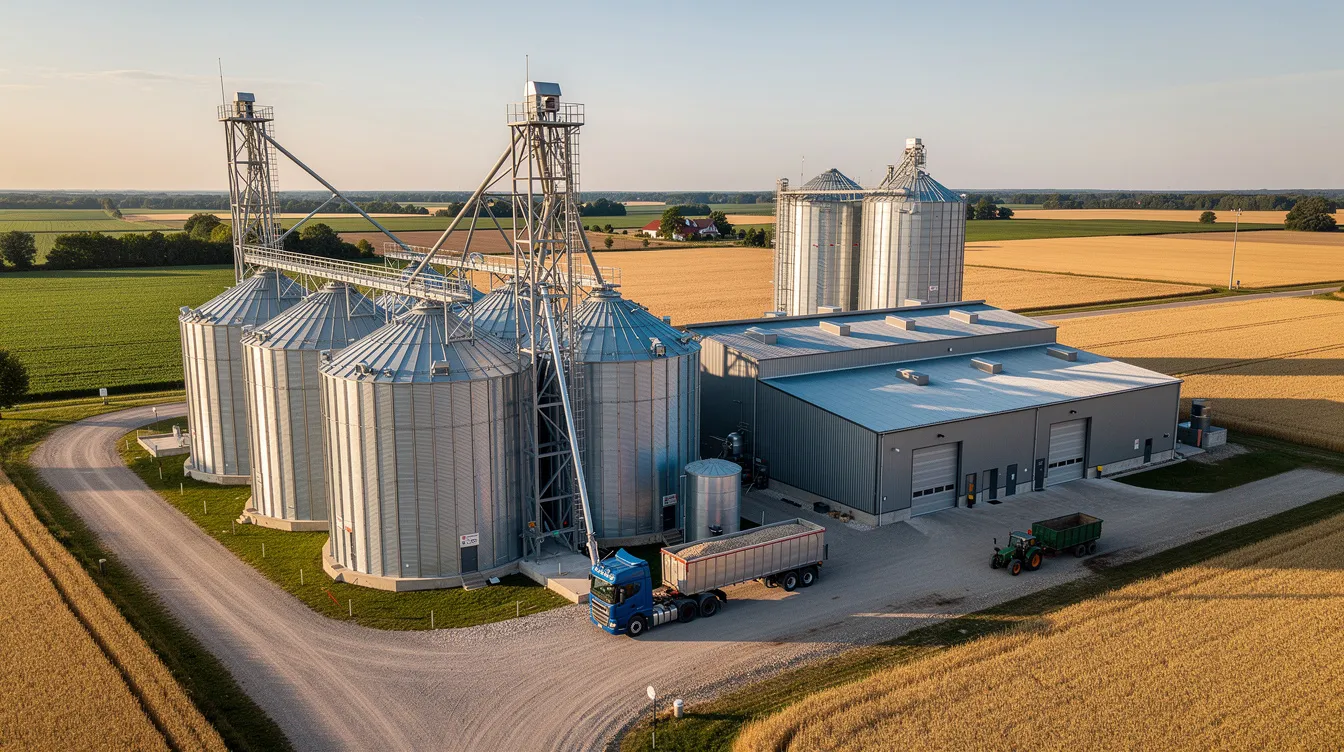
A maize based ethanol plant is a grain based distillery that uses maize (corn) as its primary feedstock to produce fuel-grade ethanol. The core process converts maize starch into fermentable sugars through liquefaction and saccharification, which are then fermented using yeast to produce ethanol. The ethanol is subsequently distilled and dehydrated to produce anhydrous fuel-grade ethanol suitable for blending with petrol.
Maize contains 65–72% starch, making it one of the most efficient grain feedstocks for ethanol manufacturing. Unlike sugarcane molasses-based distilleries, grain based ethanol plants generate DDGS (Dried Distillers Grains with Solubles) as a significant by-product with market potential for animal feed. Maize also requires less water than sugarcane for cultivation, which enhances sustainability credentials in water-stressed regions.
Maize is cultivated across multiple Indian states-Madhya Pradesh, Karnataka, Andhra Pradesh, Rajasthan, Bihar-reducing supply risk through geographic diversification. When comparing alternative feedstocks, promoters should note:
- Wheat and barley offer reasonable starch content but are subject to food security restrictions and higher MSP levels
- Broken rice has been widely used but faces periodic policy constraints on diversion from food distribution
- Sorghum remains a niche feedstock with limited commercial-scale ethanol production experience in India
- Maize offers a balance of starch content, availability, policy support and conversion efficiency
Maize-Based Ethanol Plant Capacity Planning
Capacity selection is a strategic decision influenced by maize catchment size, offtake visibility, capital availability and promoter risk appetite. KLPD (kilo litres per day) represents the daily ethanol production capacity. A DPR must assume realistic operating days per year-typically 320–330 days-for annual production estimates, with allowance for maintenance shutdowns.
| Capacity | Daily Ethanol Output | Annual Ethanol (at 330 days) | Approx. Daily Maize Requirement | Key Investment Considerations |
|---|---|---|---|---|
| 30 KLPD | 30,000 litres | ~99 lakh litres | 45–55 tonnes | Higher per-litre cost; limited economies of scale; simpler regulatory pathway |
| 60 KLPD | 60,000 litres | ~198 lakh litres | 90–110 tonnes | Moderate scale; ZLD and utility costs become significant |
| 100 KLPD | 1,00,000 litres | ~330 lakh litres | 150–180 tonnes | Requires strong maize procurement network and firm offtake |
| 200 KLPD | 2,00,000 litres | ~660 lakh litres | 280–300 tonnes | Large silos, bulk dispatch, high working capital; greater exposure to feedstock volatility |
Larger plants benefit from economies of scale in boilers, dryers and utilities. However, under-utilisation at 60–70% capacity can materially damage DSCR, ROI and IRR despite technically sound ethanol production. The DPR should include scenario-based capacity utilisation planning-ramp-up year at perhaps 50–70%, stabilisation, then steady state-rather than assuming full utilisation from commissioning.
Maize-Based Ethanol Plant Setup Cost in India
The distinction between fixed capital expenditure and total project cost is important. Fixed capital covers plant and machinery, civil works, utilities and environmental infrastructure. Total project cost adds interest during construction, pre-operative expenses and initial working capital margin.
Total capital investment for a 120 KL/day grain based ethanol plant has been estimated at approximately ₹260.26 crore in one published DPR example by EIRI India. This included land and building at ~₹59.98 crore, machinery at ~₹157.56 crore, and working capital margin of ~₹27.72 crore.
| Cost Head | Approximate Share of Fixed Capital |
|---|---|
| Process plant and machinery (fermentation, distillation, dehydration) | 40–55% |
| Civil works, buildings and infrastructure | 15–20% |
| Boiler, power and utility systems | 10–15% |
| Effluent treatment and ZLD | 8–12% |
| DDGS processing and drying | 6–10% |
| Land and site development | 8–15% |
| Pre-operative, contingency, IDC | 5–10% |
Banks closely scrutinise pre-operative expenses, interest during construction and contingency estimates for reasonableness. Total funding requirement equals fixed assets plus capitalised costs plus margin for working capital, and the means of finance must align with lender norms for debt-equity ratio. At Project Report Bank, project cost estimates are built from quotations, vendor discussions and location-specific assumptions rather than generic thumb rules.
Maize Ethanol Manufacturing Process and Technology Route
The manufacturing process follows a well-established route for grain based ethanol production:
Maize → Cleaning & Milling → Slurry Preparation & Liquefaction → Saccharification → Fermentation → Distillation → Dehydration → Ethanol Storage & Dispatch + DDGS Drying & Packing + Effluent Treatment
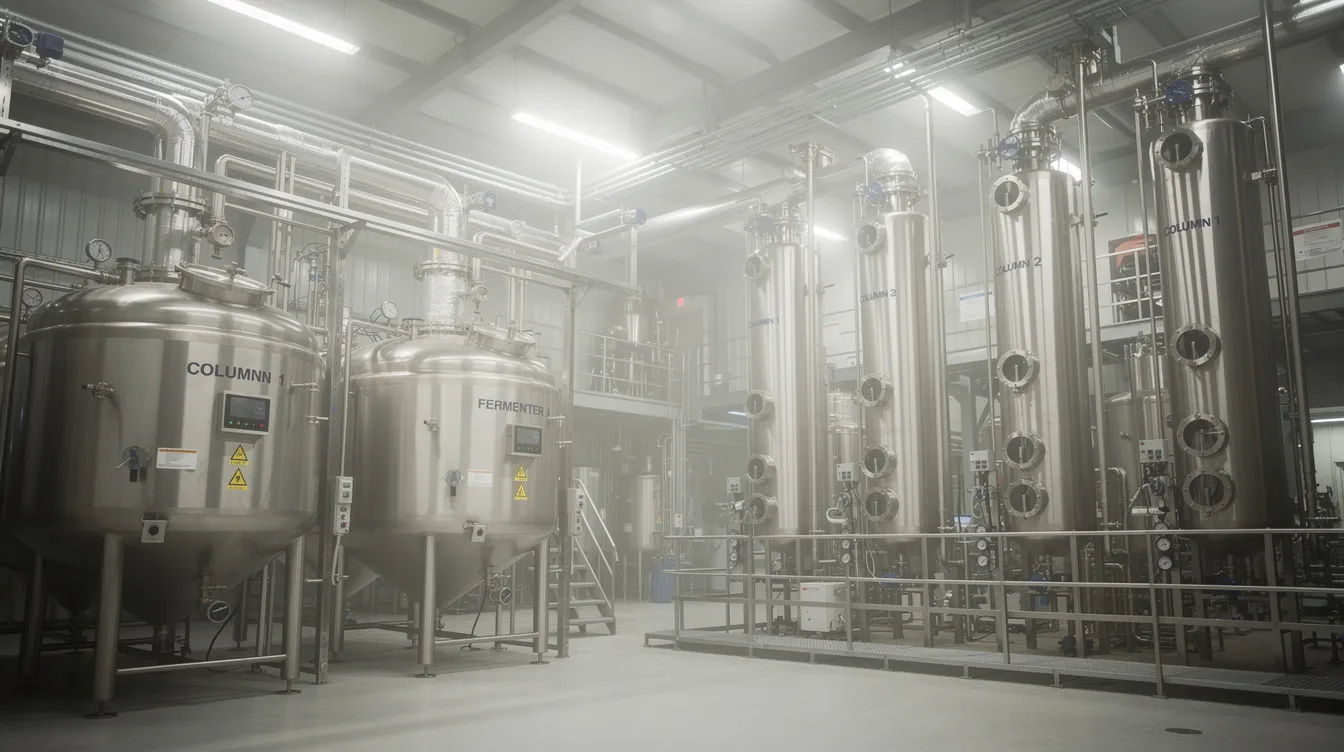
The milling process can be dry or wet grind, with dry milling being predominant in Indian fuel ethanol plants due to lower capital costs and simpler operation. After milling, maize flour is mixed with water to form slurry. During liquefaction, heat-stable alpha-amylase enzymes break down starch into dextrins. Saccharification converts these dextrins into fermentable sugars using glucoamylase enzymes.
Yeast fermentation converts sugars into ethanol and carbon dioxide over 48–72 hours under controlled temperature and contamination management. The fermented wash is then distilled to concentrate ethanol, and dehydration through molecular sieve technology produces anhydrous ethanol at approximately 99.9% purity-the fuel-grade specification required by oil marketing companies.
The stillage remaining after distillation is processed into DDGS through centrifugation and drying. DDGS drying is energy-intensive and often a bottleneck. Spent wash management through zero liquid discharge systems is mandatory under environmental norms.
Maize Requirement, Ethanol Yield and Raw Material Economics
One bushel of maize produces approximately 2.86 gallons of ethanol. In metric terms, typical Indian maize with good starch content yields approximately 430–440 litres of ethanol per tonne, with DDGS recovery at around 30–33% by weight of grain used, according to USDA Grain and Feed Annual reports.
For a 100 KLPD plant operating 330 days per year, this implies daily maize consumption of approximately 150–180 tonnes, annual ethanol output of around 330 lakh litres, and DDGS production of roughly 10,000–12,000 tonnes per year. Process losses from liquefaction inefficiencies, residual starch and fermentation inefficiency may reduce yields by 5–7% from theoretical maximums.
Feedstock availability analysis must include local maize production and seasonal availability. Maize based ethanol production is supported by India’s Minimum Support Price system, but spot prices have been volatile-ranging between ₹21,300–₹24,500 per tonne in early 2025-driven by rising ethanol sector demand. Raw material cost, including maize, enzymes, chemicals and yeast, typically accounts for 60–75% of total operating costs, making ethanol production’s financial viability highly sensitive to raw material price fluctuations.
A professional DPR should include sensitivity analysis for maize price increases of +5%, +10% and +15%, and their impact on project IRR, equity IRR and payback period.
Machinery, Equipment and Utility Requirements
Major equipment groups include grain handling and milling systems, mash preparation and liquefaction tanks, saccharification and fermentation tanks, distillation columns, molecular sieve dehydration units, DDGS dryers, boilers, cooling towers and ethanol storage tanks. Promoters should evaluate suppliers based on proven references for similar capacity, guaranteed ethanol yield per tonne, steam and power consumption norms, automation level and after-sales service availability.
Steam demand for distillation and DDGS drying is the largest energy cost driver. Power consumption covers motors, pumps and instrumentation. Water consumption typically ranges from 3–6 litres per litre of ethanol produced, depending on process design and cooling technology. Boiler fuel options include coal, biomass, briquettes and agricultural waste, subject to state environmental norms.
Higher initial investment in energy-efficient equipment often translates into lower long-term operating costs-a trade-off that should be explicitly captured in the DPR’s financial projections and financial modelling. Machinery cost data used in DPRs should come from recent budgetary quotations rather than generic published benchmarks.
Land, Infrastructure and Location Selection
Typical land requirements range from 5–8 acres for smaller plants to 15–25 acres for 100–200 KLPD facilities, depending on layout, DDGS storage, ETP/ZLD area and internal roads. Site selection must evaluate land requirements, utilities and logistics carefully-proximity to maize-growing districts, access to highways and railheads, industrial water availability and reliable grid power are all critical factors.
Locating near existing grain trading hubs or APMC markets offers procurement advantages. The DPR should include a clear plant-layout concept, material-flow rationale and infrastructure plan covering internal roads, drainage, fire hydrant systems, storage silos and weighbridge to support both technical feasibility and bank appraisal.
Revenue Model of a Maize-Based Ethanol Plant
Primary revenue streams are fuel-grade ethanol sales, DDGS sales, and potentially carbon dioxide recovery where feasible. By-products like DDGS have significant market potential for animal feed, with maize DDGS typically selling at ₹16,000–₹17,000 per tonne depending on protein content and regional feed demand.
For ESY 2025-26, the ex-mill ethanol procurement rate for maize derived ethanol was set at ₹66.07 per litre plus an incentive of ₹5.79 per litre. Earlier, oil marketing companies were buying grain based ethanol at ₹52.90 per litre-illustrating how administered pricing has evolved. Ethanol offtake through OMC tenders is not automatic; allocation depends on capacity, location, feedstock category and quality compliance.
| Revenue Component | Unit of Sale | Key Price Drivers | Contract Nature |
|---|---|---|---|
| Fuel-grade ethanol | Per litre | Government-administered rates, feedstock category, quality specifications | Long-term offtake agreements |
| DDGS | Per tonne | Protein content, local feed demand, competition from oilmeals | Spot and short-term contracts |
| CO2 (if recovered) | Per tonne | Local industrial demand, purity, logistics | Spot or annual contracts |
A robust maize based ethanol plant project report must base revenue assumptions on current and publicly available policy and tender documents, not on optimistic price expectations. Market assessments must include projections for ethanol demand and pricing grounded in verifiable data.
Maize-Based Ethanol Plant Financial Projections and Economics
Financial projections should cover operational costs including raw materials and utilities across a 7–10 year horizon. A professional DPR develops projected profit and loss accounts, balance sheets, cash flow statements and key ratios with explicitly stated input assumptions.
Critical assumptions include plant capacity and ramp-up schedule, maize consumption and price, enzyme and chemical costs, power and steam consumption, manpower, maintenance, administrative overheads, and ethanol and DDGS selling prices. EBITDA, net profit, cash accruals, break-even capacity utilisation and contribution margin per litre of ethanol are computed from these projections.
| Metric | Base Case | Optimistic | Downside |
|---|---|---|---|
| Capacity utilisation | 85% | 95% | 65% |
| Maize price index vs base | 100 | 90 | 115 |
| EBITDA margin | Moderate | Healthy | Compressed |
| DSCR | Above threshold | Comfortable | Under pressure |
Working capital assessment covers stock of maize, work-in-progress, finished ethanol inventory, receivables from OMCs and feed buyers, supplier credit, and resulting banking limits required. For detailed modelling support, promoters may consider a professional project feasibility study.
Bank Loan, Means of Finance and DSCR for Maize Ethanol Projects
Typical means of finance include promoter equity (20–30%), term loan from banks (70–80%), and separate working capital facilities. Lenders examine project cost estimates, promoter contribution, debt-equity ratio, security cover, repayment tenure and moratorium relative to projected cash flows.
DSCR measures the relationship between annual cash available for debt service and the total debt obligations for that year. Banks generally require a minimum average DSCR of 1.25–1.50 over loan tenure for capital-intensive ethanol plants. Financial metrics including Internal Rate of Return and Debt Service Coverage Ratio are central to lender appraisal.
A lender-oriented DPR must demonstrate clarity on feedstock linkages, offtake arrangements, realistic financial projections, sensitivity analysis, implementation schedule and statutory approvals. Professionally prepared CMA Data and bank finance DPRs improve the quality of appraisal but do not guarantee loan sanction-bank approval remains subject to independent assessment. Project finance advisory can assist in structuring the debt-equity mix and repayment schedule to align with projected cash generation.
Profitability, ROI, IRR, Payback and Sensitivity Analysis
Key indicators for evaluating plant economics include project IRR, equity IRR, simple ROI, payback period, NPV and break-even capacity utilisation. Published benchmarks for a maize-based ethanol project suggest a rate of return of approximately 30% and a break-even point of around 56% capacity utilisation, though these are specific to particular project configurations and assumptions.
EBITDA margin per litre and contribution per litre are more meaningful operational metrics than top-line revenue in a commodity business with feedstock volatility. Operating costs excluding feedstock are estimated at ₹10.20–₹11.50 per litre, while total cost of production including feedstock may reach ₹75.23 per litre for maize based ethanol.
Sensitivity analysis should test how variations in maize price (±5–15%), ethanol realisation, DDGS selling price and capacity utilisation affect IRR and DSCR. A project that maintains adequate DSCR even after a 10% maize price increase and a 5% ethanol price decline is more bankable than one that appears attractive only under optimistic conditions.
Government Policy, Incentives and Regulatory Approvals
The ethanol blending programme, E20 roadmap and National Policy on Biofuels (2018, amended 2022) provide the policy foundation for grain based ethanol plants using maize and other approved surplus food crops. Policy support encourages ethanol from maize and broken rice, but project-level support such as interest subvention or state incentives depends on specific schemes and time-bound notifications.
Regulatory compliance requires clearances from pollution control boards-both State PCB consents (CTE/CTO) and compliance with CPCB norms. Other approvals include environmental clearance where thresholds are triggered, factory licence, boiler registration, PESO approvals for storage, state excise licences and fire safety NOC. Environmental Impact Assessments must include solid waste management strategies for DDGS processing waste, spent wash and other residuals.
Promoters should verify current scheme availability with official notifications rather than relying on earlier media reports or subsidy announcements that may have expired or been modified.
Key Investment Risks for Maize Ethanol Plants
Technically sound maize ethanol plants can face financial stress from multiple directions. This section deserves careful attention from any promoter commissioning a DPR.
Operational risks include feedstock price volatility and drought impact-poor monsoons can reduce maize output substantially, pushing procurement costs above levels assumed in financial projections. Competition for maize from feed, starch and food sectors adds further price pressure.
Policy and offtake risk arises from potential changes in blending targets, procurement pricing or OMC allocation patterns. Capacity overbuild at national level could lead to intense competition for limited tender volumes, reducing average utilisation rates.
Environmental and operational risks include rising energy and water costs, stricter ZLD requirements, unplanned shutdowns and technology performance below design guarantees. Financial risks encompass high leverage, interest-rate movements, commissioning delays, cost overruns and delayed OMC payments affecting working capital.
A robust detailed project report and feasibility study should map these risks explicitly and propose realistic mitigation strategies-procurement contracts, diversified revenue streams, conservative gearing and contingency buffers.
What Should a Maize Ethanol Plant DPR Include?
A project report for a maize-based ethanol plant must evaluate technical feasibility, financial viability and regulatory compliance comprehensively. Technical feasibility studies should assess plant capacity and manufacturing process design. A well-structured DPR should include a detailed risk analysis and mitigation strategies.
Essential DPR components include:
- Executive summary and promoter background
- Market and demand assessment including ethanol blending roadmap
- Feedstock availability and maize catchment study
- Plant capacity, technology route and process design
- Detailed project cost estimate with phasing
- Plant and machinery specifications
- Land, site details and infrastructure plan
- Implementation schedule and regulatory approval plan
- Environmental considerations and compliance costs
- Manpower planning and organisation structure
- Financial assumptions, projected financial statements (7–10 years)
- DSCR calculation, break-even analysis, ROI and IRR computation
- Sensitivity and scenario analysis
- Working capital assessment with proposed banking limits
A maize based ethanol plant DPR in India should be customised to the specific state, maize belt, technology route and promoter funding structure. A Detailed Project Report helps in securing regulatory approvals and funding when it presents credible, well-documented analysis.
Professional DPR, Financial Modelling and Bank Finance Advisory by CA Manish Gugliya
CA Manish Gugliya, FCA, DISA (ICAI), is a practising Chartered Accountant based in Ratlam, Madhya Pradesh, with over 20 years of professional experience in project finance, DPR preparation and financial modelling. Through Project Report Bank, he provides customised advisory for maize based ethanol promoters including detailed project report preparation, project feasibility studies, financial projections and financial modelling, CMA Data for bank loans, and assistance in preparing bank finance DPRs and loan proposals.
Professional fees for Bank Finance DPR services for ethanol projects start from ₹25,000, with actual charges depending on project capacity, complexity, number of scenarios and level of lender interaction required. Engagements are conducted pan-India through digital collaboration. Serious promoters can initiate a discussion by sharing basic project details over WhatsApp, from where the team provides guidance on scope, timelines and professional fee estimates.
Frequently Asked Questions (FAQ)
The following questions address practical queries from promoters evaluating maize ethanol investments. Answers are indicative-a project-specific DPR and feasibility study are necessary for actual investment or bank finance decisions.
What is the typical cost of setting up a maize-based ethanol plant in India?
Total project cost depends on capacity, land price, technology choice, level of automation and environmental infrastructure. For reference, a published DPR for a 120 KL/day grain based ethanol plant estimated total capital investment at ₹260.26 crore. Costs for smaller 30–60 KLPD plants may range from ₹40–150 crore. These should be estimated through a project-specific DPR rather than per-KLPD thumb rules, as location, technology and compliance requirements vary significantly.
How much maize is required for a 100 KLPD ethanol plant and how much ethanol can be produced from one tonne?
A 100 KLPD plant typically requires 150–180 tonnes of maize per day. One tonne of good quality Indian maize yields approximately 430–440 litres of ethanol. In international terms, one bushel of maize produces 2.86 gallons of ethanol. Actual yields vary with starch content, moisture and process efficiency, and the DPR should use conservative estimates validated with the chosen technology supplier.
Is a maize-based ethanol plant profitable?
Profitability depends on maize procurement cost, ethanol and DDGS realisations, capacity utilisation, interest burden and applicable incentives. Published benchmarks suggest break-even at around 56% capacity utilisation with returns of approximately 30% under favourable conditions. However, there is no automatic guarantee of returns-ethanol production’s financial viability is sensitive to raw material price fluctuations, and each project must be evaluated individually.
Can banks finance maize-based ethanol manufacturing projects?
Many banks and financial institutions finance viable maize ethanol projects, provided they see a credible DPR, realistic financial projections, satisfactory DSCR, adequate promoter equity, clear feedstock and offtake strategies, and evidence of regulatory approvals. Professionally prepared documentation improves appraisal quality but does not guarantee sanction.
What information should promoters prepare before starting a maize ethanol DPR?
Promoters should gather: preferred capacity range, proposed location and land status, preliminary understanding of maize availability in the catchment area, indicative technology preference, broad idea of funding capacity and available security, and any existing discussions with oil marketing companies or feed buyers. This enables an efficient and focused DPR engagement with realistic, project-specific assumptions.