
Planning a roller flour mill in India requires clarity on one of the largest investment components: machinery and equipment. This guide provides a realistic, capacity-wise breakdown of roller flour mill machinery cost, explains what equipment is actually needed, and helps promoters budget accurately before approaching banks or investors.
Key Takeaways
Roller flour mill machinery cost in India varies widely based on configuration, and getting the budget right is essential for any bankable project report. Here are the most important points covered in this article:
- Complete roller flour mill machinery cost for commercial plants typically ranges from about ₹60–70 lakh for a basic 30 TPD line to ₹12–20 crore or more for large 500 TPD+ automatic plants, depending on configuration and automation grade.
- The main cost drivers are plant capacity (TPD), automation level (basic, semi automatic, or fully automatic), product mix (atta, maida, suji, bran), wheat cleaning section design, storage silos, and packing system complexity.
- Promoters must add 12–25% over the supplier’s ex-works quotation for GST, freight, erection, civil foundations, cabling and utility connections to arrive at realistic flour mill machinery setup cost.
- Underestimating electrical infrastructure, dust-control systems, silos, packing and material-handling equipment is one of the most common reasons DPR budgets for flour mill and atta chakki plant projects go off-track.
- Project Report Bank, led by CA Manish Gugliya, helps entrepreneurs prepare realistic capacity-wise machinery budgets, DPRs, CMA Data and bankable project reports for roller flour mills across India.
Roller Flour Mill Machinery Cost in India – Overview
When promoters search for roller flour mill machinery cost, they often expect a single number. In practice, the cost depends on the entire process line from wheat intake to packed atta, maida, suji and bran-not just a few roller mills or an atta chakki machine. A complete roller flour mill plant includes cleaning machines, roller mills, plansifters, purifiers, packing lines, material handling, dust collection, electrical panels and storage systems. Turnkey projects encompass cleaning, milling, and packaging systems for complete flour production.
In India, for a commercial wheat flour mill plant, machinery typically forms 35–55% of total fixed project cost (excluding working capital). The balance goes towards land, factory building, civil works, electrical infrastructure, and pre-operative expenses. Flour mill setup costs can range from ₹10 lakh to ₹2 crore depending on scale and scope, and the cost of roller flour mill machinery varies significantly based on scale and capacity.
The main cost drivers are: plant size in TPD, automation grade, extent of wheat cleaning (single versus multi-stage), milling and sifting technology, dust control, storage silos versus bag storage, and packing automation. Production capacity significantly influences flour mill project costs-a principle that holds true across all food processing machines.
The following indicative table summarises typical machinery cost ranges by capacity, assuming indigenous equipment and standard Indian suppliers as of 2024–2025. These figures must be confirmed through fresh quotations.
| Plant Capacity (TPD) | Automation Level | Indicative Machinery Cost Range | Typical User Profile |
|---|---|---|---|
| 30 | Semi automatic, basic cleaning, bulk bags | ₹60–90 lakh (up to ₹1.2–1.5 crore with advanced automation) | Local brands, contract grinding |
| 50 | Semi auto with better cleaning, some retail packing | ₹90 lakh – ₹1.8 crore | District-level brands, hybrid chakki+roller |
| 100 | Fully automatic, full cleaning, multiple packing lines | ₹2.0 – ₹3.5 crore | Regional brands, institutional supply |
| 150 | Fully automatic, large sifters, purifiers, multiple product lines | ₹3.5 – ₹5.5 crore | Strong regional / early national brands |
| 200–250 | High automation, large silos, multiple parallel lines | ₹6 – ₹10 crore | Large commercial mills, multi-state supply |
| 500+ | PLC/SCADA, imported core machines, extensive silos | ₹12 – ₹20 crore+ | Industrial / FMCG / national brands |
These ranges are indicative only. Actual cost depends on the offered plant configuration, supplier, and scope of supply.
What Machinery Is Required in a Roller Flour Mill?
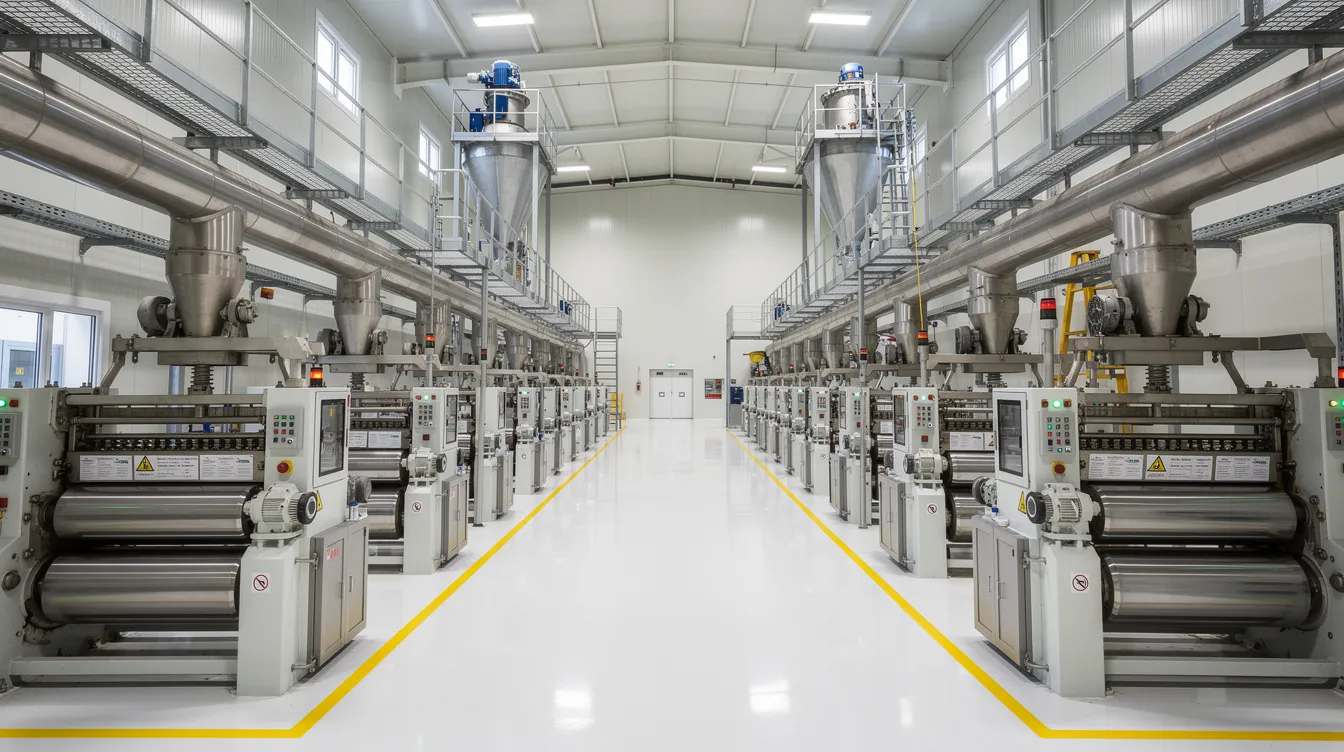
The process flow in a roller flour mill follows a defined sequence: wheat receipt, pre-cleaning, detailed cleaning and conditioning, milling through break and reduction rolls, sifting and purification, flour handling and blending, packing, and finally storage and dispatch. Roller flour mill machinery typically includes cleaning systems, roller mills, and packing lines arranged along this flow.
A complete roller flour mill equipment list covers both primary process machinery and a huge assortment of auxiliary equipment-conveyors, elevators, aspiration systems, dust collectors, compressors, weighing systems and laboratory instruments. For a typical atta–maida–suji plant, the number of individual machines can easily exceed 60–100 items even in a 50–100 TPD flour mill plant, which is why a detailed equipment schedule is essential in any DPR for a wheat flour mill project.
The following subsections describe each section’s function, main machines, and broad impact on total wheat flour mill machinery cost.
Wheat Receiving and Pre-Cleaning Equipment
This section handles incoming wheat from trucks, removes coarse impurities, and prepares grain for detailed cleaning. Equipment here is relatively modest in cost but essential for smooth operations.
Key machines include: intake hopper with grating (pit or ground-level), belt conveyor or screw conveyor for horizontal transfer, bucket elevators for vertical movement, vibro pre-cleaner or rotary drum cleaner to remove straw and large particles, aspiration channel for light impurities, and magnetic separator for metal pieces. For a 30–100 TPD plant, wheat intake and pre-cleaning machinery might account for roughly 8–12% of overall roller flour mill equipment cost. Under-designing this section leads to bottlenecks and dust issues downstream. Most plants in India use mild steel fabricated hoppers and standard Indian elevators to keep flour milling equipment price under control while maintaining high efficiency.
Wheat Cleaning Section Machinery
This section is critical. Cleaning machines remove dust and impurities before milling, and their thoroughness directly influences both roller mill life and product quality. Stones, sand, damaged kernels and other impurities must be removed before the wheat reaches the milling section.
Major machines include: high-efficiency separator for size-based cleaning, destoner for removal of stones (sized to handle three phase stone size variations in Indian wheat), scourer or emery roll to remove surface impurities, intensive dampener for precise water addition, wheat washer (optional, for high-spec mills), magnetic separator, aspirator or air-recycling system, and conditioning bins or silos for 8–24 hours of tempering.
Additional cleaning stages-double destoning, extra scourer, washer, more conditioning bins-increase wheat processing plant machinery cost but improve yield and product quality for branded packaged atta and bakery-grade maida. In a 100 TPD automatic flour mill plant, the cleaning and conditioning section can account for around 18–25% of total roller flour mill machinery price in India.
Milling Section Equipment
The milling section is the technical heart of the plant and typically represents the largest single block of machinery investment. Roller flour mills use corrugated and smooth steel rollers to produce refined flour through a series of break and reduction passes.
Key components include: break-roll roller mills for initial opening of wheat kernels, reduction-roll mills for grinding semolina into fine flour, plansifters with multiple decks for grading, purifiers to clean and classify semolina for maida and suji production, bran finishers, impact detachers, and pneumatic conveying systems linking all stages. Roller mills ensure fine and uniform grinding of wheat, while sifters separate different flour textures like atta and maida. For coarser grinding needs such as maize flour, hammer mills are more suitable, but they are not part of a standard roller flour mill.
The number of roller stands, roll length, sifter sections and purification stages directly influence both wheat milling equipment cost and extraction rates. For most commercial plants, the milling section alone can form 35–45% of the complete roller flour mill machinery cost. Well-designed grinding units using advanced technology and high capacity roller mills with modern bearings generate minimal noise and deliver better extraction.
Flour Handling and Blending Equipment
After milling, flour and by-products must be conveyed, stored, blended and dosed accurately before packing. Critical items include screw conveyors, pneumatic conveying lines, intermediate flour bins, product silos, blending systems for uniform atta or maida quality, and automatic dosing systems feeding packing machines.
While per-machine cost is smaller than roller mills, the cumulative cost of conveyors, valves, cyclones and bins adds up quickly. Neglecting them during budgeting leads to underestimation of total flour mill machinery cost in India. Well-designed blending systems ensure consistent ash content and colour-crucial for premium atta and bakery-grade maida brands.
Packing Machinery
Commercial flour mills must handle both bulk (25–50 kg) and small retail consumer packs (1–10 kg) for atta, maida, suji and sometimes bran. The product range determines packing complexity.
Options include: semi automatic bagging machines with manual bag placement and stitching, fully automatic form-fill-seal machines for retail pouches, and automatic bagging lines with bag placer, filling, weighing and heat sealing. Automated packing machines weigh and seal flour accurately, maintain hygiene and reduce manual handling. Semi automatic lines are cheaper but labour-intensive. Fully automatic lines increase initial flour milling equipment price but lower per-kg packing cost. For a 50–100 TPD plant, packaging units and packing machinery can account for roughly 8–15% of total atta maida suji machinery cost depending on SKU count and automation level.
Material Handling Equipment
Elevators, conveyors and chutes often appear as small line items but collectively form a meaningful share of roller flour mill equipment cost. Typical items include bucket elevators, chain and belt conveyors, screw conveyors, diverter valves and chutes. In a 25 TPD proposal, seven bucket elevators alone were quoted at approximately ₹5.39 lakh.
Under-designed material handling leads to chokes, spillage and higher operating cost. A well-optimised system supports high efficiency at lower cost per kg hr of throughput-an important consideration in financial projections and long term profitability analysis.
Storage Silos and Bins
Storage silos store raw grains and finished flour efficiently and help stabilise operations. Options include flat warehouses with bag storage, mild steel bins for conditioned wheat, RCC or steel silos for bulk wheat, flour silos for institutional dispatch, and bran storage. Storage can be treated partly as machinery and partly as civil or structural, and it can add 10–30% to the basic roller flour mill machinery setup cost when silo-based systems are selected. For plants above 100–150 TPD, bulk wheat silos are worth evaluating from a project-finance angle, as they reduce handling losses over the project life.
Dust Collection and Aspiration System
Dust control systems maintain cleanliness in flour milling and are essential for worker safety and regulatory compliance. Components include cyclones, bag filters, airlocks, aspiration channels, ducts and suction fans. While equipment cost may appear modest, ducting and installation labour are substantial and must be included in any realistic calculation of wheat flour processing machinery cost. Well-designed aspiration also improves sifting efficiency and overall product quality-directly impacting DSCR and profitability in real operations.
Electrical and Automation System
Electrical and control equipment costs can be a substantial part of roller mill projects-often 12–20% of total machinery-related investment. Key items include: individual motors matched to motor power requirements (specified in kW/HP), MCCs and PCCs, VFDs, PLC panels for automatic sequence control, cabling and cable trays, earthing, instrumentation (level sensors, flow meters, pressure switches) and SCADA monitoring. Three phase material and mild steel electricity connection specifications must be confirmed for each machine.
An automatic flour mill plant cost must explicitly include PLC programming, HMI screens, interlocking and safety systems. Mild steel motor power ratings and three phase electrical specifications should be verified against the supplier’s motor schedule. Higher initial investment in quality panels and automation reduces breakdowns and accidental damage over the plant’s life.
Roller Flour Mill Machinery Cost by Plant Capacity
Plant capacity in TPD is the most visible driver of roller flour mill machinery price in India. However, two plants with the same TPD can still differ by 25–40% in machinery cost due to differences in automation grade, cleaning configuration and packing setup. Processing capacity is the primary driver of machinery cost in roller flour mills, but it is not the only one. Plant capacity significantly affects installation, commissioning, and operational costs across every section.
The table below provides a detailed breakdown of indicative cost ranges. All figures assume indigenous industrial flour mill machinery with standard configuration, excluding GST, freight, and working capital.
| Plant Capacity | Typical Configuration | Indicative Machinery Cost | Suitable For |
|---|---|---|---|
| 30 TPD | Basic semi auto, 4–6 roller stands | ₹60–90 lakh (to ~₹1.5 crore with better automation) | Local atta brands, contract grinding |
| 50 TPD | Semi auto, 6–8 roller stands, better cleaning | ₹90 lakh – ₹1.8 crore | District brands, chakki + roller hybrid |
| 100 TPD | Fully automatic, 12–16 roller stands, purifiers | ₹2.0 – ₹3.5 crore | Regional brands, institutional |
| 150 TPD | Full automation, multiple sifters, purifiers | ₹3.5 – ₹5.5 crore | Strong regional / early national |
| 200–250 TPD | Parallel lines, large silos, high automation | ₹6 – ₹10 crore | Large commercial, multi-state |
| 500+ TPD | Multi-line, PLC/SCADA, imported content | ₹12 – ₹20 crore+ | Industrial, FMCG, national |
30 TPD Roller Flour Mill Machinery Cost
A 30 TPD flour mill is typically an entry-level commercial plant aimed at local atta markets and contract grinding. Machinery costs for small-scale plants can be ₹15–25 lakh for the most basic configurations, while a small scale flour mill with proper cleaning and milling can cost ₹60–90 lakh. With higher automation and retail packing, costs can reach ₹1.2–1.5 crore. A real quotation for a 25 TPD plant from a leading manufacturer was approximately ₹1.11 crore including all sections. Many promoters at this scale try to save on dust collection and lab equipment-a decision that creates quality and compliance risks.
50 TPD Roller Flour Mill Machinery Cost
Plants at 50 TPD commonly serve district-level markets with a product range covering both atta chakki-style whole wheat flour and roller-milled atta, maida and suji. Medium-scale flour mills in this range cost around ₹35 lakh to ₹80 lakh for basic configurations, but a properly equipped 50 TPD roller flour mill plant with semi automatic systems, better cleaning, and at least one automated bagging line typically costs ₹90 lakh to ₹1.8 crore. At this plant size, going for PLC-controlled main line and bagging can already make financial sense if capacity utilisation is expected to be high.
100 TPD Roller Flour Mill Machinery Cost
This is a common benchmark for regional brands targeting multiple districts. An 80–120 TPD flour mill may require ₹1 crore to ₹2 crore for basic equipment, while a fully configured 100 TPD plant with full cleaning, purifiers, pneumatic conveying and multiple packing lines typically costs approximately ₹2.0–3.5 crore for indigenous, reasonably automated machinery, excluding GST and civil works. Large flour mills at this capacity need careful power-load estimation. From a project-finance angle, lenders prefer this scale for better economies, but they insist on realistic machinery and electrical cost provisioning in DPR and CMA Data.
150 TPD Roller Flour Mill Machinery Cost
Plants at 150 TPD suit strong regional brands supplying modern trade and institutional bakeries. According to DPR data for a 150 TPD roller flour mill, core plant and machinery was approximately ₹11 crore with an additional ₹1 crore for utilities. However, this figure included an integrated 30 TPD chakki unit. A typical 150 TPD stand-alone roller flour mill plant with semi automatic to fully automatic systems generally falls in the ₹3.5–5.5 crore range for machinery, rising further with large steel silos and high-end PLC/SCADA systems.
200–250 TPD Roller Flour Mill Machinery Cost
These are large commercial flour mills with integrated wheat storage silos, multiple product lines including specialty flours, and high efficiency advanced machinery. Complete roller flour mill machinery cost at 200–250 TPD scale typically falls in the ₹6–10 crore range for indigenous equipment, with imported machines and large silos pushing cost higher. At this level, promoters should run sensitivity analysis to ensure higher machinery investment is supported by realistic market demand.
500 TPD and Large Industrial Flour Mills
Plants at 500 TPD and above serve multi-state or national markets and FMCG brands. They use PLC/SCADA, online quality monitoring, advanced pneumatic systems and highly automated packing with minimal noise and minimal manpower per ton. Indicative machinery investment is ₹12–20 crore or more, depending on import content and silo infrastructure. Foreign-exchange exposure, long delivery time, and specialised commissioning support must be factored carefully into DPR-especially for DSCR planning. These machines deliver optimally when backed by proper maintenance and skilled operators. Such plants are highly demanded by national brands looking for consistent supply at scale.
Machinery Cost for Atta, Maida, Suji and Bran Production
A roller flour mill can process wheat into different products including atta and maida, along with suji (rawa) and bran. The product mix influences machine selection and layout directly. A basic atta-focused plant might use fewer purification stages and simpler sifting, whereas a plant producing separate maida and suji grades needs more complex plansifters, purifiers and blending systems, raising atta maida suji machinery cost. Some mills also add a dedicated atta chakki machine for “chakki-style” whole wheat flour, and increasingly, multigrain flour or millet flour lines are being integrated.
Bran handling-separate bins, compactors or pelletisers-and bran packing lines are often ignored at the planning stage but add to total wheat milling equipment cost. Product mix also affects packaging: more small consumer packs for atta versus more 50 kg bags for maida or suji supplied to bakeries, each with different cost implications. A fully automatic flour mill can process various grains efficiently when designed with multi-product flexibility in mind.
Basic vs Semi-Automatic vs Fully Automatic Roller Flour Mill
Automation grade is a key dimension of both capital cost and operating cost. Fully automatic flour mills cost more than semi automatic mills, but they reduce labour costs significantly and ensure consistent flour quality with minimal manual intervention. These plants also enhance energy efficiency and improve hygiene standards. Initial investment for a fully automatic flour mill ranges from ₹50 lakh to ₹2 crore depending on capacity. Fully automated flour mills require more investment than manual or semi automatic setups, but the operating savings over a 7–10 year project horizon can be substantial.
| Parameter | Basic | Semi Automatic | Fully Automatic |
|---|---|---|---|
| Cost premium over basic | Baseline | +20–35% | +50–80% |
| Typical TPD range | 20–40 | 30–100 | 50–500+ |
| Manpower per shift | 15–25 | 10–15 | 6–10 |
| Process control | Manual valves, operator-dependent | Central panels, limited PLC | PLC/SCADA, automated sequences |
| Quality consistency | Variable, depends on skill | Moderate | High, measurable against different quality parameters |
| Energy optimisation | Limited | Partial VFD use | Full VFD, optimal performance |
| Suitability | Small local mills | Regional brands | National brands, institutional, FMCG |
| Maintenance complexity | Low | Moderate | Higher, needs trained electricians |
Basic systems are easily operated but depend heavily on worker skill. Semi automatic plants balance cost and control-common in 30–100 TPD plants. Fully automatic systems using highly advance techniques reduce manpower per ton but require trained maintenance staff. Promoters should evaluate not only the additional machinery investment but also the impact on labour, shrinkage, rejections and customer complaints over the project life.
Main Machinery Cost vs Auxiliary Equipment Cost
Focusing only on core machinery-roller mills, sifters, purifiers and cleaners-is a common mistake. Auxiliary equipment, utilities and support systems collectively add 25–40% to the initial supplier quote. Machinery scope and configuration greatly influence the overall cost of roller flour mills.
Promoters should split cost into logical blocks: core milling section, cleaning section, material handling, packing machinery, electrical (motors, panels, cables), automation and instrumentation, silos and bins, dust-collection, compressor and pneumatic systems, weighing systems, QC laboratory, and installation with commissioning.
In my experience preparing DPRs for flour mill projects, a promoter might receive a competitive-looking core machinery quote-say, only roller mills and sifters at a cost effective price-which then increases substantially when conveyors, elevators, aspiration ducting, electrical panels, erection and local fabrication are added. I always recommend that promoters insist on a complete roller flour mill equipment list with item-wise pricing before finalising project cost or submitting a DPR to banks.
Additional Costs Beyond Machinery Quotation
From a project-finance standpoint, the machinery quotation in a supplier’s brochure is not the final “machinery & equipment” figure in a bankable project report. Installation and civil works typically add 10–30% to machinery costs during setup.
Additional cost heads include: GST at applicable rate, freight and transit insurance, unloading and local shifting, erection and commissioning labour, civil foundations and machine grouting, platforms and walkways around sifters and bins, electrical cabling beyond supply scope, transformer and HT/LT panels, DG set where required, air and water piping, aspiration ducting, and structural work for silos.
Smaller but important items include initial spare parts and consumables, start-up lubricants, tools, training charges and performance trials. After installation, ongoing expenses include wheat procurement and maintenance costs. Operation and maintenance costs of roller flour mills cover electricity, labor, and raw material-all of which must be projected accurately in DPR.
Land and building costs can range from ₹10 lakh to ₹1 crore depending on location. In many practical cases I have seen, total machinery-related outlay becomes 12–25% higher than the base ex-works quotation once all add-ons are properly included. Promoters should reflect this reality in DPR and CMA Data to avoid cost overruns.
Indigenous vs Imported Flour Mill Machinery
For medium and large projects, promoters often compare Indian roller flour mill plant machinery with imported options-mainly European or Turkish-and this is an important decision in any India setting. Indigenous machines from established vendors are significantly cheaper in capital cost, and the quality gap has narrowed as made in India manufacturers improve steel quality, motor specifications and workmanship. After-sales service and spares availability are far better with local suppliers, and there is no foreign exchange exposure.
For 30–100 TPD plants, good-quality indigenous commercial flour mill machinery using premium quality mild steel fabrication is generally adequate and cost-effective. Imported core machines may be considered selectively for very large (200–500+ TPD) plants where marginal improvements in yield and power consumption per ton justify higher capital. From a lender’s perspective, reliance on a single overseas supplier for critical equipment adds implementation and foreign-exchange risk which must be factored into project risk analysis. Indian suppliers, many of whom are widely recognised in the industry, now offer advanced machinery with excellent quality at competitive prices and market leading prices.
Factors Affecting Roller Flour Mill Machinery Price
Beyond capacity, multiple factors explain why quotations from different suppliers for the “same” TPD vary significantly. The cost depends on actual number and size of roller stands, quality of steel and bearings (higher durability materials like stainless steel increase machinery costs significantly), number of cleaning stages, type of dampening system, automation level, design for energy efficiency and low power consumption per TPD, robustness of aspiration, extent of silo storage, type and number of packing machines, make of motors and gearboxes, warranty terms, and on-site sales service. Construction mild steel number and gauge used in hoppers, bins and ducting also affects cost. Some suppliers specify minimum order quantity requirements that affect pricing.
Promoters should request technical comparison sheets, flow diagrams and power-load lists from each supplier. They should verify the latest price for key components and compare on a like-to-like basis-not just headline figures. Proper budgeting requires understanding these differences before placing orders. In today’s competitive market, the cheapest quotation is not always the most economical over a 10-year project life.
How Machinery Cost Influences Total Project Cost and Bank Finance
In a typical roller flour mill project, machinery and equipment (including erection) is often 40–55% of total fixed cost. Over or under-estimation here distorts viability, DSCR and collateral planning. A 300 TPD roller flour mill DPR showed plant and machinery at ₹4.76 crore out of approximately ₹37.92 crore total investment.
Higher automation and better-quality machinery may increase CAPEX but reduce per-unit power consumption, labour and losses-improving EBITDA margins and DSCR over the loan period. A plant with higher machinery cost but better energy efficiency and fewer breakdowns can generate stronger cash flows than a cheaper, basic plant running at the same capacity. Banks look for realistic quotations, a detailed equipment list and power calculations when appraising loans for automatic flour mill plant projects. Aligning machinery budget with means of finance-promoter contribution, term loan, possible subsidy schemes, and working capital for wheat stocks-is essential for long term profitability.
Common Mistakes Promoters Make While Selecting Machinery
In over 20 years of preparing DPRs and visiting plants, I have seen certain mistakes repeat across flour mill projects:
- Choosing machines only on lowest roller flour milling machine price without technical comparison of quality parameters.
- Under-sizing cleaning section and aspiration, leading to poor flour quality and higher roller wear.
- Ignoring dust-collection, QC lab equipment and weighing systems entirely during budgeting.
- Over-investing in automation where skilled maintenance staff is not available, leading to expensive downtime.
- Selecting high capacity far above realistic market demand, resulting in chronic under-utilisation.
- Not clarifying scope of supply-what is included and excluded-with vendors before signing.
- Neglecting future expansion while planning layout, making later upgrades expensive.
A detailed project report with peer-reviewed assumptions and realistic financial projections can help avoid these pitfalls before the first purchase order is placed. Proper machinery requirements planning is as important as the investment itself.
How to Evaluate Machinery Quotations Before Finalising a Supplier
Evaluating roller flour mill machinery cost is not just about total amount-it is about configuration, efficiency, and life-cycle cost. A structured evaluation approach should include:
- Obtain a complete roller flour mill equipment list with make, model and capacity for each flour mill machine.
- Review the process flow diagram and layout-ensure machines deliver optimally in the proposed arrangement.
- Compare power-load lists (total kW/HP) and estimate energy cost per ton (kWh per ton).
- Examine automation grade and software support-PLC programming, HMI screens, interlocking.
- Assess warranty terms, spares availability and local service network from established vendors.
- Clarify included erection, training and commissioning in each quotation.
- Review payment terms, delivery time and delivery period for critical equipment.
Promoters should convert technical differences into financial numbers: expected yield percentage, energy cost per ton, manpower per shift, maintenance cost and downtime risk. When evaluating the offered plant configuration, do not hesitate to request callback additional information from suppliers or seek expert guidance from an independent consultant. The goal is an informed decision, not a rushed one.
How Project Report Bank Can Help in Planning Your Roller Flour Mill
Project Report Bank, led by CA Manish Gugliya, specialises in customised DPRs, financial modelling and bank-finance advisory for MSME and manufacturing projects including roller flour mills, wheat processing plants, atta chakki plant setups and related food processing projects such as dal mills and rice mills.
Key support areas include: capacity selection based on market study, realistic estimation of flour mill plant equipment cost, preparation of complete machinery and utility schedules, financial projections (profitability, cash flow, DSCR, IRR), means of finance planning, CMA Data preparation and bank proposal drafting. The firm works independently of machine suppliers, focusing on financial viability and risk analysis for the promoter. Both revered customers and first-time esteemed customers benefit from this independent advisory approach.
For projects of 50 TPD and above, where mistakes in machinery budgeting can be very costly, getting a professional DPR before locking machinery orders is strongly advisable.
Frequently Asked Questions (FAQ) on Roller Flour Mill Machinery Cost
Below are common practical questions from promoters that were not fully addressed in the sections above.
What is the minimum practical capacity for a commercial roller flour mill in India?
While very small units and mini atta chakki machines exist as a small scale flour mill option, for a bankable industrial roller flour mill, 30 TPD is usually considered the lower practical capacity. Below this threshold, economics tend to favour small chakki mills rather than full roller flour mill plant machinery with separate cleaning, milling and sifting sections. A small-scale flour mill costs between ₹10 lakh to ₹25 lakh, but these are typically chakki-based rather than full roller mills with maida and suji capability. The huge demand for branded atta has, however, made even 30 TPD roller flour mills commercially viable in many districts.
How much extra should I budget over supplier quotations for hidden costs?
As a practical thumb rule, total machinery-related outlay-including GST, freight, erection, cabling, minor civil work and first spares-can be 12–25% higher than the base ex-works quotation. Land costs for flour mills can range from ₹10 lakh to ₹1 crore separately. Promoters should explicitly budget for these in DPR and CMA Data to avoid funding gaps during project execution.
Can I start with semi-automatic machinery and upgrade to fully automatic later?
This is possible if the initial layout, electrical load (particularly transformer capacity) and control philosophy are planned for future expansion. However, retrofitting full automation later involves downtime, re-wiring and additional cost that could have been avoided with early planning. An experienced consultant can help design a phased approach where the initial semi automatic setup accommodates future PLC integration without major rework. Proper planning makes machines easily operated in both current and upgraded configurations.
Is it necessary to buy all machinery from a single supplier?
Single-supplier turnkey contracts simplify accountability and integration-the supplier is responsible for the entire process line working together. Multi-supplier sourcing can sometimes optimise cost or quality for specific sections, but it needs strong in-house or consultant coordination to avoid mismatch in capacities, motor power ratings, and control systems. For promoters without deep technical knowledge, a turnkey approach from a leading manufacturer is generally safer, even if individual section costs might appear slightly higher.
How often do flour mill machinery prices change in India?
Prices fluctuate with steel costs, motor and electronics prices, exchange rates for imported components, and GST or policy changes. In recent years, volatility has been significant. Serious promoters should refresh quotations if they are more than 3–6 months old before finalising project cost and approaching banks for the latest price confirmation. This ensures that the DPR reflects current market reality rather than outdated figures.