
Key Takeaways
Instant poha plant capacity, land requirement, layout and utilities are not independent decisions. They must be planned together at the DPR stage to avoid costly mismatches between machinery, infrastructure and finance.
A machine rated at 500 kg/hr does not automatically deliver 500 × 8 = 4,000 kg/day of saleable instant poha. After accounting for cleaning, changeover, maintenance and quality rejections, effective output may be only 60–70% of installed capacity – meaning roughly 2,400–2,800 kg/day of finished packs.
- A poha manufacturing plant can produce 100 to 5,000 kg/hr depending on scale, automation level and product mix.
- Small scale semi-automatic units typically yield 100–250 kg/hr; medium units 500–1,000 kg/hr; large automatic lines exceed 1,000–5,000+ kg/hr.
- Land, built-up area, power, water and fuel requirements scale proportionally – and must be validated against selected machinery and local conditions.
- All figures in this article are indicative for Indian conditions and must be refined through a detailed project report with input from machinery suppliers and technical experts.
- Project Report Bank, led by CA Manish Gugliya, assists promoters in aligning market demand, capacity, land, utilities and finance in a bankable DPR.
Introduction: Why Instant Poha Plant Capacity, Land, Layout & Utilities Must Be Planned Together
Many Indian entrepreneurs first purchase machinery for flattened rice or instant poha production, then struggle to arrange land, layout, utilities and working capital around it. This approach leads to undersized sheds, utility shortfalls and layout compromises that permanently reduce production efficiency and product quality.
A bankable instant poha project should jointly plan plant capacity, land requirement, building layout, material flow, utilities (power, water, steam, compressed air), manpower and future expansion from the very beginning. Poha production uses roughly 10% of India’s total rice output, making this a significant food processing sector where proper planning separates profitable operations from stressed projects.
Instant poha is a ready-to-cook product based on rice flakes combined with seasoning, dehydrated vegetables and branded packaging – distinct from a basic poha mill that produces only plain flattened rice. The optimal instant poha plant capacity depends on target market geography, product mix, working days per year, number of shifts, automation level, availability of quality poha or rice flakes, packaging configuration and the promoter’s investment capacity. This article is written from the professional perspective of CA Manish Gugliya (FCA, DISA), focusing on how technical planning of an instant poha manufacturing unit connects with project finance, DPR and CMA data for bank loans in India.
What Determines Instant Poha Plant Capacity?
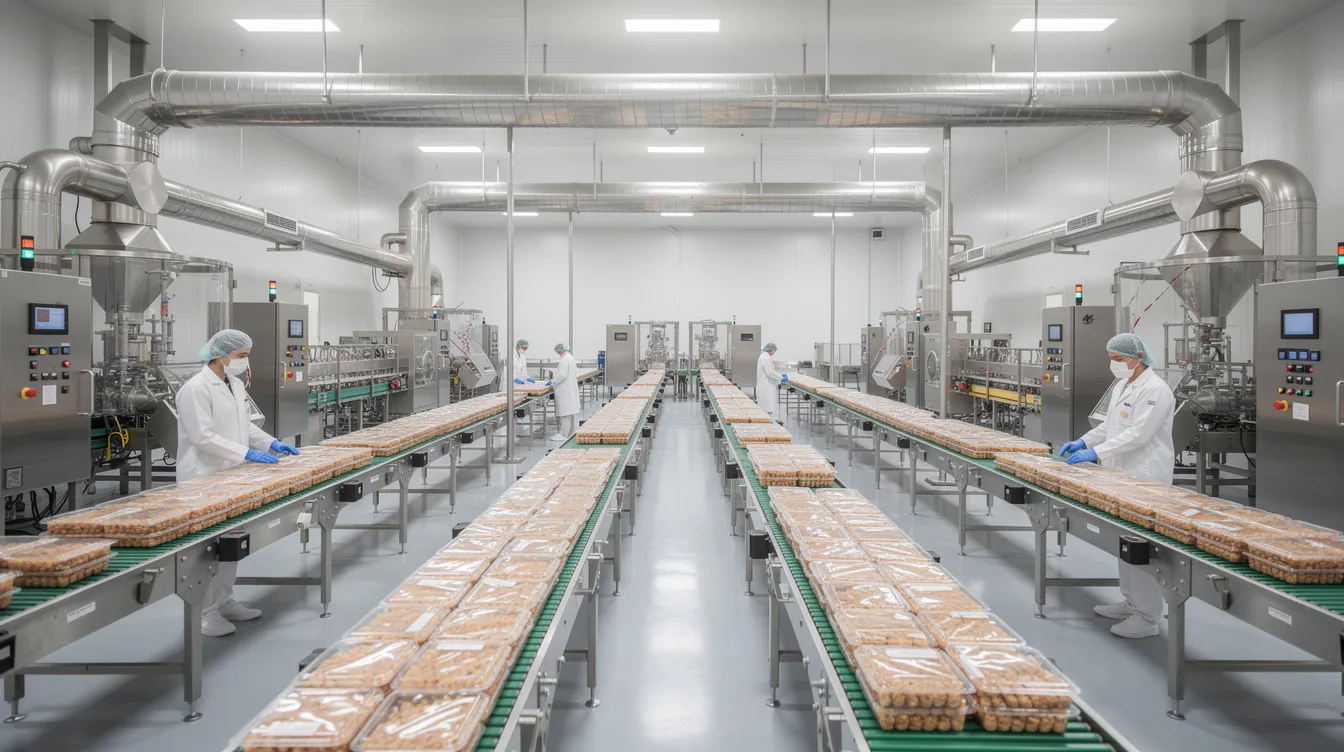
Instant poha plant capacity is not simply a machine brochure number. It must translate into realistic, saleable annual output. Plant capacity affects the type of machinery required for efficient operation, and motor capacity and specifications dictate maximum hourly output.
Key definitions every promoter should understand:
- Installed capacity: kg/hr or kg/day based on machinery nameplate rating under ideal conditions.
- Practical production capacity: what can actually be produced after accounting for downtime, cleaning and changeover.
- Capacity utilisation: percentage of installed capacity actually used in a given period.
- Annual saleable output: finished instant poha packs after rejections, broken flakes and QC failures.
The overall production line speed is limited by the capacity of the lowest-capacity unit in the chain. A 500 kg/hr mixer means nothing if your packaging machine handles only 300 kg/hr. Operating hours and maintenance impact effective daily output of a manufacturing plant significantly. Quality of raw materials affects breakage and jamming during processing, while higher-quality products require additional sorting and testing which can further affect throughput. Market demand influences actual production beyond installed capacity – you may have a 1,000 kg/hr line but only enough orders for 400 kg/hr.
For bankable project reports, capacity assumptions should be conservative and supported by the selected instant poha manufacturing process and machinery specifications.
Typical Instant Poha Plant Capacity Options
In India, instant poha plant capacity is usually grouped into small, medium and large industrial units based on kg/hr or tonnes/day. Plant capacities range from micro-scale to larger pilot plants depending on target markets.
Small Commercial Unit: Typical production capacity for small scale or medium setups is around 100 kg to 250 kg per hour. Small semi-automatic processing units typically yield 100 kg to 250 kg per hour with single-shift operation, semi-automatic packing, and serve city or state-level distribution. A semi-automatic poha making machine setup costs INR 5–10 lakh, while total investment for a poha mill may range from ₹25 lakh to ₹140 lakh depending on construction and automation.
Medium Industrial Unit: Indicative 500–1,000 kg/hr capacity with 1–2 shifts, higher automation, multiple flavours, stronger focus on modern trade, institutional buyers and regional distribution. Medium-scale plants require larger warehousing and continuous systems. Capital investment influences the quality and automation level of the processing line.
Large Automatic Instant Poha Plant: Large-scale commercial lines exceed 1,000 kg to 5,000+ kg per hour with multi-shift operations, multiple packaging lines (pouches, cups, bulk), pan-India or export focus. These demand significant infrastructure across Indian states including Madhya Pradesh, Gujarat and Maharashtra – major poha manufacturing regions.
| Parameter | Small | Medium | Large |
|---|---|---|---|
| Capacity (kg/hr) | 100–250 | 500–1,000 | 1,500–5,000+ |
| Shifts | 1 | 1–2 | 2–3 |
| Land (indicative) | 2,500–8,000 sq ft | 0.5–1 acre | 1–2+ acres |
| Built-up area | 800–4,000 sq ft | 10,000–20,000 sq ft | 20,000–30,000+ sq ft |
| Power (approx.) | 10–30 HP | 75–150 HP | 200–500+ HP |
| Manpower | 8–15 | 20–40 | 50–100+ |
| Promoter profile | Local MSME | Regional brand | National/export FMCG |
All figures are illustrative only and must be validated for your specific project.
How to Calculate Instant Poha Production Capacity
Capacity calculation is critical for DPR, CMA data and financial projections. Use this formula:
Hourly Output (kg/hr) × Operating Hours/Day × Working Days/Year × Capacity Utilisation (%) = Expected Annual Production (kg)
Example: 500 kg/hr × 8 hours × 300 days × 60% = 720,000 kg = 720 tonnes/year. At 100% utilisation, the theoretical maximum is 1,200 tonnes – but no plant achieves that continuously.
Small-scale poha mills typically operate at 500 kg/day. A 500 kg/day unit produces approximately 13 tonnes monthly. Operating on a multi-shift model multiplies total monthly and annual output – a two-shift operation on the same 500 kg/hr line could theoretically double throughput.
In project reports, utilisation is typically assumed at 40–50% in Year 1, rising to 70–80% by Year 3–5. Actual percentages depend on market acceptance, distribution build-up and operational maturity. Instant poha plant capacity per day must also be linked with packaging speed and SKU changeovers.
Capacity Selection Based on Market Demand
Startup capacity planning should align with target customers and expected demand growth – not the maximum available automatic plant brochure. Decisions on plant size should be based on expected sales rather than only machinery capacity.
Key market channels for instant poha in India include local kirana retail, distributors, modern trade and supermarkets, HoReCa, institutional catering, online marketplaces and potential exports. Market selling prices for poha range between INR 25–40 per kg, and profit margins in poha manufacturing vary based on local selling prices and brand positioning. Consistent supply of suitable raw materials is crucial for maintaining steady capacity.
To back-calculate: if your projected sales are 360 tonnes/year, and you assume 60% utilisation, you need installed capacity of about 600 tonnes/year – or roughly 250 kg/hr on a single shift. Over-sizing creates underutilised machinery, high fixed overheads and DSCR stress.
Product Mix and Its Impact on Instant Poha Plant Capacity
Instant poha plants usually handle multiple SKUs: plain, masala, vegetable, premium, diet variants, single-serve pouches, cups and larger family or institutional packs. Each changeover between flavours requires line cleaning, seasoning hopper change, printer recalibration and packaging material change – all reducing effective capacity.
Poha yield is approximately 60–70% from raw paddy grain, which matters if you integrate upstream rice flakes processing. The speed of pouch-packing machines dictates final output capacity for instant poha, and packaging speed can become a limiting factor even if the processing line is fast. Seasoning and raw material, seasoning and product mix decisions directly affect both capacity and warehouse space.
Land Requirement for Instant Poha Plant
How much land is required for an instant poha plant? Indicative ranges for Indian conditions:
- Small unit (1–3 TPD): 2,500–8,000 sq ft total land
- Medium unit (5–15 TPD): 0.5–1 acre
- Large unit (25+ TPD): 1–2+ acres or more
Initial capital investment should reflect operational overhead and space requirements beyond just the production hall. Key components driving land requirement include: production block, raw material storage for poha and rice flakes, seasoning and spices store, packaging material store, finished goods warehouse, utility block (boiler, compressor, DG set, transformer), QC lab, admin and staff amenities, parking, internal roads, loading docks and open area for future expansion. Internal roads and circulation can account for 20–35% of total land in small-medium units.
| Area Component | % of Total Land (Medium Plant) |
|---|---|
| Production hall | 20–30% |
| Raw material storage | 15–25% |
| Finished goods warehouse | 10–20% |
| Utilities | 5–10% |
| Admin, QC, lab | 3–5% |
| Roads, circulation, parking | 20–35% |
| Future expansion reserve | 5–15% |
Food processing plant land requirement in India must also consider local development control regulations, fire safety norms and location-specific constraints.
Built-Up Area Planning for Instant Poha Manufacturing Unit
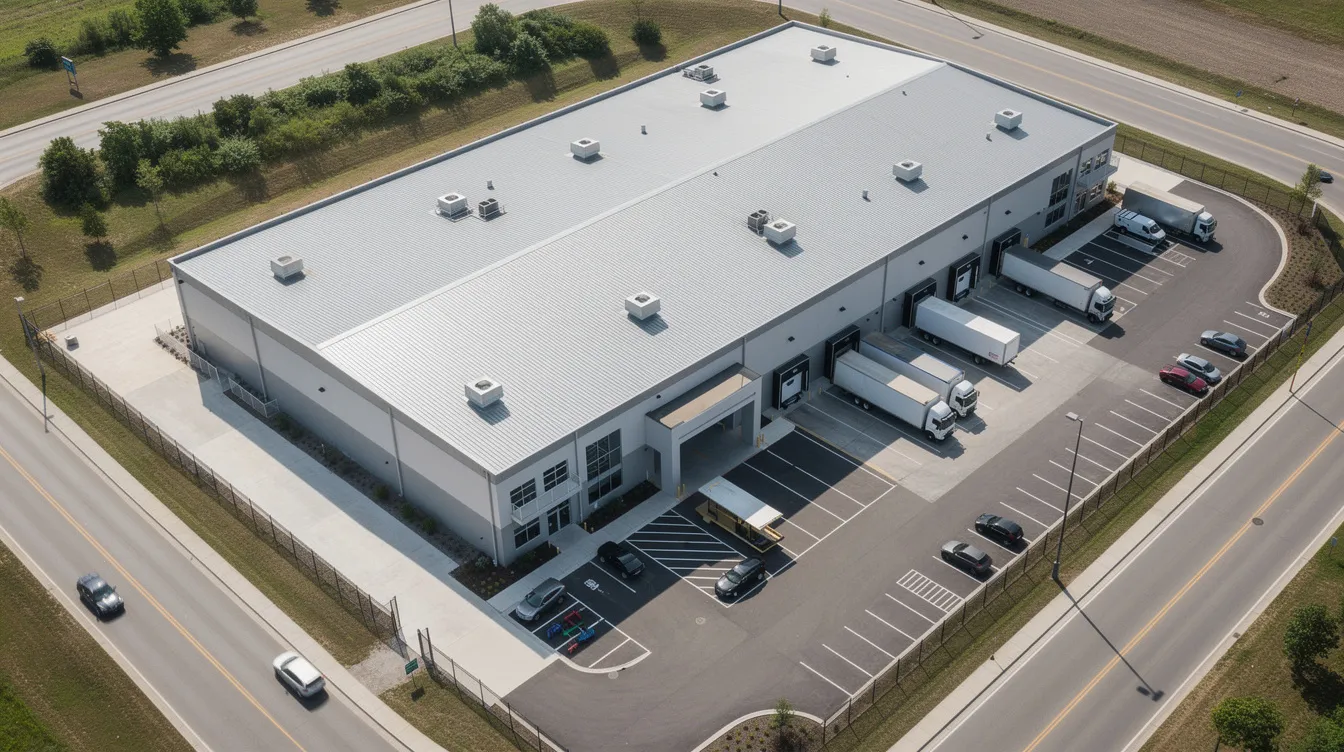
Once land requirement is finalised, detailed built-up area planning becomes critical for operations and civil-cost estimation. Typical built-up components include:
- Raw material receiving bay and poha or rice flakes storage
- Cleaning and pre-processing area (a poha manufacturing plant requires a de-stoner and aspirator for stone and sand removal)
- Instant poha processing and mixing area with conveyors
- Seasoning and oil dosing section
- Packaging hall
- Finished goods warehouse
- QC laboratory
- Maintenance and utility rooms
- Admin block and staff facilities
Logical zoning is essential: separation between raw material and finished goods, restricted QC and seasoning zones, and controlled personnel movement to support food safety and FSSAI expectations. Accurate built-up area estimates feed into the DPR’s civil construction cost, depreciation and funding requirement.
Instant Poha Plant Layout Planning
A well-designed instant poha plant layout plan ensures unidirectional material flow: raw material receipt → storage → preparation → mixing → seasoning → packaging → finished goods storage → dispatch. Efficient integration of infrastructure prevents bottlenecks in processing lines.
Key objectives:
- Minimise backtracking and manual handling
- Avoid cross-contamination between raw and packed product
- Enable efficient supervision and easy cleaning
- Provide clear emergency exits and maintenance access
- Accommodate inspection areas for FSSAI and regulatory visits
Layout drawings used in DPRs should be based on selected instant poha plant machinery and equipment and the planned production line rather than copied from generic rice flakes processing plant layouts.
Machinery Layout and Production Flow
Instant poha plant machinery layout is the micro-level arrangement of each machine – mixers, seasoning units, elevators, conveyors, packaging machines – inside the production hall. Key considerations include individual machine footprint, service clearance, operator movement paths, conveyor routing and locations for scales, checkweighers and metal detectors.
Fully automated processing lines integrate cleaning, steaming, roasting, flaking and grading continuously, while fully automated lines minimise manual intervention and downtime. Electrical cable trays, compressed air piping and steam ducting should be planned alongside machinery layout. For reference on specific equipment, individual machines like soaking tanks cost between INR 25,000 and 50,000, rotary roasting drums are priced between INR 1 lakh and 2 lakh, and flaking mills with rollers cost between INR 2 lakh and 4 lakh.
Process Flow and Its Effect on Factory Layout
Finalising the instant poha manufacturing process flow is a prerequisite for a sound factory layout. Layout must follow process, not the other way around.
Typical steps: receipt of poha or rice flakes → inspection → optional sieving or light roasting → mixing with seasoning and oil → intermediate holding → quality checks → filling into pouches or cups → sealing → coding → secondary packing and palletisation. Each step affects placement of intermediate bins, conveyors and inspection tables, which determine floor space. Future additions like cup lines or integration with an upstream rice flakes unit should be visualised in the initial planning.
Raw Material Storage Requirement
Main raw materials for an instant poha plant include poha or rice flakes, spices and seasoning premixes, dehydrated vegetables, edible oil, salt, packaging material (laminate pouches, cups, lids and cartons). Storage area depends on inventory days – promoters might hold 15–30 days stock of rice flakes and 30–60 days of critical seasoning ingredients.
Segregated, dry, pest-protected storage with proper ventilation and FIFO systems is essential to protect poha quality, texture and shelf life. Store design must consider bulk density and stacking height so that the poha manufacturing factory area is used efficiently. For detailed guidance on raw material and seasoning requirements, promoters should align procurement strategy with capacity and storage planning.
Power Requirement for Instant Poha Plant
Instant poha plant electricity requirement is a major utility component affecting both operational cost and sanctioned load from the DISCOM. Electricity requirements scale from 10 HP for minor operations up to 85 HP for industrial mills, and beyond for fully automatic lines. Main electrical loads include mixers, conveyors, elevators, seasoning dosing units, automatic filling and sealing machines, air compressors, ventilation, lighting and office equipment.
Key concepts for DPR planning:
- Connected load: sum of all machine ratings
- Diversity factor: not all machines run simultaneously at full load
- Operating load: actual average running demand
- Peak demand: determines transformer and DG sizing
Indicative connected load: small units 10–30 kW, medium 75–150 kW, large 200–500+ kW. Actual values must be computed from selected machinery specifications. Energy costs are a significant ongoing expense and must be accurately reflected in the DPR.
Water Requirement for Instant Poha Manufacturing Unit
Instant poha plants generally have modest process water consumption compared to wet food processing units. Water uses include periodic washing of mixers and contact surfaces, floor and equipment sanitation, hand-wash and toilets, boiler water make-up (if steam is used) and cooling. Indicative daily consumption: small plants 500–2,000 litres, medium 5,000–10,000 litres, large plants tens of thousands of litres per day.
Overhead tanks, appropriate filtration to achieve potable standards and proper drainage must be planned with the factory architect to maintain hygiene and avoid interference with layout.
Steam, Heating or Thermal Utilities
Instant poha plants may need thermal utilities depending on whether they integrate roasting, drying or other heat-based processes. Roasting in poha production can significantly pollute the environment. Biomass fuels in poha roasting lead to high pollution levels, and inefficient combustion in poha mills causes black smoke emissions. Pellet burners can reduce emissions but increase operational costs by 20–40%.
Key planning points include estimated steam requirement (kg/hr), choice of fuel (LPG, natural gas, briquettes or other biomass), furnace or roaster machine location, flue-gas chimney routing and compliance with local boiler and pollution-control regulations. Where roasting is contracted out or done in a separate poha processing plant, in-house thermal utilities may be minimal – reducing both capital cost and land requirement for the boiler house. Temperature control during roasting is critical for consistent poha quality and minimising emissions.
Compressed Air Requirement
Compressed air is commonly needed for pneumatic pouch and cup packaging machines, actuators, valves, date coders and controlled cleaning. Plan compressor sizing based on total air demand from all pneumatic consumers, apply a diversity factor, and size with safety margin plus an air receiver to manage peak loads. Air quality must be dry and oil-free where food contact areas are involved. Compressed air piping should be integrated with machinery layout to minimise pressure drop.
DG Set and Power Backup
In many Indian industrial areas, grid power interruptions affect instant poha plant capacity utilisation. Promoters must decide whether to back up the entire factory load or only critical sections like packaging lines, compressors and essential lighting. DG set requirement for food processing plants must be reflected in project cost, depreciation, fuel and maintenance expenses in the DPR. Where grid reliability is high, smaller backup (UPS plus limited DG) might be adequate, but this should be tested against tolerance for downtime in production.
Ventilation, Exhaust and Environmental Controls
Proper ventilation is crucial for worker comfort, dust and seasoning-powder control, and hygiene – even though instant poha manufacturing is relatively dry. Core elements include fresh-air inlets, roof or wall exhaust fans near seasoning and mixing zones, dust collection points and adequate cross-ventilation in storage areas. Maintaining moderate temperature and low humidity in production zones helps protect instant poha texture, packaging integrity and storage life. Airflow should not carry dust from raw-material areas into finished-goods sections.
Manpower Requirement for Instant Poha Plant
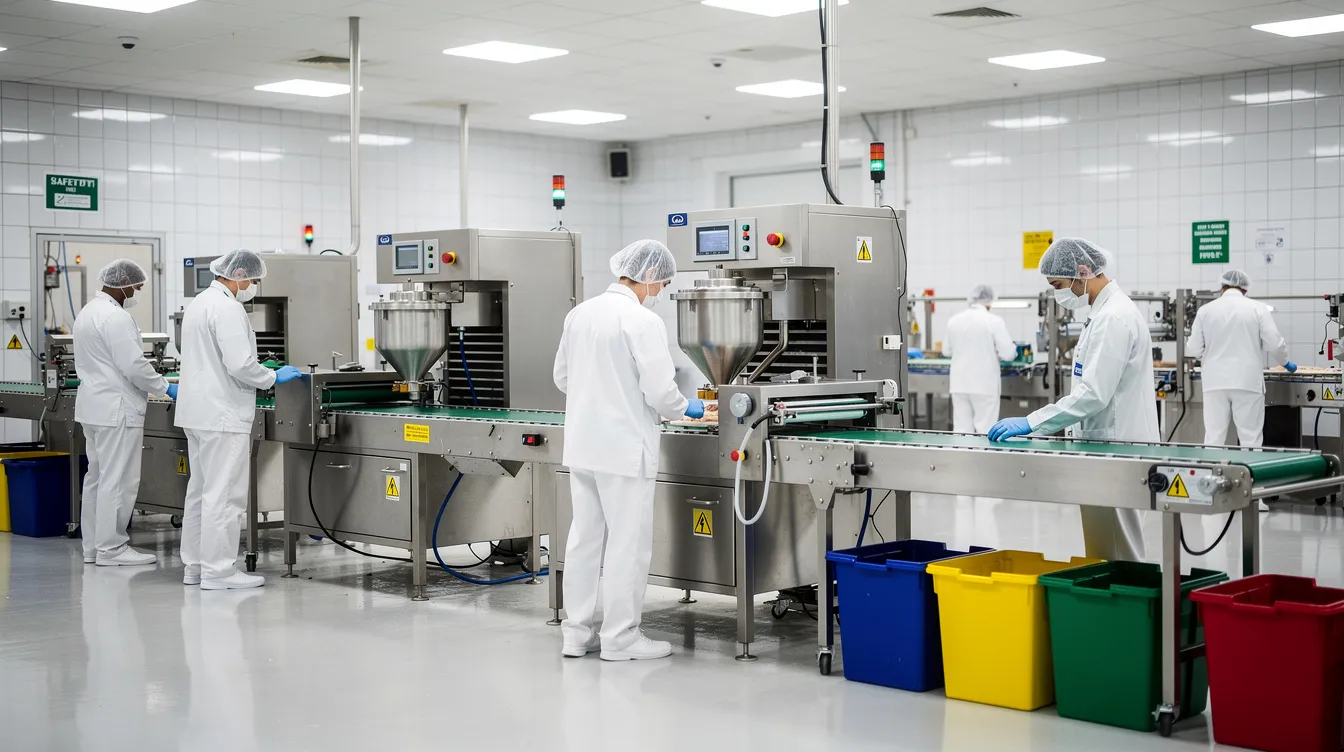
Manpower requirement depends heavily on automation level, working shifts and in-house versus outsourced functions. Monthly working capital requirements, estimated at ₹2–6 lakh for small-medium units, include salary costs as a significant component.
| Function | Small Plant | Medium Plant | Large Plant |
|---|---|---|---|
| Production operators | 3–5 | 8–15 | 20–40 |
| Packaging staff | 2–4 | 5–10 | 10–20 |
| QC/QA | 1 | 2–3 | 3–5 |
| Stores/warehouse | 1–2 | 2–4 | 4–8 |
| Utilities/maintenance | 1 | 2–4 | 5–10 |
| Admin/accounts | 1–2 | 2–4 | 5–10 |
| Total (indicative) | 8–15 | 20–40 | 50–100+ |
Actual staffing varies by plant design and automation. An automatic instant poha plant may have fewer line workers per tonne but needs more skilled technical operators and higher training investment.
Storage and Warehouse Planning
Even when instant poha production capacity is adequate, poorly planned storage can become the real bottleneck. Types include covered raw-material warehouses, separate spice and seasoning rooms (often temperature-sensitive), packaging-material stores, finished-goods warehouse sized for realistic dispatch stock days, and quarantine area.
SKU count and dispatch frequency (daily versus weekly full-truck loads in bulk) affect finished-goods storage volume, pallet positions and aisle widths. Seasonal procurement of rice flakes or raw paddy in certain regions may require additional storage. DPRs should include at least a high-level storage plan and cubic-capacity check, similar in approach to projects like puffed rice manufacturing or namkeen manufacturing where warehouse planning is equally critical.
Food Safety and Hygienic Layout Considerations
Instant poha manufacturing units fall under FSSAI regulation and must be designed for hygienic production and traceability. FSSAI licensing and food safety certifications are essential for scaling operations. Design features include smooth, washable wall and floor finishes, proper drainage slopes, adequate hand-wash and sanitiser points, pest-control provisions, and clear separation between raw and finished-product zones.
QC labs should be located conveniently close to production and warehouse for sampling of poha quality, seasoning blends and finished packs. Exact statutory dimensions and norms vary by state and project scale – promoters should consult their FSSAI consultant.
Provision for Future Expansion
Instant poha demand can grow faster than expected once branding and distribution stabilise. Plan space for additional packaging lines, cup or bowl packs, new flavours, warehouse extension, enhanced utilities (bigger compressor, boiler, DG, transformer) and added staff facilities. Including a phased expansion note in the DPR helps lenders understand that the current project is Phase I with a clear pathway to Phase II. Intelligent early planning typically costs far less than reconstructing or relocating a running factory.
Common Mistakes in Capacity and Layout Planning
- Selecting instant poha plant capacity from vendor quotations without market study
- Assuming 100% capacity utilisation in financial projections
- Ignoring that packaging is often the bottleneck, not the mixer
- Designing layout around existing shed columns instead of process flow
- Inadequate raw-material and finished-goods storage, causing congestion
- Investing heavily in civil construction or excess land at the cost of working capital and marketing
- Ignoring utility costs – including fuel, power and water – in cost of production
- Not aligning capacity, sales forecasts and working-capital cycles in financial models
Promoters should review instant poha plant design with both technical specialists and a project-finance consultant before freezing investment decisions. Sensitivity analysis on capacity utilisation, selling price and raw-material cost is essential to understand downside risks.
Capacity, Land and Utilities in a Bankable DPR
Banks carefully review instant poha plant capacity, land and utility planning in the Detailed Project Report because these directly impact project viability and repayment ability. Capacity assumptions determine annual production volume, sales turnover, raw-material consumption, utility usage, manpower size, depreciation and profitability – ultimately feeding into DSCR, break-even, ROI and IRR.
Land and building estimates affect project cost, margin money requirement, loan quantum, collateral cover and interest during construction. Utility planning – power, water, steam, compressed air, DG – must be consistent across the technical write-up, cost estimates and operating-expense projections.
Illustrative Instant Poha Plant Planning Example (Indicative Only)
This is an illustrative example for understanding concepts only – not a quotation or standard recommendation.
Consider a medium-scale instant poha plant: installed capacity of about 500 kg/hr, operating in 1 shift of 8 hours, 300 working days per year. With capacity utilisation ramping from 50% in Year 1 to 70–75% in stabilised years:
- Year 1: 500 × 8 × 300 × 50% = 600 tonnes
- Stabilised: 500 × 8 × 300 × 70% = 840 tonnes
| Parameter | Indicative Value |
|---|---|
| Installed capacity | 500 kg/hr |
| Working schedule | 1 shift × 8 hrs × 300 days |
| Year 1 output | ~600 tonnes |
| Stabilised output | ~840 tonnes |
| Total land | ~0.5–0.7 acre |
| Built-up area | ~10,000–15,000 sq ft |
| Connected load | ~75–120 kW |
| Water | ~5,000–8,000 litres/day |
| Total headcount | ~20–30 |
All figures illustrative only.
How CA Manish Gugliya and Project Report Bank Can Assist
CA Manish Gugliya is a practising Chartered Accountant with deep experience in project reports, DPR, CMA data and project finance consulting for MSME and food-processing units across India. Key services relevant to instant poha entrepreneurs include:
- Preparation and review of Detailed Project Reports and bank loan project reports
- CMA data for working-capital assessment
- Financial modelling across different plant capacities with sensitivity analysis
- Project cost estimation covering land, building, machinery, utilities and pre-operative expenses
- Means-of-finance structuring, DSCR analysis, break-even analysis, ROI and IRR assessment
While Project Report Bank assists with financial and documentation aspects, technical specifications of instant poha plant machinery, plant layout and process design must be finalised with qualified machinery suppliers, process engineers and architects. Promoters should treat DPR as a decision-making tool – not a mere banking formality – using it to refine capacity, land and utility planning before committing significant capital.
Frequently Asked Questions (FAQs)
How much land is typically required for a small instant poha plant in India?
A small commercial instant poha unit (100–250 kg/hr) typically needs 2,500–8,000 sq ft of total land, depending on capacity, storage strategy and built-up design. Always keep some expansion margin – buying the bare minimum based on present machinery footprint can block future growth.
What is the ideal instant poha plant capacity for a new entrepreneur?
There is no universal answer. Many first-time promoters in Indian states start with a small-to-medium range of 150–500 kg/hr and plan modular expansion. The ideal capacity should be derived from your market study, distribution strength and investment budget – not from the largest available machine.
How do I estimate electricity requirement for my instant poha plant?
Collect kW ratings from all proposed machines, add them for connected load, then apply a diversity factor (typically 0.6–0.8) to estimate operating load. Include lighting, ventilation, office and utility loads. A qualified electrical engineer or machinery supplier can help finalise the sanctioned load application. Electricity requirements scale from 10 HP for minor operations up to 85 HP and beyond for industrial mills.
Can an existing rice flakes manufacturing plant be upgraded to produce instant poha?
Yes. Many manufacturers add mixing and packaging lines plus seasoning and QC facilities to upgrade from plain rice flakes to branded instant poha. However, layout, hygiene, utility adequacy and FSSAI compliance must be reviewed carefully before investment. The technology and process requirements are different from a basic poha mill.
Why is realistic capacity utilisation important in a bank loan DPR for an instant poha project?
Over-optimistic utilisation inflates projected sales and profits, can mislead on DSCR and repayment capacity, and may lead to loan stress later. Lenders prefer conservative, well-justified utilisation assumptions – typically 40–50% in Year 1, reaching 70–80% in stabilised years. This should be consistent with your actual distribution reach and working-capital availability.
Conclusion
A successful instant poha project depends on aligning plant capacity, poha factory land area, plant layout, utilities, manpower and working capital with realistic market demand and promoter strengths. The highest-capacity automatic poha plant is not always the most profitable. The best project is one where production capacity, expected sales, infrastructure cost and financing are properly balanced and scalable.
Treat capacity, land and utility planning as integrated decisions taken at the DPR stage, supported by reliable machinery offers and realistic financial projections. A cheap shortcut in planning almost always becomes an expensive problem in operations.
CA Manish Gugliya FCA, DISA (ICAI) | Practising Chartered Accountant since 2006 | Project Report, DPR, CMA Data, MSME Finance and Project Finance Consultant | Project Report Bank