Key Takeaways
When you walk into a bank or financial institution to apply for a Mudra loan, there is a good chance the staff will present you with one or more insurance products alongside your loan paperwork. Many borrowers feel confused or pressured during this step and end up buying policies they do not fully understand.
- Most insurance offered with Mudra loans is optional under Pradhan Mantri Mudra Yojana guidelines. Life insurance is not mandatory for a Mudra loan under the Pradhan Mantri Mudra Yojana.
- Asset insurance may be required if a Mudra loan is used to purchase business assets, and insurance must include a bank clause for Mudra loans so the lender is named as an interested party on the policy.
- Different policies protect different parties: credit life protects the borrower’s family and the bank, fire and stock insurance protect business assets, and personal accident covers the owner.
- Borrowers should compare benefits, cost, and any existing cover before purchasing new insurance at the branch counter.
- Understanding cross-selling rules under IRDAI and RBI helps you avoid unnecessary or duplicate policies.
The Mudra scheme covers four categories: Shishu loans offer up to ₹50,000 for startups, Kishore loans range from ₹50,001 to ₹5 lakh, Tarun loans provide ₹5 lakh to ₹10 lakh for established businesses, and Tarun Plus loans range from ₹10 lakh to ₹20 lakh for borrowers who have successfully repaid previous loans. Banks commonly bundle insurance options with these small business loans across all four tiers.
This article is written from the perspective of CA Manish Gugliya (FCA), based on 20+ years of experience in MSME finance, project reports, CMA data, and Mudra loan consultancy. The purpose is purely educational; no insurance product is being sold or promoted here.
Introduction: Mudra Loans and Insurance; Why So Much Confusion?
Pradhan Mantri Mudra Yojana was launched on 8 April 2015 to provide financial assistance to micro enterprises in non corporate, non-farm sectors, including allied activities like food processing, dairy, poultry, and trading. As of February 2025, over 52 crore Mudra accounts have been opened, with ₹32.40 lakh crore disbursed. PMMY loans are collateral-free for amounts up to ₹10 lakh, which makes the scheme accessible to individual borrowers, small enterprises, and even those without any educational qualification in formal finance.
Here is what typically happens at the branch. You walk in with your business plan, identity proof, business registration documents, rent agreement (if applicable), and other documents. The bank staff discusses your loan amount, interest rate, eligibility criteria, and repayment schedule. Then, before the sanction letter is printed, someone introduces insurance: credit life insurance, personal accident cover, shop insurance, machinery insurance, and possibly more.

The confusion starts here. Many borrowers believe insurance is compulsory for loan approval or that paying a bigger premium will speed up the sanction. Some do not see the difference between the Mudra loan itself and these separate insurance contracts.
A Mudra loan is money borrowed from a bank, NBFC, or small finance banks, repaid with interest over a fixed tenure through EMIs. Insurance is a separate risk-cover product: you pay a premium to an insurer, and the insurer pays a benefit only when a specified event (death, accident, fire, stock damage) actually occurs. The two are distinct contracts with different parties and different purposes.
This guide explains every major type of insurance offered with Mudra loans, who each policy really protects, when it adds value, when it may be unnecessary, and how to make informed decisions without fear. You can also read related guides like Why Banks Recommend Insurance with Mudra Loans and Is Insurance Compulsory with a Mudra Loan? for deeper context on specific aspects.
Table of Contents
What You Will Learn in This Guide
This is a practical, checklist-style overview of Mudra loan insurance types, designed for first-time entrepreneurs and small business owners who want clarity before signing anything at the bank.
By reading this guide, you will understand:
- Each major insurance type offered with Mudra loans: credit life, personal accident, asset, fire, stock, shop, machinery, EMI protection, and business package insurance
- How each type works in real MSME situations, with examples from kirana shops, restaurants, workshops, dairy units, and mobile repair businesses
- Benefits and limitations of each policy
- What is usually mandatory vs optional as per common bank practice
- Cost factors, premium impact on cash flow, and how single-premium deductions change your effective loan cost
- How to select suitable coverage based on your actual business risks and existing policies
- Myths like “every insurance is compulsory for Mudra loan” and how to spot cross-selling
- A practical checklist to follow before agreeing to any policy
- Expert suggestions from CA Manish Gugliya based on two decades of MSME lending experience
What Is Insurance in the Context of a Mudra Loan?
Insurance, in simple terms, is a contract where you pay a small regular premium to an insurance company, and in return, the company pays a larger amount if a defined loss (death, accident, fire, theft, machinery breakdown) occurs during the policy period.
During Mudra loan processing, insurance comes up because:
- Lenders want assurance that the loan will be repaid even if the borrower dies or the business suffers a major loss.
- Borrowers benefit from protecting their family and enterprise against events that could wipe out years of effort.
- Regulators like IRDAI and RBI encourage responsible risk management for micro units, though they do not mandate most covers under the Mudra scheme.
“Insurance with Mudra loan” refers to separate policies; credit life, personal accident, asset insurance, shop or stock insurance; offered at the same time as the business loan. These are not part of the interest rate or processing fee. They are independent contracts between the borrower and an insurance company.
Key practical points to check:
- Premiums may be paid yearly or funded upfront from the loan amount (single premium model)
- You must receive policy documents, not just verbal promises
- Every policy has a sum insured, tenure, list of covered events, and exclusions
- If the borrower dies or meets an accident, or if the shop, machinery, or stock is damaged by fire or flood, the insurance payout helps repay loan EMIs and restart operations
Insurance and credit guarantees support financial stability for micro-entrepreneurs by reducing the financial shock of unexpected events.
Why Banks Offer Insurance with Mudra Loans
Banks, NBFCs, MFIs, and small finance banks that disburse Mudra loans face credit risk on every account. If a borrower defaults due to death, disability, or business destruction, the lender absorbs the loss unless some form of cover exists. Insurance is one tool to reduce that exposure for both the lender and the eligible borrowers.
Risk management for the lender. Credit life insurance settles the outstanding loan if the borrower dies. Asset and fire insurance reimburse the cost of damaged machinery or premises. Stock insurance covers inventory losses. Each of these reduces the probability that a loan extended under the scheme turns into a non-performing asset.
Protection for borrower and family. Sensible insurance prevents the borrower’s family from having to sell personal assets or face legal notices to repay Mudra EMIs after an untimely death or disability. It also funds repairs or replacement of assets created with the loan, keeping the enterprise running.
Credit guarantee support. Guarantee coverage is provided under the CGFMU scheme, and the Credit Guarantee Fund for Micro Units acts as a safety net for lending institutions covering loans to micro units. This is a separate mechanism from insurance, but both work toward reducing lender risk and encouraging banks to sanction loans to small enterprises without excessive conditions.
Cross-selling and revenue. Banks are registered as corporate agents under IRDAI and earn commission on insurance products they distribute. Cross-selling during loan processing is common and permitted within guidelines, but it must follow specific rules. IRDAI’s Registration of Corporate Agents Regulations, 2015, under Regulation 21(2), explicitly prohibit compelling customers to buy insurance when they apply for loans.
Banks may club insurance premium into the loan amount, slightly increasing EMI and effective cost. Borrowers should evaluate whether this makes financial sense for their situation.
Types of Insurance Commonly Offered with Mudra Loans
The following sub-sections break down each major Mudra loan insurance type in practical terms: what it covers, who benefits, typical claim situations, and what to check before buying.
Actual availability and conditions vary by bank, state, and insurer, but these are the most frequently offered products with Shishu, Kishore, Tarun, and Tarun Plus Mudra loans. This section is the core of the article.
Credit Life Insurance with Mudra Loans
Credit life insurance pays the outstanding Mudra loan balance if the main borrower dies during the policy term. The payout goes first toward closing the loan. Any excess (if sum insured is higher than the balance) goes to legal heirs.
Typical coverage includes natural death, accidental death, and in some products, specified critical illnesses. Suicide during the initial waiting period and pre-existing diseases are commonly excluded. For example, Indian Bank’s credit life scheme with Kotak Life offers reducing balance cover under a single-premium model that covers borrower and co-borrower.
Who benefits: the bank gets assured loan recovery, and the borrower’s family avoids pressure to repay EMIs or risk losing personal assets. Consider a trader who dies mid-tenure with ₹3.5 lakh outstanding on a Tarun loan. Credit life insurance settles the full balance, and the family retains the shop and stock.
Premium payment options matter. If the single premium is deducted from the loan amount (say ₹8,000 from a ₹5 lakh sanction), you receive ₹4,92,000 but repay interest on the full ₹5 lakh. This increases your effective cost.
Advantages: Family protection, peace of mind, clean loan closure after death.
Limitations: No maturity benefit if nothing happens. Coverage usually restricted to loan amount. Risk of mis-selling as “mandatory.”
Life insurance is not mandatory for a Mudra loan under the Pradhan Mantri Mudra Yojana, as confirmed by Invest India’s PMMY FAQ. Optional life insurance may be suggested by lenders for Mudra loan borrowers, but you can ask whether an existing term life policy already covers the gap. If it does, you may not need duplicate cover.
Personal Accident Insurance with Mudra Loans
Personal accident insurance pays a fixed benefit on accidental death or disability (permanent total, partial, or temporary). This is separate from credit life, which covers death from any cause.
Coverage includes death from road accidents, falls, machinery incidents, and similar events. Many bank-tied accident policies also pay a percentage for disability and sometimes include daily hospital cash.
Lenders may offer personal accident insurance linked to Mudra loans as optional coverage. Self-employed borrowers like shopkeepers, mechanics, and food processing workers face higher accident risk than salaried employees, making this cover worth evaluating.
Example: a small workshop owner suffers a hand injury from a lathe machine. The accident payout of ₹2 lakh covers 6 months of loan instalments and household expenses while the owner recovers.
Limitations: Only “accidents” as defined in the policy are covered, not illnesses. Sum insured in standard bank packages is often low (₹1 to ₹5 lakh).
Check if you already have accident cover in an existing health or life policy before purchasing. Borrowers may choose to take additional health insurance to mitigate medical expenses, but avoid paying for overlapping accident benefits.
Asset Insurance: Machinery, Equipment, Furniture, and Tools
Asset insurance covers physical business assets; machinery, equipment, furniture, computers, tools, and sometimes plant infrastructure; linked to the Mudra-funded project.
Common coverage: fire, burglary, accidental damage, natural calamities (flood, storm), and in some policies, breakdown. Specific perils depend on policy wording.
MSME examples:
- A tailoring unit insuring four sewing machines purchased with a Kishore loan
- A small printing press insuring its press machine and two computers
- A beauty parlour insuring chairs, mirrors, and electrical equipment acquired as capital assets
Asset insurance may be required if a Mudra loan is used to purchase business assets. According to Indian Bank’s Pre-Approved Business Loan product documentation, “Assets acquired out of Bank finance to be covered with adequate Insurance with Bank’s Clause at borrower cost.” This means the bank is named as an interest party on the policy, so claim proceeds flow first to the lender.
For Kishore, Tarun, or Tarun Plus category loans where the loan funds machinery or equipment, banks often insist on this cover. Borrowers should verify that the sum insured equals a realistic replacement value, that all items are correctly described, and that deductibles and exclusions (normal wear and tear, gradual deterioration) are understood.
Fire Insurance for Business Premises and Assets
Fire insurance covers damage to building, contents, machinery, and stock due to fire, lightning, explosion, riot, strike, flood, storm, or earthquake, depending on the add-ons selected.
Banks often insist on fire insurance for Mudra-funded shops, small factories, godowns, and business premises when loan amounts are higher or the premises house combustible material like textiles, plastics, or chemicals.
Consider a small garment manufacturing unit in a rented shed. A short circuit causes a fire that damages the shed interior and two sewing machines. With fire and allied perils cover, the insurance reimburses repair costs and part of the machine replacement, allowing the owner to restart production and continue Mudra EMI payments. Without cover, the owner faces a double burden: rebuilding the business and repaying the loan from personal savings.
Fire insurance may be part of a shop, stock, or business package policy rather than purchased separately. Avoid buying multiple overlapping fire policies for the same assets.
Key checks: correct address and description of premises, inclusion of add-ons like earthquake or flood depending on your location, and maintaining basic fire safety measures (extinguishers, proper wiring) to prevent claim disputes.
For many Mudra borrowers in small rented shops, basic fire cover is advised rather than strictly compulsory, but for secured loans or larger factory setups, it is practically mandatory.
Stock Insurance for Inventory and Raw Material
Stock insurance protects inventory, raw materials, semi-finished goods, and finished goods against fire, flood, burglary, and sometimes transit risks.
Examples:
- A grocery (kirana) store insuring packed food, grains, and daily-use items worth ₹1.5 lakh
- A mobile shop insuring phones and accessories
- A small manufacturing unit insuring raw material stored in a godown
Loss or damage to stock can destroy cash flow and loan repayment capacity. If goods worth ₹3 lakh are destroyed by fire, the owner struggles to restock and pay Mudra EMIs simultaneously.
Lenders may advise insuring machinery or stock purchased with a Mudra loan against risks, especially for working capital loans where a large portion of funding goes into inventory. Coverage is usually optional but practically recommended for traders and manufacturers.
Set the sum insured based on average stock value (not peak season highs unless you pay the corresponding premium). Maintain basic stock records and inform the insurer if you change storage location or construction type.
Shop Insurance: Structure, Fixtures, Furniture, and Theft
Shop insurance (often called a “shopkeeper’s policy”) is a package policy combining fire, burglary, glass breakage, liability, and sometimes money-in-safe coverage for small retail or service establishments.
Typical coverage: shop building (if owned), interior fixtures (counters, shelves, display units), furniture, signboards, computers, and sometimes stock, with options for theft, cash in counter, and plate glass.
Relatable examples:
- A boutique insuring fixtures, mirrors, and inventory
- A small restaurant insuring kitchen equipment, furniture, and interior fittings
- A stationery and photocopy shop insuring copiers, computers, and paper stock
Banks often position shop insurance with Mudra loans for Shishu and Kishore loans to urban shops. It is almost always optional. Entrepreneurs should select sum insured based on real replacement value of fixtures and contents, not simply to match the loan amount. Accurately declaring property type and security measures (shutters, grills, CCTV) matters during claim assessment.
Machinery Insurance and Breakdown Cover
Machinery insurance covers sudden, unforeseen physical damage to machinery from mechanical breakdown, operator error, or short circuit; risks that standard fire insurance does not cover.
Typical users: small manufacturing units, workshops, rice mills, dairy processing units, and printing presses taking Kishore, Tarun, or Tarun Plus Mudra loans to finance machinery purchases.
A standard fire policy and machinery breakdown cover are different products. A fire policy pays if the machine burns. A breakdown policy pays if the machine fails internally. Some industries need both.
Example: a ₹7 lakh packaging machine financed under a Tarun loan suffers a motor burnout. Standard fire insurance does not cover this. With machinery breakdown insurance, repair costs of ₹1.2 lakh are reimbursed, and production continues without interruption to EMI payments.
Banks may recommend this cover when a single machine forms a large part of the project cost. Check maintenance requirements, age limits of machines, and compulsory deductibles before accepting a policy.
Loan Protection / EMI Protection Insurance
Loan protection or EMI protection insurance pays EMIs for a limited period (typically 6 to 12 months) or repays the loan balance upon death, disability, or sometimes hospitalisation.
This differs from credit life insurance by focusing on temporary income interruption rather than full loan closure. Many MSME Mudra borrowers are self-employed, so job-loss coverage (common in salaried products) does not apply. Disability or hospitalisation-linked EMI cover can still be relevant.
Banks pitch this with larger Mudra loans where the EMI is a sizeable share of monthly income, or where business income is seasonal (agriculture-allied trading, tourist-focused shops).
Read conditions carefully: waiting periods, maximum number of EMIs covered, exclusions for pre-existing disease or intentional injury, and whether premium is financed through the loan. Evaluate against your emergency savings and existing insurance before purchasing.
Business Package Insurance (Combined Coverage)
Business package insurance bundles several covers; fire, burglary, stock, machinery, shop fixtures, liability, money insurance; into a single policy for micro and small enterprises.
Suitable for: small factories, workshops, diagnostic labs, restaurants, and retail businesses where multiple risks exist and managing separate policies is impractical.
Advantages: administrative convenience, potentially lower combined premium, aligned renewal dates, coherent coverage planning.
Limitations: packages might include covers you do not need (money insurance for a mostly digital-payment business, for instance), and sum insured allocation between building, machinery, and stock must be set carefully.
Discuss your actual risk profile with an experienced advisor like a Chartered Accountant or insurance professional before opting for a one-size-fits-all package offered at the bank counter.
Which Insurance with Mudra Loans Is Mandatory and Which Is Optional?
Under PMMY guidelines, insurance is generally not legally compulsory for sanctioning a Mudra loan. Individual banks, however, may have internal policies requiring certain covers for specific asset types or loan sizes. Comprehensive insurance of securities is required for Mudra loans where assets are hypothecated to the bank. Insurance must include a bank clause for Mudra loans so that the lender can recover from claim proceeds.
| Insurance Type | Usually Mandatory? | Usually Optional? | Who Mainly Benefits? | Recommended For |
|---|---|---|---|---|
| Credit Life Insurance | No (often strongly pushed) | Yes | Bank + Borrower’s Family | All categories if no existing life cover |
| Personal Accident | No | Yes | Borrower | High-risk occupations, machinery operators |
| Asset Insurance (financed assets) | Often yes (bank policy) | Rarely optional for financed machinery | Bank + Borrower | Kishore, Tarun, Tarun Plus with machinery |
| Fire Insurance | Depends on asset type | Yes for small rented shops | Both | Premises with combustible stock |
| Stock Insurance | No | Yes | Borrower | Traders, manufacturers with high inventory |
| Shop Insurance | No | Yes | Borrower | Retail shops, service outlets |
| Machinery Breakdown | No | Yes | Borrower | Manufacturing, processing units |
| EMI / Loan Protection | No | Yes | Borrower | Seasonal income, sole earners |
| Business Package | No | Yes | Both | Multi-risk businesses |
If a bank tells you any cover is “compulsory,” ask for written confirmation in the sanction letter. You can also read the detailed guide on Can You Refuse Insurance While Applying for a Mudra Loan? for step-by-step advice.
Loan approval depends on eligibility criteria, satisfactory credit track record, documentation, and business viability; not on buying a large insurance policy.
How to Choose Which Insurance Is Worth Buying for Your Business
There is no single “best insurance for Mudra loan borrowers.” Choice depends on your business type, scale, personal finances, and existing policies.
By business profile:
- Grocery / kirana stores: Stock, shop, and fire cover address the primary risks. A single fire event can destroy inventory and fixtures together.
- Manufacturing and workshops: Machinery insurance (including breakdown), fire, and stock cover are the priority. A business package may be cost-effective here.
- Restaurants and food outlets: Shop insurance (kitchen equipment, furniture), stock cover (perishable goods), fire, and public liability (customer injury) are relevant.
- Boutiques and salons: Shop and asset insurance for mirrors, chairs, and electrical equipment. Stock cover if inventory value is high.
- Mobile repair shops: Shop insurance, theft cover, and stock insurance for phones and accessories. Machines are low-cost, so separate machinery insurance may not justify the premium.
- Dairy and food processing: Machinery breakdown (pasteuriser, chiller), fire, and stock insurance for raw milk or processed goods. Seasonal fluctuations in stock value need attention.
- Service businesses (coaching centres, travel agents, online sellers): Risks are lower on physical assets. Credit life or personal accident may matter more than property cover.
Core evaluation steps:
- Identify the single event (fire, accident, theft, death) that can stop your business permanently or damage family finances beyond recovery.
- Check if an existing term life, health, or general insurance policy already covers that risk.
- Compare total premium against the realistic benefit and your working capital needs.
- If the risk is real and the cost is manageable, a policy covering that specific risk is worth serious consideration.
Advantages and Disadvantages of Taking Insurance with Mudra Loans
Insurance is a financial tool with both clear benefits and genuine costs. Decide calmly, not under pressure at the branch counter.
Advantages:
- Financial protection for family in case of borrower death or disability (credit life and accident insurance settle EMIs)
- Business continuity when assets, stock, or premises are damaged; insurance reimburses repair or replacement costs
- Reduced stress in covering loans after a major event
- Stronger loan security profile for the bank, sometimes leading to smoother sanction processing
Disadvantages:
- Extra premium reduces initial working capital, which is critical for micro enterprises engaged in trading or manufacturing
- Single premium deducted from loan amount lowers cash available for the proposed activity while interest accrues on the full principal
- Risk of duplicate or unnecessary policies if the borrower already holds adequate life, health, or asset cover
- Possibility of choosing the wrong sum insured or covers not suited to the actual business
For borrowers who already hold term life and adequate asset policies, buying additional similar covers at the time of Mudra loan may not be efficient. Insurance is best treated as part of an overall risk-management plan, not a compulsory add-on tied only to Mudra or other business loans.
Common Misconceptions and How to Avoid Mis-Selling
Several myths circulate among small borrowers about insurance with Mudra loans, leading to fear-based decisions.
Myth 1: “Every insurance is compulsory for Mudra loan.” Reality: Under PMMY scheme guidelines, most covers are optional. Only asset insurance for financed machinery may be practically required by some banks as part of internal policy.
Myth 2: “Bank can reject my application if I refuse insurance.” Reality: Loan approval is assessed based on eligibility, credit history, business plan viability, and documentation. IRDAI regulations prohibit forcing insurance as a condition for credit.
Myth 3: “Paying higher premium means faster approval.” Reality: Premium amount has no connection to loan sanction speed.
Myth 4: “One policy covers all risks; life, accident, fire, and stock together.” Reality: Each policy covers specific perils. A credit life policy does not cover fire damage to stock.
Myth 5: “Insurance guarantees loan sanction even with weak eligibility criteria.” Reality: No insurance product can substitute for a viable enterprise, necessary skills, or proper documentation.
Cross-selling by banks during Mudra loan processing is allowed within IRDAI and RBI rules, but borrowers are protected against forced bundling. To avoid mis-selling: always ask for the policy brochure, verify if the cover is truly mandatory, check sum insured and tenure, compare with outside quotes, and never sign blank forms.
Keep written records of your consent, premium receipts, and policy numbers. Ask the bank to clearly mention in the sanction letter whether any insurance was purchased as part of the loan package.
Practical Checklist Before Buying Insurance with a Mudra Loan
Follow these steps at the bank branch or at home before signing sanction papers:
- List all existing life, health, accident, and asset policies you or your family already have. Check if the loan amount falls within existing life cover.
- Identify major risks for your specific business: fire, theft, machinery breakdown, death or disability of the owner.
- Decide the maximum yearly premium you can afford without disturbing working capital or cash flow needed for stocking and operations.
- Ask the bank in writing whether any insurance is genuinely mandatory as per their policy for your specific loan category and loan amount.
- Compare at least basic features; sum insured, tenure, premium, key exclusions; before agreeing. Even a 10-minute review can prevent a costly mistake.
- Check whether the premium is being deducted from the loan amount (single premium) or paid separately. Calculate the impact on your effective interest rate.
- Verify correct spellings of your name and business name on the policy, correct asset descriptions, and nominee details for life and accident covers.
- Store policy documents and premium receipts safely, alongside your Mudra sanction letter and repayment schedule.
- Set reminders for renewal dates of yearly policies. If a policy lapses mid-tenure, your assets may be uninsured and you may breach the loan agreement.
For larger loan amounts under Tarun or Tarun Plus, a short discussion with an independent advisor (a Chartered Accountant or trusted insurance professional) can validate your decisions and save money.

Expert Guidance from CA Manish Gugliya (FCA)
Over the past 20 years, I have prepared project reports, CMA data, and loan applications for hundreds of MSME borrowers across India. I have seen cases where a ₹3,000 insurance premium saved a family from ₹4 lakh of loan liability after the borrower’s death. I have also seen cases where a borrower paid ₹12,000 for three overlapping policies that covered the same fire risk, wasting money that could have gone into stocking the shop.
Read the policy document. Focus on sections labelled “Coverage,” “Exclusions,” and “Conditions.” Verbal explanations and sales brochures are not binding. The policy wording is what the insurer will follow during a claim.
Ask these questions before signing:
- What exactly is covered? What is not?
- For how long does this policy run?
- Who is the nominee?
- Is this insurance compulsory or optional for my loan?
- Is the premium being financed through the Mudra loan or paid separately?
- What happens if I prepay the loan early; do I get any premium refund?
Avoid duplicate cover. If you already hold a term life policy with a sum insured higher than your loan amount, credit life insurance may be redundant. If you have a running fire policy on your shop, adding another fire cover through the bank wastes premium.
Keep records. Store copies of all insurance documents along with your Mudra sanction letter, loan agreement, and EMI schedule. Treat insurance as part of overall business planning, just like your project report or business registration. Risk cover should be thoughtfully chosen, not impulsively accepted under pressure.
Frequently Asked Questions (Mudra Loan Insurance)
These FAQs address common practical questions that Mudra loan applicants and borrowers ask but may not find fully answered above.
Can I buy insurance after my Mudra loan is sanctioned, or must I buy it on the same day?
Most borrower-focused covers (life, accident, shop, stock, fire) can be purchased later as independent policies from any insurer. You are not restricted to buying on the same day as loan sanction.
The exception: if the bank has made asset insurance a condition of sanction (for financed machinery, for instance), delaying it may put you in breach of the loan agreement. Ask the bank for a written timeline showing when the insurance must be in place. For optional covers, you can take time to compare products and premiums.
What should I do with my insurance if I shift my shop or factory to a new address?
Inform the insurer in writing before or immediately after moving. Fire, shop, and stock policies are location-specific. Coverage does not automatically transfer to a new address. The insurer will issue an endorsement or policy amendment reflecting the new location. Without this, a claim at the new address may be rejected.
Also update the bank if the insured assets are hypothecated, since the insurance with bank clause references the original address.
Can I change the nominee in my Mudra-related insurance policy later?
Most life and accident policies allow nominee changes at any time by submitting a simple form and KYC documents to the insurer. Update your nomination promptly after major life events: marriage, birth of children, or death of an earlier nominee. Banks acting as the beneficiary micro unit of interest under asset insurance are not “nominees” in the same sense; the bank clause is a separate arrangement that does not change with your personal nominee.
If an insurance claim settles my Mudra loan, will it hurt my credit score?
When credit life or a similar cover pays off the outstanding loan after the borrower’s death, the loan account is typically reported as “closed” to credit bureaus. This is different from a default or non-payment. Claim settlement should not negatively affect the CIBIL score of surviving co-borrowers.
That said, individual bank reporting practices can vary. If you are a co-borrower and see an adverse remark, file a dispute with the credit bureau and provide a copy of the claim settlement letter.
What happens to my policy if I prepay or close my Mudra loan early?
For single-premium credit life plans tied to the loan tenure, early closure may or may not entitle you to a premium refund. Refund eligibility depends on the product terms agreed at purchase. Some insurers offer a partial refund on a sliding scale; others do not.
Ask this question clearly at the time of purchase and get the answer documented. After early loan closure, keep both the loan closure certificate and the insurance policy document together. If a refund is due, submit the closure proof to the insurer promptly.
- Mudra Loan Insurance & Cross-selling Issues: Complete Guide to Your Rights and Safe Borrowing

- Hidden Insurance Charges in Mudra Loans: How to Spot Them
- Can Insurance Premium Be Included in Your Mudra Loan Amount?
- What to Do If Insurance Was Added Without Your Consent in a Mudra Loan
- Warning Signs of Forced Cross-selling by Banks
- How to Identify Insurance Mis‑selling During Mudra Loan Processing
- Credit Life Insurance vs Asset Insurance: Which Is Better for Mudra Loan Borrowers?
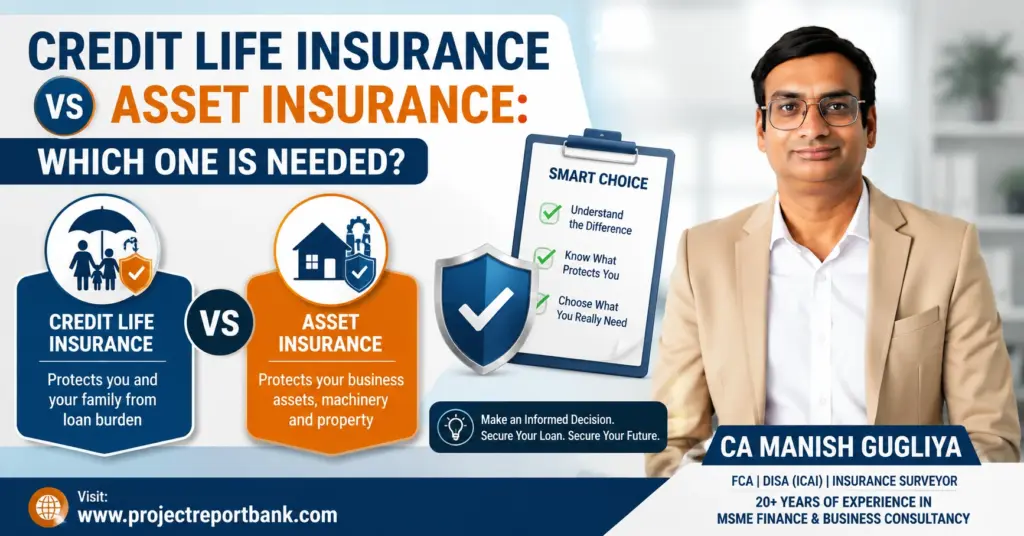
- Types of Insurance Offered with Mudra Loans Explained

- Why Do Banks Recommend Insurance with Mudra Loans?