If you are planning to start or expand a small business in India and need finance up to ₹10 lakh without collateral, the Mudra loan under Pradhan Mantri Mudra Yojana (PMMY) could be the right option for you. But before you walk into a bank, you must understand who can apply, who cannot apply, what banks actually check, and why many applicants get rejected even before their documents are reviewed.
In my 20+ years of consulting experience, I have seen hundreds of eligible entrepreneurs lose their chance simply because they did not understand the eligibility criteria properly. This guide will help you avoid that mistake.
Key Takeaways
- Any Indian citizen aged 18–65 years running or planning a non farm, non corporate micro or small business in manufacturing, trading or services can be eligible for mudra loans under the pradhan mantri mudra yojana (PMMY).
- The maximum loan amount under PMMY is ₹10,00,000 (₹10 lakh), and collateral is not required for loans up to ₹10 lakh under PMMY.
- Banks still check your CIBIL score, ITR, bank statement, repayment capacity, and business viability before sanctioning-so “collateral-free” does not mean “automatic approval.”
- New businesses, women entrepreneurs, SC/ST/OBC applicants, professionals, shopkeepers, transporters, home-based and village businesses are all potentially eligible if other conditions are met.
- Loan eligibility includes having a viable business plan, and good credit history is crucial for mudra loan eligibility across all three categories: Shishu, Kishore, and Tarun.
Table of Contents
What Is Mudra Loan & Pradhan Mantri Mudra Yojana (PMMY)?
PMMY was launched on 8 April 2015 by the Government of India to provide financial assistance and collateral-free credit to micro units and small enterprises across the country. The scheme is specifically designed for the Non-Corporate Small Business Sector (NCSBS)-think proprietorships, tiny manufacturing units, shopkeepers, service providers, street vendors, and other small entrepreneurs who previously struggled to get institutional finance.
“Mudra loans” are not given directly by MUDRA (Micro Units Development & Refinance Agency). Instead, they are loans extended by commercial banks, regional rural banks, small finance banks, NBFCs, and micro finance institutions under the refinance support of MUDRA Ltd. The application process aims to support micro-enterprises in India by facilitating access to institutional credit for income-generating activities.
As of April 2026, PMMY had disbursed over ₹40.07 lakh crore across more than 57 crore accounts, with around 60% of accounts belonging to women entrepreneurs.
The scheme covers both working capital and term loan needs of the beneficiary micro unit entrepreneur, using three categories based on the stage of growth development and funding needs:
- Shishu: Loans up to ₹50,000
- Kishore: Loans from ₹50,001 to ₹5,00,000
- Tarun: Loans from ₹5,00,001 to ₹10,00,000
These are not separate schemes-they are slabs within one scheme. As of 2026, PMMY guidelines are issued by the Ministry of Finance and implemented through lending institutions as per RBI norms. Interest rates, processing fees, and documentation requirements vary from bank to bank and lender to lender.
CA Manish Gugliya’s Expert Tip: Preparing a proper Mudra Project Report with cost, sales, profit, and repayment plan strongly improves your eligibility. Banks take you more seriously when you come with a clear business plan rather than a vague request for money.
Mudra Loan Types: Shishu, Kishore & Tarun Explained
These categories are based on the stage of business growth and the loan amount required. Banks sanction loans within these limits under the overall Mudra scheme. Each category reflects the next phase of a business’s development and funding needs.
| Category | Loan Amount Range | Typical Borrowers | Basic Bank Expectations |
|---|---|---|---|
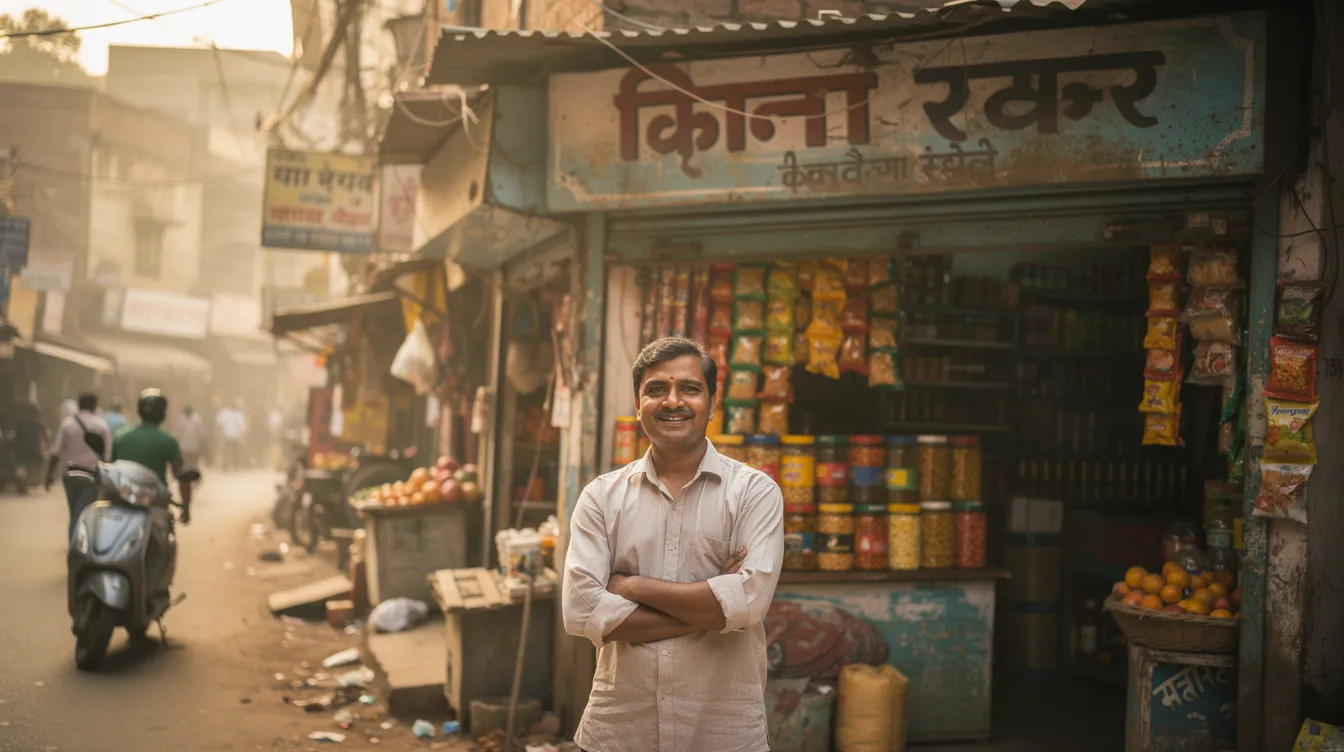
| Shishu | Up to ₹50,000 | Tea stall, roadside vendor, tailor, cobbler, tiffin service | Simple KYC, basic business proof, daily cash flow capacity |
| Kishore | ₹50,001 – ₹5,00,000 | Grocery shop, mobile repair unit, small fabrication workshop, transport operator | KYC + 6-month bank statement + basic financials or ITR |
| Tarun | ₹5,00,001 – ₹10,00,000 | Established small manufacturer, beauty parlour chain, cold storage unit | Full financials, ITRs, cash flow projections, project report |
Shishu loans are ideal for new or very small businesses. If you are a tailor, a cobbler, or running a small home-based tiffin service, you can apply under Shishu with simpler documentation. The focus here is on your daily cash flow capacity, not complex financial statements.
Kishore loans suit growing units-a grocery shop owner adding stock, a fabrication unit buying machinery, or someone purchasing their first commercial vehicle. Banks expect at least 6 months of bank statements and some proof of income.
Tarun loans are meant for relatively established micro enterprises that already have business history, turnover, and bank records. These borrowers often need both term loan and working capital for expansion.
Some banks also informally refer to a “Tarun Plus” slab (₹10–20 lakh), introduced from October 2024, but this is only available for borrowers who have already availed and fully repaid a Tarun loan. Officially, the standard PMMY structure remains these three categories.
The eligibility criteria discussed below apply across all categories, but the depth of scrutiny and documents expected increases as the loan amount increases.
Who Is Eligible for Mudra Loan? (Entity, Category & Business-Wise)
Any Indian citizen between 18 and 65 years running or planning to start a non farm micro or small business can be eligible for a Mudra loan, subject to bank appraisal. Eligible borrowers include individuals and business entities such as firms and companies. The applicant must own a micro or small business, or at least have a concrete plan to start one.
By Legal Form:
- Individual / Proprietorship: Most Shishu and Kishore loans go to individuals or proprietors. This is the simplest form-your personal KYC, business proof, and bank statements are usually enough.
- Partnership Firm: All partners’ KYC plus partnership deed required. Suitable for Kishore and Tarun slabs.
- LLP: LLP agreement, partners’ details, and financial statements needed. Typically applies for Kishore or Tarun.
- Private Limited Company: MOA/AOA, board resolution, directors’ KYC, and audited accounts (if existing). Generally applies for Tarun category.
Special Categories:
- Women entrepreneurs get priority-many banks have relaxed margin norms or interest concessions. About 60% of all Mudra accounts nationally belong to women.
- SC/ST/OBC and minority applicants may benefit from state-level interest subvention schemes and relaxed eligibility norms at certain lending institutions.
New Business vs Existing Business:
Mudra loan eligibility for new business depends mainly on the promoter’s profile, experience, and project report. If you are a trained tailor wanting to open your own shop, your skill and a realistic cost estimate matter more than past turnover. For existing businesses, banks judge you on sales records, bank statement history, and repayment track record.
Occupational Examples (All Normally Eligible):
Tailor, grocery shop, mobile repair shop, tea stall, dairy owner, beauty parlour, small transport operator, tuition centre, small manufacturing unit, home-based food processing, online resellers, freelancers, village-based artisans, and self-employed persons.
Professionals such as CA, doctor, architect, engineer, designer, consultant can also avail Mudra loans for their clinics, offices, equipment, or professional setups-subject to standard bank norms.
CA Manish Gugliya’s Expert Tip: Registering your business under Udyam (MSME registration) and maintaining a separate current account significantly improves bank comfort during eligibility assessment. It costs nothing but signals professionalism.
Who Is NOT Eligible for Mudra Loans?
Before you invest time gathering documents, make sure you do not fall in these ineligible categories:
- Large corporate entities, public limited companies, and medium/large enterprises are outside PMMY scope. They should apply under normal MSME loan products or other financial support schemes.
- Personal consumption loans are not covered under Mudra loans. Marriage expenses, education fees, medical treatment, home renovation, buying a car for personal use, or repaying credit card dues do not qualify. Mudra is strictly for income-generating business activities in sectors like manufacturing and services.
- Pure crop cultivation (agriculture on land) is not covered. However, allied agricultural activities like dairy, poultry, fishery, beekeeping, and food processing can be financed under PMMY.
- Wilful defaulters, persons with fraudulent history, or those under insolvency/bankruptcy proceedings are normally treated as ineligible. The borrower must not have a default history with banks or financial institutions.
Typical Rejection Examples:
- A salaried person wanting to buy a personal bike-not a business asset.
- An individual wanting to clear old credit card dues-not income-generating.
- A trader whose actual turnover is many times higher than reported in ITR with no proper records-banks see this as a red flag.
CA Manish Gugliya’s Expert Tip: If you are currently ineligible due to past defaults or documentation gaps, first regularise your records and clear your dues. You can explore the Mudra Loan Appeal Process only after improving your profile-not before.
Core Mudra Loan Eligibility Criteria: Age, Citizenship, Business Activity & Income
Apart from business type, banks apply four core filters to every Mudra application: age, citizenship, nature of business, and repayment capacity.
Age Criteria
Applicants must be between 18 and 65 years old.
| Parameter | Requirement | Notes |
|---|---|---|
| Minimum Age | 18 years at application | Must have valid age proof |
| Maximum Age at Maturity | ~65 years | Some banks may set lower internal limits (60–62) |
| Exceptions | Rare | Co-applicant may help in borderline age cases |
Citizenship Rules
Applicants must be Indian citizens to qualify for a Mudra loan. Valid KYC documents-Aadhaar, PAN, Voter ID, Passport-must be provided. NRIs and OCIs are normally not eligible under standard PMMY, though they may invest as owners in an Indian entity with an Indian resident acting as the borrower.
Business Activity Eligibility
The loan is intended for income-generating activities. Eligible ventures include:
| Business Type | Typical Loan Use |
|---|---|
| Manufacturing (fabrication, snack unit, packaging) | Machinery, raw material, working capital |
| Trading (kirana shop, wholesale, electronics) | Stock purchase, shop renovation |
| Services (beauty parlour, coaching centre, repair shop) | Equipment, furniture, working capital |
| Transport (auto, taxi, goods vehicle) | Vehicle purchase |
| Allied Agriculture / Food Processing (dairy, poultry, cold storage) | Equipment, setup cost, working capital |
All activities must be legal and non-speculative. Businesses in manufacturing trading and services form the core of PMMY’s target.
Income / Repayment Capacity
There is no fixed national income minimum for Mudra loans. What matters is your ability to repay. Banks look at:
- Estimated monthly surplus after existing obligations (EMIs, rent)
- Bank account transactions showing regular income or sales
- Family income support (in case of new ventures)
- FOIR (Fixed Obligation to Income Ratio)-some banks cap this at 50-60%
CA Manish Gugliya’s Expert Tip: Even if your business is cash-based (like a tea stall or small dhaba), maintain a basic daily sales diary and deposit cash regularly into your bank account. This helps the banker see real income and improves your eligibility assessment.
Can New, Existing, Salaried, Housewives, Students, Pensioners & Farmers Get Mudra Loans?
A common question in 2026 is whether people without an existing registered business-or with special status-can qualify. Let me clarify each scenario.
New Business Owners: Yes. Banks will focus on the promoter’s experience, skill, local market demand, and a clear project report. If you are a trained beautician or a skilled mechanic wanting to open your own shop, you can apply-especially under Shishu or Kishore. For detailed guidance, see our Mudra Loan for Startups page.
Existing Businesses: Existing businesses-whether registered or informal-have stronger chances. Banks expect 6–12 months of bank statements, GST data (if applicable), and previous ITRs. Even businesses without GST registration can be eligible; read more at Mudra Loan Without GST.
Salaried Persons: A salaried person can apply if they want to start a genuine side business in their own name. For example, a salaried IT employee starting an online trading business can apply. But the loan cannot be for personal consumption.
Housewives: Many banks actively support women-led micro businesses like home tiffin services, beauty parlours, and tailoring units. If you are a housewife with a genuine business idea, you are eligible. Check our detailed guide on Mudra Loan for Housewives.

Students: Students aged 18+ with a serious business idea can apply, especially under Shishu. However, banks may request a co-applicant or guarantor due to lack of credit history.
Pensioners: Eligible if below the maximum age at loan maturity and planning a viable small business. Banks may ask for a co-applicant for added security.
Farmers: Pure crop loans are not covered under Mudra. But allied activities like dairy units, small cold-storage, food processing, and small agro-equipment repair shops can be financed under PMMY as non farm micro enterprises.
Is GST, ITR & CIBIL Mandatory? Can Defaulters Get Mudra Loan?
Many applicants in 2026 are confused about whether GST registration, income tax returns, and a high CIBIL score are absolute requirements. Let me clarify.
GST Requirement: GST is compulsory only if your business legally crosses the turnover threshold under GST law. Many Shishu and small Kishore borrowers who operate below this threshold can get Mudra loans without GST registration. Banks accept Udyam registration plus bank transaction records as alternatives.
ITR Requirement: The PMMY scheme itself does not always mandate ITR for very small loans. However, most banks prefer at least 1–2 years of ITR for Kishore and Tarun applications. If you have no ITR, the bank shifts focus to your bank statement, local trade enquiries, and business viability assessment.
CIBIL / Credit Score: Mudra is collateral-free, not “risk-free.” Banks usually check credit bureau reports and may hesitate if your score is very low (below 650) or if there are recent write-offs or settlements. Good credit history is crucial for mudra loan eligibility.
Can Defaulters Apply? Minor past delays that have been cleared may be manageable. But serious NPAs, wilful defaults, or unresolved dues generally make the person ineligible until the situation is resolved. Repairing your credit profile should be the first priority.
| Criterion | Legally Mandatory? | When Banks Insist | Practical Workaround |
|---|---|---|---|
| GST | Only above threshold | Kishore/Tarun with significant turnover | Show Udyam + bank transactions |
| ITR | Not for very small loans | Kishore and Tarun categories | Strong bank statement + local verification |
| CIBIL | Not a legal bar | Almost always checked | Clear old dues, build 6-month clean track |
CA Manish Gugliya’s Expert Tip: Before approaching banks for higher Mudra limits like ₹5–10 lakh, check your credit report, clear any small overdue amounts, and file at least one ITR. These three steps alone can dramatically improve your chances.
Mudra Loan Requirements & Documents (With Practical Tables)
While PMMY is a simplified scheme, each bank follows RBI-compliant KYC and credit norms. Documents needed for Mudra loans include identity proof and business proof at a minimum. Proper documentation is critical to proving eligibility.
Main Required Documents Table
| Document Type | Examples | For Whom | Why Bank Asks It |
|---|---|---|---|
| Identity Proof | Aadhaar, PAN, Voter ID, Passport, Driving Licence | All applicants | KYC compliance |
| Address Proof | Aadhaar, utility bill, rental agreement | All applicants | Verify residence stability |
| Business Proof | Udyam certificate, shop licence, trade licence, GST certificate | All (especially Kishore/Tarun) | Confirm business existence |
| Bank Statements | Last 6 months current/savings account | All (may be relaxed for Shishu) | Assess cash flow and conduct |
| Financial Documents | ITR (1–2 years), P&L, Balance Sheet | Kishore and Tarun | Verify income and repayment capacity |
| Quotations | Machinery, vehicle, equipment quotes | Term loan applicants | Validate end-use of loan |
| Photographs | Passport-size photos | All applicants | Application form requirement |
| Project Report | Cost, revenue, profit, repayment schedule | Kishore and Tarun | Assess business viability |
Entity-Wise Additional Documents
| Entity Type | Additional Papers Required |
|---|---|
| Proprietorship | Only proprietor’s KYC + business proof |
| Partnership | Partnership deed + all partners’ KYC |
| LLP | LLP agreement + partners’ details |
| Private Limited | MOA/AOA + board resolution + directors’ KYC + audited accounts |
Documents by Mudra Category
| Category | Typical Minimum Documentation |
|---|---|
| Shishu | Basic KYC + simple business proof |
| Kishore | KYC + bank statement + basic financials + project report |
| Tarun | Full financials, ITRs, projections, detailed project report |
Though Mudra is advertised as collateral-free, banks may take hypothecation of assets (vehicle, machinery, or stock) created from the loan, and sometimes ask for personal guarantee of the proprietor, partners, or directors.
For a detailed, document-wise checklist with sample formats, visit Mudra Loan Documents Required.
CA Manish Gugliya’s Expert Tip: A professionally prepared Mudra Project Report with CMA data can convert a borderline case into an eligible, bankable proposal. If your loan amount is above ₹2 lakh, invest time in getting this right.
How to Check Mudra Loan Eligibility & Apply Online/Offline (2026)
Eligibility checking today can be done both online and offline. But remember-final approval always rests with the lending institution, not with any portal or website.
Step-by-Step Flow:
- Check basic eligibility: Confirm your age, citizenship, and business type (non farm, legal, income-generating).
- Choose correct category: Shishu, Kishore, or Tarun based on your funding needs and business stage.
- Collect documents: Identity, address, business proof, bank statements, ITRs (if available), quotations.
- Prepare project report: For Kishore and Tarun, a project report with cost breakdown, sales projection, and repayment schedule is essential.
- Apply: Online through Jan Samarth portal or offline at any participating bank branch.
Online Route: You can apply online through the Jan Samarth portal by creating an account, selecting the PMMY scheme, filling in business details, uploading documents, and choosing your preferred bank. Applications can be submitted to banks, NBFCs, or microfinance institutions.
Offline Route: Visit any PSU bank (SBI, PNB, Bank of Baroda, Canara Bank, Union Bank), regional rural bank, cooperative bank, small finance banks, MFI, or NBFC that participates in PMMY.
Lender Types for Mudra Loans
| Lender Type | Typical Focus | Key Fact |
|---|---|---|
| Public Sector Banks | Wide reach, standard PMMY norms | Mudra loans are offered by 27 public sector banks |
| Private Banks | Faster processing, may need higher credit score | Private sector banks must maintain net performing assets below 10% |
| Regional Rural Banks | Rural and semi-urban areas | 31 regional rural banks provide Mudra loans |
| Small Finance Banks | Flexible with informal businesses | Good for micro borrowers |
| MFIs / NBFCs | Most flexible documentation | Mudra loans are available through 36 micro-finance institutions |
Lending institutions mentioned above must be profitable for two consecutive years to participate in PMMY’s refinance framework.
Many banks now allow partial digital journeys where basic details are captured online but KYC and final signing happen at the branch. Physical verification of business premises is common for Kishore and Tarun.
CA Manish Gugliya’s Expert Tip: Always enquire first at your existing home branch where you already maintain a savings or current account. Your relationship history with that bank often improves eligibility and speeds up processing significantly.

Common Reasons Why Eligible Applicants Still Get Rejected
From my consulting experience, many technically eligible borrowers are refused due to completely avoidable issues. Here are the most common ones:
- Incomplete or inconsistent documents: Missing identity proof, wrong address, mismatch between declared income and bank transactions.
- Negative CIBIL: Even one unresolved default or write-off can block your application.
- Frequent cheque bounces or EMI defaults: This signals poor financial discipline.
- Unrealistic project cost or sales projections: Inflated numbers without basis make bankers suspicious.
- Unstable residence or business address: If physical verification fails, the loan is rejected.
- Mismatch between loan amount and business scale: Asking for ₹10 lakh when your business turnover is ₹50,000 per year raises red flags.
Common Mistakes vs Bank’s View
| Mistake | How Bank Interprets It | What To Do Instead |
|---|---|---|
| Cash-only operations, no bank deposits | Unverifiable income | Route at least part of sales through bank |
| Multiple EMI bounces in statement | Poor repayment discipline | Clear all dues, maintain 6 months clean |
| No business proof or registration | Doubtful business existence | Get Udyam, shop licence, or trade licence |
| Inflated quotations for machinery | Potential fund diversion | Get genuine quotations from actual suppliers |
| Applying at a bank where you have no account | No relationship history | Open account 3–6 months before applying |
For a deeper understanding of why banks reject Mudra applications, read Mudra Loan Rejection Reasons.
CA Manish Gugliya’s Expert Tip: Always give honest information. Avoid manipulating invoices or ITR figures. If rejected, use the Mudra Loan Appeal Process only after correcting the deficiencies-not as a shortcut.
Practical Tips to Improve Mudra Loan Eligibility & Approval Chances
Even if you are marginal on one or two parameters, you can actively improve your profile over 3–6 months before reapplying. Here is what works:
- Open and use a current account: Deposit your sales regularly. Maintain healthy transaction flow.
- Get Udyam registration: Free, online, and it immediately establishes your MSME credentials.
- File at least one ITR: Even if your income is below taxable limits, a filed return shows compliance.
- Keep a simple monthly profit and loss record: Even a basic diary showing sales and expenses helps.
- Pay existing EMIs on time: Six months of clean repayment history can turn a rejection into approval.
- Prepare quotations and cost estimates: For Kishore and Tarun, having supplier quotations ready shows seriousness.
- Maintain copies of all licences and registrations: FSSAI, shop licence, GST (if applicable), trade licence.
- Enquire about state schemes: Women entrepreneurs, SC/ST/OBC borrowers, and rural applicants should check state-level interest subvention or guarantee schemes.
Borrowers in key states like Maharashtra, Gujarat, Karnataka, Tamil Nadu, Rajasthan, Uttar Pradesh, Madhya Pradesh, Bihar, Telangana, Kerala, Odisha, West Bengal, and Andhra Pradesh can use state-specific project report services from ProjectReportBank.com to align documents with local bank requirements.
CA Manish Gugliya’s Expert Tip: Visit the branch well-prepared with a file neatly arranged in the same order as the bank’s checklist. This immediately signals professionalism to the loan officer and makes their job easier-which works in your favour.
Mudra Loan Eligibility Checklist (Simple Self-Test)
Before you walk into a bank, run through this quick self-test. If you can answer “Yes” to most of these, you are broadly eligible:
| # | Checklist Item | Your Answer |
|---|---|---|
| 1 | Are you an Indian citizen? | Yes / No |
| 2 | Are you between 18–65 years old? | Yes / No |
| 3 | Do you run or plan to start a non farm micro/small business? | Yes / No |
| 4 | Is your loan requirement up to ₹10 lakh? | Yes / No |
| 5 | Is your CIBIL score clean (no major defaults)? | Yes / No |
| 6 | Do you have basic KYC documents (Aadhaar, PAN)? | Yes / No |
| 7 | Can you show some proof of income or business viability? | Yes / No |
| 8 | Are your existing EMIs/loans regular (no bounces)? | Yes / No |
For New Businesses, Also Check:
- Is your project report ready with realistic cost and revenue estimates?
- Do you have basic skill or experience in your chosen line of work?
- Is your investment amount reasonable for the type of business?
For Existing Businesses:
- Do you have 6–12 months of bank statements?
- Do you maintain basic sales records or accounts?
- Have you filed ITR (if applicable)?
If you answer “No” to multiple core points, work on correcting those issues first-file your ITR, clear overdue EMIs, or get Udyam registration-before approaching the bank.
FAQ – Mudra Loan Eligibility Doubts in 2026
These questions address practical edge-cases that are not fully covered in the sections above.
Can I get a Mudra loan without any prior business experience?
Yes, new entrepreneurs can apply, especially under Shishu or lower Kishore. Banks will weigh your skill, training, market awareness, and the quality of your project report. Prior experience helps but is not always mandatory. About 21% of Mudra borrowers in FY 2024-25 were new entrepreneurs.
Is there any minimum turnover required for Mudra loan?
Officially, PMMY does not stipulate any minimum turnover. For Shishu loans, banks are quite flexible. For Kishore and Tarun, a turnover history strengthens your application, but there is no fixed national threshold. Banks use their own internal reference point based on the loan amount requested.
Can I apply for a Mudra loan in a city where I don’t live?
It is possible if you propose a business in that city and have address proof or a rental agreement for the business premises there. Banks will verify the business location, so you need a credible physical presence. Simply applying in another city without any local connection usually leads to rejection.
Can I take more than one Mudra loan from different banks?
Banks check your existing obligations and outstanding Mudra loans through credit bureau reports. Taking a second Mudra loan from another bank while the first is outstanding is difficult. However, if you have distinct business purposes and strong repayment capacity, it may be considered. For Tarun Plus, the prior Tarun loan must be fully repaid.
Does PMMY guarantee 100% approval if I am eligible?
No. Meeting eligibility criteria is necessary but not sufficient. Banks independently conduct credit evaluation, field verification, and risk assessment. Even if you meet every baseline criterion, a bank can reject your application based on its internal policy, branch-level exposure limits, or doubts about repayment capacity. Preparation and documentation quality matter as much as eligibility.
Conclusion: How to Use Eligibility Rules Wisely Before Applying
Mudra loan eligibility in 2026 rests on four pillars: the right type of business (non farm, non corporate, income-generating), the correct loan amount slab (Shishu, Kishore, or Tarun), a clean basic profile (age, citizenship, CIBIL), and adequate documents with a solid project report.
Remember-though these loans are collateral-free, borrowers can secure a maximum amount of ₹10 lakhs only when the bank is convinced about repayment capacity and business viability. Mudra loans support non-corporate small enterprises, but they are not charity. Banks lend where they see reasonable interest rates of return on their credit.
Use the eligibility checklist above, rectify gaps like missing ITR or irregular banking habits, and if needed, seek professional help from ProjectReportBank.com to prepare a strong Mudra Project Report. With proper preparation, even small entrepreneurs running tea stalls, dairy units, beauty parlours, tailoring shops, and online businesses can successfully expand their ventures and access Mudra finance in 2026.
About the Author
CA Manish Gugliya (FCA, DISA ICAI) is a Chartered Accountant with more than 20 years of experience in Project Reports, CMA Data, Mudra Loan Consulting, MSME Finance, Startup Advisory, Business Planning, and Business Valuation. Through ProjectReportBank.com, he has helped entrepreneurs across India prepare bankable project reports and financial documentation for business loans. His practical guidance focuses on simplifying complex banking procedures and improving loan approval readiness.
- Can Bank Reduce Mudra Loan Amount Without Your Consent? Complete Practical Guide (2026)

- What to Do If You Cannot Pay Your Mudra Loan EMI (2026 Guide)
- Can a Bank Refuse a Mudra Loan Because the Target Is Completed? Complete Guide (2026)
- Bank Refused My Mudra Loan Application – What Are My Rights?
- Mudra Loan for Used Vehicles (2026): Eligibility, Documents, Bank Rules & Complete Guide
- Rejected Mudra Loan – What to Do Next? Appeal Process Explained (2026)
- Mudra Loan Project Report Madhya Pradesh – Bank-Ready DPR & CMA Guide

- Project Report for Mudra Loan Maharashtra: Complete Guide for MSMEs, Startups and Small Businesses (2026)
- Mudra Loan Uttar Pradesh: Complete Guide for MSMEs, Startups and Small Businesses (2026)

- Mudra Loan Bihar 2026: Eligibility, Documents, Online Application Process & Project Report Guide
- Jan Samarth Mudra Loan 2026: Complete Guide to Online Application, Eligibility, Documents & Approval Process
- MSME Mudra Loan: Complete Guide for Small Businesses, Startups & Manufacturing Units in India (2026)
- Is the Mudra Loan Subsidy Real or Fake? Get the Facts Here

- Mudra Loan Without CIBIL Score: How to Qualify and Apply

- Mudra Loan for Used Machine (2026 Guide) – Eligibility, Documents, Valuation & Approval Tips