Introduction
Every successful business starts with the right idea. But here’s the uncomfortable truth-roughly 90% of startups fail, and a leading cause is poor idea selection and lack of market validation. Successful business ideas solve specific problems or fulfill unmet needs. Copy a competitor blindly, and you’re building on sand.
As a Chartered Accountant who has helped hundreds of entrepreneurs prepare project reports and financial projections, I’ve seen firsthand how the source of an idea shapes its trajectory. Brands like Patanjali spotted India’s herbal biodiversity trend. Zomato’s founders noticed Delhi diners couldn’t access restaurant menus easily. Nykaa identified that beauty consumers lacked trust and variety online. Each tapped different sources of business ideas-trend observation, personal experience, customer pain points-and built from there.
The smartest entrepreneurs don’t rely on a single source. They cross-reference multiple channels to collect ideas, reduce blind spots, and validate demand before investing a single rupee.

Table of Contents
How We Evaluated the Best Sources of Business Ideas
Not all idea sources are equal. Here’s the rubric I used to rank these sources for Indian entrepreneurs:
| Criterion | What It Measures |
|---|---|
| Accessibility | How easily can a student, professional, or rural innovator use this source? |
| Reliability | Track record of generating ideas that become viable businesses |
| Market Relevance | Alignment with India’s current demand, policy direction, and growth sectors |
| Scalability Potential | Can the idea grow beyond local into national or global markets? |
| Investment Feasibility | Suitable for bootstrapped founders or requires heavy capital? |
| Time Efficiency | How quickly can you move from discovery to validation? |
Each source below is evaluated against these criteria with real Indian examples.
Top 15+ Most Proven Sources of Business Ideas
1. Personal Professional Experience and Skills
Entrepreneurs generate ideas from personal experiences and skills more often than any other method. Your daily work reveals inefficiencies, gaps, and workarounds that outsiders simply can’t see.
Why It Stands Out
Insider knowledge gives you a deep understanding of industry pain points that no market report can replicate.
Best For
Working professionals, industry veterans, and specialists with 5+ years of experience.
Key Strengths
- Deep market knowledge and customer understanding
- Existing network and credibility in the field
- Lower learning curve and faster execution
Possible Limitations
- May limit thinking to familiar territories
- Risk of overconfidence in market assumptions
A bakery can stem from a passion for baking. IT skills can lead to launching a tech support service. Experience in textile manufacturing inspired one entrepreneur I advised to start a school uniform business-he already knew suppliers, fabric quality, and school procurement cycles. Leveraging personal skills and interests can inspire new business ideas you’d never find in a textbook.
2. Market Gap Analysis and Customer Pain Points
This is the most analytical source of business idea generation. Listening to customer complaints can uncover business opportunities that are hiding in plain sight. Conducting market research can reveal customer preferences and emerging demands.
Why It Stands Out
Direct market validation and clear demand signals reduce guesswork.
Best For
Research-oriented entrepreneurs and those with analytical backgrounds.
Key Strengths
- High probability of market acceptance
- Surveys reveal customer needs and market gaps
- Competitive advantage through early problem identification
Possible Limitations
- Requires significant research time and resources
- May miss breakthrough innovation opportunities
Studying competitors can reveal areas for improvement and innovation. Observing consumer feedback can help identify potential business opportunities. Market research identifies unmet customer needs-use tools like Google Trends, Amazon reviews, or IndiaMART listings to spot what people are searching for but not finding. Analyzing successful businesses helps identify market gaps. Successful entrepreneurs adapt ideas from observing others. Observation of businesses can reveal opportunities for improvement.
Observational research uncovers significant business opportunities. Sales teams provide real-time customer feedback for market insights-if you’re already in a company, talk to your sales team before quitting to start something. Identifying market gaps is a key source for innovative startups.
3. Government Policies and Startup India Initiatives
Government policies can encourage businesses in various sectors-and in India, the sheer scale of support is staggering. The Startup India Schemes Playbook lists dozens of grants, seed funds, and mentorship programmes across sectors.
Why It Stands Out
Built-in government support with favorable regulatory environment.
Best For
First-time entrepreneurs and those seeking financial assistance through MUDRA loans.
Key Strengths
- Access to funding: over ₹12,000 crore available in central grants for early-stage startups
- iDEX alone has issued 549+ problem statements and signed ~430 contracts worth ₹2,400 crore
- Priority sector lending advantages
Possible Limitations
- Dependency on policy continuity
- High competition in supported sectors
4. Technology Trends and Digital Transformation
New technologies create opportunities for new businesses at a pace that’s accelerating every year. Monitoring industry trends helps anticipate future needs in business-AI, automation, cybersecurity, and cloud computing are top focus sectors in India for 2026.
Why It Stands Out
Future-proof business models with high scalability potential.
Best For
Tech-savvy entrepreneurs and engineering professionals.
Key Strengths
- Mobile apps are a key area for business innovation
- Global market opportunities with lower physical infrastructure
- Tata Consumer Products used AI-powered ideation sprints to generate 40+ product concepts in just 4 days
Possible Limitations
- Requires technical expertise and continuous learning
- High competition from established tech companies
5. Import-Export Opportunities and Global Trade
India’s exports reached USD 825.3 billion in FY25. Trade fairs and industry events showcase new products and market trends-attending them can reveal import-export business ideas with strong margins.
Why It Stands Out
Access to global markets and currency arbitrage advantages.
Best For
Entrepreneurs with international exposure and trade knowledge.
Key Strengths
- Large addressable market size
- Government export incentives and PLI schemes
- New EU-India trade agreements opening fresh corridors
Possible Limitations
- Complex regulatory and logistics requirements
- Currency and political risks
6. Social Media Trends and Consumer Behavior
Consumer feedback can guide product development and business strategy. Platforms like Instagram, YouTube, and X surface what customers want in real time-making this one of the cheapest methods of market analysis available.
Why It Stands Out
Real-time insights and direct customer feedback at near-zero cost.
Best For
Young aspiring entrepreneurs targeting millennial and Gen-Z customers.
Key Strengths
- Low-cost market research through reviews, comments, and trending topics
- Direct customer engagement
- Viral marketing potential
Possible Limitations
- Trend volatility and short lifecycles
- Platform dependency risks
7. Agricultural and Rural Market Opportunities
India’s rural markets remain massively underserved. The a-IDEA incubator at ICAR-NAARM has documented 20+ agri-startup success stories built on solving farmer-level problems.
Why It Stands Out
Massive untapped market with strong government backing through schemes like RKVY and Krishi SURE.
Best For
Entrepreneurs from rural backgrounds-explore business ideas in Uttar Pradesh, Bihar, or Madhya Pradesh for region-specific opportunities.
Key Strengths
- Low competition in rural markets
- Social impact potential
- Cold storage, food processing, and value-added agriculture are high-growth areas
Possible Limitations
- Infrastructure challenges
- Lower purchasing power in target market
8. Franchise and Licensing Opportunities
Franchising is a method to replicate successful business models without starting from scratch. From food chains to education centres, proven systems reduce your risk significantly.
Why It Stands Out
Reduced risk with tested business models and brand support.
Best For
First-time entrepreneurs seeking lower-risk ventures. You can even explore MUDRA loans for franchise businesses.
Key Strengths
- Proven business model with brand recognition
- Training and operational guidance included
- Marketing support from the franchisor
Possible Limitations
- High initial investment and ongoing royalties
- Limited creative control and customization
9. Environmental and Sustainability Trends
Renewable energy technologies offer innovative business solutions. India added over 44 GW of renewable capacity in 2025 alone, and green hydrogen, solar, and recycling businesses are booming.
Why It Stands Out
Growing consumer consciousness and regulatory support for sustainable businesses.
Best For
Environmentally conscious entrepreneurs in Gujarat, Rajasthan, and Tamil Nadu where renewable energy infrastructure is strong.
Key Strengths
- Future regulatory alignment and ESG investment attraction
- Premium pricing potential
- Circular economy and waste management are fertile grounds
Possible Limitations
- Higher initial setup costs
- Longer payback periods
10. Healthcare and Wellness Sector Growth
Post-COVID health awareness, an aging population, and rising incomes are driving demand for telemedicine, diagnostics, and wellness services.
Why It Stands Out
Recession-proof demand with high customer lifetime value.
Best For
Medical professionals and healthcare industry veterans.
Key Strengths
- Social impact potential
- Startups like portable oxygen concentrator makers emerged from observing critical needs during health crises
- Growing preventive healthcare market
Possible Limitations
- Heavy regulatory requirements
- High liability and insurance costs
11. E-commerce and Digital Marketplaces
E-commerce advancements enable new product development across categories. Gaps exist in niche segments-local handicrafts, ethnic wear, region-specific foods-where large platforms underserve customers.
Why It Stands Out
Exponential growth in online shopping and digital payments adoption.
Best For
Retailers, product manufacturers, and digitally literate entrepreneurs exploring shop business ideas.
Key Strengths
- Lower physical infrastructure costs and wider market reach
- Data-driven customer insights from platforms like Amazon and Flipkart
- Niche categories remain underserved
Possible Limitations
- High digital marketing costs
- Platform dependency and commission fees
12. Professional Services and Consulting
If you have expertise in law, accounting, digital marketing, or training, you can monetize it with minimal startup investment.
Why It Stands Out
Low capital requirements and high profit margins.
Best For
Experienced professionals-CAs, engineers, educators, and subject matter experts.
Key Strengths
- Minimal startup investment and location independence
- High hourly rates potential
- Can be productized into courses or SaaS tools for scalability
Possible Limitations
- Personal time constraints limit revenue
- Difficulty in scaling without hiring a team
13. Local Community Needs and Services
Analyzing daily frustrations can create viable business solutions. No good laundry service nearby? Poor waste collection? These hyperlocal gaps are everywhere. Travel and observation of different regions can inspire business adaptations-what works in one town may be missing in yours.
Why It Stands Out
Direct customer access and strong community relationships.
Best For
Local entrepreneurs in small towns and those preferring community-based businesses.
Key Strengths
- Low competition and strong word-of-mouth marketing
- Strong customer relationships built on trust
- Lower investment compared to tech or manufacturing
Possible Limitations
- Limited market size
- Growth scalability challenges
14. Education and Skill Development
Demand for upskilling-coding, AI literacy, digital marketing, vocational training-is surging across India. About ~207,000 startups are now recognized under Startup India, and roughly 50% come from tier-2 and tier-3 cities hungry for quality education.
Why It Stands Out
Growing demand for professional development with government policy support through Atal Tinkering Labs and E-Yuva programmes.
Best For
Educators, trainers, and industry experts exploring business ideas for students.
Key Strengths
- Scalable digital delivery with recurring revenue potential
- Government support through incubation and grants
- Content can be repurposed across formats
Possible Limitations
- High content creation effort
- Need for continuous curriculum updates
15. Manufacturing and Production Opportunities
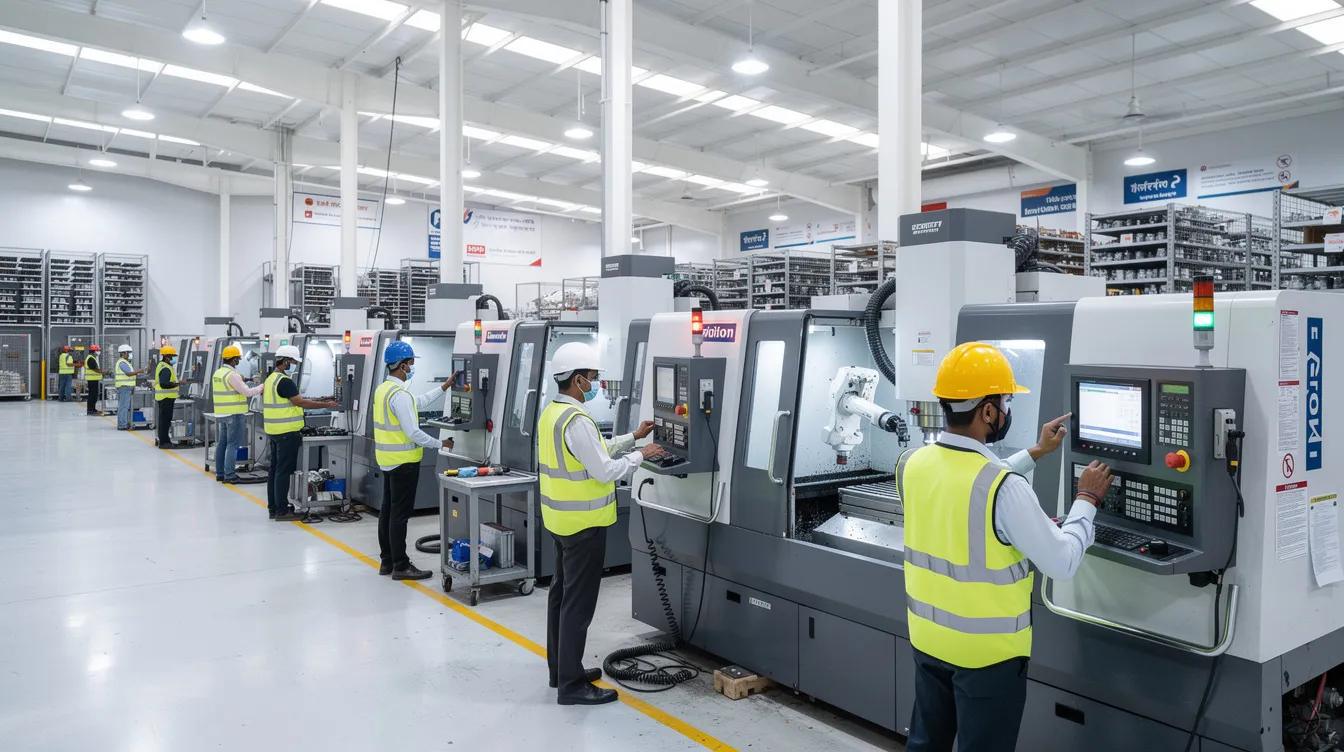
Make in India and PLI programmes create opportunities in semiconductors, electronics, solar panels, and EV components. India’s Economic Survey 2025-26 projects GDP growth at 7.4%, with domestic demand strengthening.
Why It Stands Out
Government incentives, growing domestic demand, and export potential.
Best For
Engineers, technical professionals in Maharashtra, Karnataka, and Telangana.
Key Strengths
- Government incentives and subsidies through PLI
- Export potential with India’s USD 825B+ trade volume
- Job creation impact
Possible Limitations
- High capital investment requirements
- Complex regulatory compliance
Quick Comparison of the Best Sources
| Source | Best For | Capital Needed | Risk Level | Scalability |
|---|---|---|---|---|
| Professional Experience | Industry veterans | Low-Medium | Low | Medium |
| Market Gap Analysis | Analytical entrepreneurs | Low | Low | High |
| Government Policies | First-time entrepreneurs | Low | Low | Medium |
| Technology Trends | Tech professionals | Medium-High | Medium | Very High |
| Import-Export | Trade-experienced entrepreneurs | Medium | Medium | High |
| Social Media Trends | Young digital-native entrepreneurs | Low | Medium | High |
| Agricultural Opportunities | Rural entrepreneurs | Low-Medium | Medium | Medium |
| Franchise Models | Risk-averse entrepreneurs | High | Low | Medium |
| Environmental Business | Sustainability-focused entrepreneurs | High | Medium | High |
| Healthcare Sector | Medical professionals | Medium-High | Medium | High |
How to Choose the Right Sources of Business Ideas
Choose Based on Your Background and Skills
Match your strengths to the right source. A CA should look at consulting and financial services. An engineer with manufacturing experience should explore production opportunities. Your professional background isn’t a limitation-it’s your competitive moat.
Choose Based on Available Capital and Risk Tolerance
If you have ₹50,000, start with professional services or local community needs. With ₹5-10 lakh, consider e-commerce or franchising. With ₹25 lakh+, manufacturing and import-export become viable. Always match your risk tolerance to your life stage.
Choose Based on Market Size and Growth Potential
Data shows that sectors like AI, renewable energy, and healthcare are growing at 15-25% annually. Evaluate whether your target audience is expanding or shrinking before committing resources.
Creative brainstorming techniques can foster new business ideas-run structured brainstorming sessions with people from diverse backgrounds and perspectives. Brainstorming can produce insights that individual thinking might miss. Brainstorming sessions can lead to continuous innovation pipelines when done regularly. Systems thinking and forced combinations can lead to innovative business concepts you’d never arrive at alone.
Which Sources Are Best for You?
- Choose Professional Experience if you have 5+ years in a specific industry
- Choose Market Gap Analysis if you enjoy research and have analytical skills
- Choose Government Initiatives if you need funding support and prefer lower risk
- Choose Technology Trends if you have technical skills and global ambitions
- Choose Local Community Needs if you prefer relationship-based businesses
- Choose Franchise Opportunities if you want proven models with support
Final Thoughts
The best entrepreneurs use multiple sources of business ideas simultaneously. They combine personal experience with market research, layer in government policy signals, and validate through customer feedback. The idea itself is only the starting point-execution quality, financial planning, and proper validation determine success.
Start with 2-3 sources that match your profile. Validate before you invest. Build a proper project report. Get your financial projections right. The difference between a business that survives and one that thrives often comes down to the homework done before the first rupee is spent.
Your entrepreneurial journey begins with asking the right questions from the right sources. Don’t wait for the perfect idea-start exploring, validating, and building today.
- Pulse Cleaning Plant Feasibility Study: ROI, IRR, DSCR and Bank Finance


- Pulse Cleaning & Grading Plant Working Capital & Cash Credit Requirements in India

- Pulse Cleaning & Packing Plant Financial Projections, CMA Data & DSCR

- Pulse Cleaning & Grading Processing Cost, Recovery, Wastage & Profitability in India

- Pulse Cleaning, Grading & Packing Plant Setup Cost & Investment in India

- Pulse Cleaning & Packing Plant Capacity, Land, Building & Layout Requirements

- Pulse Cleaning, Grading, Sorting & Packing Process Flow Explained

- Optical Colour Sorter for Pulses: Technology, Capacity, Price & Selection

- Pulse Cleaning, Grading & Sorting Machinery: Equipment List, Specifications & Cost

- Pulse Cleaning, Grading & Packing Job-Work Business Model & Project Report in India

- Export-Grade Pulse Cleaning, Colour Sorting & Packing Plant Project Report & DPR in India

- Integrated Multi-Pulse Cleaning, Grading & Packing Plant Project Report & DPR in India

- Pulse Protein, Starch & Advanced Ingredients Manufacturing Project Report & DPR

- Pulse Protein Manufacturing Feasibility, ROI & Bank Finance

- Pulse Protein Plant Financial Projections, CMA Data & DSCR