India’s chemical industry is growing rapidly. With a total sector size of around US$220 billion and projections to cross US$300 billion by 2026, this is one of the most promising spaces for new entrepreneurs. Production of major chemicals and petrochemicals has risen from 45,638 thousand MT in FY 2015-16 to 58,617 thousand MT in FY 2024-25. Export opportunities are expanding. Government support through MSME schemes, subsidies, and industrial parks is stronger than ever. And the chemical industry is evolving driven by sustainability and technological advancements, opening new doors for small and medium manufacturers.
If you are exploring chemical business ideas to start a profitable venture, this guide gives you practical, ground-level insights – from investment and machinery to licensing, bank loans, and project report preparation.
What is a Chemical Business
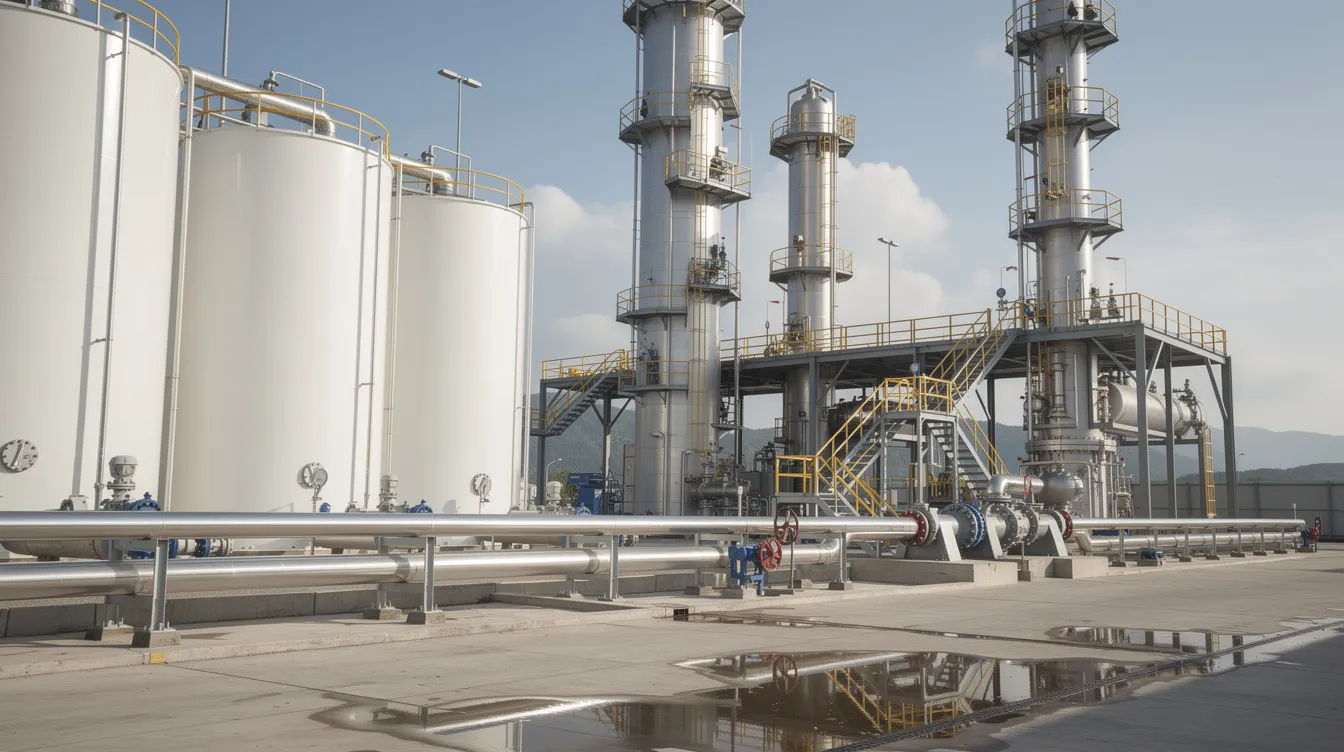
A chemical business involves manufacturing, formulating, trading, or distributing chemical products for industrial or consumer use. The scope is vast:
- Industrial chemicals like sulfuric acid are vital for fertilizers and multiple sectors
- Consumer chemicals – detergents, soaps, floor cleaners, personal care products
- Specialty chemicals include adhesives, coatings, and lubricants – often yielding higher profit margins than commodity chemicals
- Construction chemicals – waterproofing, sealants, tile adhesives
- Agricultural chemicals – biofertilizers, micronutrients, organic manure
- Textile chemicals – dyes, finishing agents, processing auxiliaries
- Water treatment chemicals – coagulants, flocculants, disinfectants
Business models range from full-scale manufacturing to trading, distribution, contract manufacturing, and formulation. Target markets span construction, agriculture, textiles, food processing industries, FMCG, pharma, and consumer goods. Investment can range from under ₹1 lakh for basic formulations to several crores for large manufacturing plants.
Table of Contents
How We Evaluated the Best Chemical Business Ideas
When shortlisting the best chemical business ideas for Indian entrepreneurs, I considered six key factors:
- Market demand – Is there consistent demand and growth in the segment?
- Investment accessibility – Can MSME entrepreneurs realistically enter?
- Profit margins and ROI – What returns can a well-run unit deliver?
- Regulatory compliance – How complex are licenses and environmental compliance?
- Raw materials availability – Are key inputs domestically sourced or import-dependent?
- Competition and entry barriers – How crowded is the market?
Each idea below is evaluated against these parameters.
Top 15 Chemical Business Ideas for Indian Entrepreneurs
India’s specialty chemicals market alone is estimated at US$24 billion in 2026 and projected to reach US$35.4 billion by 2033. Here are the most actionable opportunities.
1. Detergent Powder Manufacturing
The detergent industry has stable market demand and high profitability. India’s detergent and soap market was around ₹52,000 crore in FY 2025, growing at a CAGR of 6.4%.
Why It Stands Out
Laundry detergents enjoy recurring purchases from every household. Soda ash is crucial for glass making and detergent production, and it remains a cost-effective input. The zeolite 4A market is growing due to demand for phosphate-free detergents, opening formulation innovation opportunities. Acid slurry (LABSA) is a key raw material widely available domestically. Soda ash production is environmentally friendly with the Solvay process.
Best For
First-time entrepreneurs with ₹10-25 lakh capital looking for a proven manufacturing business.
Key Strengths
- High market demand with recurring customer purchases
- Relatively simple manufacturing process – mixing, drying, packing
- Multiple distribution channels: retail, institutional, B2B
Possible Limitations
- Intense competition from established brands like Surf, Tide, Nirma
- Working capital requirements for raw materials (55-65% of production cost)
2. Liquid Soap Manufacturing
Demand for specialty cleaning products is rising across India. Growing hygiene awareness post-pandemic has made liquid soap a household staple.
Why It Stands Out
Household cleaning products are easy to manufacture and in high demand. Higher per-unit margins than powder detergents.
Best For
Home-based entrepreneurs and women entrepreneurs starting with ₹1-5 lakh.
Key Strengths
- Growing hygiene awareness driving demand nationwide
- Higher profit margins than powder detergents (30-45% gross margin)
- Suitable for small scale production initially
Possible Limitations
- Packaging costs can eat into margins
- Quality consistency challenges without proper equipment
3. Paint Manufacturing
Eco-friendly paints reduce VOC emissions and cater to green construction – a rapidly growing niche. Titanium dioxide is a common pigment in paints and coatings, and titanium dioxide demand is rising in construction and automotive sectors.
Why It Stands Out
Strong construction and infrastructure growth creates huge demand. Premium and specialty paints command excellent margins.
Best For
Entrepreneurs with ₹25-50 lakh or more, targeting the construction sector.
Key Strengths
- India’s construction boom ensures strong demand
- Multiple product categories: interior, exterior, industrial, decorative
- Higher investment returns compared to basic chemicals
Possible Limitations
- Higher initial investment requirements
- Environmental compliance needs for VOC emissions
4. Adhesive Manufacturing
Advanced adhesives and sealants are essential in high-growth sectors like automotive, packaging, and construction. This is a specialty chemicals business with strong B2B potential.
Why It Stands Out
Diverse industrial applications create steady, contract-based revenue. Specialty products command premium pricing.
Best For
Entrepreneurs with technical expertise and ₹10-25 lakh capital.
Key Strengths
- Diverse industrial and consumer applications
- Steady B2B customer relationships with repeat orders
- Custom formulations for niche markets fetch premium prices
Possible Limitations
- Requires polymer chemistry knowledge
- Strict quality control standards
5. Water Treatment Chemicals
Polyacrylamide is essential for water treatment and paper making. Polyacrylamide demand is driven by stringent water treatment regulations across India. Sodium chlorite is primarily used for disinfectants and bleaching in wastewater treatment applications.
Why It Stands Out
Growing environmental regulations are driving demand. Municipal corporations, industrial estates, and real estate developers all need these products.
Best For
Entrepreneurs with chemistry background targeting B2B and government contracts.
Key Strengths
- Government support for water treatment initiatives and wastewater treatment
- Municipal and industrial customer base across multiple sectors
- Demand for specialty chemicals is influenced by water treatment requirements
Possible Limitations
- Specialized knowledge requirements
- Regulatory approvals needed
6. Bio Fertilizer Manufacturing
Upcycling agricultural waste transforms them into high-value chemicals and bio-inputs. The agriculture sector is seeing a massive shift toward organic and sustainable farming.
Why It Stands Out
Government subsidies and promotion of organic farming create a strong tailwind. Excellent fit for agricultural business ideas.
Best For
Rural entrepreneurs with agricultural connections and ₹5-15 lakh capital.
Key Strengths
- Government subsidies and increasing demand from organic farmers
- Export potential to international markets
- Growing awareness of sustainable agriculture
Possible Limitations
- Seasonal demand fluctuations
- Storage and shelf life challenges
7. Cosmetic Chemical Manufacturing
Natural skincare products utilize sustainable ingredients and local resources. The beauty business in India is booming, with increasing demand for essential oils, herbal extracts, and custom formulations.
Why It Stands Out
High-value products with excellent profit margins. High-purity Active Pharmaceutical Ingredients are needed in pharmaceuticals, and cosmetic-grade intermediates share similar quality standards.
Best For
Entrepreneurs targeting the premium segment with ₹25-50 lakh investment.
Key Strengths
- Growing beauty and personal care market
- Opportunity for custom formulations and private-label manufacturing
- Higher margins than most consumer products
Possible Limitations
- Strict quality and safety regulations (CDSCO, BIS)
- Higher initial investment for equipment and R&D
8. Industrial Cleaning Chemicals
Sodium hydroxide (caustic soda) is a highly demanded industrial chemical used as a base in many cleaning formulations. Industrial cleaning chemicals serve factories, hospitals, hotels, and food processing units.
Why It Stands Out
Recurring B2B demand with larger order sizes and better payment predictability.
Best For
Entrepreneurs comfortable with B2B sales cycles and ₹5-15 lakh starting capital.
Key Strengths
- Recurring demand from industrial customers across various sectors
- Higher volume orders and better payment terms
- Less price sensitivity compared to consumer products
Possible Limitations
- Longer sales cycles for new customer acquisition
- Safety and handling requirements for concentrated chemicals
9. Construction Chemicals
CPVC production is rising due to increased construction activities. The CPVC market growth is fueled by increased construction activities across residential and commercial segments. Investment in CPVC production requires ₹10 crore or more for a full-scale plant.
Why It Stands Out
India’s infrastructure boom is creating increasing demand for waterproofing, tile adhesives, and concrete admixtures.
Best For
Technically skilled entrepreneurs with ₹25 lakh+ investment.
Key Strengths
- Infrastructure development driving strong demand
- High-margin specialty products
- B2B contracts with builders and developers
Possible Limitations
- Technical knowledge requirements in polymer and resin chemistry
- Cyclical demand based on construction activity
10. Textile Chemical Manufacturing
Zinc chloride is used in metal treatment and textile processing. The zinc chloride market is rapidly expanding due to industrial demand, and zinc chloride production is growing as the textile industry continues to expand.
Why It Stands Out
India’s large textile industry provides steady, scale chemical demand. Export opportunities exist to textile manufacturing hubs globally.
Best For
Entrepreneurs near textile clusters (Surat, Tirupur, Ludhiana) with chemistry knowledge.
Key Strengths
- Large textile industry in India providing steady demand
- Diverse product range from dyes to finishing chemicals
- Export potential to international markets
Possible Limitations
- Environmental compliance requirements for effluent discharge
- Competition from established chemical suppliers
Quick Comparison of Top Chemical Business Ideas
| Business | Best For | Investment Range |
|---|---|---|
| Detergent Powder | First-time entrepreneurs | ₹10-25 lakh |
| Liquid Soap | Home-based startups | ₹1-5 lakh |
| Paint Manufacturing | Construction industry focus | ₹25-50 lakh+ |
| Water Treatment Chemicals | Environmentally conscious | ₹10-25 lakh |
| Bio Fertilizer | Rural entrepreneurs | ₹5-15 lakh |
| Cosmetic Chemicals | Premium market targeting | ₹25-50 lakh |
| Industrial Cleaning | B2B focused entrepreneurs | ₹5-15 lakh |
| Construction Chemicals | Infrastructure capitalizing | ₹25 lakh+ |
| Textile Chemicals | Textile cluster proximity | ₹15-30 lakh |
| Adhesive Manufacturing | Technical entrepreneurs | ₹10-25 lakh |
How to Choose the Right Chemical Business for You
Choose Based on Investment Capacity
- Under ₹1 lakh: Phenyl, room freshener formulation, small scale chemical industry products – mostly blending and packaging
- ₹1-5 lakh: Liquid soap, hand wash, dishwash liquid – semi-automatic processes
- ₹5-25 lakh: Detergent powder, cleaning chemicals, small adhesive units
- ₹25-50 lakh: Paint, cosmetics, construction chemicals with R&D capability
- Above ₹1 crore: Specialty chemical plants, resin manufacturing, solvent recovery, large-scale detergent manufacturing
Small-scale chemical businesses can start with ₹50,000 investment for basic formulation work. Initial investment for small chemical businesses ranges from ₹1–3 crore for proper manufacturing setups with ETP and compliance.
Choose Based on Target Market
B2B businesses (industrial cleaning, textile chemicals, construction chemicals) offer larger orders but longer sales cycles. B2C businesses (detergents, soaps, cosmetics) need proper branding, digital marketing, and retail distribution. Your target market determines your marketing strategies and working capital needs.
Choose Based on Technical Expertise
Simple processes – detergent powder, liquid cleaners, phenyl – need minimal technical knowledge. Complex processes – specialty chemicals, resins, construction chemicals – often need a chemical engineer or process chemist on the team.
Choose Based on Location and Infrastructure
Chemical businesses near industrial clusters benefit from shared infrastructure and supply chains. Rural areas suit bio fertilizer, organic inputs. Urban/peri-urban locations work for consumer chemical products. Access to renewable energy can significantly reduce operating costs.
Investment Analysis and Requirements
A typical small chemical manufacturing investment breaks down as:
| Component | Approximate Share |
|---|---|
| Land & Building | 25-30% |
| Machinery & Equipment | 30-35% |
| Utilities (power, water, ETP) | 10-15% |
| Working Capital | 15-20% |
| Marketing & Distribution | 5-10% |
Raw materials often form 55-65% of production cost. Employee costs, transportation, and packaging are recurring operational expenses. Market research before finalizing your product mix is non-negotiable.
Licenses and Regulatory Requirements
Chemical businesses require various licenses and registrations to operate legally:
- MSME/Udyam Registration – Essential for accessing government schemes
- GST Registration – Mandatory for commercial operations
- Factory License – Required under the Factories Act
- Pollution Control Board Consent – Both Consent to Establish and Consent to Operate
- Fire NOC – Especially for flammable chemical processes
- Trade License – From local municipal authority
- BIS/ISI Certification – For consumer products like detergents, paints
- Labour Registration – Under applicable labour laws
Compliance with environmental regulations is crucial for chemical businesses. Failing to obtain PCB consent can result in closure orders and heavy penalties.
Machinery and Raw Material Considerations
Machinery requirements vary by scale:
- Small formulation units: Mixers, blenders, filling machines, basic lab equipment
- Mid-scale units: Sigma mixers, ribbon blenders, reactors, homogenizers, automated packing lines
- Large plants: Continuous process equipment, DCS systems, full QC laboratories
For raw materials, build relationships with 2-3 reliable suppliers for each key input. Solvent recovery facilities provide a green solution for manufacturing firms reusing process solvents. Waste-to-energy technologies help in recycling plastics into raw materials. Chemical recycling technologies convert waste into valuable feedstocks – an area where entrepreneurs can find opportunities by focusing on eco-friendly sectors.
AI-powered process optimization enhances energy efficiency in chemical production, and even small enterprises are beginning to adopt digital monitoring systems.
Government Schemes and Financial Support
Several schemes support chemical manufacturing startups:
- Mudra Loan: Up to ₹10 lakh under Shishu/Kishore/Tarun categories for MSME business ideas
- PMEGP: Credit-linked subsidies (15-35% of project cost) for new manufacturing enterprises
- CGTMSE: Collateral-free loans up to ₹5 crore with government guarantee
- Startup India: Tax benefits, self-certification for regulatory compliance
- State Subsidies: Gujarat, Maharashtra, and Karnataka offer capital subsidies, power duty waivers, and subsidized industrial land
For bank loans, you will need a Detailed Project Report (DPR), CMA Data, financial projections for 5 years, and margin money (typically 10-25% of project cost). A professionally prepared business plan significantly improves loan approval chances.
As a CA, I can tell you – banks reject more applications due to poor documentation than poor business ideas. Get your DPR right.
Which Chemical Business Is Best for You?
- Choose Detergent Manufacturing if you want proven demand with moderate investment
- Choose Water Treatment Chemicals if you want to capitalize on environmental trends
- Choose Bio Fertilizers if you want government support and rural market access
- Choose Cosmetic Chemicals if you want high margins and premium positioning
- Choose Construction Chemicals if you want to ride the infrastructure wave
Specialty chemicals often yield higher profit margins than bulk chemicals and commodity chemicals. The most profitable segments are where you combine product quality with technical differentiation.
Challenges and Risk Management
Every chemical business faces real challenges:
- Raw material price volatility – Petrochemical feedstocks fluctuate with crude oil prices
- Competition – From large manufacturing companies and low-cost imports
- Regulatory compliance – Environmental regulations are getting stricter
- Quality control – Inconsistent product quality destroys brand trust
- Working capital – Cash gets tied in inventory and receivables
- Safety – Manufacturers seek alternatives to hazardous chemical processes for environmental benefits
Practical solutions: maintain 2-3 months of raw material buffer, invest in QC from day one, hire safety-trained staff, use proper branding and consistent formulations. Sustainable chemical solutions are increasingly demanded in the market, and green chemistry trends focus on developing environmentally friendly alternatives – adopting these gives you competitive advantage.
Bio-based specialty chemicals are derived from renewable feedstocks and represent a thriving business opportunity. Bioplastics manufacturing meets demand for sustainable alternatives. Sustainable packaging materials are increasingly required in various industries. Capturing CO2 helps in creating a circular carbon economy – all emerging areas where careful planning can yield a highly profitable and profitable business.
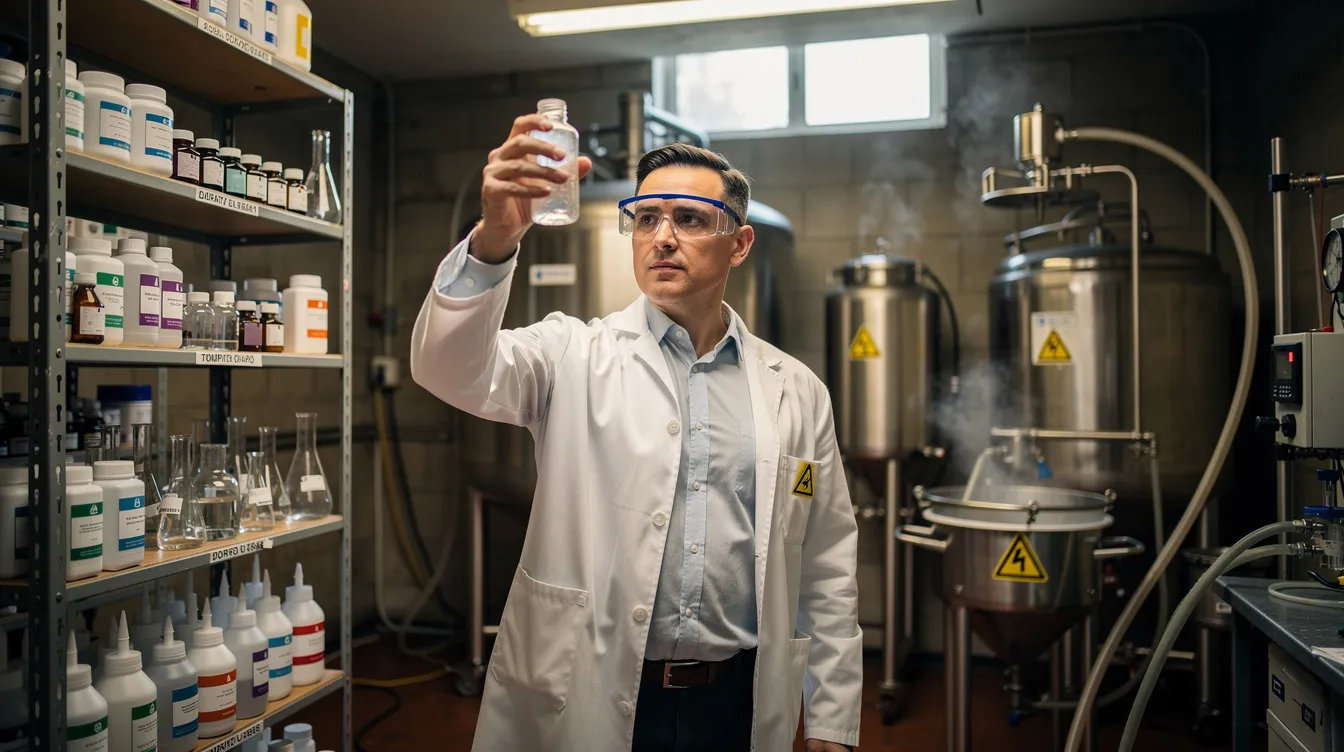
Why Project Report Preparation is Critical
A Detailed Project Report (DPR) is not just a bank requirement – it is your business blueprint. It includes:
- Realistic cost estimates for land, building, machinery, and utilities
- Raw material sourcing plan and supplier identification
- 5-year financial projections: P&L, cash flow, balance sheet
- Break-even analysis and sensitivity scenarios (best, base, worst case)
- CMA Data formatted to bank standards
From my experience of helping thousands of MSME entrepreneurs, I can say that a professionally prepared project report is the single most important document for securing bank finance. It demonstrates you have done your market research, understand your costs, and have a realistic path to profitability.
Final Thoughts
India’s chemical manufacturing industry offers genuine, long-term business opportunities across various chemicals and various sectors. Whether you are looking at a low investment chemical business like liquid soap or a large-scale chemical factory for construction chemicals, the key lies in proper planning, regulatory compliance, and sound financial projections.
Sustainability drives innovation in the chemical industry. The small scale chemical industry is expanding. India’s chemical industry contributes 8.1% to manufacturing GVA and the demand-supply gap means opportunities exist for new entrants.
Don’t start without a proper project report. It is the foundation of every successful chemical business.
If you need help with a Detailed Project Report, CMA Data, business plan, financial projections, bank loan documentation, or MSME advisory for your chemical business, reach out to us at ProjectReportBank.com. We have helped thousands of entrepreneurs turn their chemical business ideas into running, funded businesses.
Frequently Asked Questions
Which chemical business is most profitable in India?
Specialty chemicals, cosmetic chemicals, and construction chemicals are among the most profitable segments due to higher margins and strong demand. Specialty chemicals often yield higher profit margins than commodity chemicals.
Which chemical business requires lowest investment to start?
Phenyl, liquid hand wash, and floor cleaners can be started with as little as ₹50,000-₹1 lakh. These involve simple mixing and packaging.
Can I start a chemical manufacturing business from home?
Yes. Liquid soap, hand wash, room freshener, and small cleaning chemicals can be started from home with basic equipment. Ensure you have proper ventilation and safety measures.
Which licenses are mandatory for chemical businesses?
GST Registration, MSME Registration, Factory License, Pollution Control Board Consent, Fire NOC, and Trade License are essential. BIS certification may be needed for consumer products.
Which chemical products have highest market demand currently?
Cleaning chemicals, detergents, water treatment chemicals, construction chemicals, and cosmetic ingredients see high demand and consistent demand across India.
What profit margins can I expect from chemical manufacturing?
Consumer chemical products typically offer 25-40% gross margins. Specialty and niche products can exceed 40%. Commodity chemicals may yield 10-20%. Actual margins depend on scale, efficiency, and product quality.
Is pollution clearance mandatory for all chemical businesses?
Yes. Every chemical manufacturing unit needs Pollution Control Board consent. Even small formulation units must comply with safety regulations and effluent norms.
Can I get Mudra Loan for chemical business startup?
Yes. Small chemical manufacturing ventures qualify under Mudra Loan categories. You will need a project report and business plan with financial projections.
Which machinery is essential for small scale chemical manufacturing?
Mixers/blenders, storage tanks, filling machines, weighing scales, and basic QC equipment (pH meter, viscometer). Scale up adds reactors, homogenizers, and automated packing lines.
Which chemical business is best for first-time entrepreneurs?
Detergent manufacturing, liquid soap, and cleaning chemicals offer proven demand, simpler processes, and moderate initial investment – ideal for beginners.
Which chemical products have good export potential from India?
Specialty chemicals, dyes, pharmaceutical intermediates, agrochemicals, and industrial cleaning chemicals have strong demand in export markets.
How much initial investment is needed for different chemical businesses?
Ranges from ₹50,000 for basic formulations to ₹1-3 crore for proper small-scale manufacturing with compliance. Large specialty plants need ₹5 crore and above.
Is chemical manufacturing business risky for health and safety?
Handling chemicals involves risks. Proper PPE, ventilation, MSDS documentation, fire safety, and trained staff mitigate these risks significantly.
What are essential safety requirements for chemical manufacturing?
Fire extinguishers, proper ventilation, PPE for workers, MSDS for all chemicals, emergency protocols, first-aid kits, and regular safety training.
How can I prepare a bankable project report for chemical business?
Include realistic cost estimates, market analysis, financial projections (5 years), break-even analysis, and CMA Data. Contact ProjectReportBank.com for professionally prepared reports that banks accept.
About the Author: CA Manish Gugliya (FCA, DISA) is a Chartered Accountant with more than 20 years of experience in project finance, MSME consultancy, business planning, Detailed Project Reports (DPR), CMA Data, startup funding, and bank loan advisory. Through ProjectReportBank.com, he has helped thousands of entrepreneurs across India prepare bankable project reports, secure business loans, and successfully establish MSMEs across diverse industries. His practical guidance combines financial expertise with real-world business experience, making complex business concepts easy to understand for aspiring entrepreneurs.
- Dal Mill Power Consumption, Dryers & Utility Requirements – Complete Guide

- Dal Mill Colour Sorter, Grading, Polishing & Packaging Machinery – Types, Capacity, Cost & Selection Guide

- Pulse Conditioning, Dehusking & Splitting Process – Improving Dal Recovery

- Dal Mill Recovery Ratio, Dal Yield, Broken Percentage & Milling Losses
- Masoor Dal Processing Plant Project Report & DPR in India

- Chana Dal Manufacturing Plant Project Report & DPR in India

- Urad Dal Mill Project Report & DPR in India

- Moong Dal Processing Plant Project Report & DPR in India
- Toor Dal (Arhar Dal) Mill Project Report & DPR in India

- Fully Automatic vs Semi-Automatic Dal Mill – Cost, Efficiency & Investment Comparison

- Dal Mill Land, Building & Plant Layout Requirements in India

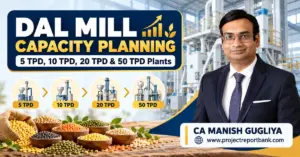
- Dal Mill Capacity Planning – 5 TPD, 10 TPD, 20 TPD & 50 TPD Plants
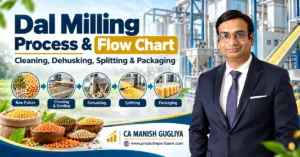
- Dal Milling Process & Flow Chart – Cleaning, Dehusking, Splitting & Packaging
- Dal Mill Machinery, Equipment & Cost – Complete Plant Guide

- Dal Mill Plant Setup Cost in India – Investment & Cost Breakdown