
Estimating the Instant Poha Plant Project Cost requires far more than checking a poha making machine price on a supplier website. Poha is a popular breakfast food across several Indian states, and setting up a manufacturing unit to produce it at scale involves evaluating total capital expenditure, structuring the means of finance, provisioning for working capital, and building a realistic operating cost model. Two plants with the same production capacity can have very different project costs because of differences in automation, packaging systems, seasoning facilities, building specifications, land location and product mix. This article, written from the perspective of a practising Chartered Accountant involved in DPR and CMA Data preparation, breaks down the financial anatomy of an Instant Poha manufacturing project for entrepreneurs, MSME promoters, investors, bank loan applicants and project finance professionals in India.
Key Takeaways
Instant Poha Plant Project Cost covers the full investment from land acquisition through commissioning and working capital margin, not just the machinery price.
- The total cost includes land, civil work, plant and machinery, utilities, pre-operative expenses, interest during construction, contingencies and margin for working capital. A poha mill setup may cost ₹5-10 lakh at the most basic level, while machinery costs alone for medium plants range from ₹12-60 lakh, and total investment for a larger unit may reach ₹140 lakh.
- For the same capacity, the Instant Poha manufacturing plant cost in India can vary based on automation level, packaging line complexity, seasoning system, food-grade building standards and geographic location.
- A bankable Detailed Project Report must balance total project cost with realistic means of finance (promoter contribution + term loan + working capital finance) and demonstrate an acceptable DSCR across the projection period.
- Instant Poha plant operating cost is driven mainly by raw material (paddy or rice, accounting for 55 to 70 percent of production cost), seasoning, packaging, power, labour and selling expenses, which together determine the cost of production per kg.
- Project Report Bank, led by CA Manish Gugliya, prepares DPRs, CMA Data and financial models specifically tailored for Instant Poha and ready-to-cook rice products plants.
Understanding Instant Poha Plant Project Cost
The Instant Poha Plant Project Cost represents the total investment required from land acquisition through commissioning and includes margin for working capital. It is not simply the price of a poha processing machine.
A complete project cost estimate in a DPR covers:
- Land and land development (internal roads, drainage, boundary wall, utility platforms)
- Factory building and civil construction (raw material storage, processing hall, packaging section, warehouse, QC lab, office, staff amenities)
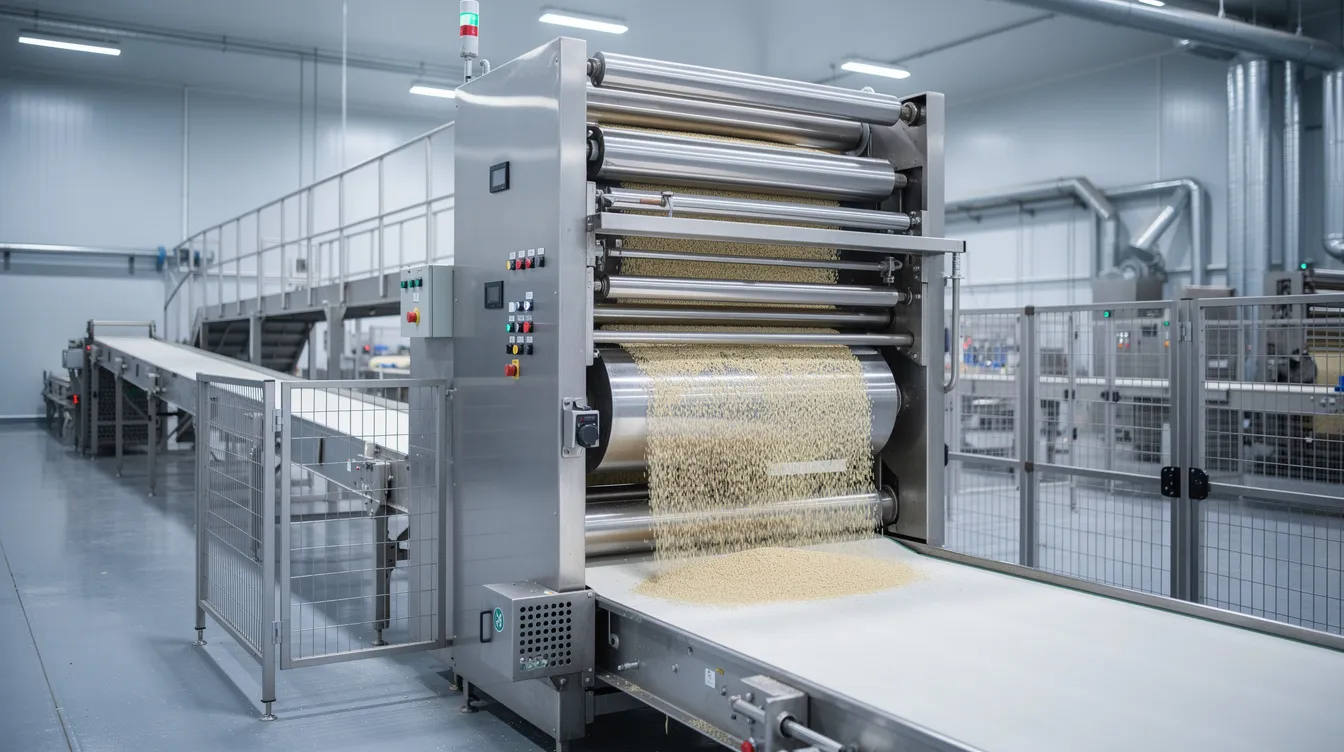
- Plant and machinery (cleaning, roasting, flaking, seasoning, packaging equipment and material handling)
- Electrical installations and utilities (power connection, panels, cabling, water system, compressed air, heating arrangement, ventilation)
- Packaging equipment, laboratory and quality-control infrastructure, furniture and office equipment
Soft costs that must also be captured:
- Preliminary expenses: company formation, consultancy, DPR preparation, legal fees
- Pre-operative expenses: salaries during implementation, trial runs, travel, training
- Interest during construction (IDC)
- Contingencies (typically 5-10% of hard cost)
- Margin money for working capital
A 500 kg/day poha mill requires INR 5-10 lakh investment at the most basic, semi-automatic level. Small-to-medium scale poha manufacturing requires structured capital investment well beyond this when you add building, utilities, packaging and working capital. Relying on a single machine poha quotation is dangerous from a project-finance view. It often leads to underestimation of the Poha Manufacturing Plant Project Cost in bank proposals, triggering cost overruns and cash-flow stress after implementation begins.
Major Components of Instant Poha Plant Capital Cost
This section breaks down the Instant Poha Plant CAPEX into the practical cost heads that appear in a DPR and CMA Data. Each sub-section covers a specific cost block with its typical behaviour: land is highly location-sensitive, machinery is vendor-driven, and utilities must be sized as per capacity.
Land and Site Development
Land and building requirements vary based on plant size for poha manufacturing. Small and medium plants processing around 500 kg to 2 tonnes per day typically need 4,000-6,000 sq ft for the production shed, storage, parking and utilities. A micro mini poha plant focused on bulk rice flakes may need less; larger industrial poha units need proportionally more, especially if future expansion is planned.
Location drives cost sharply. Land prices range from ₹300/sq ft in rural areas of states like Bihar or Chhattisgarh to ₹1,500-2,500/sq ft near industrial estates in Pune, Indore or Ahmedabad. This variation is why land cost should be treated separately from machinery cost in the DPR.
Site development items include internal roads, hard paving for truck movement, drainage and rainwater management, boundary wall, gate, parking bays, loading and unloading area, green belt, and basic security infrastructure. Utility areas (transformer yard, DG set platform, water tank, compressor shed) and statutory requirements (setbacks, fire access) must also be factored in. Detailed land norms and layout options are discussed in the guide on Instant Poha plant capacity, land, layout and utilities.
Building and Civil Construction Cost
Typical building blocks include raw paddy or rice storage, cleaning and conditioning area, roasting and flaking section, seasoning and mixing room, packaging hall, finished goods warehouse, utility area, QC lab, staff amenities and administration office. Proper drainage and effluent management are essential in poha production facilities and should be designed into the civil layout from the start.
Food-grade construction requirements (dust-free flooring, washable wall surfaces, proper slope for drainage, pest-control friendly design) increase the Poha Plant Land and Building Cost by roughly 10-30% over a standard industrial shed. Construction rates for industrial steel sheds range from ₹900-1,600/sq ft in 2025-2026, depending on specifications and finishing level.
In my experience preparing DPRs for food processing units, civil cost is one of the most frequently underestimated items in early-stage project cost estimates. Entrepreneurs often budget only for a basic shed and then discover that food-grade flooring, partitions, drainage and loading docks push actual cost well beyond initial assumptions.
Plant and Machinery Cost
Plant and machinery is usually the single largest component of the Instant Poha Plant Capital Cost, accounting for 40-60% of total fixed capital. Instant poha production heavily relies on equipment for cleaning, roasting, and packaging.
Key equipment groups and indicative individual costs:
| Equipment | Indicative Cost Range |
|---|---|
| Paddy cleaner and aspirator | ₹40,000 – ₹1,50,000 |
| De-stoner | ₹30,000 – ₹60,000 |
| Stainless-steel soaking tanks | ₹25,000 – ₹50,000 |
| Rotary roasting drum | ₹1,00,000 – ₹2,00,000 |
| Flaking mill with rollers | ₹2,00,000 – ₹4,00,000 |
| Grader and sieve | ₹50,000 – ₹1,00,000 |
| Pouch filling and sealing machine | ₹60,000 – ₹1,50,000 |
A semi-automatic poha making machine setup costs INR 5-10 lakh. A mini poha plant costs approximately ₹5,65,000, while an automatic poha making plant costs around ₹14,55,000. Machinery costs for a poha mill overall range from ₹12-60 lakh depending on machine type, capacity and automation. Substantially higher capital expenditure is required for fully automated poha manufacturing lines with PLC controls and integrated packaging.
When evaluating Instant Poha machinery and equipment, compare quotations based on rated capacity versus practical output per hour, power consumption, material of construction (SS vs MS contact parts), flexibility to handle different rice flakes or flavour variants, maintenance needs and vendor after-sales service. Look beyond the machine leading manufacturer label and check actual installed references.
GST, freight, installation and commissioning often add 20-40% over the basic ex-works Poha Manufacturing Machine Cost and must be captured in the DPR CAPEX.
Utility and Electrical Installation Cost
Electrical requirements include sanctioned power load, main LT panel, cable network, internal wiring, MCCs for motors, lighting and earthing. Where required, a transformer and DG set add to the Poha Plant Power Cost related CAPEX. Electric power is critical to running equipment in poha processing facilities.
Utilities for poha manufacturing include electricity, water, and waste handling. The full list covers borewell or municipal water supply with pumping and storage tanks, compressed air system, heating arrangement (LPG, PNG, biomass or electric for roasting), ventilation and exhaust fans, firefighting equipment and basic effluent or waste handling where applicable.
Utility sizing must align with plant capacity and expected future expansion. For a 500 kg/day unit, electrical and water setup may cost ₹1.5-5 lakh combined. Electrical and utility CAPEX is sometimes expressed as a percentage of plant and machinery in early estimates but should ultimately rest on vendor offers and actual load calculations.
Packaging and Product-Mix Related Investment
A simple bulk poha manufacturing line producing plain rice flakes in 25-50 kg bags needs minimal packaging investment; packaging cost per kg stays at ₹0.50-1.00. A branded ready-to-cook Instant Poha facility with small retail pouches, flavours and seasonings requires materially higher investment.
Additional equipment for Instant Poha includes high-speed form-fill-seal (FFS) machines, multi-head weighers, nitrogen flushing, date and batch coding, secondary packing (cartoning), shrink wrapping, check weigher and metal detector for food safety compliance. Packaging machinery can cost ₹1.5-4.0 lakh for automatic units.
Multiple flavour lines (masala, lemon, vegetable Poha) may require additional seasoning drums, mixers, storage for spices and separate packing heads, increasing the Instant Poha Plant Setup Cost. Details on formulation and Instant Poha raw material, seasoning and product mix planning are covered separately. Packaging development costs (design, printing cylinders/plates, initial laminate inventory) are often forgotten in early cost calculations but can be substantial for new brands entering the market.
Illustrative Instant Poha Plant Project Cost Structure
The following table provides an illustrative (not universal) cost structure for a small-to-medium Instant Poha unit in India. Actual Instant Poha Manufacturing Plant Cost depends on capacity, automation, product range, location and vendor quotations.
| Particular | Nature of Cost | Indicative Share / Remarks |
|---|---|---|
| Land | Capital | 5-15%; highly location-dependent |
| Site development | Capital | 2-5%; roads, drainage, boundary |
| Building and civil works | Capital | 12-20%; food-grade finish adds cost |
| Plant and machinery | Capital | 35-50%; largest single block |
| Electrical installation | Capital | 5-10%; panels, cabling, transformer |
| Utilities (water, air, heating) | Capital | 3-6% |
| Packaging equipment | Capital | 3-8%; higher for branded retail |
| Lab and QC equipment | Capital | 1-2% |
| Office furniture and equipment | Capital | 1-2% |
| Preliminary and pre-operative expenses | Capital | 3-5% |
| Contingencies | Capital | 3-5% of hard cost |
| Margin money for working capital | Margin for WC | 5-10% |
Total investment for a poha mill may reach ₹140 lakh for a larger, well-equipped, automated unit with branded packaging. I advise clients to obtain at least 2-3 competing quotations for major machinery before freezing the project cost in the DPR. The total project cost in this example must exactly match the total means of finance, reflecting bankable DPR practice.
How Production Capacity Affects Project Cost
The Instant Poha Plant Project Cost per tonne per day (per TPD) decreases as capacity rises, because many fixed elements do not scale proportionally. But total absolute project cost increases.
- Step-fixed costs: one building and its basic utilities can support more than one packaging line or an additional shift without doubling civil investment.
- Linearly scaling costs: machinery size, storage silos, raw material handling, packaging line throughput and electrical connected load rise more directly with capacity.
- Production volume dictates machinery size and power requirements for poha processing.
- Monthly production capacity can reach approximately 13 tonnes even for a relatively modest unit operating single-shift.
Production capacity and scale influence the financial footprint of poha units. A 1 TPD mini poha plant will have a higher cost per TPD than a 5 TPD industrial plant because the latter spreads land, utilities and administration across more output. Readers seeking detailed guidance on sizing can refer to the guide on Instant Poha plant capacity and layout.
Instant Poha Manufacturing Process and Its Impact on Cost
The core process flow in the Instant Poha manufacturing process and production line runs through cleaning, moisture conditioning, roasting or heating, flattening, cooling, grading, seasoning and packaging. Each step’s configuration affects both CAPEX and OPEX.
Key process facts that influence cost:
- Paddy is soaked in hot water for 24-26 hours before further processing.
- Approximately 5 kg of paddy is roasted with fine sand before flaking.
- Roasting occurs at temperatures between 180°C and 220°C.
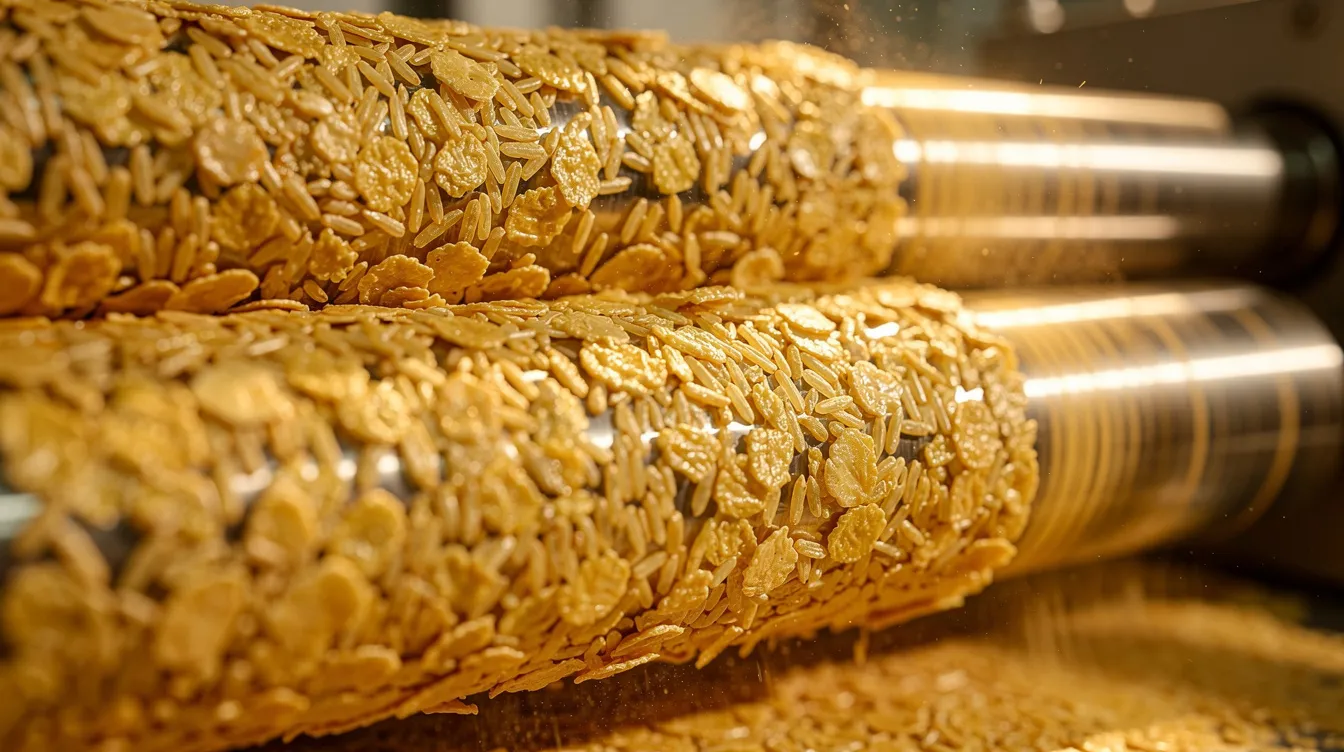
- Flaking rollers determine the thickness of poha flakes, and their specifications affect both machine cost and product quality.
- Short-grain parboiled paddy varieties are preferred for better yield.
Configuration decisions (continuous vs batch roaster, manual vs automatic seasoning system, semi-automatic vs fully automatic packaging) change both the Instant Poha Manufacturing Plant Cost and recurring operating expenses. Establishing a poha processing plant involves balancing machinery and operational variables. Process design also affects yield and wastage of rice flakes, which directly influences Poha Production Cost and profitability assumptions. Financial feasibility analysis should be done only after the broad process route and automation level are finalised with the technical supplier.
Means of Finance for Instant Poha Plant
Every Poha Plant Cost Estimate must be matched by a realistic means of finance plan. Effective financial planning requires thorough budgeting of equipment and operational costs in poha units.
- Promoter contribution consists of equity capital and quasi-equity (unsecured loans from promoters or relatives where accepted by the bank). This typically ranges from 10-40% depending on project size, credit profile and collateral. It directly determines the Debt Equity Ratio for Poha Plant.
- Term loan from a bank covers building, plant and machinery, utilities, electrical installation and related fixed assets, subject to bank norms and collateral.
- Other sources: internal accruals from an existing rice mill or food business, investor equity, or institutional support schemes (where eligible under applicable policy).
- Working capital finance (CC/OD limits) is usually sanctioned separately.
From an advisory standpoint, means of finance must exactly equal total Instant Poha Plant Project Cost in the DPR. Over-reliance on debt can adversely impact DSCR and bankability.
Illustrative Means of Finance
| Source | Amount / Percentage | Remarks |
|---|---|---|
| Promoter contribution | 25-35% | Equity + quasi-equity; minimum per bank norms |
| Term loan | 60-70% | For eligible fixed assets; tenure 5-8 years typical |
| Other sources (if any) | 0-10% | Internal accruals, investor equity |
| Total | 100% | Must equal total project cost |
This structure is illustrative. Actual Instant Poha Plant Project Finance structure depends on promoter net worth, collateral, banking relationship, risk perception and projected cash flows. Working capital limits are typically sanctioned separately but should be part of overall Poha Plant Loan Finance planning. Project Report Bank assists in developing bank-ready financial structures and CMA Data but cannot guarantee loan sanction, which rests solely with lending institutions.
Term Loan for Instant Poha Manufacturing Plant
The term loan generally finances fixed assets: building, plant and machinery, utilities, electrical installation and other eligible assets as per bank policy. Land may or may not be included depending on the lender.
Key term loan parameters:
- Tenure: typically 5-8 years with 6-12 months moratorium
- Interest rate: varies by lender, borrower profile and prevailing market rates
- Security: primary charge on fixed assets, collateral as required
- Promoter margin: minimum equity contribution expected before disbursement
- DSCR assessment: banks use projected cash flows from the Instant Poha manufacturing business to assess repayment capacity
Realistic capacity utilisation and Poha Plant Operating Cost assumptions are critical for DSCR credibility. CA-prepared Instant Poha Plant Project Reports and CMA Data strengthen the case by demonstrating repayment capacity, but final sanction remains at the bank’s discretion. Lenders may insist on separate working capital limits based on assessed Poha Plant Working Capital Requirement, coordinated alongside the term loan proposal.
Working Capital Requirement of an Instant Poha Plant
Working capital covers day-to-day funding of inventory, receivables and operational expenses, less trade credit and other current liabilities. Initial working capital is necessary to cover raw material inventory in poha manufacturing operations.
Key elements:
- Raw paddy or rice stock (often 15-30 days’ supply)
- Seasoning ingredients (spices, oil, dehydrated vegetables)
- Printed packaging materials
- Work-in-process and finished goods inventory
- Debtors and customer credit
Working Capital Requirement = Inventory + Receivables + Other Current Assets – Trade Creditors – Other Eligible Current Liabilities
Branded retail distribution requires higher working capital than bulk B2B sales because of more SKUs, longer receivable cycles and higher finished-goods stock. In my experience, working capital is one of the most commonly underestimated items in Instant Poha Plant DPRs, leading to cash-flow stress even when CAPEX is well funded.
Instant Poha Plant Operating Cost
This section analyses the Instant Poha Plant Operating Cost (OPEX) as presented in a DPR: fixed, variable and semi-variable expenses that together determine Poha Plant Running Cost and profitability. Operating expenses for poha production include labor, utilities, and raw material costs as the primary drivers. The following sub-sections deal with each cost head.
Raw Material Cost
Paddy costs account for 55 to 70 percent of total production costs of flattened rice. Raw paddy procurement impacts overall expenses in Instant Poha production setups. The purchase price of paddy or rice varies seasonally and regionally; moisture content and grain quality affect usable yield after cleaning loss, husk and bran removal, and breakage.
Procurement strategy matters: direct from farmers vs traders, long-term contracts vs spot market, and location advantages near rice-growing belts. Short-grain parboiled paddy varieties are preferred for better yield. Small errors in assumed purchase price can change project viability materially. Readers can explore rice variety selection in detail on the Instant Poha raw material and seasoning page.
Seasoning and Ingredients Cost
Typical Instant Poha seasoning components include edible oil, spices, salt, dehydrated vegetables, nuts, flavour enhancers and permitted food additives, varying by product name and variant (masala, lemon, vegetable Poha). Each flavour has its own recipe cost per kg of finished product; higher-value mixes raise selling price but also increase per-kg Instant Poha Manufacturing Cost. Seasoning cost is sensitive to commodity price fluctuations (oil, spices) and deserves sensitivity analysis. Spillage and rework during start-stop operations should be realistically built into cost assumptions.
Packaging Cost
Packaging cost per kg is much higher for small consumer packs (70 g, 200 g) than for large bulk or institutional packs. Printed laminate pouches, labels, cartons, shrink-wrap, outer corrugated boxes and tertiary transport packaging all contribute. Packaging Cost for Instant Poha should be estimated based on actual quotes from printers and pouch suppliers, including one-time cylinder and plate charges. Regulatory printing requirements (FSSAI, ingredients, nutrition, batch, MRP) influence choice of packaging material.
Power and Fuel Cost
Poha Plant Power Cost covers running all machinery: cleaning equipment, elevators, flakers, roasters, blowers, conveyors, seasoning mixers, air compressors, packing machines and general lighting. Fuel cost (LPG, PNG, biomass, diesel) for roasting and drying is a key variable cost. DPR energy calculations should be based on actual connected load and estimated hours of operation, not arbitrary per-kg assumptions. Different states have different industrial power tariffs, and this location factor should be explicitly reflected. Energy efficiency improvements may increase CAPEX but reduce long-term Poha Plant Utility Cost, improving project IRR.
Labour Cost
Typical manpower categories include production operators, machine attendants, electricians, fitters, packaging staff, quality-control executives, storekeepers, supervisors, shift in-charges and administrative staff. The automation level affects initial investment and long-term labor costs in poha production. Fully automatic machine poha lines reduce headcount but require higher-skilled technicians. Wage levels vary by region; DPRs should use location-specific salary benchmarks plus statutory benefits (ESI, PF, bonus). Annual increment provision should be included in projections.
Repair and Maintenance
Annual repair and maintenance cost covers spares, consumables, service visits and minor repairs of poha making machinery, electrical systems, buildings and material handling equipment. In early years with warranty coverage, actual spend may be lower. A realistic DPR usually provides 2-5% of plant and machinery value as an ongoing provision. Ignoring maintenance distorts Instant Poha Plant Operating Cost and gives an over-optimistic DSCR picture. Some suppliers offer AMC contracts whose cost should be reflected in annual OPEX if chosen.
Selling and Distribution Cost
Selling cost components include freight, distributor or dealer margins, trade schemes, sales incentives, marketing expenses, advertising budgets, modern trade listing fees and online marketplace commissions. For branded Instant Poha, selling and distribution expenses can be a material share of total OPEX. B2B bulk supply has lower marketing cost but tighter margins; B2C branded retail carries higher marketing cost but greater gross margin expectations. Realistic marketing budgets in initial years may be higher as the brand is established.
Administrative and Other Expenses
Administrative overheads cover management salaries, accounting and audit fees, insurance, licence renewal fees, office rent, communication, IT and software subscriptions. Compliance and licensing costs include obtaining food business registration (food safety registration like FSSAI license is mandatory for food processing operations) and environmental clearances. States require local pollution control approvals for effluent emissions in food processing plants. Investment in quality control infrastructure is important for maintaining standards. While modest compared to raw material, these costs are mostly fixed and influence break-even.
Fixed Cost vs Variable Cost in Instant Poha Manufacturing
Classifying costs helps in break-even analysis, pricing and capacity planning.
| Cost Item | Nature |
|---|---|
| Salaries and wages (admin, supervision) | Fixed |
| Rent / lease payments | Fixed |
| Insurance | Fixed |
| Depreciation | Fixed |
| Minimum utility charges | Semi-variable |
| Maintenance | Semi-variable |
| Raw material (paddy/rice) | Variable |
| Seasoning ingredients | Variable |
| Packaging material | Variable |
| Power and fuel linked to production | Variable |
| Outward freight | Variable |
| Sales commission and advertising | Variable |
Fixed costs must be covered irrespective of output; higher capacity utilisation reduces fixed cost per kg. Variable costs determine contribution per kg. Semi-variable elements should be approximated carefully to avoid underestimation of Poha Plant Running Cost.
How to Calculate Cost of Production per Kg of Instant Poha
Cost of Production per Kg = Total Factory Production Cost for the Period ÷ Saleable Quantity in Kg
Total Factory Production Cost includes: raw materials consumed, seasoning, packaging, power and fuel, direct labour, factory overheads, repairs and maintenance and quality-control expenses. Depending on the purpose, finance cost, depreciation and selling overhead may be treated separately to compute contribution margin vs full cost per kg.
Market selling prices for poha range from INR 25-40 per kg. Profit margins can vary between INR 5-15 per kg depending on product mix, scale and brand positioning. Adjust for process losses and yield: how many kg of paddy are required to produce 1 kg of saleable Instant Poha after wastage, graded rejects and sorting. In DPR and CMA Data, cost of production per kg should be shown year-wise to reflect changes in capacity utilisation, raw material prices and efficiency improvements.
Capacity Utilisation and Operating Cost
First-year utilisation for a new Instant Poha plant is usually around 50-60% of installed capacity, gradually ramping up over 2-3 years. DPR projections should realistically reflect this ramp-up.
| Capacity Utilisation | Effect on Cost per Kg | Effect on DSCR |
|---|---|---|
| 50% | Higher; fixed costs spread over less output | Lower; may stress debt servicing |
| 70% | Moderate; approaching efficient zone | Improving; typically adequate |
| 90% | Lower; near optimal absorption | Strong; demonstrates viability |
Banks often review reasonableness of capacity-utilisation assumptions when appraising Instant Poha Plant Project Finance proposals and may stress-test DSCR at conservative utilisation (50-60%). Avoid using 100% utilisation from year one, as this makes projections appear unrealistic and undermines lender confidence.
Importance of Product Mix in Financial Planning
Product mix options range from plain Poha (rice flakes) and Instant Poha (ready-to-cook flavoured) to masala Poha, vegetable Poha, diet variants, institutional bulk packs and small retail sachets. Product mix affects revenue per kg, packaging cost, seasoning cost and overall gross contribution. Higher-value SKUs justify higher operating cost but also require more marketing, better packaging and greater working capital.
A well-planned mix of bulk institutional sales (for restaurants, canteens and distributors) and branded retail packs can balance volume stability, margin and working-capital needs. Financial projections should ideally model at least 2-3 realistic product-mix scenarios to explore their effect on profitability and DSCR. Detailed Instant Poha product mix planning guidance is available separately.
Factors That Can Increase Instant Poha Plant Project Cost
- Purchasing expensive industrial land in a prime location
- Opting for overly high civil specifications or imported construction materials
- Buying imported or very high-end automatic Poha machinery when domestic alternatives from a reputable manufacturer in the country would suffice
- Adding multiple parallel packaging lines, formats and flavour systems from day one
- Creating large warehousing capacity beyond immediate needs
- Specialised infrastructure: cold store for certain ingredients, advanced air-handling systems, elaborate waste-treatment plants
- Project delays in civil construction or machinery delivery, increasing interest during construction
- Layout changes mid-way through implementation, causing rework and cost escalation
Build contingencies of 5-10% of hard cost into the Instant Poha Plant Project Cost to cover such uncertainties. Promoters should freeze key design decisions and vendor choices before finalising the DPR.
Common Mistakes While Estimating Poha Plant Project Cost
| Mistake | Likely Impact |
|---|---|
| Treating a single poha making machine quotation as total cost | 30-50% cost underestimation |
| Ignoring GST, freight and installation on machinery | 10-18% CAPEX gap |
| Underestimating building and civil construction | Budget overrun, implementation delay |
| Omitting electrification and utility infrastructure | Post-sanction funding shortfall |
| Not provisioning margin for working capital | Cash-flow stress from month one |
| Ignoring pre-operative and preliminary expenses | Total cost vs means of finance mismatch |
| Assuming 100% capacity utilisation from year one | Unrealistic DSCR, bank query |
| Underestimating packaging and seasoning costs | Compressed margins, pricing pressure |
| Using optimistic selling prices without market validation | Overstated profitability |
Project Report Bank’s DPR and CMA preparation approach seeks to address these risks through detailed cost build-ups and sensitivity analysis.
What Banks Examine Before Financing an Instant Poha Plant
Banks focus on: promoter profile and experience (especially in food or rice processing), net worth, credit history, identification documents, project concept, market potential and raw material availability in the catchment area.
Quantitative aspects reviewed include total Instant Poha Plant Project Cost, means of finance, proposed debt-equity ratio, projected capacity utilisation, cost of production, profitability, break-even point, DSCR and projected cash-flow statements. Banks also examine security and collateral, quality of machinery suppliers, terms of supply, implementation schedule and adequacy of working capital limits.
An Instant Poha Plant Project Report and CMA Data prepared with realistic assumptions help lenders evaluate proposals more confidently but do not guarantee sanction. Promoters should be prepared to explain assumptions on pricing, sales volumes, operating cost and working capital cycles during bank discussions.

DPR Requirements for Instant Poha Plant Project Finance
A professional Detailed Project Report is both a financial and technical document, aligning plant layout, capacity and process with credible financial projections.
Typical DPR contents include:
- Executive summary, promoter and company profile
- Project concept, detailed product description and Instant Poha product mix
- Installed capacity and capacity-utilisation plan
- Manufacturing process description
- Plant and machinery list with specifications and quotations
- Land and building details, utilities and manpower planning
- Detailed Instant Poha Plant Project Cost and means of finance
- Working capital assessment
- Projected cost of production, sales and pricing assumptions
- Projected P&L, balance sheet and cash-flow statement
- DSCR calculation, break-even analysis, ROI, IRR, payback period
- Sensitivity and scenario analysis
Project Report Bank, under the guidance of CA Manish Gugliya, assists entrepreneurs and MSMEs in preparing customised, bank-ready Instant Poha Plant DPRs and CMA Data aligned with lender expectations.
FAQ: Instant Poha Plant Project Cost, Finance & Operations
All figures mentioned below are indicative. Promoters should obtain location- and capacity-specific estimates before making investment decisions.
What is a realistic investment range to start an Instant Poha plant in India?
A very small, semi-automatic mini poha plant focused on bulk rice flakes can start at ₹5-10 lakh for basic machinery, with total project cost (including land, building, utilities and working capital) in the range of ₹25-40 lakh. A fully automatic branded Instant Poha manufacturing plant with multiple SKUs and advanced packaging can require ₹80 lakh to ₹1.40 crore or more. Actual investment depends on plant capacity (TPD), automation, land cost, building specifications, machinery configuration and working capital requirement, so entrepreneurs should rely on a tailored DPR rather than treating market figures as definitive.
How long does it typically take to implement an Instant Poha manufacturing project?
Implementation timelines vary. DPR preparation and bank finance processing may take 2-4 months depending on documentation readiness. Civil construction and utility setup typically run 3-6 months. Machinery fabrication, delivery, installation and trial runs add another 2-4 months. Total timeline from DPR to stable commercial production often falls in the 8-14 month range. Good planning of layout, vendor selection and finance documentation can shorten this; changes mid-way lead to delays and higher interest during construction.
Do I need prior food industry experience to get a bank loan for an Instant Poha plant?
Prior food or rice-processing experience strengthens a proposal, but banks may consider first-time entrepreneurs who demonstrate strong understanding of the business, adequate promoter contribution, collateral and a well-prepared DPR and CMA Data. Assembling a competent technical and financial advisory team helps mitigate perceived execution risk in the eyes of lenders.
Can I start with plain rice flakes and later add branded Instant Poha products?
Many promoters begin with bulk Poha manufacturing to build volume, then reinvest to add seasoning and packaging capability for Instant Poha and other ready-to-cook rice products. The initial plant layout and utility planning should keep future expansion in mind to avoid major rework or duplicate investment later.
How can Project Report Bank support my Instant Poha plant proposal?
Project Report Bank prepares customised Instant Poha Plant Project Reports, CMA Data, financial projections and feasibility analyses, aligned with current banking practices and MSME norms in India. Interested promoters can share project details and preferred communication channel (including email or mobile number) so that the team can suggest an appropriate documentation and advisory package.
Conclusion and Professional Advisory Note
A sound Instant Poha Plant Project Cost analysis must combine complete CAPEX (land, building, machinery, utilities, installation), adequate working capital, realistic Instant Poha Plant Operating Cost projections, carefully structured means of finance and a feasible capacity-utilisation roadmap. Two plants of identical rated capacity can have very different costs and operating economics depending on location, automation level, product mix and marketing strategy. Boilerplate numbers from the internet cannot substitute for a professionally prepared DPR tailored to your specific project.
A well-prepared Instant Poha Plant Project Report and CMA Data serve not only the purpose of obtaining bank finance but also give promoters a clear picture of cost of production, break-even, DSCR and long-term financial viability. If you are planning an Instant Poha manufacturing unit, existing rice processors considering product diversification, or MSME promoters evaluating this opportunity, consider engaging Project Report Bank for services including Detailed Project Reports, bank finance DPRs, CMA Data preparation, financial models, pitch decks and project finance advisory.
About the Author
CA Manish Gugliya is a practising Chartered Accountant with hands-on experience in preparing bankable DPRs, CMA Data, financial projections and feasibility reports for MSME and food-processing projects across India. His work through Project Report Bank focuses on helping entrepreneurs convert technical project ideas like Instant Poha plants into financially viable, lender-ready business proposals.
Website: www.projectreportbank.com