

Key Takeaways
An industrial ice cream plant project cost in India encompasses far more than machinery. It includes land, building, plant and machinery, refrigeration and hardening tunnels, utilities, pre-operative expenses, contingencies and margin for working capital. Promoters who treat machinery price alone as the full investment often face serious funding gaps during implementation.
- For medium- to large-scale ice cream manufacturing plants, total investment can range from a few crore to several tens of crores depending on capacity, automation, cold-chain depth and location. All figures in this article are purely illustrative and not quotations.
- Accurate project cost estimation is directly linked to bankability, repayment capacity and long-term viability, especially for automated plants targeting branded or institutional ice cream markets.
- The article covers both cost components with a typical cost breakdown and means of finance such as promoter contribution, term loan, working-capital finance and possible subsidy or grant support.
- Actual ice cream production costs depend on various factors including scale, automation level, product mix, refrigeration technology and site conditions. A customised detailed project report is essential before approaching banks or investors.
- This content is written from the practical viewpoint of CA Manish Gugliya, a Chartered Accountant experienced in DPRs, bank finance and ice cream manufacturing projects in India.
Introduction: Why Ice Cream Plant Project Cost & Finance Planning Matter
India’s ice cream market is projected to reach ₹30,000 crore, growing at 13–15% annually. The global ice cream market was valued at USD 78.57 billion in 2025 and is expected to reach USD 102.38 billion by 2034. With India producing over 20 crore tonnes of milk annually, the raw material base is strong. This combination of demand and supply has made ice cream manufacturing one of the most attractive food-processing investments in the country.
Yet, the majority of project stress in this sector does not come from weak demand. It comes from poorly estimated project costs, unrealistic funding structures and gaps between what a promoter budgets and what the project actually requires. Precise estimation of the ice cream plant project cost is critical for industrial promoters, dairy companies and investors planning automated ice cream manufacturing units.
Project cost goes far beyond basic ice cream machinery. It must include land and site development, factory building, processing equipment, refrigeration, hardening tunnels, cold storage, utilities, quality-control infrastructure, pre-operative expenses, contingencies and margin for working capital. Installed capacity (say, 10,000–20,000 L/day), product mix (cups, cones, sticks, tubs, bulk packs), level of automation, packaging speeds and refrigeration load all directly influence the industrial ice cream plant setup cost in India.
The relationship between total project cost, means of finance, bank term loan requirement, working-capital finance and the unit’s repayment capacity over a typical 7–10 year horizon must be understood before any investment decision is finalised. This article focuses exclusively on medium- and large-scale industrial ice cream manufacturing-not micro parlours, carts or commercial kitchens-and all cost numbers used are illustrative examples, not quotations.
What Is Included in Ice Cream Plant Project Cost?
Total project cost for an industrial ice cream manufacturing plant is the comprehensive sum of every expenditure needed to bring the plant from concept to commercial production, plus the margin for working capital required to sustain initial operations. It is not simply a machinery invoice or a civil construction estimate.
Here is how the key elements differ:
- Fixed capital investment: Land, site development, building, plant and machinery, refrigeration, utilities, electricals, QC lab and office infrastructure.
- Preliminary and pre-operative expenditure: Company formation, DPR preparation, technical consultancy, engineering design, statutory approvals, recruitment, training, trial runs and initial marketing.
- Interest during construction (IDC): Interest cost on term loans drawn during the construction period, before commercial production begins.
- Contingency provision: A buffer for price escalation, design modifications, freight changes, exchange-rate movements and implementation delays.
- Margin money for working capital: The promoter’s share of working-capital funding for initial raw materials, packaging, finished goods and operating expenses.
A simple formula:
Total Project Cost = Land & Site Development + Building & Civil Works + Plant & Machinery + Refrigeration & Cold Storage + Utilities & Supporting Infrastructure + Electricals & ETP + Office & QC Facilities + Preliminary & Pre-operative Expenses + IDC + Contingencies + Margin for Working Capital
Ice cream manufacturers and bankers should never treat machinery alone as the complete capital investment, especially for fully automatic plants. Banks typically appraise the full project cost-including fixed assets and margin for working capital-when considering a term loan for an ice cream manufacturing unit.
Major Cost Components of an Industrial Ice Cream Manufacturing Unit
The subsections below break down each major cost component of an ice cream factory setup cost, from land to working capital, using practical industrial terminology. Relative percentages of each cost head (for example, machinery requirements at 30–45%, civil works at 10–18%, refrigeration at 15–25%) can vary by capacity, product portfolio and technology selection.
A structured cost breakdown helps in preparing a robust ice cream plant project report and in justifying the means of finance to lenders or investors.
Land and Site Development Cost
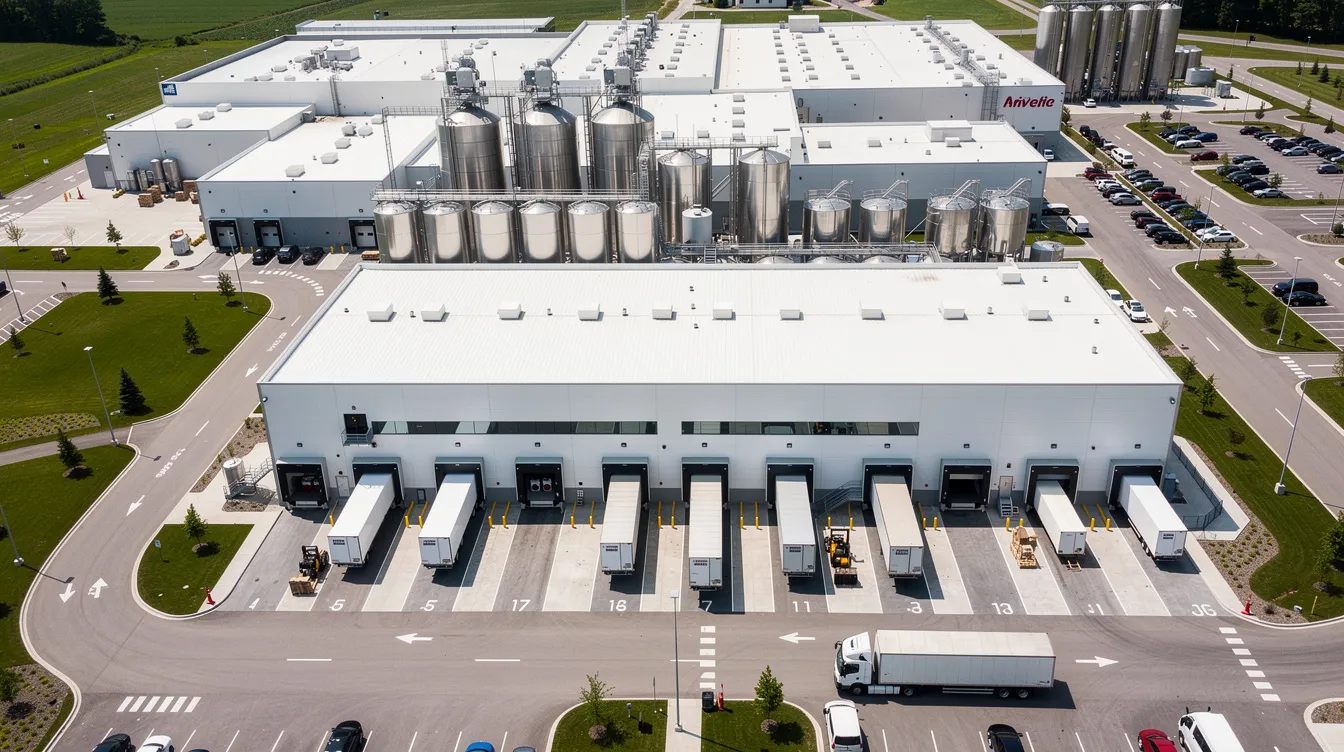
A medium to large industrial ice cream plant (10,000–20,000 L/day with cold store and dispatch yard) typically needs 1–3 acres. Land prices vary dramatically between industrial belts, semi-urban areas and metro fringes across India.
Specific elements of ice cream plant land and building cost include:
- Freehold purchase or long-term lease, stamp duty and registration
- Site levelling, internal roads, boundary wall and security gate
- Drainage, rainwater harvesting and sewage connections
- Parking bays, loading and unloading zones for milk tankers and refrigerated dispatch vehicles
Planning space for future expansion of pasteurisation, freezing, hardening tunnel and cold storage lines at the outset can save significant cost later. Retrofitting additional cold-chain infrastructure on a cramped site is far more expensive.
Lenders may treat speculative land values or excessive land banks differently from land strictly required for the proposed project. For project-cost purposes, land should be valued at actual acquisition cost, not at future expected market value or revalued figures.
Factory Building and Civil Construction Cost
The built-up area of an industrial ice cream plant covers multiple functional zones: raw milk and cream reception, ingredient storage, mix preparation, pasteurisation and homogenisation, ageing room, freezing hall, filling and packing section, hardening tunnel area, frozen storage, dispatch docks, QC lab, utilities block and administration building. The plant layout must support a logical, hygienic process flow.
Food-grade construction standards-epoxy or PU flooring, insulated sandwich panels, smooth walls, rounded corners, hygienic drainage and temperature-controlled rooms-can increase factory building cost compared to ordinary industrial sheds. For plants above 20,000 LPD, building costs often range from ₹1,500 to ₹3,000 per sq ft depending on specification and location.
Civil works also include heavy foundations for continuous freezers, brine tanks, ammonia compressor rooms and structural supports for insulated ducting and piping. Staff amenities, change rooms, hand-wash and hygiene stations, canteen, security cabin and fire-safety infrastructure are non-negotiable and must be budgeted separately. Promoters should obtain itemised civil estimates from qualified architects, as building cost is often underestimated in early planning.
Plant and Machinery Cost (Processing, Freezing and Filling Lines)
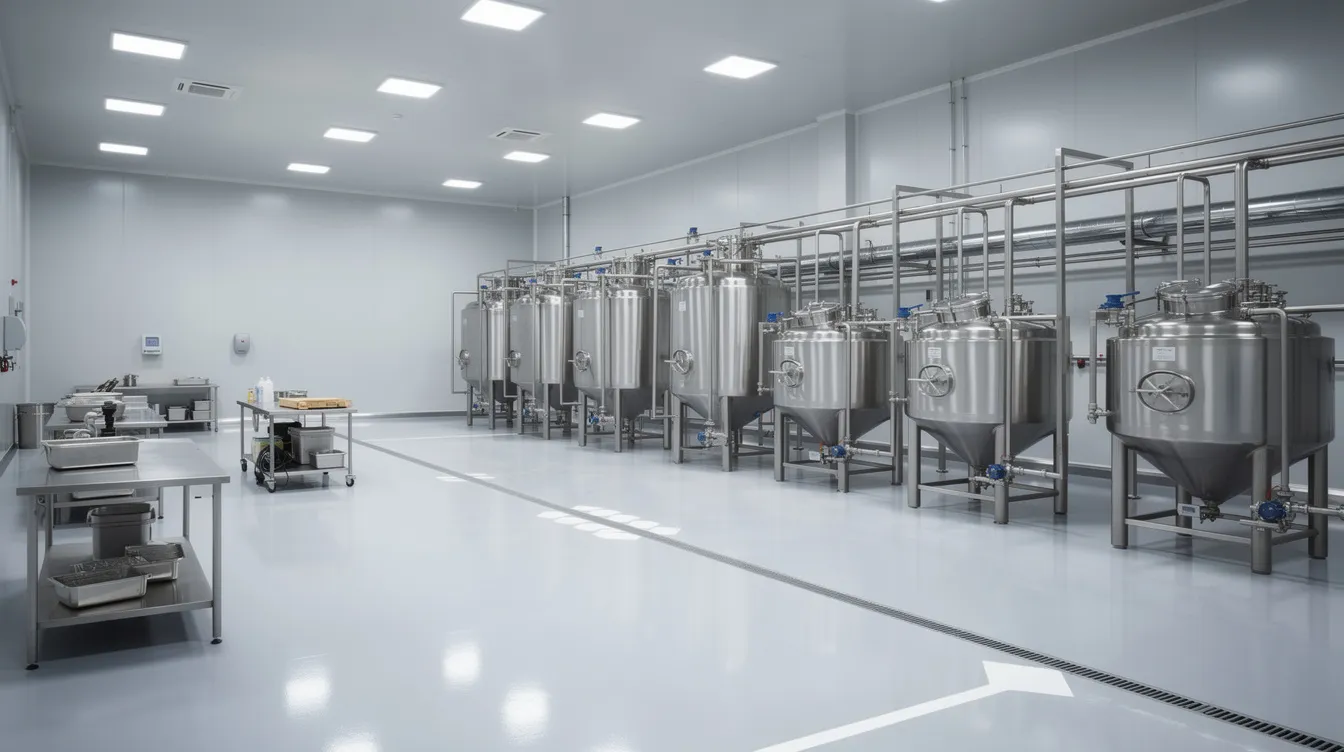
Machinery accounts for 30% to 50% of total capital expenditure in most industrial ice cream projects. Core processing and packaging equipment includes milk reception and storage tanks, mix blending systems, a milk pasteurizer, homogenisers, ageing vats, continuous freezers, fruit feeders, ripple pumps, a batch freezer where needed, cup/cone/stick/family-pack filling lines, moulding or extrusion systems, packaging and coding machines and CIP systems. Pasteurization tanks are essential for heating milk to required food safety standards. Ice cream production also requires homogenizers and filling machines to achieve consistent texture and efficient packaging.
A typical ice cream plant capacity ranges from 100 to 500 L/hr for semi-industrial setups, while large automated plants operate at far higher throughput. The automatic ice cream plant machinery and equipment cost depends on installed capacity, number of flavours and SKUs (vanilla, chocolate, mango, and seasonal flavors), speed of filling lines, change-over flexibility, level of automation (PLC/SCADA), and whether the plant handles both dairy ice cream and frozen dessert products.
Fully automatic machinery lines cost significantly more than semi-automatic setups but reduce labour costs, improve wastage control and deliver better product consistency-critical for ice cream brands targeting national or institutional distribution. For reference, a 500 LPH core processing plus filling machinery setup may cost ₹50–80 lakh, while larger fully automatic plants with multiple filling lines for cups, cones, sticks and tubs can see machinery investment of ₹30–55 crore.
Cost implications of imported versus domestic technology, stainless steel grade (SS304 vs SS316), energy efficiency features and after-sales support from leading manufacturers must be evaluated. Machinery cost in the project report should include GST, freight, insurance, installation, commissioning, performance trials and basic spares-all itemised in the cost breakdown shared with banks.
Refrigeration, Hardening Tunnel and Cold Storage Infrastructure
Refrigeration systems, hardening tunnels and cold rooms are often the single largest and most critical component of industrial ice cream plant capital investment. In large-scale plants, refrigeration and cold-chain infrastructure can represent 25–40% of total fixed capital. Underestimating the refrigeration load can restrict production capacity and compromise product quality, overrun control and shelf life.
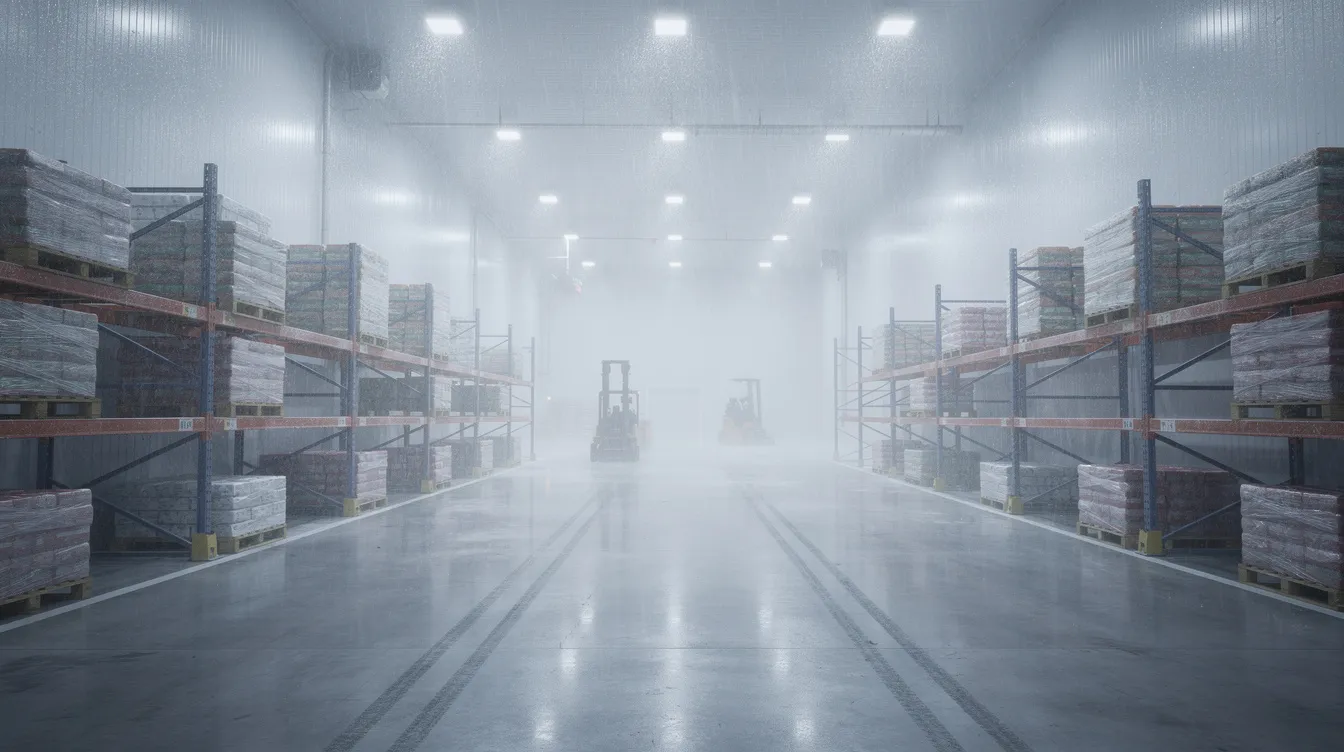
Major refrigeration elements include central ammonia or Freon-based refrigeration plant (ice cream plants commonly use R404A refrigerant for cooling systems), compressors, condensers, evaporators, glycol or brine systems, hardening tunnels operating at –35°C to –40°C, low-temperature cold rooms at –20°C, insulated doors, racking systems, insulated dock areas and temperature-monitoring systems. An ice cream freezer for the hardening stage must be sized for peak-season throughput, not average production.
The ice cream cold storage, refrigeration and hardening tunnel requirements must be designed in line with peak-season production volume, inventory holding days, distribution radius and number of SKUs. Backup power through DG sets, duty-standby compressor configurations and energy-efficient design (VFDs, evaporative condensers, good insulation) increase initial cost but substantially reduce long-term operating expenditure. Whether refrigerated vehicles or reefer containers are part of the project scope should be clarified early, as this alters the overall setup cost.
Utilities, Electricals and Supporting Infrastructure
Production machinery and utilities/supporting infrastructure are distinct cost categories. Utilities include HT/LT electrical connection, transformer, main LT panel, cabling, internal electrification, DG sets, boiler or hot-water generator, water-treatment plant, chilled-water system, air compressors, steam and air pipelines, CIP utility stations and fire-detection and fire-fighting systems. Ice cream production facilities typically require substantial utilities for refrigeration and water. Utilities account for roughly 15% to 20% of operating expenses during production.
An effluent treatment plant (ETP), oil and grease traps and wastewater-drainage systems are usually required due to CIP discharge and wash-water from ice cream production. Projects may also include rooftop solar power and energy-monitoring systems where financially justified. Separate budgets should be maintained for electrical installations, ETP and utilities in the ice cream plant cost breakdown because banks often appraise them as distinct fixed-asset categories.
Quality Control, Food Safety and Office Infrastructure
Industrial ice cream manufacturing requires a well-equipped quality-control laboratory and food-safety infrastructure. An FSSAI food license is mandatory for ice cream production, and quality control and safety testing are essential components of any production facility. Licensing and compliance costs include food safety registrations and environmental permits.
QC investments cover microbiology lab equipment, basic chemical-analysis instruments, sample freezers, incubators, weighing balances, pH meters, temperature loggers and periodic third-party testing. Food-safety infrastructure includes hygiene stations, wash basins with elbow-operated taps, pest-control measures, traceability and batch-coding systems, and staff training facilities for quality inspection protocols.
Office assets-furniture, computers, networking, ERP or production-management software, CCTV, access control, attendance and communication systems-may form a small percentage of total investment but are essential for compliance, audit readiness and professional management. Labor costs vary significantly depending on the level of automation and plant size, with labor generally accounting for 10% to 15% of operational expenditures.
Preliminary Expenses, Pre-operative Costs and Contingencies
Preliminary and pre-operative expenses cover company formation, legal documentation, project report preparation, technical consultancy, detailed engineering, statutory approvals (including FSSAI and pollution board), recruitment, training, travel, vendor inspections, trial runs and initial marketing or product launches. Starting an ice cream business requires securing all necessary licenses before commissioning.
Interest during construction (IDC) arises when term loans are drawn before the plant starts commercial production, particularly in projects with a 12–18 month implementation period. Pre-operative costs for trial production, batch validation and packaging development are often underestimated in ice cream plant DPRs, leading to cost overruns.
Contingency provision covers potential price escalation, design changes, additional civil work, extra utility requirements or changes in machinery specifications. The contingency percentage should be justified based on project complexity and implementation risk-typically 2–6% of project cost. All these costs must be clearly shown in the ice cream plant project report so that total project cost and bank loan requirement are estimated realistically.
Margin for Working Capital and Seasonal Funding Needs
Working capital in an ice cream plant covers finance required for milk, cream, sugar, flavors, stabilisers, emulsifiers, packaging materials (cups, cones, sticks, wrappers, cartons), utilities, labour and overheads between cash outflow to suppliers and collection from customers. Raw materials include milk, sugar and flavor essences, with key raw materials like milk costing ₹50–60 per litre in India. Raw material costs constitute roughly 60% to 70% of total operating expenses, with milk cream being the primary cost driver. Operating costs are driven by raw materials, mainly milk cream. Ingredient costs for ice cream production can vary based on quality and formulation.
Total working-capital requirement, bank-funded working-capital limits (cash credit, working-capital demand loans) and promoter’s margin for working capital are different things. Only the margin money is included in total project cost. Initial inventory reserve should cover at least one to two months of raw materials. A small plant may need ₹5 lakh for initial raw materials, while medium-to-large plants require proportionally more.
The seasonal nature of the ice cream market-peak summer volumes can be 3–4× winter levels-increases inventory and receivable levels during certain months. This affects the working-capital cycle materially. Quick commerce platforms and modern distribution channels add complexity but also provide easy access to consumers. Margin money for working capital is typically a one-time component in the project cost, while regular working-capital borrowings are revolving facilities assessed separately. Initial working capital is a significant part of setup costs and should be aligned with production volumes, finished-goods holding days in cold storage, credit terms to distributors and credit received from suppliers.
Factors Affecting Industrial Ice Cream Plant Cost in India
Industrial ice cream plant cost in India varies widely. The initial investment for a small ice cream plant is about ₹25 lakh (approximately ₹25,00,000), while starting a small-to-medium-scale ice cream manufacturing plant requires substantially higher capital investment-total investment for such units typically ranges from $100,000 to $600,000, and large-scale industrial production facilities can cost several tens of crores.
Capacity-related factors: Installed capacity (5,000 vs 25,000 L/day), number of shifts, expected capacity-utilisation ramp-up and whether the plant is designed for future expansion. A small ice cream plant can produce 1,000 litres daily, while medium and large plants scale significantly higher. The industrial ice cream manufacturing process and production line configuration directly determines cost.
Product and process factors: Product mix between dairy ice cream and frozen desserts, share of bulk packs vs impulse products (cups, cones, bars), number of flavors, premium or low sugar variants, packaging styles and cold chain infrastructure depth.
Technology and automation: Level of automation (manual filling vs automatic high-speed lines, PLC controls, auto-CIP), domestic vs imported commercial ice cream machine technology, and energy-efficient refrigeration all affect both CAPEX and OPEX.
Location and infrastructure: Land cost, labour availability, power reliability, water quality, proximity to dairy farmers and milk supplies, ambient temperatures and access to distribution networks. Initial setup costs can vary widely depending on these factors.
Implementation risk: Longer construction periods increase IDC and contingency utilisation, while fast-track projects demand stronger upfront planning and vendor coordination.
Illustrative Ice Cream Plant Project Cost Table (Medium/Large Industrial Unit)
The table below is an illustrative example for a hypothetical industrial ice cream plant in India with approximately 15,000 L/day installed capacity. It is not a quotation or a standard cost applicable to all projects.
| Cost Component | Illustrative Amount (₹ crore) | % of Total Project Cost | Basis / Key Assumption |
|---|---|---|---|
| Land and Site Development | 3.00 | 7.1% | ~2 acres in industrial belt, including registration and levelling |
| Building and Civil Works | 6.50 | 15.5% | Food-grade construction, insulated panels, hygienic flooring |
| Plant and Machinery | 14.00 | 33.3% | Processing, freezing, filling lines, CIP, incl. GST and installation |
| Refrigeration and Hardening System | 7.00 | 16.7% | Ammonia system, hardening tunnel, cold rooms, insulated panels |
| Utilities (Boiler, Water, Air) | 2.50 | 6.0% | Boiler, WTP, air compressor, CIP utilities |
| Laboratory and Quality Control | 0.60 | 1.4% | Micro lab, chemical testing, sample storage |
| Electrical Installation | 2.00 | 4.8% | HT/LT panels, transformer, DG set, cabling |
| ETP and Waste Management | 0.50 | 1.2% | ETP, oil-grease trap, drainage |
| Furniture and Office Equipment | 0.40 | 1.0% | Office, ERP, CCTV, IT |
| Preliminary and Pre-operative Expenses | 1.50 | 3.6% | DPR, consultancy, training, trials, marketing |
| Interest During Construction | 1.50 | 3.6% | IDC on term loan during 15-month implementation |
| Contingencies | 1.00 | 2.4% | ~3% of fixed capital as risk buffer |
| Margin for Working Capital | 1.50 | 3.6% | Promoter’s share for initial inventory and receivables |
| Total Project Cost | 42.00 | 100% | – |
Plant and machinery, refrigeration and building are the three most sensitive components. A shift from semi-automatic to fully automatic filling lines can increase machinery cost by 30–50%. Expanding cold-storage capacity for wider distribution or more SKUs can add ₹3–8 crore. Changes in plant size, automation level or product mix will alter these figures significantly-promoters must rely on actual vendor quotations and site-specific estimates.
Capacity-wise Investment Comparison for Different Industrial Configurations
Not all industrial ice cream projects are identical. The investment profile changes significantly between a medium semi-automatic plant, a large fully automatic plant and an integrated multi-product facility.
| Parameter | Medium Semi-Automatic | Large Fully Automatic | Integrated Multi-Product |
|---|---|---|---|
| Indicative Capacity | 5,000–10,000 L/day | 15,000–25,000 L/day | 25,000–50,000+ L/day |
| Automation Level | Semi-automatic filling, manual packing | PLC-controlled, auto filling and packing | Fully automated, SCADA-integrated |
| Product Formats | Cups, family packs | Cups, cones, sticks, tubs | Ice cream, softy mix, frozen dessert, novelty bars |
| Machinery Intensity | Moderate | High | Very high |
| Refrigeration Requirement | Moderate cold storage | Large hardening tunnel + cold rooms | Extensive cold chain infrastructure |
| Approx. Investment Range | ₹10–₹25 crore | ₹25–₹60 crore | ₹50–₹100+ crore |
| Working-Capital Intensity | Moderate | High (seasonal) | Very high |
| Suitable Promoter Profile | Regional brand, dairy cooperative | National FMCG brand, established dairy | Integrated dairy company, PE-backed venture |
All investment ranges are broad and illustrative. Final cost must be based on detailed technical configuration, site conditions and vendor quotations. Promoters should align chosen capacity and automation level with realistic market-demand estimates, distribution reach and financial strength.
What Is Means of Finance in an Ice Cream Plant Project?
Means of finance describes the set of funding sources used to meet the total ice cream plant project cost, including both fixed capital and margin for working capital. Every DPR must show how the total investment will be funded.
The core equation:
Total Means of Finance = Promoter Contribution + Term Loan + Eligible Subsidy or Grant + Acceptable Unsecured Loan or Quasi-equity + Other Approved Funding Sources
Total means of finance must equal total project cost exactly. A balanced ice cream project funding structure considers project risk, expected cash flows, collateral security and promoter net worth rather than relying excessively on bank debt or optimistic subsidy assumptions.
Major Sources of Finance for an Industrial Ice Cream Plant
Promoter contribution includes equity capital, partners’ or proprietor’s capital, internal accruals from existing businesses and documented personal funds. Banks expect clear evidence of the source and timing of contribution.
Bank term loan may finance eligible fixed assets such as building and civil works, plant and machinery, refrigeration systems, utilities, electricals and QC infrastructure. Loan tenures for food-processing projects frequently span 7–10 years with moratorium during the construction phase. Disbursement is typically against invoices and project progress. Sanction terms, security and margin vary by bank and project.
Working-capital finance through cash credit, working-capital demand loan or bill discounting is assessed separately based on inventory, receivables and the operating cycle of ice cream production and distribution.
Subsidy and government support may be available under schemes like PM Kisan SAMPADA Yojana for food-processing infrastructure or state-level industrial-incentive policies for capital subsidies. However, subsidy must not be treated as assured until formally sanctioned. Promoters should verify the latest scheme guidelines, eligibility norms and disbursement conditions from official MOFPI notifications.
Unsecured loans and quasi-equity from promoters or related parties may supplement funding, subject to bank appraisal, subordination requirements and repayment restrictions. For large integrated projects with heavy marketing and cold-chain investment, equity investors or strategic partners may be appropriate.
Illustrative Means of Finance Structure for an Ice Cream Manufacturing Project
This table links to the earlier illustrative total project cost of ₹42 crore.
| Source of Finance | Illustrative Amount (₹ crore) | % of Total Project Cost | Important Appraisal Consideration |
|---|---|---|---|
| Promoter Contribution (Equity) | 12.60 | 30.0% | Source must be documented; infused before or during implementation |
| Term Loan | 26.40 | 62.9% | Secured against project assets; repayment linked to DSCR |
| Eligible Subsidy / Grant (if sanctioned) | 1.50 | 3.6% | Not assured; project must remain viable without it |
| Unsecured Loan (Promoter / Related Party) | 1.50 | 3.6% | Subject to subordination; may be treated as quasi-equity by bank |
| Total Means of Finance | 42.00 | 100% | Must equal Total Project Cost |
Promoter contribution of 30% results in a project-specific debt–equity ratio of approximately 2.1:1 (treating ₹26.40 crore term debt against ₹12.60 crore equity). If the bank accepts the unsecured loan as quasi-equity, the effective ratio improves. This example is purely educational-actual structures must be customised.
Debt–Equity Ratio, Promoter Contribution and Bankability
Debt–equity ratio in project finance is computed as long-term debt divided by promoter’s equity (tangible net worth in the project). Banks typically expect promoters to contribute 20–30% of project cost as equity. The difference between project-specific debt–equity and overall balance-sheet leverage is important: banks may review both.
Unsecured loans from promoters may sometimes be treated as quasi-equity depending on subordination conditions, repayment terms and bank policy. Very high leverage increases DSCR pressure and financial risk, especially given the seasonal nature of ice cream sales and sensitivity to power and milk costs. There is no universal ideal ratio-acceptability depends on lender norms, project risk, collateral coverage and promoter track record.
How Banks Assess an Ice Cream Plant Project and Loan Proposal
Banks evaluate technical feasibility, market prospects and financial viability together. Key appraisal aspects include:
- Promoter evaluation: Background, experience in dairy or FMCG, financial strength, credit history and existing banking relationships
- Technical evaluation: Plant capacity, product mix, process-flow design, machinery quotations, refrigeration design, utilities sizing, plant layout, location and statutory-approval status
- Financial evaluation: Realistic project cost estimates, means-of-finance structure, profitability projections, cash flows, term-loan repayment schedule, DSCR, break-even level, IRR and sensitivity to variations in raw-material prices, power tariffs and seasonal sales volumes
- Working-capital assessment: Seasonal build-up of finished stock, distributor credit terms, receivable days, payable days and whether requested limits are justified
Importance of Correct Cost Estimates in the Ice Cream Plant DPR
A bankable DPR for an ice cream manufacturing unit must have accurate, well-documented cost estimates at its core. Underestimating key cost heads-refrigeration, utilities, civil works, pre-operative expenses or IDC-leads to cost overruns, need for additional promoter contribution and delays in commissioning.
Common mismatches in weak project reports include machinery capacity inconsistent with proposed plant capacity, insufficient cold-storage space for projected inventory, and optimistic capacity-utilisation ramp-up assumptions. Updated vendor quotations, realistic assumptions on GST, freight and installation charges, and explicit contingency provisions are essential. Incorrect estimates lead to avoidable reappraisals, funding gaps and strained relationships with banks.
Financial Projections Required for Ice Cream Manufacturing Project Finance
Along with project cost and means-of-finance tables, comprehensive financial projections are required for bank appraisal:
- Projected profit and loss account, balance sheet, cash-flow and fund-flow statements
- Detailed term-loan repayment schedule, interest calculations and depreciation schedule
- Working-capital assessment linked to production and seasonal cycles
- DSCR, break-even analysis (production volume and sales turnover), IRR and payback period
Gross profit margins for ice cream manufacturing typically range between 40–50%, but net profitability depends heavily on scale, efficiency and distribution costs. Break-even for an ice cream manufacturing business typically ranges from 3 to 5 years. All projections must use a single consistent set of assumptions. Scenario and sensitivity analysis-lower capacity utilisation, higher milk or power cost, delayed sales growth-should be performed to establish the robustness of the project.
Practical Example: Project Cost and Funding Structure for a Hypothetical Ice Cream Plant
Consider a hypothetical ice cream plant with 15,000 L/day installed capacity operating in two shifts, producing cups, cones, sticks and family packs of dairy ice cream and frozen dessert. A small unit producing 1,000 litres daily may earn ₹50,000–₹1,00,000 monthly, but this scale targets higher volumes and a wider market.
- Total project cost: ₹42 crore (as detailed in the illustrative table above)
- Promoter contribution: ₹12.60 crore (30%)
- Term loan: ₹26.40 crore (63%)
- Unsecured loan from promoters: ₹1.50 crore (treated as quasi-equity)
- Possible subsidy: ₹1.50 crore (shown but not treated as assured)
- Working-capital margin in project cost: ₹1.50 crore; total working-capital requirement estimated at ₹6 crore, of which banks may fund ₹4.50 crore through revolving cash credit
Debt–equity ratio: ₹26.40 crore ÷ ₹12.60 crore = 2.1:1 (improves to ~1.87:1 if unsecured loan is accepted as quasi-equity).
DSCR illustration: If annual net cash accrual (after tax + depreciation – increase in working capital) is ₹5.5 crore and annual debt service (principal + interest) is ₹4.2 crore, the DSCR is approximately 1.31-a stable but not excessive margin. This is educational only. Actual structures must be customised using exact quotations, real market data and up-to-date bank terms.
Sensitivity of Ice Cream Plant Project Cost, Cash Flows and Repayment
Sensitivity analysis is critical for large-scale industrial production projects in ice cream, which face volatility in milk and cream prices, power tariffs, demand patterns and competition from established ice cream brands. There are over 12,700 ice cream businesses in the United States alone, and competitive prices drive margins tighter globally.
| Scenario | Impact on Project Cost | Impact on Promoter Contribution | Impact on DSCR / Repayment |
|---|---|---|---|
| Machinery cost increases 15% | Rises by ₹2–3 crore | Additional equity needed | DSCR may fall below comfort |
| Civil construction cost rises 20% | Rises by ₹1–1.5 crore | Gap must be filled by promoter | Marginal DSCR pressure |
| Implementation delayed 6 months | Higher IDC and contingency use | Promoter may need bridge funds | Delayed revenue, higher debt burden |
| Interest rate increases 1–2% | No direct impact on project cost | – | DSCR weakens materially |
| Promoter contribution reduced | – | Higher term loan required | Leverage increases, repayment risk rises |
| Capacity utilisation 50% vs 75% | – | – | DSCR may fall below 1.0 |
| Milk and sugar prices rise 15% | – | Higher working capital needed | Operating margins compress |
| Sales concentrated in summer | – | Seasonal WC spike | Uneven cash flows, repayment stress |
Plants with high fixed-cost and refrigeration overheads are particularly sensitive to capacity underutilisation. Building multiple projection scenarios (base, optimistic, conservative) while preparing the ice cream plant DPR is strongly recommended.
Common Mistakes to Avoid in Ice Cream Plant Costing and Finance
Many industrial ice cream projects face stress due to avoidable planning errors:
Costing mistakes:
- Treating only machinery price as the entire project cost
- Ignoring GST, freight, installation and commissioning charges
- Omitting cold storage and hardening facilities from the cost breakdown
- Under-budgeting utilities, electricals and ETP
- Providing an unrealistically low contingency
Finance and DPR mistakes:
- Mixing working-capital limits with project cost
- Showing subsidy as already received before formal sanction
- Not documenting the source of promoter contribution
- Proposing an aggressive repayment schedule not supported by cash flows
- Using inconsistent capacity or sales figures across DPR sections
Market-assumption errors:
- Ignoring seasonality in financial projections
- Underestimating competition from established ice cream brands and dairy companies
- Not aligning branding and marketing budgets with the desired scale of operations
- Over-reliance on a single distributor
Having the DPR, cost estimates and means-of-finance structure reviewed by an experienced professional reduces such mistakes before submission to banks or investors.
Documents Required for Accurate Costing and Bank Finance Assessment
Banks require comprehensive documentation. A concise checklist:
Promoter documents: KYC (PAN, Aadhaar), partnership deed or company incorporation documents, shareholding pattern, net-worth statement, last 3 years’ income-tax returns and financial statements.
Project and asset documents: Land title deeds or lease agreements, site plan, building drawings and estimates, machinery quotations (including refrigeration and utilities), implementation schedule, key contracts or MoUs.
Operational and financial documents: Product-mix and capacity plan, raw-material consumption norms, working-capital calculations, sales and distribution strategy, proposed pricing, statutory-approval status (FSSAI, pollution, factory licence, fire safety), security and collateral details, existing loan statements, evidence of promoter contribution source.
A structured detailed project report along with financial projections and CMA Data forms the core document for ice cream manufacturing project finance proposals.
Role of a Detailed Project Report (DPR) for an Ice Cream Manufacturing Unit
A bankable DPR is a comprehensive technical–financial document that integrates project-cost estimates, means of finance, technical configuration, capacity planning, market assessment and financial projections into one coherent package. It is the foundation of any credible ice cream plant project report.
A robust DPR covers processing and packaging configuration, refrigeration and cold-storage design, utilities, manpower, raw-material plan, fixed-capital and working-capital requirements, profitability and cash-flow projections, DSCR, break-even point and sensitivity analysis. It also provides the feasibility report that banks need to evaluate the proposed project.
Generic downloadable reports or automated templates cannot replace customised DPRs reflecting actual site conditions, machinery quotations, chosen product strategy and the promoter’s financial profile. Consistency across all sections is essential for credibility. Promoters should work closely with experienced professionals to prepare, refine and update the DPR as quotations or scheme guidelines change during implementation.
How CA Manish Gugliya and ProjectReportBank.com Can Assist
CA Manish Gugliya, as a practising Chartered Accountant with over 20 years of experience, assists entrepreneurs and industrial promoters in planning and documenting ice cream plant projects. Key services include:
- Customised DPR preparation for industrial ice cream plants
- Project-cost estimation and means-of-finance planning
- Preparation and review of financial projections
- Working-capital assessment and CMA Data assistance
- DSCR and repayment analysis, break-even and sensitivity analysis
- Support in structuring bank finance proposals and providing additional information as required during appraisal
The role is advisory and analytical-helping promoters present technically and financially sound proposals to establish credibility with banks and investors. No guarantees of loan sanction, certification of projections or endorsement by specific banks or government agencies are implied. Serious promoters, dairies and investors planning medium- or large-scale ice cream manufacturing projects can connect via ProjectReportBank.com for customised analysis.
Conclusion: Aligning Ice Cream Plant Project Cost with Sustainable Finance
Successful industrial ice cream projects depend on realistic ice cream plant project cost estimation, balanced means-of-finance planning and disciplined execution during every phase of implementation. Market growth and attractive margins alone do not guarantee stable operations if the project is under-costed or over-leveraged.
Every cost head-from land, building, plant and machinery to refrigeration, utilities, QC, pre-operative expenses and margin for working capital-must be captured accurately and supported by quotations and reasoned assumptions. Alignment between installed capacity, chosen manufacturing process, cold-chain infrastructure, promoter contribution, term-debt level, repayment schedule and seasonal cash flows is what separates bankable projects from troubled ones.
Promoters planning an industrial ice cream manufacturing plant-or looking to expand existing dairy operations into ice cream-can seek expert help from CA Manish Gugliya through ProjectReportBank.com to develop a customised, bank-ready DPR and financial assessment.
Frequently Asked Questions (FAQs)
The following FAQs address common queries on ice cream plant project cost and means of finance that complement the main article.
What is the typical project cost of an industrial ice cream plant in India?
Industrial ice cream plant project cost can vary widely. A medium semi-automatic plant (5,000–10,000 L/day) may require ₹10–25 crore in total investment, while a large fully automatic plant (15,000–25,000 L/day) can cost ₹25–60 crore or more. Integrated multi-product facilities with extensive cold chain infrastructure can exceed ₹80–100 crore. These are indicative ranges-promoters should rely on customised DPRs based on actual quotations, site conditions and technology choices rather than any single benchmark figure.
Is working capital included in Ice Cream Plant Project Cost?
Yes, the promoter’s margin money for working capital is generally included in total project cost. This represents the promoter’s share in funding initial inventories (milk, cream, sugar, packaging materials) and receivables at the start of operations. Bank-funded working-capital limits such as cash credit are separate revolving facilities, but they are evaluated together with the term loan during overall project appraisal.
Can subsidy be considered in the means of finance for an ice cream plant?
Eligible capital subsidy or government subsidies under schemes like PM Kisan SAMPADA Yojana or state-level industrial policies may be shown as part of means of finance, provided the scheme permits it and the promoter applies correctly. However, subsidy must never be treated as assured until formally sanctioned and disbursed. Promoters should design the project and finance structure to remain viable even if subsidy is delayed or lower than expected. Always verify the latest official guidelines before including any subsidy component.
Can a bank provide a term loan for ice cream plant machinery and refrigeration?
Subject to appraisal and eligibility, banks typically consider term loans for eligible fixed assets such as processing machinery, continuous freezers, hardening tunnels, cold rooms, utilities and supporting infrastructure. Sanction terms, security, margin and tenure vary by bank and project. A bankable DPR with realistic financial projections, consistent capacity assumptions and documented vendor quotations significantly improves the quality of appraisal and the prospect of a favourable credit decision.
Why is a customised DPR important for industrial ice cream manufacturing projects?
Each ice cream plant has a unique combination of capacity, location, product mix, technology choices and promoter profile. A generic report cannot reflect actual delivery time for imported machinery, specific site constraints, current market dynamics or the promoter’s financial position. A customised DPR ensures internal consistency between capacity, cost, means of finance, working capital, profitability and repayment schedule-making it credible for banks, investors and the team managing the project.