An imaging centre project report is one of the most critical documents a promoter will prepare before approaching a bank for term-loan finance. Whether you are a radiologist setting up your first MRI centre, an existing diagnostic lab expanding into CT scanning, or a hospital planning a standalone imaging facility, the DPR is what connects your clinical vision to the bank’s credit-appraisal process. This guide – written from a practising Chartered Accountant’s perspective – walks you through how a bankable imaging centre DPR is actually structured, evaluated and defended.
Key Takeaways
- An imaging centre project report must connect project concept, imaging modalities (MRI, CT, X-Ray, Ultrasound), project cost, means of finance, realistic patient volumes and DSCR to prove repayment capacity. It is not a marketing brochure – it is a risk-assessment document for the bank.
- Medical equipment usually forms 60–80% of capital cost in an MRI- or CT-based diagnostic imaging centre, so accurate quotations and installation or site-preparation costs are critical to a credible DPR.
- Banks closely examine utilisation ramp-up, working capital requirement and DSCR rather than only projected profits when sanctioning an imaging centre term loan. A project can show accounting profit but still face repayment stress.
- Financial feasibility should cover CAPEX and OPEX among other costs; an imaging center project report must include an executive summary, modality-wise revenue drivers and sensitivity analysis.
- All figures, case studies and examples in this article are illustrative only. Actual project reports must be based on the borrower’s real quotations, location and proposed modalities.
Explore Diagnostic Centre DPR Guides
Explore our complete series on Diagnostic Centre project planning, equipment, financial projections and bank finance.
What Is an Imaging Centre Project Report / DPR?
An imaging centre project report – also called an imaging centre DPR for bank loan – is a structured document submitted to banks and NBFCs in India to evaluate the technical feasibility, financial viability and repayment capacity of a proposed radiology or diagnostic imaging centre. Medical imaging services include modalities such as MRI, CT, X-ray, and ultrasound, and the DPR must explain how each proposed modality contributes to cash generation.
It is more detailed than a generic imaging centre business plan. A bankable DPR must satisfy specific credit-appraisal needs, including:
- Promoter profile – qualifications, experience and financial standing
- Project concept and location – services proposed (MRI, CT, digital X-Ray, ultrasound, etc.), target patients, operating hours
- Detailed diagnostic equipment list with specifications, quotations and warranty details
- Project cost and means of finance with full reconciliation
- Revenue model built modality-wise from scan volumes and tariffs
- Operating expenses, working capital, profitability and cash flow projections
- DSCR analysis demonstrating repayment capacity over the loan tenure
- Break-even and sensitivity analysis addressing downside scenarios
The document should narrate how the diagnostic centre will move from project implementation stage to stabilised operations with enough cash accrual to service term-loan EMIs.
A project report must also define the target market and local demographics so that revenue assumptions are grounded in reality, not assumption.
DPR vs. Project Report vs. CMA Data: A detailed project report usually contains deeper market assessment, sensitivity analysis and more granular financial projections – often month-wise in Year 1, then year-wise. CMA Data is a bank-prescribed financial format covering past and projected balance sheet, P&L and ratios. Financial projections are the numerical backbone which the DPR explains in words.
In my experience preparing project reports for bank finance, sanctioning authorities often ask how each numerical assumption – scan volumes, tariffs, cost inflation, moratorium period – has been derived. Every assumption in the DPR should be logically defensible.
Importantly, an imaging centre DPR focuses on radiology services (MRI, CT, X-Ray, USG), while a pathology lab DPR covers laboratory tests such as hematological and radiological tests. Common diagnostic tests in a combined setup include both pathological tests and imaging procedures. Promoters planning a combined diagnostic centre can also refer to a dedicated pathology lab project report for bank loan guide.
Imaging Centre Business Model – What Exactly Are You Financing?
Before preparing any diagnostic imaging centre project report, the exact business model must be frozen. The modality mix, capex, working hours, staffing and revenue potential differ drastically across configurations.
What the bank is financing can range from a basic X-Ray and ultrasound clinic to a full MRI and CT scan centre with PACS/RIS. This must be clearly labelled in the DPR’s executive summary. The document should specify modalities (e.g., 1.5T MRI, 16- or 64-slice CT, DR X-Ray, 4D ultrasound with Colour Doppler), target patient segments (OPD, IPD, trauma, corporate, TPA) and operating hours.
Demand for diagnostic imaging is increasing due to chronic diseases, and the diagnostic market is expanding due to rising lifestyle-related diseases. India’s urban consuming class grew from 78 million in 2001 to 250 million by 2010, and the diagnostic centre sector is witnessing rapid expansion of organized centers. These macro trends support the viability of well-planned imaging centres – but the DPR must still justify the micro-level demand in the chosen location.
Standalone Imaging Centre
An independent centre providing MRI, CT, X-Ray, ultrasound and related diagnostic services to walk-in patients and referrals from local clinics and hospitals. The DPR should highlight catchment area, referring doctors, expected daily footfall and planned pricing strategy for each modality. Banks will expect strong justification for utilisation build-up because standalone centres rely heavily on referral relationships and local competition.
Imaging + Pathology Diagnostic Centre
This model combines imaging (MRI, CT, USG, X-Ray) with a diagnostic lab offering tests such as hematological, pathological and other tests under one roof. Common diagnostic tests include blood work, urine analysis and radiological investigations. The DPR should clearly separate investment and revenue from imaging services versus pathology services so that bankers can assess which segment drives repayment. Laboratory equipment for pathology typically costs between Rs. 25 lakh to Rs. 75 lakh as an additional component. For the pathology component, readers can cross-reference more focused guidance on pathology lab setup cost and equipment list.
Hospital-Attached Imaging Centre
This model serves as an in-house or outsourced radiology department for a hospital or nursing home. Hospitals can provide substantial recurring volumes for imaging services, making this attractive to lenders. The DPR should capture details of long-term agreements or MoUs with hospital partners, minimum assured volumes and revenue-share or per-scan tariffs. From a banker’s appraisal perspective, this model can offer more predictable volumes if the hospital occupancy and specialities are strong, but documentation of the tie-up is critical.
Specialised MRI / CT Scan Centre
Some promoters propose a focused MRI centre or CT scan centre in locations where existing diagnostic centres lack advanced imaging capability. The DPR should justify why a specialised centre – for example, one serving neuro-MRI and musculoskeletal MRI referrals – is viable, including the presence of orthopaedic, neuro and spine surgeons in the region. Because MRI and CT are high-capex modalities, banks scrutinise utilisation assumptions, tariff levels, maintenance contracts and power costs closely.
Expansion of an Existing Diagnostic Centre
Many projects involve existing diagnostic centres adding a new MRI machine, upgrading CT or adding digital X-Ray and USG rooms. The DPR should include at least 2–3 years of historical financials, current utilisation, existing banking arrangements and how the new investment will increase turnover and profitability. Banks will review both past performance and projected DSCR after expansion. A portion of project cost may be funded from internal accruals in such cases.
How Much Does It Cost to Start an Imaging Centre in India?
There is no universal figure for imaging centre project cost in India. Investment can range from tens of lakhs for a basic X-Ray and ultrasound test setup to multiple crores for MRI and CT-based centres. All monetary figures discussed here are indicative only – actual imaging equipment prices must be taken from vendor quotations at the time of DPR preparation.
For broader capital requirement analysis, entrepreneurs can review a detailed guide on diagnostic centre project cost in India.
Typical Project Cost Components
| Cost Head | Description | Indicative Range |
|---|---|---|
| Land & Building | Owned premises or leasehold improvements | Varies by city and ownership |
| Rent (if leased) | Monthly lease for diagnostic centre premises | Rs. 50,000 to Rs. 1 lakh/month |
| Civil Work & Interiors | Partitions, tiling, false ceiling, waiting areas, changing rooms | Based on site area (e.g., 2,000–4,000 sq.ft.) |
| Electrical, Shielding & HVAC | AERB-compliant shielding, dedicated panels, earthing, RF shielding for MRI, HVAC | Contractor estimates required |
| Medical Imaging Equipment | MRI system, CT scanner, digital X-Ray, ultrasound machines, mammography, electrocardiogram machines, bone densitometry | Rs. 1 crore to Rs. 5 crore depending on modality mix |
| IT Infrastructure & PACS/RIS | Servers, workstations, PACS storage, RIS software, networking | Rs. 10 lakh to Rs. 25 lakh |
| Furniture & Fixtures | Reception, seating, trolleys, workstations, signage | Rs. 10 lakh to Rs. 25 lakh |
| Pre-Operative & Preliminary Expenses | Architect/consultant fees, legal costs, interest during construction, initial marketing | Project-specific |
| Licensing & Documentation | Registration, AERB licence, clinical establishment, Shops and Establishment Act | Rs. 50,000 to Rs. 1 lakh |
| Deposits & Contingency | Refundable deposits (electricity, water) plus contingency for variations | 3–5% of project cost |
| Margin for Working Capital | Buffer for 1–3 months of operating expenses | Included in total project cost |
A bankable DPR must build in margin money for working capital as part of total project cost. Pre-operative expenses such as architect fees, staff recruitment and documentation should be capitalised in the project report.
Impact of Modality Mix on Project Cost
- A basic X-Ray and ultrasound centre involves lower site-preparation and equipment costs compared with CT- or MRI-based centres, suitable for lower-capital entrepreneurs or early-stage expansion.
- CT-based imaging centres require higher capex for scanner, shielding, power backup and maintenance. Industry data suggests CAPEX for 2–4 slice CT machines around ₹80 lakh, while 32+ slice machines range from ₹1.8–6.0 crore depending on brand and site preparation.
- MRI-based imaging centres typically represent the most capital-intensive projects – scanner, RF shielding, structural requirements, chiller/HVAC – and therefore demand careful DSCR and cash-flow planning.
- Multi-modality imaging centres (MRI + CT + X-Ray + USG) have the highest project investment but can diversify revenue sources and improve utilisation of shared infrastructure.
Imaging Centre Equipment & Infrastructure Planning
Diagnostic equipment selection and infrastructure planning sit at the heart of any imaging centre DPR because equipment drives both capex and revenue potential. Diagnostic centres require MRI machines and X-ray systems as core modalities, and the staffing structure should include radiologists and radiologic technologists to operate them.
Each modality listed in the project report should be aligned with projected procedure volumes and tariff assumptions. Banks often question any mismatch between equipment capacity and revenue numbers. The DPR should attach vendor quotations, brochures or proforma invoices for major medical equipment with model numbers, key specifications, warranty terms and AMC/CMC details.
New versus refurbished equipment choices must be justified in terms of cost, warranty, useful life and technology obsolescence. For detailed brand-wise costing guidance, readers can refer to resources on diagnostic centre equipment list and cost.
MRI System
Typical choices include 1.5 Tesla versus 3 Tesla MRI. A 3T system costs significantly more in acquisition, installation, power and cooling but offers superior clinical capability for neuro, MSK and research applications. The DPR should capture key configuration details – channels, gradient strength, coil package – and justify why the selected model suits the projected case mix.
Bankers often review MRI room layout, RF shielding plan, power requirements and AMC cost percentage. Published data suggests fixed costs per MRI scan of approximately ₹3,544 with variable costs of ₹330–584 depending on contrast usage, which helps in tariff-setting within the DPR.
CT Scanner
Slice-count (16, 32, 64-slice) and usage profile (routine, trauma, cardiac, neuro, oncology) influence scanner cost and revenue potential. The DPR should include scanner brand or model, tube warranty, contrast injector plans and expected daily scans linked to projected CT revenue. Per-scan realisation for 4–16 slice CT units has been observed at ₹3,300–₹3,600 in tier-2/3 cities, while higher-slice machines command ₹5,000–₹6,000+ in premium setups.
Radiation safety compliance includes proper room design and shielding – electrical load, shielding, gantry room size and control room layout should be captured in project drawings.
Digital X-Ray
Many imaging centres start with digital radiography (DR) as a base modality due to relatively lower cost and high referral demand for x rays. The DPR should specify whether the project proposes a fixed DR room, mobile X-Ray unit, or both, and how many studies per day are expected at maturity. The AERB requires licensing before operation of diagnostic X-ray equipment, and this timeline should be built into the implementation schedule.
Ultrasound / Colour Doppler
USG and Colour Doppler generate high-volume, mid-ticket revenue and are often essential for viability, especially in tier-2/3 cities. Ultrasound machines should be planned for specialities such as obstetric, abdominal, vascular, musculoskeletal and small-parts scanning. PNDT compliance for foetal ultrasound – including any pregnancy test-related procedures – should be mentioned at a high level in the DPR without making blanket legal claims.
Mammography & Bone Densitometry (DEXA)
These are optional modalities based on local demand. The DPR should mention any cancer-screening or bone-health programmes driving volume. Bankers may expect conservative utilisation assumptions for these specialised modalities in the first 1–2 years. The financial model should clearly show whether these add-ons are essential to viability or only incremental.
PACS / RIS and Reporting Infrastructure
A robust PACS (Picture Archiving and Communication System) and RIS (Radiology Information System) enable digital image storage, distribution and reporting, which impact turnaround time and referring-doctor satisfaction. The DPR should outline whether reporting will be done by in-house radiologists, teleradiology partners, or a hybrid model. Banks view appropriate IT investment as a sign of professional management; under-budgeted IT and PACS is a common weakness in low-quality project reports.
Electrocardiogram machines are also essential for diagnostic centres offering cardiac evaluation alongside imaging, and should be listed where applicable.
Power Backup, Electrical & Supporting Infrastructure
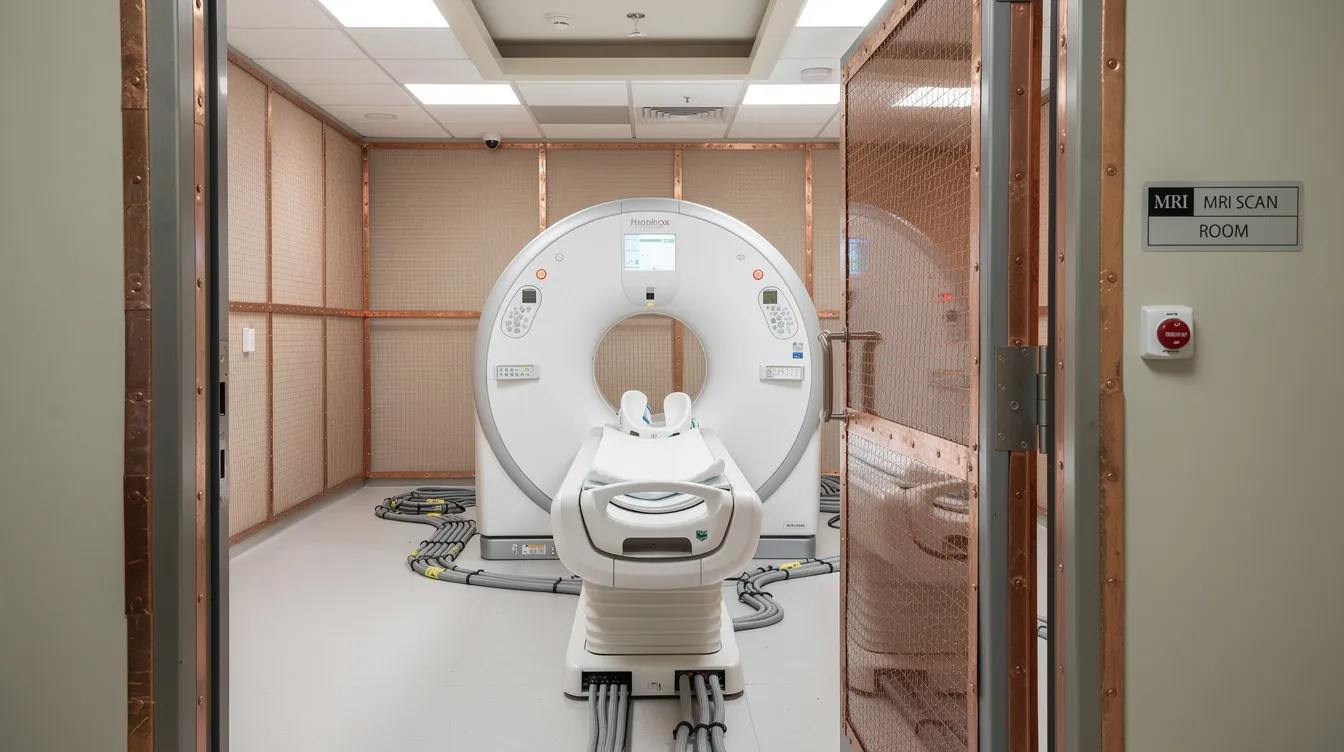
MRI and CT require stable power. DG sets, UPS systems, dedicated transformers and earthing must be properly sized and costed. The DPR should note how many hours of backup are provided and whether critical systems (MRI chiller, servers) have separate protection. Banks will check whether site preparation costs – electrical, HVAC, fire safety – are realistic compared with the scale of equipment proposed.
How to Prepare Project Cost & Means of Finance for an Imaging Centre
From a banker’s perspective, one of the first checks in an imaging centre loan project report is whether the total project cost is realistic and fully tied up through an acceptable means of finance structure.
The basic relationship is straightforward:
Total Project Cost = Promoter Contribution + Term Loan (including equipment finance) + Other Eligible Sources
Other eligible sources may include unsecured loans from family, subsidies, internal accruals (for expansion projects) and separate equipment finance limits.
The DPR should present project cost and means of finance in side-by-side tables, with figures reconciling exactly and a short narrative explaining each funding source. Banks evaluate not only the percentage of margin but also whether the promoter has the financial capacity and documentary proof – bank statements, net-worth statement – to bring in the proposed contribution.
Medical equipment financing can cover costs up to Rs. 30 crore, and medical equipment finance can cover both domestic and imported equipment. For MRI and CT scan centre project reports, some banks may prefer specific structures such as separate equipment finance limits. Diagnostic centre loans typically range from Rs. 5 lakh to Rs. 5 crore, with interest rates for diagnostic centre loans generally in the range of 10% to 16% per annum, though specific bank schemes may offer different terms.
Any subsidy, soft loan or external equity should be backed by eligibility criteria and documentation, otherwise bankers may exclude it from means of finance.
Illustrative Project Cost & Means of Finance Structure
Illustrative Only – for learning purposes
| Component | Amount (₹ Crore) |
|---|---|
| Medical Imaging Equipment (MRI, CT, DR, USG) | 5.00 |
| Civil Work, Interiors, Shielding, HVAC | 1.20 |
| IT/PACS, Furniture, Fixtures | 0.50 |
| Pre-Operative Expenses & Deposits | 0.30 |
| Working Capital Margin | 0.50 |
| Contingency | 0.50 |
| Total Project Cost | 8.00 |
| Means of Finance | Amount (₹ Crore) | % |
|---|---|---|
| Promoter Contribution | 2.40 | 30% |
| Bank Term Loan | 4.80 | 60% |
| Unsecured Loans (Family) | 0.80 | 10% |
| Total | 8.00 | 100% |
Actual structures vary by lender policy, collateral, borrower profile and scheme. Indian Bank’s Ind Health Care scheme, for example, allows up to 84 months for medical equipment and up to 120 months when building or construction costs are involved. Where existing diagnostic centres are expanding, internal accruals may form part of the margin, and banks will cross-check this with audited financials.
Imaging Centre Revenue Model & Financial Projections
In my experience, unrealistic revenue assumptions are the most common reason why imaging centre DPRs attract queries during bank appraisal. A common mistake I see is promoters projecting mature-level volumes from month one without any ramp-up justification.
The basic logic for building revenue projections:
Projected Revenue = Number of Procedures × Average Realisation per Procedure × Working Days
This driver-based approach should be used modality-wise – separately for MRI, CT, X-Ray, ultrasound, Doppler, mammography and any other imaging services offered. Financial feasibility should cover CAPEX and OPEX among other costs, and the projected model should produce P&L, Balance Sheet and Cash Flow statements for at least 5–7 years.
Patient Footfall & Scan Volumes
Footfall projections must be based on realistic estimates of referring doctors, hospital tie-ups, catchment population and competition – not arbitrary numbers like “50 MRI scans per day from month one.” The DPR should specify for each modality the expected scans per day at stabilised level, expected utilisation in Year 1, Year 2 and Year 3, and total working days per month (typically 26–28 days).
| Modality | Year 1 (Daily Avg.) | Year 3 (Daily Avg.) |
|---|---|---|
| MRI | 4–5 scans | 10–12 scans |
| CT Scan | 8–10 scans | 20–25 scans |
| Digital X-Ray | 15–20 studies | 35–45 studies |
| USG/Doppler | 10–15 studies | 25–30 studies |
Illustrative volumes only – actual numbers depend on location, competition and referral network.
Average Realisation per Procedure
Tariffs should be benchmarked against local market rates – government schemes, TPAs, corporate contracts and self-pay patients – and adjusted for discounts or packages. The DPR should differentiate between cash-paying OPD tariffs and institutional/TPA tariffs where discounts and delayed payments apply. Banks may question whether proposed pricing is sustainable given local competition.
Capacity Utilisation & Ramp-Up Period
Imaging equipment has high theoretical capacity, but realistic utilisation for Year 1 is usually much lower. A newly established MRI or CT centre often takes 12–24 months to reach mature volumes. Model utilisation in phases – for example, 30–40% in Year 1, 50–60% in Year 2, 70–80% from Year 3 onwards – with a short narrative justifying why these levels are achievable. Projecting 80–90% utilisation from month one is usually seen as aggressive and may reduce banker confidence.
Referral Network, Hospital Tie-Ups & Institutional Business
The DPR should outline the strategy for engaging local physicians, surgeons, orthopaedic specialists, ENT specialists, and neuro specialists. Wherever hospital or clinic tie-ups and TPA contracts are expected, the DPR should indicate the approximate proportion of total revenue and corresponding credit period (e.g., 30–60 days receivables) to feed into working-capital planning. Promoters’ existing clinical reputation and previous practice history in their respective fields should be highlighted.
Projected Financial Statements
For a bankable DPR, projections usually cover at least 5 years including modality-wise revenue, salaries, power, consumables, maintenance, rent, admin costs, marketing and finance costs. EBITDA, PBT, PAT and cash accrual trends should show movement from initial losses or low profit to stable profitability.
Depreciation for MRI and CT equipment is often a large non-cash charge, which lowers accounting profit but not necessarily cash accrual. The important point is not merely to show profitability but to demonstrate repayment capacity – banks focus on cash available for debt service after tax.
Working Capital Requirement of an Imaging Centre
Although imaging centres are primarily service businesses, they still require working capital for salaries, power, consumables and credit to hospitals and TPAs, especially in early months before revenue stabilises.
Key monthly operating expenses include:
- Radiologists and technologists’ salaries (attending patients across modalities)
- Reception, admin and housekeeping staff costs
- Rent, electricity and utilities (significant fixed costs for MRI and CT operations)
- Contrast media, films and consumables
- Maintenance and AMC/CMC charges
- Software licences, marketing and administrative overheads
Receivable cycles from corporates, TPAs and hospital partners (30–90 days) mean the centre must fund expenses while waiting for payments. The DPR should estimate net working capital based on receivable days, payable days and at least one month of expenses buffer, and indicate how much will be financed via promoter funds versus bank working-capital limits (cash credit or overdraft).
The distinction is simple: a term loan funds fixed assets like equipment and civil work, while working-capital facilities fund day-to-day operations. In many small and mid-sized imaging centres, initial working-capital requirement is funded entirely through promoter contribution as part of project cost.
DSCR & Loan Repayment Capacity – The Banker’s Perspective
Banks sanction term loans based not only on profitability but on repayment capacity, which is typically measured using the Debt Service Coverage Ratio.
DSCR = Cash Available for Debt Service ÷ Total Debt Service (Interest + Principal) for the period
Cash available for debt service in an imaging centre DPR means: profit after tax plus depreciation and other non-cash charges, adjusted for drawings or dividends as appropriate.
The DPR should show year-wise DSCR for the entire loan tenure and also an average DSCR, with commentary on which years are relatively weak and why. Repayment period and moratorium period should be aligned with realistic ramp-up. Lenders offer a moratorium of 3 to 6 months for new diagnostic centres, sometimes extending to 6–12 months for MRI and CT greenfield projects, subject to lender policy.
The objective is not to artificially stretch tenure merely to inflate DSCR, but to demonstrate a practical schedule where cash flows comfortably cover EMIs with some cushion.
Illustrative DSCR Example
Illustrative Only
| Year | Cash Available for Debt Service (₹ Lakh) | Interest + Principal (₹ Lakh) | DSCR |
|---|---|---|---|
| Year 1 | 55 | 50 | 1.10 |
| Year 2 | 120 | 80 | 1.50 |
| Year 3 | 145 | 80 | 1.81 |
| Year 4 | 155 | 80 | 1.94 |
| Year 5 | 160 | 80 | 2.00 |
Most banks prefer DSCR above a certain threshold – typically in the range of 1.25–1.50 – but individual credit policies, collateral and promoter strength also influence comfort levels. DSCR is sensitive to lower-than-expected scan volumes or pricing pressure, which is why sensitivity analysis in the DPR gives comfort to both promoters and bankers.
A project can show accounting profit yet face cash-flow stress if receivables are high or EMI schedules are aggressive, reinforcing the importance of cash-flow-based analysis over simple profitability.

How Banks Assess an Imaging Centre Project for Term Loan
From a banker’s appraisal perspective, an imaging centre DPR is read not as a marketing brochure but as a risk-assessment document across promoter, technical, market and financial dimensions. Understanding this lens helps promoters anticipate and address questions proactively.
Promoter Background
Banks assess professional qualifications (MD Radiology, MBBS, DNB), imaging experience, business track record and financial standing. The DPR should include a brief profile for each key person covering education, clinical experience and role in the project. Non-medical entrepreneurs can also start imaging centres, but banks may expect a qualified radiologist as partner, director or medical director with clear engagement terms in their respective fields required for the business.
Project Location & Market Potential
Catchment analysis should cover approximate population, income levels, nearby hospitals and clinics, existing radiology diagnostic centers and travel distances for advanced imaging. Quantify competition: how many centres offer MRI or CT scans within a 5–10 km radius, what their approximate tariff range is and whether there are service gaps (e.g., no 24×7 CT access or no MRI at all). A project report must define the target market and local demographics to support revenue assumptions.
Technical Feasibility
Banks rely on site plans, equipment quotations and implementation schedules to evaluate whether proposed infrastructure, floor area, electrical capacity and civil works are adequate. For MRI and CT, approvals like an AERB licence and other local regulatory requirements should be acknowledged, with a realistic time frame built into the implementation schedule.
Project Cost & Reasonableness
Bankers verify whether the overall cost is in line with typical industry ranges and whether all major heads have been considered – no glaring omissions like HVAC or shielding. At least one competitive quotation for each big-ticket equipment item should be included or available. Underestimation of project cost can be a red flag because it suggests additional unfinanced costs may emerge during execution.
Promoter Contribution & Financial Strength
Banks examine the source of promoter contribution – own savings, sale of asset, internal accruals – and look for documentary support. Including a brief net-worth statement and bank statements summary in the DPR can speed up appraisal. Over-dependence on unsecured loans as margin may reduce comfort unless well supported by net worth and group cash flows. There is no universal margin percentage – some banks under specific healthcare finance schemes require 10–15%, while high-capex MRI and CT projects may attract higher margin expectations. Banks may also apply an upfront fee or processing charges depending on the scheme.
Revenue Assumptions & Profitability
Bankers cross-check projected scan volumes against local market size, current competition and promoter capabilities. The DPR should avoid “round-number” projections (e.g., flat 100 MRIs per month for every year) and instead show a gradual, justified pattern. Sustainable profitability – not just initial high-growth numbers – matters. Lenders prefer models where profitability stabilises even under slightly lower-than-projected volumes, considering there is quite a number of variables at play.
DSCR, Security & Collateral
In addition to DSCR, banks look at available primary security (equipment under hypothecation) and, where applicable, collateral (land, building or other property). Imaging equipment’s resale value, brand and age are considered. The DPR should clearly list proposed primary and collateral securities without making absolute claims about bank acceptance. NABL accreditation improves loan eligibility for diagnostic centres and may support attractive interest rates or better terms with some lenders.
Credit History & Existing Financials
CIBIL and other credit reports of promoters will be reviewed. Consistent repayment history supports the case. For expansion projects, banks analyse the last 2–3 years’ audited financials for turnover, margins, debt levels and banking conduct. Transparent disclosure of existing loans and liabilities builds trust.
Regulatory & Statutory Compliance
An imaging center should have a clear regulatory and compliance plan. The regulatory checklist should assess various compliance requirements before project commencement. Diagnostic centres require various permits and licenses to operate, and the regulatory plan for imaging centers should prioritize radiation safety compliance.
Key regulatory points include:
- The AERB requires licensing before operation of diagnostic X-ray equipment
- Common licenses include registration under the Shops and Establishment Act
- Licenses from local health authorities may also be required
- NABH standards cover areas including patient care, imaging procedures, and facility safety – the project should adopt NABH standards from inception instead of retrofitting later
- Pollution control board clearance may be required depending on biomedical waste generation and local rules
- NABL accreditation is generally more relevant to pathology or diagnostic lab segments but may strengthen brand and corporate empanelment for multi-modality centres
Requirements vary by state and modality, so the DPR should list applicable registrations without making exhaustive legal claims.
Documents & Information Required for Preparing an Imaging Centre DPR
A practical checklist helps promoters assemble data efficiently so that the imaging centre project report can be prepared accurately:
- Promoter Details – KYC documents, PAN, Aadhaar, educational qualifications, medical registration (for doctors) and brief CV for each key promoter
- Entity Documents – Proposed or existing entity type (proprietorship, partnership, LLP, private limited), along with relevant documents like partnership deed, LLP agreement or MOA/AOA
- Project Location – Address, ownership or lease status, area (sq.ft.), basic layout plan, rent or lease terms, or land/building valuation reports
- Project Concept Note – Short write-up on proposed modalities, target patient segments, operating hours, staffing structure and any hospital or clinic tie-ups including services like a thorough diagnostic check up, detailed medical check up, eye checkup, eye checkup pertaining to refractive anomalies and ocular ailments, BP test, cardiological test, sputum test, stool test, semen test, MMR test, IVP test, nervous system checkups and other diagnostic procedures offered
- Equipment Quotations – Vendor quotations for MRI, CT, X-Ray, ultrasound machines and other diagnostic equipment; IT/PACS quotations; warranty and AMC/CMC details
- Civil, Electrical & Interior Estimates – Contractor estimates for civil work, shielding, electrical wiring, HVAC, DG/UPS and furniture
- Operational Assumptions – Expected daily scan volumes by modality, average tariffs, working days, launch date and ramp-up timeline
- Staffing Plan – Proposed number of radiologists (full-time or visiting), technologists, nurses, reception, accounts and housekeeping staff with approximate monthly salaries. The staffing structure should include radiologists and radiologic technologists as core clinical staff
- Existing Financial Data (for Expansion) – Last 2–3 years’ audited financial statements, income-tax returns, bank statements, existing loan details and current CMA Data if any
- Proposed Bank Finance – Required term loan amount, expected moratorium period, preferred tenure, working-capital requirement and details of available collateral
- Implementation Schedule – High-level timeline from sanction to go-live covering civil work, equipment delivery, installation, regulatory approvals and trial runs
Exact documentation requirements may vary by bank and by whether the project is greenfield or expansion.
Illustrative Imaging Centre Bank Loan Case
This is a fictional example for learning purposes. All figures are illustrative only.
Consider a 2026 project in a tier-2 city planning a multi-modality centre with 1.5T MRI, 32-slice CT, digital X-Ray and two ultrasound/Colour Doppler units, operating from approximately 3,000 sq.ft. of leased premises.
Project Cost Breakdown (Illustrative)
| Item | ₹ Crore |
|---|---|
| MRI System (1.5T) including RF shielding, installation | 2.80 |
| CT Scanner (32-slice) including shielding | 1.50 |
| Digital X-Ray (DR) | 0.40 |
| Ultrasound/Colour Doppler (2 units) | 0.35 |
| Civil, Interiors, Electrical, HVAC | 1.10 |
| IT/PACS/RIS, Furniture, Fixtures | 0.45 |
| Pre-Operative Expenses & Deposits | 0.25 |
| Working Capital Margin | 0.50 |
| Contingency | 0.15 |
| Total | 7.50 |
Means of Finance: Promoter contribution of ₹2.25 crore (30%), bank term loan of ₹4.50 crore (60%), and family unsecured loans of ₹0.75 crore (10%). Real-life structures are customised during discussions with the bank.
Revenue Projection Logic: In Year 2, MRI averages 8 scans per day at an indicative average realisation of ₹5,000, multiplied by 26 working days per month. CT averages 15 scans per day at ₹4,000. X-Ray averages 25 studies per day and USG averages 18 studies per day at their respective tariffs. Year 1 volumes are significantly lower during ramp-up.
Operating expenses (salaries, rent, electricity, consumables, maintenance, admin) are deducted to arrive at EBITDA. Interest and depreciation are factored to reach profit after tax and cash accrual. Annual cash accrual is then compared with annual interest plus principal repayments to compute DSCR over a 7-year tenure. This linkage – projected cash flows to loan servicing – is what bankers ultimately rely on.
The wide scope of diagnostic purposes that the centre can serve, from routine X-rays to advanced MRI and CT scans, supports revenue diversification. The centre also affords facilities for healthcare providers in the region who currently refer patients to distant cities.
Common Mistakes in an Imaging Centre DPR
Many otherwise promising imaging centre proposals face delays or avoidable queries because of errors in the project report. Based on my review of several DPRs over the years, here are the most frequent issues:
- Unrealistic Patient Volumes – Directly projecting 80–100% utilisation from month one without factoring in ramp-up, competition and referral-building effort
- Outdated or Generic Equipment Quotations – Copying old price lists from other projects instead of using fresh vendor quotations reflecting current technology, warranty and AMC terms
- Ignoring Site-Preparation Costs – Underestimating or omitting shielding, RF cage, HVAC, electrical upgrades and UPS/DG costs, which can significantly alter actual project investment
- Inadequate Working Capital – Assuming that all bills are paid in cash immediately and not budgeting for receivables from hospitals, corporates and TPAs
- Underestimating Maintenance & AMC – Not providing for annual maintenance contracts, which can be a material percentage of MRI/CT equipment cost after warranty expiry
- Excessive Debt & Weak Margin – Proposing very low promoter contribution with aggressive loan size, resulting in thin DSCR and limited resilience to slower ramp-up
- Copy-Pasted Financial Projections – Using templates from unrelated cities without aligning them to local tariffs, rent levels, regulatory environment and promoter network
- Mismatch Between Equipment Capacity & Revenue – Proposing high-end scanners but projecting very low volumes, or projecting very high volumes on single-modality equipment without additional shifts or staff
- Repayment Schedule Not Matching Cash Flows – Selecting short-tenure loans with high EMIs that strain early-year cash flows instead of a balanced schedule within bank norms
- Weak Market Justification – Focusing entirely on technical features and ignoring the question: “Why will patients and doctors choose this imaging centre in this location?”
These issues do not necessarily cause rejection, but they invite queries that delay appraisal and reduce confidence in plant economics and overall feasibility study quality.
FAQ – Imaging Centre Project Report & Bank Finance
What is an Imaging Centre Project Report in banking terms?
In banking terms, an imaging centre project report (or DPR) is a structured document submitted with a loan application that explains who the promoters are, what imaging services will be offered (MRI, CT, X-Ray, ultrasound, etc.), how much the project will cost, how it will be financed and whether projected cash flows can comfortably repay the proposed term loan. Banks use this report along with KYC, financial statements and collateral information to conduct a detailed credit appraisal before sanctioning imaging centre project finance.
Is a DPR always required for an Imaging Centre bank loan?
For small equipment loans or simple upgrades, some lenders may accept a shorter project summary. However, for new MRI- or CT-based imaging centres or large expansions, most banks expect a detailed project report or equivalent DPR and CMA Data. Having a well-prepared DPR usually speeds up appraisal because many of the banker’s standard queries are already answered. Diagnostics projects with dental clinics or hospital development components may have additional documentation needs.
How much promoter contribution is generally expected for an Imaging Centre loan?
Margin requirements vary by bank, scheme, collateral, credit profile and project risk, so there is no single universal percentage. Many lenders expect a reasonable portion of project cost to come from promoters, especially in high-capex MRI and CT projects. The DPR should clearly indicate the proposed promoter contribution, its source and documentary support. Final margin decisions are taken by the sanctioning authority based on full appraisal. Some financing solutions under healthcare-specific schemes may accept 10–15% for certain categories, while others require 25–30% or more.
Can one DPR cover both Imaging Centre and Pathology Lab services?
Yes, a single DPR can cover a combined diagnostic centre offering both imaging and pathology services, but it should clearly separate project cost, revenue and operating assumptions for each segment. Promoters may benefit from referring to dedicated pathology lab project report guidance when detailing the laboratory component for service quality and completeness, while keeping the overall financial projections integrated for bank appraisal. The radiology department and pathology lab should each have a clear objective and revenue model.
Can a new Imaging Centre without prior business history obtain a term loan?
Many imaging centres in India are funded as greenfield projects where promoters do not have an existing diagnostic business but may have clinical or managerial experience. In such cases, banks place greater emphasis on promoter background, collateral, realistic DPR assumptions and DSCR. The loan may be structured with a suitable moratorium period to allow ramp-up. A pptx comprehensive overview or detailed presentation to the bank credit committee, alongside the formal DPR, can strengthen the case. Requirements related to throat ailments, IVP test-related radiological investigations and other specialised imaging should be justified by local demand from healthcare providers including doctors in the catchment area.
About the Author & Professional Support
CA Manish Gugliya is a practising Chartered Accountant associated with ProjectReportBank.com, with hands-on experience in preparing detailed project reports, CMA Data, projected financial statements and DSCR analysis for healthcare projects including imaging centres, diagnostic centres and pathology labs. His work typically involves structuring project cost and means of finance, building realistic modality-wise revenue models, assessing working-capital needs and aligning repayment schedules with projected cash flows for better bankability.
While he assists in preparation, review and structuring of project reports and financial projections, final loan-sanction decisions always rest with the respective banks and financial institutions. His approach focuses on making every assumption in the DPR defensible – because the assumptions used should be capable of being explained to the sanctioning authority.
Call to Action – Preparing a Bankable Imaging Centre DPR
Before committing to MRI or CT equipment or signing long-term leases, serious promoters should have a realistic, numbers-backed imaging centre project report tailored to their city, modality mix and borrowing capacity. This is applicable whether the project involves requisites measures for a basic ultrasound test centre or a full-service radiology and imaging facility.
A customised DPR should be built around actual equipment quotations, detailed project cost, proposed means of finance, expected patient volumes, pricing strategy and tentative loan terms – not generic templates or copied numbers from unrelated projects.
If you are planning to establish or expand an imaging centre, contact Project Report Bank for professional assistance with DPR preparation, CMA Data, projected financial statements, term-loan and working-capital assessment, DSCR and repayment analysis, and bank documentation support.
CA Manish Gugliya Project Report Bank – www.projectreportbank.com
No advisory service can guarantee loan approval. Each proposal is subject to independent bank appraisal.
Explore All Diagnostic Centre DPR Guides
Continue exploring our complete series on Diagnostic Centre project planning, equipment, financial projections, repayment capacity and bank finance.