
India’s wholesale business landscape is expanding faster than ever. With the global wholesale market projected to reach $12.4 trillion by 2025 and B2B ecommerce sales projected to reach $6.6 trillion by 2025, the opportunity for entrepreneurs to start a wholesale business has never been stronger. Digital B2B commerce is reshaping opportunities for wholesale businesses across every product category.
Based on my experience as a Chartered Accountant advising hundreds of MSMEs, I can tell you that wholesale businesses remain one of the most reliable paths to building long-term wealth. Wholesalers can earn between 15% and 30% profit on sales, and high profit margins are achievable in wholesale due to bulk purchasing. Whether you are a first-time entrepreneur in a small town or an existing retailer planning wholesale expansion, this guide covers the most profitable wholesale business ideas in India with real investment data, margin analysis, and practical insights.
Table of Contents
How We Chose the Best Wholesale Business Ideas
Selecting the top wholesale business ideas required a rigorous evaluation framework. Here is exactly what I assessed:
- Market demand and growth trends: India’s FMCG sector alone crossed ₹20 lakh crore in 2025, growing at 4.5–6.5% annually. Market research helps identify consumer demand and trends across sectors. Market research also provides insights into competition and distribution channels.
- Investment requirements: Evaluated businesses across capital ranges from ₹50,000 to ₹50+ Lakh, ensuring options for every budget.
- Profit margins and ROI: Wholesale focuses on Business-to-Business (B2B) sales, where wholesalers rely on high volume and lower margins per unit, while retailers charge a higher retail price for higher per-unit profits. Retail focuses on Business-to-Consumer (B2C) sales. I assessed which categories deliver the strongest net returns after accounting for logistics and spoilage.
- Regulatory compliance: Each idea was reviewed for licensing complexity-GST registration, FSSAI, drug licenses, and sector-specific permits.
- Scalability: Businesses with proven expansion potential through digital platforms, geographic reach, and franchise models scored higher.
- Supply chain reliability: Supplier availability and freight infrastructure were critical factors, especially given India’s logistics cost of 13–17% of GDP.
- Competition levels: Intense price competition affects wholesale profit margins, so I prioritized sectors where new entrants can still differentiate. Direct-to-Consumer competition also poses a challenge for wholesale in certain categories.
- Repeat purchase potential: Wholesale orders require large bulk volume, and businesses with strong recurring demand ranked highest.
Understanding the wholesale business model matters. Merchant wholesalers buy goods in bulk and resell them. Dropshipping wholesalers ship products directly to customers. Specialty wholesalers focus on specific product categories. Full-service wholesalers provide logistics and marketing support. Cash and carry wholesalers require upfront payment from retailers. Each model suits different entrepreneurs.
Top 15 Wholesale Business Ideas in India
1. FMCG Products Wholesale
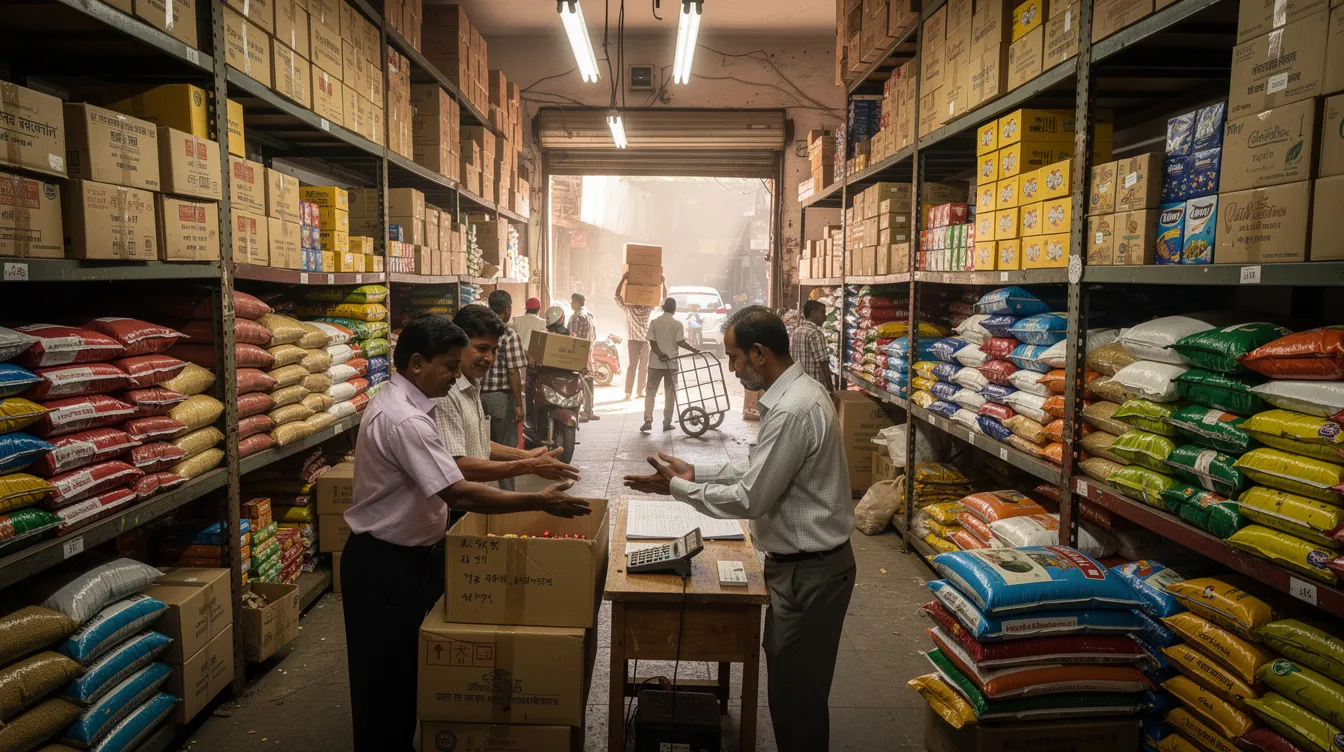
FMCG wholesale involves selling packaged foods, beverages, personal care items, and household products in bulk to local retailers, kirana stores, and institutional buyers. Investment range: ₹2–10 Lakhs with 15–25% profit margins.
FMCG products ensure strong and continuous demand in wholesale, making this one of the most recession-proof wholesale business opportunities available.
Why It Stands Out
FMCG products enjoy consistent daily demand and rapid inventory turnover. A single distributor can cycle through inventory every 7–15 days, generating strong cash flow. Repeat purchase cycles are reliable because consumers buy these essentials regardless of economic conditions.
Best For
- First-time entrepreneurs seeking stable business models
- Businesses targeting urban and rural retail networks
- Entrepreneurs with moderate capital investment capacity
Key Strengths
- Recession-proof demand for essential products
- Strong wholesale distribution networks across India with multiple revenue streams
- Proven profitable wholesale business model with brand support
Possible Limitations
- High competition from established wholesale distributors-FMCG distributor margins of 3.5–5% are being called unsustainable by industry bodies
- Significant working capital requirements for inventory management
If you are exploring broader shop business ideas, FMCG wholesale is often the safest starting point.
2. Textile and Garments Wholesale
Distributing fabrics, clothing, ethnic wear, and fashion accessories represents one of the best wholesale business ideas in India. Investment range: ₹5–25 Lakhs with 20–35% profit margins.
Textile and garment wholesale is one of the most profitable sectors, and textile and garment wholesale is highly profitable in India due to the country’s manufacturing base and cultural demand.
Why It Stands Out
Strong export potential to global markets combined with a diverse product range from sarees to uniforms. Seasonal demand spikes during festivals and weddings can double monthly revenues.
Best For
- Entrepreneurs with fashion industry knowledge
- Businesses targeting export markets
- Wholesalers near textile manufacturing hubs like Surat, Tirupur, and Ludhiana
Key Strengths
- High profit margins on designer and ethnic wear
- Scalable with franchise opportunities
- If you are specifically interested in ethnic wear, explore detailed saree business ideas
Possible Limitations
- Fashion trend dependency and seasonal fluctuations
- Quality control challenges with multiple suppliers
3. Agricultural Products Wholesale
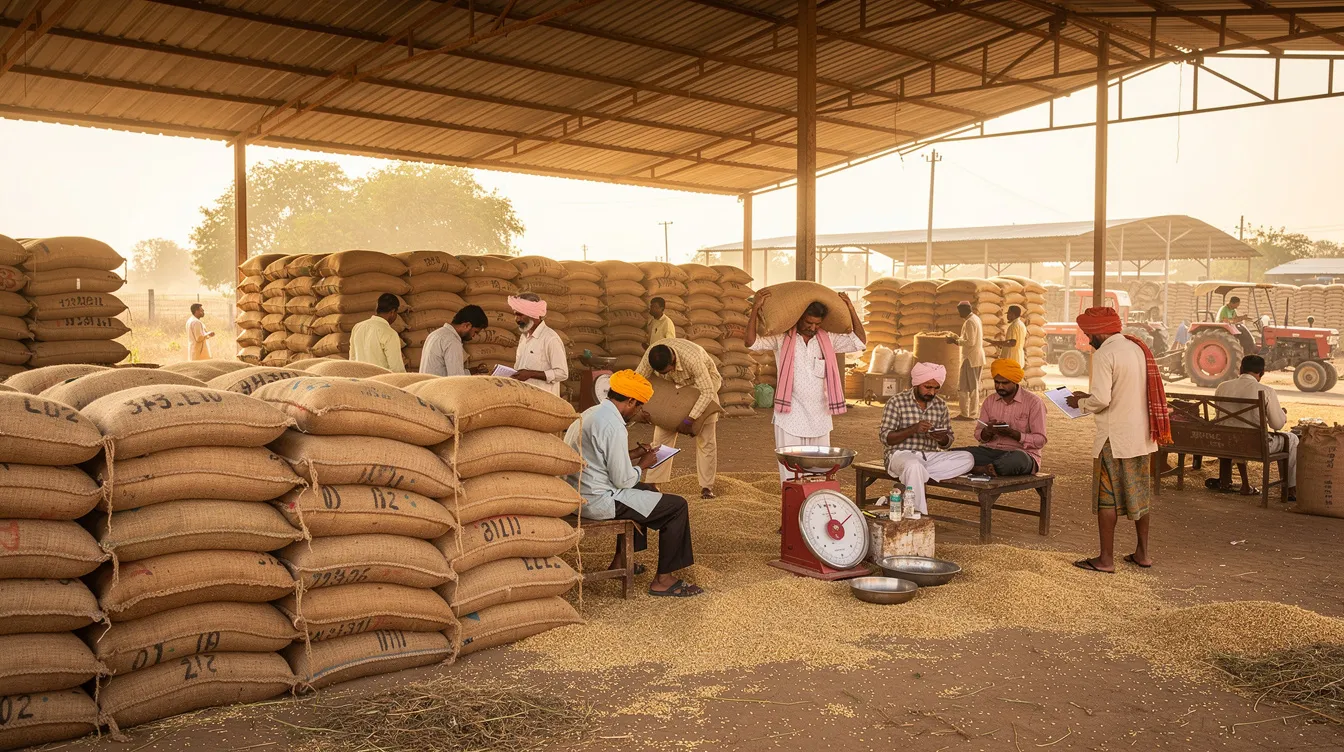
Trading grains, pulses, spices, and organic produce forms the backbone of India’s wholesale trading ecosystem. Investment range: ₹3–20 Lakhs with 10–20% profit margins.
Why It Stands Out
Government support schemes and procurement programs like MSP provide a safety net. Export demand for Indian spices, tea, and organic produce continues climbing. For entrepreneurs interested in this niche, tea business ideas offer specific guidance.
Best For
- Rural entrepreneurs with agricultural background
- Businesses near farming regions and mandis
- Wholesalers targeting food processing industries
Key Strengths
- Essential product category with consistent demand across all income segments
- Government subsidies and strong export opportunities to global markets
- Raw materials sourced directly from farmers can improve margins
Possible Limitations
- Weather dependency and crop yield variations
- Storage and preservation challenges requiring proper storage facility infrastructure
4. Mobile Accessories Wholesale
Distributing phone cases, chargers, earphones, and gadgets is among the top wholesale business ideas for entrepreneurs with limited capital. Investment range: ₹1–5 Lakhs with 25–40% profit margins.
Why It Stands Out
India’s smartphone user base continues expanding rapidly, and accessories require frequent replacement. This creates high demand with quick inventory turnover.
Best For
- Small entrepreneurs with limited capital seeking a small wholesale business
- Urban market-focused businesses
- E-commerce oriented wholesalers leveraging wholesale marketplaces
Key Strengths
- Low startup costs and minimal storage requirements
- Fast-moving inventory with quick returns-a great wholesale business idea for beginners
- Growing smartphone market in tier 2 and tier 3 cities
Possible Limitations
- Technology obsolescence and rapid product cycles
- High competition from online retailers and digital platforms
5. Pharmaceutical and Medical Supplies
Distributing medicines, surgical items, and medical equipment is a wholesale business in India that offers strong regulatory protection and steady margins. Investment range: ₹5–30 Lakhs with 12–25% profit margins.
Why It Stands Out
Essential healthcare demand combined with an aging population makes this a recession-proof sector. Government healthcare initiatives are expanding coverage, increasing consumer demand for affordable medicines.
Best For
- Entrepreneurs with pharmacy or medical background
- Businesses targeting hospitals and clinics
- Wholesalers in tier 2 and tier 3 cities where competition is lower
For deeper analysis of this sector, explore medical business ideas.
Key Strengths
- Long-term contracts with hospitals create predictable revenue
- Government schemes supporting healthcare access
- Medical equipment wholesale adds high-value revenue streams
Possible Limitations
- Strict regulatory compliance-you must obtain a business license and GST registration plus drug license
- Temperature-controlled storage needs for certain products
6. Electronics and Consumer Durables
Distributing home appliances, gadgets, and electronic goods involves higher capital but significant revenue potential. Investment range: ₹10–50 Lakhs with 8–18% profit margins.
Why It Stands Out
Rising disposable income and urbanization are driving demand. Festive season spikes and EMI culture boost sales volumes significantly.
Best For
- Entrepreneurs with substantial capital
- Businesses targeting urban and semi-urban retail market
- Those interested in exclusive brand partnerships-consider dealership business ideas for exclusive arrangements
Key Strengths
- High-value transactions with significant revenue potential
- Growing rural market penetration
- Brand partnerships and exclusive wholesale distributorship opportunities
Possible Limitations
- High capital requirements and slower inventory turnover
- After-sales service obligations increase wholesale operations complexity
7. Cosmetics and Beauty Products
Distributing skincare, makeup, and personal grooming products offers some of the highest margins in wholesale distribution. Investment range: ₹2–8 Lakhs with 20–35% profit margins.
Beauty and personal care products are India’s fastest-growing market, driven by social media influence and rising grooming consciousness.
Why It Stands Out
Premium product margins combined with strong brand loyalty create a profitable business with excellent repeat purchase behavior.
Best For
- Entrepreneurs targeting urban female demographics
- Businesses with beauty industry knowledge
- Wholesalers focusing on salon and parlor networks
Key Strengths
- High profit margins on premium and organic products
- Growing male grooming segment expanding the customer base
- Strong repeat purchase behavior ensuring consistent demand
Possible Limitations
- Brand competition and counterfeit product risks
- Shelf life and storage temperature requirements

8. Home and Kitchen Appliances
Distributing cookware, storage solutions, and household items serves a steadily growing middle-class market. Investment range: ₹3–12 Lakhs with 15–30% profit margins.
Why It Stands Out
Nuclear family trends and modern lifestyle adoption drive customer demand. Housing sector growth creates steady new-household demand.
Best For
- Entrepreneurs targeting middle-class households
- Businesses near residential development areas
- Wholesalers with retail and e-commerce distribution capability
Key Strengths
- Consistent demand driven by lifestyle changes
- Wide product range catering to diverse price points
- Festival gift market potential
Possible Limitations
- Seasonal demand fluctuations
- Storage space requirements for bulky items
9. Automobile Spare Parts
Distributing vehicle components, accessories, and maintenance items leverages India’s growing vehicle population. Investment range: ₹5–25 Lakhs with 15–25% profit margins.
Why It Stands Out
The automobile industry in India adds millions of vehicles annually, creating a massive aftermarket. Maintenance and replacement needs generate reliable supply of recurring orders.
Best For
- Entrepreneurs with automotive industry knowledge
- Businesses targeting mechanics and service centers
- Wholesalers in industrial areas-this also works well as one of the business ideas for men with technical backgrounds
Key Strengths
- Steady demand from vehicle maintenance needs
- Growing commercial vehicle segment
- Repeat business from established customer base ensures customer satisfaction
Possible Limitations
- Technical knowledge requirements for product selection
- Quality issues with duplicate parts in the market
10. Stationery and Office Supplies
Distributing notebooks, pens, office supplies, and educational materials offers low-risk entry into wholesale trading. Investment range: ₹1–6 Lakhs with 18–30% profit margins.
Why It Stands Out
Consistent demand from educational institutions and corporate offices creates bulk orders with predictable cycles.
Best For
- Small businesses seeking stable returns
- Businesses targeting schools and corporate offices
- Wholesalers in educational hub areas
Key Strengths
- Low startup costs and minimal storage requirements
- Academic year-driven bulk order patterns
- Recession-resistant educational sector demand
Possible Limitations
- Seasonal demand peaks during academic sessions
- Digital transformation gradually reducing paper-based product demand
11. Food Grains and Pulses
Trading rice, wheat, lentils, and staple foods is among the most essential wholesale distribution businesses. Investment range: ₹5–30 Lakhs with 8–15% profit margins.
Why It Stands Out
Food security concerns and government procurement programs guarantee baseline demand. Every household in India is a potential end-consumer.
Best For
- Entrepreneurs with agricultural market connections
- Businesses near grain mandis and storage facilities
- Wholesalers targeting food processing industries
Key Strengths
- Essential commodity with guaranteed demand
- Government support through procurement schemes
- Export potential for premium varieties like Basmati rice
Possible Limitations
- Price volatility due to monsoon dependency
- Large storage infrastructure requirements-you must set up a warehouse or storage facility for inventory
12. Hardware and Construction Materials
Distributing tools, fasteners, plumbing, and electrical items ties directly to India’s infrastructure boom. Investment range: ₹8–40 Lakhs with 12–22% profit margins.
Why It Stands Out
Government housing schemes like PMAY and infrastructure development projects sustain long-term demand.
Best For
- Entrepreneurs with construction industry connections
- Businesses in industrial and developing areas
- Wholesalers targeting contractors and builders
Key Strengths
- Infrastructure development driving consistent demand
- B2B sales with bulk orders from contractors
- This sector pairs well with B2B business ideas for integrated service offerings
Possible Limitations
- Economic cycle dependency and project-based sales patterns
- Heavy inventory and transportation costs
13. Toys and Children Products
Distributing educational toys, games, and kids’ accessories is among the new wholesale business ideas gaining momentum. Investment range: ₹2–10 Lakhs with 25–40% profit margins.
Why It Stands Out
Parents are spending more on children’s development. The arts and crafts niche within children’s products commands premium pricing. Festival and birthday gift markets create reliable seasonal spikes.
Best For
- Entrepreneurs targeting urban family demographics
- Businesses with toy and child product knowledge
- Wholesalers focusing on retail stores and e-commerce
Key Strengths
- High profit margins on branded and educational toys
- Growing STEM and learning toys segment
- Festival and birthday gift market potential
Possible Limitations
- Safety regulations and quality certification requirements
- Age-group specific demand and trend dependency
14. Packaging and Shipping Supplies
Distributing boxes, tapes, bubble wrap, and protective materials is a wholesale business starting to see exponential growth. Investment range: ₹3–15 Lakhs with 20–35% profit margins.
Why It Stands Out
E-commerce growth is driving packaging demand across every industry. Consistent B2B demand from online retailers, logistics companies, and manufacturers creates a lucrative venture.
Best For
- Entrepreneurs targeting e-commerce and logistics sectors
- Businesses near industrial and commercial zones
- This connects naturally with agency business ideas for logistics-focused entrepreneurs
Key Strengths
- E-commerce boom driving exponential demand growth
- Recurring orders from established business customers
- Eco-friendly packaging trend creating premium segments
Possible Limitations
- Raw material price fluctuations affecting margins
- Environmental regulations on plastic packaging
15. Handicrafts and Gift Items
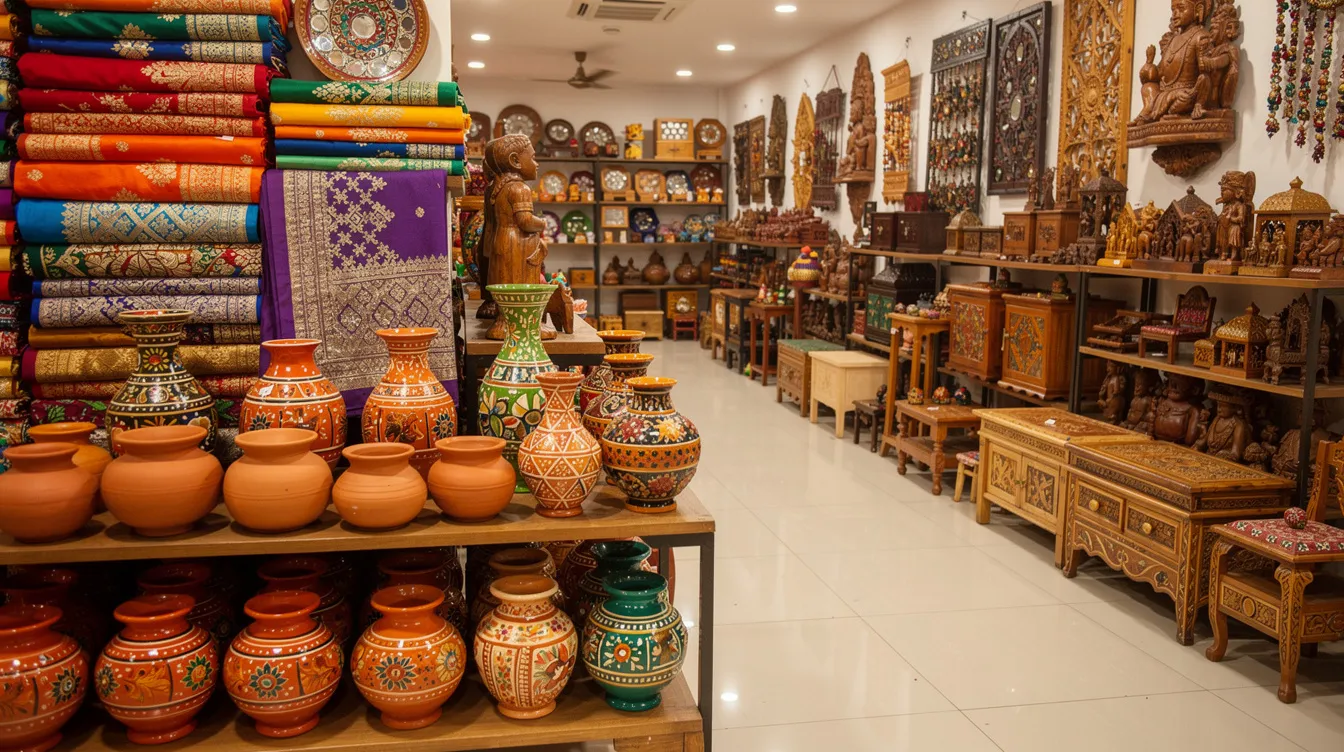
Distributing traditional art, home decor, and cultural products offers the highest potential profit margins among all wholesale markets. Investment range: ₹2–12 Lakhs with 30–50% profit margins.
Why It Stands Out
Strong export potential to global markets and cultural tourism demand make this a standout. Authentic handmade products command premium pricing that few other categories match. International trade in Indian handicrafts is growing consistently.
Best For
- Entrepreneurs with artisan and craft knowledge
- Businesses targeting export and tourism markets
- Wholesalers focusing on premium gift and decor segments
Key Strengths
- High profit margins on unique and authentic products
- Growing global demand for Indian handicrafts
- Cultural significance and premium positioning potential
Possible Limitations
- Artisan dependency and quality consistency challenges
- Seasonal demand peaks during festivals and tourist seasons
Quick Comparison of the Best Wholesale Businesses
| Wholesale Business | Investment Range | Profit Margin | Best For |
|---|---|---|---|
| FMCG Products | ₹2–10 Lakhs | 15–25% | Stable returns, moderate investment |
| Mobile Accessories | ₹1–5 Lakhs | 25–40% | Low investment, high margins |
| Textiles & Garments | ₹5–25 Lakhs | 20–35% | Export potential, seasonal profits |
| Agricultural Products | ₹3–20 Lakhs | 10–20% | Rural entrepreneurs, government support |
| Pharmaceuticals | ₹5–30 Lakhs | 12–25% | Essential sector, regulatory stability |
| Electronics | ₹10–50 Lakhs | 8–18% | High-value transactions, brand partnerships |
| Cosmetics & Beauty | ₹2–8 Lakhs | 20–35% | Premium margins, urban markets |
| Handicrafts & Gifts | ₹2–12 Lakhs | 30–50% | Export opportunities, cultural products |
| Packaging Supplies | ₹3–15 Lakhs | 20–35% | E-commerce driven, B2B recurring orders |
| Automobile Parts | ₹5–25 Lakhs | 15–25% | Aftermarket demand, repeat business |
Beyond these categories, emerging niches like pet supplies wholesale can generate $80,000 to $2.5 million annually, serving online pet retailers and local pet shops. A wholesale jewelry business also offers strong margins for entrepreneurs with gemstone or fashion knowledge. These newer segments represent profitable wholesale businesses worth exploring.
How to Choose the Right Wholesale Business
Choose Based on Investment Capacity
Calculate potential profit margins before selecting products. Match your available capital with appropriate business categories from the table above. A common mistake I see is entrepreneurs underestimating working capital-the cash needed beyond initial investment to fund inventory, cover credit periods, and manage business operations daily.
Wholesale businesses typically experience cash flow pressures from long payment terms. In my experience preparing project reports, the working capital cycle (inventory holding + receivable days − payable days) determines whether a new wholesale business survives its first year.
Economic volatility impacts wholesale inventory management and pricing, so maintain a 20–30% buffer in your capital estimates. Government schemes like Mudra Loan, PMEGP, and CGTMSE can provide business loans at subsidized rates-leverage them through a comprehensive business plan with proper financial projections.
Choose Based on Market Location
Conduct thorough market research before finalizing your location. Assess local market demand by visiting wholesale markets and talking to local retailers in your target area. Consider proximity to reliable suppliers and transportation infrastructure-India’s logistics costs remain 13–17% of GDP, so location directly impacts your bottom line.
Effective market research informs product offerings and marketing strategies. Understanding market demand reduces the risk of unsold inventory. Conduct market research by visiting trade shows, talking to existing wholesalers, and studying industry trends in your region.
Building strong supplier relationships is essential in wholesale. Reliable suppliers ensure consistent product quality and timely delivery. Supplier reliability minimizes the risk of stockouts for wholesalers. Vetting suppliers involves checking licenses and quality certifications. Strong supplier relationships can lead to better pricing and quality over time. Diversifying suppliers helps avoid disruptions in product sourcing-never depend on a single source for your supply chains.
Choose reliable suppliers by requesting samples, checking references, and starting with small trial orders before committing to bulk discounts.
Choose Based on Industry Expertise
Leverage existing knowledge and professional networks. If you have worked in pharmaceuticals, starting a medical wholesale company makes far more sense than entering textiles cold. The learning curve matters-evaluate technical requirements and your ability to assess product quality.
Marketing for wholesale focuses on B2B relationships rather than consumer advertising. Your existing contacts become your initial retail customers. Wholesalers generally have lower overhead costs compared to retail, but success in wholesale relies on operational efficiency and strong customer relationships.
Technology matters increasingly. Warehouse Management Systems improve order fulfillment efficiency. AI forecasting predicts demand based on sales history. Data analytics tools provide insights into customer purchasing trends. Smart inventory tracking reduces stockouts and overstocking. One Delhi-based wholesale distributor built a B2B portal that grew buyer accounts by 147% and revenue by 63% within 12 months.

Which Wholesale Business Is Best for You?
- Choose FMCG Products if you want stable demand with moderate investment and a proven successful wholesale business model. This is the most popular among the best wholesale business ideas for a reason.
- Choose Mobile Accessories if you prefer low investment with quick returns and urban market focus. These are competitive prices products that move fast.
- Choose Textiles if you seek export opportunities with seasonal high profits. Wholesale prices on ethnic wear generate premium returns.
- Choose Agricultural Products if you have rural connections with government scheme benefits and essential sector stability.
- Choose Pharmaceuticals if you want recession-proof demand with regulatory barriers protecting margins-the most profitable wholesale businesses often sit behind licensing walls.
- Choose Packaging Supplies if you want to ride the e-commerce wave with recurring B2B orders.
- Choose Handicrafts if you want the highest profit margins and access to growing global demand.
Each of these is a profitable wholesale business in its own right. The key is alignment between your capital, expertise, and local market trends.
Final Thoughts
Running a wholesale business successfully in India requires three foundations: thorough market research, reliable supplier relationships, and disciplined financial planning. Whether you pick FMCG, textiles, or any of the most profitable wholesale businesses listed above, the fundamentals remain the same.
From my professional experience as a Chartered Accountant, I have seen small wholesale business owners in small towns build ₹2–3 crore annual revenue within 3–5 years simply by choosing the right product category, maintaining cash flow discipline, and investing in inventory management systems. Inventory management is critical in wholesale due to high volume-poor stock tracking is the single biggest margin killer I encounter during audits.
Government support through MSME registration, Mudra loans, and CGTMSE guarantees can reduce your financial risk significantly. Take advantage of these schemes, but always start with a professional project report that banks can evaluate seriously.
The wholesale business opportunities in India are enormous and growing. The question is not whether opportunity exists-it is whether you will prepare properly to capture it.
My recommendation: before approaching any bank for a business loan, invest in preparing a detailed project report with proper CMA data, cash flow projections, and break-even analysis. A well-prepared business plan separates entrepreneurs who get funded from those who get rejected. If you need guidance on project reports for any of these wholesale business ideas, consult a practicing Chartered Accountant who understands both the financial and operational realities of wholesale trading in India.
- Atta Chakki Plant Project Report – A Professional DPR & Business Plan Guide

- Atta Chakki Plant ROI, IRR, Payback & Sensitivity Analysis

- Atta Chakki Plant Feasibility Study & Project Viability

- Atta Manufacturing Financial Projections, Working Capital & DSCR

- Atta Chakki Plant Project Cost & Means of Finance (India Focus)
- Atta Chakki Plant Land, Building & Layout Requirements

- Atta Chakki Plant Capacity Planning – TPD & Production Capacity

- Atta Manufacturing Process & Flour Mill Flow Chart (Expert Guide for Plant Promoters)
- Atta Chakki Machine Price & Automatic Atta Plant Machinery Cost – A Practical Guide for Entrepreneurs

- Atta Chakki Plant Setup Cost in India – Practical Cost Guide by CA Manish Gugliya
- Roller Flour Mill Project Report & DPR: Complete Guide for Bank Finance and Project Planning

- Roller Flour Mill ROI, IRR, Payback & Sensitivity Analysis: A Practical Guide for Investors and Bankers
- Roller Flour Mill Feasibility Study & Project Viability

- Roller Flour Mill Financial Projections & Working Capital

- Roller Flour Mill Project Cost & Means of Finance