Introduction
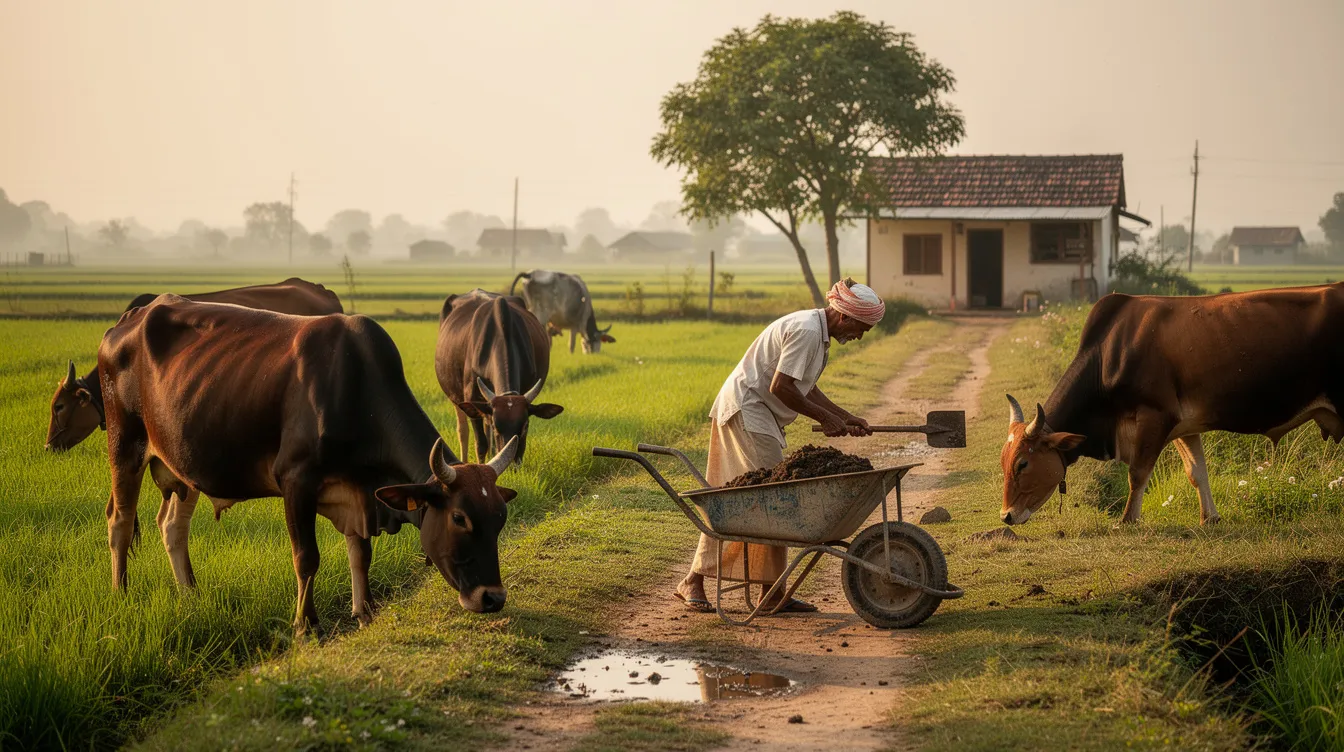
A decade ago, cow dung was something most people wanted to get rid of. Today, it fuels a rapidly expanding industry that the government itself calls the gobar-economy. From organic manure to renewable energy, cow dung products are gaining popularity due to sustainable farming practices, eco-conscious consumer behavior, and strong policy support.
The numbers tell the story. According to the National Statistical Office, the real Gross Value Output of livestock dung in India reached approximately ₹35,190.8 crore in FY2020-21 – surpassing even the total economic value of fodder consumed by livestock. Demand for cow dung-derived products is growing, especially in fertilizers, eco friendly products, and sustainable energy solutions.
The Gobar-Dhan Scheme promotes biogas plant installations in India and funds community-level waste-to-wealth projects. State programs like Chhattisgarh’s Godhan Nyay Yojana directly procure cow dung from farmers. Cow dung is a versatile resource for making eco-friendly products – from biodegradable packaging materials to natural paints and construction materials.
This article breaks down the 8 most profitable cow dung business ideas based on practical financial analysis, real-world case studies, and my two decades of experience preparing project reports and bank loan documentation for entrepreneurs across India.
How We Evaluated the Best Cow Dung Business Opportunities
Not every cow dung business is equally viable. Here’s the framework I used to rank these opportunities:
- Investment requirements – initial capital needed to start operations
- Profit margins and ROI – realistic net margins based on actual case studies
- Market demand – current and projected growth in domestic and international markets
- Raw material availability – ease of sourcing fresh or dried Indian cow dung
- Government support – subsidies under GOBAR-Dhan, SATAT, MNRE, and state schemes
- Scalability – ability to grow from cottage to commercial scale
- Competition level – market saturation and differentiation potential
- Export opportunities – global demand and value addition potential
Beyond the eight core ideas below, cow dung can also be made into compressed particle boards for construction, and innovations utilizing cow dung are yielding lighter, thermal-insulating bricks. Natural paints can be developed from processed cow dung for eco-friendly uses. Cow dung can even be processed into eco-friendly charcoal for cooking. Each of these represents a viable niche – but the eight below offer the strongest risk-reward balance in 2026.
Top 8 Most Profitable Cow Dung Business Ideas for 2026
1. Organic Manure and Vermicompost Production
The organic manure market could exceed USD 12 billion by 2030, driven by a global shift away from chemical fertilizers. Cow dung is rich in nitrogen, phosphorus, and potassium – making it an excellent organic fertilizer. Cow dung can be composted to produce organic fertilizers, and it can be processed into vermicompost using earthworms like Eisenia fetida. Organic fertilizers from cow dung cater to sustainable agriculture and improve soil fertility significantly.
Why It Stands Out
This is the highest-demand cow dung based product with a guaranteed market among organic farmers. A Ludhiana-based study found that vermicomposting yielded net returns of approximately ₹11,012 per cattle unit – compared to just ₹225 from simple composting.
Best For
Dairy farmers, agricultural entrepreneurs, and rural business startups with access to steady cattle dung supply.
Key Strengths
- Investment: ₹2–5 lakhs for a 5-tonne/month unit
- Revenue potential: ~₹75,000/month (bulk compost + vermi-wash + earthworm culture)
- Profit margin: 40–60% at small scale, up to 70% at optimized scale
- Continuous demand from organic farming practices
- Cow dung can be processed into products for organic farming and gardening
Possible Limitations
- Seasonal demand fluctuations during monsoon affect drying and storage
- Requires proper composting knowledge and adequate covered space
2. Biogas and Bio-CNG Production
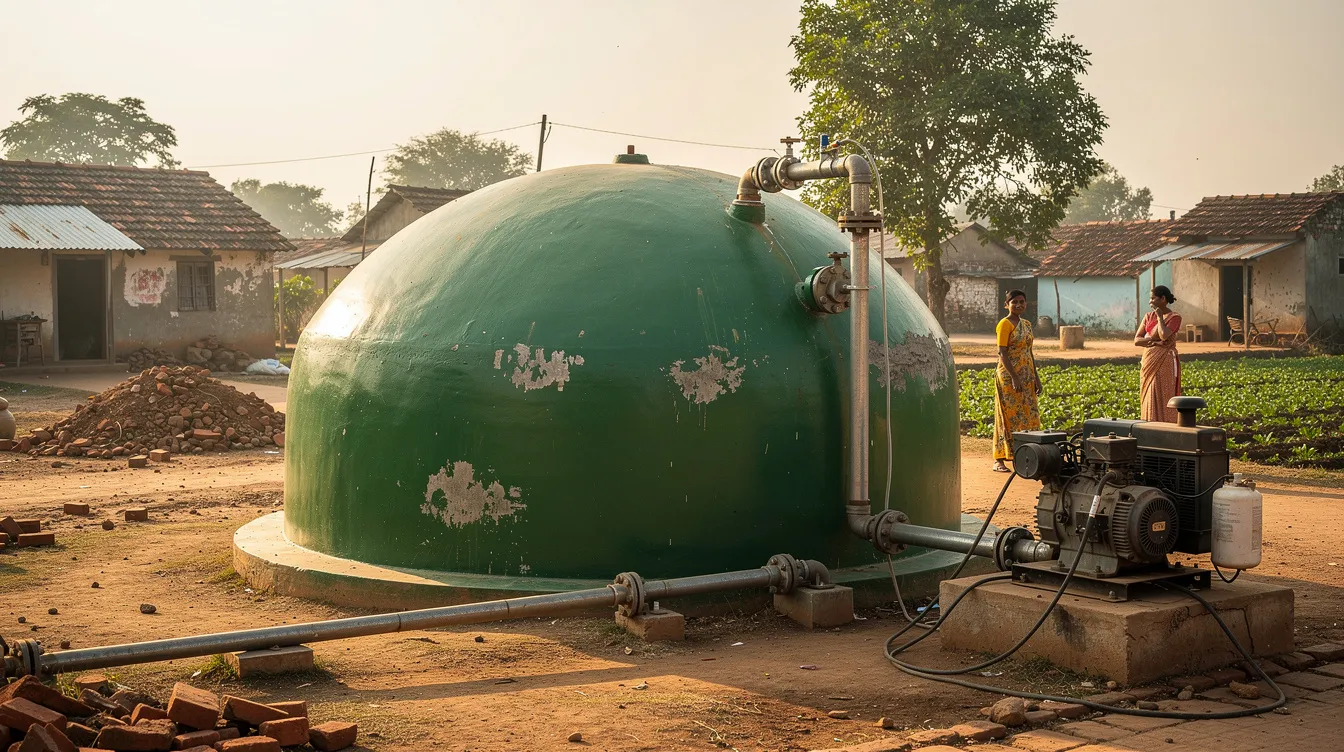
Biogas production utilizes cow dung to create renewable energy. Cow dung can produce biogas for cooking and electricity at household or commercial scale. Bio-CNG can be produced from cow dung for energy applications, offering a clean renewable energy source that replaces fossil fuels.
Why It Stands Out
Dual revenue streams: gas sales and bio-slurry (organic manure). A 5 TPD CBG plant can generate ₹39–62 lakh/month in revenue, with EBITDA of ₹25–42 lakh/month. Biogas production can generate steady income from gas sales year-round.
Best For
Large dairy farms, rural communities, and energy entrepreneurs with access to government support.
Key Strengths
- Government subsidies up to 50% under MNRE and SATAT scheme
- Setting up a biogas plant requires moderate investment – small household units start at ₹28,000–53,000 before subsidy
- Mid-scale biogas plants: ₹25–75 lakhs; CBG plants: ₹20–50 crore
- Guaranteed off-take from Oil Marketing Companies under SATAT
- Strong environmental benefits – reduces greenhouse gas emissions
Possible Limitations
- Higher initial investment for commercial-scale operations
- Technical expertise required for maintenance and gas purification
3. Cow Dung Incense Sticks and Dhoop Manufacturing
Cow dung incense sticks have a steady market in spiritual settings across India and abroad. Eco-friendly incense can be made with dried cow dung and herbs, creating dung based incense sticks that command premium pricing. Cow dung is used to create eco-friendly incense sticks that appeal to health-conscious and spiritually-minded consumers.
Why It Stands Out
Premium pricing due to natural ingredients and spiritual significance. Under Chhattisgarh’s Godhan Nyay scheme, SHGs earned ₹1.78–₹27.68 net income per piece depending on product complexity.
Best For
Small entrepreneurs, women self-help groups, and village-level businesses. This is one of the strongest business ideas for housewives with minimal startup capital.
Key Strengths
- Very low investment: ₹50,000–2 lakhs
- Profit margins: 50–70%
- Strong export demand to spiritual communities in the middle east, USA, and Southeast Asia
- Simple production process using natural products and fragrances
Possible Limitations
- Brand building required for premium pricing
- Quality consistency challenges with manual production
4. Cow Dung Fuel Logs and Briquettes
Cow dung logs can replace traditional firewood in various applications – from household cooking to small industrial heating. Cow dung can be used to manufacture high-density briquettes for fuel, offering an eco friendly alternative to coal and wood.
Why It Stands Out
Growing demand as environmental pollution regulations tighten. Semi-automatic log-making machines cost as low as ₹35,000 for ~500 kg/hr capacity, and finished logs sell at approximately ₹14 per kg.
Best For
Industrial fuel suppliers, rural fuel businesses, and eco-product manufacturers.
Key Strengths
- Moderate investment: ₹5–10 lakhs for a proper production setup
- Both industrial and domestic market demand
- Profit margins: 35–45%
- Environment-friendly product positioning supports plant growth in nearby areas by reducing deforestation
Possible Limitations
- Seasonal storage challenges – monsoon affects drying
- Transportation costs for bulk sales can eat into margins
5. Cow Dung Paper and Eco-Packaging Materials
Cow dung can be transformed into biodegradable paper, and cow dung paper production is gaining popularity in sustainable industries. India’s paper packaging market is projected to grow from ~$19 billion in 2025 to ~$54 billion by 2031 at a CAGR of ~19%. Cow dung can be transformed into biodegradable packaging materials, and it can replace petroleum-based plastics in packaging – a massive opportunity for innovative packaging and eco friendly packaging materials.
Why It Stands Out
Innovative product with high value addition and strong export potential in international markets. Several Gaushalas in Rajasthan already produce cow dung paper for stationery and gift wraps, using sustainable packaging approaches.
Best For
Tech-savvy entrepreneurs, eco-product manufacturers, and export businesses.
Key Strengths
- Premium pricing for sustainable building materials and packaging materials
- Strong export opportunities to markets demanding proper packaging with biodegradable materials
- Government support for sustainable practices
- Growing corporate demand for green and eco friendly packaging
Possible Limitations
- Higher initial investment: ₹8–15 lakhs for pulping and papermaking machinery
- Technical expertise required for consistent product quality
6. Cow Dung Diyas, Idols and Decorative Items
The market for cow dung based religious and decorative items sees peak demand during Diwali, Navratri, and other festivals. These natural products carry deep cultural significance.
Why It Stands Out
A Chhattisgarh SHG case study showed net income of ₹27.68 per murti and ₹5.50 per gamla – artisan items generate considerably higher per-unit profits than basic cow dung cakes.
Best For
Artisan entrepreneurs, women entrepreneurs, and seasonal businesses.
Key Strengths
- Very low investment: ₹25,000–1 lakh
- High seasonal profit margins: 60–80%
- Cultural and religious significance drives organic products demand
- Basic handcraft skills sufficient – no expensive machinery needed
Possible Limitations
- Highly seasonal business model – most revenue concentrated around festivals
- Storage space required for pre-festival inventory buildup

7. Cow Dung Based Mosquito Coils and Pest Repellents
Cow dung can be used to create natural pest repellents, and cow dung is a key ingredient in natural pest repellents that are chemical-free. With rising health consciousness, this segment is gaining popularity among urban and rural consumers alike.
Why It Stands Out
Chemical-free pest control with year-round market demand. Unlike incense sticks or diyas, this product isn’t seasonal – mosquitoes don’t take holidays.
Best For
Health-conscious entrepreneurs, rural manufacturers, and organic product businesses.
Key Strengths
- Low investment: ₹1–3 lakhs
- Growing demand for chemical-free pest control across rural and urban markets
- Profit margins: 40–55%
- Can be combined with other organic materials like neem and camphor
Possible Limitations
- Product efficacy testing required for consumer trust
- Competition from established chemical alternatives
8. Value-Added Export Products (Organic Fertilizer Mix)
India’s cow dung export market could exceed USD 12 billion by 2030. Top importing countries include the USA, UAE, and Japan. The HS Code for cow dung export is 31010091. Cow dung products exported include processed organic manure, vermicompost blends, and enriched cow dung based fertilizers – with exporting cow derived fertilizers becoming a profitable growth area.
Why It Stands Out
Highest profit margins through access to the global market. Premium international pricing and growing global demand for organic farming inputs make this segment attractive for established businesses looking to export cow dung from India.
Best For
Established businesses, export-oriented entrepreneurs, and large-scale producers with capabilities in the cow dung export business.
Key Strengths
- Premium international pricing – significantly higher than domestic rates
- Growing global organic farming market creates sustained market demand
- Government export incentives available
- Multiple product variants possible – from raw cattle dung to processed natural fertilizer mixes
Possible Limitations
- High initial investment: ₹15–30 lakhs including quality testing and certifications
- Export documentation and compliance requirements can be complex
Quick Comparison of the Best Cow Dung Businesses
| Business | Investment | Profit Margin | Difficulty | Best Suited For |
|---|---|---|---|---|
| Organic Manure | ₹2–5 lakhs | 40–60% | Easy | Agricultural entrepreneurs with dairy access |
| Biogas/Bio-CNG | ₹10–75 lakhs+ | 30–50% | Moderate | Large-scale operations with subsidy access |
| Incense Sticks | ₹50K–2 lakhs | 50–70% | Easy | Small entrepreneurs, women SHGs |
| Fuel Logs | ₹5–10 lakhs | 35–45% | Easy | Industrial fuel suppliers |
| Paper Products | ₹8–15 lakhs | 45–60% | Moderate | Tech-savvy export-focused entrepreneurs |
| Decorative Items | ₹25K–1 lakh | 60–80% | Easy | Artisan and seasonal businesses |
| Pest Repellents | ₹1–3 lakhs | 40–55% | Moderate | Health-conscious rural/urban targeting |
| Export Products | ₹15–30 lakhs | 50–70% | Hard | Established businesses with export capability |
How to Choose the Right Cow Dung Business for You
Choose Based on Investment Capacity
- Under ₹2 lakhs: Diyas, incense sticks, cow dung cakes, pest repellents. These work well for rural business ideas with minimal risk. You can explore Mudra Loan options for startup capital.
- ₹2–10 lakhs: Vermicompost, fuel logs, mosquito coils. These offer profitable growth with manageable risk and strong soil health market connections.
- Above ₹10 lakhs: Biogas plants, cow dung paper, export operations. These require solid project reports and bank loan documentation for startup financing.
Choose Based on Market Access
- Local market: Organic manure, diyas, and fuel logs sell well through agriculture shops, nurseries, temples, and farmer producer organizations
- Export-oriented: Paper products, organic fertilizer blends, and dung exports target international markets with premium pricing
- Year-round vs seasonal: Biogas, vermicompost, and pest repellents offer consistent revenue; decorative items peak during festivals
Choose Based on Technical Expertise
- Minimal skills needed: Cow dung cakes, diyas, incense sticks – basic handcraft and drying processes
- Moderate expertise: Vermicompost (composting science), fuel logs (machine operation), cow milk processing and related dairy development products
- Advanced knowledge: Biogas/Bio-CNG (engineering), cow dung paper (pulping technology), cow based ayurvedic shampoo and other organic materials processing, cheese production from cow milk proteins alongside cow dung utilization for integrated dairy-dung businesses
Which Cow Dung Business Is Best for You?
Choose Organic Manure if you have dairy farm access and connections to organic farmers who need cow dung organic fertilizer for sustainable farming practices.
Choose Biogas Production if you can access government subsidies and want to produce biogas from a reliable renewable energy source – and sell bio-slurry as a co-product.
Choose Incense Sticks if you’re starting small with limited capital and want quick returns. This cow dung business scales well from home-based to commercial.
Choose Export Products if you have established business experience and want to tap into the global demand for cow dung from India and other organic products.
Your decision should align with three factors: your risk tolerance, available investment, and knowledge of your target market. Every one of these cow dung business ideas can work – but only with proper planning, realistic financial projections, and a bankable project report.
Final Thoughts
The cow dung industry – now widely referred to as the gobar-economy – represents one of the most accessible waste-to-wealth opportunities in India today. Whether you’re a dairy farmer looking to collect cow dung for extra income, a woman entrepreneur starting a cottage unit, or an established MSME exploring cow dung based products for export, the opportunity is real and growing.
Cow dung bricks can be made for construction purposes. Cow urine adds value to ayurvedic formulations. Cow milk alongside dung creates integrated revenue streams through milk processing and dairy development. The demand for organic products, sustainable agriculture, and eco friendly packaging will only accelerate through 2030.
But here’s what separates successful entrepreneurs from those who struggle: a professionally prepared project report. Banks don’t fund ideas – they fund well-documented, financially viable business plans.
Need a Bankable Project Report for Your Cow Dung Business?
CA Manish Gugliya, with more than 20 years of experience in project finance and MSME advisory, helps entrepreneurs prepare bankable project reports, DPR, CMA data, financial projections, DSCR analysis, break-even analysis, and complete loan documentation – customized for banks, Mudra Loan applications, and MSME financing. A professionally prepared cow dung project report significantly improves your chances of loan approval and helps you present your business plan with confidence.
About the Author
CA Manish Gugliya is a Chartered Accountant with more than 20 years of experience in project finance, bank loan consulting, MSME advisory, startup consulting, DPR preparation, CMA reports, business feasibility studies, manufacturing project reports, and financial planning. He has assisted entrepreneurs across multiple industries – including organic farming, recycling businesses, food processing, and manufacturing – in preparing bank-ready project reports and business plans.
- Ethanol Plant Water Consumption, ETP & ZLD – Requirements, Treatment Systems & Cost in India

- CO₂ Recovery Plant in Ethanol Distillery – Setup Cost, Profitability & Feasibility in India
- DDGS Production, Revenue & Profitability in Grain-Based Ethanol Plants – India
- Ethanol Distillery Boiler, Steam, Power & Utilities Requirements in India
- Ethanol Plant Land, Building & Layout Requirements in India – 30 to 200 KLPD Distillery Projects
- Ethanol Plant Raw Material Requirements & Yield in India – Maize, Rice & Grain Consumption
- Ethanol Plant Capacity Planning – 30 to 200 KLPD in India: Production, Investment & Feasibility
- Ethanol Production Technology – Dry Milling, Fermentation & Distillation in India

- Grain-Based Ethanol Manufacturing Process & Flow Chart in India – Complete Step-by-Step Guide
- Ethanol Distillery Machinery, Equipment & Cost in India
- Grain-Based Ethanol Plant Setup Cost in India – Investment, Machinery & Infrastructure
- Grain-Based vs Molasses-Based Ethanol: Which Is Better for Indian Ethanol Investors?
- Multi Feedstock Ethanol Distillery Project Report – DPR, Plant Setup, Cost & Feasibility
- Broken Rice & Damaged Foodgrain Ethanol Plant Project Report & DPR in India – Setup Cost, Machinery, Profitability & Feasibility
- Maize-Based Ethanol Plant Project Report & DPR in India