Key Takeaways
- Pradhan Mantri Mudra Yojana (PMMY) is active and available in 2026 and FY 2026-27. The scheme has not been stopped or discontinued.
- PMMY being active does not guarantee automatic loan approval. Each application is assessed based on eligibility, documentation and the lender’s credit appraisal.
- Mudra Loan categories in 2026-27 are Shishu (up to ₹50,000), Kishor (₹50,001 to ₹5 lakh), Tarun (₹5 lakh to ₹10 lakh) and Tarun Plus (₹10 lakh to ₹20 lakh under specific conditions).
- Tarun Plus is available only for borrowers who have successfully repaid previous loans under the Tarun category; new applicants cannot directly access ₹20 lakh.
- All information in this article is checked as of July 2026. Borrowers should cross-verify with official PMMY and bank sources before applying.
Introduction: Is Mudra Loan Still Available in 2026?
If you are wondering whether Mudra Loan is still available in 2026, the short answer is yes. Pradhan Mantri Mudra Yojana continues to operate in 2026 and FY 2026-27. But availability of the scheme should not be confused with guaranteed loan approval.
I am CA Manish Gugliya (FCA), a practising Chartered Accountant with over 20 years of experience in project reports, CMA data, MSME finance and Mudra Loan consultancy. I regularly help small businesses and entrepreneurs across India prepare bankable proposals for financial assistance under government schemes.
The confusion around PMMY’s status is understandable. Outdated YouTube videos still mention only the ₹10 lakh limit. Social media posts claim the scheme has been stopped. Old articles do not reference Tarun Plus at all. These mixed signals leave genuine applicants unsure about the current position.
This article focuses on one question: is PMMY available in 2026-27? For detailed coverage of new rules and circulars, I have separate dedicated pages on ProjectReportBank.com.
Information checked as of July 2026.
Table of Contents
Is Mudra Loan Available in 2026?
Yes. Mudra loans are available in 2026 and FY 2026-27 through eligible banks and financial institutions across India, subject to prevailing PMMY guidelines and lender credit appraisal.
The scheme covers income-generating activities in manufacturing, trading, services and eligible allied activities for micro enterprises and micro units in the non corporate, non-farm sector. MUDRA loans cover various income-generating activities undertaken by small and micro enterprises.
There is a clear difference between:
- The scheme being active (it is)
- A borrower meeting eligibility criteria
- A bank or financial institution accepting the application
- The sanction decision after credit appraisal
- Actual disbursement after documentation
No borrower possesses a legal right that forces banks to approve every application just because PMMY exists. Banks follow their own credit norms within PMMY guidelines issued by the Department of Financial Services.
PMMY remains a central tool for financial inclusion and self-employment finance in India, with government budget support and refinancing through MUDRA as a refinance agency.
Is PM Mudra Yojana Still Active in 2026-27?
PM Mudra Yojana remains an active central government scheme in FY 2026-27, administered through the Department of Financial Services and MUDRA Ltd.
The government does not lend directly. It provides a framework and refinance support to Member Lending Institutions (MLIs). These MLIs then extend loans to the beneficiary micro unit.
To be clear about the process:
- The scheme is notified and ongoing
- A particular bank continues to participate as an MLI
- The borrower must meet eligibility norms for the chosen category
- The bank completes its credit appraisal
- Sanction and disbursement follow only if all conditions are met
Some branches may temporarily tighten categories like Tarun Plus based on their risk appetite. That does not mean PMMY itself has ended. Applicants should check their preferred bank’s latest circulars and the official MUDRA website to confirm which categories are currently open.
What Has Changed in Mudra Loan by 2026?
PMMY in 2026-27 is an evolved version of the scheme launched in 2015 by the micro units development and refinance agency (MUDRA Ltd). The nature of changes matters for anyone relying on old information.
Key updates relevant to borrowers in 2026:
- Tarun Plus category was introduced on 24 October 2024, extending the ceiling to ₹20 lakh for qualifying borrowers
- Allied agricultural activities (dairy, poultry, fishery, beekeeping) are explicitly included in eligibility
- Digital application routes like e-Mudra and JanSamarth portals expand access
- Interest rates for Mudra loans are deregulated; current interest rates range from 9.05% to 21%, varying based on the lender and applicant profile
The basic Shishu, Kishor, Tarun structure remains intact. Interest rates are not fixed by a single PMMY rate; individual lenders set them based on cost of funds and risk assessment.
For a detailed breakdown of year-wise changes and latest circulars, see my Mudra Loan latest update for 2026-27.
Mudra Loan Categories Available in 2026-27 (Shishu, Kishor, Tarun, Tarun Plus)
In FY 2026-27, funding is structured into four tiers: Shishu, Kishor, Tarun and Tarun Plus. MUDRA loans are categorized by business growth stages. Loan amounts range from ₹50,000 to ₹20 lakhs across these categories. Repayment tenure typically ranges from one to five years, depending on the loan type and lender.
Shishu loans provide up to ₹50,000 for new businesses or very small income-generating activities. Street vendors, home-based units and small shops at an early stage typically fall here. Documentation is simpler and processing faster. Mudra loans are collateral-free up to ₹10 lakhs, and shishu loans fall well within that range.
Kishor loans range from ₹50,001 to ₹5 lakhs for expansion of growing micro enterprises needing more working capital or machinery to purchase capital assets. Banks may ask for basic financials and bank statements.
Tarun loans cover ₹5 lakh to ₹10 lakh for more established businesses. Lenders look more closely at financial statements, GST returns and cash-flow projections. Both working capital and term loan components can be structured under this category.
Tarun Plus covers above ₹10 lakh and up to ₹20 lakh. It is available for eligible borrowers who have availed and successfully repaid a Tarun category loan. This is not a default entitlement for every new applicant; it reflects a specific growth stage and repayment track record.
Is ₹20 Lakh Mudra Loan Available in 2026?
Yes. The maximum loan limit under PMMY is ₹20 lakh, available under the Tarun Plus category as of FY 2026-27, subject to lender policies and scheme rules.
Tarun Plus offers loans from ₹10 lakh up to ₹20 lakh for previous Tarun loan repayers. The ₹20 lakh figure is an upper ceiling, not a standard amount every applicant receives. Actual sanction depends on project cost, margin, cash flow and the bank’s internal guidelines.
Most lenders prefer to offer this category to existing PMMY borrowers who have handled previous loans satisfactorily. As of March 2026 government data, Tarun Plus accounted for only about 0.004% of total Mudra loan accounts sanctioned, confirming that the loan extended under this band remains limited and selective.
New businesses are usually restricted to lower categories initially. For detailed rules and examples, see Mudra Loan up to ₹20 lakh and Tarun Plus Mudra Loan eligibility and rules.
Who Can Apply for Mudra Loan in 2026-27?
Applicants must be Indian citizens aged 18 to 65. Eligible businesses must be non-corporate, non-farm micro-enterprises, though in 2026, allied agricultural activities are included in eligibility.
Individuals, sole proprietorships, partnership firms, private/public limited companies, Self-Help Groups and Joint Liability Groups are all eligible. Eligible businesses include non-farm micro or small enterprises engaged in manufacturing, trading, services or agri-allied activities.
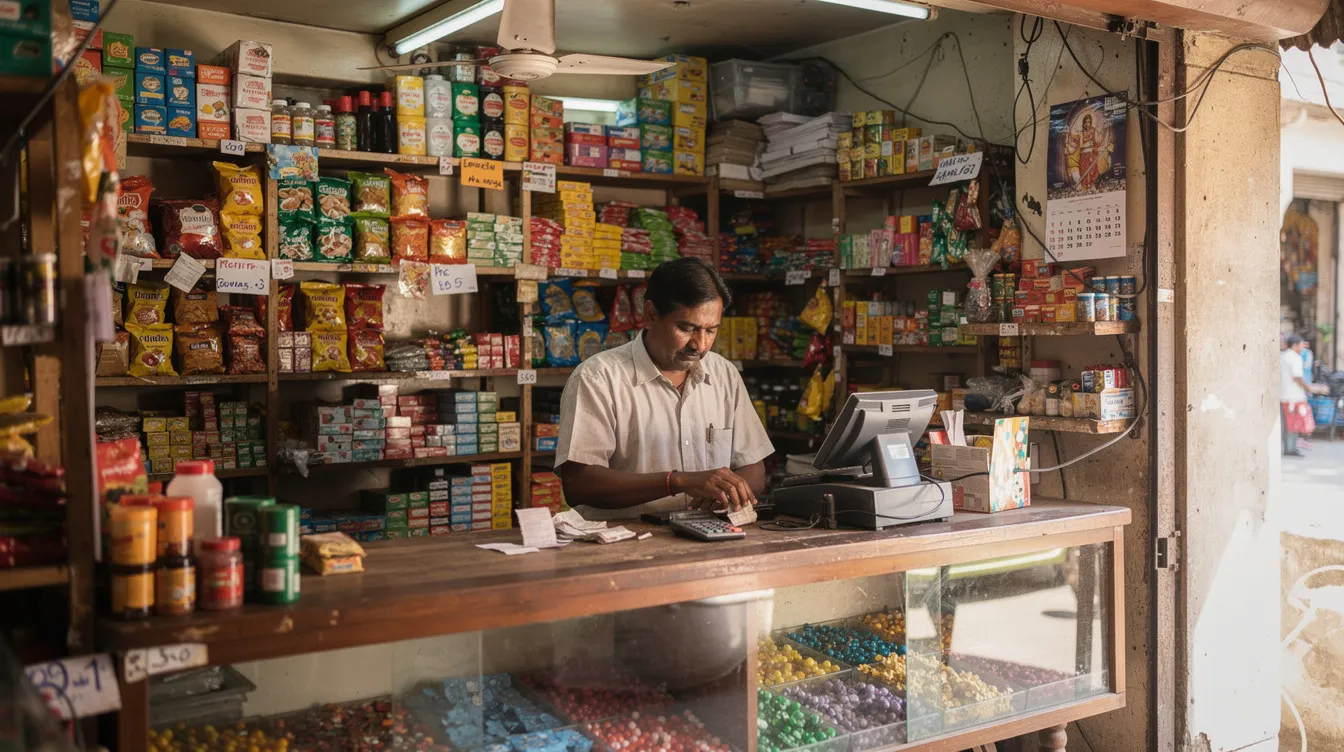
Typical examples: small manufacturing units (fabrication, food processing, tailoring), trading businesses (kirana stores, retail, wholesale traders), services (salons, repair shops, coaching centres), transport operators and permitted allied activities like dairy or poultry.
Both new and existing enterprises can apply. No specific educational qualification is required under PMMY, but individual borrowers must demonstrate that they possess the necessary skills or experience to undertake the proposed activity.
Women-led businesses may receive a 0.25% to 0.50% interest rebate at select lenders, and women borrowers held about 60% of Mudra accounts in FY 2024-25.
From my experience, I always advise matching the Mudra category to realistic funding needs rather than chasing the highest possible limit. Overstretching the loan amount creates repayment pressure that benefits no one.
Are Banks Still Giving Mudra Loans in 2026?
In 2026-27, various financial institutions are actively offering Mudra loans under PMMY. Loans are routed through participating MLIs.
Mudra loans are available through commercial banks, regional rural banks, small finance banks, microfinance institutions and non-banking financial companies. Applicants can approach banks, NBFCs, or MFIs for loans. Public sector banks usually offer the lowest interest rates. Private banks like HDFC Bank, SFBs and NBFCs have their own product offerings targeting specific geographies or customer segments.
PMMY is not a direct cash benefit from the government. It is always a bank loan that must be repaid with interest, even though it enjoys guarantee coverage. Mudra loans are backed by the credit guarantee fund for Micro Units (CGFMU), covering loans up to ₹20 lakh under applicable conditions.
Bank participation differs by branch and region. A branch with high NPAs might be more conservative. Applicants may need to approach more than one eligible financial institution.
Can a Bank Reject a Mudra Loan Even Though the Scheme Is Active?
Yes. Banks can and do reject Mudra Loan applications in 2026 even when PMMY is fully active. Sanction is always subject to credit appraisal.
Common reasons for rejection:
- Weak or unviable business proposal
- Insufficient repayment capacity based on turnover or income
- Poor credit history or existing overdues; a clean credit track record is essential, and a CIBIL score of 650+ is preferred for higher loan categories
- Incomplete documentation or inconsistent bank statements
- Unrealistic sales projections or unclear project cost
Applications are assessed based on the borrower’s satisfactory credit track record, business viability and documentation quality. Lenders must balance financial inclusion with prudence; they are not permitted to lend blindly to meet targets, even under a government scheme.
My advice: treat Mudra Loan like any other bank finance. Prepare a clear plan, support it with documents and be transparent during appraisal.
Documents Required for Mudra Loan in 2026 (Indicative)
Requirements differ by bank, loan size and business type. Processing fees may vary based on the lending institution’s guidelines.
KYC documents: Identity proof (Aadhaar, PAN, voter ID, passport), address proof (Aadhaar, utility bill, rental agreement), photographs.
Business documents: Udyam registration, shop and establishment certificate, GST registration, partnership deed or constitution documents, existing loan statements.
Financial documents: Bank statements (6-12 months), income tax returns and GST returns where relevant, basic financials for Kishor, Tarun and Tarun Plus.
Proposal support: Quotations for machinery or vehicles to purchase equipment, rent agreement, business plan summarising investment, sales assumptions and repayment projections. Required documents include identity proof and business plan at a minimum.
Is a Project Report Required for Mudra Loan in 2026?
For very small shishu loans, some lenders may not demand a detailed project report. For Kishor, Tarun and Tarun Plus, a structured project report is highly recommended and often informally expected.
A good Mudra project report should cover: nature of business, promoter background, proposed investment, working capital needs, revenue assumptions, cost estimates, profitability and repayment plan.
From my experience preparing hundreds of project reports, a clear document can reduce back-and-forth queries with the bank by 50% or more. It lets the credit officer see at a glance whether the assets created from the loan will generate enough cash flow to service repayment.
For amounts near ₹10-20 lakh, getting a professionally prepared project report with realistic CMA-style cash flow makes the file more bankable.
How to Apply for Mudra Loan in 2026-27
The application can be submitted online or at bank branches, depending on the lender’s infrastructure and the applicant’s preference.
The process in practice:
- Define the business activity, total project cost and required loan amount
- Determine the relevant Mudra category (Shishu, Kishor, Tarun or Tarun Plus)
- Prepare KYC documents, business proof and a project report where needed
- Approach an eligible bank branch or use an applicable portal like JanSamarth
- Submit the application
- Cooperate with KYC verification, site visit if required, and credit appraisal
- Review the sanction letter carefully (interest rate, tenure, margin, conditions)
- Complete pre-disbursement formalities
Timelines depend on bank workload, document quality and risk assessment. No one can promise instant or guaranteed sanction.

Mudra Loan 2026 vs Old Mudra Loan Rules
Many articles and videos still reference only the ₹10 lakh maximum without mentioning Tarun Plus. This creates confusion in 2026-27.
Key contrasts with older rules:
- Tarun Plus now allows a ceiling up to ₹20 lakh for qualifying borrowers
- Allied agricultural and digital-first micro businesses receive wider recognition
- Documentation expectations for higher categories are more structured
Core principles remain unchanged: collateral-free micro enterprise finance under CGFMU, with interest rates decided by lenders. Some old content may cite different rate ranges or margin norms. Always rely on current bank communication rather than viral forwards.
For a clause-wise comparison, see latest Mudra Loan rules and changes.
How to Check Whether Mudra Loan Information Is Current in 2026
PMMY has been running since 2015. A large volume of outdated content exists online. Borrowers in 2026-27 must verify whether any article or video reflects present rules.
Simple checks:
- Does the content mention a publication or “last updated” date in 2026?
- Does it reference Tarun Plus and the ₹20 lakh ceiling accurately?
- Are sources official (government, MUDRA, bank) or just hearsay?
Check at least one of: the official PMMY website, latest press releases from Department of Financial Services, or your own bank’s Mudra Loan page.
Do not rely on WhatsApp messages, short videos promising guaranteed approval or posts calling Mudra Loan “free government money.” Use reliable resources like ProjectReportBank.com while still cross-checking with primary official sources.
Common Misconceptions About Mudra Loan in 2026
“Mudra Loan has been discontinued.” Incorrect. The scheme is active in 2026-27 with cumulative disbursements of approximately ₹40.07 lakh crore across 57.79 crore accounts since 2015.
“Everyone can now get ₹20 lakh.” The ₹20 lakh ceiling applies only under Tarun Plus for borrowers who have availed and repaid Tarun loans. Mudra loans are available up to ₹20 lakhs for micro enterprises, but only at the top tier with proven eligibility.
“Mudra Loan is a subsidy or free grant.” It is a repayable bank loan. There is no subsidy element built into PMMY. Instalments must be repaid on time.
“If the scheme is active, the bank cannot reject my application.” Banks retain full discretion over credit appraisal. Scheme availability does not override risk assessment.
“Interest rates are fixed or interest-free.” Interest rates vary based on individual risk profiles. They are deregulated across lenders.
“Collateral is never taken.” While PMMY loans are generally collateral-free up to prescribed limits, banks may still take primary charge on assets created from the loan and personal guarantees from proprietors or partners.
Practical Advice from CA Manish Gugliya for Mudra Loan 2026-27
In my two decades of working with MSME borrowers, one pattern repeats: applicants focus on whether a scheme exists without asking whether their own business proposal is realistic and properly documented.
Instead of only asking “Is Mudra Loan available in 2026?”, ask these questions:
- Is my project cost realistic, or have I inflated it to get a bigger loan?
- Can my business actually generate enough revenue to repay within the tenure?
- Are my bank statements clean? Do I file GST and ITR on time?
- Have I disclosed existing borrowings honestly?
Avoid overestimating sales or underestimating expenses to fit higher loan amounts. Such projections get flagged during appraisal, and even if a loan gets sanctioned on inflated numbers, the repayment stress can destroy the business.
A simple but structured project report, clean banking habits, timely compliance and transparent disclosure make the difference between a file that gets sanctioned and one that gets returned.
Mudra loans can be a genuinely useful tool for entrepreneurs in 2026-27 when combined with sound planning, disciplined execution and honest communication with the lender. The scheme and the funding exist; what matters is whether you bring the right knowledge and preparation to the table.
FAQs: Is Mudra Loan Available in 2026 and FY 2026-27?
Is Mudra Loan available in FY 2026-27, or has the scheme been stopped?
Pradhan Mantri Mudra Yojana continues to operate in FY 2026-27. The scheme has not been stopped. All loans remain subject to eligibility, documentation and bank credit appraisal. As of March 2026, cumulative disbursement crossed ₹40 lakh crore.
What is the Mudra Loan limit in 2026, and can every borrower get ₹20 lakh?
PMMY coverage ranges from shishu loans up to ₹50,000 to Tarun Plus loans up to ₹20 lakh. The ₹20 lakh figure is a maximum ceiling. Banks sanction amounts based on project cost, borrower profile and repayment capacity. A new applicant without prior Mudra repayment history cannot typically access Tarun Plus directly.
Are Mudra Loans interest-free or a government subsidy in 2026?
Mudra loans are normal bank loans with interest. They are not a blanket subsidy or grant. Interest rates are deregulated and set by each lender; public sector banks tend to offer the lowest rates. Instalments must be repaid on schedule like any other credit facility.
Can a new business in 2026 apply directly for Tarun Plus ₹20 lakh Mudra Loan?
New businesses usually start with Shishu, Kishor or standard Tarun levels. Tarun Plus loans extend up to ₹20 lakhs for successful Tarun borrowers who have already completed repayment. Only well-justified projects with strong promoters and documentation may be considered at higher levels by some lenders.
Where should I check the latest Mudra Loan rules and updates for 2026-27?
Confirm current rules using the official PMMY website at financialservices.gov.in, PIB press releases, your bank’s Mudra page or branch circulars. For explanatory guides, visit ProjectReportBank.com pages on the Mudra Loan latest update for 2026-27 and latest Mudra Loan rules and changes. Always cross-check benefits and guidelines with primary official sources before applying.
- Is Previous Tarun Loan Repayment Mandatory for Tarun Plus? (Tarun Plus Eligibility & Previous Loan Clarified)

- Kishor to Tarun Plus Mudra Loan: Can You Skip Tarun and Apply Directly?

- Can First-Time Mudra Borrowers Get ₹20 Lakh Under Tarun Plus?

- Mudra Loan Interest Rate 2026 – Has It Really Changed in FY 2026-27?

- Is There Any New Subsidy on Mudra Loan in 2026? Latest Update for FY 2026-27

- Is Mudra Loan Available in 2026? Latest PMMY Status Explained for 2026-27

- Mudra Loan Latest Update 2026-27: What Borrowers Should Know (By CA Manish Gugliya)

- Mudra Loan Old vs New Rules: What Has Changed in 2026-27?

- Can You Get a Mudra Loan Up to ₹20 Lakh? Latest Rules Explained