Key Takeaways
- Mudra loan processing can slow down during festivals like Diwali, Holi, Eid, and Christmas, and during March financial year-end, but loans are not officially stopped under Pradhan Mantri Mudra Yojana.
- Expect 2 to 7 extra working days of delay around festival weeks, and up to 1 to 3 weeks during the 15 to 31 March closing period.
- Delays happen because of bank holidays, reduced staffing during holidays, and year-end workload (audits, NPA reviews, reporting); they do not mean your application is rejected.
- This article is written by CA Manish Gugliya (FCA) based on 20+ years of practical experience with mudra loans, project reports, CMA data, MSME finance, and business loans.
Introduction: Why Your Mudra Loan Slows Down Around Festivals and March Closing
Your Mudra loan file was moving smoothly. The bank collected your documents, ran your CIBIL check, and then suddenly: no update for days. You call the branch; nobody picks up. You visit; the counter is shut for Diwali, Holi, or the branch staff are buried in March closing work.
This situation is common across India. Festival seasons (October to November for Diwali and Durga Puja, March for Holi and financial year-end, long weekends around Republic Day or Independence Day, Christmas to New Year) reduce the number of working days at branches. Staff take leave. Field officers postpone site visits. When delays stack up, micro-entrepreneurs may resort to high-cost informal credit, and applicants miss business opportunities they were counting on.
Here is what you need to know: a mudra loan delay during festivals or financial year-end is normally a processing slowdown, not a sign that the mantri mudra yojana pmmy has been cancelled or your application refused. Mudra loan processing usually takes 7 to 10 working days under normal circumstances; festivals and March can stretch that timeline.
I am CA Manish Gugliya (FCA), with over 20 years of experience in project reports, CMA data preparation, MSME finance, and Mudra loan consultancy across PSBs, RRBs, private banks, and NBFCs. In this article, you will learn how different stages (CIBIL, site inspection, branch manager approval, regional office, disbursement) get affected, what is a normal waiting period, when to follow up, and when escalation is justified.
No guarantee of Mudra loan approval is given here. The focus is on understanding delays and managing them practically.
Table of Contents
Quick Answer: Can Festivals, Holidays or Financial Year-End Delay Mudra Loan Processing?
Festivals, bank holidays, and March financial year-end do not stop mudra loans under Pradhan Mantri Mudra Yojana. However, they can add 2 to 7 extra working days (festivals) or 1 to 3 weeks (March closing) to the normal processing time. Many Mudra loan applications are processed within a few days when documents are complete and CIBIL is clean. Delays happen because of fewer working days, reduced staffing, and pending verifications. Processing resumes at normal pace once holidays end and closing pressure reduces. Mudra loans are collateral-free and approved quickly under normal conditions.
Do Festivals Really Delay Mudra Loan Processing?
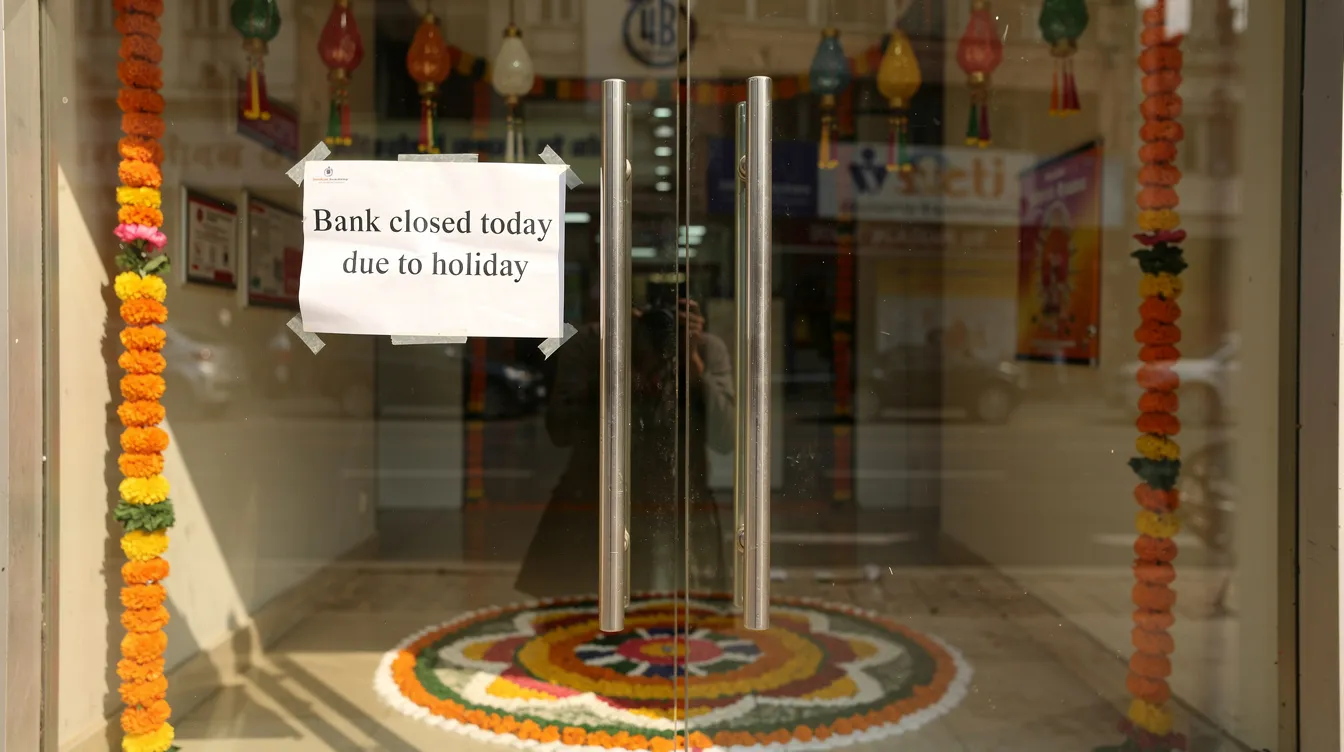
Indian festivals like Diwali (October to November), Holi (March), Eid, Christmas to New Year, and state festivals such as Pongal, Onam, Bihu, and Ganesh Chaturthi create clusters of bank holidays and low-staff working days. In November 2026 alone, there will be at least 9 bank holidays nationwide, with regional observances pushing the total to around 14 non-working days.
Here is how mudra loan processing delay due to holidays plays out:
- National holidays (26 January, 15 August, 2 October) combined with weekends create 3 to 4-day disruptions. Higher application volumes during festivals can extend processing times beyond usual limits, and high volumes of applications during festivals can overwhelm banks.
- State-specific bank holidays affect only certain branches, causing confusion when a regional office is open but your branch is shut, or vice versa.
- Festival weeks like Diwali or Durga Puja cause reduced staffing during holidays, and non-essential work (like fresh small Mudra loan appraisals) often gets pushed after holidays. Banks sometimes prioritize high-value retail loans over Mudra loan applications during festive seasons.
- Delays in mudra loans often occur during peak festive seasons because key decision-makers (branch manager, field officer) are on leave and pending site visits pile up.
These are temporary slowdowns. Banks do not officially stop accepting applications for business loans under PMMY. Eligible borrowers operating as a proprietary concern, partnership firm, or other legal forms remain eligible. Eligible businesses include shop owners and service providers, and micro enterprises engaged in the non farm sector can still apply.
Online portals (like JanSamarth or bank websites where you can apply online) may accept forms even when branches are closed, but backend verification and the full application process resume only on working days.
How Bank Holidays Affect Each Stage of Mudra Loan Processing
A Mudra loan passes through multiple stages. When your file shows “mudra loan pending after bank holidays,” one of these stages is stuck because staff or external parties were unavailable.
Here is the typical sequence for pmmy loans under the mudra scheme: application receipt, document verification, CIBIL check, credit appraisal, site inspection, branch manager approval, regional or higher office approval (for larger amounts), internal bank approval, sanction letter, and disbursement. Loan applications up to ₹5 lakh should be disposed of within 2 weeks under normal conditions. Processing time may vary based on document completeness.
How holidays affect each stage:
- Document verification: Data entry and KYC checks get queued. Incomplete documents required lists may be communicated late. Document verification can slow down processing times during busy periods. Missing or incorrect documents can impact loan processing times at this point.
- CIBIL verification: Usually system-based, but holidays delay the officer’s review of exceptions. Learn more about what happens when your Mudra loan is pending CIBIL verification.
- Credit appraisal: During holidays and quarter-end, credit officers focus on large accounts; small Mudra files move slower. See how the credit appraisal stage works in detail.
- Site inspection: Field officers avoid scheduling visits on festival days or during traffic restrictions. If you are wondering about a Mudra loan pending after site inspection, holidays are a common reason.
- Branch Manager approval: The manager may be on leave; decisions for small loans wait till return. Read about branch manager approval separately.
- Regional Office approval: Less impacted by local holidays, but branches send pending proposals in batches after festivals, creating a surge. Details on files sent to regional office are covered separately.
- Internal bank approval: Back-office compliance teams work only on working days; holidays create backlogs. See more on internal bank approval delays.
- Sanction and disbursement: Cashier and operations staff need to open accounts, mark liens, and post entries. A Mudra loan disbursement delay is common when holidays cut working days.
| Stage | How Holidays Affect It | Typical Extra Delay |
|---|---|---|
| Document verification | Staff queuing KYC, late queries | 1-3 days |
| CIBIL review | Officer unavailable for exceptions | 1-2 days |
| Credit appraisal | Officers focused on large accounts | 2-5 days |
| Site inspection | Field visits postponed | 3-7 days |
| Branch Manager approval | Manager on leave | 2-5 days |
| Regional Office | Batch submissions after holidays | 3-7 days |
| Internal approval | Compliance team backlog | 2-4 days |
| Disbursement | Counter/cashier operations closed | 1-3 days |
PSU banks tend to be more affected than private banks or small finance banks, though all institutions face some slowdown.
Why Financial Year-End (March) Causes Mudra Loan Delays
Most Indian commercial banks and various financial institutions close their financial year on 31 March. From roughly 15 March to 31 March, the focus shifts to closing existing accounts, NPA reviews, audits, and reporting rather than fresh small-ticket sanctions like mudra loans. This is why “Mudra loan sanction delay in March” and “Mudra loan application pending in March” are so common.
Here is what drives the bank year-end workload Mudra loan slowdown:
- Financial closing work: Provisioning, balance-sheet finalisation, branch-wise trial balance, reconciliation of suspense and clearing accounts consume staff time.
- Internal audits and compliance: Concentrated in March, pulling senior staff away from loan processing.
- NPA review and recovery drives: Staff chase overdue accounts; fresh exposure decisions take a back seat.
- Branch target pressure: Some branches push faster cases to meet targets and postpone borderline Mudra proposals till April. Banks prioritize high-value retail loans over Mudra loan applications during this period as well.
- Heavy reporting workload: Regional, Zonal, and Head Office reporting eats into officers’ daily hours.
- Staff shortages: Transfers, training, and accumulated leave before 31 March reduce available personnel.
Banks do not have any reserve bank or PMMY rule stopping Mudra loans in March. A Kishore loan (say, ₹3 to 4 lakh) application submitted on 20 March may realistically see sanction only in early April, even if all documents are proper. Mudra loan disbursement after financial year end often becomes smoother in the first week of April when new budgets and staffing stabilise.

Quarter-End vs Financial Year-End: Which Period Slows Mudra Loans More?
All four quarter-ends create reporting pressure, but March is in a different category.
| Quarter | Typical Processing Speed | Main Focus of Bank | Chance of Mudra Loan Delay |
|---|---|---|---|
| June (Q1 end) | Near normal | Aligning to annual targets | Low |
| September (Q2 end) | Slightly slower | Half-yearly review, minor audit | Low to Moderate |
| December (Q3 end) | Mostly normal | Calendar year-end reporting; banks still push MSME sanctions | Moderate |
| March (Q4 / FY end) | Noticeably slow from 15 March | Financial closing, NPA, audit, staff transfers | High |
Basic steps like receiving applications or running CIBIL checks may still proceed near normal speed during any quarter-end. The bottleneck hits at credit appraisal, sanction, and disbursement.
If your Mudra loan is delayed in March, it almost always has nothing to do with your personal eligibility criteria, legal entity type (proprietary concern, partnership firm, public company, or other legal entity), or changes to the mantri mudra yojana pmmy policy. It is an internal workload issue.
Does RBI Suspend Mudra Loan Processing During Holidays or Year-End?
No. The reserve bank of India and the Government of India have not issued any instruction to suspend or stop Mudra loans during festivals, bank holidays, quarter-end, or financial year-end.
- RBI declares public holidays and working days for banks. On those days, over-the-counter processing stops, but no rule singles out mudra loans for suspension.
- PMMY guidelines allow member lending institutions (banks, NBFCs including mudra ltd as a refinance agency, MFIs) to process eligible Mudra loan proposals year-round. Interest rates and eligibility remain unchanged during festivals.
- There is a clear difference between “temporary operational slowdown” and “official suspension.” The first happens due to staff and workload. The second does not apply to mudra loans in any festival or year-end period.
- Even if banking hours are reduced or branches partially close for local festivals, online applications and internal systems continue queuing cases for later.
- Interest rates for mudra loans are deregulated by banks; interest rates are determined by Member Lending Institutions. The current interest rate for Mudra loans is around 9.05% p.a. at many banks, and this does not change during festivals.
Rumours that “banks are not allowed to disburse in the last week of March” are false. Many branches disburse even on 30 or 31 March when the file is complete. For a deeper look at what banks can and cannot do, read about whether banks can legally delay Mudra loan processing.
How Long Can Festival-Related and Year-End Delays Last?
There is no fixed rule, but based on practical experience with multiple banks across states, these patterns are common for Mudra loan processing time during festive season:
| Situation | Typical Additional Delay | Comments |
|---|---|---|
| One mid-week bank holiday | 1-2 working days | Minimal if rest of week is normal |
| Long weekend (Sat to Mon closed) | 2-5 working days | Backlog builds on reopening day |
| Major festival week (Diwali, Durga Puja) | 3-7 working days | Staff leave, postponed inspections |
| Holi week overlapping with March closing | 1-2 weeks | Combined festival plus year-end effect |
| March closing (15 to 31 March) | 1-3 weeks | Varies by bank, loan amount, file quality |
These delays are on top of the normal Mudra loan processing time. Shishu loans provide up to ₹50,000 for startups, Kishore loans range from ₹50,000 to ₹5 lakh for growth, Tarun loans offer ₹5 lakh to ₹10 lakh for established businesses, and the newer Tarun Plus loans provide ₹10 lakh to ₹20 lakh for expanded businesses. Shishu loans covering loans upto rs 50,000 tend to clear fastest even during holidays; larger categories take longer due to more documentation and approval layers.
After holidays, banks often clear pending small Mudra files in batches. Cases with weak CIBIL or incomplete files face longer delays, but that is risk appraisal, not just holidays. No collateral is required for loans up to ₹10 lakh under the flagship scheme.
When Should You Start Following Up on a Delayed Mudra Loan?
Some waiting is normal around festivals and March. Endless silence is not. Here is a practical guide:
- Regular months: For shishu kishore and Tarun loans, expect 7 to 15 working days if documents are complete and your satisfactory credit track record is confirmed via CIBIL.
- Festival grace period: Wait an additional 5 to 7 working days after a big festival or long weekend before worrying. Applicants should not be defaulters to any bank.
- March closing: Give banks up to 2 to 3 weeks from the date of complete file submission before considering escalation, unless your business need is urgent.
A simple decision flow:
- No communication for more than 10 working days after holidays? Call the branch.
- Still no clarity? Request a meeting with the loan officer or branch manager.
- File stuck at Regional Office? Politely ask for the reference point number and expected date.
Do not visit the branch daily. Regular follow-up with bank officials can help track application status; 1 to 2 polite calls per week work better. Red flags for escalation include repeated postponements without reasons, commitment dates missed multiple times, or conflicting information from different officers. Delays can lead to missed business opportunities for applicants, so knowing when to push matters.
Practical Tips to Avoid Unnecessary Mudra Loan Delays
You cannot control bank holidays or financial year-end, but you can reduce avoidable delays by careful planning.
- Time your application: Applying early can help avoid delays. Try to submit your form 3 to 4 weeks before Diwali or before 10 March to avoid the peak year-end rush. The application process for individual borrowers works better outside peak periods.
- Complete your required documents: Gather KYC (voter’s id card, Aadhaar, PAN), address proof, property tax receipt for business premises, financials, and other documents before visiting the bank. Incomplete documentation is a major cause of loan delays. Proper documentation reduces the likelihood of loan rejection and delays.
- Prepare a clear business plan: A simple, practical project report covering proposed activity, cash flow projections, and a liability statement improves credit appraisal speed. Professional project report support is available at ProjectReportBank.
- Respond quickly to queries: Even a 2 to 3-day delay from your side can push the file to the next week. Keep your mobile number and email active.
- Do not change your loan amount or business activity midway unless absolutely necessary, as this triggers re-appraisal.
- Use digital platforms: Using digital platforms can expedite the application process for mudra loans. Track online where available and keep a log of submission dates and officer names.
- Avoid unauthorised agents: Entrepreneurs should avoid using agents promising guaranteed loan approval. PMMY and the micro units development agency do not appoint middlemen.

Real-Life Scenarios: How Different Festivals and Bank Events Affect Mudra Loans
Actual timelines vary, but these examples (based on patterns I have seen across banks) help set realistic expectations.
Holi overlapping with March: A shopkeeper in UP submitted a Kishore loan file on 8 March for working capital. Holi fell on 25 March. Between the festival holiday, branch closing work, and weekend, the branch manager signed the sanction only on 5 April. The total extra wait: about 10 working days beyond normal.
Diwali stock-up: A retailer in Haryana applied in early October for a Shishu loan to increase inventory for Diwali sales. Diwali week had 4 consecutive non-working days; site inspection was postponed. Sanction came 6 working days later than expected. Delays can lead to missed business opportunities; this shopkeeper had to borrow from relatives at higher cost.
Eid in Muslim-majority localities: A service business owner applied for a Tarun category loan. The field officer could not complete the site visit on Eid days. Disbursement got pushed by a full week.
Christmas to New Year: In metros and private banks, reduced staffing and year-end leave caused mild delays for a partnership firm Mudra loan application. Sanction came 4 working days late.
Republic Day long weekend: A Friday to Monday holiday block left a file marked “Mudra loan pending after bank holidays” until mid-week. The applicant waited just 3 extra days.
March NPA drive: A branch prioritised recovery of previous loans and review of overdue accounts, temporarily slowing fresh sanctions. A borrower who had successfully repaid previous loans faced no credit issues but still waited an extra week for sanction.
Each scenario confirms: approval depends on eligibility criteria, CIBIL, business viability, and quality of financial assistance sought, not just timing.
Common Myths vs Facts About Mudra Loan Delays in Festivals and March
| Myth | Fact |
|---|---|
| Banks stop mudra loans during Diwali | Processing slows temporarily but resumes after holidays |
| March closing means automatic rejection | March increases workload, not rejection; assessed based on merit |
| Pending file after holiday means refusal | Silence usually means backlog, not rejection |
| RBI bans disbursement in last week of March | No such ban exists; disbursements happen even on 31 March |
| Festival-time interest rates are higher for Mudra loans | Interest rates follow bank policy, unrelated to festivals; Mudra loans up to ₹10 lakh require no collateral security regardless of season |
| Only proprietary concerns get Mudra loans quickly; partnership firms and other legal forms are delayed | All non corporate small business enterprises with legal forms are processed under the same PMMY norms |
| Once CIBIL is checked, holidays cannot affect the rest | CIBIL is one step; credit appraisal, site visit, and sanction still need working days |
| Site inspection cannot happen after festivals | Inspections resume on the next working day; field officers schedule visits post-holiday |
| Pending Mudra loan in March should be withdrawn and re-applied in April | Withdrawing resets the queue; wait for the file to clear instead |
| Online Mudra loan applications are unaffected by holidays | Online submission works, but backend human processing still depends on working days |
Expert Advice from CA Manish Gugliya: Handling Mudra Loan Delays Smartly
Over 20 years of working with business enterprises, income generating micro enterprises, and small enterprises across commercial banks, small finance banks, and NBFCs, I have seen hundreds of Mudra loan cases across different seasons. Here are my recommendations:
- Plan major expansion loans outside peak March if possible. Use February for documentation, planning, and preparing your business plan so the file is complete by early March.
- For shishu loans (covering loans upto rs 50,000), complete KYC and a simple description of your income generation activity. These can move fast even during festivals if the file is clean.
- For Kishore and Tarun loans, prepare a basic project report with cash flow projections and capital assets details so credit officers can assess viability without repeated queries. Whether your proposed activity is food processing, trading, or activities allied to manufacturing, clarity helps.
- Never hide existing credit needs or overstate income. Mismatches found in CIBIL or bank statements are a far bigger reason for delay than holidays. Applicants must be aged between 18 to 65 years and should not be defaulters.
- If your loan is genuinely urgent (seasonal stock for Diwali, for example), communicate this politely to the branch at the start. The beneficiary micro unit entrepreneur who explains their timeline gets better attention.
- Keep photocopies and scanned copies of all documents required so missing papers can be sent quickly even during busy periods. Address proof, voter’s id card, and business registration should always be ready.
- Avoid submitting incomplete files close to long weekends. A properly entered file after holidays moves faster than a half-baked one dumped before closing.
- Do not argue with staff about “RBI rules” based on rumours. Ask them to explain the actual reason and expected date for your loan extended sanction.
- Use professional help for project reports if the bank or financial institution raises concerns about viability. This often unlocks stuck cases faster than pressuring for speed.
- Small delays of a few days are normal. Focus on overall sanction quality (loan amount, interest rates, conditions) rather than only the calendar date. The stage of growth development and funding needs of your beneficiary micro unit should guide your patience.
- If your disbursement delay is only at the final voucher or entry stage, request a clear date and ensure your account KYC, signatures, and assets created documentation are already updated.
- Understand that agricultural activities like farming are not eligible for mudra loans; the scheme launched under Pradhan Mantri Mudra Yojana covers only non farm sector activities. If your lending institution asks about this, have clarity on your proposed activity. Educational qualification is not a barrier; necessary skills and experience matter more to the bank.
Conclusion: Patience, Planning and Professional Follow-Up Win Over Seasonal Delays
Festival and bank holidays, and March financial year-end closing, can slow Mudra loan processing, but they do not stop it. The growth development and funding needs of small businesses and micro units are served year-round under the flagship scheme. Most mudra loan delay during festivals cases resolve once normal working resumes, provided your eligibility criteria, CIBIL, and documentation are in order.
Be patient during genuine holiday periods. Avoid panic if your Mudra loan application is pending in March. Focus on timely, polite follow-ups instead of daily visits. Learn how each stage works so you know where your file is stuck and whether it is a holiday issue or something else.
Explore related guides on ProjectReportBank to prepare stronger applications, better project reports, and understand your rights when banks delay Mudra loan processing. The development and funding needs of your business deserve informed, well-timed action.
Frequently Asked Questions
Can Holi or Diwali really delay my Mudra loan approval?
Yes. Holi and Diwali often create 3 to 7 working days of additional delay because of bank holidays, staff leave, and postponed site visits. The lending institution continues processing once full working resumes. Your Mudra loan is not refused; it is queued. Individual borrowers with clean files and a satisfactory credit track record typically see approvals soon after holidays.
Does March closing stop banks from sanctioning Mudra loans?
March closing does not legally stop Mudra sanctions. However, from around 15 to 31 March, many branches prioritise financial closing, NPA work, and compliance reporting. Fresh Mudra loan proposals, especially under Kishore and Tarun categories, may be decided only in late March or early April. The pradhan mantri mudra yojana and mudra ltd as a refinance agency have no rule suspending sanctions in March.
Can my Mudra loan be rejected just because I applied during festivals or in March?
Timing alone is never a valid rejection reason. Mudra loan decisions depend on eligibility, CIBIL, business viability, and your documents. Your credit needs are assessed based on merit, not the calendar. Whether you operate a proprietary concern, partnership firm, or any other legal entity, the scheme does not penalise festival-time applications. The final decision may simply arrive later if you applied during a busy period.
Is online Mudra loan processing faster during holidays than visiting the branch?
Online portals accept your form instantly, but backend verification, CIBIL checks, and approvals still happen only on working days. Using digital platforms can expedite the initial submission for financial assistance, but the overall delay due to festivals or March closing can still occur. The reference point is that both online and offline applicants face the same backend queue once a bank holiday reduces working days.
How long should I wait after a long bank-holiday weekend before following up?
Wait 3 to 5 working days after offices reopen before calling or visiting. Staff need time to clear accumulated work and update system status for pending applications. If there is still no response after 7 to 8 working days post-holiday, contact the branch and request a specific update on your file status. Regular follow-up with bank officials helps, but daily visits are counterproductive.
- Mudra Loan Delay in Processing: Complete Guide to Every Stage, Reason & Solution


- Mudra Loan Processing Time: Stage-Wise Timeline from Application to Disbursement


- Why Does Mudra Loan Verification Take Longer for New Businesses?

- Can Festivals, Holidays or Financial Year-End Delay Mudra Loan Processing?

- Mudra Loan Pending Due to Internal Bank Approval: What Should You Do?

- Mudra Loan Pending Because of CIBIL Verification: What to Expect

- Mudra Loan Sanctioned but Disbursement Delayed: Reasons & Solutions (By CA Manish Gugliya)
- Why Is My Mudra Loan Still Under Credit Appraisal?

- Mudra Loan Pending After Site Inspection: What It Really Means (From a Banker’s Desk)