
Introduction
Chennai is a fast-growing economic hub in South India, and if you’re thinking about starting your own business here in 2026, your timing couldn’t be better. As a practising Chartered Accountant who has prepared hundreds of project reports for entrepreneurs across Tamil Nadu, I can tell you from first-hand experience – the volume of enquiries I receive from Chennai-based founders has doubled in the last three years alone.
Chennai is known as the “Detroit of India” for its automobile industry, producing nearly 30% of India’s automobiles and 35% of auto components. The city has a large, skilled workforce supporting various industries – from IT and healthcare to textiles and food processing. Its strong port infrastructure for logistics and trade saw combined throughput of over 107 million metric tonnes at Chennai Port and Kamarajar Port in FY 2025-26. Chennai’s operational costs are lower than in Mumbai or Delhi, making it attractive for first-time entrepreneurs. The Tamil Nadu government supports entrepreneurs with various schemes, and the state’s startup ecosystem has grown to nearly 19,000 startups generating 2.2 lakh jobs.
Whether you have ₹10,000 or ₹25 lakhs to invest, this guide covers 75+ profitable business ideas in Chennai that match different budgets, skill sets, and risk appetites.
Why Start a Business in Chennai?
Chennai’s industrial ecosystem supports various service-related businesses, and the city has a large consumer market facilitating small business opportunities. Here’s what makes it special for entrepreneurs:
- Automobile manufacturing cluster around Sriperumbudur and Oragadam hosts Hyundai, Renault-Nissan, BMW, Ashok Leyland, and hundreds of ancillary suppliers. About 2.04 lakh vehicles were exported from Chennai Port alone in FY26.
- Electronics and textile clusters provide ready supply chains for small scale business units.
- IT corridor along OMR has the highest density of skilled professionals and software services companies in India, creating huge demand for support businesses.
- Healthcare – Chennai is a medical tourism destination with world-class hospitals, creating opportunities in diagnostics, telehealth, and medical devices.
- Port connectivity – twin ports handling 107 MMT of cargo means massive potential for import-export, warehousing, and cold chain businesses.
- Food processing and logistics – growing urban population, seafood exports, and new multimodal logistics parks (like the ₹1,424 crore Mappedu park) open doors for trading businesses and supply chain ventures.
- Tourism and education – Chennai attracts millions of tourists each year and is known for a strong focus on education, creating demand for coaching centres, hostels, and ed-tech.
- Smart City initiatives and Metro expansion are improving connectivity to business districts and retail outlets across the city.
Chennai has a vibrant startup and tech ecosystem. If you’re exploring broader options, check out these business ideas in Tamil Nadu as well.
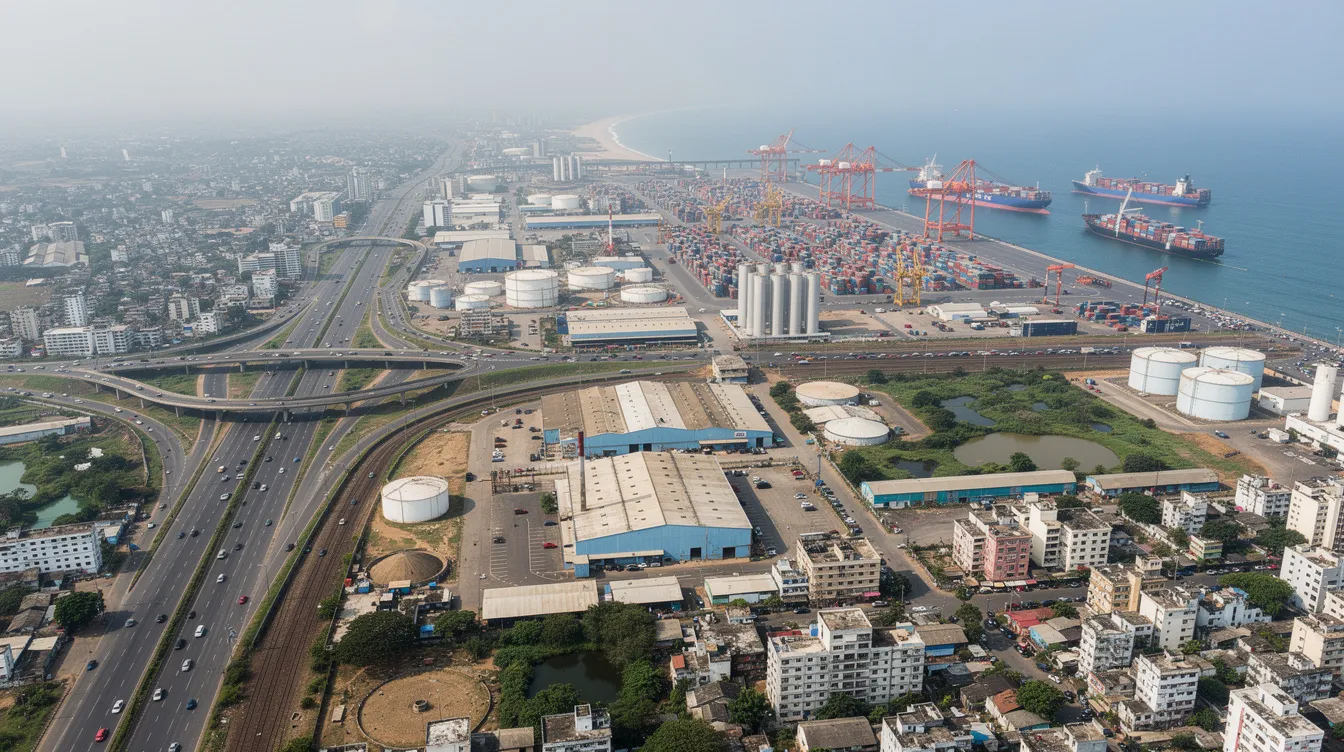
Table of Contents
How We Evaluated the Best Business Ideas for Chennai
Every business idea in this list was evaluated on seven criteria that I use when advising clients:
- Investment required – categorised as low (under ₹1 lakh), medium (₹1–10 lakhs), or high (₹10–25 lakhs)
- Profit margins – based on real financial data from project reports and case studies (e.g., rice milling units in Tiruvallur show net margins of 14–15%)
- Market demand – specific to Chennai’s economy, population, and industry clusters
- Skills required – technical, creative, or management; how steep is the learning curve?
- Licensing and compliance – GST registration, FSSAI, pollution control, Udyam registration ease
- Future growth potential – can it scale? Can you enter export markets?
- Risk factors – competition intensity, input cost volatility, seasonal demand
I always tell my clients: the right business idea is the one where your skills meet market demand at a price point your capital can support.
75+ Best Business Ideas in Chennai for 2026
Manufacturing Business Ideas (₹2–10 Lakhs Investment)
Chennai’s automobile industry ecosystem and proximity to ports make it ideal for small-scale manufacturing. Here are the top ideas:
- Automobile spare parts manufacturing – rubber bushings, brackets, gaskets. Investment: ₹5–10 lakhs. Margins: 15–25%. Target: OEM vendors and aftermarket dealers. Risk: margin pressure from OEMs (one client of mine saw EBITDA drop from 14.5% to 11.2% before recovering through product mix corrections).
- Plastic components and packaging materials – bottles, containers, wrapping films. Growing demand from e-commerce and FMCG sectors.
- Textile and garment production – ethnic wear, embroidered garments. Chennai’s textile cluster provides raw materials and skilled labour.
- Chemical and specialty chemical production – cleaning agents, adhesives, specialty chemicals. Investment: ₹5–10 lakhs. Requires pollution control clearance.
- Food processing and packaging – rice milling, spice grinding, snack production. A small rice mill near Tiruvallur showed consistent 14–15% net margins with capacity utilisation of 65–75%.
- Electronics components assembly – cable harnesses, PCB assembly. Feeds into Chennai’s electronics manufacturing base.
- Paper and paper products – carry bags, tissue rolls, cardboard boxes.
- Steel and metal fabrication – gates, grills, small structural work for construction.
- Agarbatti and dhoop manufacturing – consistent local demand in Chennai’s temple-rich culture.
- PVC pipe and fittings – real estate growth in Greater Chennai Corporation areas drives demand.
For detailed guides, see manufacturing business ideas.
Food and Beverage Business Ideas (₹50K–5 Lakhs Investment)
Home-based food services are highly profitable in Chennai, and the food business category has some of the lowest entry barriers. Chennai’s climate drives demand for fresh juices and snacks year-round.
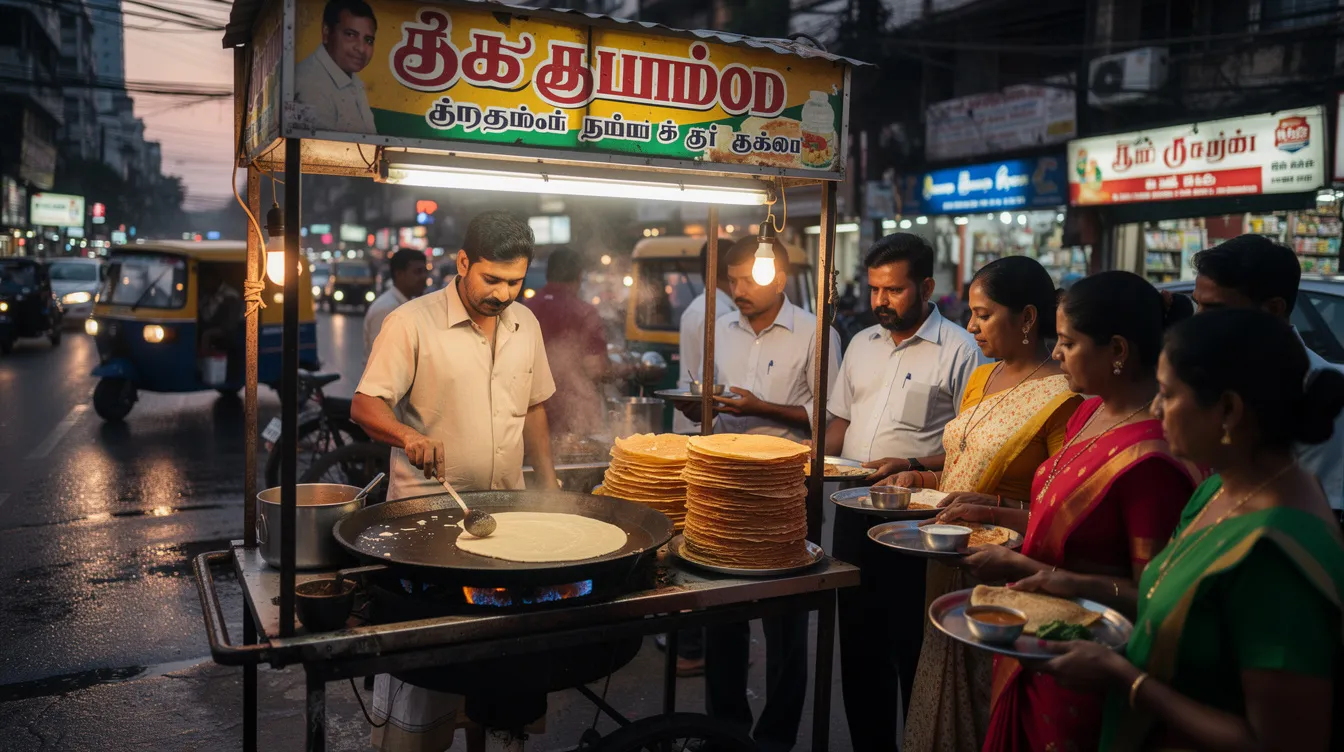
- South Indian food café – idli, dosa, filter coffee. Investment: ₹2–5 lakhs. Profit margins: 25–40%.
- Spice manufacturing and trading – Chennai’s spice business can yield high profits due to local demand. Start with turmeric, chilli powder, garam masala blends.
- Home-based tiffin delivery service – Chennai has a growing demand for homemade tiffin services. Investment: ₹20,000–₹50,000. Target: IT employees, students, working professionals.
- Cloud kitchen – cloud kitchens cater to the demand for home-cooked meals without the cost of a dine-in restaurant. Investment: ₹2–4 lakhs.
- Seafood business and export – Chennai being a coastal city has abundant supply. Processing and exporting seafood to Middle East and Southeast Asian markets is lucrative.
- Food truck – food trucks are popular among Chennai’s younger audiences. The average cost to start a food truck is ₹8–10 lakhs. Quick ROI if parked near corporate offices or college zones.
- Fresh juice and smoothie bar – works well near gyms, IT parks, and business districts.
- Bakery and cake shop – custom cakes for traditional Tamil weddings and corporate events.
- Organic grocery store – the demand for organic grocery stores is growing. Food businesses that serve healthy options are gaining popularity among health-conscious urban consumers.
- Packed snack manufacturing – murukku, mixture, banana chips for retail outlets and online store sales.
Explore more food business ideas for detailed project report formats.
Export and Trading Business Ideas (₹1–20 Lakhs Investment)
With twin ports handling record cargo, import-export business ideas are extremely viable in Chennai.
- Agricultural products export – rice, groundnuts, cashews. Investment: ₹5–20 lakhs. You need IEC code, APEDA registration.
- Handicraft and textile export – Kanchipuram silks, Mahabalipuram stone carvings. Target: USA, Europe, Gulf countries.
- Spice and food products export – pepper, cardamom, curry powders. Profit margins: 20–35%.
- Auto components export – leveraging Chennai’s automobile manufacturing cluster.
- Seafood export – shrimp and fish fillet exports from Chennai’s fish harbour.
- Import of industrial raw materials – chemicals, metals, machinery parts for local manufacturers.
- Garment trading – buy from Tirupur manufacturers, sell through e commerce platforms or wholesale.
- Mobile phone accessories trading – high turnover, consistent customer demand.
- Building materials trading – sand, cement, steel. High-volume, low-margin but steady.
- FMCG distribution – become a regional distributor for national brands.
Service-Based Business Ideas (₹20K–2 Lakhs Investment)
Service businesses have some of the best margins because they don’t require heavy inventory. Chennai’s industrial ecosystem supports various service based businesses and service based ventures across the city, including service businesses Porur, T. Nagar, and Anna Nagar areas.
- Digital marketing agency – digital marketing services are in high demand as businesses move online. Chennai’s small businesses increasingly need digital marketing services. Digital marketing includes SEO, social media management, and content creation. Local businesses in Chennai seek affordable digital marketing solutions. Chennai’s digital marketing sector is growing due to increased online presence. Investment: ₹20K–₹1 lakh (laptop, software tools, internet). See agency business ideas.
- Web development services – web development for SMEs, restaurants, clinics. ₹30K–₹1 lakh startup costs.
- Language training centre – Chennai has a high demand for language training services. The language training sector serves both corporate clients and individuals. Chennai attracts many people seeking to learn Tamil, and it is a hub for various cultural language learners. Language training can be done from home in Chennai. Online certification courses can help become an accredited language teacher. A language training centre Chennai can start with minimal investment.
- Education and coaching centre – competitive exams preparation, school tuition, skill training. Specialized education services have a consistent market in Chennai.
- Healthcare support services – diagnostic sample collection, telehealth coordination, medical billing.
- Tourism and travel agency – the city is known for its cultural heritage and scenic beauty, its rich cultural heritage. Starting a travel agency requires an investment of ₹30,000–₹1 lakh. Tourists seek guidance on accommodation and local attractions. Chennai’s travel agencies can offer customized tour packages.
- Logistics and last-mile delivery – partner with e-commerce companies. Requires storage space and 2–3 delivery vehicles.
- Event management – traditional Tamil weddings and corporate events create year-round demand.
- Interior design consultancy – residential and office space design. Low investment, high-value projects.
- Bharatanatyam and classical dance classes – Bharatanatyam classes can attract both locals and tourists in Chennai. Bharatanatyam classes can be a profitable venture in Chennai.
- Mobile pet grooming – mobile pet grooming is a growing niche market. Minimal setup needed.
- Health and wellness services – yoga studios, physiotherapy at home. Health and wellness services are appealing to urban consumers in Chennai.
- Babysitting and childcare services – babysitting requires no investment and can be lucrative. High demand in dual-income families.
- Urban gardening and hydroponic kits – urban gardening and hydroponic kits fit well in Chennai’s market. There is increasing interest in sustainable living in Chennai.
- CA/Tax consulting practice – GST filing, income tax returns for small business owners.
Online and Digital Business Ideas (₹10K–₹1 Lakh Investment)
For those with digital skills, online business ideas offer location flexibility and low investment.
- E-commerce store – e-commerce for specialized products is a promising sector. Sell niche products (handicrafts, organic foods) via e commerce platforms. Investment: ₹10K–₹50K.
- Social media management – manage social media channels for restaurants, clinics, retail shops. ₹10K startup costs (laptop + internet).
- Online tutoring and coaching – English, maths, coding classes via Zoom. Great for students looking for business ideas.
- Software development and SaaS – build tools for local businesses. Chennai has a massive software services talent pool. AI-driven services are becoming increasingly important for local businesses.
- Vlogging and content creation – vlogging about local culture can attract many followers in Chennai. Monetize through YouTube, brand deals.
- Freelance graphic design – portfolio development and social media creatives. Minimal investment needed.
- Affiliate marketing – promote products through blog content. Zero inventory.
- Online course creation – teach skills you know. Record once, sell repeatedly.
- App development – local apps for food delivery, cab booking, or niche solutions.
- Print-on-demand business – custom T-shirts, mugs with Chennai-themed designs.
Home-Based Business Ideas (₹5K–₹50K Investment)
These are ideal for women entrepreneurs, students, and anyone starting their entrepreneurial journey with personal savings. See more home business ideas and business ideas for housewives.
- Candle making business – candle-making businesses require an investment of ₹10,000–₹40,000. Candle making can start with an investment of ₹10,000–₹40,000. Sell at craft fairs, online, and retail outlets.
- Homemade food products – pickles, podi, snacks. Home-based food services require ₹20,000–₹50,000 to start.
- Tailoring and embroidery – blouse stitching, alteration services. Strong demand near wedding seasons.
- Beauty and wellness at home – bridal makeup, facials. Investment: ₹10K–₹30K.
- Terracotta jewelry making – terracotta jewelry sales are rising due to fashion trends. Terracotta jewelry can be made with an investment under ₹10,000.
- Handicraft production – handicraft businesses can be highly profitable in Chennai. Wooden toys, cloth bags, decorative items.
- Handmade soap and cosmetics – organic, chemical-free products.
- Tiffin service from home – home-based food services can be highly profitable in Chennai.
- Mehendi art services – for weddings, festivals, and corporate events.
- Cloth bag and jute bag manufacturing – eco-friendly, consistent demand after plastic ban.

Franchise Business Opportunities (₹1–25 Lakhs Investment)
- Food and beverage franchises – brands like Chai Sutta Bar, Wow! Momo, Subway. Investment: ₹5–25 lakhs. Built-in customer access and brand recognition.
- Education and training franchises – NIIT, Kidzee, EuroKids. Franchise costs: ₹3–15 lakhs. Education franchises benefit from Chennai’s strong education culture.
- Retail and service franchises – laundry services (UClean), pharmacy (Apollo), optical (Lenskart). Standardized operations reduce risk.
Additional ideas to complete 75+:
- Printing and stationery shop
- Courier and parcel services
- Security services agency
- Pest control services
- Car washing and detailing
- Coconut oil extraction
- Electrical and plumbing services
- Photography and videography
- Gym and fitness studio
- Rental business (furniture, electronics)
For more ideas organized by category, explore our small business ideas and B2B business ideas guides.
Investment and Profit Comparison Tables
| Category | Investment Range | Avg. Profit Margin | Breakeven Period | Risk Level |
|---|---|---|---|---|
| Manufacturing | ₹2–10 lakhs | 12–25% | 12–24 months | Medium-High |
| Food & Beverage | ₹50K–5 lakhs | 20–40% | 6–12 months | Medium |
| Export & Trading | ₹1–20 lakhs | 10–35% | 6–18 months | Medium-High |
| Service-Based | ₹20K–2 lakhs | 30–60% | 3–8 months | Low-Medium |
| Online & Digital | ₹10K–1 lakh | 40–70% | 2–6 months | Low |
| Home-Based | ₹5K–50K | 25–50% | 1–4 months | Low |
| Franchise | ₹1–25 lakhs | 15–30% | 12–24 months | Low-Medium |
Manufacturing vs Trading vs Service:
| Factor | Manufacturing | Trading | Service |
|---|---|---|---|
| Capital Intensity | High | Medium | Low |
| Licensing Burden | Heavy (pollution, factory) | Moderate (GST, trade) | Light (GST, professional) |
| Scalability | High (volume-driven) | High (market-driven) | Medium (people-driven) |
| Margins | 12–25% | 8–20% | 30–60% |
| Skill Requirement | Technical | Commercial/Networking | Domain/Digital |
Government Schemes and Financial Support
The Tamil Nadu government supports entrepreneurs through multiple schemes. Here are the ones I most commonly help my clients apply for:
- Mudra Loan – up to ₹10 lakhs (Shishu/Kishore/Tarun categories). No collateral required for loans up to ₹10 lakhs. See documents required and common rejection reasons.
- PMEGP – for new small scale business units. Subsidy: 15–35% of project cost. Manufacturing projects up to ₹50 lakhs, service up to ₹20 lakhs.
- CGTMSE – collateral-free credit guarantee for MSME business loans up to ₹5 crores.
- Stand Up India – specifically for women entrepreneurs and SC/ST entrepreneurs. Business loans from ₹10 lakhs to ₹1 crore.
- UYEGP (Tamil Nadu) – loans up to ₹15 lakhs with subsidy of 25% of project cost (max ₹3.75 lakhs).
- NEEDS – capital subsidy + initial training for first-generation entrepreneurs.
- Tamil Nadu MSME Capital Subsidy – 25% on plant and machinery. For micro enterprises, cap at ₹25 lakhs. Additional incentives for women, SC/ST, and green technologies.
- Udyam Registration – free online MSME registration that unlocks priority sector lending, government tender eligibility, and scheme benefits.
My advice: never approach a bank without a proper project report and CMA data. Your application quality directly determines your approval chances.
Project Report and Business Planning Essentials
Every entrepreneur planning to raise finance – whether through business loans, government schemes, or investors – needs a professional business plan and project report. Here’s what banks typically require:
- Bank Loan Project Report – detailed document covering promoter profile, project details, market analysis, financial projections
- CMA Data – Current, Estimated, and Projected financial statements in bank-prescribed format
- Break-even Analysis – the point where your revenue covers all costs
- DSCR (Debt Service Coverage Ratio) – banks want minimum 1.5x DSCR
- Cash Flow Projections – monthly/quarterly cash inflows and outflows for 3–5 years
- Working Capital Assessment – Nayak Committee method or Turnover method based on business type
- Market Analysis – industry size, competition mapping, customer demand assessment
I’ve seen many promising business ideas in Chennai fail at the funding stage simply because the entrepreneur submitted a poorly prepared project report. Visit project report preparation services for professional assistance.
How to Choose the Right Business Idea for Chennai
Choose Based on Your Investment Capacity
- Under ₹1 lakh – home-based food services, digital marketing, social media management, tutoring, candle making, tailoring
- ₹1–10 lakhs – cloud kitchen, food truck, small manufacturing, franchise, trading
- Above ₹10 lakhs – automobile spare parts factory, seafood export unit, logistics company, large franchise
Choose Based on Your Skills and Experience
- Technical skills – manufacturing, electronics assembly, software development, web development
- Creative skills – handicrafts, content creation, photography, graphic design, portfolio development
- Management skills – trading, distribution, event management, consulting
A business degree helps but is not essential. What matters more is market research and execution.
Choose Based on Market Demand in Chennai
- High-demand sectors – automobile components, IT support services, food delivery, healthcare, education for competitive exams
- Emerging sectors – EV components, green manufacturing, AI-driven services, hydroponic farming
- Year-round demand – food, healthcare, education, digital marketing (vs. seasonal businesses like event management)
Common Mistakes to Avoid When Starting a Business in Chennai
- Skipping market research – many entrepreneurs assume customer demand without validation. Always survey your target area.
- Underestimating working capital – your machines may cost ₹5 lakhs, but you’ll need another ₹3–5 lakhs for 3 months of raw materials, salaries, and operational costs.
- Ignoring compliance – compliance with local regulations is crucial for business success. Get your gst registration, Greater Chennai Corporation trade license, and FSSAI (for food) from day one.
- Poor location selection – rental costs in prime areas can destroy margins. A food business in a low-footfall area will struggle regardless of quality.
- No financial planning – running without cash flow projections means you won’t see trouble until it’s too late.
- Not preparing project reports – banks reject applications that lack proper documentation. A well-prepared report can be the difference between getting ₹10 lakhs at 9% interest and getting nothing.
- Choosing business structure carelessly – a sole proprietorship works for tiny ventures, but consider a private limited company structure if you plan to raise investor funding or scale beyond ₹50 lakhs turnover.
Expert Tips from CA Manish Gugliya
From 20+ years of advising entrepreneurs, here are my practical recommendations:
- Start lean, validate fast. Don’t invest ₹10 lakhs on day one. Test your business idea with minimal investment first. A cloud kitchen doesn’t need a fancy dining hall.
- Separate personal and business finances. Open a current account. Track every rupee. This habit alone prevents 80% of cash flow crises.
- Register for GST early. Even if your turnover is below the threshold, voluntary gst registration improves credibility with B2B clients and government tenders.
- Prepare CMA data before approaching banks. Banks assess your DSCR, current ratio, and projected profitability. Jan Samarth portal streamlines Mudra loan applications.
- Price for profit, not just volume. Many Chennai manufacturers compete on price and destroy their margins. Focus on quality, niche positioning, and customer access.
- Get a business valuation before bringing in investors. I’ve seen founders give away 40% equity for ₹5 lakhs because they didn’t know their company’s worth.
- Think export from day one. If you’re manufacturing anything – auto parts, food products, textiles – Chennai’s port gives you an edge. Build export-grade quality from the start.
- Plan your scaling path. A successful business isn’t one that makes profit in year one – it’s one that can double revenue in year three without doubling costs.

Which Business Idea Is Best for You?
- Choose manufacturing if you have technical skills, access to ₹5+ lakhs capital, and patience for 12–24 month breakeven periods.
- Choose service businesses if you prefer low investment, have people skills, and want faster returns with lower startup costs.
- Choose trading businesses if you understand market dynamics, have networking abilities, and can manage inventory and logistics.
- Choose online business if you have digital skills (coding, design, content), want location flexibility, and are comfortable with e commerce platforms.
There is no single most profitable business – only the most profitable business for your specific situation.
FAQs
Which business is most profitable in Chennai?
Service-based and digital businesses (digital marketing, web development, software services) offer the highest margins (40–70%). Among manufacturing, auto components and food processing deliver consistent 15–25% net margins. The highly profitable business for you depends on your skills and capital.
Which business can start under ₹1 lakh in Chennai?
Home-based tiffin service, candle making business, tailoring, tutoring, freelance digital marketing, content creation, and babysitting. Many low investment business ideas require only personal savings and a laptop.
Which manufacturing business has highest demand?
Automobile spare parts, plastic packaging, food processing, and electronics assembly – all benefit from Chennai’s OEM supply chain and port access.
Which home business gives good profit margins?
Homemade food products (pickles, snacks), candle making, terracotta jewelry, and tailoring services. Home-based food services can be highly profitable in Chennai with gross margins of 30–50%.
Which businesses are eligible for Mudra Loan?
Almost any micro or small business – food business, manufacturing, trading, services. You need a viable business plan and proper documentation. Read the Mudra Loan guide for details.
Which export businesses have high demand from Chennai?
Seafood, auto components, textiles (especially Kanchipuram silk), spices, and handicrafts. All benefit from Chennai’s port proximity and established logistics.
Which businesses are future-ready in Chennai?
EV component manufacturing, AI-driven software services, green energy products, e-commerce, and health-tech. These align with global trends and government incentives.
How to get a project report for bank loan in Chennai?
Engage a qualified CA or financial consultant who understands bank requirements. A proper project report includes market analysis, financial projections, CMA data, and DSCR calculations. Visit ProjectReportBank.com for professional project report services.
Conclusion
Chennai offers one of the best business environments in India – strong infrastructure, a massive consumer base, port connectivity, a skilled workforce, and active government support through government schemes. But opportunity alone doesn’t build a successful business. You need the right combination of skills, market demand, capital, and planning.
Don’t rush. Do your market research. Prepare a proper project report. Register your business correctly. And start with a clear understanding of your costs, margins, and breakeven timeline. The best small business idea in Chennai is the one you can execute well, sustain through tough months, and scale when the time is right.
About the Author
CA Manish Gugliya (FCA, DISA-ICAI) is a Practising Chartered Accountant with over 20 years of experience in project reports, business planning, CMA data preparation, MSME consulting, startup advisory, business valuation, and financial feasibility studies. He has helped hundreds of entrepreneurs across India secure bank financing, prepare investor pitch decks, and build financially sound business models.
Contact CA Manish Gugliya for Business Planning Services
If you’re serious about starting a small business in Chennai, don’t go to a bank without professional documentation. Through ProjectReportBank.com, CA Manish Gugliya offers:
- Customized Project Reports and DPR preparation
- Bank Loan Project Reports and CMA Data
- Startup Financial Planning and Business Plans
- Investor Pitch Decks and Business Valuation
- Financial Projections for any industry
- MSME Consulting and Scheme Advisory
Whether you need a project report for a ₹2 lakh tiffin service or a ₹25 lakh manufacturing unit, reach out through ProjectReportBank.com to get started on your entrepreneurial journey with confidence.
- Dal Mill Colour Sorter, Grading, Polishing & Packaging Machinery – Types, Capacity, Cost & Selection Guide


- Pulse Conditioning, Dehusking & Splitting Process – Improving Dal Recovery

- Dal Mill Recovery Ratio, Dal Yield, Broken Percentage & Milling Losses
- Masoor Dal Processing Plant Project Report & DPR in India

- Chana Dal Manufacturing Plant Project Report & DPR in India

- Urad Dal Mill Project Report & DPR in India

- Moong Dal Processing Plant Project Report & DPR in India
- Toor Dal (Arhar Dal) Mill Project Report & DPR in India

- Fully Automatic vs Semi-Automatic Dal Mill – Cost, Efficiency & Investment Comparison
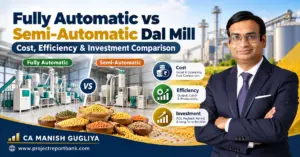
- Dal Mill Land, Building & Plant Layout Requirements in India
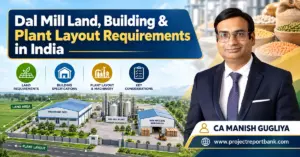
- Dal Mill Capacity Planning – 5 TPD, 10 TPD, 20 TPD & 50 TPD Plants
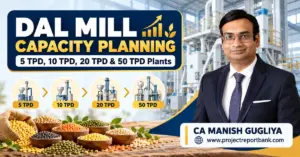
- Dal Milling Process & Flow Chart – Cleaning, Dehusking, Splitting & Packaging
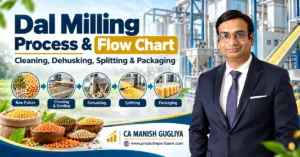
- Dal Mill Machinery, Equipment & Cost – Complete Plant Guide

- Dal Mill Plant Setup Cost in India – Investment & Cost Breakdown
- Integrated Multi-Pulse Processing Plant Project Report – Tur, Moong, Urad, Chana & Masoor