Kashmir’s economy offers opportunities in tourism, handicrafts, agriculture, and food processing that few other regions in India can match. With nearly 70% of the population engaged in agriculture, a handicrafts industry valued at ₹2000 crore, and tourism that contributes ₹1,200 crores annually, the valley is far more than scenic beauty-it is a genuine business frontier.
Government-backed initiatives support startups in Kashmir through schemes like PMEGP, Mudra loans, and the Startup India Seed Fund Scheme, which has a budget of ₹945 Crore. Add to that the Industrial Promotion Policy 2021-30, which offers a 10-year income tax exemption, and Kashmir also offers a 90% capital investment subsidy for businesses in select sectors. These aren’t small incentives-they fundamentally change the economics of starting something here.
In this guide, I have shortlisted 10 profitable business ideas in Kashmir based on real market data, investment feasibility, and government support. Whether you are an aspiring entrepreneur with limited capital or an investor looking at scalable ventures, this list covers the full spectrum.

Table of Contents
How We Chose the Best Business Ideas for Kashmir
Having prepared hundreds of detailed project reports and CMA reports for entrepreneurs across India, I know that a business idea is only as good as its financial viability. Here is the framework I used to evaluate these best business ideas in kashmir:
- Investment requirements and ROI potential – Investment requirements for businesses range from ₹5–50 lakhs in Kashmir. I prioritized ideas with clear payback periods.
- Local market demand and tourism influence – Tourism remains a powerful demand driver across hospitality services, handicrafts, and food.
- Government scheme availability – Schemes like PMEGP, MUDRA, National Horticulture Mission, and the Himayat Scheme (which provides free skills training and placement support) directly reduce risk.
- Raw materials availability – Kashmir has strong advantages in horticulture and handicrafts, with local supply chains for saffron, apples, walnuts, wool, and timber.
- Export potential and scalability – Ideas targeting the international market scored higher.
- Licensing and regulatory ease – Simpler compliance frameworks were preferred for first-time entrepreneurs.
- Seasonal viability – Year-round profitability beats seasonal spikes.
- Skill requirements and local workforce – Kashmir has ~4.45 lakh artisans and a growing pool of digitally skilled youth.
Unique business ideas in Kashmir leverage its natural resources and cultural heritage-that principle guided every selection below.
Top 10 Business Ideas in Kashmir
1. Saffron Cultivation and Processing
Kashmir produces 90% of India’s saffron, concentrated in the Pampore region of Pulwama district. With the India International Kashmir Saffron Trading Centre (IIKSTC) now operational at Dussu, Pampore (built at ₹38.11 crore), the infrastructure for organized saffron marketing is finally in place.
Saffron cultivation requires an investment of ₹3-15 lakhs depending on scale. Expected returns from saffron cultivation are ₹2-8 lakhs per kanal per year, and the saffron market price ranges from ₹3-5 lakhs per kilogram.
Why It Stands Out
Global saffron demand is increasing by 8.7% annually. Kashmir’s GI-tagged saffron commands a much higher price range in export markets compared to Iranian or Spanish alternatives. The National Saffron Mission has targeted rejuvenation of ~3,715 hectares, with ~2,598.75 hectares already achieved as of December 2025.
Best For
Farmers with 2-5 acres of land in Pulwama, Budgam, or Kishtwar districts. Also suitable for entrepreneurs interested in agriculture-based business with premium agricultural products.
Key Strengths
- High profit margins (300-400% markup possible on processed saffron)
- Premium product with global demand and GI tag protection
- Government support through National Horticulture Mission and MIDH
- Tissue culture labs being established for disease-free corm supply
Possible Limitations
- Weather dependency and 3-year cultivation cycle before full yield
- High labour input during delicate hand-harvesting
- Corm quality maintenance remains a technical challenge
2. Apple Grading and Cold Storage
Kashmir’s apple production stands steady at approximately 20.56 LMT in 2024-25, with export volumes reaching 18.57 LMT in 2023-24. The region faces challenges in reliable cold storage and logistics for agricultural products-which is exactly where the business opportunity lies.
Why It Stands Out
Kashmir produces 75% of India’s apple crop. Under MIDH, Controlled Atmosphere (CA) storage support (subsidy) is available for units with capacity up to 5,000 metric tons. Typical apples cost significantly less when bought at farm-gate in September, and proper grading and CA storage allow year-round sales at premium prices.
Best For
Entrepreneurs with ₹15-25 lakhs investment capacity in apple-growing areas of Shopian, Baramulla, and Anantnag.
Key Strengths
- Steady demand and established supply chain to national markets
- PMEGP and MUDRA loan availability for cold storage projects
- Export potential to Gulf countries and Central Asia
- Links to e-NAM and regulated markets improving in J&K
Possible Limitations
- Seasonal business with peak activity September–November
- High electricity costs for cold storage operations; backup power essential
- Capital intensive-a 1,000 MT CA cold store runs into crores
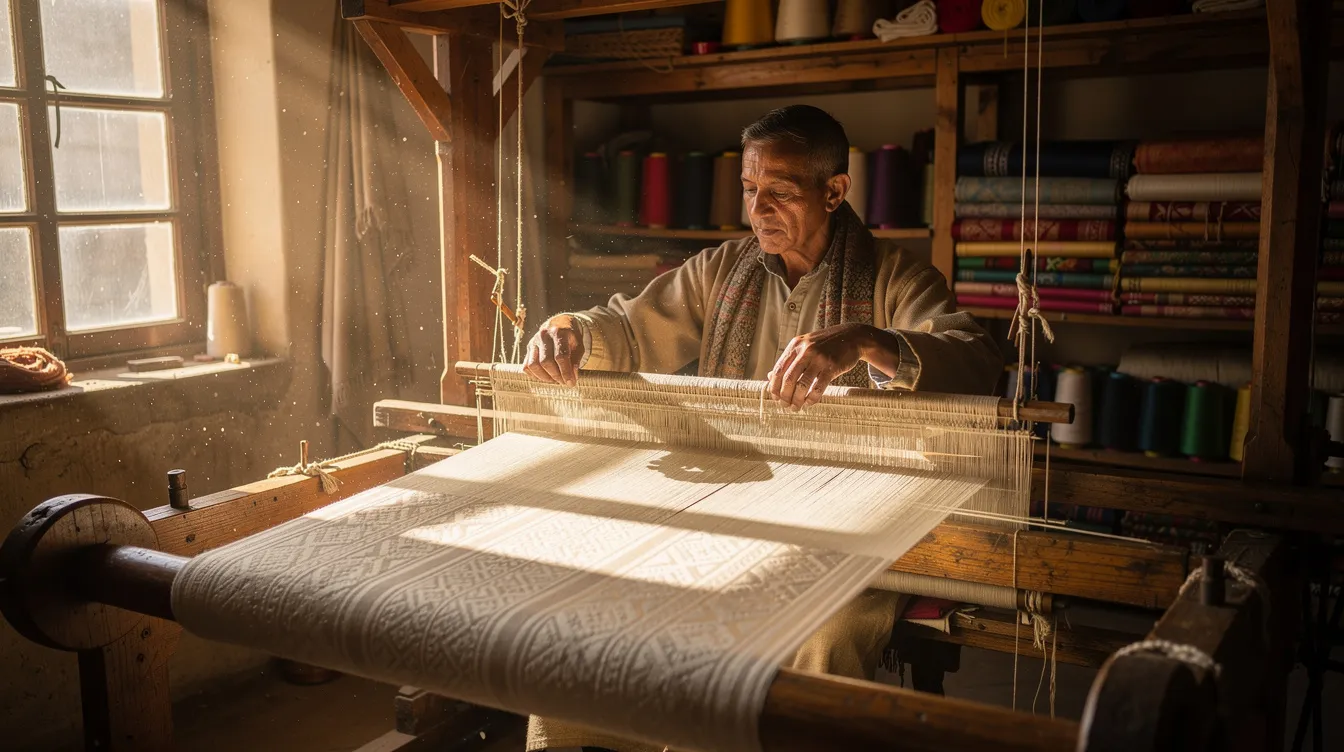
3. Pashmina Shawl Manufacturing
Kashmir’s handicrafts industry is valued at ₹2000 crore and the handicrafts sector is growing at 15% annually. Crafts exports in 2024-25 totalled Rs 733.59 crore. With QR code-based certification now applied to over 51,000 shawls, the fight against counterfeits is gaining ground.
Why It Stands Out
Pashmina products have strong domestic and international demand in the luxury textile production segment. Investment in handicrafts can range from ₹2-20 lakhs, and expected ROI for handicrafts businesses is 30-50% annually.
Best For
Women entrepreneurs, heritage craft enthusiasts, and entrepreneurs with an artistic background. Direct-to-consumer models can improve profit margins for Kashmiri products dramatically versus selling through intermediaries.
Key Strengths
- High value product with relatively low raw material cost per unit
- Strong online sales potential through e commerce platforms and online marketplaces
- Geographical Indication (GI) tag protection against imitations
- GST reduced from 12% to 5% on GI-tagged handicraft products
Possible Limitations
- Competition from machine-made alternatives flooding national markets
- Skilled artisan availability challenges-requires continuous skill development
- Dependence on imported raw Pashmina fibre in some cases
4. Homestay and Boutique Tourism
Tourism contributes ₹1,200 crores annually to Kashmir’s economy. Kashmir is projected to attract 1.8 million tourists in 2024, and the growing tourism trend shows no signs of slowing. Experiential eco tourism is in high demand in Kashmir.
Why It Stands Out
Homestays in Srinagar can charge ₹3,500 per night, and boutique accommodation facilities in Gulmarg or Pahalgam command ₹5,000-8,000 per night during peak season. The tourism industry has shifted toward experiential stays over cookie-cutter hotels.
Best For
Property owners in Srinagar, Gulmarg, Pahalgam, and local families with hospitality interest. A professional hotel project report helps secure financing.
Key Strengths
- High daily rates with low operational costs compared to hotels
- Government support through tourism development schemes
- Adventure tourism options (trekking, river rafting, skiing) attract premium travellers
- Wellness tourism including Ayurvedic resorts and yoga centers is an emerging niche
- Kashmir’s natural beauty is the primary marketing asset
Possible Limitations
- Seasonal fluctuations in tourist arrivals
- Security concerns affecting tourist confidence in certain periods
- Eco tourism regulations and compliance requirements
5. Walnut Processing and Oil Extraction
Walnut cultivation across Anantnag, Kupwara, Kulgam, and Budgam generates roughly ₹120 crore yearly trade value, supporting about 10,000 people. Yet walnut processing remains significantly underdeveloped-most raw walnuts leave the valley without value addition.
Why It Stands Out
Health-conscious consumers in metro cities pay a much higher price range for processed kernels and cold-pressed walnut oil. Multiple product lines (kernels, oil, shell charcoal, walnut wood furniture) maximize revenue from a single raw material.
Best For
Small-scale manufacturers with ₹8-12 lakhs investment capacity. Good fit for entrepreneurs near walnut-growing districts.
Key Strengths
- Abundant raw materials from local farmers at competitive prices
- Growing demand for walnut oil in health and cosmetic segments
- Export opportunities to health-conscious international markets
- Essential oils extracted from walnut shells have niche industrial applications
Possible Limitations
- Machinery maintenance and technical expertise required for oil extraction
- Storage and preservation challenges in humid conditions
- Working capital requirements for bulk raw material procurement
6. Trout Fish Farming
Kashmir has emerged as India’s trout farming capital. Private farmers produce trout at approximately ₹345/kg and sell to traders at ₹495/kg, yielding gross margins above 40%. In metro markets like Delhi and Bengaluru, retail prices reach ₹1,300-1,500/kg.
Why It Stands Out
The most profitable business in aquaculture for Kashmir’s climate. Khyber Aquaculture recently launched a ₹100+ crore RAS trout farm in Ganderbal with initial capacity of 1,500 MT/year, targeting 7,000 MT within 3-5 years.

Best For
Entrepreneurs with access to clean, cold water sources and investment range ₹10-15 lakhs for raceway systems. Larger RAS facilities need substantially more capital.
Key Strengths
- High market price (₹800-1,200 per kg retail) with growing demand
- Government support through Blue Revolution scheme-50% subsidy (60% for women/ST/SC)
- Biofloc technology being introduced to reduce costs; 7 units already operational
- Low feed conversion ratio and relatively fast growth cycle
Possible Limitations
- Technical expertise and water quality management (temperature 10-14°C, dissolved oxygen) critical
- Limited local demand-profitable distribution requires metro city logistics and cold chain
- Feed costs remain high; local feed mills operate sub-optimally
7. Organic Honey Production
Organic farming and beekeeping go hand-in-hand in Kashmir’s diverse floral landscape. GI-tagged Sulai Honey is already gaining market recognition, and organic honey commands 2-3x regular honey prices in urban markets.
Best For
Rural entrepreneurs and farmers seeking additional income with low investment of ₹2-5 lakhs. Ideal for agro based industries in districts with orchard and meadow ecosystems.
Key Strengths
- Multiple revenue streams: honey, beeswax, propolis, royal jelly
- Government subsidies available through horticulture missions
- Low operational costs once bee colonies are established
- Growing consumer preference for organic, traceable honey products
Possible Limitations
- Seasonal production cycle and weather dependency
- Requires specialized knowledge of bee colony management
- Scaling beyond local markets needs branding and packaging investment
8. Carpet Manufacturing and Export
Kashmir’s traditional crafts have strong domestic and international appeal, and handknotted carpets sit at the top of this pyramid. With ~19,700 carpets already GI-labelled and QR-coded for provenance verification, the authenticity infrastructure is strengthening.
Best For
Entrepreneurs with ₹20-30 lakhs investment and experience in textile or export business. Suitable for those targeting the international market.
Key Strengths
- High export value and foreign exchange earnings-carpets lead J&K’s craft exports
- Skilled local artisans available through 634 government training centres
- Government export promotion support and working capital subsidies under J&K Handicraft Policy 2020
- Rich culture and heritage adds intangible brand value
Possible Limitations
- Long production cycles (months per carpet) and high working capital needs
- Competition from machine-made carpets and international quality standards compliance
- Artisan Credit Card loans (up to ₹1-2 lakhs) may be insufficient for scaling
9. Digital Marketing Agency
IT in Kashmir grew by 45% since 2022, and the UT has recognized over 1,217 startups as of November 2025. Yet most local businesses-handicraft sellers, hoteliers, tour operators-still lack professional online presence.
Why It Stands Out
Digital marketing services include brand identity development, e-commerce solutions that help local craftsmen establish online stores, and content creation focused on marketing Kashmir tourism. Online education is also a growing sector in Kashmir’s IT industry.
Best For
Young entrepreneurs and budding entrepreneurs with digital skills. Investment requirement is just ₹2-4 lakhs-primarily for equipment, software subscriptions, and initial marketing.
Key Strengths
- Low overhead costs and scalable business model
- Growing market among tourism and handicraft businesses needing digital services
- Can serve clients pan-India remotely; not location-dependent
- Coaching centers and computer training institutes can be added as extensions
Possible Limitations
- Competition from established agencies in metros
- Internet connectivity issues in remote areas of Jammu Kashmir
- Client education needed-many local businesses don’t yet understand digital ROI
10. Food Processing Unit (Pickles and Preserves)
Food processing can add value to local agricultural products, and Kashmir’s food processing market includes traditional snacks and preserves that have authentic appeal in urban India. Investment in food processing ranges from ₹5 lakh to ₹30 lakh depending on scale.
Why It Stands Out
Kashmir’s food processing sector targets urban Indian markets initially, then expands to export channels. Growing demand for authentic Kashmiri flavors-think Kashmiri red chilli pickle, cherry preserves, apple jam-creates a distinct niche.
Best For
Women entrepreneurs and small-scale manufacturers with ₹5-8 lakhs starting capital. Excellent fit for food processing business ideas that leverage local produce.
Key Strengths
- FSSAI licensing relatively simple for small food processing units
- Good profit margins (40-60%) on branded, packaged products
- Raw material availability from local farmers year-round
- Government schemes support entrepreneurship and employment generation in Kashmir through PMEGP and CGTMSE
Possible Limitations
- Shelf-life management and quality control challenges without proper packaging
- Marketing and distribution network development needed for national markets
- Businesses that add value through branding or processing have better sustainable growth, but building that brand takes time
Quick Comparison of the Best Business Ideas
| Business Idea | Investment Range | Best For | Key Advantage |
|---|---|---|---|
| Saffron Cultivation | ₹3-15 lakhs | Agriculture entrepreneurs | Highest markup potential |
| Apple Processing/Cold Storage | ₹15-25 lakhs | Seasonal agri-business | Steady national demand |
| Pashmina Manufacturing | ₹2-20 lakhs | Luxury handicraft market | GI-tagged premium product |
| Tourism Homestay | ₹10-20 lakhs | Property owners in tourist areas | Low operating costs |
| Walnut Processing | ₹8-12 lakhs | Health-conscious market | Multiple product lines |
| Trout Fish Farming | ₹10-15 lakhs | Premium aquaculture | 40%+ gross margins |
| Honey Production | ₹2-5 lakhs | Rural low investment entrepreneurs | Multiple revenue streams |
| Carpet Manufacturing | ₹20-30 lakhs | Export-oriented businesses | High forex earnings |
| Digital Marketing Agency | ₹2-4 lakhs | Tech-savvy youth | Scalable, location-independent |
| Food Processing | ₹5-8 lakhs | Women entrepreneurs | Growing national demand |

How to Choose the Right Business for Kashmir
Choose Based on Investment Capacity
- Low investment (₹2-8 lakhs): Honey production, digital marketing agency, food processing unit. These business opportunities suit first-time Kashmir entrepreneurs with limited capital.
- Medium investment (₹8-20 lakhs): Homestay, walnut processing, trout farming. Require moderate capital but offer strong growth opportunities.
- High investment (₹20+ lakhs): Saffron cultivation at scale, carpet manufacturing, cold storage infrastructure. Best suited for investors or those with access to bank loans backed by a professionally prepared project report.
Choose Based on Location and Resources
- Rural areas: Agriculture-based businesses-saffron, honey, trout farming, organic farming. Kashmir’s geographical location and natural resources give these ventures inherent advantages.
- Tourist areas: Homestays, handicraft retail, adventure tourism. Growing tourism drives consistent local demand.
- Urban centers (Srinagar, Jammu): Digital services, food processing, export-oriented businesses. Better connectivity and access to logistics.
Choose Based on Market Demand
- Local market focus: Food processing, homestays, digital services-serve immediate regional needs.
- National market: Apple processing, handicrafts, honey products-target metros via e commerce and modern retail.
- Export potential: Saffron, carpets, Pashmina shawls-address global demand through IEC registration and trade platforms.
Which Business Idea Is Best for You?
Choosing the right profitable business depends on your specific situation:
- Choose Saffron Cultivation if you have agricultural land and patient capital for 3-year cycles. The most profitable business for those with land in Pampore or Budgam.
- Choose Tourism Business if you own property in tourist areas and enjoy hospitality. Kashmir’s business landscape includes eco-tourism opportunities that are only growing.
- Choose Handicrafts (Pashmina/Carpets) if you appreciate traditional handicrafts and want to build a brand preserving heritage. The sector rewards patience and quality.
- Choose Digital Services if you are young, tech-savvy, and prefer a low investment own business. Job creation potential is high as you scale.
- Choose Food Processing if you are interested in women entrepreneurship, local flavors, and building consumer brands.
For any of these manufacturing business ideas or service ventures, government incentives through the industrial promotion policy and startup ecosystem substantially reduce your risk. The Himayat Scheme provides free skills training and placement support for those who need skill development before launching.
Final Thoughts
Kashmir offers diverse business opportunities across agriculture, tourism, handicrafts, and modern services. The region’s strategic location, human capital, and natural beauty create investment opportunities that are difficult to replicate elsewhere. Whether you are eyeing industrial development through manufacturing or building a new business around local demand and accommodation facilities, the fundamentals are strong.
Success depends on matching your investment capacity, location, and market understanding to the right idea. Government schemes like PMEGP, MUDRA, and sector-specific subsidies provide crucial support-but you need to present your case properly to banks and financial institutions.
In my 20+ years of experience preparing bank loan project reports and CMA reports, I have seen one consistent pattern: entrepreneurs who submit a well-prepared detailed project report with proper DSCR calculations, break even analysis, and financial projections get funded. Those who walk in with a vague idea and no documentation get rejected-regardless of how good the business idea is.
If you are serious about starting a profitable business in Jammu and Kashmir, get your documentation right from day one. A bank-ready project report is not an expense-it is the investment that unlocks every other investment.
Ready to turn your business idea into reality? Visit ProjectReportBank to get a customized, bank-ready project report prepared by experienced consultants. We handle DPRs, CMA reports, financial projections, and MSME advisory-so you can focus on building your business.
– CA Manish Gugliya (FCA, DISA ICAI), Project Finance Consultant
- Specialty Flour Blending Plant Project Report & DPR in India – Setup Cost, Machinery, Manufacturing Process, Profitability & Bank Finance

- Organic Atta Manufacturing Plant Project Report & DPR in India – Setup Cost, Machinery, Process, Profitability & Bank Finance
- High-Fibre Atta Manufacturing Plant Project Report & DPR in India – Setup Cost, Machinery, Process, Profitability & Bank Finance
- Fortified Wheat Flour Manufacturing Plant Project Report & DPR in India
- Multigrain Atta Manufacturing Plant Project Report & DPR
- Maida, Suji & Wheat Products Manufacturing Project Report & DPR
- Wheat Milling Product Mix Optimisation: Maida, Suji, Atta & Bran
- Maida & Suji Plant ROI, IRR, Payback & Sensitivity Analysis in India

- Maida & Suji Plant Feasibility Study & Project Viability in India – Investment Decision Guide
- Maida & Suji Plant Financial Projections, Working Capital & DSCR: Complete Bank Finance Guide in India

- Maida & Suji Plant Land, Building & Layout Requirements in India – Complete Infrastructure Planning Guide

- Maida & Suji Plant Project Cost & Means of Finance in India – Capital Structure, Bank Loan & Investment Planning

- Maida & Suji Plant Capacity Planning & Product Mix
- Maida & Suji Manufacturing Process & Flow Chart: Complete Technical Guide
- Maida & Suji Plant Machinery, Equipment & Cost in India – Complete Guide