
Key Takeaways
- Integrated rice mill plant setup cost in India depends primarily on capacity (TPH), process configuration (raw, steam, or parboiled), automation level, land and civil construction standards, and working capital for buying paddy.
- For 2026, a typical 5–10 TPH modern rice mill can broadly range from ₹18 crore to ₹45 crore including land, buildings, machinery, and 3–4 months of working capital, but the actual integrated rice mill project cost must be engineered through a project-specific DPR.
- Paddy procurement and working capital often equal or exceed fixed capital, so rice mill investment cost in India must always be planned as “plant money + paddy money.”
- Banks assess DSCR, financial projections, market demand, and promoter contribution before sanctioning a term loan, not just machinery quotations.
- This article is written in the professional voice of CA Manish Gugliya for ProjectReportBank.com and will guide entrepreneurs on capacity selection, cost heads, feasibility, and DPR requirements for modern integrated rice milling plants.
What Is an Integrated Rice Mill Plant?
An integrated rice milling plant is a modern facility that combines paddy reception, pre-cleaning, cleaning, de-stoning, drying, storage, husking, whitening, polishing, grading, colour sorting, weighing, packaging, and by-product handling (husk, bran, broken rice) within a single coordinated plant. Unlike traditional setups where each process may be handled in isolation, an integrated facility is designed for continuous material flow, higher efficiency, and consistent output quality.
A traditional rice mill relies on old huller or sheller technology, delivers low recovery (often 52–60%), involves extensive manual handling, and offers limited automation. A modern rice mill upgrades this with rubber roll shellers, multi-stage whiteners and polishers, graders, and aspirators. An automatic rice mill takes it further by adding mechanised material handling, basic PLC controls, and semi-automatic packing. A fully automatic integrated rice mill represents the highest tier, with end-to-end PLC/SCADA control, automatic bagging, online weighing, and minimal manual intervention across the entire process line.
The distinction between raw, steam, and parboiled configurations is equally important. A raw rice mill handles cleaning, dehusking, whitening, polishing, grading, sorting, and packing without any pre-milling heat treatment. A steam rice mill adds steaming and drying stages. A parboiled rice mill includes soaking, steaming or parboiling, and specialised drying, plus a full milling line. Each configuration materially changes the rice mill plant setup cost in India due to the additional boiler, civil, water, and utility infrastructure required.
- Mini rice mills process 0.5–2 tonnes per hour and are fundamentally different from integrated facilities. An integrated rice milling plant typically operates at 4–50 TPH paddy, requires significantly larger land, higher automation level, and far greater working capital for seasonal paddy procurement.
Integrated Rice Mill Plant Setup Cost in India (Overall View)
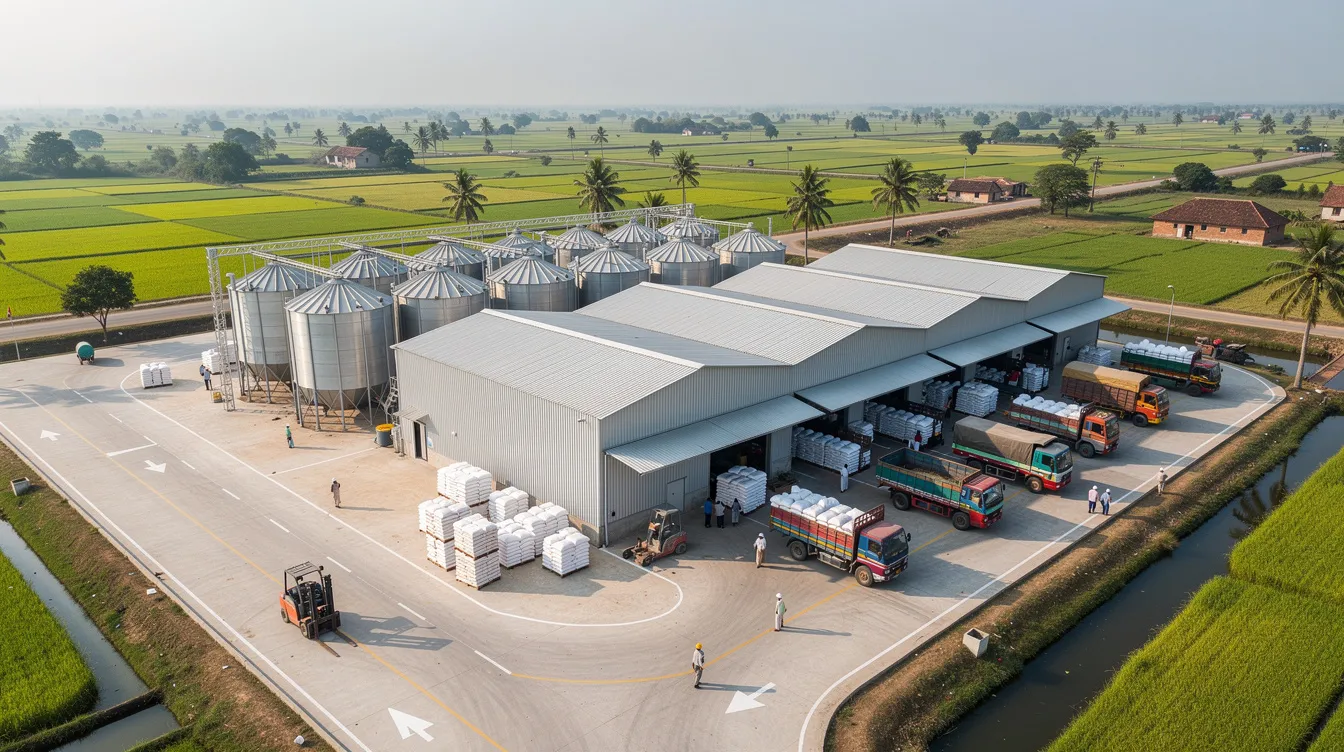
Integrated rice mill plant setup cost in India cannot be captured in a single number. It depends on plant capacity (5, 10, 20, 30, or 50 TPH), type of rice processed (raw, steam, or parboiled), automation scope, brand of milling machinery, geographic location, and how much storage infrastructure is included.
Setting up an integrated rice mill plant in India requires a capital investment from ₹35 lakh for a micro unit to over ₹15 crore for a large automated rice mill, and well beyond that for mega projects. For commercial and industrial-scale projects in 2026, the following indicative bands (excluding GST) can serve as planning references:
- A 5 TPH modern raw rice mill with basic silos and warehouse may require approximately ₹18–30 crore total project cost including 3–4 months working capital.
- A 10 TPH integrated raw and steam rice mill with dryer and colour sorter may require approximately ₹30–45 crore.
- A 20 TPH integrated parboiled and raw rice mill with silos, dryer, and high automation may require approximately ₹65–100 crore.
These are illustrative DPR-style ranges, not quotations. Key cost blocks include land, civil and PEB or RCC building, mill plant and machinery, paddy dryer, silos and warehouses, utilities and electrical systems, lab and quality control, material handling, pollution control, pre-operative expenses, contingencies, and margin for working capital.
Two 10 TPH modern rice milling plants in different states can differ in total cost by 20–30% simply because of variations in land prices, labour costs, state incentives, civil specifications, and logistics infrastructure. From a bank-finance and DPR perspective, the cost of setting up an integrated rice mill always includes working capital margin for buying paddy, not just fixed assets.
Rice Mill Plant Cost According to Capacity
Capacity in tonnes per hour is the single most visible driver of rice milling plant cost in India, but the right investment requires careful analysis of paddy availability, market demand, and financing capacity.
A 5 TPH integrated raw rice mill may process roughly 25,000–35,000 MT of paddy annually (assuming 16–20 hours per day and 250–300 operating days). A 10 TPH plant doubles that requirement, and a 20 TPH plant can consume 100,000+ MT annually, demanding enormous procurement networks and working capital.
| Capacity (TPH) | Approx. Annual Paddy (MT) | Indicative Project Cost (₹ Crore) | Typical User Profile |
|---|---|---|---|
| 5 | 25,000–35,000 | 18–30 | MSME, first-time commercial promoter |
| 10 | 50,000–70,000 | 30–45 | Regional corporate, established miller |
| 20 | 100,000–140,000 | 65–100 | Large corporate, export-oriented |
| 30+ | 150,000+ | 100+ | Mega integrated agri processing |
Non-technical factors influencing capacity selection include procurement radius and competition for buying paddy, market demand for specific rice segments, availability of power and water, working capital capacity, and logistics distances to mandis, ports, and target customers. Larger production capacity does not automatically mean better returns. Sub-optimal capacity utilisation can damage DSCR and loan repayment capacity even if machinery is advanced.
Major Components of Integrated Rice Mill Project Cost
Any professional rice mill plant project report for bank loan will break the total cost into logical heads rather than a single lump-sum figure. Each component discussed below carries its own cost drivers and design considerations.
Land and Site Development
Typical land requirement ranges for integrated rice milling plants are approximately 2–3 acres for 5 TPH, 4–6 acres for 10 TPH, and 8+ acres for 20 TPH. These are indicative and depend on silos, open yards, and expansion plans. Land costs for rice mills range from ₹20 lakh to ₹1.5 crore per acre, depending on state and proximity to industrial zones. Site development cost, including ground levelling, compaction, drainage, boundary wall, internal roads, and security, is often 5–10% of civil cost. Acquiring an extra 20–30% land up-front helps future capacity expansion and avoids disruption later.
Factory Building and Civil Construction
Civil components include the main milling building (multi-storey or high-bay PEB/RCC), paddy receiving area, parboiling and dryer shed where relevant, godowns for paddy and finished rice storage, utility block, and office and laboratory. Pre-Engineered Building sheds are usually more economical than traditional RCC construction, with PEB sheds saving roughly 18–25% compared to RCC. Land and civil works contribute 15% to 30% of the total project cost. Civil over-runs are a common reason why rice mill construction cost exceeds the initial estimate, particularly when drawings are not frozen before BOQ preparation. Installation and setup costs alone are estimated at ₹5 lakh to ₹20 lakh depending on scale.
Rice Mill Plant and Machinery
Core milling machinery modules include the pre-cleaner, aspirator, de-stoner, rubber roll husker with husk aspiration, paddy separator, multiple rice whiteners, silky polisher, length grader, thickness grader, plan sifter, colour sorters, weighing and packing units, bucket elevators, conveyors, and dust-collection systems. Machinery costs account for 50–65% of total project cost excluding land. A complete 4 TPH machinery line costs ₹65 lakh to ₹1.4 crore depending on brand and scope. Quotations must be compared on complete scope including spares, panels, freight, supervision, installation, and commissioning, not just ex-works sticker price. Machinery must be sized consistently across the line to match intended production capacity and product mix.
Dryer and Paddy Handling System
Mechanical drying is essential in high-rainfall states, for parboiled or steam rice projects, and for plants planning 24×7 operation. Equipment includes continuous or batch paddy dryers, pre-cleaning for wet paddy, overhead bins, chain or belt conveyors, and dedicated bucket elevators. Rice mill dryer cost and associated handling systems can add 10–20% to plant and machinery cost for a 10–20 TPH integrated paddy processing plant.
Parboiling and Steam Rice Equipment
Key components include soaking or steeping tanks, parboiling units or continuous parboiling systems, boiler and steam distribution network, drainage and effluent management, and specialised dryer configuration for parboiled paddy. Adding a full parboiled rice mill train can increase the modern rice mill plant cost by 25–40% compared to a pure raw rice mill of the same TPH, because of boiler, additional civil work, water treatment, and higher electrical and steam loads. Banks usually expect clear justification in the DPR for opting into these facilities.
Electrical Installation and Power Infrastructure
Major electrical components include HT/LT panels and cabling, transformer and outdoor yard, MCC panels, control wiring, VFDs, DG set for backup power, and internal lighting. Connected load for a 10–20 TPH integrated rice milling plant can reach several hundred kVA to 1–2 MVA, making electrical work a non-trivial component, often 5–8% of project cost. Automation panels, PLC cabinets, and instrumentation are part of this cost, especially for fully automatic rice mill projects.
Packaging and Finished Goods Handling
Packaging solutions range from semi-automatic bagging machines for 25/50 kg sacks to fully automatic form-fill-seal machines for 1–10 kg retail packs, plus checkweighers, metal detectors, conveyors, and palletisation systems. Rice packaging machine cost varies widely depending on target market and can add 5–15% to plant and machinery cost for premium, brand-focused rice mill business models.
Rice Mill Machinery Cost in India
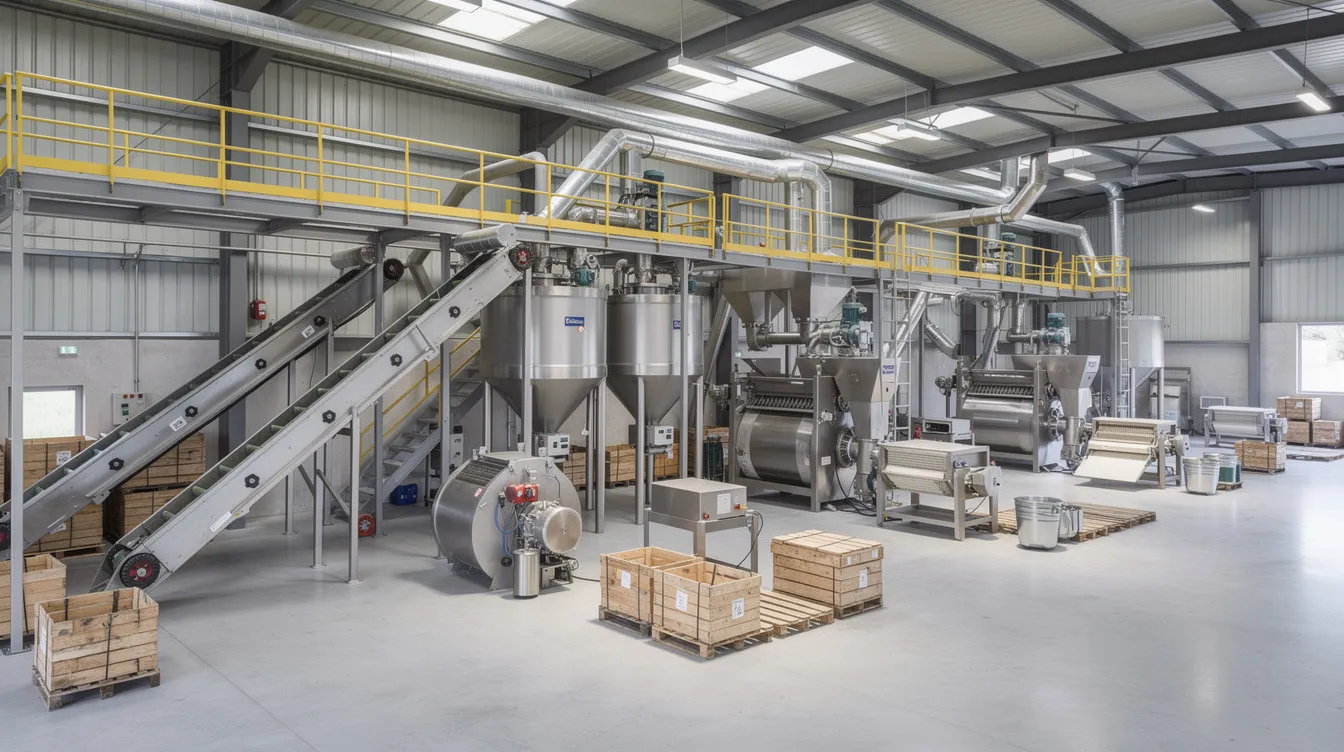
Rice mill machinery cost in India should always be evaluated on a complete line basis rather than individual machines. Missing items such as airlocks, cyclones, spouting, and elevators lead to budget and time overruns. There is significant cost variation between Indian brands and imported brands like Satake or Bühler. For a 4–10 TPH capacity, the difference can be 30–45% between domestic and premium imports. Machinery costs for a rice mill can reach ₹25 lakh to ₹2.5 crore depending on scale and scope. Fully automated rice mills are more expensive than semi automatic ones, but the trade-off between higher initial integrated rice mill machinery cost and improved rice recovery, lower broken percentage, and better brand positioning can justify the premium over time.
When evaluating quotations, verify rated production capacity per hour, automation level (manual, semi automatic, or PLC/SCADA), scope of supply including erection and commissioning, freight and insurance, GST registration implications, and availability of service network and spare parts. An apparently cheaper quote missing colour sorters, dust collection, and structural supports can ultimately make the actual automatic rice mill machinery price higher than a more comprehensive initial quote.
Raw Rice vs Parboiled Rice Mill Setup Cost
A raw rice mill focuses on cleaning, dehusking, whitening, polishing, grading, sorting, and packing. A parboiled or steam rice mill adds pre-milling steps including soaking, steaming, and drying, and requires higher boiler, water, and effluent-treatment capacities.
Capital-cost impacts of adding parboiling:
- Additional parboiling and boiler systems can increase modern rice mill plant cost by roughly 25–50% at the same TPH.
- Civil cost rises due to heavy soaking tanks, steam lines, and drainage infrastructure.
- Utilities and ETP/STP investments become important line items.
Operating costs are also higher for parboiled mills due to more fuel and power consumption per tonne, greater labour and water requirements. However, parboiled rice can command higher realisation in certain markets and export contracts. Promoters should match configuration with market demand rather than simply adding parboiling units because they appear more premium.
Land Requirement for an Integrated Rice Mill
There is no universal answer to how much land is required, but indicative ranges for 2026 are approximately 2–3 acres for a 5 TPH integrated raw rice mill, 4–6 acres for 10 TPH, and 8–10+ acres for 20 TPH. Space components include the milling building footprint, paddy godowns or silo complex, finished rice warehouse, dryer and parboiling areas, husk handling and bran storage, internal roads, parking, weighbridge, truck circulation, and fire tender movement. Land and building cost can vary from 10–40% of total rice mill plant setup cost in India, depending on location and construction standards. Provision for future expansion is a best practice for any integrated rice processing plant investment above 5 TPH.
Working Capital Requirement of Rice Mill
Rice milling is highly working capital intensive because buying paddy is seasonal while sales occur throughout the year. Working capital requirement typically covers paddy inventory (1–4 months of crush requirement), packing material and spare parts, wages, power, fuel, routine overheads, and receivables from traders and institutions.
For a 6 TPH parboiled rice processing plant, one DPR estimated working capital at approximately ₹25.80 crore versus fixed capital of ₹8–9 crore. This underscores how paddy procurement financing can dwarf fixed-asset investment. Monthly operational costs for a rice mill range from ₹1 lakh to ₹5 lakh for smaller setups, scaling proportionally with capacity.
Banks assess working capital based on operating cycle, structure limits under cash-credit or WCDL, and expect margin contribution from promoters, typically 15–25% of working capital requirement. Improper estimation directly impacts procurement timing, plant utilisation, and DSCR.
Paddy Procurement and Its Impact on Project Viability
Paddy procurement strategy is as important as technical design. Rice mill profitability and capacity utilisation depend on consistent access to quality paddy at competitive rates. Key aspects include procurement radius and logistics cost, relationships with farmers and mandi traders, seasonality of paddy arrivals across kharif and rabi, and quality parameters such as moisture, variety, and impurities.
Small changes in paddy purchase price or milling recovery can change gross margin per tonne substantially. A 5% adverse movement in the paddy-rice price spread can reduce DSCR from comfortable to borderline levels. DPRs should include assumptions on procurement volumes, price bands, and inventory holding period. Poor planning can lead to under-utilised plants and higher raw material cost despite adequate mechanical capacity.
Rice Recovery and By-Product Economics
Rice recovery is the foundation of rice mill profitability analysis. Output streams include head rice, broken rice, rice bran, and rice husk. A 4 TPH modern rice mill can yield 67–70% head-rice recovery compared to older huller mills achieving only 52–60%. This yield gap alone can pay back the differential in modern rice mill plant cost within a couple of years.
By-product revenue is significant:
- Broken rice serves breweries, feed, and industrial uses.
- Rice bran goes to solvent extraction plants or cattle feed.
- Husk is used as boiler fuel, briquettes, or for power generation.
- Husk and bran sales can generate ₹40–60 lakh per year in a well-run commercial mill.
DPRs should avoid overly optimistic recovery assumptions and clearly show how revenue is split across all output streams. Even a 1–2 percentage point change in head-rice yield influences annual revenue materially.
Revenue Model of an Integrated Rice Mill
Potential product lines include raw rice (non-basmati, basmati), steam rice, parboiled rice, broken rice in various grades, rice bran, and rice husk. Market positioning between bulk institutional sales and branded retail packs affects average realisation per tonne, marketing strategy and distribution costs, inventory and receivable cycles, and profit margins.
A 10 TPH modern rice mill may operate with a product mix such as 60% non-basmati raw rice, 20% parboiled, and 20% by-product revenue. This mix must be captured accurately in rice mill financial projections and must be consistent with plant configuration and local market demand. Lenders prefer diversified revenue streams but will stress-test the model for price and volume changes.
Operating Cost of Rice Milling Plant
Major operating cost heads include paddy purchase (the dominant raw material cost, typically 65–80% of total operating cost), power and fuel, direct labour and supervision, packing material, repairs and maintenance of milling machinery, insurance and administration, transportation, and finance charges. Rice mill profit margins in India range from 5–10% at the net level, making procurement efficiency and loss control critical.
For 2026 conditions, rising energy tariffs and labor costs make automation and energy-efficient equipment important long-term cost-control tools despite higher initial investment. Energy consumption should be benchmarked against industry norms per tonne of paddy to check technical efficiency.
Profitability of Rice Mill Plant in India
Rice mill profitability is project and location-specific. Key drivers include gross margin between paddy purchase price and realisation from rice and by-products, rice recovery percentages, capacity utilisation, operating efficiency, financing cost, and working capital cycle. A well-run 4 TPH rice mill can generate ₹35–50 lakh EBITDA annually. Mini rice mills typically have net profit margins of 8–15%.
ROI, IRR, and payback should be calculated on total rice mill investment cost in India, including margin for working capital and pre-operative expenses. Profitability varies across states and segments. Export basmati commands different economics than domestic non-basmati. Careful DPR preparation and scenario planning are essential for assessing rice mill project feasibility before committing capital. Making rice milling a profitable business requires discipline across procurement, processing, and sales.
Financial Projections Required in a Rice Mill DPR
Any bankable integrated rice mill DPR should contain 7–10 years of detailed financial projections aligned with plant life, loan tenure, and expected stabilisation period. Minimum financial statements include projected profit and loss account, projected balance sheet, cash-flow statement, term-loan amortisation schedule, working capital assessment, break-even analysis, DSCR (average and minimum), and ROI, IRR, and payback period.
DSCR measures cash available for loan servicing divided by loan obligations. IRR is the discount rate at which project NPV becomes zero. Break-even is the capacity at which contribution covers fixed costs. Assumptions on capacity utilisation ramp-up, prices, and recovery should be clearly stated. Banks typically scrutinise projections for stress scenarios, and including such analysis upfront improves credibility.
DSCR and Loan Repayment Capacity
DSCR (Debt Service Coverage Ratio) matters more to lenders than book profit. The formula compares cash accruals (profit after tax plus depreciation) against annual principal repayment and interest obligations. DSCR is influenced by loan amount, interest rate, moratorium, repayment period, capacity utilisation ramp-up, and operating margins.
Banks look at both average DSCR and minimum DSCR over the entire loan tenor. Acceptable benchmarks vary by institution, with many expecting average DSCR of at least 1.25. A 1 TPH sample DPR showed average DSCR of 2.56, while larger projects may show tighter ratios. A strong DSCR improves chances of favourable terms but does not guarantee loan sanction; collateral, promoter track record, and overall risk also matter.
Bank Loan for Integrated Rice Mill Project
The usual means of finance include promoter contribution (equity), term loan for land, building, and machinery, and separate working capital limits for buying paddy and running the mill. Banks typically review detailed cost estimates with quotations, licences and land documents, paddy availability and market-demand study, technical configuration and capacity, financial projections and DSCR, security and collateral, and promoter experience and net worth.
The process flows from DPR preparation through internal project appraisal, bank discussions, document submission, sanction, and disbursement. Relevant schemes under agriculture and food processing segments may offer priority-sector status. Interest rates and margins depend on risk assessment at the time of sanction. The role of a professional DPR is to present a coherent technical, financial, and market case.
Promoter Contribution and Means of Finance
Means of finance summarises how total project cost will be funded. Typical structures involve 25–35% promoter contribution with 65–75% from term loan and working capital facilities, though exact ratios depend on bank policy and project risk. Margin for working capital is usually expected from promoters. Government subsidies, if sanctioned, serve as additional support but should not be treated as primary means of finance.
Subsidy availability is scheme-specific and time-bound. Entrepreneurs must check current central and state policies such as PMFME and AIF at the time of planning. The right investment structure balances leverage with adequate equity to ensure repayment comfort even in adverse scenarios.
Licences and Approvals for Rice Mill Plant in India
Starting a rice mill requires 8–10 licences. Statutory compliance includes business entity registration and Udyam MSME registration, PAN, TAN, and GST registration, FSSAI licence (Central licence costs ₹7,500 per year for mills above 2 MT per day), factory license under the Factories Act (₹20,000–50,000), Pollution Control Board consent for establishment and operation (₹50,000–2 lakh), electricity connection and load sanction, boiler inspectorate approvals for steam boilers, fire NOC, legal metrology registration, and mandi or APMC registration. Total licensing cost for a rice mill is typically ₹1.5–3.5 lakh. Licensing, working capital, and statutory fees are essential cost components that must be budgeted.
Banks may release final term-loan instalments only after key approvals are in place. Licences for pollution control, boiler, and factory inspection are particularly critical for parboiled and steam rice projects.
Utilities Required for Rice Mill Plant
Critical utilities include electricity (connected load and contract demand), water for soaking, steaming, and cooling, steam and boiler fuel (coal, husk, briquettes), compressed air for actuators and controls, DG sets for backup power, and dust extraction systems. Utility sizing is closely linked to TPH capacity and configuration. Using rice husk as boiler fuel can meaningfully reduce operating cost, enabling higher efficiency in energy management.
Utility planning should precede final machinery orders so that transformers, cables, boiler rating, and storage tanks are correctly sized and costed. Utility CAPEX and OPEX must appear as separate line items in the DPR to avoid underestimation.
Automation in Modern Rice Milling Plants
Automation spans three levels: semi automatic (manual bagging, basic controls), automatic rice mill (PLC-based process control, semi-automatic packing), and fully automatic integrated (SCADA, automatic bagging, data logging, minimal manual intervention). Higher levels of automation greatly increase initial capital expenditures but lower long-term labor costs and improve consistency. Key components include PLCs, HMIs, SCADA systems, sensors, VFDs, and automatic sampling systems.
Two plants of equal 10 TPH capacity can differ in capital cost by 10–25% depending on automation scope. For large scale and export-oriented plants, higher automation is often justified, while smaller regional plants may start moderate and upgrade later. A single phase approach to automation adoption can manage budget while preserving a faster ROI trajectory.
Integrated Rice Mill with Silo Storage
Silo storage offers bulk handling, mechanised loading and unloading, better moisture and temperature control, reduced manual labour, and improved inventory management. Cost implications include silo structures and foundations, aeration and temperature-control systems, additional conveyors and elevators, and integration into plant automation.
Silos are usually justified for large scale 20–50+ TPH integrated rice milling plants, long storage period projects, and export and quality-sensitive operations. Rice mill silo cost should be separately shown in project-cost tables and justified to lenders versus conventional warehousing.
Rice Mill Project Feasibility Analysis
A sound integrated rice mill project must be feasible across technical, raw-material, market, financial, operational, and regulatory dimensions. A step-wise approach involves preliminary market and raw-material study, conceptual plant configuration, rough-order cost estimate, detailed DPR with financial modelling, and final decision with financing plan.
Integrated rice mill project cost alone should not drive the decision. A slightly higher-cost configuration may prove safer or more profitable given local conditions. An experienced project finance consultant can align engineering assumptions with realistic banking requirements.
Break-Even Analysis
Break-even analysis identifies the capacity at which total revenue equals total costs. It requires separating fixed costs (salaries, interest, depreciation) from variable costs (paddy, fuel, packing, power per tonne) and calculating contribution per tonne. For a 10 TPH plant, a higher fixed-cost base from automation or parboiling requires correspondingly higher capacity utilisation to reach break-even. Understanding this threshold helps promoters plan procurement and marketing strategy to ensure operations run above break-even consistently.
ROI, IRR and Payback Period
ROI measures average annual profit divided by total investment. IRR is the rate of return at which project NPV equals zero. Payback period measures how long cumulative net cash inflows take to recover initial investment. The ROI for a 4 TPH rice mill is 18–25% post-tax IRR. A 4 TPH rice mill has a payback period of 3–4 years. Mini rice mills typically have a payback period of 2.5–3.5 years. For larger integrated plants, payback may extend to 5–8 years under realistic conditions. These metrics must be evaluated together under base, optimistic, and conservative scenarios.
Sensitivity Analysis for Rice Mill Project
Sensitivity analysis tests how changes in key assumptions affect project viability. Typical variables include paddy price increase (+5%, +10%), rice selling-price decrease, lower capacity utilisation (60–70% of rated), reduced recovery by 1–2 percentage points, higher power and fuel tariffs, and higher interest rates. Each scenario affects gross margin, annual EBITDA, DSCR, and payback period. A robust integrated rice mill DPR will always incorporate sensitivity tables and present them transparently to banks and investors for a comprehensive cost breakdown.
Common Mistakes While Estimating Rice Mill Setup Cost
- Considering only machinery price and ignoring civil, electrical work, and utilities.
- Underestimating land and warehouse requirements for paddy and finished rice storage.
- Ignoring working capital for buying paddy and running operations.
- Excluding contingency and pre-operative expenses such as interest during construction and consultancy fees.
- Overestimating capacity utilisation in early years.
- Assuming unrealistically high head-rice recovery or selling prices.
- Omitting auxiliary items like weighbridge, lab, fork-lifts, fire systems, and IT infrastructure.
These mistakes lead to funding gaps, commissioning delays, or cash-flow stress soon after starting production. A carefully prepared DPR is the best tool to avoid underestimating total cost. Comparing only per-TPH machinery cost without looking at full integrated plant configuration produces misleading conclusions. Cost estimates must be periodically updated for inflation and current market rates, especially for 2026 and beyond.
How to Select the Right Rice Mill Capacity
A practical decision framework covers availability of paddy within an economical procurement radius, market demand for targeted rice types, promoter capital and working capital strength, ability to manage operations at larger scale, and infrastructure readiness including power, water, and connectivity.
A staged approach works best: starting with moderate capacity (5–10 TPH) with provision for expansion, prioritising high utilisation and efficiency before aggressive scale-up, and using early operational data to guide future additions such as parboiling or silos. Avoid selecting capacity purely on peer pressure or dealer marketing. Consider whether existing local mills are underutilised, indicating demand constraints. Ensure DSCR remains comfortable even at 60–70% utilisation in early years. Professional financial modelling greatly assists capacity selection and budget planning for integrated rice mill projects.
Importance of a Detailed Project Report Before Investment
For integrated rice mill projects above a few crores, preparing a structured, bankable rice mill detailed project report is essential. A good DPR covers project concept, capacity and configuration, technical layout and machinery list, land and building and utilities plan, implementation schedule, detailed cost estimates with quotations, market and competitor analysis, working capital study and revenue model, and full financial projections with DSCR, IRR, and sensitivity analysis.
A DPR should be prepared before finalising machinery orders, buying high-priced land, committing to large civil contracts, or applying for substantial bank loans. An experienced DPR consultant like CA Manish Gugliya can help align engineering assumptions with realistic finance and banking requirements, increasing the likelihood of a well-structured and viable project.
Indicative Project Cost Table
| Cost Head | What It Includes | Major Cost Driver |
|---|---|---|
| Land | Industrial plot purchase or lease | Location, area, and state land prices |
| Site Development | Roads, drainage, levelling, boundary | Site condition and terrain |
| Building & Civil | Processing building, warehouse, office | Capacity, PEB vs RCC, construction standards |
| Plant & Machinery | Complete milling line and auxiliaries | Technology, automation, brand (Indian vs imported) |
| Dryer System | Paddy dryer, wet handling conveyors | Capacity, climate, and operating season |
| Silos/Storage | Paddy and finished rice bulk storage | Storage days, volume, aeration systems |
| Utilities | Boiler, water treatment, air, DG | Process type (raw vs parboiled), scale |
| Electrical & Instrumentation | Transformer, panels, cabling, PLC | Connected load, automation level |
| Packaging & Material Handling | Bagging, weighing, conveyors, palletisation | Target market (bulk vs retail) |
| Pre-operative Expenses | Consultancy, interest during construction, trials | Project duration, financing timeline |
| Contingency | Unforeseen cost overruns | Project complexity, price volatility |
| Margin for Working Capital | Paddy inventory, operating cycle expenses | Procurement strategy, inventory holding period |
For a sample 10 TPH integrated rice mill, machinery may represent 45–55% of fixed capital, civil works 20–30%, and the remaining heads 15–25%. This structure mirrors how banks view rice mill fixed capital investment and helps promoters ensure no major head is overlooked.
Factors That Increase Rice Mill Plant Cost
Factors that push cost higher include higher capacity (20–50 TPH versus small rice mill setups at 5 TPH), addition of parboiling and steaming facilities, mechanical dryers and large silo complexes, premium imported machinery and high-end color sorters, fully automatic packaging, extensive civil work with heavy foundations, strong utility infrastructure including high-capacity boilers and transformers, and higher quality finishes. Some of these may be commercially justified but must be evaluated against expected incremental margin and grain value. Overspecification without clear revenue benefit lengthens payback and depresses IRR. Lenders may question high-cost options unless supported by market or contractual justification. Careful value engineering during the design stage can optimise cost without compromising core performance.
Factors That Can Improve Project Economics
Key improvement levers include:
- Efficient paddy procurement through timely purchases and direct farmer linkages.
- Better rice recovery through right machinery and process control.
- Effective use of by-products including captive husk-fired boilers.
- Higher capacity utilisation via toll-milling or contract milling.
- Rational energy management with efficient motors, VFDs, and waste-heat utilisation.
- Optimised working capital cycle through inventory control and credit discipline.
- Strategic product mix and branding for higher realisations and better maintenance schedules.
Improving head-rice recovery by just 1% can add materially to annual EBITDA in a 10 TPH plant. Selling bran to solvent extractors on long-term contracts stabilises by-product revenue. Many of these measures require managerial focus rather than large additional capital. Modern rice mills reduce wastage and improve grain quality through better process control.
Frequently Asked Questions
How much does an integrated rice mill plant cost in India in 2026?
Cost depends on capacity, configuration, automation, and land. Indicative 2026 project-cost bands are approximately ₹18–30 crore for a 5 TPH integrated raw rice mill, ₹30–45 crore for 10 TPH raw plus steam, and ₹65–100 crore for 20 TPH integrated parboiled plus raw, all including 3–4 months working capital. A 2 TPH mini rice mill costs ₹35–60 lakh, while a 4 TPH rice mill project costs ₹1.2–2.5 crore. A mini rice mill setup costs ₹11–22 lakh for 1 TPH capacity. Large automated rice mills with capacities above 10 TPH are priced from ₹6 crore to over ₹15 crore for the mill plant alone. Preliminary estimates suggest a 6 TPH integrated rice mill could require total funding of ₹9–14 crore including working capital needs. The operational capacity is a major cost driver for rice milling setups. These are broad estimates; actual integrated rice mill plant setup cost in India must be engineered project-wise. Small commercial mills cost between ₹1.2 crore and ₹2.5 crore for 4 TPH capacity. 4 TPH milling capacity can range from ₹85 lakh to ₹3.5 crore depending on scope and automation. Promoters should obtain updated quotations and civil estimates before finalising their invest decisions.
How much land is required to set up a modern integrated rice mill?
Land requirement depends on capacity, use of silos versus godowns, parboiling and drying areas, and future expansion. Indicative 2026 ranges are about 2–3 acres for a compact 5 TPH integrated raw rice mill, 4–6 acres for 10 TPH, and 8–10+ acres for 20 TPH. India ranges widely in land cost by state and industrial zone. A preliminary layout from machinery and civil consultants should be obtained before finalising purchase. Allowing 20–30% additional area wherever feasible supports future capacity expansion without relocation.
What determines rice mill profitability and is the rice mill business profitable?
Rice mill profitability depends on the spread between paddy purchase price and rice selling price, recovery percentages, capacity utilisation, operating efficiency, by-product monetisation, and financing cost. Annual EBITDA for a 4 TPH rice mill is ₹35–50 lakh under realistic assumptions. Whether the rice mill business is profitable depends entirely on management quality, procurement discipline, and market positioning. Avoid blanket claims that any scale is automatically profitable.
What is the typical payback period and IRR for a large scale rice mill project?
Payback and IRR depend on gross margin, utilisation, fixed costs, interest, and product mix. In many realistic DPRs for 5–20 TPH integrated plants, payback may fall in the 4–8 year range and project IRR in the mid- to high-teens. A 4 TPH rice mill has shown payback of 3–4 years and 18–25% post-tax IRR in favourable conditions. These metrics must be computed using project-specific projections under multiple scenarios before committing.
Is a Detailed Project Report mandatory for rice mill bank finance?
For commercial integrated rice mills of 5 TPH and above, banks almost always require a comprehensive DPR or bankable project report. A DPR helps the bank understand exact rice mill plant setup cost, technical configuration, market viability, DSCR, and risks. Many applications are delayed because project details are incomplete or inconsistent. A well-prepared rice mill detailed project report significantly improves clarity and reduces processing time. Integrated rice mill plants may include sorting, grading, packaging, and parboiling facilities, all of which must be documented for the lender.
Conclusion
Integrated rice mill plant setup cost in India is a composite of land, civil construction, plant and machinery, utilities, storage, automation, pre-operative expenses, and, critically, working capital for buying paddy. No single machinery quotation can represent the total rice mill project cost. A structured DPR must evaluate capacity, technology, market demand, procurement strategy, and financial structure to arrive at a realistic investment estimate.
Financial metrics like DSCR, IRR, break-even, and payback should be analysed under multiple scenarios to ensure project resilience in a sector exposed to price and policy fluctuations. Entrepreneurs serious about setting up a modern integrated rice milling plant should invest time in professional project planning, realistic financial projections, and bank-ready documentation rather than relying on rough thumb rules or incomplete quotations.
Through ProjectReportBank.com, CA Manish Gugliya assists entrepreneurs, MSMEs, and corporates in preparing customised Detailed Project Reports, means-of-finance plans, working capital assessments, and bank-finance proposals for rice milling and other agri processing projects across India. No specific loan sanction, subsidy disbursement, or profitability outcome can be guaranteed, but a professionally prepared DPR significantly improves clarity, credibility, and decision-making quality for all stakeholders.