

Key Takeaways
- A wrongly prepared mudra loan project report caused the initial rejection of a ₹8 lakh Kishore category loan for a small trader in Kota, Rajasthan, in late 2023.
- After correcting sales estimates, working capital calculations, cost of project breakdowns, and financial projections, the same bank branch approved the loan within 15 days.
- Banks evaluate business viability, realistic numbers, and consistency in a project report-not just impressive-looking figures.
- This article walks through the original vs corrected project report step by step, with practical tables and a pre-submission checklist you can use before submitting your own loan application.
Introduction: Why This Mudra Loan Project Report Case Study Matters
I am CA Manish Gugliya, and over the past two decades I have helped hundreds of entrepreneurs prepare project reports for bank loans. One pattern I see repeatedly: the business idea is solid, but the project report kills the application.
The Pradhan Mantri Mudra Yojana, launched in 2015 by the Government of India, provides collateral-free loans up to Rs. 10 Lakhs to support micro enterprises. The mudra loan is categorized into three schemes-Shishu (up to ₹50,000), Kishore (₹50,001 to ₹5 lakh), and Tarun (₹5 lakh to ₹10 lakh). Mudra loans target non-corporate, non-farm micro and small enterprises, and they support Micro, Small and Medium Enterprises (MSMEs). MUDRA Yojana aims to improve financial inclusion for micro and small enterprises, and first-time borrowers constitute a significant percentage of MUDRA loan recipients.
This mudra loan project report case study follows a small business owner whose Kishore category loan was rejected-then approved-based entirely on how his project report was corrected. The story is realistic but anonymised for privacy.
Why Project Reports Matter in Mudra Loan and Other Business Loans
Every mudra loan application is essentially a business plan plus financial projections in the eyes of a banker. A project report is required to apply for a mudra loan, whether you are seeking ₹2 lakh or ₹10 lakh.
A mudra loan project report describes your business plan. It should include business description and funding needs, along with market analysis, cost of project, working capital requirements, sales forecasts, cash flow, and a repayment plan. Mudra loan project reports should include business plans and financial details that are clear and easy to understand for approval. A standard project report format is accepted by most Indian banks-public sector banks, RRBs, and private lenders like ICICI Bank.
The project report should not be lengthy and must be clear. Reports must be clear, concise, and easy to understand. From my professional experience, over 60% of MSME loan rejections happen because the loan project report is incomplete, copy-pasted, or internally inconsistent-not because the business idea is bad.
Case Background: Entrepreneur Profile and Original Mudra Loan Application
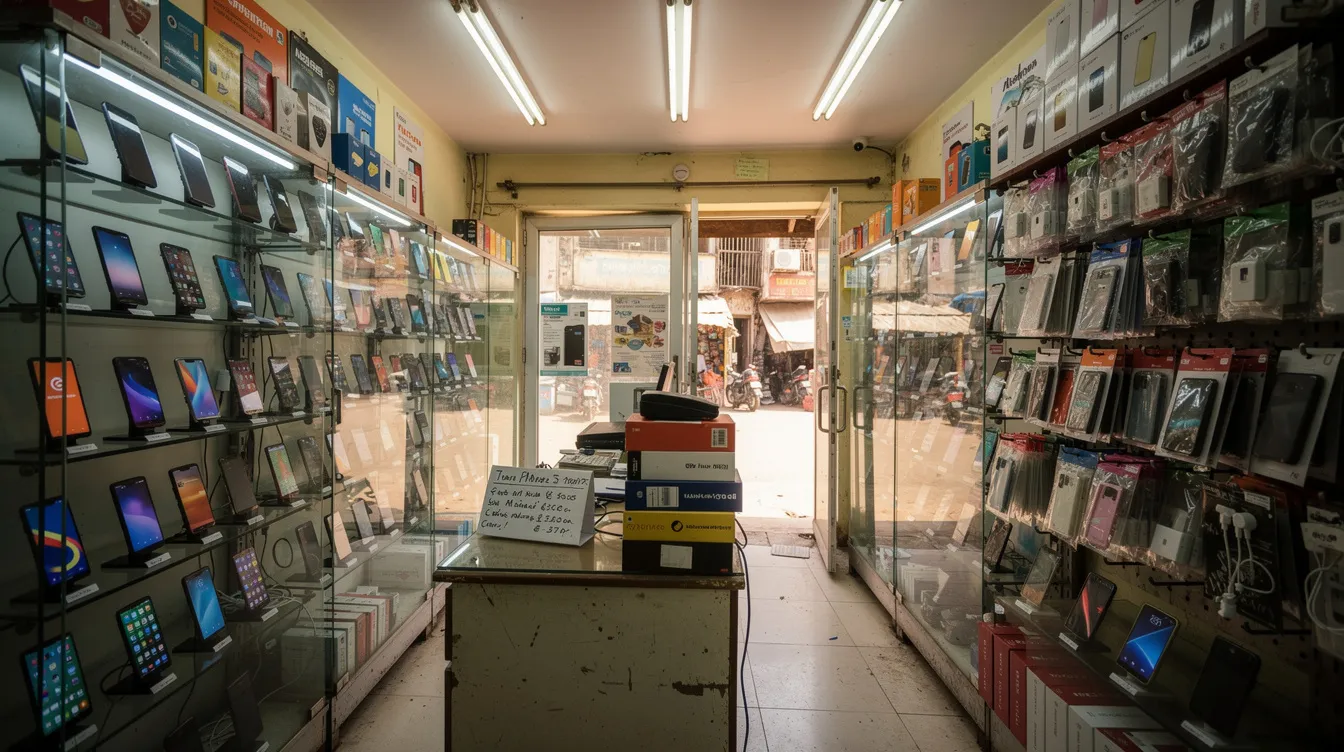
Meet “Mr. Arun Sharma”-a 32-year-old graduate (education qualification: B.Com) with 5+ years of experience managing a mobile accessories shop in Kota, Rajasthan. His business idea was straightforward: open his own 250 sq. ft. mobile and electronics retail shop near a coaching hub, selling budget phones, accessories, and basic electronics.
In September 2023, Arun applied for a ₹8 lakh mudra loan under the Kishore/Tarun category from a PSU bank branch in Kota. The loan amount was meant to cover shop renovation, display racks, initial inventory, and working capital.
How did he prepare his report? Mudra loan project reports can be created online using templates, and that is exactly what Arun did-he downloaded a generic project report format from the internet and filled it with rough estimates. Documentation requirements and financial literacy are challenges for MUDRA borrowers, and Arun fell into this trap. The bank accepted his loan application for processing but raised serious objections during appraisal.
Initial Bank Objections: Why the Mudra Loan Was Not Approved
When Arun met the branch manager and credit officer, the conversation was uncomfortable. The bank found his detailed project report unconvincing on multiple fronts.
Specific objections included:
- Monthly sales projected at ₹6,00,000 with no explanation of customer footfall or product mix
- A flat 30% gross profit margin applied to all products, including low-margin mobile phones
- No clear working capital calculation or break even analysis
- Mismatch between projected net profit and EMI repayment capacity
- No proper market analysis, competition overview, or explanation of how the location near coaching institutes would generate demand
- Inconsistencies between financial projections and Arun’s past bank statements and ITR
The bank did not support the mudra yojana application as submitted and issued a formal rejection citing “project not found viable as per submitted report.”
Detailed Review of the Original Mudra Loan Project Report
After rejection, Arun approached me in October 2023 with his complete set of financial documents-the earlier project report, bank observations, and rejection letter.
I reviewed the entire loan project report, checked every assumption, and compared them with local market reality and Arun’s experience profile. The original report had a weak structure: a short business overview, no proper cost of project table, a lump-sum inventory estimate, and a one-page financial projection without year-wise details information.
The company’s background section was just two lines. The project company profile lacked any mention of employees working with him, advertising strategies, or project logistics details. Most numbers were not problematic because they were small-they were problematic because they were unreasoned and internally inconsistent.
Key Mistakes in the Original Loan Project Report and Why Banks Disliked Them
Project report mistakes generally fall into four categories: sales assumptions, cost of project, working capital, and profitability. Here is what went wrong in Arun’s mudra loan project report:
- Sales assumption: Monthly sales written as ₹6,00,000 without explaining customer footfall, average bill size, or all the products being sold
- Margin error: Gross profit margin assumed at 30% for everything-mobiles actually yield 7–10%, accessories 25–40%
- Cost of project lumped: “Shop setup & stock: ₹8,00,000” with no separate heads for furniture, computer, security deposit, space or land requirement, or inventory
- No working capital cycle: Zero calculation of credit from suppliers, cash sales proportion, or minimum stock levels
- Understated expenses: Rent, helper salary, electricity, GST compliance costs grossly understated, giving inflated net profit
- Wrong EMI calculation: EMI for ₹8 lakh computed using incorrect interest rate and tenure, creating a mismatch between repayment capacity and actual cash flow
Each mistake eroded the banker’s confidence. When a bank sees unrealistic numbers, it triggers further queries or outright rejection.
Step-by-Step Corrections: How the Mudra Loan Project Report Was Improved
I sat with Arun for three detailed discussions, visited the proposed shop location, and collected quotations before revising the report. The report should detail funding needs and repayment plans clearly-so we rebuilt every section.
Business section improvements: A clearer project company profile with the promoter’s experience, business overview highlighting location advantage near coaching institutes, product mix (budget phones, mid-range phones, accessories, basic electronics), and project commercial aspects.
Cost of project corrections:
| Head | Original (Lump Sum) | Corrected (Itemised) |
|---|---|---|
| Shop renovation & furniture | Combined ₹8,00,000 | ₹1,80,000 |
| Display racks & billing counter | – | ₹75,000 |
| CCTV, computer & software | – | ₹45,000 |
| Initial inventory (phones + accessories) | – | ₹4,50,000 |
| Margin money & working capital | – | ₹50,000 |
| Total | ₹8,00,000 | ₹8,00,000 |
Bank finance vs own contribution was shown separately. MUDRA loans can be used for purchasing machinery and working capital-we made that distinction explicit.
Operating expenses were recalculated realistically: rent at ₹25,000, two helpers at ₹8,000 each, electricity, marketing at ₹5,000/month, GST filing cost, and contingencies. EMI was recomputed at 11% p.a. over 5 years, aligning with typical mudra loan schemes.
Financial Projections Before vs After Correction
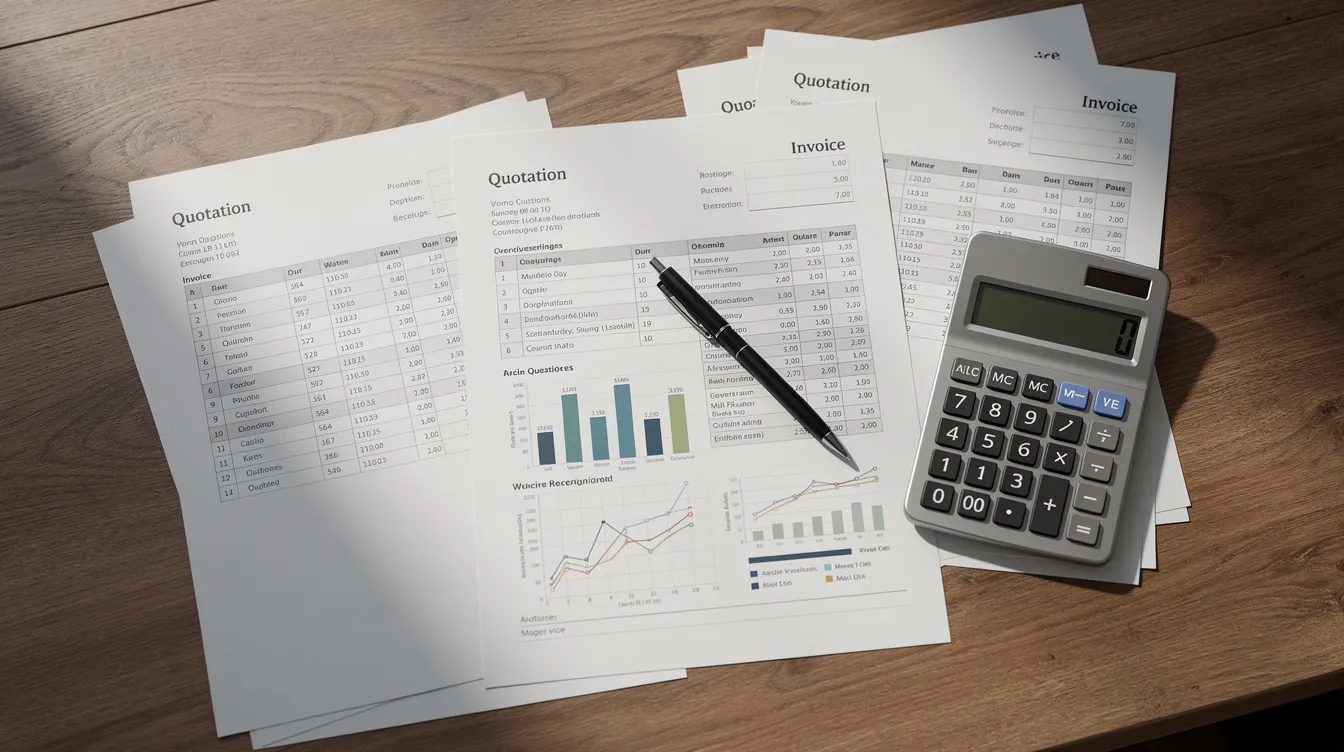
Financial projections are essential in a project report. Here is the comparison that made the difference:
Monthly Projection (Year 1):
| Item | Original Report | Corrected Report |
|---|---|---|
| Monthly Sales | ₹6,00,000 | ₹4,00,000 |
| Gross Profit Margin | 30% | 17% (blended) |
| Gross Profit | ₹1,80,000 | ₹68,000 |
| Total Expenses | ₹55,000 | ₹78,000 |
| Net Profit | ₹1,25,000 | ₹-10,000 (Month 1-2), ₹15,000+ (Month 3 onwards) |
| Monthly EMI | ₹20,000 (wrong calc) | ₹17,400 |
| Surplus / (Deficit) | ₹1,05,000 | ₹8,000–₹15,000 |
Year-Wise Summary:
| Year | Annual Turnover | Net Profit | DSCR |
|---|---|---|---|
| Year 1 | ₹48,00,000 | ₹1,20,000 | ~1.3 |
| Year 2 | ₹56,00,000 | ₹2,10,000 | ~1.5 |
| Year 3 | ₹65,00,000 | ₹3,00,000 | ~1.6 |
DSCR (Debt Service Coverage Ratio) measures cash available for EMI vs actual EMI. After correction, DSCR improved from a borderline ~1.1 to a comfortable ~1.6, giving the banker confidence in repayment capacity. Expected revenue figures were tied to 40–50 daily transactions at ₹250–300 average billing.
Better Assumptions, Risk Analysis, and Supporting Financial Documents
Beyond numbers, the corrected report improved the narrative-the story behind the money.
Improved assumptions: Footfall estimates based on nearby coaching institutes and hostels. Seasonal variations accounted for (festivals, exam seasons, new batch admissions). Competition mapping showed 3 shops within 500 meters with a differentiation strategy around after-sales continuous support, accessories variety, and UPI/EMI options. Required third party details including supplier names and credit terms were included.
Risk analysis added:
| Risk | Mitigation |
|---|---|
| New competitors | Focus on accessories (higher margin), local service |
| Online retailers | Offer instant replacement, touch-and-feel advantage |
| Price wars | Diversify into electronics repair services |
| Demand fluctuation | Maintain lean inventory, seasonal promotions |
Supporting documents attached: Rent agreement draft, shop location photos, GST registration application, quotations for fixtures and stock with third party details, KYC, previous bank statements, experience letter from Arun’s former employer, and partial fulfilment proof of earlier business dealings. These complete financial information attachments addressed every earlier bank observation.
Revised Appraisal, Mudra Loan Approval, and Post-Sanction Outcome
Timeline:
- September 2023: Original rejection
- November 2023: Revised project report submitted under mudra yojana Kishore scheme
- Late November 2023: Branch re-appraisal and sanction within ~15 days
The banker’s attitude shifted entirely after seeing a structured, data-backed loan project report. The sanction split the loan amount as ₹6 lakh term loan for setup and ₹2 lakh working capital limit, at approximately 11.5% p.a. interest, with 5-year tenure. Security was as per standard Mudra policy-collateral-free with CGFMU cover, hypothecation of stock and assets, and personal guarantee.
Arun’s shop opened in January 2024. Initial sales ran slightly below projection for the first three months, then caught up. Successful implementation of MUDRA loans can significantly improve business profitability-and in Arun’s case, proper use of the mudra loan enhanced his cash flow and enabled business expansion into accessories repair by month six. He manages EMI on time and maintains proper billing and GST compliance.
The corrected report did not magically increase profits. It set realistic expectations for both the enterprise and the bank, reducing stress and enabling effective communication during reviews.

Practical Lessons and Checklist for Your Own Mudra Loan Project Report
Key lessons from this case study:
- Never copy-paste a generic mudra loan project report without aligning it to your actual business
- Link every sales projection to concrete assumptions-customers per day, ticket size, days open
- Keep margins and expenses realistic, even if profits look smaller on paper
- The MUDRA Yojana helps transition informal businesses into formal entities-treat your report as a business administration tool, not just a bank document
- MUDRA Yojana promotes entrepreneurship development among first-generation entrepreneurs-the scheme facilitates job creation by supporting small businesses
- Constructive criticism from a bank rejection is valuable feedback, not a dead end
Pre-submission checklist:
- [ ] Business profile and promoter background with project work history
- [ ] Cost of project with means of finance properly tabulated
- [ ] Working capital calculation showing stock days, credit days, cash buffer
- [ ] At least 3 years’ financial projections with P&L and cash flow
- [ ] EMI and repayment plan aligned with projected surplus
- [ ] Risk analysis with 3–4 key areas and mitigation steps
- [ ] All supporting documents attached (quotations, rent agreement, KYC, photos)
- [ ] Report is not an exhaustive list of generic statements-it reflects your actual business
Consider professional help if your loan amount exceeds ₹5 lakh or if you have already received a rejection. A well-prepared business plan for a mudra loan is also a roadmap for running your small business-not just paper for the bank. Related topics worth exploring include common mudra loan project report mistakes, CMA data preparation for msme loan applications, and reapplication strategy after rejection. These apply equally to other loan schemes like pmegp loan and jan dhan yojana-linked services.
Frequently Asked Questions on Mudra Loan Project Report Case Studies
These FAQs are based on queries I regularly receive from mudra loan applicants and MSME owners during my practice. The answers reflect practical banking knowledge applicable across public sector banks and private lenders.
Can a rejected Mudra loan application be approved later with a corrected project report?
Yes. Banks can reconsider if you submit a stronger project report that addresses earlier objections, adds missing financial documents, and demonstrates improved repayment capacity. Sometimes reapplying to the same branch works best (since they already know your file), while in other cases approaching a different bank makes sense based on feedback received. There is no guarantee of approval, but professional revision of the project report can significantly improve approval chances if the business is genuinely viable. The process is about building confidence, not about creating fictional numbers.
Do I always need a CA to prepare a Mudra loan project report?
For Shishu loans (up to ₹50,000), many banks accept simple self-prepared project notes. But for Kishore and Tarun categories (₹50,000–₹10 lakh), a structured detailed project report is strongly advisable. A CA or experienced MSME finance professional can help avoid common mistakes in financial projections, DSCR calculations, and working capital estimation that frequently cause rejection. If you are comfortable with numbers, you can use guided templates or software to create your report and then get it reviewed professionally before you submit it.
What supporting documents strengthen a Mudra loan project report?
Key documents include KYC (PAN, Aadhaar), existing bank statements for 6–12 months, ITRs where available, rent agreement or property papers, quotations for machinery and fixtures, shop photographs, relevant licenses or registrations, and experience certificates. These documents help the bank verify assumptions and confirm that the borrower is serious. Proper documentation also helps the banker justify the proposal to credit departments during internal appraisal-often the difference in borderline cases. Details about manufacturing processes, commercial manufacturing processes, or achievements export orders should be included where relevant to your enterprise.
How realistic should sales and profit projections be for Mudra loan?
Projections should be cautious in Year 1, with reasonable growth of 10–20% annually based on market size and your capacity-not wishful thinking. Link numbers to working hours, footfall, or production capacity. Use local benchmarks from similar businesses where possible. Showing very high profits to impress the bank backfires when margins and expenses do not align with industry norms, leading to suspicion and possible rejection. Beauty parlors, food stalls, and retail shops each have different margin profiles-use yours accurately.
Is a detailed risk analysis really necessary in a small Mudra loan project report?
Banks do not expect a complex academic model. But a short, honest risk analysis is appreciated even in small loans under the pradhan mantri mudra yojana and pmmy scheme. Add 3–4 key risks-competition, demand fluctuations, supplier issues, export orders dependency-and brief mitigation strategies like diversified products, emergency fund, or alternate suppliers. This section shows the entrepreneur has thought through challenges, which builds bank confidence and sets a realistic objective and mindset for the borrower. It also demonstrates that you understand the finance and demand dynamics of your specific business.